Don’t Let Cracks Ruin Your Relaxation
Jacuzzi crack repair is a common concern for homeowners in South Florida, where sun, heat, and shifting ground can damage even well-maintained hot tubs. The good news is that most cracks are fixable, and you don’t always need to replace your entire unit.
Quick Answer: How to Repair a Jacuzzi Crack
- Identify the damage – Determine if it’s a surface scratch or a structural crack.
- Gather materials – Get an acrylic repair kit or marine-grade epoxy, sandpaper, drill, and safety gear.
- Prepare the area – Drain, clean, and completely dry the cracked surface.
- Apply the fix – For hairline cracks, apply sealant and sand smooth. For deeper cracks, drill stop-holes, create a V-groove, and apply a fiberglass patch and epoxy.
- Cure and finish – Allow 24-48 hours to cure, then sand and polish.
- Test for leaks – Refill and monitor the water level.
DIY Cost: About $25 for sealant and basic supplies | Professional Repair: Typically $200-$1,500 | Replacement: Often $3,000+ once you include removal and installation
Finding a crack in your Jacuzzi is disheartening. Whether it’s a hairline crack from thermal stress or a deeper gash from physical damage, addressing it quickly prevents leaks, water damage, and costly structural problems.
Small cracks and scratches in acrylic or fiberglass shells are often simple DIY projects. However, deeper cracks, structural damage, or persistent leaks may require professional expertise to ensure a permanent, watertight repair.
I’m Frank Hernandez, and since 1996, my team at All Surface Refinishing has been repairing bathroom surfaces, including Jacuzzis, throughout South Florida. We’ve helped countless homeowners in Miami, Fort Lauderdale, Boca Raton, and nearby communities restore their Jacuzzis and bathtubs to like-new condition. I’m here to guide you through the Jacuzzi crack repair process so you can get back to enjoying your soak.
Identifying the Damage: Is It a Crack or Just a Scratch?
Before starting a Jacuzzi crack repair, you must diagnose the problem. A scratch is a superficial blemish on the top layer, while a crack penetrates deeper, risking leaks and structural damage. To tell the difference, run your fingernail over the imperfection. If it catches, it’s likely a scratch. If the line appears to go into the material or shows signs of leaking, you’re dealing with a crack.
Cracks can vary in type:
- Hairline cracks: Thin, superficial lines that may not leak immediately but can worsen. They are often a quick DIY repair.
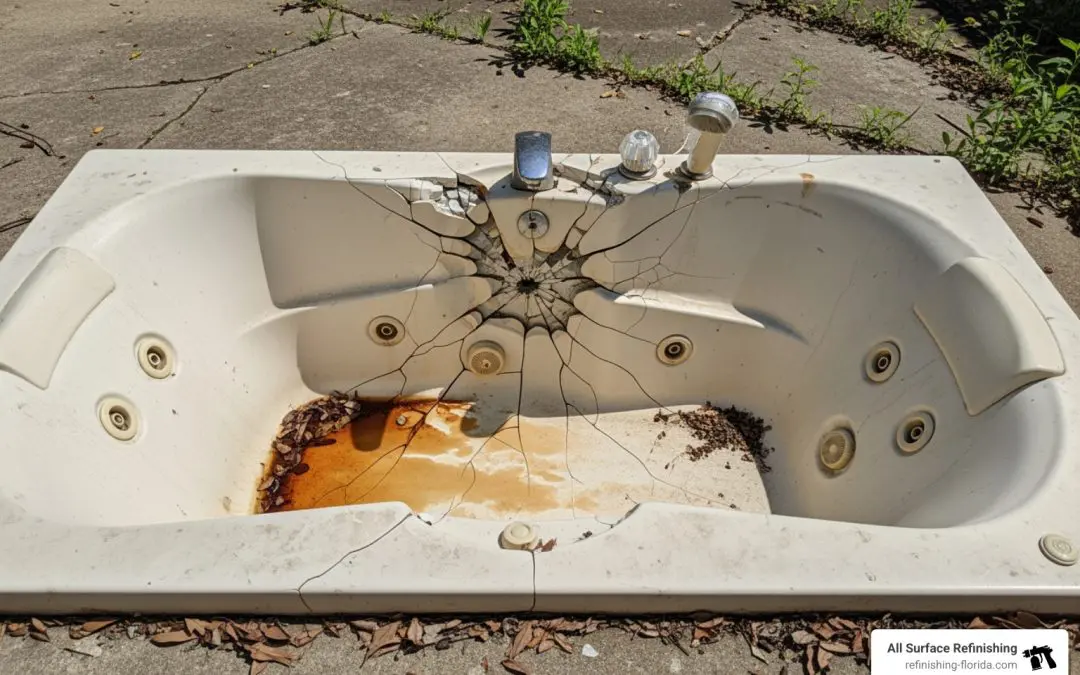
- Deep cracks or gashes: These penetrate deeper into the shell, sometimes through the entire acrylic layer. They are a common cause of leaks.
- Spider cracks: A web-like pattern of fine cracks, usually indicating stress or impact, often seen in gel coatings.
Before attempting a DIY Jacuzzi crack repair, check your warranty, as self-repair can void it. Knowing your hot tub’s material—acrylic, fiberglass, or polyethylene—is also crucial, as each requires specific repair methods. For more details on repairing different tub types, see our guide on How to Repair Cracks in Your Jacuzzi or Tub: A Step-by-Step Guide.
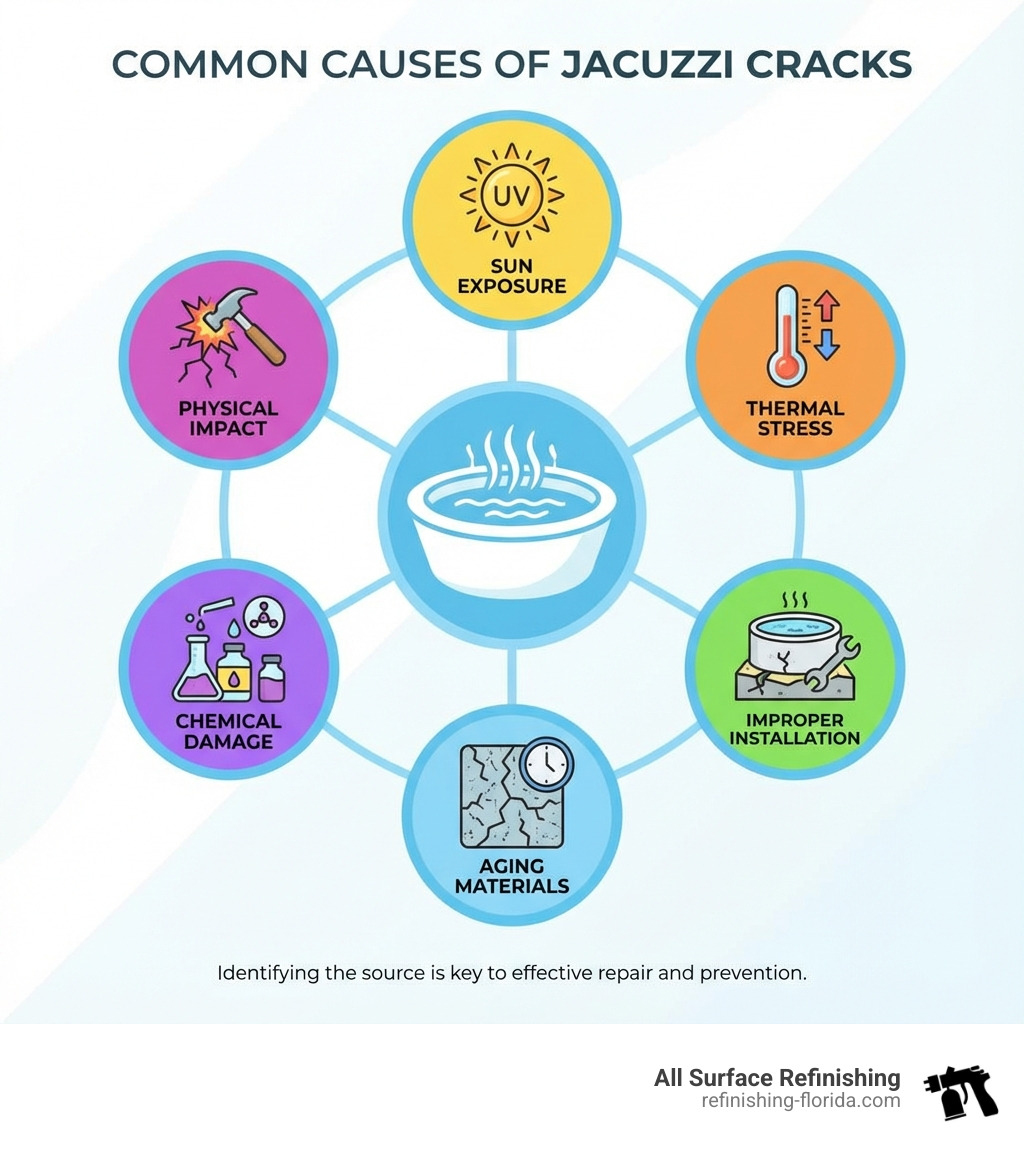
Common Causes of Cracks in Florida Jacuzzis
In South Florida, our Jacuzzis face unique challenges. Our experience serving areas like Aventura, Boca Raton, and Miami shows several common culprits:
- Sun Exposure and Thermal Stress: Intense Florida sun causes the shell material to expand and contract, leading to thermal stress that weakens it over time.
- Improper Installation and Shifting Foundations: An unlevel foundation or shifting ground puts immense stress on the shell, leading to cracks.
- Aging Materials: Over years of use, acrylic or fiberglass can become brittle and more prone to cracking.
- Chemical Damage: Incorrect water chemistry or harsh chemicals can slowly weaken the shell material, making it vulnerable.
- Physical Impact: Accidental bumps from heavy objects or dropped tools can cause immediate cracks.
- Standing Water Deterioration: Water left standing beneath the tub can deteriorate the shell, especially if the base is not properly sealed.
Signs Your Jacuzzi Crack is Causing a Leak
A leaking crack requires urgent attention. Here is how to tell if your Jacuzzi crack repair is needed to stop a leak:
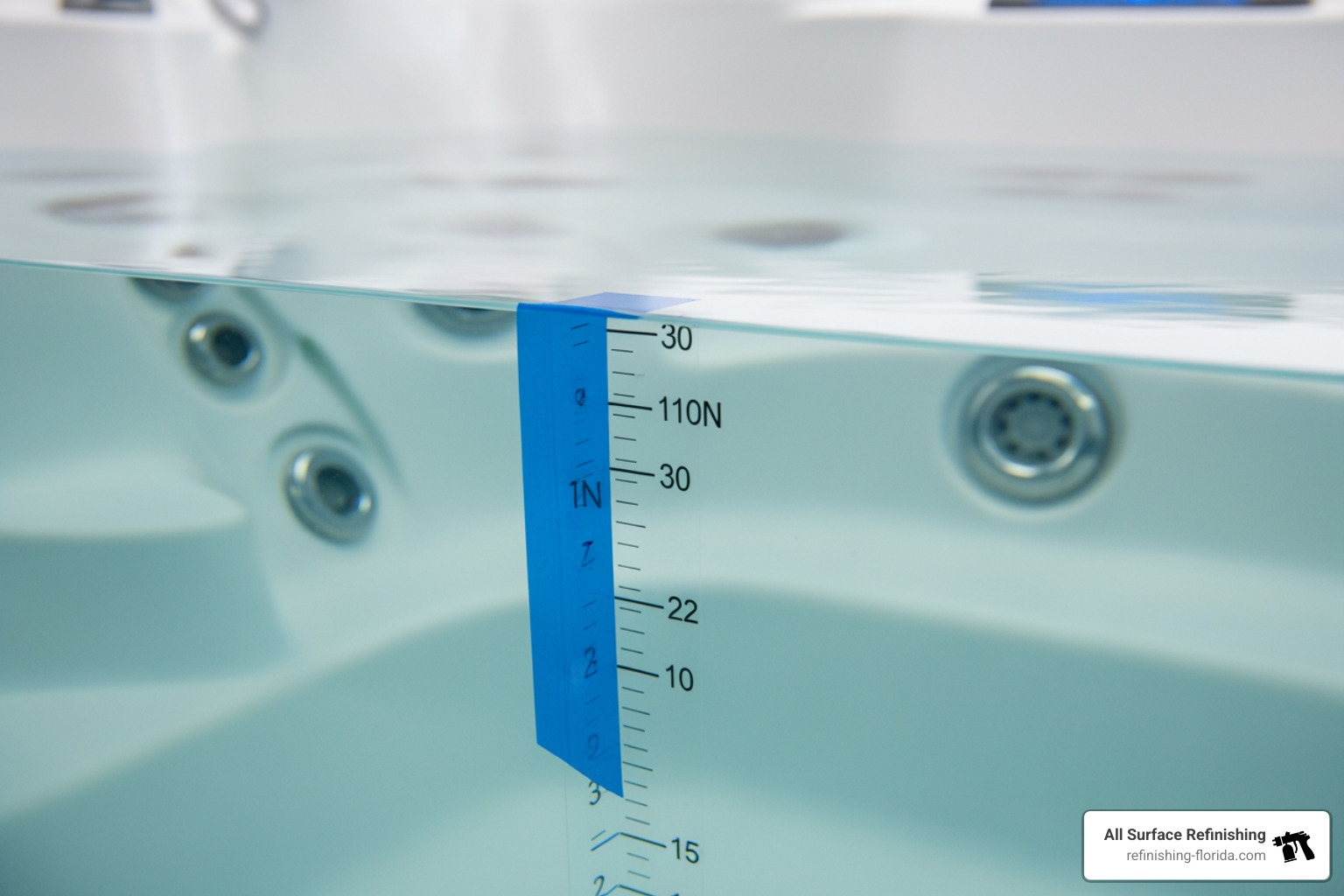
- Dropping Water Level: If the water level drops faster than normal evaporation, you likely have a leak. To confirm, mark the water line, turn off the pumps, and check again in 24 hours.
- Visible Puddles: Puddles or damp spots on the pad or surrounding area are a clear sign of a leak.
- Damp or Damaged Insulation: Check the internal insulation. If it’s damp or moldy, a crack is the likely cause.
- Increased Water Bills: A hidden, ongoing leak can quietly increase your water bills.
- The Dye Test Method: With the pumps off, add a few drops of colored dye near the suspected crack. If the dye is drawn into the crack, it confirms a leak.
Promptly addressing a leaking crack is crucial to prevent water waste, damage to components, and mold growth in Florida’s humid environment.
Gearing Up for a DIY Jacuzzi Crack Repair
Ready to tackle that crack yourself? For minor blemishes, a DIY Jacuzzi crack repair can be a quick, cost-effective solution. Our team at All Surface Refinishing always emphasizes safety and proper preparation. You’ll need the right tools and materials for a durable fix.

[LIST] of Essential Tools and Materials
Before you begin, gather everything you’ll need. A small crack repair typically costs around $25 for the sealant and basic supplies.
- Acrylic Repair Kit: Often includes color-matching resin and an applicator.
- Waterproof Marine-Grade Epoxy: For a robust repair. Brands like Loctite Marine or JB WaterWeld are well-regarded.
- Sandpaper (multiple grits): A range from coarse (220-400) to very fine (600-1000).
- Drill with Small Bit (1/16″): To drill stop-holes at the ends of deeper cracks to prevent spreading.
- Utility Knife: For cutting a V-channel along the crack.
- Putty Knife or Spreader: To apply and smooth the repair material.
- Soft Cloths: For cleaning and buffing.
- Hot Tub Cleaner or Mild Soap: For thorough cleaning.
- Rubbing Alcohol (optional): To ensure a grease-free surface.
- Fiberglass Cloth/Matting (for deeper cracks): For reinforcement if the crack penetrates the fiberglass backing.
- Polishing Compound: To restore shine.
- Safety Glasses and Gloves: Always protect yourself.
Preparing the Cracked Area for Repair
Proper preparation is the key to a successful Jacuzzi crack repair. Skimping here can lead to a failed repair.
- Drain the Jacuzzi: The tub must be completely empty.
- Disconnect Power: Safety first. Turn off and unplug your hot tub.
- Clean the Surface: Thoroughly clean the cracked area with a hot tub cleaner or mild soap to remove dirt, oils, and residue.
- Remove Oils: Wipe the area with rubbing alcohol to ensure it’s completely free of contaminants.
- Dry the Area Completely: This is critical. Any moisture can compromise the bond. Use a soft cloth and allow it to air dry, or use a hairdryer on a low, cool setting.
Choosing the Right Sealant for Your Jacuzzi
Selecting the correct sealant is paramount. Your choice depends on the tub’s material and the crack’s nature.
- Waterproof Epoxy: A two-part, marine-grade epoxy is a go-to for many repairs. It’s designed for constant water exposure and temperature changes, creating a strong, rigid bond.
- Marine-Grade Sealants: Similar to epoxy, these are formulated for aquatic environments and offer excellent water resistance.
- Acrylic-Specific Kits: For acrylic Jacuzzis, a dedicated repair kit is often best for small cracks, as they bond seamlessly and may offer color-matching.
- Color Matching: For an invisible repair, color matching is key. Some kits offer this, or you may need to tint your epoxy.
- Polyester Resin: A common choice for fiberglass shells, often used with fiberglass cloth for a strong, structural repair.
- Plastic Welding Kits: For polyethylene hot tubs, a plastic welding kit is the recommended method.
Always read the manufacturer’s recommendations for your hot tub and the repair product. Using an incompatible sealant can lead to a failed repair.
The Step-by-Step Repair Process
With your Jacuzzi prepped, it is time for the actual Jacuzzi crack repair. Patience is crucial, especially during curing. Always follow your repair kit’s specific instructions, as products can vary.
How to Fix a Small Hairline Crack
For annoying hairline cracks or surface scratches that don’t leak, a simpler approach is usually sufficient.
- Sand the Surface: Gently sand the area with fine-grit sandpaper (400-600 grit) to roughen the surface for adhesion. Clean away any dust.
- Apply Sealant: Apply a small amount of acrylic sealant or marine-grade epoxy directly over the crack.
- Spread Evenly: Use a putty knife to spread the sealant thinly, feathering the edges to blend with the surface.
- Curing Process: Allow the sealant to cure completely per the manufacturer’s instructions. Do not rush this step.
- Sanding Smooth: Once cured, lightly sand the area with very fine-grit sandpaper (600-1000 grit) until it is smooth and flush.
- Buffing and Polishing: Finish by buffing with a soft cloth and polishing compound to restore the shine.
For more detailed information on our general tub and Jacuzzi services, visit our page on More info about tub and Jacuzzi services.
How to Fix a Deeper Jacuzzi Crack or Gash
Deeper cracks require a more robust, reinforced approach, similar to a boat repair.
- Drilling Stop-Holes: Use a 1/16-inch drill bit to drill a small hole at each end of the crack to prevent it from spreading.
- Creating a ‘V’ Groove: With a utility knife or rotary tool, carefully cut a ‘V’ channel along the crack’s length. This creates a recess for the repair material to fill. Clean out any debris.
- Applying Fiberglass Patch (if needed): If the crack is through the shell, reinforce it. Apply a layer of epoxy, then lay a piece of fiberglass matting over it.
- Layering Epoxy Resin: Mix your two-part marine-grade epoxy and apply a bead into the ‘V’ groove, ensuring it fills the channel. If reinforcing, apply a generous layer over the fiberglass patch.
- Building Up the Repair: For deep cracks, you may need to apply several thin layers of epoxy. If working from the underside, apply a larger patch of epoxy and fiberglass matting.
- Sanding Flush: Once fully cured (24-48 hours, or as directed), use progressively finer grits of sandpaper (starting around 220 grit and moving up to 1000) to sand the repair smooth and flush.
- Final Polishing: Finish by buffing the area with a polishing compound to restore its original luster.
For comprehensive solutions for your entire bathroom, explore our services for More info about our bathroom services.
When to Call a Professional: DIY vs. Expert Repair
While DIY is great, some Jacuzzi crack repair projects require a professional. Knowing when to call an expert can save you time, money, and frustration.
| Feature | DIY Jacuzzi Crack Repair | Professional Jacuzzi Crack Repair |
|---|---|---|
| Cost | About $25 (for sealant, small crack) | Typically $200 – $1,500 (depending on size and complexity) |
| Effort | Moderate to High (requires careful prep and application) | Low (you call, we handle it) |
| Tools Needed | Basic kit, sandpaper, drill, safety gear | Specialized tools, industrial-grade materials, color-matching equipment |
| Warranty Risk | Can void manufacturer warranty | Often maintains warranty or comes with a professional guarantee |
| Outcome | Good for small, superficial cracks; visible if not perfectly matched | Seamless, durable, often nearly invisible repair; professional finish |
| Durability | Varies based on skill and product; may not be permanent | Long-lasting, structural integrity restored; typically stronger than the surrounding surface |
| Time | Multiple steps, curing times, can take days | Often completed in a single visit; tub ready for use after cure |
| Risk | Potential for failed repair, further damage, color mismatch | Minimized risk, backed by experience and, in many cases, a written warranty |
Our team at All Surface Refinishing knows professional repair costs more upfront but ensures the job is done right, preventing recurring issues and saving you money long-term. In many cases, professional repair can save you up to 75% over the cost of replacing the entire Jacuzzi or bathtub.
Deciding if You Need a Professional for Jacuzzi Crack Repair
How do you know if your Jacuzzi crack repair has crossed into “call the pros” territory? Here are key indicators:
- Large or Complex Cracks: If a crack is longer than a few inches, wide, or has multiple branches, it likely indicates significant structural stress.
- Damage Through the Shell: If the crack penetrates completely through the shell, it requires expert attention to reinforce it properly.
- Leaks You Can’t Locate: If your water level is dropping but the source is hidden, a professional has the tools for leak detection.
- Lack of Confidence or Time: If you’re unsure about the process or lack the time, calling a professional is a smart move. A botched DIY repair can be more expensive to fix.
- Ensuring a Permanent Fix: For peace of mind and a guaranteed durable, watertight, and aesthetically pleasing repair, professionals are your best bet.
For expert assistance, our team provides Expert Jacuzzi and Tub Repair Service throughout Aventura, Boca Raton, Fort Lauderdale, Broward County, Miami, and the surrounding South Florida areas.
The Cost of Jacuzzi Crack Repair in South Florida
When considering Jacuzzi crack repair, cost is always a factor. The good news is that repair is almost always cheaper than replacement.
- DIY Cost: A DIY repair for a small crack is very affordable, costing around $25 for a basic kit.
- Professional Repair Cost: Professional hot tub repair can range from about $200 to $1,500, depending on the crack’s size, location, and complexity.
- Replacement Cost: Replacing an entire Jacuzzi can easily exceed $3,000, plus installation and removal costs.
Weighing these figures, it is clear that repair is the more economical choice. Investing in a professional repair ensures the work is done correctly, saving you money and hassle in the long run. For specifics on our services and typical pricing ranges, visit our page for More info about tub and Jacuzzi repair services.
Preventing Future Cracks in Your Jacuzzi
Preventing cracks is easier than dealing with Jacuzzi crack repair. While some damage is unavoidable, diligent care can prevent many issues. Here are our top tips for keeping your Jacuzzi in pristine condition in the Florida climate:
- Regular Maintenance and Water Chemistry: Imbalanced water chemistry can degrade the shell. Regularly test and adjust pH, alkalinity, and sanitizer levels.
- Use a Quality Cover: A good, insulated cover protects the shell from direct sunlight, UV degradation, and thermal stress.
- Sun Protection: If your Jacuzzi is often uncovered in direct sun, consider a canopy or umbrella to prevent the acrylic from weakening.
- Stable Foundation: Ensure your Jacuzzi is on a flat, level surface. Periodically inspect the foundation for shifting.
- Avoid Impacts: Be mindful of heavy or sharp objects around your Jacuzzi. Accidental drops can easily cause cracks.
- Proper Draining Practices: Follow the manufacturer’s recommended intervals for draining and cleaning.
- Manufacturer-Approved Components: Only use accessories and cleaning tools approved by your Jacuzzi’s manufacturer to avoid damage.
- Periodic Inspections: Regularly inspect your Jacuzzi’s shell for early signs of damage. Catching a hairline crack early makes for a much simpler repair.
By following these preventative measures, you will significantly extend the life of your Jacuzzi and bathtubs. For more ways to protect your bathroom fixtures, explore our services for More info about restoring your tub or Jacuzzi.
Your Jacuzzi Repair Questions Answered
We often hear similar questions from homeowners throughout South Florida about Jacuzzi crack repair. Here are some of the most common inquiries:
Can all cracks in a Jacuzzi be repaired?
Most surface cracks in acrylic or fiberglass Jacuzzis are repairable. Hairline cracks are usually simple DIY fixes. However, very large or complex gashes that affect the tub’s structural layers require professional assessment. In rare, severe cases, replacement might be more practical, but our goal is always to repair and restore first.
What is the best epoxy for Jacuzzi crack repair?
For a strong, water-tight Jacuzzi crack repair, we recommend a two-part, marine-grade waterproof epoxy. This type is designed to resist water, chemicals, and temperature changes common in a hot tub. Brands like Loctite Marine or JB WaterWeld are effective choices. For acrylic shells, dedicated acrylic repair kits are also excellent for a seamless, color-matched finish.
How long does a Jacuzzi crack repair take to cure?
Curing time varies by product but typically ranges from 12 to 48 hours, influenced by humidity and temperature. It is crucial to let the repair cure completely before refilling your Jacuzzi to prevent the patch from failing. Always follow the manufacturer’s instructions on your specific repair kit for a lasting fix.
Restore Your Relaxation with a Flawless Finish
We have covered identifying damage, DIY fixes, and when to call a pro for Jacuzzi crack repair. The key takeaway is to act promptly. Do not let a small crack become a major, costly problem that spoils your relaxation.
Whether you’re a DIYer or prefer the peace of mind of professional expertise, a beautiful, functional Jacuzzi is within reach. For a guaranteed, like-new finish on your Jacuzzi or bath tub in Aventura, Boca Raton, Fort Lauderdale, Broward County, Miami, and throughout South Florida, our team at All Surface Refinishing is here to help. We bring decades of experience to ensure your repair is seamless and durable.
To schedule your free estimate, visit our tub and Jacuzzi services page.
