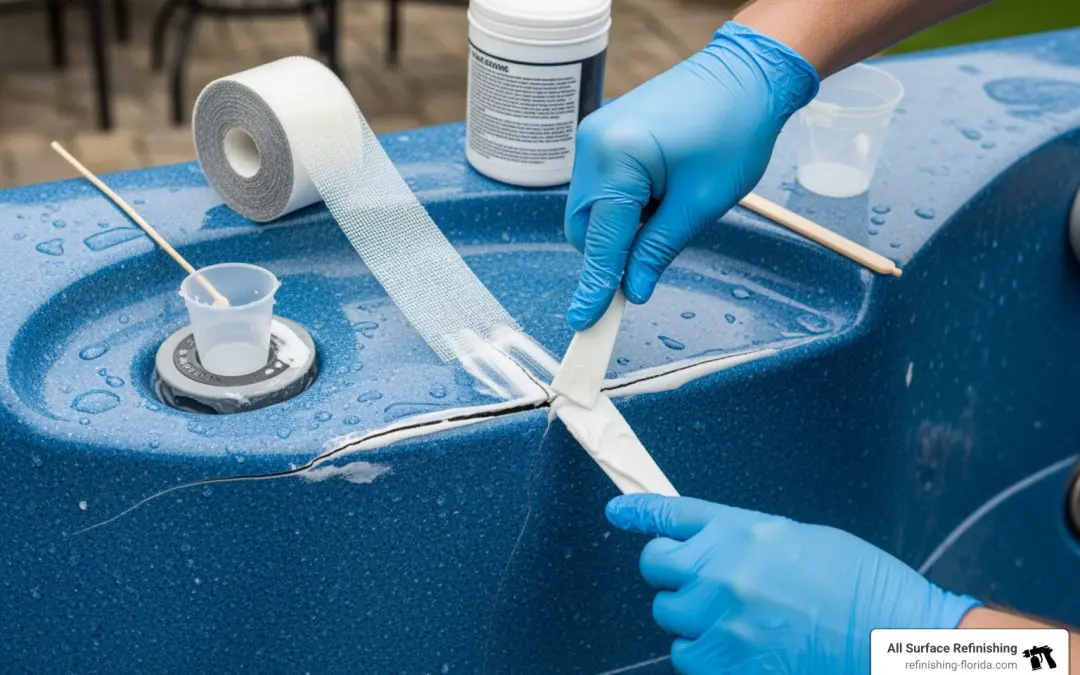
Your Guide to a Leak-Free Jacuzzi
Hot tub fiberglass repair is a cost-effective solution that can save you thousands compared to replacement. Whether you’ve found a small hairline crack or a deeper structural issue, most damage can be fixed with the right approach.
Quick Answer: How to Repair Hot Tub Fiberglass
- Assess the damage – Identify if it’s a surface crack, structural crack, or gelcoat blister
- Drain and clean – Empty the tub, disconnect power, and clean the repair area thoroughly
- Small cracks – Use marine-grade epoxy or acrylic repair kit, sand smooth, and polish
- Deep cracks – Grind a V-notch, layer fiberglass cloth with resin, apply matching gelcoat
- Professional help – Call experts for extensive damage, multiple cracks, or warranty concerns
Finding a crack on your hot tub is disheartening, and unlike a cosmetic scratch, it can lead to serious problems. Left untreated, even small cracks can grow, leak, and allow water into the shell’s internal structure, causing water damage, mold, and the need for a costly replacement.
The good news is that you don’t have to replace your jacuzzi. Most fiberglass and acrylic damage can be repaired for a fraction of the cost. Professional repairs often range from $100 to $500, saving you thousands compared to a new hot tub. With proper techniques, your tub can look beautiful and last for years.
This guide walks you through everything about hot tub fiberglass repair—from identifying damage to deciding between DIY and professional restoration. You’ll learn the proper methods to restore your jacuzzi’s beauty and function, whether you’re dealing with a tiny surface crack or extensive structural damage.
I’m Frank Hernandez, President of All Surface Refinishing, and I’ve been helping South Florida homeowners and businesses restore their bathroom and kitchen surfaces since 1996. With expertise in hot tub fiberglass repair across Miami-Dade, Broward, and Palm Beach counties, our team has successfully repaired hundreds of jacuzzis, saving our clients time and money while delivering results that last for decades.
Identifying the Damage: Causes and Diagnosis of Hot Tub Cracks
Before diving into hot tub fiberglass repair, it’s crucial to understand why cracks appear and how to diagnose them. Common causes are often a mix of environmental factors and wear and tear. Here are the usual suspects we encounter in Florida:
- Thermal Stress: Significant temperature fluctuations, common in South Florida, cause the shell to expand and contract, leading to stress cracks over time.
- Sun Exposure: Prolonged exposure to intense sun can degrade the hot tub’s materials, making them brittle and more susceptible to cracking, especially the gelcoat layer.
- Improper Installation: If your hot tub isn’t on a perfectly level and stable foundation, the uneven support can create structural stress points, leading to cracks.
- Physical Impact: Accidents happen. Dropping a heavy object or rough handling can cause direct physical damage.
- Water Freeze Damage: While less common in our warmer climate, if water freezes within the tub or plumbing, the expansion can exert immense pressure, causing cracks.
- Material Aging and Wear and Tear: Like anything, hot tub materials weaken over time. General use contributes to overall material fatigue.
- Chemical Damage: Incorrect chemical balances, especially highly acidic or alkaline water, can erode the gelcoat and fiberglass, making them vulnerable.
Diagnosing a crack might seem straightforward, but sometimes they are hard to spot. Here’s how to find them:
- Visual Inspection: Look closely at the entire surface of your hot tub shell, paying attention to corners, edges, and areas around jets or drains. A flashlight can highlight imperfections.
- Flashlight Test: Hold a bright flashlight at an angle to the surface. The light will cast shadows that make even fine hairline cracks more visible.
- Water Leak Test: If you suspect a leak but can’t see a crack, fill the tub, mark the water level, and let it sit for 24-48 hours. A significant drop in water level indicates a leak.
- Dye Method: For invisible leaks, a small amount of concentrated dye (food coloring works) can be added near the suspected area. The dye will be drawn into the crack, revealing its location.
Now, let’s talk about the types of damage you might encounter:
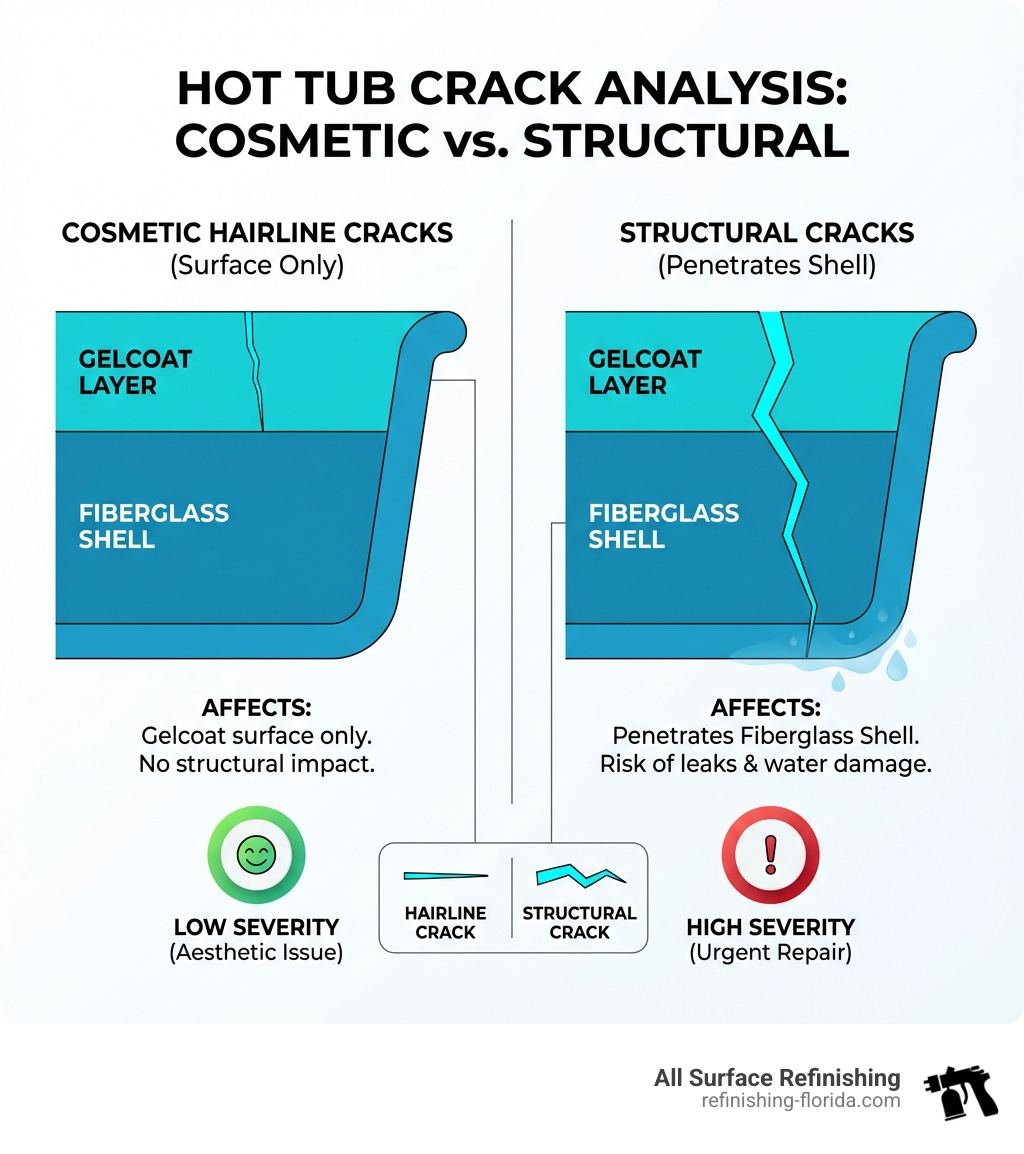
- Hairline Cracks: These are superficial, usually affecting only the gelcoat layer. They might look like fine scratches or spiderwebs. While often cosmetic, they can deepen if left untreated.
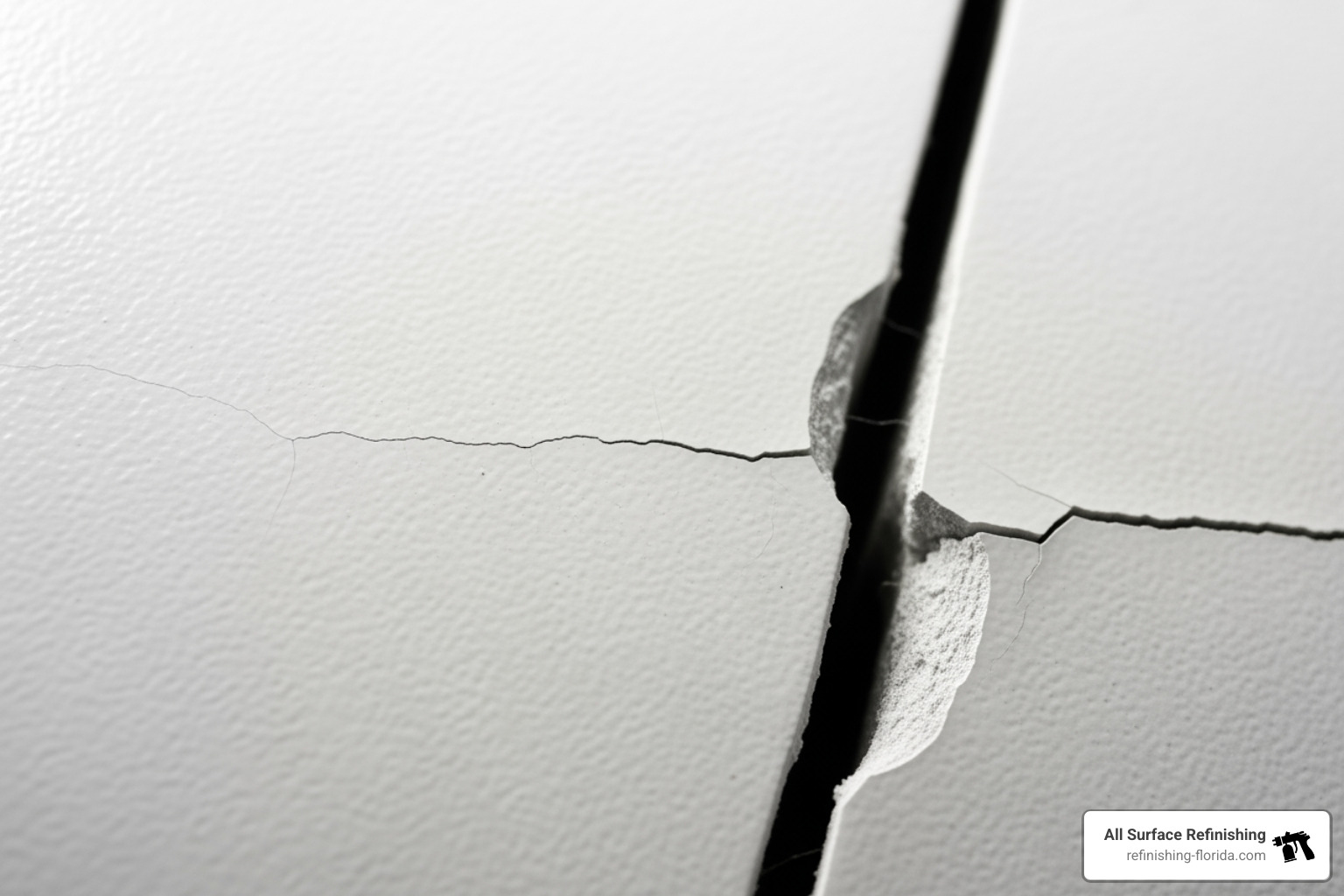
- Deeper Structural Cracks: These penetrate through the gelcoat and into the fiberglass layers, potentially compromising the structural integrity of your hot tub. These cause leaks and require more extensive hot tub fiberglass repair.
- Gelcoat Blisters: These appear as small bubbles or raised areas on the surface. They occur when water penetrates the gelcoat and reacts with the underlying resin.
- Osmosis: This is a more widespread blistering that can indicate deeper issues with the fiberglass laminate, often requiring professional attention.
Understanding Different Hot Tub Materials
While we’re experts in hot tub fiberglass repair, it’s worth noting that hot tub shells come in different materials, primarily fiberglass and acrylic. Many modern hot tubs feature an acrylic shell with a fiberglass or ABS (Acrylonitrile Butadiene Styrene) backing for structural support.
Fiberglass repair involves working with resin and fiberglass cloth to rebuild and reinforce the damaged area, often finishing with a gelcoat layer. This method creates a strong, structural bond. Acrylic repair, on the other hand, typically uses specialized acrylic repair kits or a two-part acrylic adhesive that chemically welds the plastic, making it a very different process. The surface finish is also distinct; fiberglass tubs have a gelcoat, while acrylic is a solid, homogenous material throughout its thickness. We handle a wide array of refinishing projects, including various types of tubs. More info about our refinishing services.
Assessing Crack Severity
Knowing when to worry about a crack is key. Here are our guidelines:
- Leaking Water: If you notice the water level dropping rapidly or puddles forming around your tub, you’ve got an active leak. This is a clear indicator that the crack has penetrated the shell and needs immediate attention.
- Crack Size and Depth: A small, superficial hairline crack is less urgent than a deeper crack that you can feel with your fingernail or that extends through the color layer. The deeper the crack, the more critical the repair.
- Location of Crack: Cracks around jets, drains, or corners are often more problematic as these are areas of high stress and potential water ingress.
- Structural Integrity Check: If the area around the crack feels soft, spongy, or flexes excessively, it could indicate delamination or structural damage to the fiberglass backing. This is definitely a job for the pros.
- Checking Warranty: Before attempting any DIY hot tub fiberglass repair, always check your hot tub’s warranty. Many manufacturers will void a warranty if unauthorized repairs are performed. If your tub is still under warranty, contact the manufacturer or retailer first.
The Ultimate DIY Guide to Hot Tub Fiberglass Repair
For smaller, less severe cracks, a DIY approach can be a rewarding and cost-effective solution. However, safety and thorough preparation are paramount.

Safety First!
Before you begin, let’s talk safety. Fiberglass dust and chemical fumes are hazardous.
- Protective Gloves: Always wear chemical-resistant gloves to protect your hands from resins and solvents.
- Safety Glasses: Eye protection is essential to shield against dust, splashes, and debris.
- Respirator Mask: A good quality respirator mask is crucial when working with fiberglass dust and resins to protect your lungs.
- Well-Ventilated Area: Work outdoors or in a very well-ventilated area to disperse fumes.
Preparing for the Repair
Proper preparation is key to a successful hot tub fiberglass repair. Skimping here will lead to failure.
- Draining the Tub & Disconnecting Power: This is non-negotiable. Completely drain your hot tub and disconnect it from its power source.
- Cleaning the Repair Area: Thoroughly clean the affected area with mild soap and water. Rinse well and let it dry completely. Once dry, wipe the area with acetone to degrease and ensure optimal adhesion.
Tools and Materials You’ll Need
Gathering all your supplies beforehand will make the process smoother. Here’s our essential checklist for hot tub fiberglass repair:
- Fiberglass repair kit: Includes resin, hardener, and fiberglass cloth/mat.
- Polyester or vinyl ester resin: Vinyl ester offers superior water resistance for hot tubs.
- Hardener: (MEKP – Methyl Ethyl Ketone Peroxide) for resins.
- Fiberglass cloth/mat: For strength and build-up.
- Gelcoat paste repair kit: For the final surface finish, ideally color-matched.
- Marine-grade epoxy: Excellent for sealing smaller cracks (e.g., Loctite Marine, JB WaterWeld).
- Putty knife or plastic spreader: For applying fillers.
- Sandpaper (various grits): Coarse (80-120 grit) for shaping, fine (400-600 grit) for finishing.
- Power sander/grinder: For larger repairs or grinding V-notches.
- Mixing containers and stir sticks: Disposable is best.
- Brushes: For applying resin and gelcoat.
- Polishing compound: Automotive polishing compound works well.
- Microfiber towels: For cleaning and polishing.
Step-by-Step Hot Tub Fiberglass Repair for Small Cracks
This method is for hairline cracks, small chips, or minor surface imperfections.
- Prepare the Area: After cleaning and drying, lightly sand the crack and surrounding area (1-2 inches) with 220-grit sandpaper for better adhesion. Clean dust with acetone.
- Mix Your Repair Material: For small cracks, use a marine-grade epoxy or gelcoat repair paste. Mix the two-part material per the manufacturer’s instructions, noting the limited pot life.
- Apply the Filler: Using a putty knife, apply a thin, even layer of the material into and over the crack. Press firmly to fill voids and eliminate air bubbles.
- Spread Evenly: Feather the edges to blend smoothly with the surrounding surface. Leave it slightly proud of the surface to account for shrinkage.
- Curing Time: Allow the material to cure completely. This can take several hours to a full day. Do not rush this step.
- Sanding Smooth: Once cured, use 400-grit sandpaper to sand the repair flush with the surface. Follow with 600-grit (or finer) wet sanding for a super smooth finish.
- Polishing to a Shine: Clean the area, then apply polishing compound with a microfiber towel and buff the spot until it matches the tub’s sheen.
For all your bathtub and tub repair needs, whether it’s a small chip or a full resurfacing, we have the expertise to make your tubs look new again. More info about tub repair.
Advanced Hot Tub Fiberglass Repair for Deeper Cracks
When a crack penetrates the fiberglass layers, a more robust hot tub fiberglass repair is needed.
- Prepare the Crack:
- Grinding a ‘V’ Notch: Using a rotary tool, grind a “V” groove along the crack. This channel helps the repair material create a stronger bond.
- Tapering Edges: For more strength, taper the edges of the “V” notch outwards about 1-2 inches. This allows new fiberglass layers to blend and distribute stress. Clean thoroughly with acetone.
- Layering Fiberglass Cloth and Resin:
- Cutting Cloth to Size: Cut several pieces of fiberglass cloth, from a small piece for the “V” notch to progressively larger pieces for the tapered area.
- Mixing Resin and Hardener: Mix your polyester or vinyl ester resin with hardener per instructions. Only mix what you can use in 10-15 minutes.
- Saturating the Cloth: Apply a thin resin layer to the crack. Lay the smallest cloth piece in the notch, press it down, and apply more resin to fully saturate it. Use a roller to remove air bubbles.
- Building Up Layers: Repeat, layering progressively larger cloth pieces, saturating each with resin, and removing air. Build the repair slightly proud of the surface.
- Applying the Gelcoat Finish:
- Curing and Sanding: Allow the fiberglass to cure completely, then sand it level with 120-grit sandpaper, followed by 220-grit for smoothness.
- Color Matching: Gelcoat kits have tinting agents. Mix small batches of gelcoat with hardener and tints until you match your hot tub’s color. Test on a scrap piece.
- Apply Gelcoat: Apply the color-matched gelcoat over the sanded repair in several thin coats.
- Curing and Finishing:
- Curing: Let the gelcoat cure fully. Some products require a wax additive or PVA film to cure tack-free. Check instructions.
- Wet Sanding: Once cured, wet sand the gelcoat with progressively finer grits (400 up to 2000-grit) until perfectly smooth.
- Buffing and Polishing: Use a rubbing compound, then a polishing compound, to restore the original shine and make the repair invisible.
Professional vs. DIY: When to Call the Experts in South Florida
Deciding between DIY hot tub fiberglass repair and calling a professional is a common dilemma. While DIY can save money, it’s not always the best solution, especially in South Florida’s demanding climate.
DIY Pros and Cons:
- Pros: Cost savings and the satisfaction of a job well done.
- Cons: Risk of improper repair leading to further damage, significant time commitment, and the need for specialized tools.
When to Call a Professional:
We highly recommend calling in the experts for the following situations:
- Extensive Structural Damage: If you have multiple large cracks, significant delamination, or a soft, spongy area, the tub’s structural integrity is compromised. This requires professional expertise.
- Multiple Large Cracks: While one small crack might be manageable, several large ones could indicate a systemic issue that needs a thorough assessment.
- Lack of Time or Confidence: Fiberglass repair is detailed and requires patience. If you lack the time, tools, or confidence, it’s better to leave it to professionals.
- If the Tub is Under Warranty: As mentioned, DIY repairs can void your warranty. Always check first.
Our team at All Surface Refinishing has been serving communities like Fort Lauderdale, West Palm Beach, and Miami for decades, bringing expertise to every hot tub fiberglass repair project.
The Cost of Professional Repair
The cost of professional hot tub fiberglass repair can vary, but homeowners can generally expect to pay between $100 and $500. This average is influenced by several factors:
- Crack Size and Complexity: A small hairline crack is less expensive to repair than a deep structural crack that requires extensive fiberglass layering.
- Location: The accessibility of the crack plays a role. A crack on an easily accessible flat surface is simpler than one in a tight corner or near plumbing.
- Material Type: While this guide focuses on fiberglass, acrylic repairs can have different material costs.
- Getting a Quote: The best way to get an accurate estimate for your specific hot tub fiberglass repair is to contact a local professional service. We offer free, no-obligation quotes for repairs in areas like Boca Raton. Get a quote for your tub repair in Boca Raton.
Why Choose a Professional Service?
Choosing a professional like All Surface Refinishing for your hot tub fiberglass repair offers several distinct advantages:
- Guaranteed Results: We stand behind our work, ensuring a durable and aesthetically pleasing repair. Our 30+ years of experience and 14,000+ projects speak for themselves.
- Proper Tools and Materials: We have access to industrial-grade tools and high-quality, long-lasting materials that might not be available to the average DIYer.
- Experience with Complex Repairs: Our technicians are trained to diagnose and repair even the most challenging damage, including structural issues and complex color matching for gelcoats.
- All Surface Refinishing Expertise: We’ve been trusted experts in bathtub and countertop refinishing, resurfacing & painting across South and Southwest Florida since 1996. We understand the unique demands of our climate. We proudly serve a wide range of communities, including West Palm Beach and Fort Lauderdale, bringing our commitment to lasting durability and quality to every project.
Prevention and Post-Repair Maintenance
Once your hot tub fiberglass repair is complete, a little care goes a long way in ensuring its longevity and preventing future issues.
Finishing Touches:
- Full Cure Time: After the repair, resist the urge to refill the tub immediately. Allow the materials to fully cure (up to seven days, depending on the product) to ensure maximum strength and durability.
- Testing for Leaks: Before fully committing to a soak, refill the hot tub and carefully inspect the repaired area for any signs of leakage.
- Polishing for a Seamless Blend: A final polish with a high-quality automotive polishing compound will blend the repair seamlessly with the surrounding gelcoat, making it virtually invisible.
Best Practices for Prevention:
An ounce of prevention is worth a pound of cure, especially for hot tubs in our sunny Florida climate.
- Proper Installation on a Level Base: Ensure your hot tub is always on a solid, perfectly level foundation to prevent undue stress on the shell.
- Regular Cleaning: Keep your hot tub clean using mild, non-abrasive cleaners specifically designed for hot tub surfaces. Avoid harsh chemicals that can degrade the gelcoat.
- Balanced Water Chemistry: This is critical. Regularly test and balance your hot tub’s pH, alkalinity, and sanitizer levels. Imbalanced water can be corrosive and damage the shell over time.
- Using a Quality Hot Tub Cover: A good cover protects your hot tub from UV rays and debris and helps maintain a stable temperature, reducing thermal stress. Keep it covered when not in use.
- Avoiding Abrasive Cleaners: Stay away from abrasive pads or cleaners that can scratch the gelcoat, creating weak points where cracks can start.
We’re always here to offer advice on maintaining your surfaces. Read our maintenance tips.
Frequently Asked Questions about Fiberglass Jacuzzi Repair
Can you repair blisters in a hot tub’s gel coating?
Yes, blisters in a hot tub’s gelcoat (osmosis) are a common and repairable issue. The process involves grinding out the blister, ensuring the area is completely dry, filling it with waterproof epoxy filler, and then sanding and refinishing with a matching gelcoat to restore the protective layer.
What is the best epoxy for sealing hot tub cracks?
For smaller cracks, a high-quality marine-grade epoxy (like Loctite Marine or JB WaterWeld) is recommended. These epoxies are designed to be waterproof and durable. However, for deeper structural hot tub fiberglass repair, a polyester or vinyl ester resin combined with fiberglass cloth is superior as it provides the necessary structural reinforcement.
How does fiberglass repair differ from acrylic repair for hot tubs?
The main difference between hot tub fiberglass repair and acrylic repair is the materials and techniques, which reflect the tub’s construction.
- Fiberglass Repair: This involves rebuilding composite layers with resin and fiberglass cloth, finished with a protective gelcoat. This method rebuilds the structural integrity of the shell.
- Acrylic Repair: Acrylic tubs are solid plastic. Repairs typically use a specialized adhesive to chemically “weld” the plastic. The surface is then sanded and polished, as the color is integral to the material itself.
Essentially, fiberglass repair is about rebuilding layers with composite materials, while acrylic repair is about bonding and filling a monolithic plastic surface.
Restore Your Jacuzzi and Your Peace of Mind
A damaged hot tub is frustrating, but as we’ve explored, hot tub fiberglass repair is a cost-effective alternative to replacement. By understanding the damage and applying the correct techniques, you can extend your jacuzzi’s life for many more years of enjoyment.
Remember to allow a full cure before refilling your hot tub after any repair. For a flawless, professional finish that lasts, especially for extensive damage, trust the experts. Our team at All Surface Refinishing is ready to bring our 30+ years of experience to your home, whether you’re in Weston, Pembroke Pines, or any of our other service areas across Florida. Contact us for all your tub refinishing and resurfacing needs in Florida.
