Why Porcelain Tub Repairs Matter for Florida Bathroom Tubs
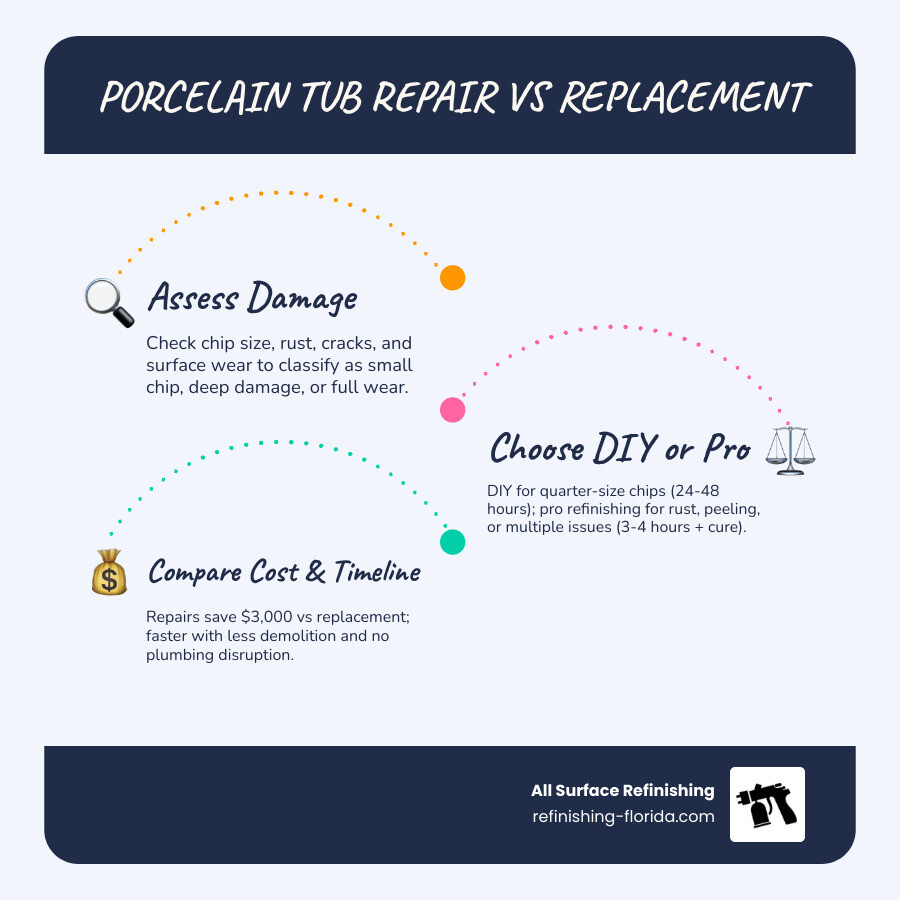
Porcelain tub repairs can save you thousands of dollars and hours of bathroom downtime – here’s a quick summary of your main options:
| Damage Type | Best Solution | Typical Timeframe |
|---|---|---|
| Small chip (quarter-size or less) | DIY repair kit | 24-48 hours cure time |
| Deep chip, rust, or peeling finish | Professional refinishing | 3-4 hours + 24 hours cure |
| Full surface wear or dullness | Professional reglazing | 3-4 hours + 24 hours cure |
| Structural crack or drain damage | Call a pro immediately | Varies |
The average cost of a full bathtub replacement runs around $3,000 – and that doesn’t count the demolition, plumbing work, or days without a usable bathroom. For most Florida homeowners, a repair or refinish is the smarter move.
But here’s the thing: not all porcelain tub damage is the same. A small chip from a dropped bathroom bottle is a very different problem from a cracked, rusting bathtub surface that’s been ignored for years. Knowing the difference – and choosing the right fix – is what this guide is all about.
I’m Frank Hernandez, President of All Surface Refinishing, and I’ve been working hands-on with porcelain tub repairs and surface refinishing across South Florida since 2011. I’ll walk you through exactly how to assess your bathroom tub damage, when to try a small DIY bathtub repair, and when to call in a professional bathtub refinishing team.
Helpful bathtub refinishing resources:
What a porcelain bathtub surface really is
A “porcelain tub” usually means a bathtub made of cast iron or steel with a porcelain enamel coating fused over the metal. That hard, glossy outer layer is what gives the tub its clean shine, stain resistance, and classic bathroom look.
In many older Florida bathrooms, especially in Miami, Fort Lauderdale, Boca Raton, and West Palm Beach homes, we still see heavy cast iron bathtubs with durable enamel finishes. They are built like tanks. Unfortunately, even tanks can chip.
Once that glossy glaze is damaged, water and daily bathroom use can start working against the surface. On cast iron tubs, exposed metal may rust. On steel tubs, chips can spread faster than many homeowners expect.
Why bathroom tubs chip, crack, and go dull
Most bathtub damage starts in very ordinary ways:
- A shampoo bottle or shower rod gets dropped
- A metal drain tool scrapes the bathtub surface
- Harsh cleaners slowly wear down the glaze
- Soap scum and hard water build up over time
- Years of bathroom use make the finish dull and porous
After about 15 years of normal use, porcelain bathtub surfaces often become less smooth, harder to clean, and more likely to hold stains. In Florida bathrooms, humidity can make soap scum and mineral residue even more persistent, which means bathtub surfaces may look older faster if they are not cleaned gently and consistently.
Why porcelain tub repairs often beat bathtub replacement
For many homeowners, porcelain tub repairs are the practical answer.
Here is why:
- Replacement averages about $3,000
- Repair avoids demolition and plumbing disruption
- Most professional refinishing jobs are completed in 3 to 4 hours
- Many tubs are ready to use again within 24 hours
- Professional refinishing can extend fixture life by up to 15 years
There is also the appearance factor. Many professionally refinished bathtubs look so close to new that most people will not notice a difference at a glance. That is a strong argument for keeping a good bathtub instead of tearing it out.
How to Assess Bathroom Tub Damage Before Starting Porcelain Tub Repairs
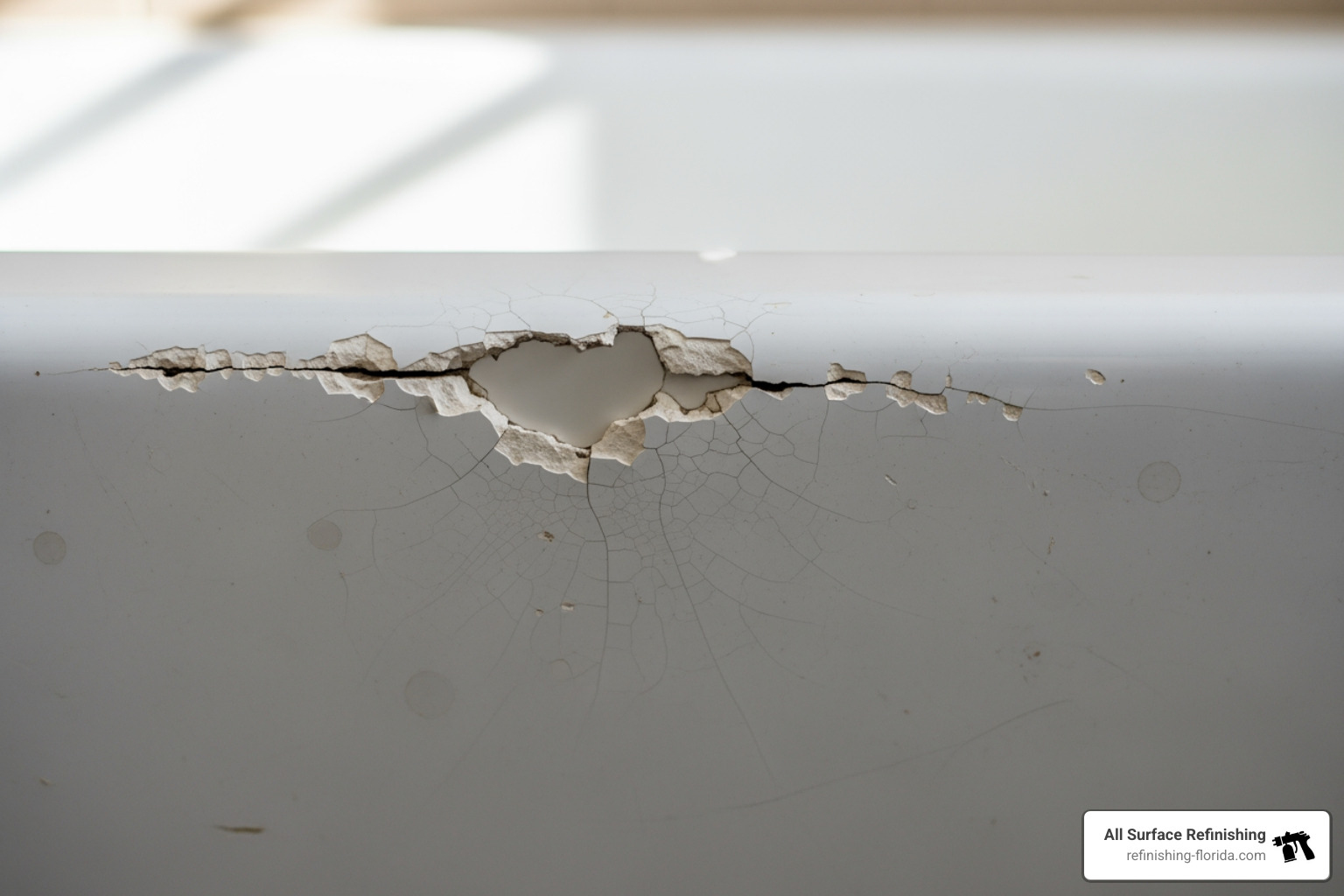
Before you buy a repair kit or schedule a service, figure out what kind of bathtub damage you actually have. This step saves time, money, and the classic DIY regret speech: “Well, it looked smaller yesterday.”
Which porcelain tub repairs are safe for small bathtub damage
DIY usually makes sense when the damage is:
- Smaller than a quarter
- Limited to a surface chip or nick
- Not near the drain or faucet
- Not exposing large areas of rust
- Not part of a peeling or failing old coating
Most DIYers can handle a chip smaller than a quarter if they work carefully, follow cure times, and use the right bathroom tub materials. Hairline scratches and tiny impact chips are the best candidates.
Good bathtub repair kit features include:
- Two-part epoxy or filler
- Color-matched topcoat or glaze
- Fine sandpaper
- Application tools
Choose a kit made for porcelain, enamel, or ceramic bathroom surfaces, not a random all-purpose adhesive from the junk drawer.
When to call a bathtub refinishing pro
Skip the DIY route and call a professional if you see any of the following:
- A deep chip with metal showing
- Rust around the damaged area
- Cracks that feel structural, not just cosmetic
- Damage around the drain
- Multiple chips across the bathtub
- A dull, worn surface over the whole bathtub
- Peeling from a previous coating or painted bathtub finish
These are the situations where spot repair alone often fails or looks obvious. A pro can repair the damaged areas and restore the full bathtub surface so everything matches.
Professional help is also the better choice for older cast iron bathtubs that are still solid but cosmetically tired. Those tubs are often worth saving.
How Florida bathroom conditions affect bathtub repairs
Florida adds a wrinkle to every bathroom project: humidity.
High humidity can slow cure times, especially for epoxy-based bathtub repair materials. In South Florida bathrooms, we recommend:
- Running exhaust fans during and after repair
- Keeping windows open if weather allows
- Avoiding steamy showers nearby during curing
- Keeping the bathroom as dry as possible for the full cure period
If a product says 24 hours, do not treat that as “close enough” at hour 17 just because the tub looks dry. In humid conditions, patience wins.
Step-by-Step Porcelain Tub Repairs for Small Bathtub Chips and Surface Damage
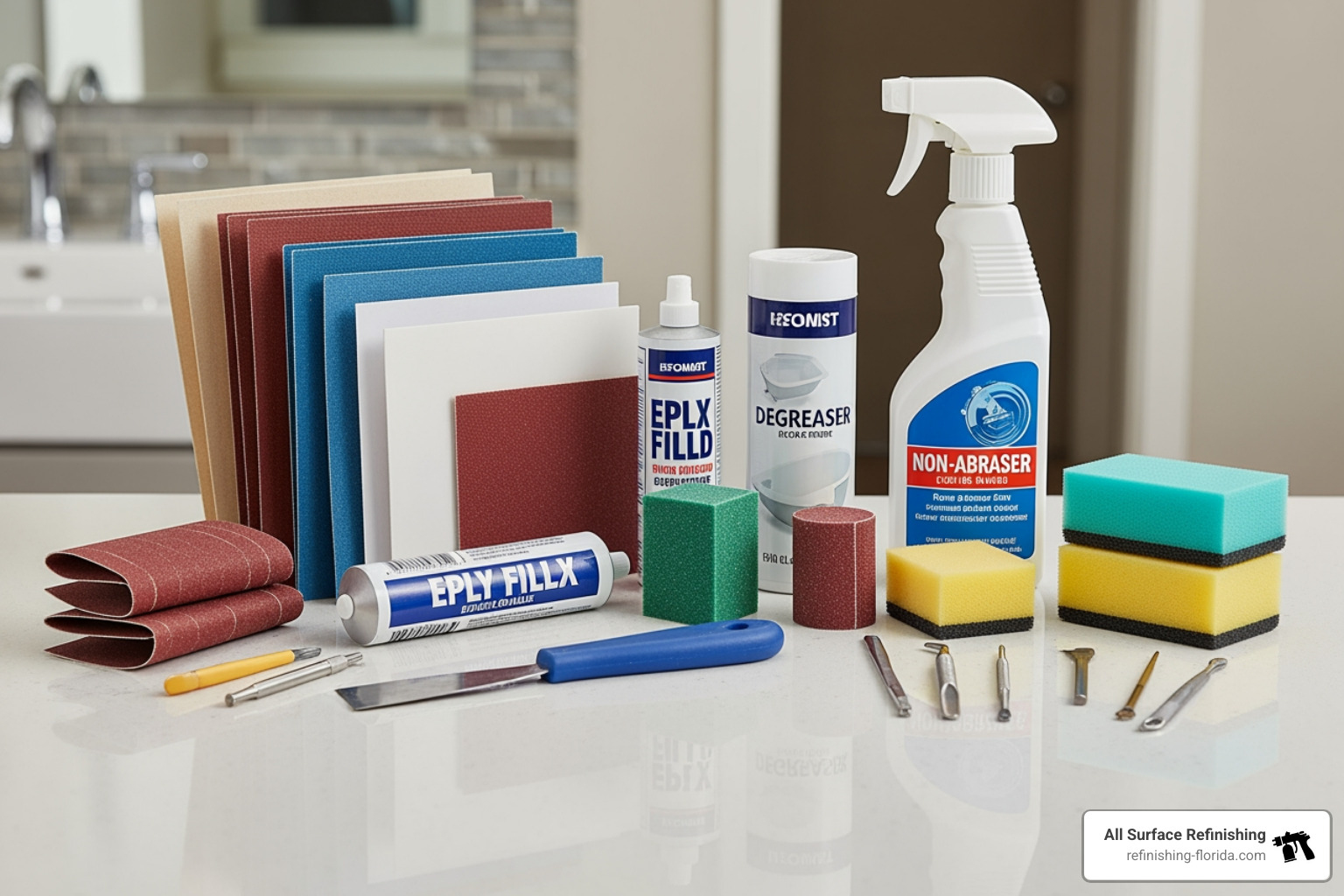
For small bathtub damage, this is the basic process we recommend. Always follow the instructions on the specific bathtub repair kit you buy, but these steps reflect best practice across most porcelain chip repairs.
Bathtub repair supplies checklist:
- Non-abrasive bathroom cleaner or degreaser
- Lint-free cloths
- Painter’s tape
- Two-part epoxy or porcelain filler
- Small applicator or putty knife
- 400-600 grit sandpaper
- 2000 grit wet/dry sandpaper
- Matching glaze or topcoat
- Gloves
- Eye protection
- Good bathroom ventilation
Prep the bathtub surface for porcelain tub repairs
Prep matters more than most people think. If the bathtub surface is not perfectly clean and dry, the repair may not bond well.
- Clean the area with a non-abrasive bathroom cleaner to remove soap scum, oils, and residue.
- Rinse thoroughly.
- Dry with a lint-free cloth.
- Let the area air dry fully.
- Tape around the chip to protect the surrounding bathtub finish.
Do not use abrasive powder cleaners or rough scrub pads. They can scratch the surrounding glaze and make the repair area more obvious.
Fill, level, and sand the bathtub repair
Once the area is clean and dry:
- Mix the two-part epoxy or filler exactly as directed.
- Apply it in thin layers, not one thick blob.
- Press out air pockets.
- Slightly overfill the chip so you can sand it flush later.
- Let it cure as directed.
After the filler hardens:
- Sand gently with 400-600 grit paper until the patch is level.
- Keep checking by touch as well as by sight.
- For the final finish, wet sand lightly with 2000-grit paper if the product instructions allow it.
That “slightly overfill, then sand flush” trick is one of the biggest secrets to a less visible bathtub repair.
Glaze and cure for a seamless bathtub finish
After the filler is smooth:
- Apply the matching glaze or topcoat
- Feather the edges so the patch blends into the original finish
- Allow the coating to cure fully before exposing it to water
Color matching matters. White is not always just white. Many bathroom tubs are off-white, almond, bone, or older warm whites. A mismatch is often more noticeable than the original chip.
Typical cure windows are 24 to 48 hours depending on the material. During that time:
- Keep the bathroom dry
- Do not run showers nearby if possible
- Do not clean the area
- Do not set bottles or bath accessories on the patch
The Secret to a Perfect Cast Iron Tub Glaze Finish
Here is the truth: the secret is not one magic product. It is a combination of preparation, leveling, color match, and restraint. The best repairs are almost boring in how carefully they are done.
How to make porcelain tub repairs blend into a bathtub surface
For a better-looking result:
- Feather the repair edges instead of leaving a sharp patch outline
- Build filler in thin coats
- Sand flush, not below the surface
- Use a high-gloss topcoat that matches the existing sheen
- Judge the repair by both sight and touch
Run your fingertips across the area after sanding. If you can feel a ridge, you will probably see it later too.
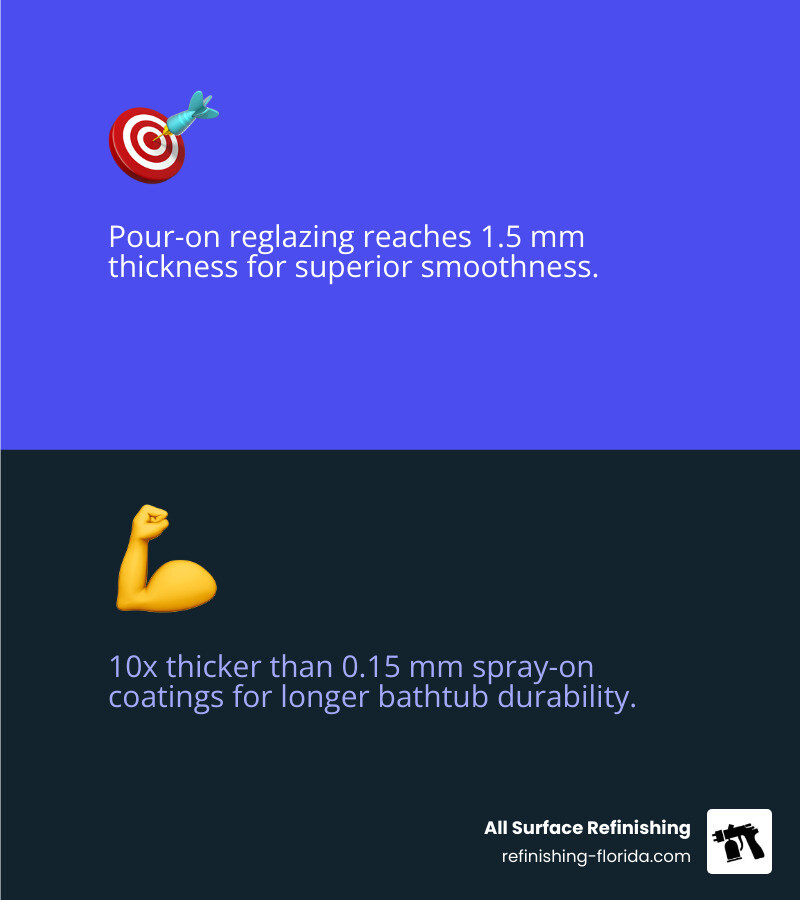
For professional refinishing, coating thickness makes a major difference. Research shows a pour-on reglazing surface can reach about 1.5 mm thick, roughly 10 times thicker than a traditional 0.15 mm spray-on application. That added build helps create a smoother, more durable finish on worn tubs.
Common mistakes that ruin porcelain tub repairs
We see the same problems again and again:
- Incomplete cleaning before filler application
- Applying repair compound too thick
- Sanding with the wrong grit
- Rushing the cure time
- Using bleach or abrasive cleaners afterward
- Trying to patch a tub that really needs full refinishing
- Poor ventilation during curing
Another common mistake is trying to “improve” the shine with wax. Do not wax a bathtub. It can create a slippery surface, and no one wants their relaxing bath to turn into an unplanned stunt scene.
How long a bathtub repair lasts and how to protect it
A small DIY chip repair can last for years if:
- The chip was minor
- The prep was done correctly
- The area cures fully
- The tub is cleaned gently afterward
But not all repairs are equal. Traditional spray-on refinishing often lasts about 1 to 3 years, while thicker professional pour-on refinishing can last 7 to 15 years. For many worn porcelain tubs, full refinishing gives a better long-term result than repeated little patches.
To protect any repaired or refinished bathtub:
- Use mild liquid soap or a non-abrasive cleaner
- Rinse the tub after use
- Wipe down standing water when possible
- Avoid bleach and scouring powders
- Fix dripping faucets quickly
- Use a non-slip mat carefully, and avoid mats with aggressive suction cups if the finish is newly repaired
Spot Porcelain Tub Repairs vs Professional Bathtub Refinishing
Sometimes the right choice is a small repair. Sometimes the right choice is restoring the whole bathtub surface.
| Option | Best For | Surface Build | Time to Complete | Typical Longevity |
|---|---|---|---|---|
| Chip repair | One small chip or scratch | Minimal, localized | Short repair + 24-48 hour cure | Varies by damage and kit |
| Professional bathtub refinishing | Dull, stained, chipped, or multi-damaged tubs | Full coating across entire tub | 3-4 hours + 24 hour cure | Up to 15 years |
What professional bathtub refinishing adds
Professional bathtub refinishing is not just “paint over the problem.” Done properly, it includes:
- Damage repair
- Surface cleaning and preparation
- Smoothing and leveling
- A new continuous finish across the whole bathtub
- A more uniform gloss and color
In many cases, the process is completed in 3 to 4 hours and the tub is ready to use within 24 hours. That is a huge difference compared with replacement, which can involve demolition, haul-away, plumbing adjustments, tile disruption, and schedule delays.
At All Surface Refinishing, we have handled more than 14,000 projects across South and Southwest Florida. For older bathroom tubs, commercial bathroom bathtubs, and hard-to-replace cast iron units, refinishing is often the fastest path back to a clean, like-new look.
Best choice for worn, dull, or multi-damaged bathtubs
If your bathtub has any of the following, full refinishing is usually the better move:
- Overall surface wear
- Widespread dullness
- Multiple chips
- Old staining
- Porous, hard-to-clean glaze
- A previous repair that stands out badly
This is especially common in older homes and condos throughout Miami-Dade County, Broward County, Palm Beach County, Martin County, Saint Lucie County, and nearby coastal communities. Salt air, humidity, and constant bathroom use can wear finishes down over time.
When the whole bathtub looks tired, isolated touch-ups often look exactly like what they are: isolated touch-ups.
Frequently Asked Questions About Porcelain Tub Repairs
Can I repair a chipped porcelain bathtub myself?
Yes, if the chip is small, usually quarter-size or less, and the surrounding bathtub finish is still in good shape. A DIY bathtub repair kit can work well for small nicks and chips if you clean thoroughly, color match carefully, and respect the full cure time.
If the damage is deep, rusty, near the drain, or part of a larger finish failure, call a professional instead.
How much do porcelain tub repairs cost compared with replacing a bathtub?
A full bathtub replacement averages around $3,000, and that often does not include all the side costs. Repairs and refinishing are usually far more budget-friendly because you keep the existing tub in place and avoid major bathroom demolition.
That is one reason refinishing is often considered 75% to 80% less expensive than replacement. The exact price depends on the tub condition, the amount of damage, and whether you need a small repair or complete surface restoration.
Can an old cast iron bathtub be refinished instead of replaced?
Yes. In fact, old cast iron bathtubs are often excellent candidates for refinishing because the structure is usually still solid even when the glaze is worn out.
If the tub was previously coated, a professional may need to strip the old material before refinishing again. But in many cases, a quality cast iron bathtub can be restored instead of removed.
That is good news, because moving a cast iron tub out of a bathroom is nobody’s idea of a relaxing weekend.
Conclusion: Get a Longer-Lasting Bathroom Tub Finish in Florida
The best porcelain tub repairs start with an honest assessment. Small bathtub chips can often be handled with a careful DIY repair. But if your bathroom tub is dull, peeling, rusting, or damaged in multiple places, professional refinishing usually gives you a better-looking and longer-lasting result.
For Florida homeowners, that matters. A repaired or refinished bathtub can save money, avoid replacement headaches, and keep a solid cast iron tub in service for years longer.
If you are in Miami, Fort Lauderdale, Boca Raton, West Palm Beach, Port Saint Lucie, Vero Beach, or surrounding South Florida communities, All Surface Refinishing can help you decide whether your tub needs a spot repair or a full restoration. Learn more about our bathtub refinishing services.
When the goal is a smooth, glossy, factory-look finish, the real secret is simple: use the right fix for the right damage, and do not rush the glaze.
