Understanding the Baseline Bathtub Replacement Cost in 2026
When planning a bathroom update, understanding the baseline expenses helps set clear expectations. While a basic tub insert at a home improvement store might carry an affordable sticker price, the tub itself represents only a portion of the final investment. Nationally, the average installation runs roughly $3,500, with comprehensive benchmark data on bathtub installation highlighting that labor and site preparation routinely represent the majority of overall project billing.
The material of your tub sets the starting line for your budget. Below is an overview of standard material price ranges and typical project totals:
| Bathtub Material | Unit Material Cost | Average Installed Cost (Basic Scope) | Weight Class |
|---|---|---|---|
| Fiberglass | $200 – $1,000 | $1,200 – $2,800 | Very Lightweight |
| Standard Acrylic | $500 – $2,000 | $1,800 – $3,800 | Lightweight |
| Cast Iron | $400 – $3,500+ | $2,800 – $6,500+ | Extremely Heavy (300–500 lbs) |
| Freestanding Acrylic | $700 – $2,500 | $2,500 – $5,000 | Moderate |
| Walk-In / Accessible | $2,000 – $8,000+ | $3,500 – $12,000+ | Heavy |
Beyond the fixture itself, labor expenses vary based on contractor specialty and trade licensing. General bathroom demolition, hauling old fixtures, and landfill disposal fees add $150 to $450 to an estimate. When a project transitions from an uncomplicated alcove replacement to a complete bathroom tear-out, labor and secondary material requirements quickly multiply.
5 Key Factors That Drive Up Bathtub Project Expenses
A straightforward tub swap assumes perfect alignment, intact walls, solid framing, and modern plumbing valves. However, bathrooms undergo daily moisture stress, and dismantling fixtures often reveals unexpected complications. Here are the five most significant drivers behind rising replacement budgets.
1. Tub Material and Weight: Impact on Bathtub Replacement Cost
The physical makeup of your new fixture heavily impacts project labor. While lightweight acrylic and fiberglass tubs are straightforward to transport through standard doorways and upstairs hallways, heavy materials like enameled cast iron or stone composite introduce severe installation hurdles.
Cast iron fixtures retain heat exceptionally well, but an empty tub can easily weigh between 300 and 500 pounds. Once filled with water and an occupant, total weight can exceed 800 to 1,000 pounds concentrated over a compact footprint.
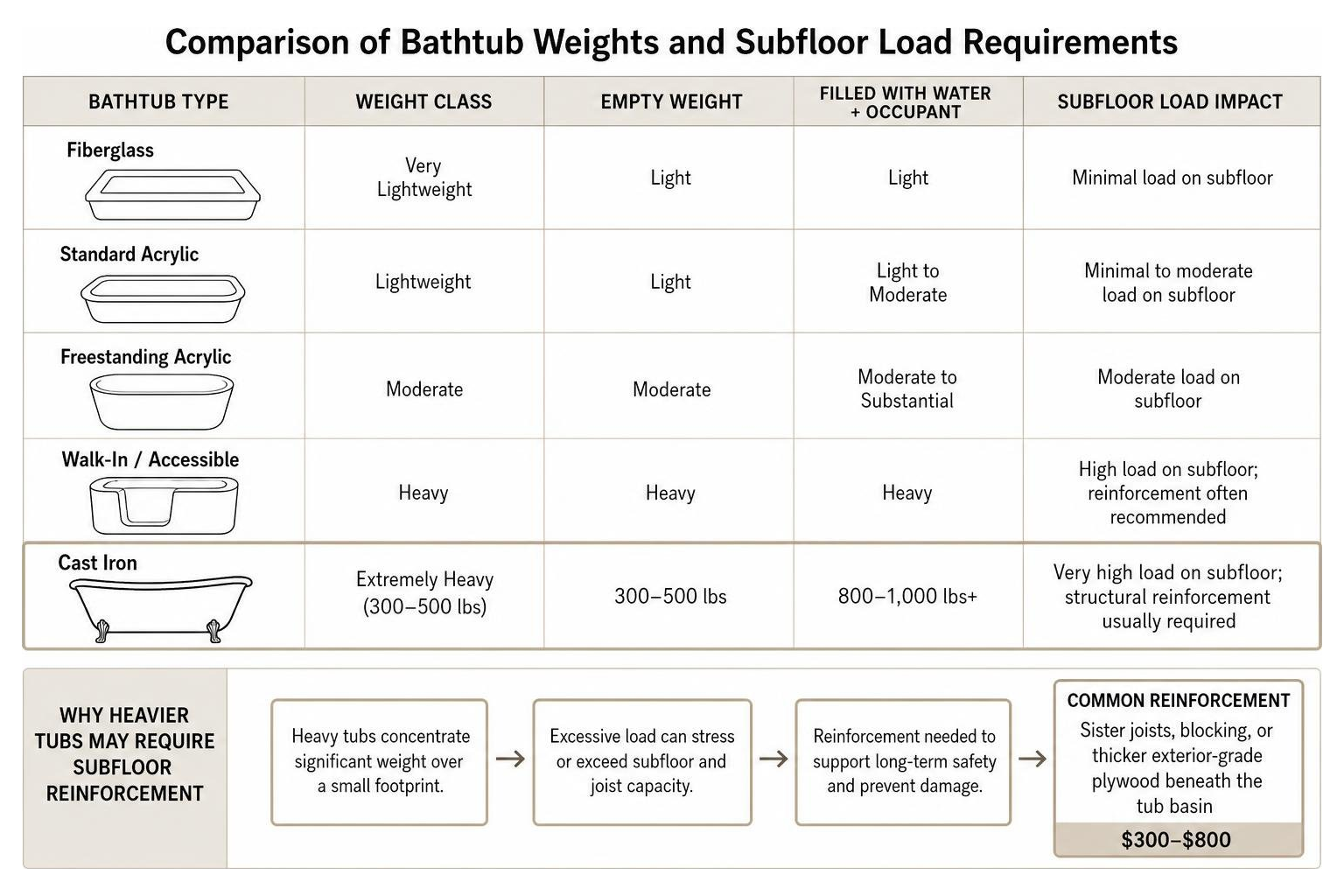
This concentration of weight often requires structural framing adjustments:
- Subfloor Reinforcement: Installing sister joists, blocking, or thicker exterior-grade plywood beneath the tub basin costs between $300 and $800.
- Maneuvering Labor: Navigating a multi-hundred-pound basin through narrow residential corridors requires additional crew members, increasing hourly labor totals.
For homeowners who love the rock-solid feel of their original cast iron tub but hate its chipped, stained surface, reviewing a cost breakdown of tub reglazing options reveals that restoring the factory finish in place preserves high-end material benefits without paying for structural reconstruction.
2. Hidden Water Damage and Subfloor Rot
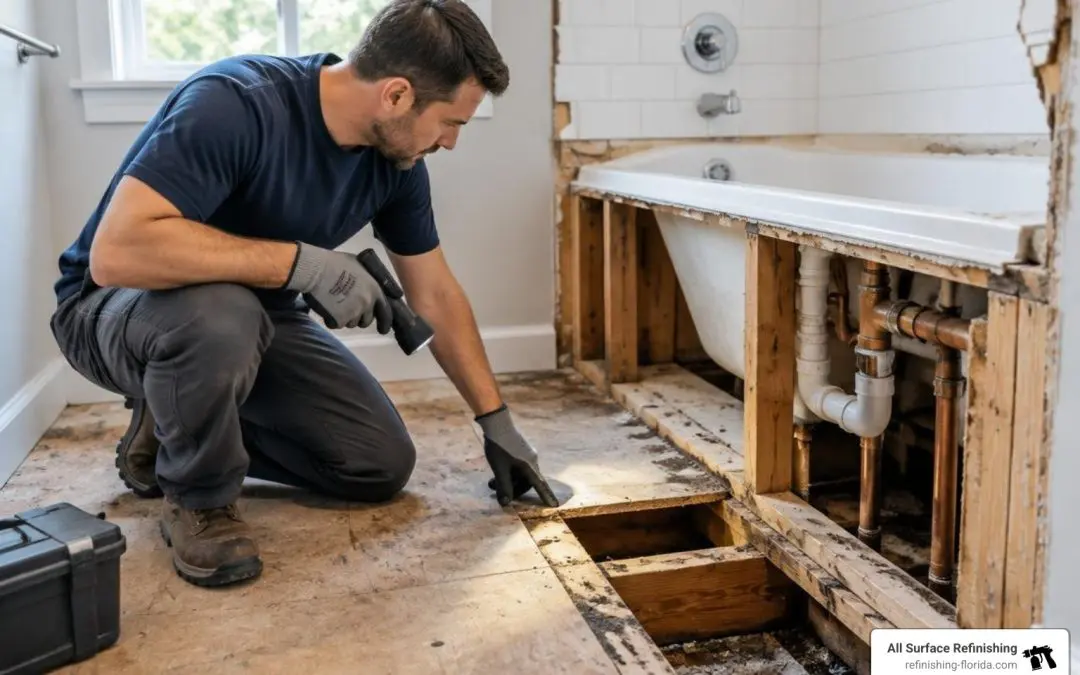
The moment an old tub is pulled away from the wall framing, hidden moisture issues can come to light. According to regional installation cost benchmarks, roughly 25% to 30% of tub replacements uncover some degree of subfloor rot, mildew, or framing degradation.
Because moisture frequently travels behind deteriorated caulk beads and hairline tile cracks, underlying plywood subflooring softens over time. Repairing these compromised areas is mandatory before setting a rigid new basin:
- Subfloor Patching & Framing Stabilization: Replacing rotted sections of OSB or plywood runs $200 to $1,200 depending on the spread of the damage.
- Mold Remediation: Addressing active fungal growth inside closed wall cavities can add $500 to $1,500.
Ignoring deteriorated framing can cause a new tub to flex underfoot. A flexing basin breaks perimeter seals, loosens plumbing connections, and eventually cracks the tub floor.
3. Plumbing Alterations and Drain Relocation
Connecting a new fixture to existing rough-in plumbing is rarely a plug-and-play operation unless the new tub matches the old tub’s exact dimensions, drain orientation, and overflow height.
When switching bathtub styles—such as moving from a standard 60-inch left-hand alcove to a centered freestanding soaking tub—licensed plumbers must alter water supply lines and waste pipes.
Key plumbing line items include:
- Drain & Trap Realignment: Relocating a subfloor P-trap and waste line typically costs $400 to $1,200.
- Pressure-Balancing Valve Upgrades: Modern building codes require anti-scald pressure-balancing mixing valves, which add $250 to $600 including hardware and copper soldering.
- Supply Line Relocation: Running hot and cold lines through floors or framing adds $300 to $800 in specialized labor.
Plumbing tasks require licensed trade professionals, where labor rates typically range from $45 to $200 per hour depending on technical complexity.
4. Wall Surround Demolition and Tile Repairs
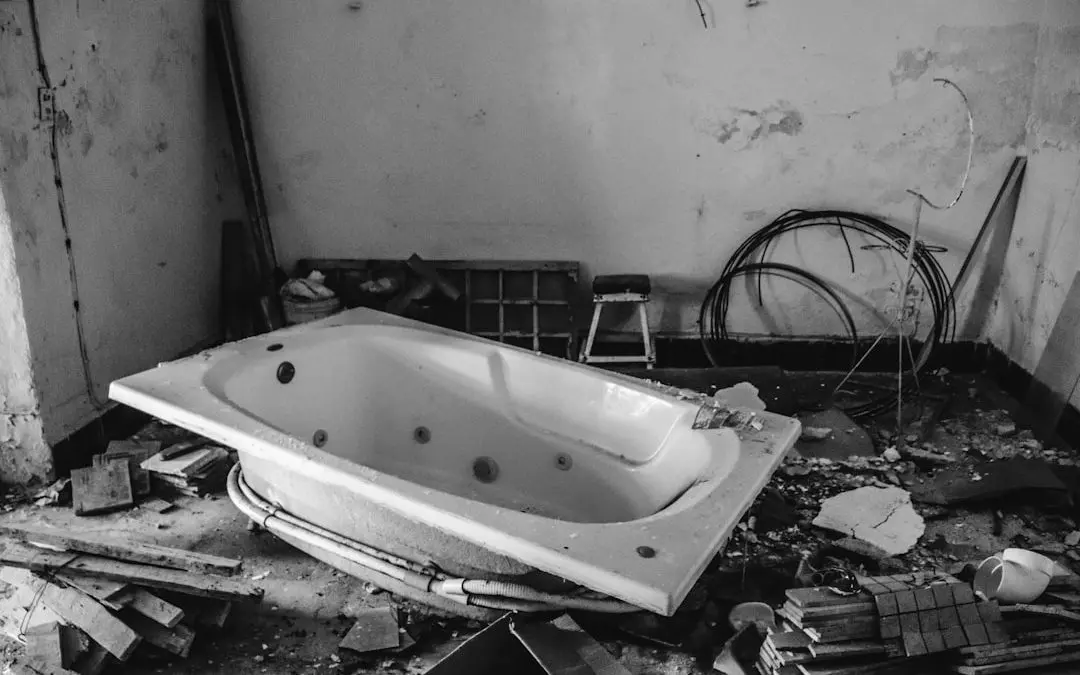
A bathtub is anchored directly to the wall studs via an integrated tiling flange. Because wall tiles overlap this flange to create a waterproof barrier, removing an alcove tub without disturbing the surrounding tilework is virtually impossible.
Removing an old tub usually requires tearing out at least the bottom one to two rows of tile. Because matching existing tile shades and grout patterns is difficult, many projects evolve into full surround rebuilds:
- Demolition and Substrate Removal: Tearing out deteriorated drywall or outdated plaster down to the bare studs.
- Waterproof Backer Board: Installing cementitious backer board (such as Durock or HardieBacker) to provide a stable, moisture-resistant base.
- Waterproofing Membranes: Applying continuous waterproof sheet membranes or liquid topical barriers (such as RedGard or Kerdi) to prevent wall cavity leaks.
- Tile Installation: Re-tiling a three-wall alcove surround with ceramic, porcelain, or natural stone runs from $1,000 to $3,500+ depending on tile selection and layout pattern.
What began as a simple tub purchase often turns into a comprehensive masonry and carpentry renovation.
5. Permitting, Code Compliance, and Accessibility Upgrades
Municipal building codes ensure home renovations meet strict safety, sanitation, and electrical standards. When a bathroom renovation involves opening wet walls, moving supply lines, or adding dedicated electrical circuits, building permits are legally required.
- Permits: Municipal plumbing and building permits typically cost between $50 and $500 depending on project valuation.
- Electrical Upgrades for Specialized Tubs: Installing a whirlpool, air jetted, or walk-in tub with heating elements requires a dedicated GFCI-protected electrical circuit installed by a licensed electrician, adding $400 to $1,000.
- Safety & Accessibility Fixtures: Upgrading an alcove for aging-in-place involves blocking reinforcement for grab bars ($150–$350), installing low-threshold entries, or retrofitting ADA-compliant hardware.
Smart Alternatives to Avoid High Bathroom Remodel Bills
Given the secondary expenses associated with demolition, plumbing adjustments, and tile reconstruction, full tub replacement is not the only way to modernize a bathroom. When an existing fixture is structurally sound but looks worn, stained, chipped, or dated in color, surface refinishing provides a high-end visual upgrade without the mess of demolition.
Evaluating the structural condition of your bathroom fixture helps determine whether full tear-out is necessary. By comparing tub reglazing vs replacement, property owners can weigh the advantages of saving thousands of dollars while avoiding weeks of renovation downtime.
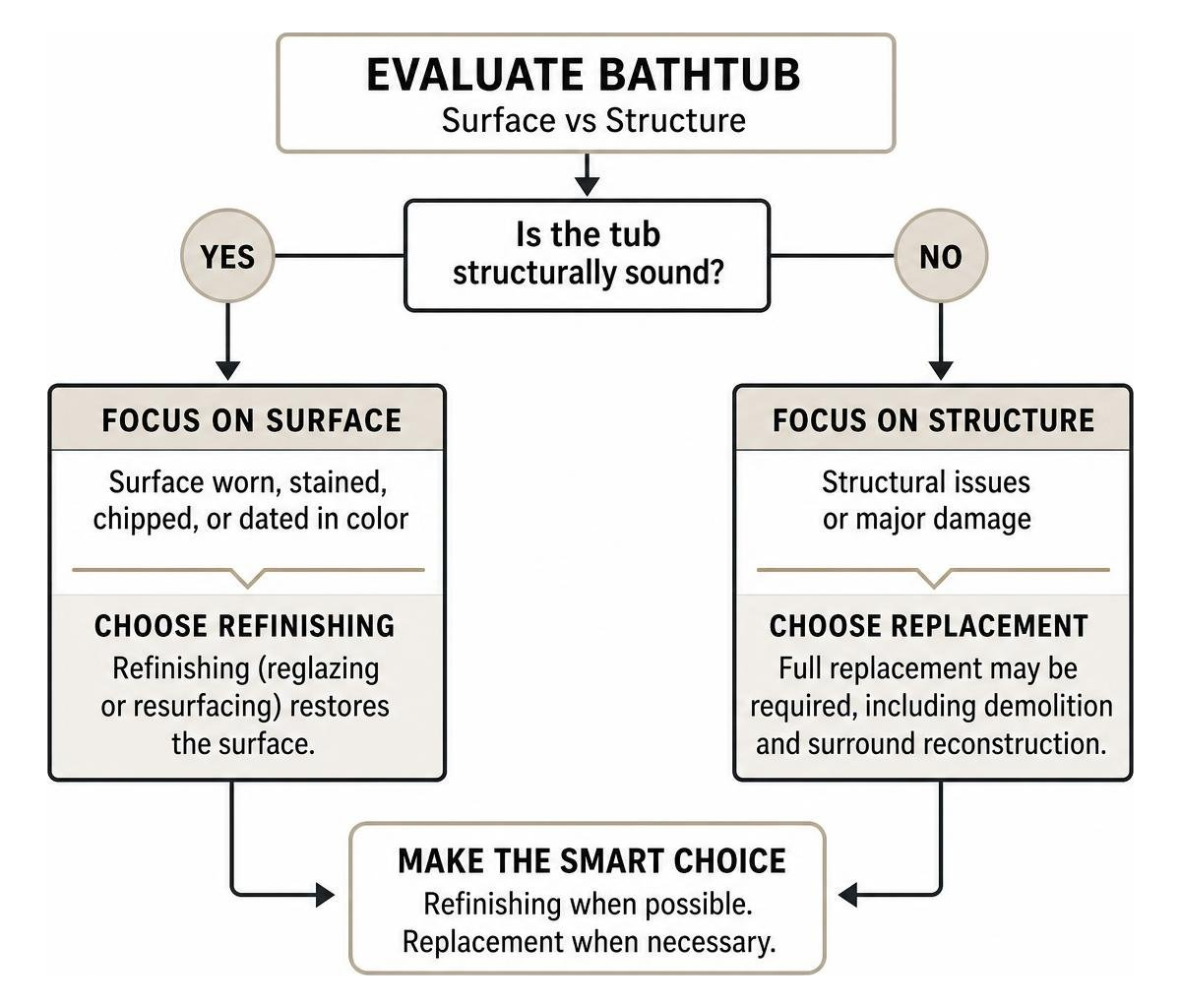
Evaluating Resurfacing vs Full Bathtub Replacement Cost
Refinishing (also known as reglazing or resurfacing) involves a multi-step chemical bonding process. Technicians mechanically etch the original porcelain, fiberglass, or enamel surface, repair surface scratches or chips, apply high-performance bonding primers, and finish with durable acrylic polymers.
Homeowners exploring options can review our comprehensive bathtub refinishing guide to explore process details. Looking closely at the cost to resurface your old tub shows that professional restoration averages $400 to $650—a fraction of the $3,200 to $5,900+ required for complete tear-outs and tile repairs.
Frequently Asked Questions About Bathtub Replacement
How long does a full bathtub replacement project take?
A full bathtub replacement project typically takes between 2 to 5 full working days, provided no hidden rot is uncovered. The demolition stage and structural inspections occupy the first day, followed by plumbing alterations, subfloor reinforcement, tub setting, backer board installation, waterproofing, and tilework. Once grouting and silicone caulking are complete, a 24- to 48-hour curing window is required before using the shower or tub. In contrast, professional refinishing is completed in 3 to 5 hours and is ready for use within 24 hours.
Does replacing a bathtub increase home resale value?
A complete midrange bathroom remodel returns approximately 60% to 75% of its cost at resale. However, replacing a bathtub on its own as an isolated project typically recoups less (roughly 30% to 50%), because buyers value complete, unified bathroom spaces over an updated tub sitting inside older tilework. If the existing tub functions well, refreshing its finish provides a clean, modern aesthetic that shows well to prospective buyers without cutting into renovation equity.
Can I save money by refinishing instead of replacing my tub?
Yes. Refinishing saves property owners between 70% and 85% compared to the total cost of replacement. By keeping the existing tub, plumbing rough-ins, subfloor, and tile surround undisturbed, you bypass demolition charges, waste disposal, licensed plumbing alterations, and wall reconstruction. A professionally refinished tub provides a factory-grade high-gloss finish that extends the fixture’s lifespan by 10 to 15 years with proper maintenance.
Conclusion
A bathtub update does not have to turn into an expensive, chaotic construction project. While full replacement is essential when a basin is severely cracked or when altering your bathroom’s floor plan, the costs associated with tile demolition, plumbing moves, and framing repairs add up fast.
At All Surface Refinishing, we bring over 30 years of hands-on experience and more than 14,000 completed projects to every home. We help property owners achieve clean, high-gloss bathroom transformations without the mess and high expense of tear-outs. Whether you need your bathtub, shower tile, vanity, or cabinets updated, our skilled team delivers clean, lasting results in hours.
Before you spend thousands on demolition, explore what our professional bathtub refinishing services can do for your bathroom. Contact All Surface Refinishing today to request a free, no-obligation project quote.
