2026 Tub Reglazing Cost Estimate: National Averages and Regional Variations
Understanding realistic pricing starts with looking at benchmark numbers. Across the United States in May 2026, the baseline cost to reglaze a bathtub ranges from $727 to $1,473 for standard residential applications. However, local economies, labor markets, and property characteristics create significant shifts in final pricing.
To see how these costs compare across different project scopes and markets, review the table below:
| Project Scope / Region | Typical Cost Range | Average Cost | Notes |
|---|---|---|---|
| National Baseline (Standard Tub) | $727 – $1,473 | $1,100 | Basic mid-range work, standard 60-inch alcove tub |
| High-Density Metro (e.g., NYC) | $1,200 – $2,800 | $2,000 | Reflects $8–$18/sq. ft. and urban logistics |
| Florida Metro (Standard Alcove) | $750 – $1,350 | $1,050 | Standard porcelain or fiberglass refinishing |
| Extensive Repairs & Custom Finishes | $1,350 – $3,400 | $2,375 | Includes severe rust remediation, structural patches, premium urethane |
Major metropolitan centers often have the highest pricing nationwide. For example, NYC tub reglazing cost data highlights how dense urban settings experience project totals between $1,200 and $2,800 due to higher wage floors, stringent building requirements, and travel challenges. Learning how much it costs to resurface your old tub helps homeowners avoid surprises when evaluating line-item quotes.
Standard Alcove Tubs vs. Cast Iron and Premium Models
The style and material composition of your bathtub heavily dictate the final price. A standard 60-inch alcove tub made of porcelain-enameled steel or acrylic is the simplest to resurface. The technician only needs to spray the inner basin and the visible front apron.
In contrast, heavy cast iron tubs, vintage clawfoot basins, and deep soaking units require substantial extra effort:
- Cast Iron Alcoves: Require more extensive thermal cleaning, aggressive etching, and heavy-duty primers to bond securely with the dense substrate.
- Freestanding Clawfoot Tubs: Both the interior basin and the exterior shell must be stripped, prepped, and sprayed, essentially doubling the surface area.
- Whirlpool & Jacuzzi Systems: Masking jet fittings, air controls, and intricate contours adds notable labor time.
When planning a restoration budget, checking the porcelain tub refinishing cost for specific vintage fixtures prevents underestimating the specialized preparation required.
Urban Surcharges and Travel Fees Across Metros
Dense urban centers frequently introduce logistical fees that do not appear on standard suburban job sheets. In high-density settings, surcharges of $50 to $300 are commonly added for parking fees, high-rise service elevator scheduling, and extended travel times.
Throughout South Florida—from coastal high-rises in Miami Beach, Fort Lauderdale, and Aventura to communities across Boca Raton, West Palm Beach, and Coral Gables—logistics also play a role. Navigating parking structures, security clearances, and service elevators requires extra coordination. Consulting a guide to local bathtub refinishing costs and services ensures you account for these regional nuances.
How Tub Size and Configuration Affect Your Estimate
Beyond material type, the physical dimensions and installation style of your bathtub directly influence labor hours and material consumption. A compact 54-inch tub in a guest bathroom requires less coating product and fewer masking materials than a 72-inch soaking tub or a large garden tub in a primary suite. Freestanding tubs with exposed exterior surfaces demand complete coverage on all sides, while alcove installations only require finishing the interior basin and front apron.
Corner tubs, drop-in tubs with surrounding decking, and tub-shower combinations also introduce additional masking and edge-detailing work. Technicians must protect adjacent tile, glass enclosures, and plumbing fixtures before spraying, which adds time to the project. When requesting a tub reglazing cost estimate, provide the exact tub dimensions, installation style, and any surrounding materials so the contractor can calculate surface area accurately and avoid mid-project change orders.
Labor, Materials, and Duration: How Professionals Price Projects
A high-quality reglazing project is heavily weighted toward skilled labor. While top-tier industrial coatings represent a portion of the price, meticulous preparation, chemical etching, and professional spray application demand dedicated craftsmanship.
A thorough understanding of bathtub refinishing costs reveals that labor typically accounts for 65% to 75% of the total quote.
How Labor Rates Shape Your Tub Reglazing Cost Estimate
Professional surface refinishers bill at hourly rates between $80 and $180 per hour depending on region, insurance overhead, and crew size. A straightforward reglaze typically takes a single technician or two-person crew between 2 and 5 hours of on-site labor. Complex restorations involving structural fiberglass repairs or extensive stripping can extend project duration to 8 to 10 hours.
Reviewing what professional tub reglazing services charge demonstrates that paying for experienced labor prevents premature peeling, bubbling, and overspray.
Surface Prep and Repairs in a Tub Reglazing Cost Estimate
The final finish is only as reliable as the foundation beneath it. Applying coatings over dirt, soap scum, or structural defects will cause premature failure. Surface preparation and repairs add anywhere from $150 to $900 to the total bill, depending on existing damage:
- Chemical Stripping: Removing a previous, failed DIY paint or glaze layer ($100–$250).
- Rust Remediation: Grinding out oxidation around the drain, neutralizing metal, and applying rust-inhibiting compounds ($75–$200).
- Chip and Crack Repairs: Filling deep gouges, crazing, or spider cracks with reinforced polyester or epoxy fillers ($100–$350).
- Fiberglass Inlay Installation: Reinforcing cracked, spongy tub bottoms to restore structural integrity ($250–$500).
Homeowners can accurately evaluate repair requirements to gauge project scopes before requesting bids.
Ventilation, Masking, and Job Site Protection
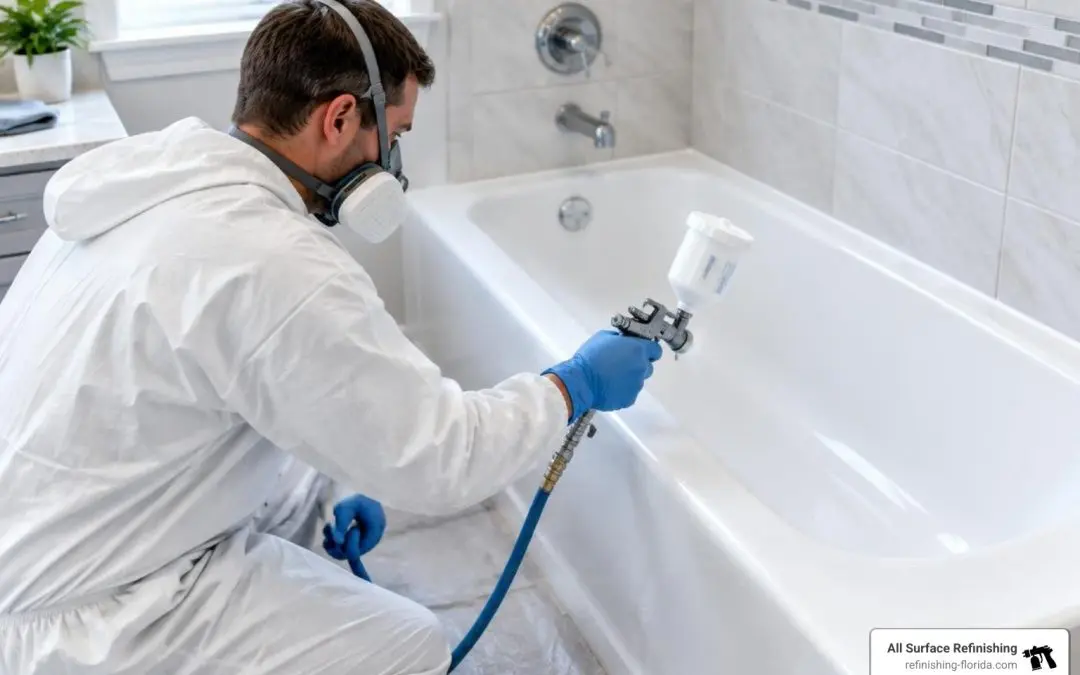
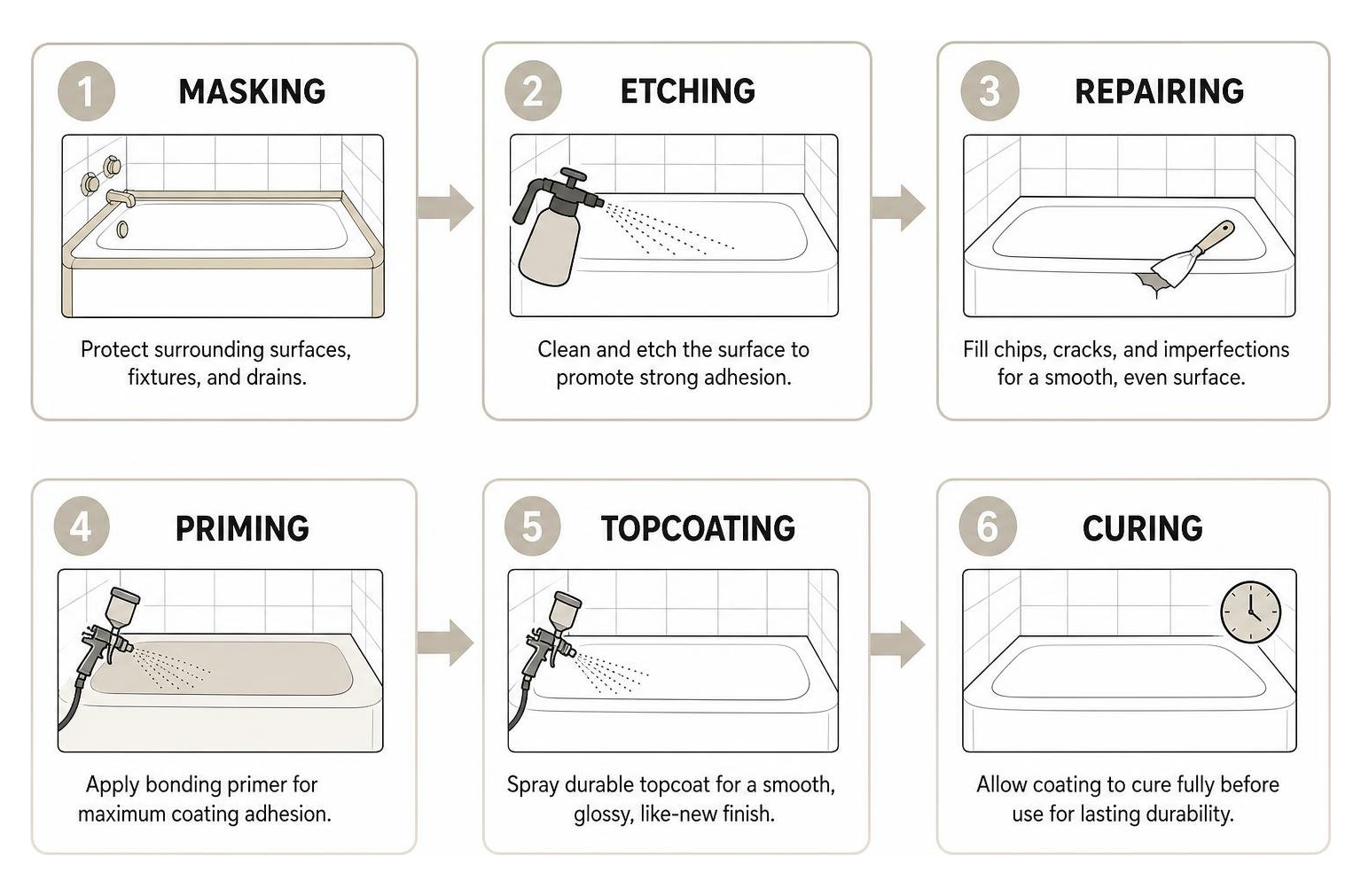
Professional refinishers treat your bathroom as a controlled work environment. Before any coating is sprayed, technicians seal off the work area with plastic sheeting and painter’s tape to protect surrounding tile, vanities, mirrors, and flooring from overspray. High-output exhaust fans are positioned to channel airborne fumes and particulates outdoors, maintaining safe air quality throughout the application and curing process.
This containment phase typically adds 30 to 60 minutes to the project timeline but is essential for achieving clean, crisp edges and preventing damage to adjacent surfaces. Contractors who skip or rush this step often leave behind a fine mist of coating residue on bathroom fixtures, which is difficult to remove once cured. A detailed tub reglazing cost estimate should always include line items for masking materials, plastic sheeting, ventilation equipment, and site protection so you can compare quotes on equal footing.
What Is Included in a Standard Quote vs. Extra Fees
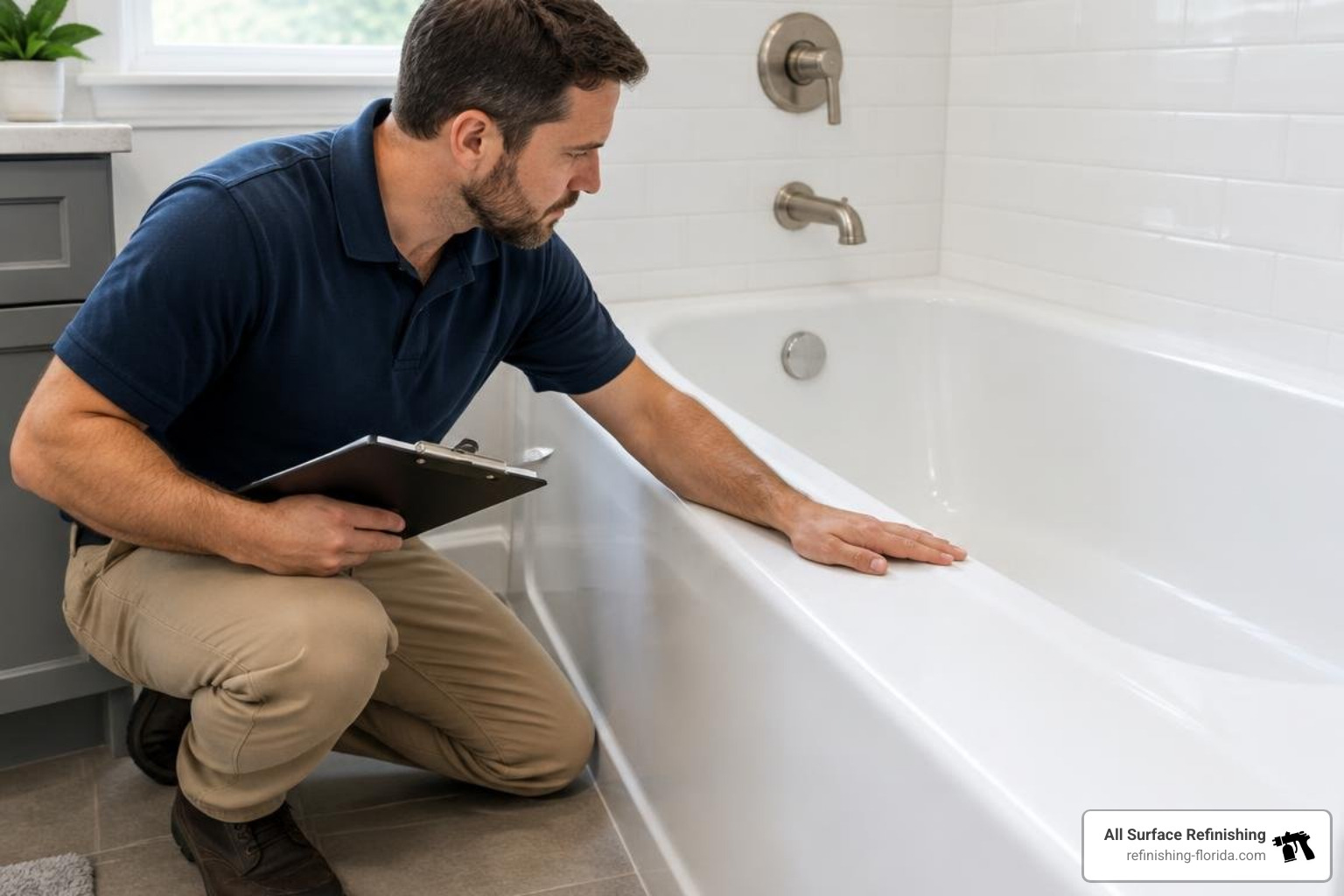
A comprehensive reglazing estimate should clearly distinguish standard line items from optional or conditional surcharges. When comparing quotes, knowing whether tub reglazing is worth it will help you confirm that the estimate covers every required phase.
A standard professional quote typically covers:
- Complete masking and plastic shielding of surrounding tile walls, vanity, mirrors, and flooring.
- High-output exhaust fan ventilation to channel airborne overspray and chemical fumes outdoors.
- Acid or alkaline chemical etching of porcelain or mechanical sanding of fiberglass/acrylic.
- Application of specialized adhesion-promoting bonding agents.
- Multiple coats of high-solids primer and premium topcoat.
- Site clean-up and post-application inspection.
Common exclusions or add-on costs include:
- Replacing old drain assemblies or overflow plates.
- Removing heavy silicone caulk around the perimeter ($50–$100).
- General contractor supervision markups (13%–22% if managed through a general builder).
- Specialty custom colors beyond standard white and biscuit finishes.
Material Grades and Premium Topcoat Finishes
The formulation of the resurfacing product directly influences both aesthetic finish and overall longevity. Examining the real price of a shiny tub highlights the clear difference between economy coatings and professional-grade materials:
- DIY Epoxy Kits ($50–$150 materials only): Readily available at retail stores, but prone to yellowing, brush marks, and peeling within 12 to 24 months.
- Commercial Acrylic Polyurethanes: High gloss, strong chemical resistance, and flexible bonding suitable for everyday use.
- Advanced Aliphatic Acrylic Urethanes: The industry gold standard, offering unmatched color retention, UV stability, high scratch resistance, and an authentic porcelain-like appearance.
High-grade materials justify their cost by backing up warranties that protect against peeling or premature discoloration for 1 to 3 years.
Long-Term Maintenance and Coating Longevity
A professionally reglazed tub delivers an expected lifespan of 8 to 15 years when maintained correctly. Maximizing return on investment requires simple, regular care. As detailed in our guide on budgeting for bathtub and shower reglazing, maintenance costs are minimal:
- Clean with gentle formulas: Use non-abrasive liquid detergents and microfiber cloths. Never use scouring powders, abrasive pads, or harsh bleach solutions.
- Avoid standing water: Ensure the drain operates smoothly so water does not pool continuously around the basin base.
- Maintain perimeter caulk: Inspect and re-caulk joints every 2 to 3 years to prevent moisture intrusion behind the coating edge.
Understanding Warranty Terms and Service Guarantees
Before signing a contract, review the warranty language carefully. Reputable refinishing companies in South Florida typically offer written guarantees covering adhesion failure, peeling, and premature discoloration for one to three years. Some contractors extend coverage to five years for premium aliphatic urethane systems applied to properly prepared surfaces.
Warranty protection is only as valuable as the company standing behind it. Ask whether the contractor carries general liability insurance, how long they have operated in your area, and whether they maintain a portfolio of completed bathtub refinishing projects. A slightly higher tub reglazing cost estimate from an established, insured professional often delivers better long-term value than a bargain quote from an unlicensed operator with no verifiable track record.
Frequently Asked Questions About Bathtub Reglazing Estimates
How much does it cost to reglaze a bathtub in 2026?
The estimated national average to reglaze a standard bathtub in 2026 falls between $727 and $1,473. Projects requiring deep rust removal, extensive crack repairs, or high-end urethane systems generally range from $1,350 to $2,400. To eliminate financial guesswork, request a real tub refinishing price estimate based on your exact bathroom layout and tub condition.
Is it cheaper to reglaze a bathtub or replace it?
Reglazing is significantly cheaper than a full replacement. Demolishing an existing bathtub often requires cutting drywall, breaking surrounding tile, hiring a plumber to reconfigure piping, and paying disposal fees. Total replacement easily runs between $3,000 and $8,000, meaning reglazing can save homeowners 30% to 50% or more while eliminating days of messy demolition.
How long does a professional reglazing job last?
With routine cleaning using non-abrasive products and proper aftercare, a professional reglazing application lasts 8 to 15 years. Reputable refinishing contractors back their craftsmanship and coating adhesion with 1- to 3-year commercial warranties.
Can any bathtub be reglazed, or are some too damaged?
Most bathtubs can be successfully reglazed, including porcelain-enameled steel, cast iron, fiberglass, and acrylic models. However, tubs with severe structural cracks, extensive water damage behind the walls, or completely failed substrates may require reinforcement before coating. A professional inspection will determine whether fiberglass inlay installation, crack filling, or other repairs can restore the surface to a refinishable condition.
How soon can I use my bathtub after reglazing?
Most professional refinishing companies recommend waiting 24 to 48 hours before using the tub. The coating needs time to cure fully and achieve maximum hardness. During this period, avoid touching the surface, keep the bathroom ventilated, and do not allow water to pool in the basin. Your contractor will provide specific aftercare instructions based on the coating system used.
Conclusion
Reglazing restores faded, chipped, or outdated fixtures to a bright, factory-like shine without the disruptive mess and high expense of total demolition. By understanding how tub dimensions, surface repairs, and coating grades impact project pricing, you can confidently budget for your renovation.
At All Surface Refinishing, we bring over 30 years of hands-on surface refinishing expertise and more than 14,000 completed transformations to homeowners and commercial property managers across South Florida. From Miami-Dade, Broward, and Palm Beach counties to Martin County and Saint Lucie County, our team delivers high-quality craftsmanship that revitalizes your bathroom quickly and affordably.
Ready to transform your bathtub? Contact our team today or learn what it costs to reglaze a tub in 2026 to schedule your personalized estimate.
