
Layout Strategies for a Balanced Black and White Kitchen
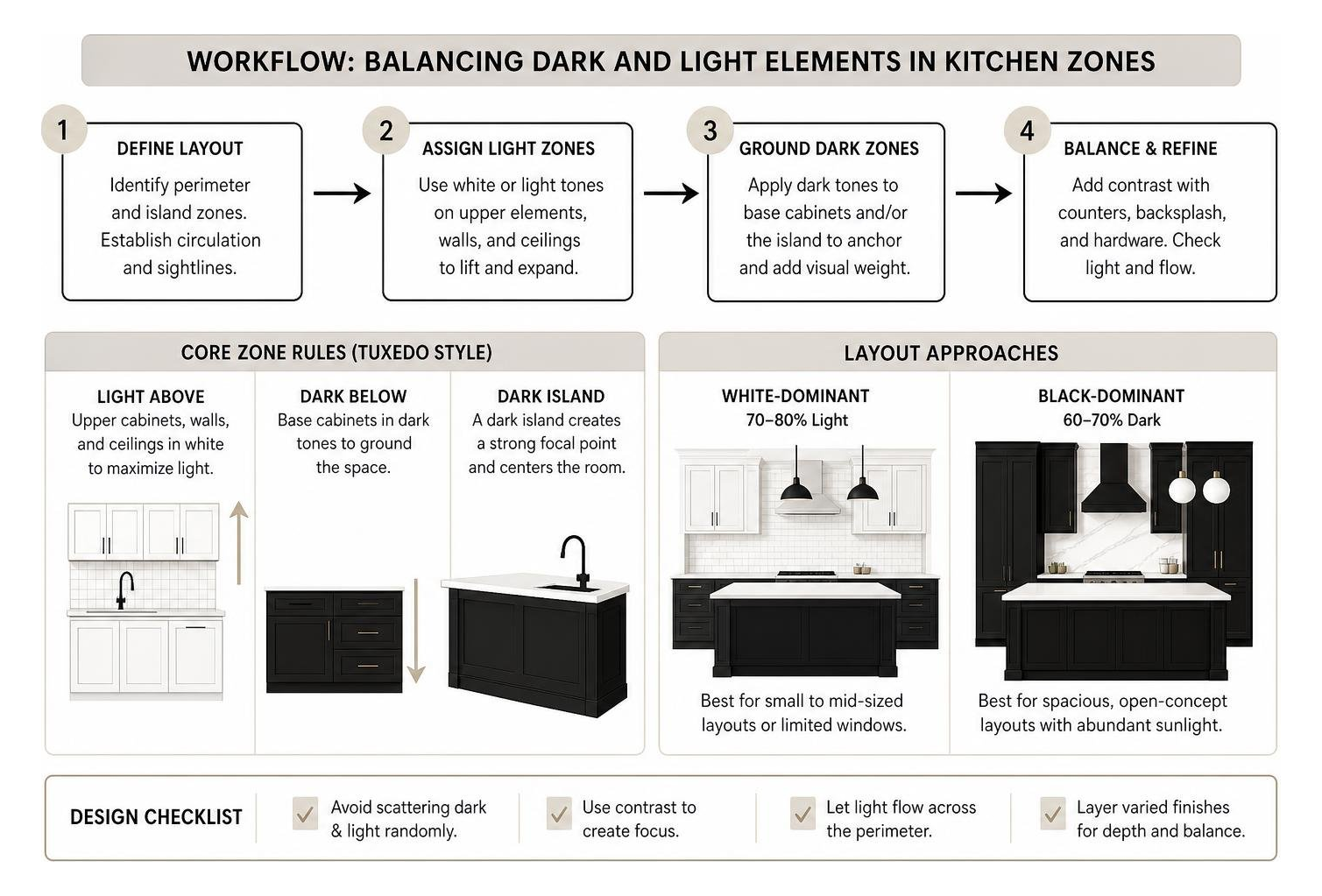
Achieving visual harmony in a high-contrast room comes down to architectural balance. In interior design, black operates as an anchor that adds visual weight, while white acts as a lift that expands space and bounces light. When planning your layout, avoid scattering dark and light elements randomly across the room, which can create visual clutter. Instead, establish clear zones that draw the eye naturally.
One of the most reliable layouts is the classic tuxedo style. By positioning darker cabinetry along the base of the perimeter and keeping upper storage crisp and light, you establish a solid foundation without making the ceiling feel lower. If your layout features a central island, painting or refinishing that island in charcoal or jet black turns it into a striking centerpiece, especially when contrasted with bright perimeter surfaces.
Designing a Small Black and White Kitchen
Working with a compact floor plan requires deliberate control over where dark tones sit. Because dark surfaces absorb light, installing heavy black wall cabinets in a tight space can make the room feel cramped and cave-like.
To maintain an open, airy feeling:
- Elevate the light: Keep ceilings, walls, and upper cabinetry in soft white or light cream to maximize natural reflection.
- Ground the perimeter: Confine deeper charcoal or midnight tones to lower base cabinets to anchor the room.
- Streamline cabinet transitions: When updating existing cabinetry, knowing how to change kitchen cabinet color like a pro ensures smooth coverage that brightens vertical planes.
- Eliminate visual bulk: Swap out heavy enclosed upper boxes for open floating shelves to display monochrome ceramics and let perimeter light flow freely across the room, as seen in this inspiring Black and White Small Kitchen Redo – Before and After Photos | Apartment Therapy feature.
White Dominant vs. Black Dominant Layouts
Deciding whether to lean predominantly light or dark depends on your home’s architectural lighting, room dimensions, and overall style goals.
| Design Attribute | White-Dominant Kitchen (70-80% Light) | Black-Dominant Kitchen (60-70% Dark) |
|---|---|---|
| Best Room Profile | Small to mid-sized layouts, limited windows | Spacious, open-concept floor plans with abundant sunlight |
| Visual Atmosphere | Airy, clean, Scandinavian or modern farmhouse | Moody, dramatic, upscale luxury, or industrial chic |
| Cabinet Distribution | White perimeter & uppers; black accents or island | Black full-height pantry walls, base runs, and dark hoods |
| Lighting Needs | Standard ambient and task lighting | High-output multi-tier lighting to offset light absorption |
| Maintenance Profile | Shows food splashes and coffee drips quickly | Highlights white dust, flour spills, and water spots |
A white-dominant layout offers timeless versatility, serving as a bright canvas where matte black hardware, iron pendant frames, and dark stone work surfaces create crisp focal points. On the other hand, a black-dominant space creates intimate luxury. If you have floor-to-ceiling windows or sliding patio doors, dark cabinetry paired with light veined stone provides rich depth without feeling enclosed.
Material and Finish Selection for Cabinets, Countertops, and Backsplashes
Selecting the right materials prevents high contrast from feeling flat. The secret lies in layering varied sheens and organic patterns across your primary work surfaces.

Cabinet Finishes and Resurfacing Options
The sheen of your cabinetry determines how light interacts with the room:
- Matte Black: Modern matte finishes absorb glare and provide a velvety, sophisticated look. High-quality matte surfaces resist smudges and daily wear better than high-gloss coatings.
- Satin & Semi-Gloss White: A soft satin sheen on white cabinetry reflects ambient light without creating harsh reflections.
- Professional Coatings: Applying durable industrial coatings through proven refinishing methods yields factory-grade durability without the disruption of a tear-out. Reviewing a practical guide to painting kitchen cabinets professionally highlights the importance of proper degreasing, bonding primers, and spray application.
Backsplash and Countertop Pairings
Your horizontal and vertical surfaces tie the entire color palette together:
- Engineered Quartz: Engineered white quartz featuring subtle charcoal or slate veining bridges the gap between light and dark elements. It provides stain resistance and non-porous durability for busy cooking spaces.
- Natural Soapstone and Honed Granite: Deep gray soapstone or honed absolute black granite introduces an organic, matte work surface that softens bright cabinetry.
- Dimensional Tile: Rather than basic flat tiles, consider handmade zellige ceramic tiles, full-height quartz slab backsplashes, or a classic white subway tile laid in a herringbone pattern with contrasting medium-gray grout.
- Surface Restoration: If your existing counters are structurally sound but visually dated, exploring our countertop refinishing resurfacing complete guide offers an efficient way to achieve a high-end stone or solid-color aesthetic at a fraction of replacement costs.
Textures, Warm Accents, and Fixtures to Avoid a Sterile Look
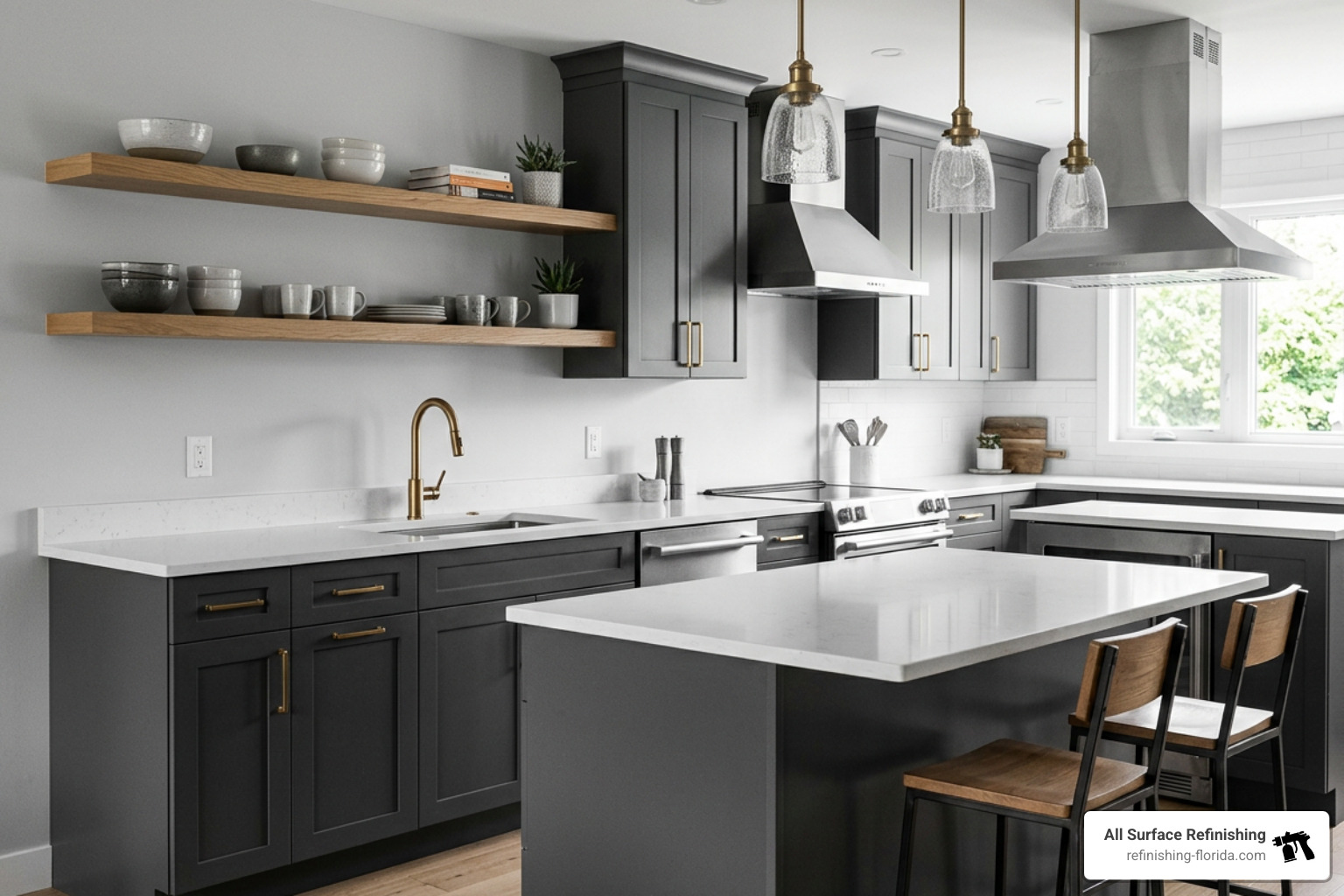
Without tactile variation, a monochrome kitchen can lean clinical. Introducing warm undertones and natural materials brings welcoming comfort into the space.
Adding Warmth to a Black and White Kitchen
To soften sharp contrasts, weave natural textures into the perimeter and dining zones:
- Natural Wood Accents: Incorporate white oak floating shelves, walnut counter stools, or exposed ceiling beams. The organic grain breaks up crisp lines.
- Warm Wall Tones: Instead of stark, cool blue-whites on the drywall, opt for warm greige, soft alabaster, or creamy off-white tones. For practical layout inspiration on blending warm neutrals with high contrast, explore Why Does Beige, Black & White Work So Well in the Kitchen? (And How to Copy It).
- Tactile Materials: Woven rattan pendant shades, ribbed glass pantry inserts, and leather-upholstered barstools introduce natural warmth.
- Living Greenery: Potted herbs on the windowsill, trailing pothos on open shelving, or a large vase of olive branches add instant life.
Selecting Timeless Hardware and Layered Lighting
Fixtures act as the jewelry of the kitchen, adding polish and personality:
- Warm Brushed Brass & Gold: Gold and brushed brass hardware add instant warmth, contrasting against dark drawer fronts and pairing naturally with white stone.
- Polished Nickel & Chrome: For homeowners seeking a classic, transitional look, polished nickel offers warm undertones that resist passing trends.
- Matte Black Fixtures: Matte black pulls and faucets create an intentional, architectural outline when set against white backsplashes and cabinetry.
- Layered Illumination: Combine under-cabinet task lighting (to illuminate dark countertops), overhead recessed cans calibrated to a warm 2700K–3000K temperature, and statement pendant fixtures over the island. Proper lighting ensures dark surfaces stay rich and dimensional rather than shadowy.
Maintenance and Durability Considerations for High-Contrast Surfaces
Every finish has unique maintenance characteristics that affect day-to-day care:
- Dark Matte Cabinets: While matte dark finishes conceal smudges better than high-gloss laminates, natural skin oils can leave marks near pulls. Clean them regularly using a damp microfiber cloth and pH-neutral, non-abrasive soap.
- White Countertops: Engineered stone and refinished quartz surfaces resist stains, but acidic liquids like red wine, tomato sauce, and coffee should be wiped promptly to avoid surface discoloration.
- Hard Water Prevention: Dark granite composite sinks and matte black faucets can show chalky calcium and mineral deposits. Wipe them dry with a soft cloth after heavy use to maintain their clean finish.
- Long-Term Surface Care: Preserving the factory-grade finish on refinished cabinetry and countertops involves avoiding harsh abrasive pads, bleach, and ammoniated cleaners. Understanding the fundamentals outlined in cabinet resurfacing 101 will help you protect your investment for years to come.
Frequently Asked Questions About Monochrome Kitchens
How do you prevent a monochrome kitchen from feeling cold?
Integrate organic textures such as natural oak or walnut accents, warm-toned paint on un-cabineted walls, woven rattan barstools, and brushed brass or warm bronze hardware. Calibrate your LED lighting between 2700K and 3000K to cast a soft, welcoming glow across both light and dark surfaces.
Are matte black cabinets harder to keep clean than glossy cabinets?
Matte black surfaces are generally easier to maintain daily than high-gloss finishes because they diffuse light rather than highlighting every smudge. However, because they can show hand oils and flour dust, wiping high-touch areas with a damp microfiber cloth keeps them looking pristine.
What is the most timeless hardware finish for high-contrast kitchens?
Brushed brass, unlacquered brass, and polished nickel remain the most enduring hardware choices. They introduce warmth that balances the crisp contrast between dark cabinetry and bright work surfaces without looking dated.
Conclusion
A well-executed black and white palette brings enduring style, structural balance, and practical versatility to any home. Whether you choose a bright, light-filled layout with crisp charcoal accents or an intimate, dark-grounded space softened by natural wood and warm metals, this contrast offers lasting design appeal.
At All Surface Refinishing, we help homeowners update their spaces with cost-effective, high-quality transformations. Serving South Florida communities from Miami and Fort Lauderdale to Boca Raton, West Palm Beach, Stuart, and Vero Beach, our specialized resurfacing solutions revitalize your existing surfaces without the cost and mess of full demolition. Explore our professional cabinet refinishing services to see how we can bring your monochrome kitchen vision to life.
