
Types and Configurations of Kitchen Wall Cabinets
When planning your layout, selecting the right door profile and cabinet configuration determines both the functionality and visual flow of your cooking space. Upper kitchen cabinetry comes in several primary designs:
- Solid Door Cabinets: The traditional workhorse of upper kitchen storage. Solid doors conceal mismatched tableware, bulk dry goods, and everyday clutter behind sleek flat-panel or classic Shaker profiles.
- Glass Front Cabinets: Designed with transparent or frosted glass inserts, these units break up long, heavy runs of solid cabinetry. They create visual depth, making smaller kitchens feel larger while displaying decorative glassware and heirloom ceramics.
- Horizontal Lift-Up Cabinets: Often utilizing upward-swinging hydraulic hinges, horizontal units work wonderfully in contemporary or minimalist designs, especially over appliances or prep zones.
- Open Shelf Cubbies: Integrated open units, such as decorative wine racks or spice cubbies, provide quick access to daily kitchen essentials while introducing contrasting accent colors or wood tones. Modular units like the METOD wall cabinet with shelves/2 doors, white/Havstorp brown-beige, 60×60 cm – IKEA Sweden blend closed storage with clean, Scandinavian styling.
- Integrated Upper Drawers: Specialized upper units feature shallow lower drawers beneath the main cupboard section, perfect for small kitchen tools, tea collections, or spice packets.
Standard vs Specialized Kitchen Wall Cabinets
Not all upper kitchen storage units share the same dimensions or functions. Standard wall cabinets are engineered for accessible reach above countertops, while specialized bridge units are built specifically to accommodate large kitchen appliances and proper ventilation clearances.
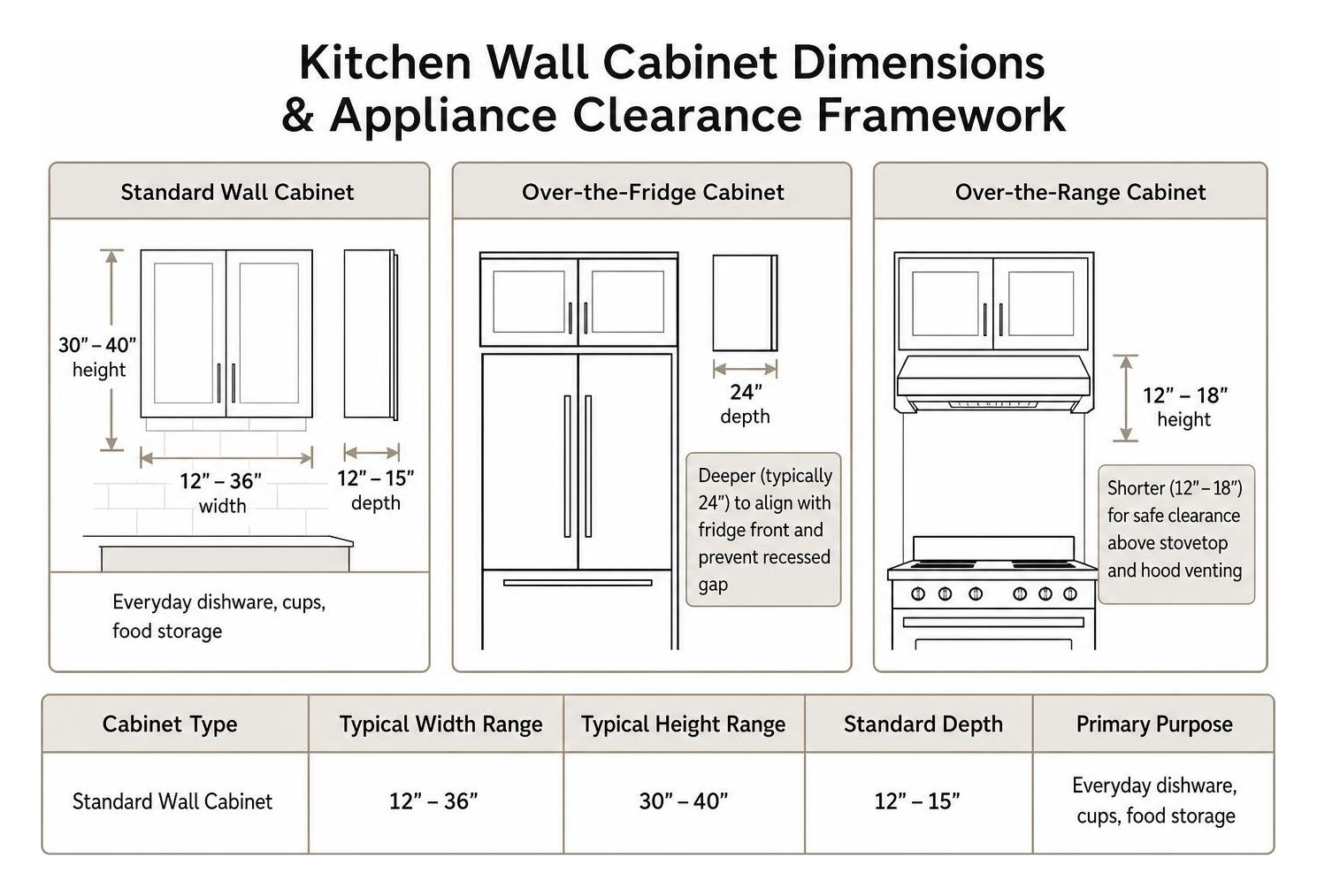
Over-the-fridge units require deeper dimensions (typically 24 inches deep) to remain flush or align proportionally with the appliance front, preventing a recessed, hard-to-reach gap. Conversely, over-the-range cabinets are shorter in height (12 to 18 inches) to ensure safe vertical clearance above stovetops and provide dedicated space for exterior range hood venting pathways.
| Cabinet Type | Typical Width Range | Typical Height Range | Standard Depth | Primary Purpose |
|---|---|---|---|---|
| Standard Wall Cabinet | 12″ – 36″ | 30″ – 40″ | 12″ – 15″ | Everyday dishware, cups, food storage |
| Over-the-Fridge Bridge | 30″ – 36″ | 12″ – 24″ | 24″ | Deep seasonal storage, large kitchen trays |
| Over-the-Range Cabinet | 30″ – 36″ | 12″ – 18″ | 12″ – 15″ | Range hood housing, upper clearance |
| Open Accent Cubby | 9″ – 15″ | 30″ – 40″ | 12″ – 15″ | Spices, cookbooks, decorative display |
Corner Wall Cabinets and Carousel Storage Solutions
Kitchen corners can quickly turn into dead zones if not planned properly. To maximize corner accessibility, several upper cabinet solutions exist:
- Blind Corner Units: These extend straight across the wall corner, leaving one section tucked behind an adjacent cabinet. While cost-effective, reaching the deep back corner requires intentional organization.
- Diagonal Corner Units: Featuring a 45-degree angled front door, these cabinets create an open visual transition between perpendicular walls.
- Corner Units with Rotating Carousels: Upper carousel inserts spin 360 degrees, bringing canned goods, spices, and small bowls directly to your fingertips without forcing you to dig into deep corners.
- 90-Degree Easy-Reach Cabinets: Equipped with bi-fold doors, these units open fully across both wall planes to provide unhindered access to every interior shelf.
Standard Sizing, Depths, and Placement Guidelines
Achieving proper ergonomic balance between your lower counters and upper cabinetry is vital for comfort and daily efficiency. Standard upper cabinet widths range from 12 to 36 inches in 3-inch increments. Height profiles generally fall into 15, 20, 30, or 40-inch variations depending on your ceiling height and whether you prefer crown molding or a flush ceiling look.

While traditional upper cabinets measure 12 inches deep, modern modular lines frequently utilize 15-inch depths. That extra three inches easily accommodates oversized dinner plates, serving platters, and specialty glassware that struggle to fit into shallower older boxes.
Standard placement guidelines dictate mounting upper cabinets 18 inches above the finished kitchen countertop, providing sufficient headroom for countertop appliances like espresso machines and stand mixers.
Mounting and Installing Kitchen Wall Cabinets
Safe, level installation requires sturdy hardware and reliable structural support:
- Suspension Rail Systems: Widely adopted in modern cabinetry lines such as the SEKTION wall cabinet with 2 doors, white/Vallstena white, 24x15x30″ – IKEA , heavy-duty metal suspension rails are anchored directly into wall studs first. Individual cabinet frames then hang securely onto the rail, allowing micro-adjustments for perfect horizontal leveling.
- Direct Stud Anchoring: For traditional face-frame cabinets, units are secured using cabinet screws through the internal hanging rail directly into the center of wall studs.
- Snap-On Hinges with Integrated Dampers: Modern European hinges clip onto mounting plates without tools and feature built-in soft-close dampers that stop loud door slamming completely.
Ideal Items to Store in Upper Cabinetry
Upper kitchen cabinetry is best reserved for lighter, high-frequency items that benefit from eye-level access:
- Daily Dinnerware: Everyday ceramic plates, cereal bowls, and saucers.
- Glassware and Drinkware: Coffee mugs, water glasses, wine stems, and tumblers.
- Baking Ingredients and Spices: Organized spice racks, flour canisters, sugar jars, and seasonings.
- Lightweight Pantry Goods: Cereals, boxed pasta, tea tins, and snacks.
Pro tip: Heavy cast iron skillets, Dutch ovens, and bulky small appliances belong in lower base cabinets to avoid straining your shoulders or overloading upper shelf brackets.
Materials, Finishes, and Durability Options
Choosing the right cabinet core and finish directly affects durability, moisture resistance, and cleaning ease:
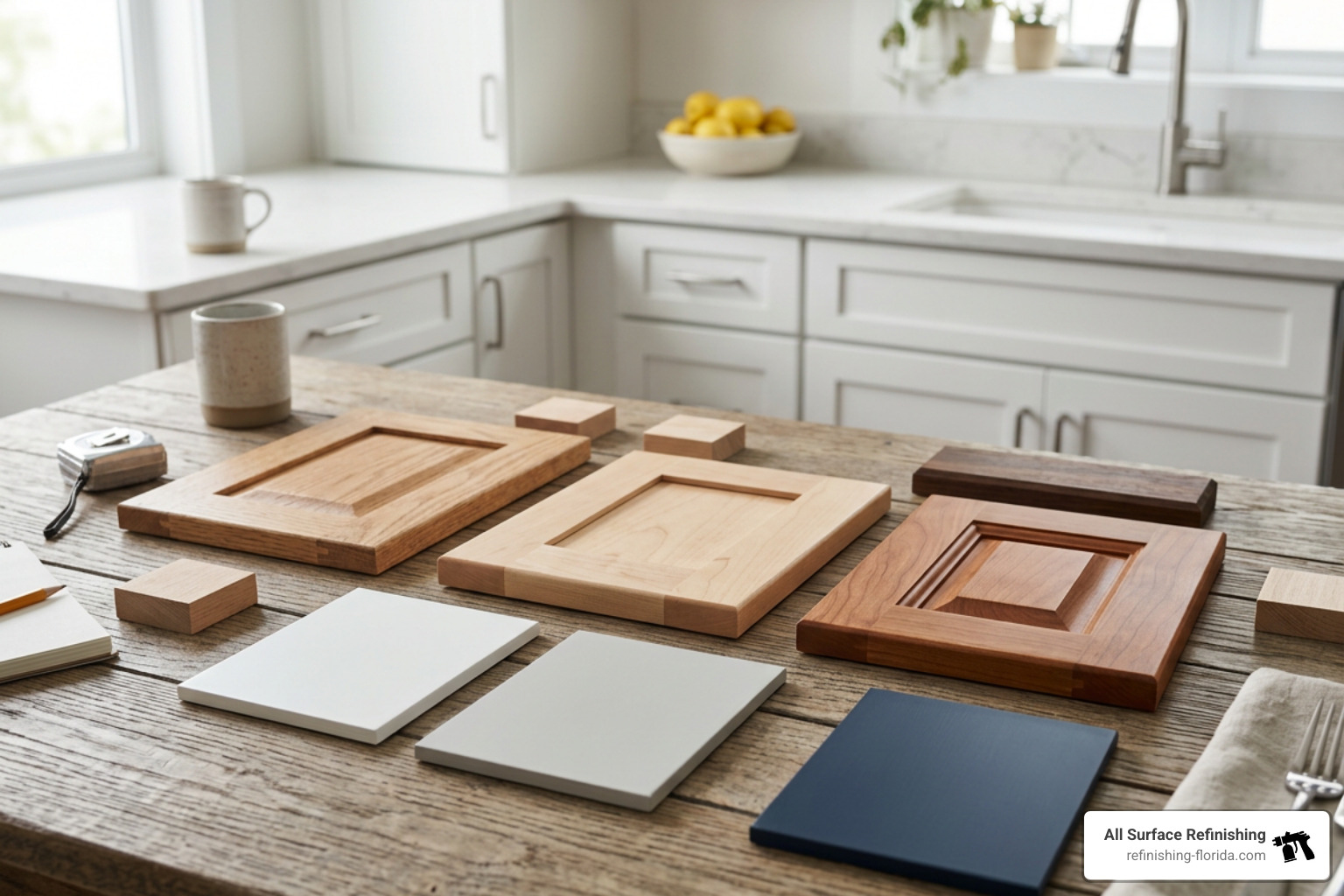
- Particleboard Cores: Engineered from pressed wood particles coated in resin. When sealed with durable melamine foil, particleboard offers an affordable, flat, and stable core for modern cabinetry.
- Plywood Cabinet Boxes: Constructed from layered wood veneers glued in alternating grain directions. Plywood provides superior screw-holding strength and excellent structural stability.
- Solid Wood Frames: Often used on traditional face-frames and door fronts (maple, oak, or cherry), solid wood delivers natural beauty but expands and contracts with climate fluctuations.
- Wood Veneers: Real hardwood sliced paper-thin and bonded to stable cores, offering the warmth of authentic timber grain. For a deeper breakdown of veneer styles and care, read our guide to kitchen cabinet veneer sheets and materials.
Comparing Box Construction, Veneer, and Finishes
Finishes determine how your kitchen reflects ambient light and stands up to daily cooking grease. Classic matte white, crisp light gray, warm beige, and natural oak remain top choices for South Florida homeowners seeking bright, airy interiors.
For those wanting to update outdated timber finishes without replacing sturdy cabinet boxes, our professional cabinet color change service offers a fast transformation. You can also explore trendy color pairings in our overview of painted kitchen cabinet ideas.
Routine maintenance for high-quality painted or foil-wrapped cabinets simply requires wiping surfaces with a soft microfiber cloth dampened with warm water and mild dish soap. Never use abrasive scrub pads or harsh bleach cleaners.
Pricing Breakdown and Top-Rated Models
Cabinet replacement costs vary widely based on materials, brand tier, and hardware options:
- Budget Stock Units ($70 – $200 per cabinet): Off-the-shelf flat-pack options (such as entry-level melamine boxes or utility cabinets found on Amazon, like the Prepac Elite or Yaheetech series) provide affordable utility for laundry areas or rental properties.
- Semi-Custom / Modular Cabinets ($200 – $450+ per cabinet): Systems like the IKEA SEKTION line (consistently rated 4.7 to 4.8 stars across hundreds of verified owner reviews) combine high-end soft-close mechanisms, versatile sizing, and durable 25-year limited warranties.
- Full Custom Cabinets ($500 – $1,200+ per linear foot): Built-to-order hardwood and custom plywood cabinetry designed for unique ceiling heights and complex kitchen footprints.
If you are budgeting your remodel, take a look at our detailed breakdown on how much new kitchen cabinets actually cost to compare new installations against resurfacing.
Frequently Asked Questions about Kitchen Wall Cabinets
What are the most common dimensions for upper kitchen cabinets?
Standard widths range from 12 to 36 inches in 3-inch increments. Typical heights run 15, 30, 36, or 40 inches tall, with standard depths ranging between 12 and 15 inches.
How do suspension rail systems work for hanging upper cabinets?
A continuous steel suspension track is leveled and screwed securely into the wall studs. The cabinet boxes are then hooked onto the rail using internal brackets, allowing precise horizontal adjustments before locking into place.
What is the best way to clean and maintain cabinet finishes?
Wipe cabinet faces regularly using a soft microfiber towel with warm water and a small drop of pH-neutral dish detergent. Dry immediately with a clean towel to protect edges from prolonged moisture exposure in humid coastal climates.
Conclusion
Choosing the right upper kitchen cabinetry comes down to balancing proper proportions, convenient everyday access, and durable surface finishes. Whether you are reconfiguring your layout with modern 15-inch deep boxes or seeking to refresh your existing kitchen aesthetic, making intentional material and color selections will elevate the heart of your home.
If your existing cabinet boxes are structurally sound, you do not need to spend tens of thousands of dollars on full demolition. With over 30 years of experience and more than 14,000 projects completed, we provide cost-effective transformations for kitchens and bathrooms across South Florida. Explore our expert cabinet refinishing and painting services throughout Boca Raton, Fort Lauderdale, Miami, Hollywood, FL, Coral Gables, Boynton Beach, Delray Beach, Palm Beach Gardens, and surrounding communities to bring new life to your kitchen.
