Why Slip-Resistant Floors Matter for Your Safety
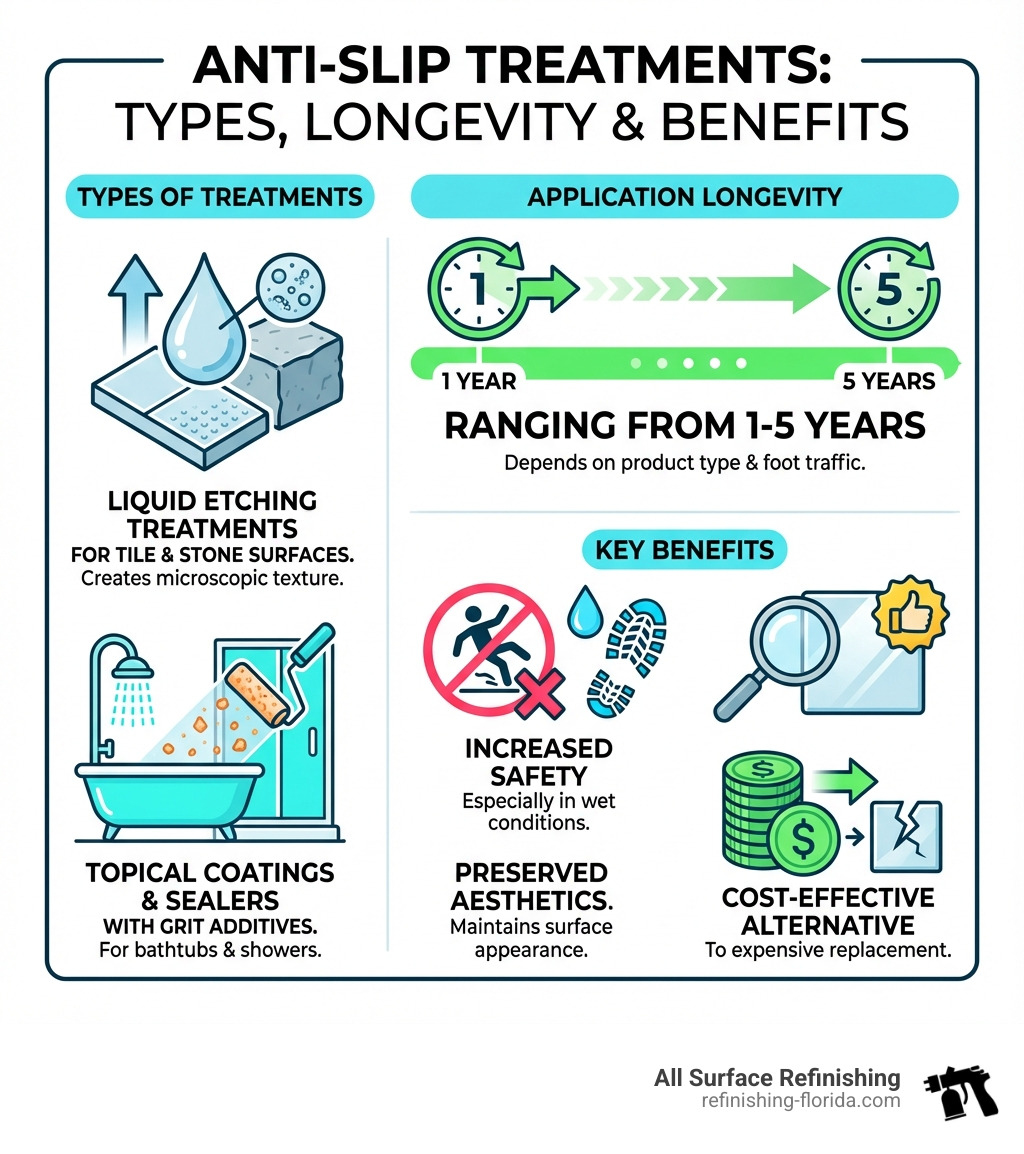
Anti-Slip Treatments are specialized solutions applied to floors, bathtubs, showers, and other surfaces to increase traction and reduce the risk of slips and falls, especially in wet conditions. These treatments work by chemically altering or coating surfaces to create microscopic texture that improves grip without significantly changing the appearance of your floors.
Quick Overview: What You Need to Know
- What they are: Chemical etchants or topical coatings that increase surface friction
- Where to use them: Bathrooms, kitchens, pool decks, tile floors, bathtubs, and showers
- How long they last: 1-5 years depending on product type and foot traffic
- Main benefit: Dramatically reduces slip-and-fall accidents in wet areas
- Application: Professional application recommended for best results and longevity
Slippery surfaces in your home aren’t just inconvenient—they’re dangerous. Every year, thousands of homeowners and their families experience injuries from falls on wet bathroom floors, slick bathtubs, and slippery kitchen tiles. In Florida’s humid climate, moisture is a constant challenge, making surfaces in bathrooms, around pools, and on outdoor patios especially hazardous.
The good news? You don’t need to replace your existing surfaces to make them safer.
Anti-slip treatments offer a cost-effective alternative to full replacement. Whether you’re dealing with a slippery porcelain bathtub, glossy ceramic tile in your shower, or smooth concrete around your pool deck, these treatments can transform dangerous surfaces into safe ones—often in just a single day.
From liquid etching solutions that create microscopic pores in tile and stone, to textured coatings that add grip to bathtubs and shower floors, there are multiple options available. The key is understanding which treatment works best for your specific surface and situation.
I’m Frank Hernandez, President of All Surface Refinishing, and I’ve been helping South Florida homeowners and businesses create safer spaces since 2011. Over the years, my team and I have applied countless Anti-Slip Treatments to bathtubs, showers, tile floors, and pool decks throughout Miami-Dade, Broward, and Palm Beach counties, helping property owners protect their families and guests while preserving the beauty of their existing surfaces.
In this guide, we’ll walk you through everything you need to know about anti-slip treatments—from how they work to which type is right for your home or business.
How Do Anti-Slip Treatments Increase Floor Safety?
Have you ever wondered why some surfaces feel like ice rinks when wet, while others maintain their grip? It all comes down to friction, and that’s where Anti-Slip Treatments work their magic. These innovative solutions are designed to directly address the problem of low friction on smooth surfaces, drastically improving floor safety in homes and commercial properties across Florida.
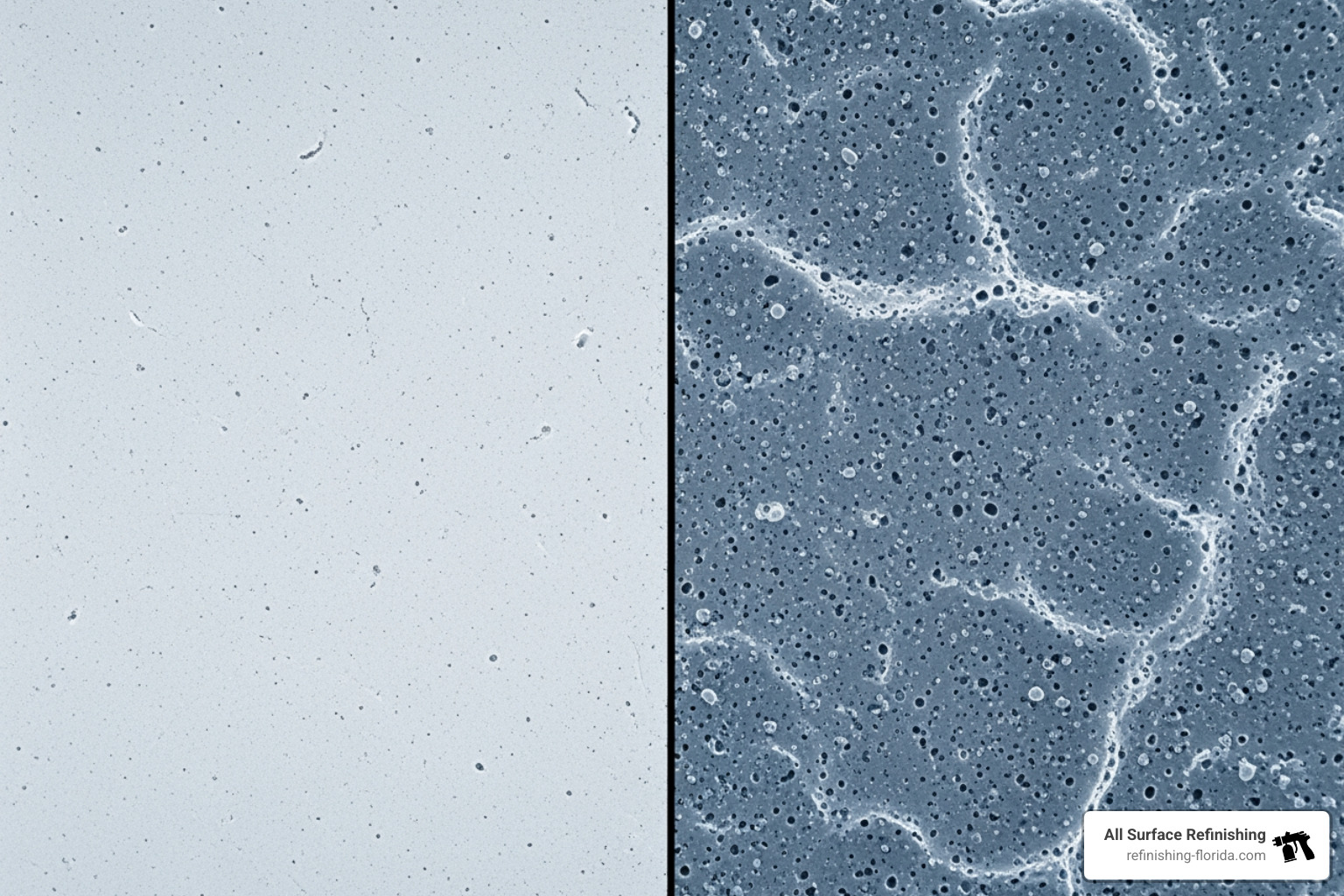
At their core, Anti-Slip Treatments increase floor safety by altering the surface at a microscopic level or by adding a layer that improves traction. For example, some treatments, often referred to as liquid etchants or micro-etching solutions, create tiny, invisible pores or treads on the surface of materials like ceramic tile, porcelain, or natural stone. Imagine countless miniature suction cups on your floor, working to provide grip even when wet. This microscopic alteration allows water to disperse more effectively, preventing the dangerous hydroplaning effect that occurs when a liquid film forms between your shoe and the floor. Other treatments involve applying coatings with fine, textured aggregates that provide a tactile grip underfoot.
To truly understand how effective these treatments are, we often rely on Coefficient of Friction (COF) testing. This scientific measurement quantifies the slip resistance of a surface. A higher COF indicates greater friction and, thus, better slip resistance. By applying an anti-slip treatment, we aim to significantly increase the COF, especially in wet conditions, bringing it up to industry safety standards, such as those outlined by the National Floor Safety Institute (NFSI). For additional background on how COF is defined and measured, you can review the overview of friction on Wikipedia. For instance, some additives can help surfaces achieve a P4 slip rating when applied correctly, as text to AS 4586:2013, ensuring a much safer walking surface.
The Science of Slip Resistance
The science behind slip resistance is fascinating and critical to ensuring floor safety. When we talk about COF, we’re usually referring to two types: static COF and dynamic COF. Static COF measures the force required to get an object moving on a surface, while dynamic COF measures the force required to keep it moving. For floor safety, dynamic COF in wet conditions is often the most relevant factor, as it simulates someone walking on a damp floor.
Water is a major culprit in reducing friction. When a smooth surface gets wet, water acts as a lubricant, creating a thin film that dramatically lowers the COF and increases the risk of slips. This is the hydroplaning effect we mentioned. Anti-Slip Treatments counteract this by either creating a micro-textured surface that allows water to drain into the tiny grooves, maintaining direct contact between your foot and the floor, or by incorporating fine particles that physically break through the water film to provide grip. This is why a treated porcelain bathtub or a tiled kitchen floor in a home in Pembroke Pines, FL, will feel much safer than an untreated one when wet.
We conduct COF testing to assess the slip resistance of a surface before and after treatment. This gives us valuable data to ensure your floors meet the required safety standards, providing peace of mind for both residential and commercial applications.
Benefits Beyond Slip Prevention
While preventing slips is the primary goal of Anti-Slip Treatments, the advantages extend far beyond just increased safety. When we apply these treatments to your surfaces, you’re investing in a host of other benefits that improve your property’s value and your daily life.
- Improved Durability: Many anti-slip coatings, especially those used for concrete or tile, also act as protective sealers. These can shield the underlying surface from wear and tear, staining, and chemical damage. For example, a quality polyurethane sealer can last three to five years on a tile, significantly outperforming standard acrylics that might last only a few months.
- Easier Cleaning: Contrary to what some might think, properly applied Anti-Slip Treatments can actually make surfaces easier to clean. By sealing porous materials like grout or concrete, they prevent dirt, grime, and bacteria from penetrating, making routine cleaning more effective. While some textured surfaces might require careful cleaning to prevent residue buildup, using pH-neutral cleaners is often all that’s needed.
- Aesthetic Preservation: A common concern is that anti-slip treatments will ruin the look of your beautiful floors. However, many modern solutions are designed to be invisible or offer various finishes (matte, satin, wet look) to complement your existing decor. Liquid etchants typically don’t alter appearance, and clear coatings can protect the original look while adding safety.
- Protecting Underlying Surfaces: By adding a protective layer, these treatments can extend the life of your bathtubs, showers, and tile floors, guarding against chips, scratches, and water damage, which is particularly important in high-moisture areas common in Florida homes and commercial properties.
- Increased Property Value: A safer home or business is a more attractive one. Investing in floor safety can increase your property’s appeal and value, demonstrating a commitment to quality and well-being.
- Peace of Mind: Perhaps the most intangible yet significant benefit is the peace of mind knowing that your loved ones, guests, or customers are safer from dangerous slips and falls. This is especially true for families with children or elderly individuals.
For more information on how we can improve your home or commercial property’s surfaces, explore our [More info about our services](https://refinishing-florida.com/services/).
Exploring Different Types of Anti-Slip Treatments
When it comes to making your floors safer, there isn’t a one-size-fits-all solution. Different surfaces and environments call for different types of Anti-Slip Treatments. We’ve seen it all, from slick porcelain bathtubs in Miami Beach to expansive concrete patios in West Palm Beach, and we know the right treatment makes all the difference.
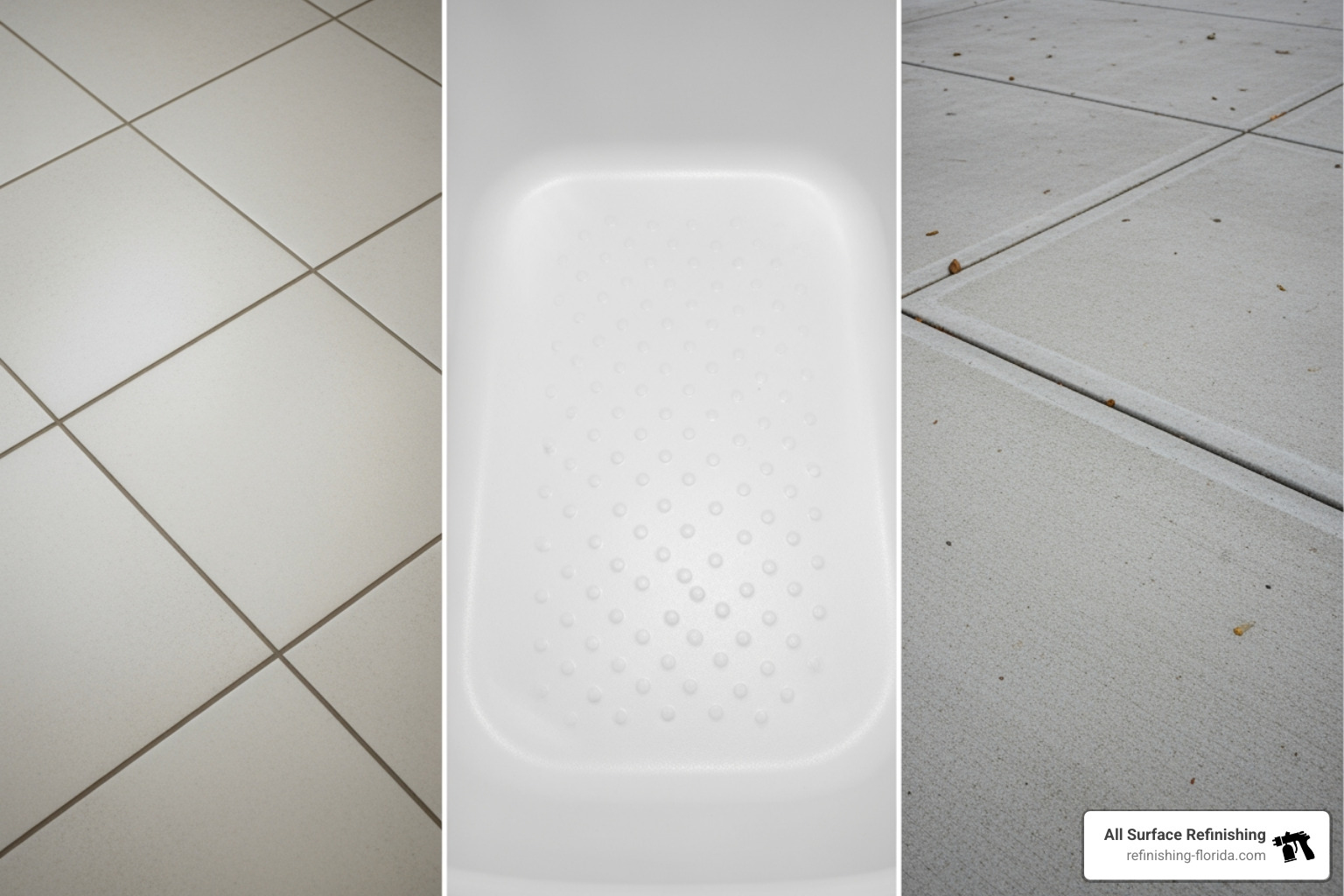
Here’s a look at the most common and effective types of anti-slip treatments available for various surfaces like tile, concrete, and stone, as well as specialized applications for bathtubs and showers.
Liquid Etching Treatments
Liquid etching treatments are a fantastic solution for inorganic surfaces primarily composed of silica, which includes most ceramic and porcelain tiles, natural stone, terrazzo, and even enamel bathtubs. These treatments work by creating a microscopic texture on the surface through a controlled chemical reaction.
Here’s how they generally work:
- Chemical Reaction: The solution, often acid-based, gently reacts with the minerals in the surface (like silica).
- Creating Micro-Pores: This reaction forms millions of tiny, invisible pores or channels on the surface. These micro-pores are too small to be seen with the naked eye and won’t change the look or feel of your floor, but they’re large enough to displace water.
- Invisible Finish: The beauty of these treatments is that they typically leave an invisible finish. Your glossy tile will still look glossy, and your stone will retain its natural aesthetic, but it will have significantly increased grip when wet.
- Ideal for Tile and Stone: These treatments are particularly effective on dense, glazed tiles (like ceramic and porcelain) and natural stone, which can be notoriously slippery when wet. They’re also excellent for
[Tubs](https://refinishing-florida.com/tub/)and[Showers](https://refinishing-florida.com/shower-refinishing-miami-beach/)in homes and commercial settings across Florida, providing long-lasting results without the need for frequent reapplication. Some applications can last up to 2-3 years, making them a durable choice for high-moisture areas.
Anti-Slip Coatings and Sealers
For surfaces that may not respond well to etching, or where a more pronounced texture or protective layer is desired, anti-slip coatings and sealers come into play. These treatments form a topical layer on the surface, often incorporating aggregates or grit for improved traction.
- Topical Layers: Unlike etchants, these products sit on top of the surface, creating a new, slip-resistant finish.
- Film-Forming Sealers: Many are film-forming sealers that also offer protection against stains, abrasion, and chemicals. This is particularly beneficial for concrete in garages or outdoor patios.
- Polyurethane and Epoxy Coatings: These are highly durable options, often used in commercial settings like kitchens, restrooms, or industrial spaces, but also popular for residential garages and pool decks. Polyurethane sealers, with proper adhesion promotion, can last three to five years on tile, offering superior durability compared to acrylics. Polyurea coatings, known to be four times stronger than epoxy, also offer excellent anti-slip properties and UV stability.
- Aggregates and Grit Additives: Fine aggregates, like ultra-fine glass beads or polymer grit, are often mixed into these coatings. These particles create a textured surface that provides excellent grip. For example, an anti-slip additive can be stirred into a clear protective sealer for concrete and paving, achieving a minimum P4 slip rating.
- Clear or Colored Finishes: These coatings can be clear, allowing the original surface to show through, or they can be colored, offering a complete aesthetic change while adding safety. Our
[Professional Tile Services](https://refinishing-florida.com/professional-tile-resurfacing/)often incorporate these types of coatings to provide both a fresh look and improved safety.
Whether you’re looking to protect a newly treated bathtub in Fort Lauderdale or improve the safety of a commercial kitchen floor in Miami, selecting the right type of anti-slip treatment is crucial.
The Application and Longevity of Floor Treatments
Understanding how Anti-Slip Treatments are applied and how long they last is key to making an informed decision for your Florida home or business. While some products are designed for DIY application, for optimal results and longevity, we always recommend professional application.
Proper surface preparation is paramount, often taking 80-90% of the total job time for coating applications. This involves thorough cleaning and degreasing to ensure the treatment can properly adhere or react with the surface. Any dirt, oil, or previous coatings can compromise the effectiveness and durability of the anti-slip layer.
The application process varies significantly between liquid etchants and topical coatings. Curing time is another crucial factor; while some new floor coatings can be walked on in 4 to 6 hours and driven on in 24 hours, others may require longer. Factors affecting longevity include foot traffic, exposure to harsh cleaning chemicals, and the specific type of treatment applied.
What is the Typical Application Process?
Let’s walk through a general application process for a liquid etching treatment, a common and effective solution for many tile and stone surfaces:
- Surface Testing: Before applying to the entire area, we always perform a small test in an inconspicuous spot. This ensures the treatment reacts as expected with your specific surface and doesn’t alter its appearance.
- Thorough Cleaning and Drying: The surface must be carefully cleaned to remove all dirt, grease, oil, and soap scum. After cleaning, it must be completely dry. This step is critical for the treatment’s effectiveness.
- Applying the Solution: The liquid etching solution is applied evenly across the surface. This can be done by pouring, spraying, or using a specialized applicator. We ensure uniform coverage to achieve consistent slip resistance.
- Dwell Time: The solution is left to “dwell” or react on the surface for a specific period, typically ranging from 10 to 60 minutes, depending on the product and surface material. During this time, the chemical reaction creates the microscopic texture. We monitor the process to ensure optimal results.
- Neutralizing and Rinsing: After the appropriate dwell time, the treatment is neutralized and thoroughly rinsed with clean water. This removes any residue and stops the chemical reaction.
- Drying Time: The surface is then allowed to dry completely. Once dry, it’s ready for use.
For coatings and sealers, the process might involve multiple layers, including a base coat, broadcasting of decorative chips or anti-slip aggregates, and a clear topcoat. Each layer requires specific drying and curing times. Safety precautions, such as proper ventilation and protective gear, are always followed during application.
How to Maintain Your Anti-Slip Treatments for Lasting Safety
The longevity of your Anti-Slip Treatments depends heavily on proper maintenance. While these solutions are designed for durability, they aren’t indestructible.
- Proper Cleaning Techniques: The golden rule for maintaining treated surfaces is to use pH-neutral cleaners. Harsh chemicals, degreasers, or abrasive cleaners can degrade the anti-slip properties or damage the coating. Regular cleaning with a mild detergent and water is usually sufficient.
- Avoiding Harsh Abrasives: While some anti-slip surfaces have a texture, using abrasive pads or brushes can wear down the treatment over time. Stick to soft brushes or mops.
- Reapplication Schedule: Longevity varies:
- Liquid etchants can last anywhere from 3 to 5 years, or even longer, depending on traffic and maintenance.
- Anti-slip coatings with embedded additives can last 1 to 2 years with light wear.
- Topical spray-on treatments might need reapplication every 6 to 12 months, especially in high-traffic areas like commercial kitchens or busy bathrooms in South Florida.
- High-performance coatings like polyurethanes can last 3 to 5 years.
- Inspecting for Wear: Regularly inspect your treated surfaces for any signs of wear, such as thinning of the coating or a decrease in noticeable texture. Addressing these issues promptly can help extend the overall life of the treatment.
By following these simple maintenance guidelines, you can ensure your Anti-Slip Treatments continue to provide optimal safety for years to come.
Choosing the Right Solution for Your Space
Selecting the perfect Anti-Slip Treatment for your property in Florida involves more than just picking a product off the shelf. We consider your specific needs, the type of surface, and whether it’s a residential sanctuary or a busy commercial establishment. The choice often balances aesthetics with function, and for commercial applications, liability concerns play a significant role.
For a residential kitchen in Coral Springs, you might prioritize a treatment that is easy to clean and maintains the beauty of your tile. However, for a commercial kitchen in a restaurant in Fort Lauderdale, extreme durability, chemical resistance, and a high slip-resistance rating are non-negotiable. Similarly, a pool deck in Jupiter needs a treatment that can withstand constant moisture and UV exposure, while a bathtub in a hotel in Miami needs something durable and easy to maintain for guests.
How to Choose the Best Anti-Slip Treatments for Your Surface
Choosing the best treatment involves understanding the limitations and potential downsides, as well as the benefits. Here’s a table to help you compare:
| Treatment Type | Surface Compatibility | Aesthetics | Durability | Maintenance |
|---|---|---|---|---|
| Liquid Etching | Ceramic & porcelain tile, natural stone, enamel tubs | Invisible; preserves the original look and shine of the surface. | Long-lasting (2-5+ years), depending on foot traffic and maintenance. | Simple cleaning with pH-neutral products; avoid harsh abrasives. |
| Anti-Slip Coatings | Concrete, tile, bathtubs, showers (versatile for many surfaces). | Can be clear or colored; available in matte, satin, or gloss finishes. Can alter or refresh the surface’s appearance. | Varies widely (6 months to 5+ years) based on the specific product (e.g., acrylic vs. polyurethane). | Requires pH-neutral cleaners; textured surfaces may need extra care to prevent residue buildup. |
