Your Guide to a Flawless Cast Iron Tub
Cast iron tub repair is the process of fixing chips, cracks, rust, and holes in your tub’s porcelain enamel surface. This restores its beauty and function, saving you from a costly replacement.
Cast iron bathtubs are the durable, antique giants of the bathroom. Weighing 300-500 pounds, their classic porcelain enamel coating and heat retention offer a timeless appeal that modern acrylic or fiberglass tubs can’t match. The good news is that you don’t need to replace a damaged cast iron tub. Whether you have a chipped corner, rust around the drain, or even small holes, most damage can be repaired on-site for far less than the thousands a full replacement would cost.
This guide walks you through everything needed to restore your cast iron tub, from identifying the tub type to fixing common problems and deciding between a DIY approach and calling a pro.
I’m Frank Hernandez, President of All Surface Refinishing. Since 1996, my team and I have specialized in cast iron tub repair and refinishing across South Florida. We’ve restored everything from 100-year-old clawfoot tubs to modern built-in fixtures, and I’m here to share the proven methods we use to bring these beautiful bathroom centerpieces back to life.
Before You Start: Identifying Damage and Tub Type
Before starting a cast iron tub repair, you must correctly identify your tub’s material and the extent of the damage. This determines the right repair strategy. Common issues include chips, cracks, rust, holes, a dull finish, and leaks.
Is It Cast Iron or Steel?
Many tubs look similar, but the base metal affects repair techniques. Here’s how to tell the difference:
- Magnet Test: A magnet will stick firmly to both cast iron and steel. If it doesn’t, you have an acrylic or fiberglass tub.
- Sound Test: Tap the side of the tub. Cast iron produces a dull “thud,” while thinner steel gives a higher-pitched “ring.”
- Flex Test: Stand in the tub. If you feel a slight flex, it’s steel. Cast iron is rigid and won’t bend.
- Rust Appearance: Both have a porcelain enamel finish. Rust on steel can eat through the metal, while rust on cast iron is often a surface issue initially but can lead to pitting.
Knowing the material is vital, as some repair products are formulated for a specific metal.
Common Types of Damage and When to Repair
Promptly addressing damage prevents further deterioration. Here are common issues:
- Surface Chips & Scratches: Small areas where enamel has flaked or been scratched off, exposing the metal. These are good candidates for DIY spot repair if addressed before rust forms.
- Spiderweb Cracks: Fine, hair-like cracks in the enamel. Extensive cracking may require professional assessment or full refinishing.
- Rust Around the Drain: A very common problem caused by worn enamel and constant water exposure. It can lead to pitting and holes if not treated.
- Pitting & Holes: Pitting is small depressions from rust or chemicals. A hole indicates severe deterioration where rust has eaten through the metal, causing leaks. Large holes require professional repair.
- Dull Finish: A worn, porous surface caused by abrasive cleaners. This is an aesthetic issue best solved by refinishing.
- Water Leaks: Stains on the ceiling below or dampness around the tub signal a leak from a hole, a bad drain seal, or failing caulk. This requires immediate repair to prevent water damage.
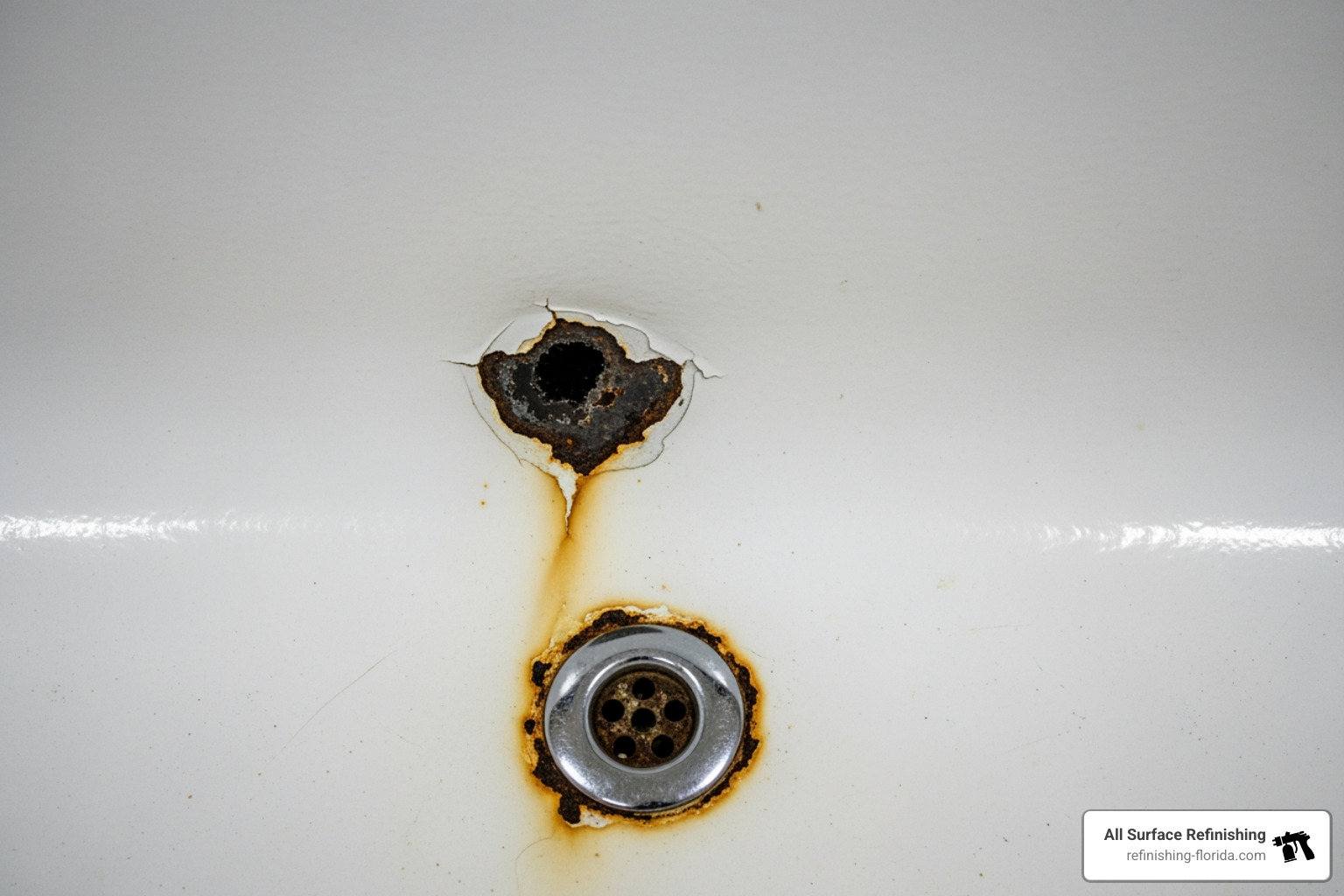
For simple chips and scratches, a DIY approach can work. However, for extensive rust, large cracks, or holes causing leaks, we strongly recommend consulting a professional.
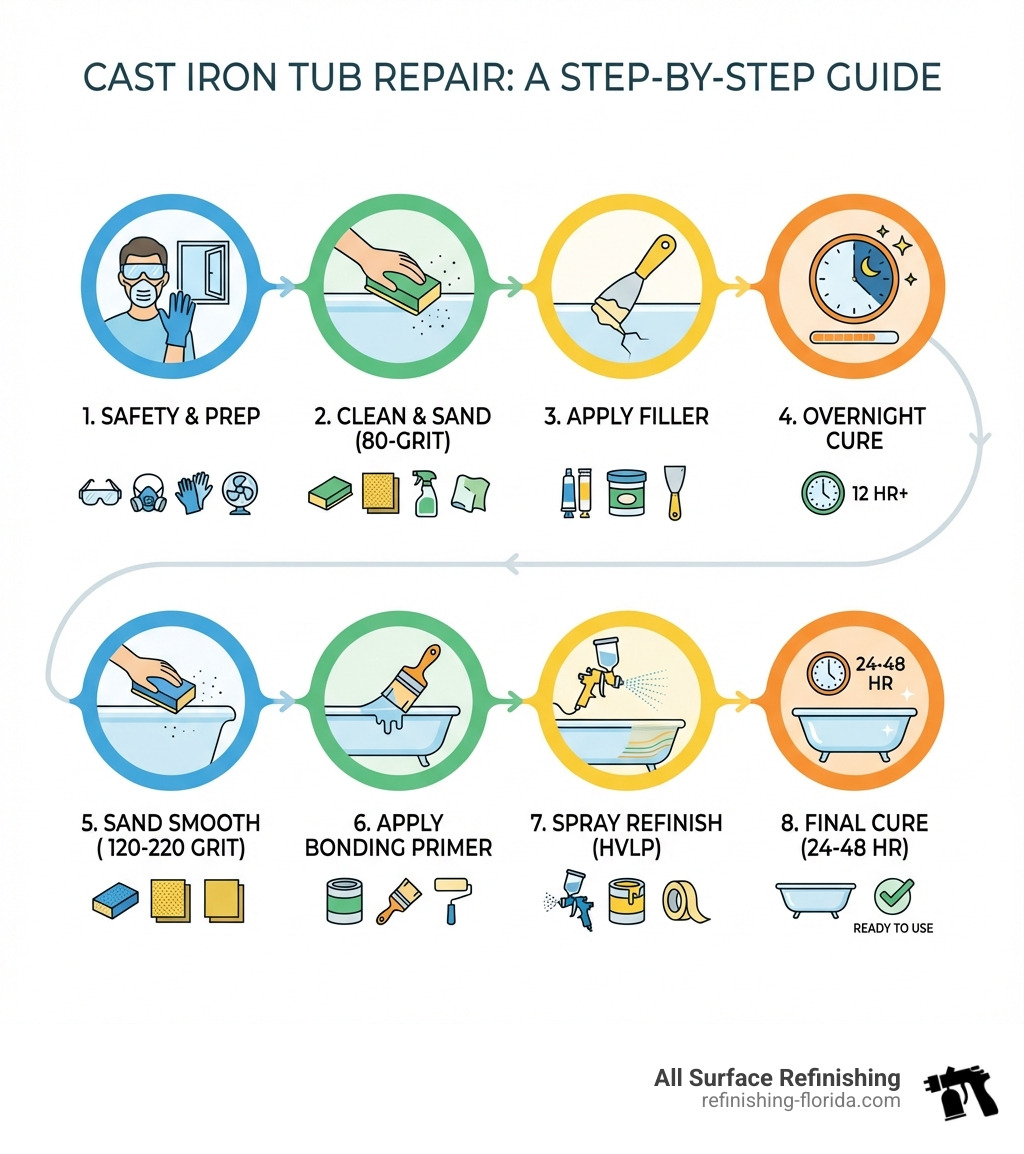
The Ultimate Cast Iron Tub Repair Guide
This section covers the hands-on process for a lasting cast iron tub repair, emphasizing safety and proper technique.
Essential Tools and Materials
Gather these items before starting:
- Epoxy Repair Kit/Porcelain Filler: A two-part epoxy for tubs. Use a non-sagging formula for vertical surfaces.
- Degreaser/Cleaner: Heavy-duty cleaner or acetone.
- Sandpaper: 80-grit, 120-grit, and 220-grit.
- Applicators & Protection: Putty knife, tack cloth, painter’s tape, and drop cloths.
- Safety Gear (Non-Negotiable): Goggles, a respirator with organic vapor cartridges, chemical-resistant gloves, and full-coverage clothing.
- Rust Removal Tools: Wire brush or a rotary tool with a grinding attachment.
- Finishing Supplies: Primer/bonding agent and porcelain-epoxy refinishing paint.
- HVLP Spray System (Recommended): For a professional, smooth finish.
Step 1: Safety and Preparation
Proper prep is key to a successful repair.
- Ventilate: Open windows and use fans to direct chemical fumes outdoors.
- Protect Surfaces: Use painter’s tape and drop cloths to mask off fixtures, walls, and floors.
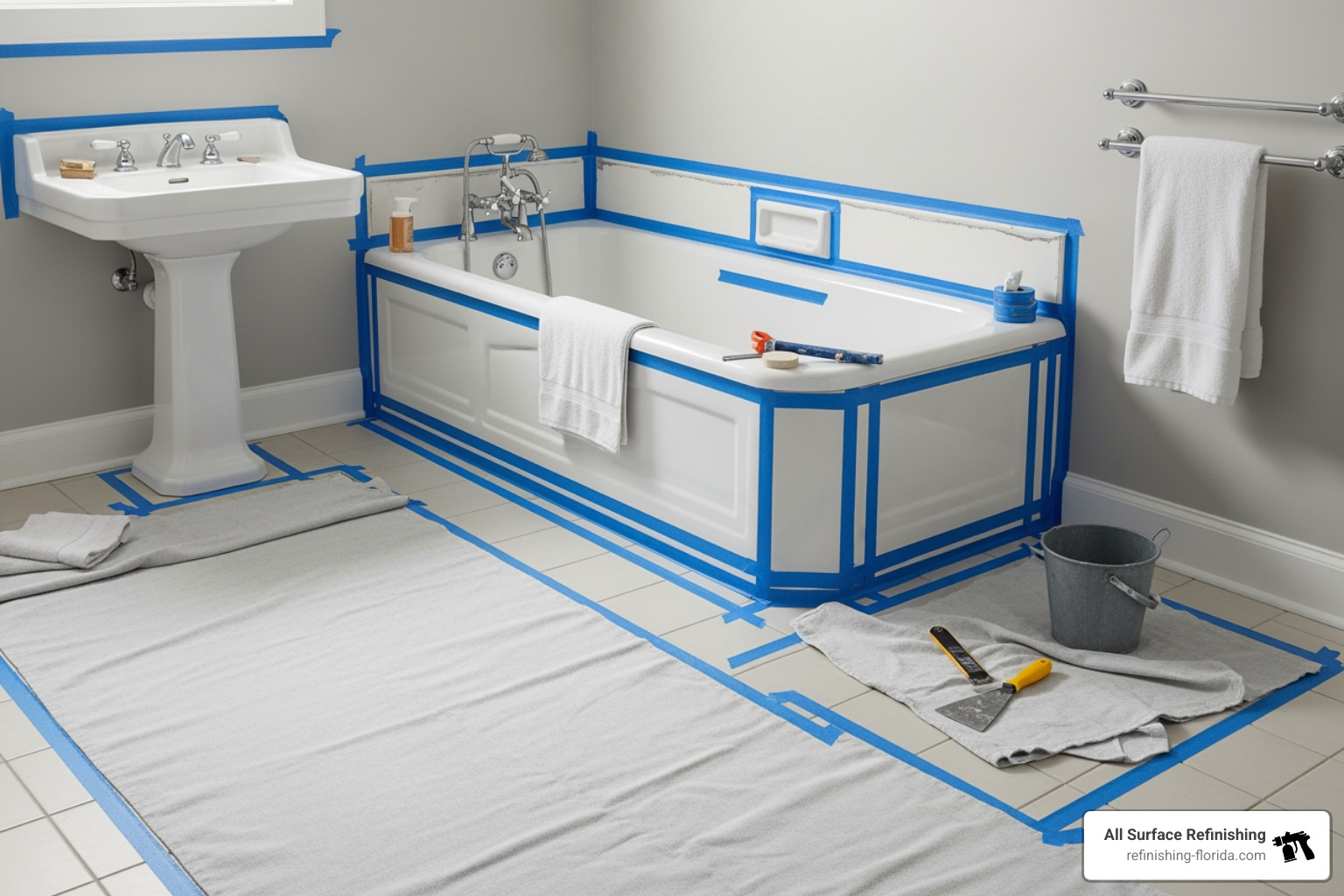
- Clean the Tub: Remove old caulk. Use a heavy-duty degreaser to scrub away all grime. Rinse and let the tub dry completely.
- Remove Hardware: For a full refinishing, turn off the water and remove the faucet and drain hardware.
Step 2: Fixing Chips, Cracks, and Holes
- Sand the Damage: Use 80-grit sandpaper to rough up the damaged area to help the filler adhere.
- Apply Epoxy Filler: Mix your two-part epoxy. Apply it deep into the damage with a putty knife, leaving it slightly raised. For holes, you may need to build up layers.
- Cure and Sand Smooth: Let the filler cure completely (often overnight). Sand the repair with 120-grit, then 220-grit sandpaper until it’s perfectly flush. Wipe away dust with a tack cloth.
Step 3: Addressing Rust Around the Drain
Rust requires aggressive treatment to prevent its return.
- Remove Drain and Rust: Remove the drain trim. Use a wire brush or rotary tool to grind away all visible rust.
- Treat and Fill: Apply a rust converter if needed. For severe rust, a muriatic acid solution can be used with extreme caution and full safety gear. Fill any pits or holes with a steel-reinforced epoxy, let it cure, and sand it smooth.
Step 4: The Finishing Touches
This stage completes the restoration, often with a full refinishing.
- Prime the Surface: Apply a quality porcelain primer or bonding agent over the repairs or the entire tub. Let it dry.
- Apply Refinishing Paint: For best results, use an HVLP sprayer to apply a durable porcelain-epoxy paint in multiple thin, even coats.
- Cure the New Surface: This is critical for durability. Allow the finish to cure for a minimum of 24-48 hours, or as directed by the manufacturer, before use.
For more detailed information about our professional tub repair services, please visit our page on Tub Repair.
DIY vs. Professional Repair: Making the Right Choice
Deciding whether to tackle cast iron tub repair yourself or call an expert depends on cost, time, the damage, and your desired outcome.
The Pros and Cons of DIY Repair
| Pros of DIY Repair | Cons of DIY Repair |
|---|---|
| Cost Savings: DIY kits range from $20-$200. | Potential for Mistakes: Risk of uneven finishes, drips, or poor adhesion. |
| Sense of Accomplishment: Pride in fixing it yourself. | Visible Repairs: Difficult to achieve an invisible repair or perfect color match. |
| Convenience: Work on your own schedule. | Durability Questions: DIY repairs may not last as long as professional work. |
| Safety Risks: Handling chemicals can be hazardous without proper training. |
While a DIY kit saves money upfront, results can be visibly flawed and less durable. For a long-lasting, aesthetically pleasing fix, professional work is often superior.
When to Call a Professional
Professional cast iron tub repair is a necessity for quality and safety in certain situations:
- Large Holes or Cracks: Extensive damage, especially a hole causing a leak, requires specialized techniques to ensure a watertight fix.
- Extensive Rust Damage: Widespread rust or deep pitting requires professional tools and expertise to remove all corrosion and rebuild the surface.
- Desire for a Flawless Finish: To make your tub look new without patches, a professional refinishing service using an HVLP spray system is the best option.
- Lack of Time or Tools: The repair process is time-consuming and requires specific tools. Hiring a pro saves you the hassle.
- Safety Concerns: Professionals are trained in safely handling refinishing chemicals, mitigating health risks from fumes. Learn more about handling harmful chemicals safely.
Cost Breakdown: Repair vs. Replacement
When your tub is damaged, you have three options: DIY repair, professional refinishing, or full replacement.
| Option | Estimated Cost (Florida) | Longevity | Quality of Finish | Added Home Value |
|---|---|---|---|---|
| DIY Spot Repair (Kit) | $20 – $200 | 1-3 years | Fair (often visible) | Minimal |
| Professional Repair/Refinishing | $300 – $1,000 | 5-10+ years | Excellent (like-new) | Moderate to High |
| Full Tub Replacement | $3,000 – $6,000+ | 15-20+ years | Excellent | High |
- DIY Kit: The cheapest option for small chips, but the repair may be noticeable and less durable.
- Professional Refinishing: A cost-effective way to get a like-new tub that lasts for years and adds to your home’s resale value.
- Full Replacement: This is a major project involving demolition, plumbing, and tile work, with costs easily exceeding $3,000. This makes refinishing a popular alternative.
After the Repair: Maintenance and Longevity
A professionally repaired surface can last 5-10 years or more with proper care. Even DIY repairs benefit from good maintenance.
How to Clean Your Repaired Tub
Gentle, consistent cleaning is key to preserving your new finish.
- Use Mild Products: Use non-abrasive, mild cleaners (pH between 3 and 8) with soft sponges or cloths.
- Avoid Harsh Chemicals: Steer clear of bleach, abrasive powders, strong acids, and paint strippers, as they can dull or strip the finish.
- No Abrasive Pads: Never use steel wool, wire brushes, or abrasive sponge pads, which will scratch the surface.
- Clean Regularly: Wipe the tub down after each use to prevent soap scum buildup and clean it at least once a week.
Durability and Lifespan
- Professional vs. DIY: A professionally refinished tub can last 5-10+ years with proper care. DIY repairs typically last 1-3 years.
- Impact Resistance: A refinished surface can withstand light impacts, but like any enamel, heavy or sharp objects can cause chips. Treat it with the same care as a new tub.
- Preventing Future Rust: Regular cleaning, proper caulking, and promptly fixing new chips are crucial for preventing rust.
For more information on how we restore tubs to their former glory, visit our Restore Tub services page.
Protecting Your New Finish
Simple habits will protect your cast iron tub repair for years:
- Use Removable Bath Mats: Avoid mats with suction cups, which trap moisture and can damage the finish.
- Fix Leaky Faucets: A constant drip will wear down and discolor the new surface. Fix leaks immediately.
- Maintain Caulk: Inspect and re-caulk any gaps or cracks to prevent water infiltration.
- Avoid Storing Items on Tub: Don’t leave heavy bottles or metal cans on the tub’s edge where they can scratch or chip the surface.
- Ventilate: Keep the bathroom well-ventilated to reduce moisture and prevent mildew.
Frequently Asked Questions about Cast Iron Tub Repair
Can a large hole in a cast iron tub actually be fixed?
Yes, a large hole can be fixed. The process involves grinding away rust, backing the hole, and filling it with a strong, fiber-reinforced material like steel-reinforced epoxy. The filler is then cured, sanded smooth, and refinished to blend seamlessly with the tub’s surface. For a durable, watertight result on large holes, a professional Tub Repair service is highly recommended to ensure structural integrity.
What is the difference between repairing and refinishing a tub?
Repairing and refinishing are related but distinct processes.
- Repairing targets specific, localized damage like a single chip, crack, or rust spot. It fixes only the imperfection.
- Refinishing (or Reglazing) is a complete restoration of the tub’s entire surface. The process includes repairing all imperfections, chemically etching the surface for adhesion, and then spraying on a new, durable topcoat for a uniform, factory-like finish.
Essentially, refinishing includes repairs as the first step, while a simple repair doesn’t always require a full refinish. If your tub has widespread wear or multiple damages, refinishing is the best option. You can Learn about reglazing a tub to understand the full process.
How long does a repaired cast iron tub last?
The longevity depends on the quality of the work and your maintenance.
- DIY Spot Repair: A DIY repair on a small chip can last for several years but is often less durable than a professional job.
- Professionally Repaired and Refinished Tub: A tub that is professionally repaired and fully refinished can last 5-10 years or even longer. Proper care, including using non-abrasive cleaners, is key to maximizing its lifespan. Our experience at All Surface Refinishing confirms that quality coatings and proper maintenance lead to a beautiful, long-lasting finish.
Bring Your Florida Bathroom Back to Life
Restoring a cast iron tub revives a classic fixture and improves your entire bathroom. Whether you DIY a small chip or opt for a professional makeover, using the right methods is key. For homeowners across South Florida looking for a guaranteed, flawless finish that lasts, the experts at All Surface Refinishing provide decades of experience. We serve Aventura, Bal Harbor, Boca Raton, Boynton Beach, Broward County, Carol City, Coconut Creek, Coconut Grove, Cooper City, Coral Gables, Coral Springs, Cutler Ridge, Dade County, Dania Beach, Davie, Deerfield Beach, Delray Beach, Fisher Island, Fort Lauderdale, Fort Pierce, Gold Coast, Golden Beach, Greenacres, Hallandale Beach, Hialeah, Hillsboro Beach, Hobe Sound, Hollywood, FL, Homestead, Indian River County, Indiantown, Islamorada, Ives Estates, Jensen Beach, Jupiter, Kendall, Key Biscayne, Key Largo, Key West, Lake Worth, Lauderdale By The Sea, Lauderdale Lakes, Lauderhill, Lazy Lake, Lighthouse Point, Loxahatchee, Marathon, Margate, Martin County, Miami, Miami Beach, Miami Lakes, Miami Shores, Miami Springs, Miami-Dade County, Miramar, North Bay Village, North Lauderdale, North Miami, North Miami Beach, North Palm Beach, Oakland Park, Palm Beach, Palm Beach County, Palm Beach Gardens, Palm City, Parkland, Pembroke Pines, Perrine, Port Saint Lucie, Port Salerno, Saint Lucie County, Sebastian, Stuart, Sweetwater, Tamarac, Vero Beach, Wellington, FL, West Miami, West Palm Beach, Weston, and Wilton Manors. Ready to make your tub the star of your bathroom again? Get a free estimate on your tub repair today!
