Why Traditional Oak Cabinets Look Dated (and What to Change)
You can make oak kitchen cabinets look modern by removing the yellowed clear coat and applying a muted natural stain or a smooth solid finish, then pairing the refreshed doors with linear matte black or brushed brass hardware, 3000K warm-white under-cabinet lighting, and calm solid or lightly veined countertops and backsplashes. These changes neutralize the heavy orange undertones and busy grain that date the room without requiring a full cabinet replacement.
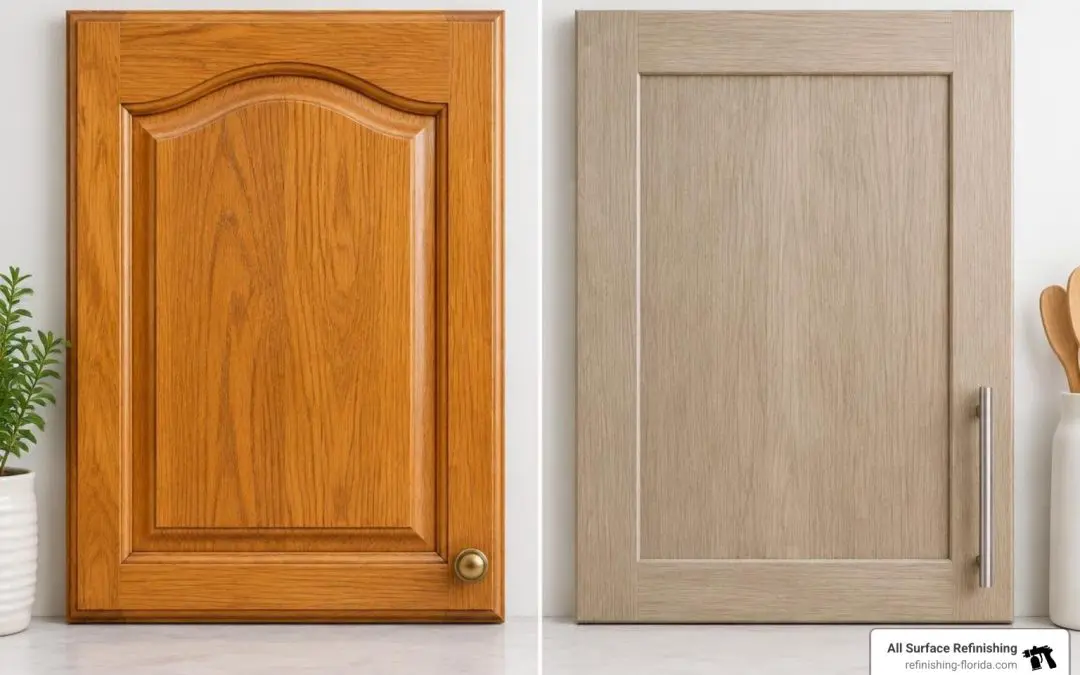
Oak cabinets built throughout the 1980s and 1990s were prized for their structural strength, but several distinct aesthetic elements now make them look stuck in the past. The biggest culprits are heavy orange or golden undertones created by aged oil-based polyurethane topcoats, ornate cathedral-arched door panels, heavy crown moldings, and undersized brass or ceramic knobs.
When paired with dark laminate counters and shadowy task areas, plain-sawn oak can overwhelm a room with busy flame patterns and aggressive amber tones. Modern design emphasizes visual quietness: straight lines, balanced textures, and neutral palettes that let natural elements feel intentional rather than chaotic.
Grain Patterns, Door Profiles, and 1990s Finishes
The heavy visual texture of traditional oak comes from plain-sawn milling, which produces dramatic, swirling cathedral grain patterns. Decades ago, manufacturers highlighted this texture using dark wiping stains topped with thick, high-gloss clear coats. Over years of exposure to sunlight, these oil-based varnishes oxidize into a brassy, yellowish-orange shell.
Modernizing the look does not require fighting the wood itself. By softening strong undertones and surrounding the cabinets with calmer surfaces, you allow the natural grain to add organic texture rather than visual clutter. For practical design concepts, reviewing expert tips on natural oak styling can help you discover how designers balance natural grain in contemporary kitchens.
Evaluating Cabinet Box Integrity Before Refinishing
Before you plan any visual makeover, confirm that your existing cabinet boxes are structurally sound. Most vintage oak cabinetry was constructed with solid 3/4-inch plywood or solid oak face frames, outperforming many modern mass-produced particleboard options.
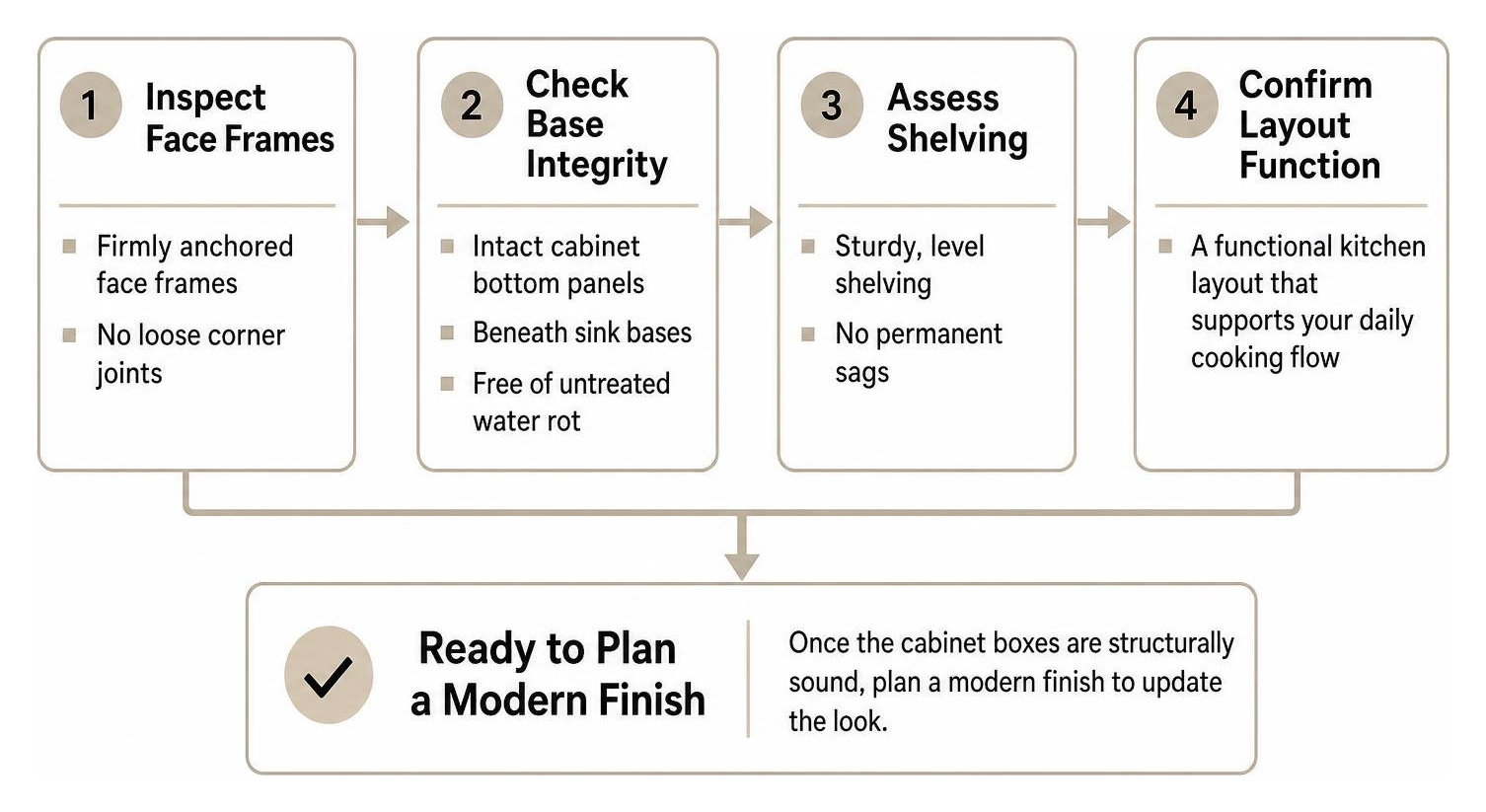
Check for:
- Firmly anchored face frames with no loose corner joints
- Intact cabinet bottom panels beneath sink bases free of untreated water rot
- Sturdy, level shelving without permanent sags
- A functional kitchen layout that supports your daily cooking flow
If your layout functions well and the core cabinet boxes remain solid, choosing modern cabinet refinishing lets you achieve a brand-new aesthetic at a fraction of the cost of tearing out your kitchen. Reviewing kitchen cabinet price comparisons clearly illustrates how much value is preserved by keeping intact structural frames.
How to Make Oak Kitchen Cabinets Look Modern with Strategic Color and Finishes
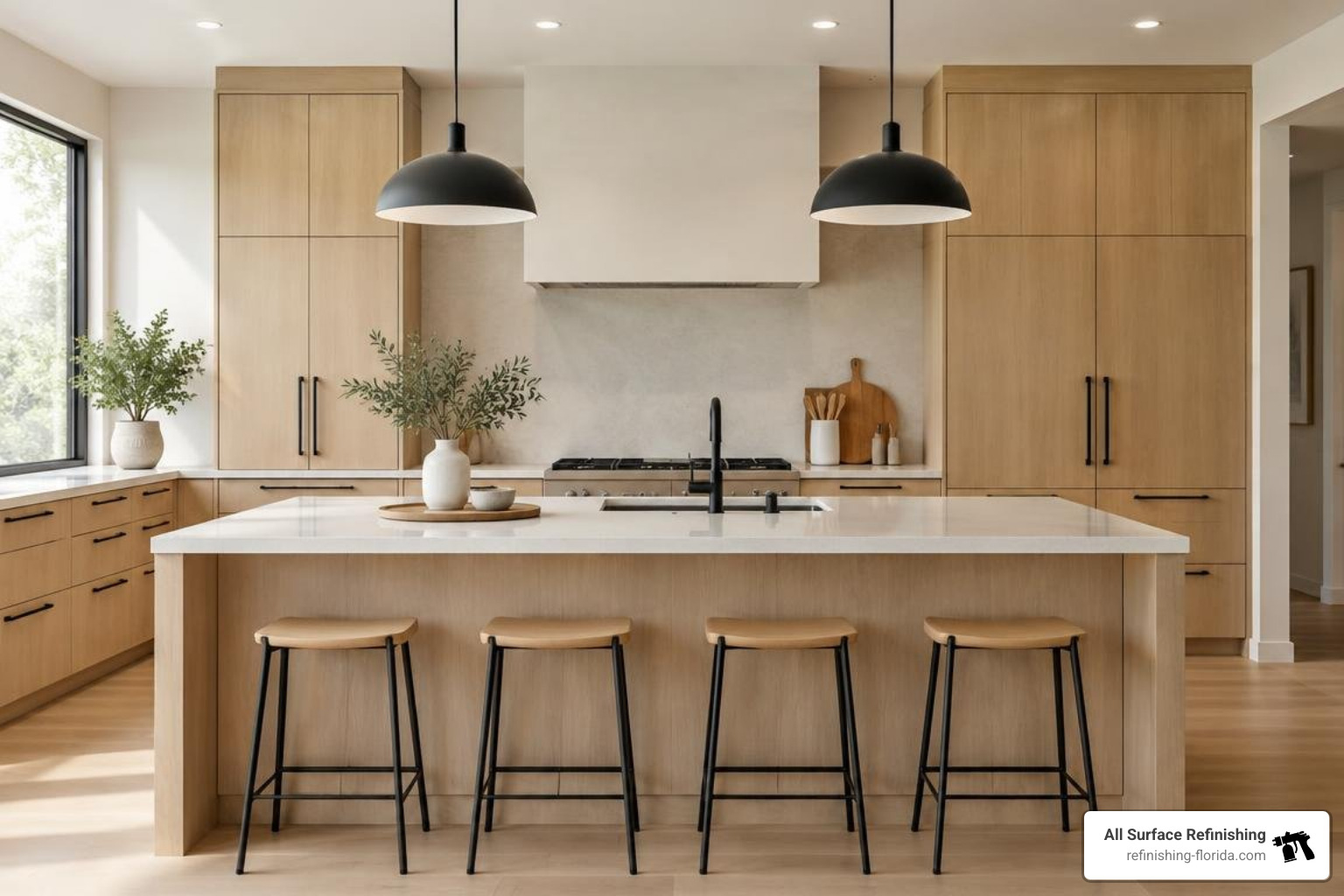
Finishes dramatically alter how light interacts with the wood’s deep pores. Homeowners typically choose between two modern directions: updating the natural grain with fresh, low-sheen clear coats or stains, or applying an ultra-smooth opaque factory finish.
| Refinishing Approach | Visual Aesthetic | Grain Visibility | Ideal Design Styles | Maintenance Level |
|---|---|---|---|---|
| Natural Wood Refinishing | Warm Scandinavian, Japandi, Organic Modern | Visible open wood pores, low-luster satin/matte sheen | Minimalist, Japandi, Modern Farmhouse | Low; hides minor micro-scratches |
| Solid Opaque Refinishing | Clean, architectural, seamless color | Wood grain filled and leveled for a sleek, satin surface | Transitional, Contemporary, Urban Loft | Low-to-moderate; wipes clean easily |
How to Make Oak Kitchen Cabinets Look Modern Without Painting
If you appreciate real wood grain, you do not need to paint your cabinetry to modernize it. The goal is removing the thick, yellowed clear coat and applying a modern, muted wood tone.
You can explore several paint-free cabinet modernization techniques that strip old varnishes down to raw wood. From there, applying a subtle cerused finish, a diluted Scandinavian white wash, or a neutral driftwood-grey stain neutralizes brassy undertones. Pairing these natural tones with low-sheen matte conversion sealers keeps the wood looking fresh and raw rather than plastic-coated. If you want to bypass heavy chemical stripping entirely, learning about changing cabinet colors without painting offers practical styling options.
How to Make Oak Kitchen Cabinets Look Modern Using Two-Tone Paint Schemes
Two-tone kitchen palettes bring architectural depth to older spaces by breaking up large expanses of oak. In a two-tone scheme, lower base cabinets and kitchen islands remain in natural or deep-toned wood, while upper wall cupboards are refinished in crisp off-white, warm greige, or soft cream.
This layout visually grounds the kitchen floor while keeping eye-level spaces bright and open. Achieving a sleek finish over heavy oak grain requires thorough grain-filling and high-grade primers applied via professional cabinet spray painting, ensuring a smooth, factory-level look without visible brush marks.
High-Impact Non-Paint Upgrades: Hardware, Lighting, and Backsplashes
Surrounding elements significantly influence how cabinet wood tones appear. Even pristine natural oak will look outdated if it is trapped between yellow laminate counters, dim 1980s soffit lights, and ornate brass pull handles.
Choosing and Scaling Modern Cabinet Hardware
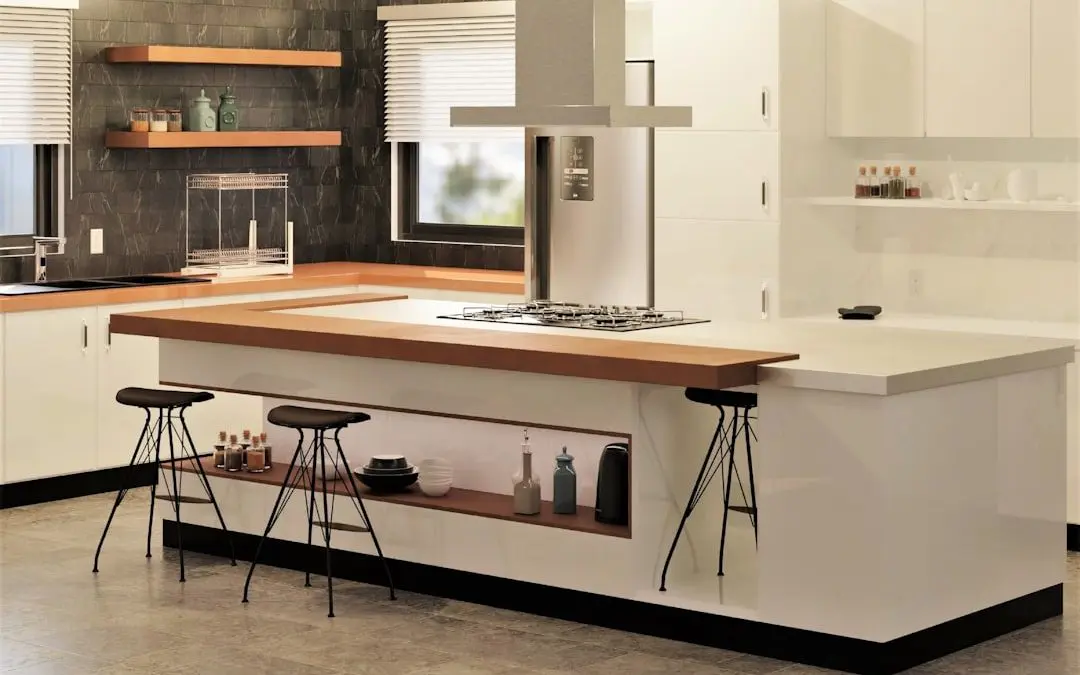
Cabinet hardware functions as the jewelry of the kitchen. Traditional oak was often fitted with small 3-inch ornate arched pulls or decorative floral knobs that drew attention to the center of each door.
To modernize your cabinet faces:
- Upgrade to Linear Pulls: Install sleek, straight bar pulls or squared European hardware.
- Scale Up Drawer Pulls: Use 8-inch to 12-inch handles on wide pot drawers to emphasize horizontal lines.
- Install Minimalist Finger Pulls: Edge-mounted finger pulls preserve clean sightlines across flat or Shaker doors.
- Select Contemporary Finishes: Matte black offers sharp contrast against light-to-medium oak, while warm brushed brass complements neutral wood tones without the harsh glare of polished yellow brass.
Layered Kitchen Lighting: Under-Cabinet, Pendants, and Dimmers
Poor lighting makes oak cabinets appear shadowy and heavy. The yellow wavelengths of older incandescent bulbs (or overly cool 5000K fluorescent fixtures) distort wood grain into unnatural orange or dull grey tones.
- Install 3000K LED Under-Cabinet Strips: Continuous, warm-white LED tape lighting casts even light downward onto the backsplash, eliminating dark shadows under upper cabinets.
- Add Modern Statement Pendants: Replace frosted-glass flush mounts with geometric, open-cage, or matte ceramic pendant lights over islands and peninsulas.
- Use Dimmable Switches: Dedicated dimmers let you switch effortlessly between functional cooking brightness and ambient evening lighting.
Coordinating Countertops, Backsplashes, and Wall Paint
Oak’s rich grain demands clean, calm companion surfaces. Busy, speckled brown or gold granite countertops compete directly with oak grain patterns, creating visual chaos.
- Countertops: Choose solid white, soft grey, or lightly veined marble-look finishes. Refinishing existing worn countertops with a clean stone-look composite creates an instant modern foundation.
- Backsplashes: Select solid, light-toned surfaces such as refinished tile, crisp stacked subway tile, or a seamless neutral backsplash running from counter to cabinet base.
- Wall Paint: Choose warm neutral off-whites, greiges, or muted earthy sage greens that flatter the wood’s warmth without reflecting strong yellow tones back onto the cabinetry.
Common Pitfalls to Avoid When Updating Oak Cabinets
When updating an oak kitchen, avoiding common design mistakes saves substantial time and money:
- Pairing Warm Oak with Cool Ice-Blue Grays: Cool blue-toned grays clash with warm oak, making cabinets look significantly more orange by direct color contrast.
- Using Undersized Hardware: Tiny 3-inch pulls look lost on large oak cabinet doors and reinforce an outdated look.
- Overcrowding Open Shelving: If you remove upper cabinet doors to create open shelving, avoid filling them with mismatched clutter. Stick to monochromatic dishware and simple accents.
- Skipping Grain Preparation on Solid Finishes: Spraying solid enamel directly over open-pore oak without proper grain filler produces an uneven, dimpled texture instead of a smooth surface.
- Mixing Too Many Competing Wood Tones: Maintain one dominant wood tone across cabinets and floors to keep the overall kitchen design cohesive.
Frequently Asked Questions About Modernizing Oak Kitchens
Can honey oak cabinets really look modern without painting them?
Yes. Honey oak looks remarkably fresh when you change the elements surrounding it. Swap out ornate hardware for matte black or brushed brass pulls, install 3000K warm-white under-cabinet LED task lighting, install a clean white backsplash, and repaint yellowed walls in warm off-white or soft greige.
What wall paint colors look best with natural oak cabinets?
Warm off-whites, creamy taupes, soft greiges, and muted sage greens complement natural oak best. Avoid cool, blue-based grays and golden yellows, which either clash with the wood or exaggerate orange undertones.
How much does it cost to professionally refinish oak kitchen cabinets?
Professional cabinet refinishing typically costs 60% to 75% less than a full cabinet replacement. Exact pricing depends on your total door and drawer count, layout size, and whether grain filling is needed for a solid color conversion. You can review detailed budget breakdowns in our cabinet refinishing cost guide.
Transform Your Oak Cabinets with Professional Surface Refinishing
Modernizing your kitchen cabinets does not require the mess, disruption, and landfill waste of a complete kitchen tear-out. Retaining your solid oak cabinet boxes while refreshing their surface finish, hardware, and surrounding counters gives you a durable, beautiful kitchen tailored to current design aesthetics.
At All Surface Refinishing, we bring more than 30 years of industry experience and over 14,000 completed resurfacing projects across South Florida. Whether you are located in Fort Lauderdale, Boca Raton, West Palm Beach, Miami, Coral Gables, Boynton Beach, Hollywood, FL, Jupiter, or Stuart, our factory-grade refinishing systems deliver durable, flawless results.
Ready to make your kitchen feel bright, functional, and brand new? Contact our team today to explore our specialized cabinet color change service and schedule your personalized kitchen consultation.
