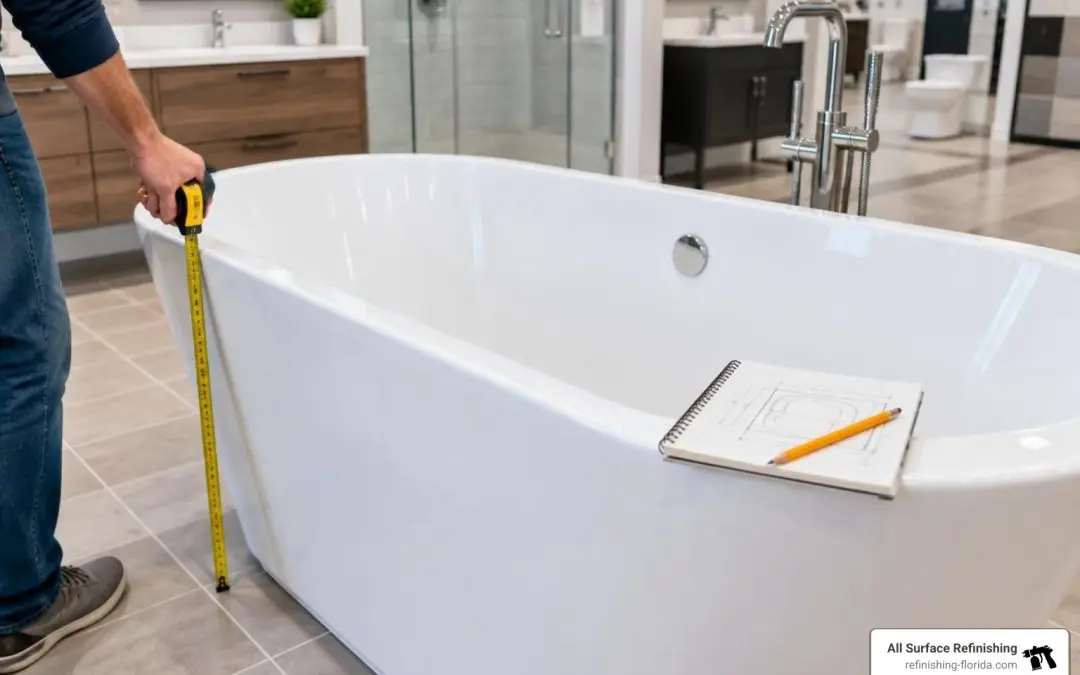
Preparing for Your Visit to Inspect Bathtubs Near Me
Before you visit a showroom to inspect bathtubs near me, prepare a practical inspection checklist. Measure your alcove width, doorway clearances, and rough-in drain placement so you can verify that any display model will fit your bathroom. On the showroom floor, press firmly on the acrylic rim and basin floor to check for flexing, and inspect the drain alignment and overflow assembly for a sealed, reversible configuration. Finally, sit inside the tub to test lumbar angle, soaking depth, and step-in height before making a decision.
Walking into a local plumbing supply or home improvement showroom across Fort Lauderdale, Miami, or West Palm Beach can be overwhelming. Shiny freestanding tubs, deep alcove models, and jetted whirlpools look stunning under bright retail lighting. However, showroom lighting hides potential pitfalls that can turn a weekend bathroom renovation into a weeks-long plumbing nightmare.
Before jumping in your car to locate retail fixtures, proper preparation is essential. Retailers stock everything from budget drop-in shells to massive soaking tubs. Without exact layout specs in hand, it is easy to fall in love with a display that simply cannot fit through your hallway door or aligns poorly with your existing waste pipes.
Essential Measurements Before Browsing Bathtubs Near Me in Showrooms
When shopping for tubs, your tape measure is your most valuable asset. The space available on a wide-open showroom floor is deceiving. A tub that appears modest on a sales floor can completely swallow a standard residential bathroom in Coral Gables or Boca Raton.
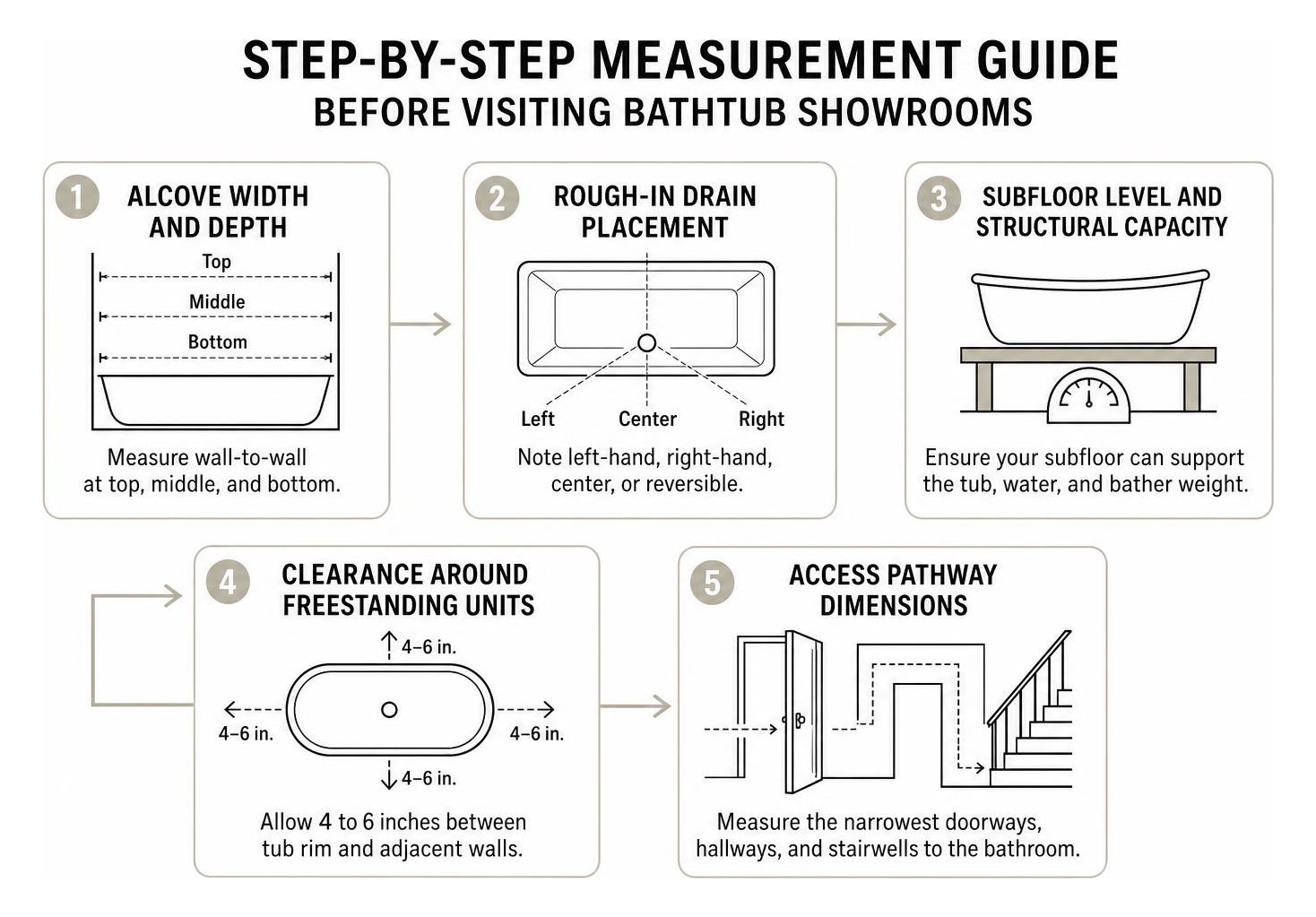
Before visiting local retail showrooms, document these five critical dimensions:
- Alcove Width and Depth: Measure the wall-to-wall distance at the top, middle, and bottom of your tub enclosure. Walls in older Florida homes are rarely perfectly square.
- Rough-In Drain Placement: Note whether your current plumbing requires a left-hand, right-hand, center, or reversible drain configuration. Knowing how to measure layout tolerances helps avoid major subfloor structural alterations, as outlined in our measuring plumbing layouts for bathtub repair guide.
- Subfloor Level and Structural Capacity: A massive soaking vessel like the Wyndham Collection Hannah 67 in. Acrylic Flatbottom Bathtub features a 90-gallon water capacity. Water weighs approximately 8.34 pounds per gallon. Combined with a 90-pound shell and an adult bather, your subfloor must comfortably support upwards of 900 pounds.
- Clearance Around Freestanding Units: Freestanding designs require at least 4 to 6 inches of breathing room between the tub rim and the adjacent tiled walls for routine cleaning.
- Access Pathway Dimensions: Measure the narrowest doorways, stairwells, and hallway turns from your front entryway to the bathroom. Even a gorgeous 67-inch double-ended tub is useless if it cannot clear your master bathroom doorway.
Tools to Bring to Local Plumbing Showrooms
Never rely purely on visual estimates when touring display floors. Bring a dedicated field kit:
- Heavy-Duty Tape Measure: To verify exterior rim dimensions, internal basin depths, and step-in heights.
- Torpedo Level: Place this across the top deck and inside the basin of floor models to assess factory levelness and slope-to-drain engineering.
- High-Lumen Flashlight: Useful for peering underneath floor models to inspect sub-frame structural supports, leveling legs, and fiberglass reinforcement layers.
- Notepad and Floorplan Sketch: Keep your plumbing line locations, subfloor measurements, and electrical clearance points on hand.
- Smartphone Camera: Take photos of manufacturer specification tags, model numbers, and plumbing rough-in schematics printed on product displays.
Key Structural and Material Quality Checks on Floor Displays
When examining display units, understand that retail models have endured touches, taps, and leans from hundreds of shoppers. This makes showroom displays the perfect testing ground for evaluating material durability.
In South Florida’s coastal climate, material integrity is everything. Poorly constructed acrylic or thin gel-coated units can yellow, warp, or crack when subjected to fluctuating indoor humidity and regular use.
Evaluating Acrylic Thickness and Shell Rigidity
Most modern freestanding tubs utilize sanitary-grade acrylic shells reinforced with fiberglass composites. When standing next to a floor model, perform these structural tests:
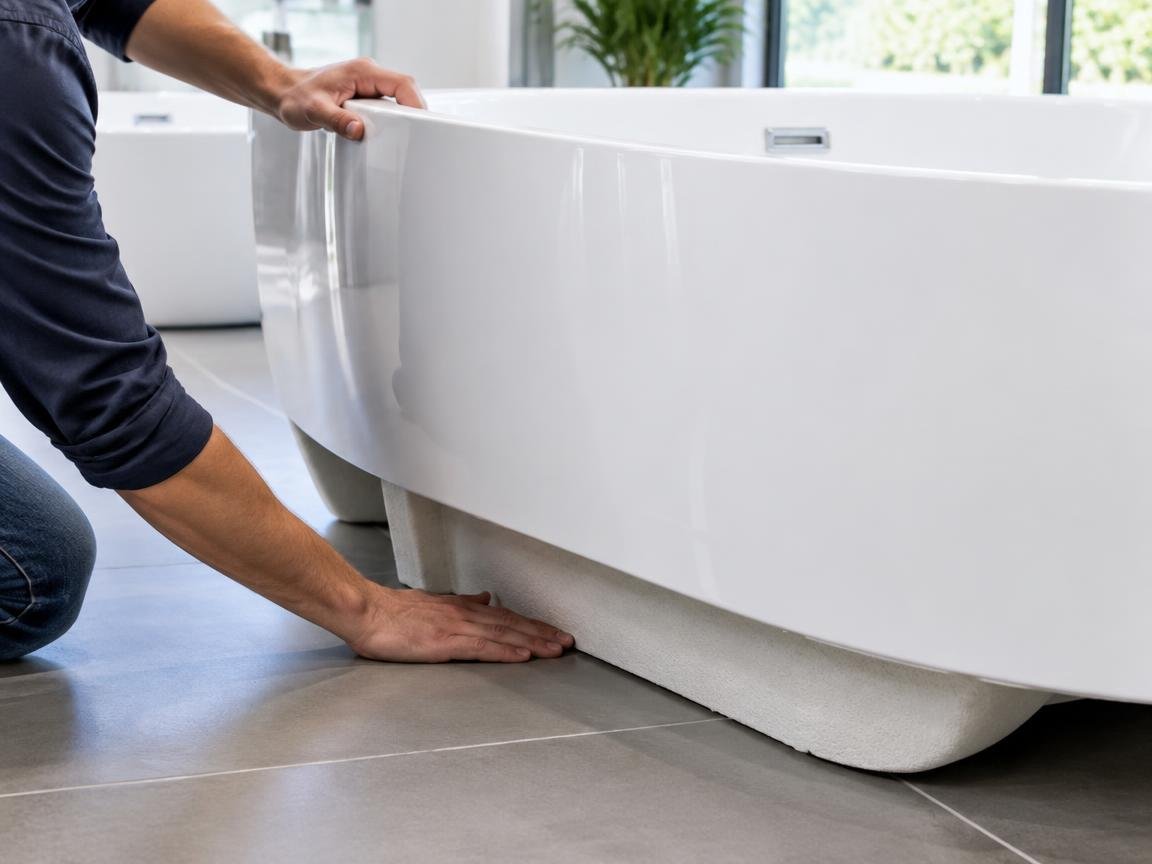
- The Rim Deflection Check: Place your hands along the top edge of the tub wall and apply firm downward and lateral pressure. A premium tub made from 100% pure acrylic sheets should feel solid. If the acrylic rim deflects, squeaks, or bows under moderate hand pressure, it will flex under full water weight.
- Basin Floor Rigidity: Step inside the unit if the retailer allows. If the floor groans or depresses noticeably under your body weight, the structural base lacks adequate fiberglass reinforcement or wooden sub-base encapsulation.
- Adjustable Leveling Base Inspection: Look underneath the freestanding tub skirt. Quality models feature integrated stainless steel or coated heavy-gauge metal frames with adjustable horizontal feet to accommodate uneven bathroom subfloors.
Inspecting Drain Alignments and Overflow Assemblies
Plumbing integration issues cause the vast majority of post-purchase installation headaches. When browsing rectangular alcove tubs or drop-in designs, look closely at how the drain channel is engineered.
Many quality tubs feature reversible drain configurations. This allows the tub to adapt to existing rough-in plumbing without costly subfloor concrete cutting.
For freestanding units, verify that the overflow is fully integrated and factory-sealed. An integrated overflow channel eliminates external drainage pipe routing behind the shell, reducing leak potential. Ensure the pop-up drain mechanism seals tightly and that drain trims (such as brushed gold, chrome, or matte black) match your planned bathroom sink and shower fixtures.
Testing Ergonomics and Real-World Comfort on the Showroom Floor
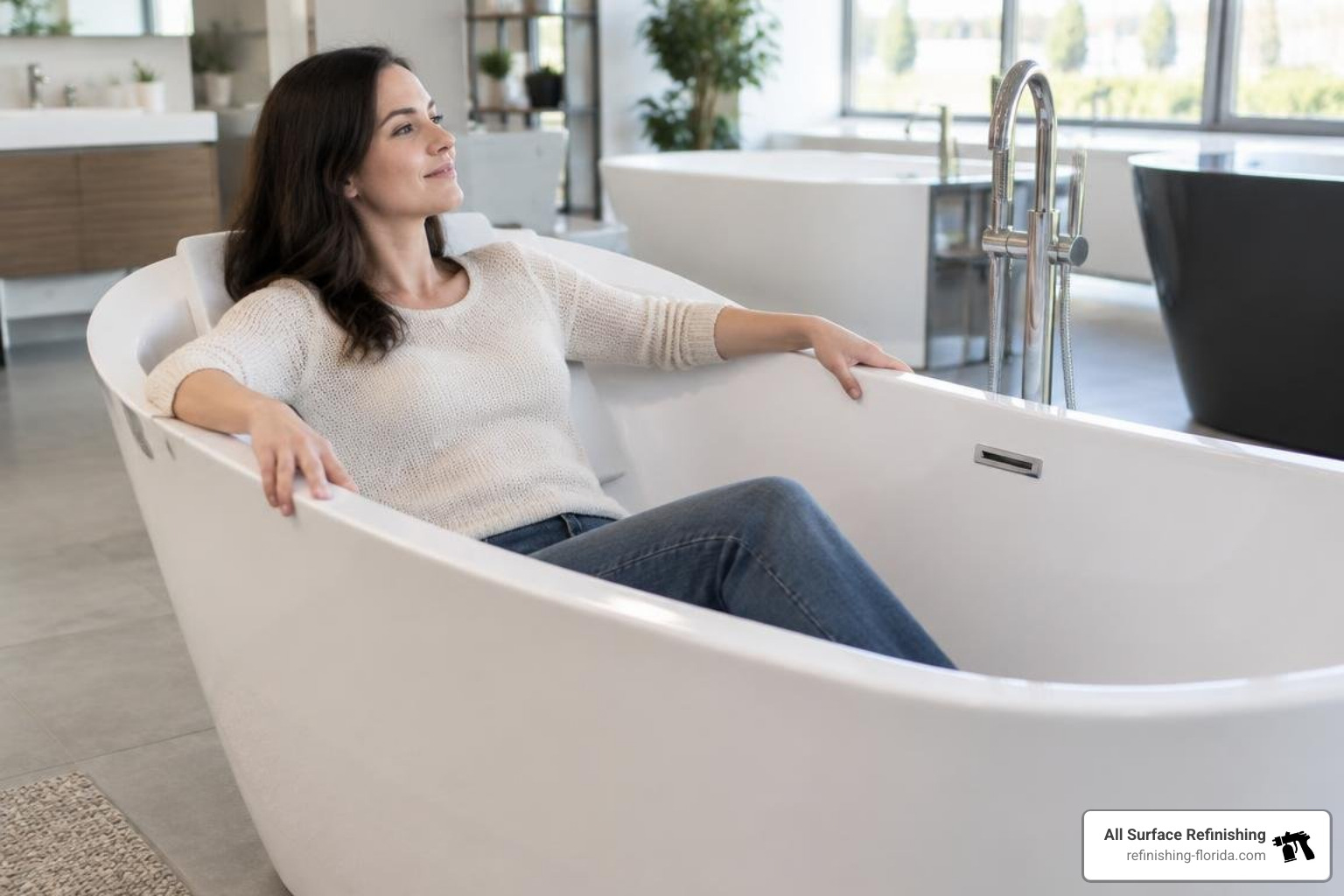
A bathtub is one of the few home fixtures designed for prolonged, direct physical contact. A tub can have rave reviews and flawless aesthetics, but if the backrest angle pinches your spine or your knees press uncomfortably against the sidewall, you will never enjoy it.
Finding the Right Fit for Soaking Depth and Basin Width
When showroom staff grant permission, remove your shoes and sit in the display model. Pay close attention to these internal ergonomic factors:
- Lumbar Slope Angle: An upright wall angle (common in compact space-saving tubs) forces you to sit at an alert 90-degree angle. Premium soaking tubs provide a gentle 25- to 35-degree recline for true back and shoulder relaxation.
- Effective Soaking Depth: Check the distance from the bottom of the basin to the overflow cut-out. A tub might have an exterior height of 24 inches, but if the overflow cutout is placed low, your actual soaking depth may only be 12 to 14 inches. High-capacity tubs offer true 16-inch or higher immersion depths.
- Shoulder and Basin Width: Lean back completely. Do your shoulders rest comfortably within the rim, or are your arms forced inward? Double-ended flatbottom tubs feature center drains and dual sloped backrests, allowing comfortable bathing from either end.
Assessing Entry Height and Slip-Resistant Bottoms
Accessibility and everyday safety should never take a back seat to luxury. If you are shopping for aging-in-place renovations or multi-generational households in Hollywood or Boynton Beach, step-in ergonomics are critical:
- Threshold Step-Over Height: Measure the distance from the exterior floor to the highest point of the tub rim. High-sided freestanding tubs (often 23 to 28 inches tall) can be hazardous for children or seniors to enter and exit safely.
- Basin Slip Resistance: Inspect the bottom floor texture. Models like the Universal Tubs Builder’s Series 30 in. L x 52 in. W Whirlpool Jetted Bathtub ($2,599.99) incorporate factory-molded textured floor surfaces and ADA-compliant contoured seating to prevent slips.
- Grab Bar Placement: Verify whether the tub deck or adjacent wall framing can accommodate secure grab bar installations.
Comparing New Showroom Fixtures Against Tub Resurfacing Options
Before committing thousands of dollars to a new showroom bathtub, consider the hidden costs of a complete teardown. Buying a new tub off a showroom floor in West Palm Beach or Delray Beach is rarely a simple swap.
Removing an existing cast iron, porcelain, or pressed-steel bathtub often requires tearing out the surrounding tile surround, disrupting subfloor plumbing, cutting drywall, and hiring licensed plumbers, tile installers, and debris removal crews.
Total Replacement Scope vs. Professional Bathtub Restoration
| Renovation Factor | Showroom Purchase & Full Replacement | Professional Tub Resurfacing |
|---|---|---|
| Typical Fixture Cost | $680 – $2,600+ (Tub shell only) | Included in service |
| Additional Labor & Demo | $2,000 – $4,500 (Demolition, plumbing, tile repair) | Zero demolition required |
| Project Downtime | 1 to 3 weeks of bathroom disruption | Ready to use in 24 to 48 hours |
| Surrounding Tile Impact | High risk of damaged tile & wallboard | Existing tile, grout, and fixtures preserved |
| Disposal / Landfill Waste | 80 – 350+ lbs of debris hauled away | 100% eco-friendly, zero landfill waste |
If your existing porcelain or cast iron tub has surface chips, discoloration, or outdated colors but remains structurally sound, full replacement is often unnecessary. Understanding bathtub refinishing costs helps homeowners save 70% to 80% compared to showroom teardown expenses.
With more than 30 years of hands-on experience and over 14,000 completed transformations across South Florida, our team at All Surface Refinishing restores existing bathtubs, tile surrounds, and vanity tops to a brilliant, factory-grade gloss. Check out our complete bathtub resurfacing guide to see how modern cross-linking polymers bond directly to cast iron, steel, and acrylic without tearing your bathroom apart.
Frequently Asked Questions About Shopping for Bathtubs Locally
Can I sit inside showroom display tubs before purchasing?
Yes. Most dedicated plumbing showrooms encourage customers to test the internal fit and lumbar angle of floor models. Always ask a showroom sales consultant for permission first, and remove your shoes before stepping into any acrylic or porcelain display to prevent scratching the surface gloss.
How do I verify if a showroom tub fits existing bathroom plumbing?
Check the tub’s spec sheet for the exact rough-in drain measurement (the distance from the wall framing to the center of the drain outlet). If you want to avoid relocating your floor waste pipe, choose a model with an identical drain orientation (left, right, or center) or a fixture that features a reversible drain kit.
What warranty coverage should I look for on display models?
Review the manufacturer’s warranty for structural cracking, surface fading, and plumbing seals. Standard retail tubs offer 1-year to limited lifetime warranties (such as American Standard’s lifetime residential coverage). If you purchase a discounted floor model directly from a showroom floor, verify in writing that the retail mark-down does not void the manufacturer’s original finish or structural defect warranty.
Conclusion
Inspecting showroom floor models gives you real-world insight into structural rigidity, soaking depth, and ergonomics that online product listings simply cannot provide. By bringing accurate measurements, testing lumbar angles, and inspecting drain configurations, you can choose a fixture that fits your space and budget perfectly.
However, if your bathroom renovation is driven primarily by worn surfaces, outdated colors, or localized rust stains, you may not need a full tear-out. At All Surface Refinishing, we help property owners across Broward, Miami-Dade, and Palm Beach counties revitalize their bathrooms in as little as one day.
Contact us today to explore our professional bathtub refinishing services and get a fast, accurate quote for your home.
