
How to Refinish a Porcelain Bathtub
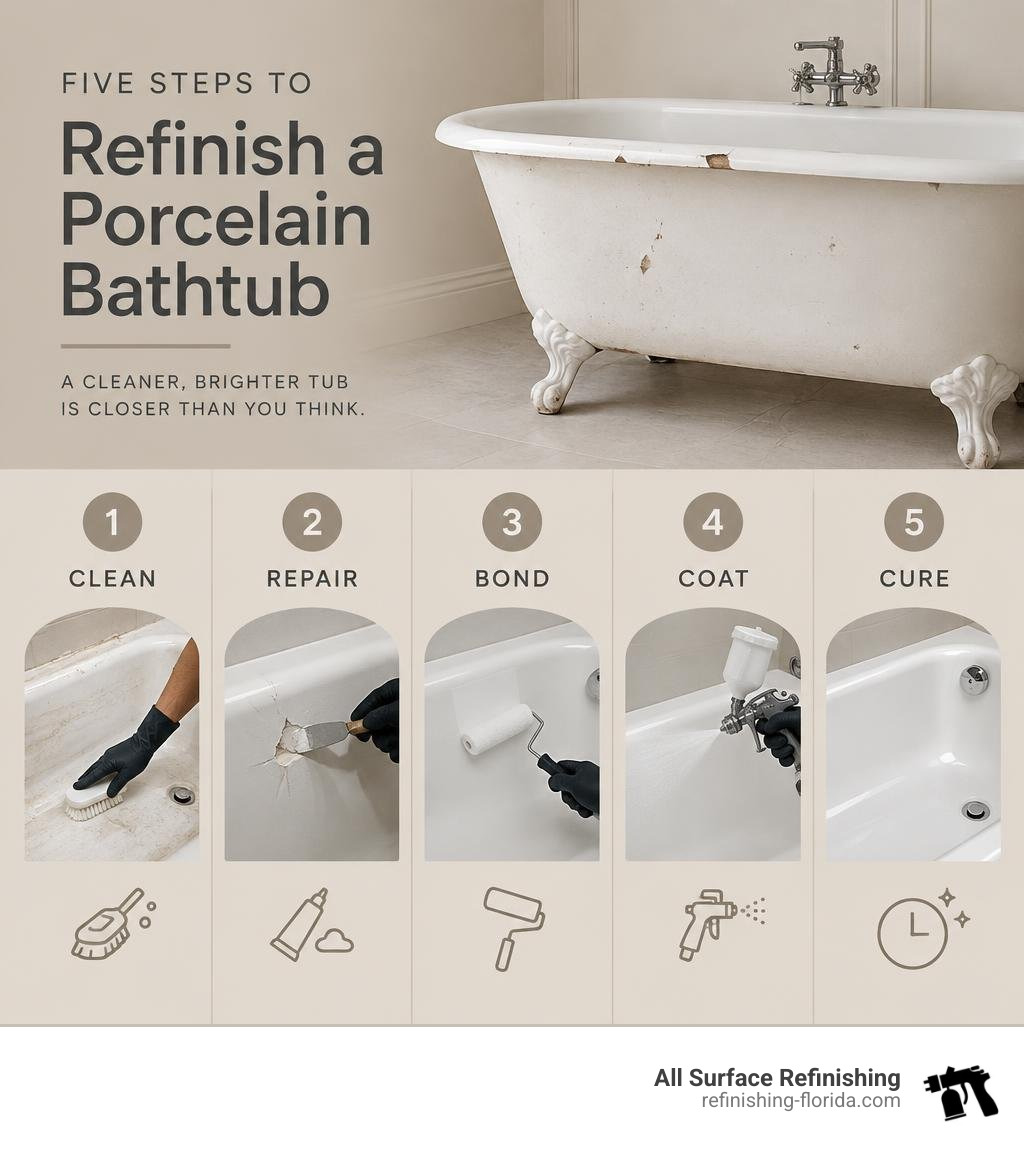
If the tub is structurally sound, you can often refinish it without removing it. The five steps are:
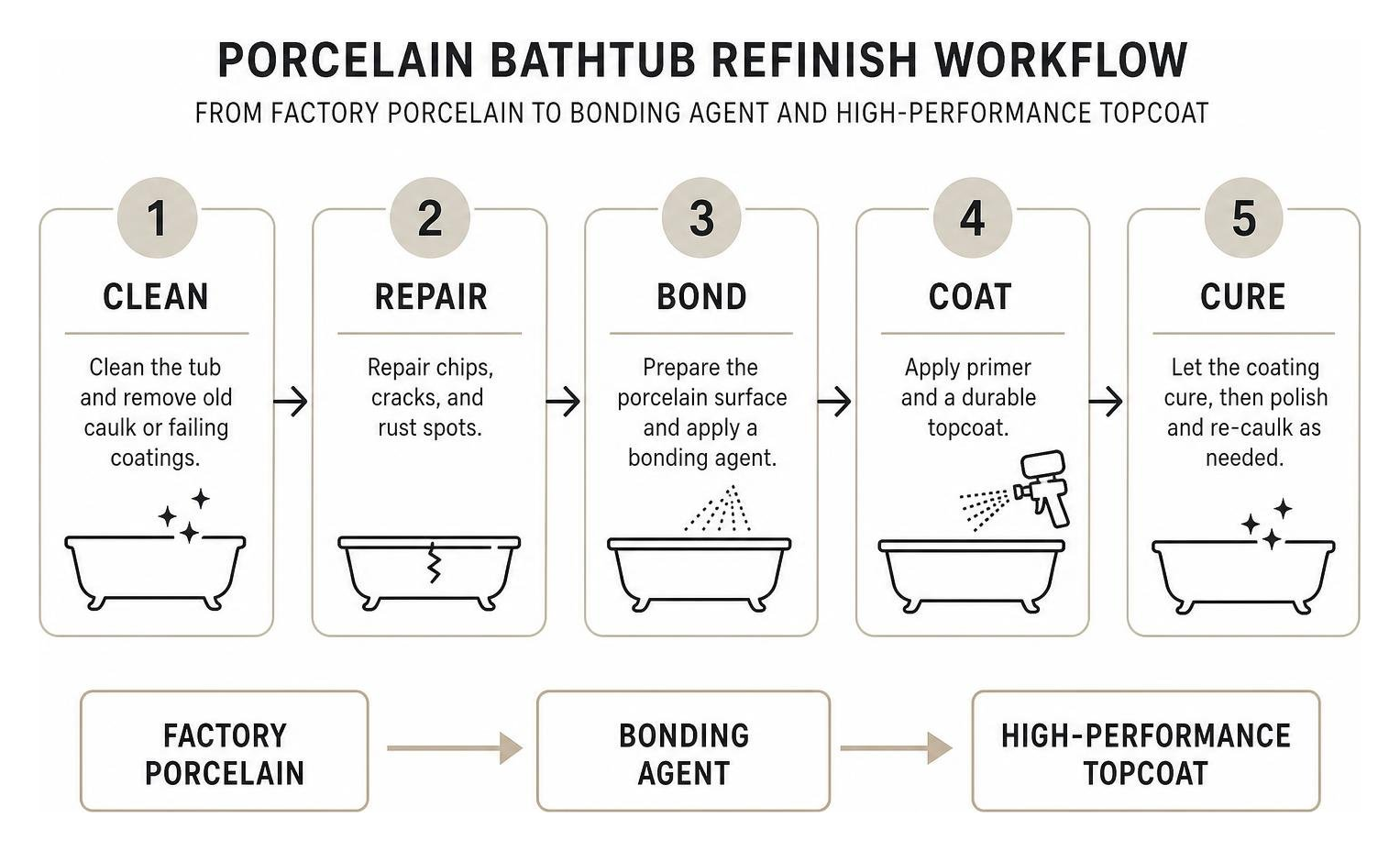
- Clean the tub and remove old caulk or failing coatings.
- Repair chips, cracks, and rust spots.
- Prepare the porcelain surface and apply a bonding agent.
- Apply primer and a durable topcoat.
- Let the coating cure, then polish and re-caulk as needed.
A professional porcelain bathtub refinish gives a worn tub a fresh look with far less disruption than total replacement. But surface prep, coating fumes, and cure time matter. A professional can help you get an even finish and avoid adhesion problems.
I’m Frank Hernandez, president of All Surface Refinishing, and I’ve worked in surface refinishing since 2011. In this guide, I’ll use my experience with porcelain bathtub refinish projects to explain what happens at each step.
For related bathroom fixture repairs, explore our guides on acrylic tub scratch repair and patching fiberglass tubs and showers.
Understanding Porcelain Bathtub Refinish, Reglazing, and Resurfacing
Homeowners often ask us about the difference between refinishing, reglazing, and resurfacing a bathtub. In the restoration industry, these three terms are used interchangeably. Each phrase describes the exact same mechanical and chemical process: restoring an existing fixture’s worn outer layer by repairing defects, applying a molecular bonding agent, and spraying high-performance coatings over the original substrate.
True porcelain enamel is a glass material fused to cast iron or heavy pressed steel inside industrial kilns at temperatures exceeding 1,500 degrees Fahrenheit. Because firing a kiln inside a residential bathroom is impossible, modern refinishing uses advanced polymers. We apply high-grade epoxy primers paired with acrylic urethane topcoats designed to bond chemically to the original porcelain. To dive deeper into the technical chemistry, check out our comprehensive porcelain bathtub resurfacing manual, or consult our professional bathtub reglazing guide for complete material breakdowns.
Assessing Your Tub: Is It a Good Candidate for Restoration?
Not every fixture needs replacement, but you must ensure your bathtub is structurally sound before investing in refinishing. The ideal candidate has cosmetic issues rather than severe structural degradation. Surface dullness, hard water etching, discoloration, minor rust around the drain, and surface chips are easily repaired during the restoration process.
Heavy vintage fixtures—especially built-in cast iron tubs and antique freestanding models—are prime candidates. Removing a heavy cast iron bathtub often requires sledgehammers, tearing out surrounding bathroom tiles, and re-framing walls. You can read more about preserving these timeless heavy metal fixtures in our cast iron tub restoration article.
Porcelain Bathtub Refinish Candidates and Suitability
To help determine if restoration fits your bathroom goals, we have compared the common surface conditions:
| Surface Condition | Restoration Suitability | Typical Downtime | Expected Lifespan | Impact on Surrounding Tile |
|---|---|---|---|---|
| Dull, stained, or etched porcelain | Excellent candidate | 24–48 hours | 10–15 years | Zero tile disruption |
| Chipped or scratched enamel | Excellent candidate | 24–48 hours | 10–15 years | Zero tile disruption |
| Surface rust around drain/overflow | Good candidate (requires spot treatment) | 24–48 hours | 10–12 years | Zero tile disruption |
| Previously painted or reglazed tub | Good candidate (requires chemical stripping) | 48 hours | 10–15 years | Zero tile disruption |
| Severe structural cracking through cast metal | Poor candidate (requires full replacement) | 1–2 weeks | N/A | Substantial tile tear-out |
Benefits of Professional Refinishing
Professional refinishing relies on specialized surface etching, silane molecular primers, and High-Volume Low-Pressure (HVLP) spray guns to achieve lasting results. This equipment atomizes the coating into a factory-smooth, mirror-like finish that basic application methods cannot replicate. Moreover, experienced technicians back their workmanship with multi-year warranties, giving you peace of mind that the coating will not lift when you take a hot bath.
Step-by-Step Guide to Refinishing a Porcelain Bathtub
Refinishing a tub is a meticulous process that balances chemistry, mechanical abrasion, and paint application. Review our 5-step tub refinishing process and our overview on restoring bathtub surfaces to see how every stage works together.
Step 1: Deep Cleaning and Stripping the Surface
The first step involves removing every trace of silicone caulk around the perimeter joints. Acrylic topcoats will not adhere to silicone residue. Technicians use heavy-duty industrial degreasers and acidic solutions to remove soap scum, body oils, and mineral scale. If the bathtub was coated in the past, technicians apply industrial stripping solvents to remove the failing paint down to the bare porcelain enamel.
Step 2: Repairing Chips, Cracks, and Rust Spots
Once the bare porcelain is clean and dry, technicians grind down any rust pockets around the drain and treat the bare metal with rust-inhibiting converters. Gouges, chips, and surface cracks are filled with high-strength waterproof polyester fillers. After curing, these repair patches are sanded smooth and feather-edged flush with the surrounding porcelain surface so no uneven spots remain.
Step 3: Etching and Applying the Bonding Agent
Because porcelain is non-porous and glass-smooth, high-performance topcoats require a mechanical and chemical profile to anchor to. Technicians apply a mild acid wash or mechanical micro-abrasion process to create microscopic pores in the porcelain glaze. After neutralizing and drying the surface, a wipe-on silane molecular bonding agent is applied. This clear agent acts as a molecular bridge, chemically fusing the upcoming primer directly to the glass substrate.
Step 4: Spraying Primer and High-Gloss Acrylic Topcoat
All adjacent walls, fixtures, floors, and vanities are masked with poly sheeting and painter’s tape to prevent overspray. Using an HVLP turbine spray system, the technician applies two to three coats of a specialized epoxy primer.
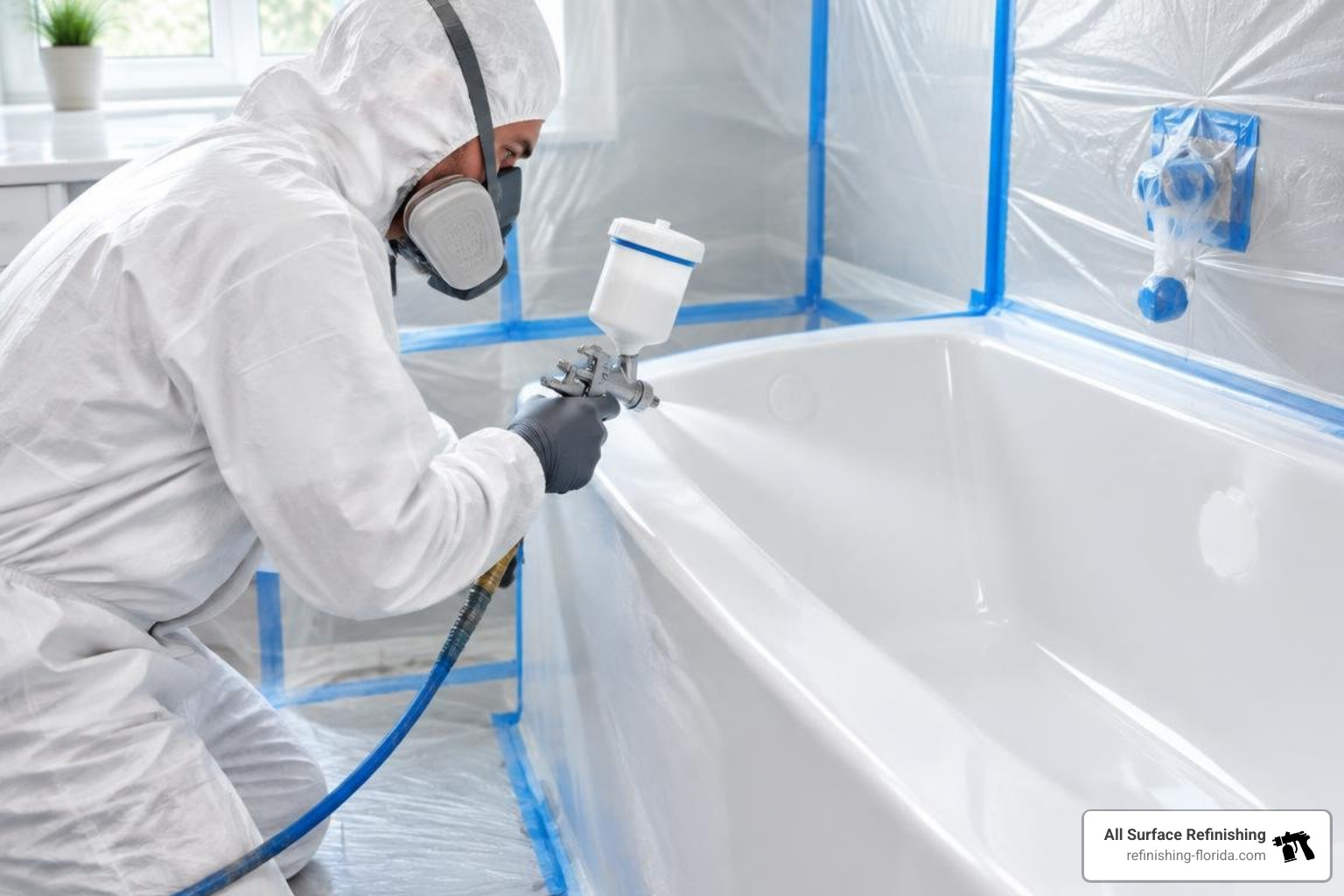
Once the primer flashes, multiple coats of an aliphatic acrylic urethane topcoat are sprayed over the tub. This high-solids coating flows out into an ultra-smooth, high-gloss shell with uniform thickness.
Step 5: Curing, Polishing, and Re-Caulking
The coating enters a tack-free stage within a couple of hours and requires 24 to 48 hours to cure completely. After the curing window, any minor surface dust nibs are wet-sanded using ultra-fine abrasive paper and buffed with commercial polishing compounds. The technician pulls the masking paper, cleans the perimeter, and installs a fresh bead of commercial-grade, mold-resistant caulk along the tub-to-tile joint line.
Critical Factors: Costs, Fume Safety, and Longevity
Planning a bathroom update requires balancing your budget, safety, and long-term care habits.
Estimating Your Porcelain Bathtub Refinish Budget
A typical professional bathtub refinish costs between $300 and $700 depending on fixture dimensions, existing damage, and project complexity. Projects requiring extra prep work—such as stripping away a failing DIY paint kit or fixing deep rust pockets—can cost more due to the additional labor and chemicals required.
For detailed cost breakdowns and budget planning tips, see our guides on porcelain tub refinishing costs and our overall bathtub refinishing budget guide.
Fume Mitigation and Proper Ventilation Safety
The solvents, primers, and urethane topcoats used in professional refinishing release volatile organic compounds (VOCs) that produce strong paint odors. Mitigating these fumes is essential for indoor air quality and safety.
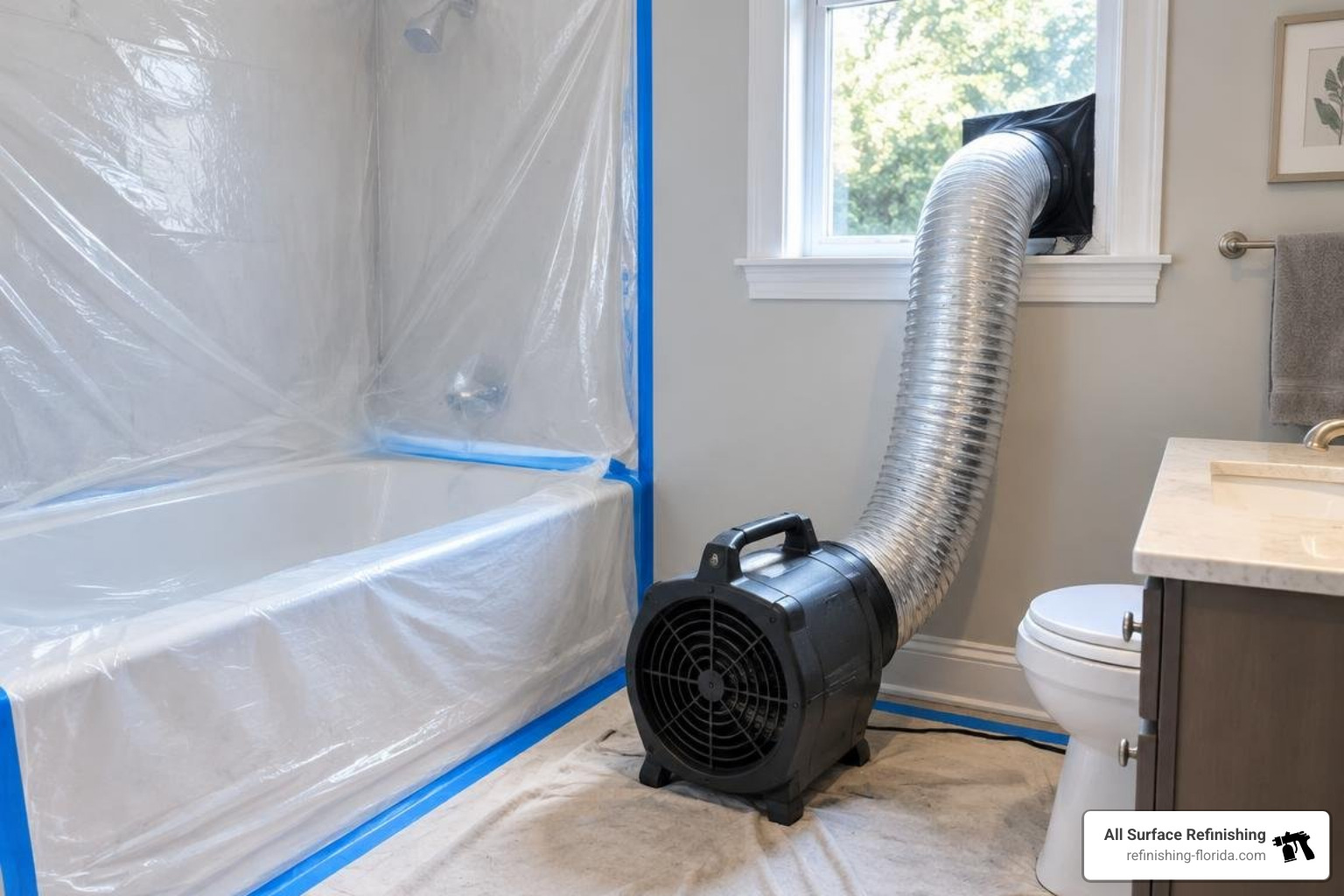
Professional technicians wear full-face respirators equipped with organic vapor cartridges during the spraying process. We also set up heavy-duty negative air exhaust fans connected to flexible ductwork routed out of the nearest window. This equipment pulls airborne overspray and solvent fumes directly out of your home while drawing fresh air into the work zone. Homeowners and pets often prefer to step out or vacate the immediate area for 3 to 5 hours until the primary venting process concludes and the odors dissipate.
Maintenance Routine to Maximize Lifespan
A professionally refinished bathtub can easily last 10 to 15 years with simple, gentle maintenance. Avoid abrasive cleaning powders, bleach, ammonia, and scouring pads, as they create micro-scratches that dull the gloss and trap dirt.
Instead, wipe down the tub after use and clean it regularly with non-abrasive liquid dish soap or a dedicated foaming bathroom cleaner using a soft microfiber towel or sponge. For more details on preserving the high-gloss shine, read our guide on how long resurfaced tubs stay shiny. Re-caulk the perimeter seam every few years to keep moisture from seeping behind the edges.
Frequently Asked Questions About Bathtub Reglazing
How long does a refinished bathtub surface last?
A professionally refinished porcelain bathtub will last between 10 and 15 years when properly maintained. The exact lifespan depends on the quality of the bonding agent, the film thickness of the urethane topcoat, and whether the surface is cleaned with non-abrasive products.
Can other bathroom fixtures like sinks and tile surrounds be refinished?
Yes. Ceramic wall tiles, fiberglass shower pans, pedestal sinks, cast iron basins, and vanity countertops can all be refinished using similar prep, bonding, and spraying methods. This allows homeowners to update their bathroom color palette without replacing underlying fixtures.
What cleaners should be avoided on a reglazed tub?
Avoid abrasive scouring powders, bleach, acidic descalers, aerosol drain cleaners, and rough green scouring pads. These cleaners will strip the protective acrylic gloss layer, turning the glossy finish dull and porous over time. Stick to pH-neutral spray cleaners and soft cloths.
Conclusion
Refinishing your porcelain bathtub restores its deep gloss, eliminates unsanitary chips and stains, and saves you thousands of dollars compared to a messy bathroom teardown. With proper prep, industrial bonding agents, and professional spraying techniques, your classic bathtub can look brand new for over a decade.
At All Surface Refinishing, we bring over 30 years of industry experience and more than 14,000 completed transformations to homes across South Florida. Whether you are located in Miami, Fort Lauderdale, West Palm Beach, Boca Raton, Coral Gables, or surrounding communities, our team is ready to update your space. Visit our professional bathtub refinishing services page today to request a free quote and give your tub a beautiful, durable new look.
