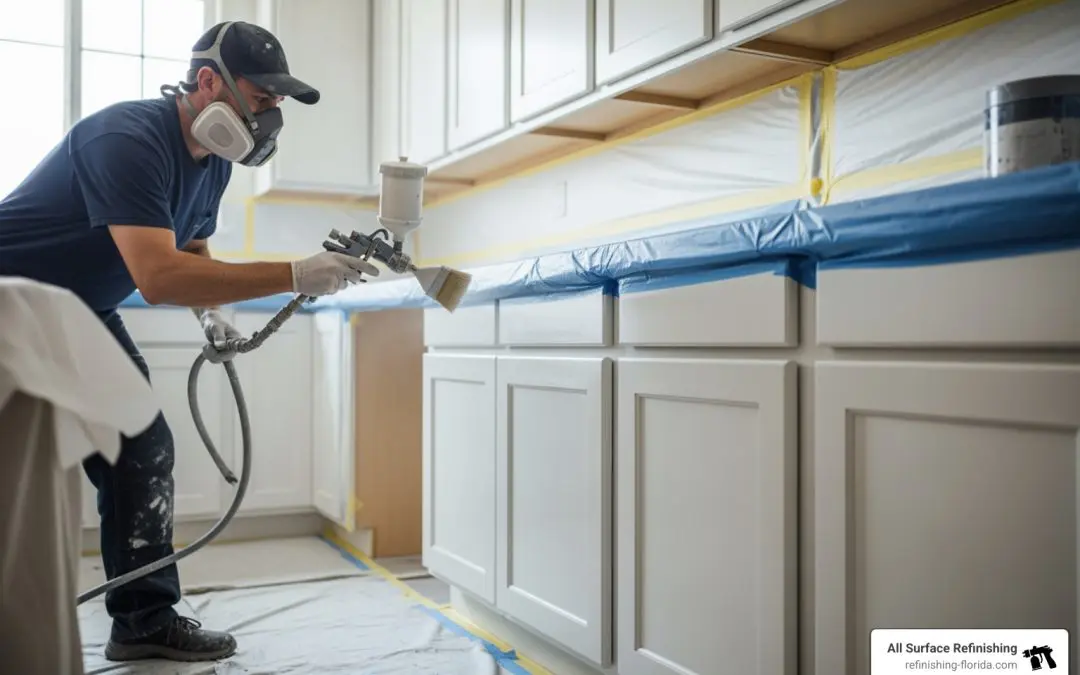
Why Choosing the Right Paint Makes All the Difference
Best paint for cabinets is a critical decision that determines whether your kitchen change lasts for years or starts chipping within months. After testing countless products on hundreds of cabinet projects across South Florida, we’ve identified the top performers that deliver professional, durable results.
Quick Answer: Top Cabinet Paint Recommendations
Best Overall: Sherwin Williams Emerald Urethane Trim Enamel
- 4-hour recoat time
- Self-leveling formula
- Exceptional durability
- $109/gallon (often on sale)
Best Budget Option: Dutch Boy Cabinet, Door and Trim Alkyd Enamel
- Professional-grade finish
- Strong adhesion
- $55/gallon
Best for DIYers: Benjamin Moore Advance
- Easy application
- Minimal brush strokes
- 16-hour dry time between coats
Best Fast-Drying: PPG Break-Through!
- 1-hour recoat time
- Low VOC
- Excellent coverage
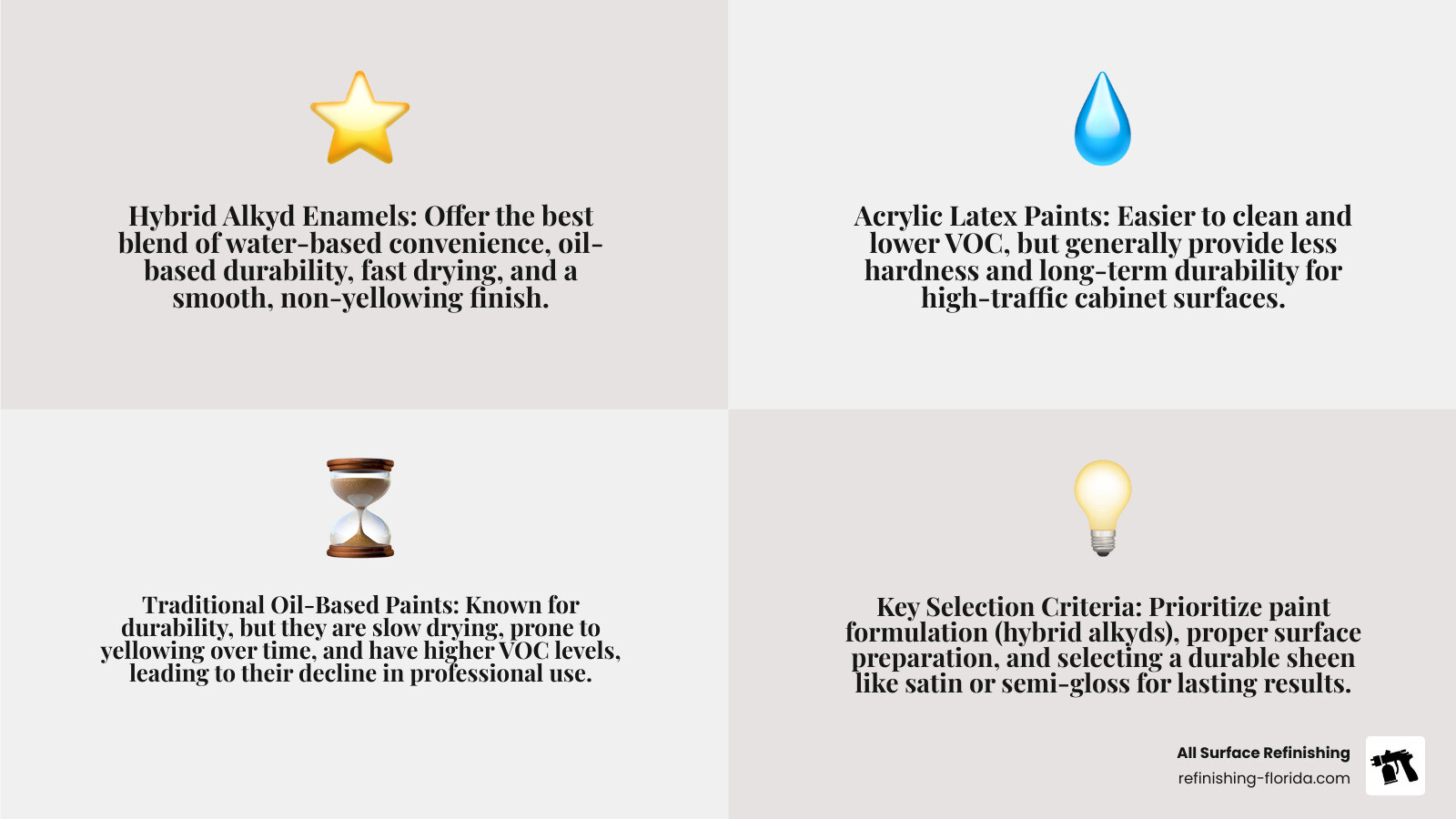
The difference between a good cabinet paint job and a great one comes down to three things: the paint formulation (hybrid alkyd enamels outperform traditional latex), proper surface preparation (cleaning, sanding, and priming), and the right sheen (satin or semi-gloss for durability and easy cleaning).
Modern hybrid paints combine water-based convenience with oil-based durability. They dry faster, resist yellowing, and provide that smooth, factory-like finish that homeowners expect. Water-based alkyds have essentially replaced traditional oil paints in professional applications.
I’m Frank Hernandez, President of All Surface Refinishing, and I’ve personally overseen hundreds of cabinet painting projects throughout Miami-Dade, Broward, and Palm Beach counties since 1996. Through extensive testing and real-world application of every major best paint for cabinets product on the market, I’ve learned exactly which formulations hold up to South Florida’s humidity, daily wear, and frequent cleaning.
Choosing the Best Paint for Cabinets: Key Factors to Consider
When it comes to selecting the best paint for cabinets, we consider several crucial factors that ensure not just a beautiful finish, but one that truly lasts, especially in high-traffic areas like kitchens and bathrooms. Our goal is always to deliver results that stand up to daily use, frequent cleaning, and even the occasional rogue cooking splatter.
The most important factors we evaluate include:
Durability: Kitchen and bathroom cabinets endure a lot. They’re touched constantly, exposed to moisture, grease, and cleaning agents. The paint needs to be tough enough to resist scuffs, scratches, and chipping. While traditional oil-based paints were once the go-to for their extreme durability, modern water-based paints, especially hybrid alkyds, have evolved to be equally durable without the drawbacks. They are designed to withstand significant wear and tear, ensuring your cabinets look fresh for years.
Self-Leveling and Flow: This refers to the paint’s ability to smooth out evenly after application, minimizing brush strokes and roller marks. A paint with excellent self-leveling properties will spread to a smooth film, creating a flawless, factory-like finish that professionals strive for. This is particularly important for achieving a sleek, modern look on your cabinets.
Scrubbability: Our “scrubbability” test, as we like to call it, measures how well a paint can be cleaned without being damaged. In a busy South Florida kitchen, spills and grime are inevitable. A good cabinet paint must allow for easy cleanup without compromising the finish. This means the paint won’t wear down or come off when scrubbed, maintaining its appearance even after repeated cleaning.
Adhesion: Strong adhesion is the foundation of a long-lasting paint job. The paint needs to bind securely to the cabinet surface, preventing peeling or flaking. This is where proper surface preparation and the use of a strong binding primer become critical. Primers bond both mechanically and chemically to the surface, creating a uniform base for the paint to truly stick.
VOC Levels: Volatile Organic Compounds (VOCs) are chemicals found in many paints and household products. Short-term exposure can cause headaches and eye irritation, while chronic exposure can lead to more serious health issues. We prioritize low or zero VOC paints to ensure better indoor air quality for your home and our team. Many high-quality modern paints are now Greenguard Gold Certified, meaning they meet stringent standards for low chemical emissions.
Here’s a quick comparison of traditional water-based (latex) and oil-based paints, and how modern hybrid formulations offer the best of both worlds:
| Feature | Traditional Water-Based (Latex) | Traditional Oil-Based | Modern Hybrid (Waterborne Alkyd) |
|---|---|---|---|
| Drying Time | Fast (few hours) | Slow (24+ hours) | Moderate (4-16 hours) |
| Odor | Low | Strong | Low |
| Cleanup | Easy (water) | Easy (mineral spirits) | Easy (water) |
| Durability | Good, but can be less hard | Excellent, very hard | Excellent, very hard |
| Yellowing | No | Yes, over time | No |
| Flexibility | High | Low (can crack) | Good |
Top-Rated Paint Brands for Professional Results
When we tackle a cabinet painting project in your Aventura, Coral Gables, or Jupiter home, we know that the quality of the paint directly impacts the final outcome. That’s why we rely on top-tier brands and formulations designed specifically for cabinetry. The advancement in paint technology, particularly with hybrid enamels and waterborne alkyds, has been a game-changer for achieving durable, factory-smooth finishes. These modern paints offer the best of both worlds: the easy cleanup and low VOCs of water-based products combined with the hard, durable finish of traditional oil-based paints.
We use these advanced paints to transform kitchens and bathrooms across Miami, Fort Lauderdale, and Palm Beach, delivering results that look brand new without the cost of replacement. For more information on how we can transform your space, explore our kitchen cabinet painting services.
Best Paint for Cabinets: Hybrid Enamels
Hybrid enamel paints are at the forefront of cabinet refinishing. They are engineered to provide exceptional durability, superior self-leveling, and a beautiful, hard finish.
Sherwin Williams Emerald Urethane Trim Enamel: This is hands-down one of our top recommendations for the best paint for cabinets. We’ve seen it perform brilliantly in countless projects, from Hollywood to Pembroke Pines. It’s a water-based urethane-modified alkyd enamel that strikes an incredible balance. It offers the ease of use and quick dry time of a water-based paint (recoat time is typically just 4 hours!) with the hard, professional finish of an oil-based product. It’s known for its incredible coverage and self-leveling properties, which help us achieve that coveted factory-smooth finish. While it retails around $109 per gallon, its quality and durability make it a worthwhile investment. You can find more details on the Sherwin-Williams Emerald Urethane Trim Enamel product page.
Benjamin Moore Advance: Another powerhouse in the hybrid category, Benjamin Moore Advance is often lauded as the overall best paint for cabinets by many professionals. It’s a waterborne paint designed to mimic the look and feel of oil paint without the environmental impact. It offers outstanding coverage and dries to a super smooth finish, excelling in scrubbability tests. While its dry time between coats is longer at 16 hours, the result is a durable, non-yellowing finish that is highly resistant to wear and tear. At around $60 per gallon, it offers excellent value for its quality. You can learn more about Benjamin Moore Advance on their website.
Best Paint for Cabinets: Specialty and Budget Options
While hybrid enamels often lead the pack, there are other excellent options available depending on your specific needs, budget, and desired finish.
PPG Break-Through!: This is a multipurpose, quick-drying paint that’s fantastic for projects where speed is essential. Similar to Benjamin Moore Command (which is primarily for commercial applications and can dry hard enough for a forklift to drive over in 24 hours!), PPG Break-Through! can be recoated in about an hour and is dry to the touch in just 15 minutes. This makes it ideal for faster project turnarounds in busy areas like Coral Springs or Davie.
General Finishes Milk Paint: For those seeking an acrylic option, General Finishes Milk Paint is a fantastic choice, particularly for DIYers looking for ease of use. It retails around $100 per gallon and is known for its unique, free-flowing nature that makes it enjoyable to work with. It boasts excellent adhesion, often minimizing the need for primer, though we always recommend a topcoat for high-use surfaces like kitchen cabinets to improve durability.
Dutch Boy Cabinet, Door and Trim Alkyd Enamel: If you’re looking for the best paint for cabinets on a budget without sacrificing quality, this option often comes out on top. Retailing at about $55 per gallon, it provides a professional-grade finish with strong adhesion. It’s a testament that you don’t always need to break the bank to achieve great results.
The Essential Preparation Process for a Factory Finish
We can’t stress this enough: the secret to a durable, professional-looking cabinet paint job lies in meticulous preparation. Even the best paint for cabinets will fail if the surface isn’t properly prepared. Courtney Longnecker, a home improvement expert, rightly states that “Properly cleaning, sanding, and priming the surface of your cabinets is essential to ensure a durable and high-quality finish.” We follow a rigorous process for every project, whether it’s in Fort Lauderdale, Weston, or any of our service areas.
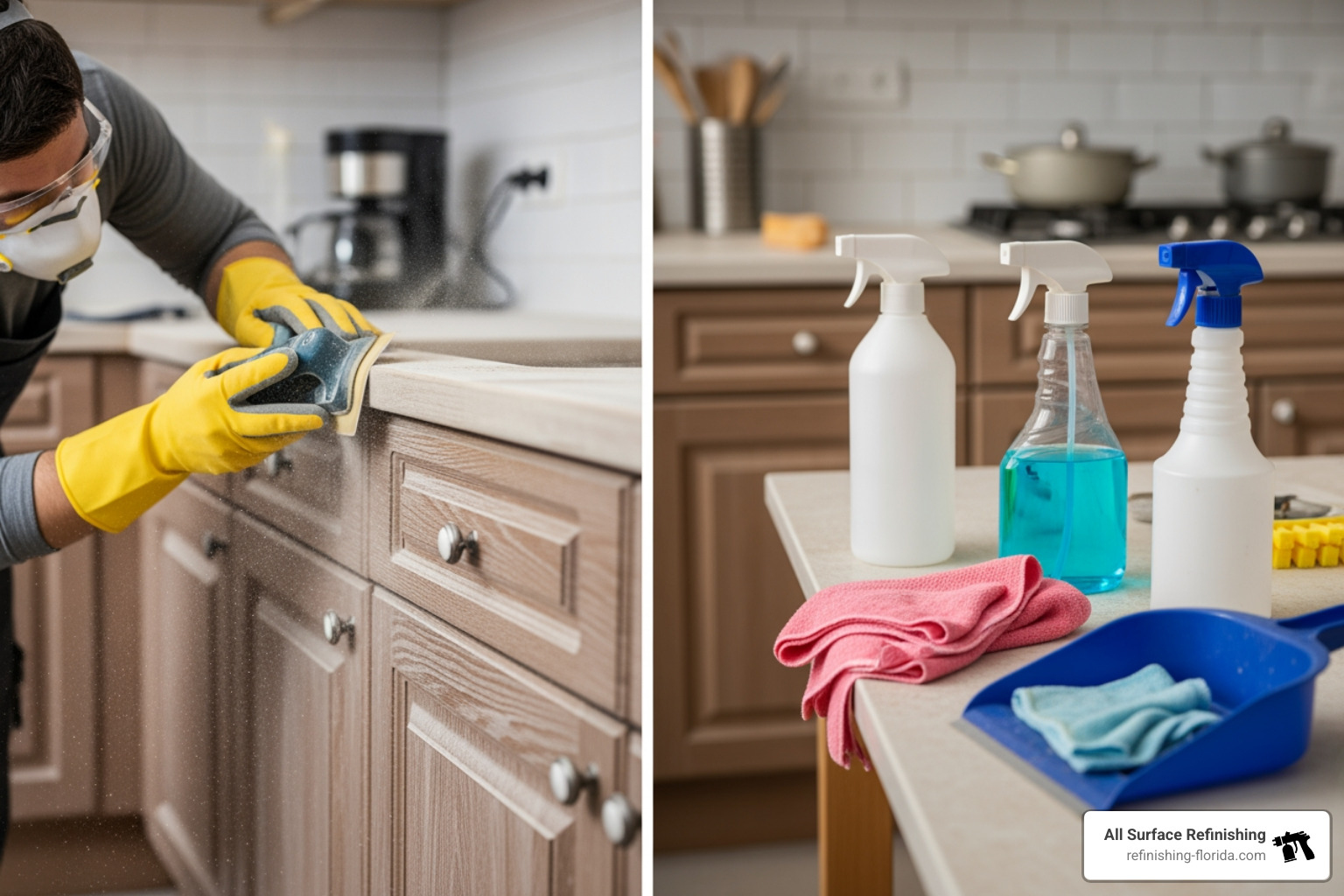
Here’s our essential preparation process:
Degreasing and Cleaning: Kitchen cabinets accumulate grease, grime, and food residue over time. This needs to be thoroughly removed. We start by cleaning all cabinet surfaces with a powerful degreaser like Krud Kutter. This step is non-negotiable; paint simply will not adhere well to greasy surfaces.
Scuff Sanding: After cleaning, we perform a thorough scuff sanding. This doesn’t mean sanding down to the bare wood, but rather roughing up the existing finish just enough so that it’s no longer slick. We typically use 180-grit sandpaper for this. This creates a mechanical bond, helping the primer and new paint adhere much better. For more details on preparing your cabinet doors, check out our guide on cabinet doors refinishing.
Repairs and Wood Filler: Any imperfections, such as small dings, dents, or old hardware holes (if you’re changing hardware), are addressed at this stage. We use high-quality wood filler to repair these areas, sanding them smooth once dry. This ensures a perfectly smooth canvas for the paint. This attention to detail is part of what makes our cabinet painting services in areas like Palm Beach stand out.
Dust Removal: After all the sanding and filling, we carefully remove all dust with a damp cloth or tack cloth. Any leftover dust can compromise adhesion and lead to a bumpy finish.
Recommended Primers for Adhesion
Priming is another critical step that should never be skipped. A good primer creates a strong bond, blocks stains, and provides a uniform surface for the topcoat. Choosing the right primer depends on the cabinet material and its current finish.
Zinsser BIN Shellac-Based Primer: For stain blocking, especially on raw wood or previously stained cabinets that might bleed through, Zinsser BIN shellac-based primer is our go-to. It bonds exceptionally well with lacquer finishes and ensures that no discoloration shows through, particularly when painting with white or light colors. This is crucial for achieving a clean, crisp look in your Miami kitchen. For comprehensive guidance on cabinet refinishing in your area, visit our cabinet painting in Miami guide.
Zinsser Cover Stain (Oil-Based): For better adhesion on slick surfaces or if you’re dealing with deep wood grain, Zinsser Cover Stain is an excellent choice. It provides a strong foundation for the topcoat.
Material-Specific Primers:
- Particleboard and MDF: We recommend a solvent-based primer to help with adhesion, as these materials can absorb water if not sealed well.
- Laminate or Melamine: A high-quality, water-based acrylic urethane primer or sealer is essential to prevent peeling on these challenging surfaces. Some acrylic or alkyd resin formulas even include primer properties for improved adhesion.
- Metal Cabinets: For metal, a rust-protecting base layer is vital to prevent corrosion and ensure the paint adheres properly.
Selecting the Perfect Sheen and Finish
The paint sheen you choose for your cabinets significantly impacts their appearance, durability, and ease of maintenance. It’s a balance between aesthetics and practicality. We guide our clients in areas like Boca Raton, Coral Gables, and Wellington to select the finish that best suits their lifestyle and desired look.
Here’s a breakdown of common sheens and their characteristics for cabinets:
Matte/Flat: While aesthetically pleasing for its soft, non-reflective look, a matte finish is generally not recommended for kitchen or bathroom cabinets. It’s less durable, harder to clean, and prone to showing smudges and fingerprints. It doesn’t stand up well to frequent washing, which is a necessity in these high-traffic areas.
Satin: This is often our top recommendation and a favorite among homeowners. Satin offers a low-to-medium sheen that hides imperfections better than glossier finishes. It provides excellent durability and is much easier to clean than matte. It’s also quite forgiving with fingerprints. Satin strikes a beautiful balance, offering a sophisticated look without being overly shiny.
Semi-Gloss: A popular choice for cabinets, semi-gloss provides a higher sheen than satin, making colors appear vibrant and reflecting more light. This finish is highly durable, easy to clean, and resists mold and mildew, making it ideal for the humid Florida climate. While it can highlight imperfections more than satin, thorough preparation ensures a stunning result.
High-Gloss: This finish offers the highest level of shine and durability. High-gloss paint is extremely tough, making it resistant to scratches and dents, and it’s very easy to clean. It can also make a room appear larger due to its reflectivity. However, its highly reflective surface will accentuate every imperfection on the cabinet surface, requiring impeccable preparation. It’s often used in modern kitchens and baths for a dramatic effect.
For most kitchen and bathroom applications, we find that a satin or semi-gloss finish provides the optimal blend of durability, cleanability, and aesthetic appeal. They withstand daily use, are easy to wipe down, and look fantastic. For more tips on selecting the right options for your home, explore our cabinet painting near me tips.
Frequently Asked Questions about Cabinet Painting
We get a lot of questions about painting cabinets, and rightfully so! It’s an investment in your home, and you want to ensure the best possible outcome. Here are some of the most common questions we hear, backed by our decades of experience.
What is the best sheen for kitchen cabinets?
Based on our experience and the demands of a busy kitchen in areas like Coral Springs or Coconut Creek, we highly recommend a satin or semi-gloss finish for kitchen cabinets.
- Satin offers a beautiful, soft luster that is durable, easy to clean, and excellent at hiding fingerprints and minor imperfections. It provides a sophisticated look without being too reflective.
- Semi-gloss has a slightly higher sheen, which makes it even more durable and easier to wipe clean. It reflects more light, making colors pop and adding a fresh, bright feel to the kitchen. While it can show more imperfections than satin, with our meticulous preparation, the results are stunning.
Matte finishes are generally not practical for kitchens due to their lack of durability and difficulty in cleaning. High-gloss, while very durable, can highlight every tiny flaw and fingerprint. We aim for a balance that provides both beauty and functionality for your home. For more insights on achieving the perfect look, check out our resources on cabinet painting in Coral Springs.
How many coats of paint are typically needed?
To achieve a truly durable and professional-looking finish, we typically apply two coats of paint over a properly primed surface. The number of coats can sometimes vary depending on the original color of the cabinets, the new color being applied, and the paint’s coverage properties. For instance, covering a dark finish with a light color might require an additional thin coat to ensure complete opacity and a uniform color.
The importance of the primer coat cannot be overstated. After thorough cleaning and sanding, we apply a high-quality primer to ensure optimal adhesion and a consistent base. This means, in essence, you’re looking at one coat of primer followed by two coats of your chosen best paint for cabinets. This layering approach builds up the film thickness and creates a robust, long-lasting surface that can withstand the rigors of daily life. For more on how we transform cabinets in areas like Pembroke Pines, visit our page on cabinet painting in Pembroke Pines.
How long should cabinets dry before reinstallation?
Understanding the difference between “dry time” and “curing time” is crucial for cabinet painting. While a paint might feel dry to the touch in a few hours (like Sherwin Williams Emerald Urethane Trim Enamel’s 4-hour recoat time), it takes much longer to fully cure and achieve its maximum hardness and durability.
For optimal results, we recommend allowing painted cabinets to cure for several days before reinstallation. Even after they feel dry, the paint is still hardening. If cabinet doors are reinstalled and closed too soon, they can stick to the cabinet frames, potentially damaging the fresh finish.
For instance, Sherwin Williams Emerald Urethane Trim Enamel typically reaches its full hardness in about a week. Benjamin Moore Advance, with its longer dry time between coats (16 hours), also benefits from a generous curing period. We often advise keeping cabinet doors open for another week after reinstallation to prevent any sticking. This patience ensures that the best paint for cabinets performs as intended, providing a rock-solid finish that will last. For details on local services, see our page on cabinet painting in Wilton Manors.
Conclusion
Choosing the best paint for cabinets is a decision that impacts the longevity and beauty of your kitchen or bathroom for years to come. As Florida’s trusted expert in cabinet refinishing, resurfacing, and painting, All Surface Refinishing has spent over 30 years and completed more than 14,000 projects perfecting the art and science of cabinet change.
We understand the unique challenges posed by South Florida’s climate and the demands of a busy household. Our expertise ensures that every project, from Miami and Fort Lauderdale to Palm Beach, Boca Raton, Boynton Beach, and Coral Springs, receives the highest quality materials and application techniques. We’re proud to offer cost-effective, fast, and high-quality changes that breathe new life into your spaces.
Don’t settle for a paint job that won’t stand the test of time. Let our experienced team help you achieve the durable, beautiful, factory-smooth finish your cabinets deserve. Find more about our comprehensive cabinet services and how we can bring your vision to life by visiting our main services page: More info about our cabinet services.
