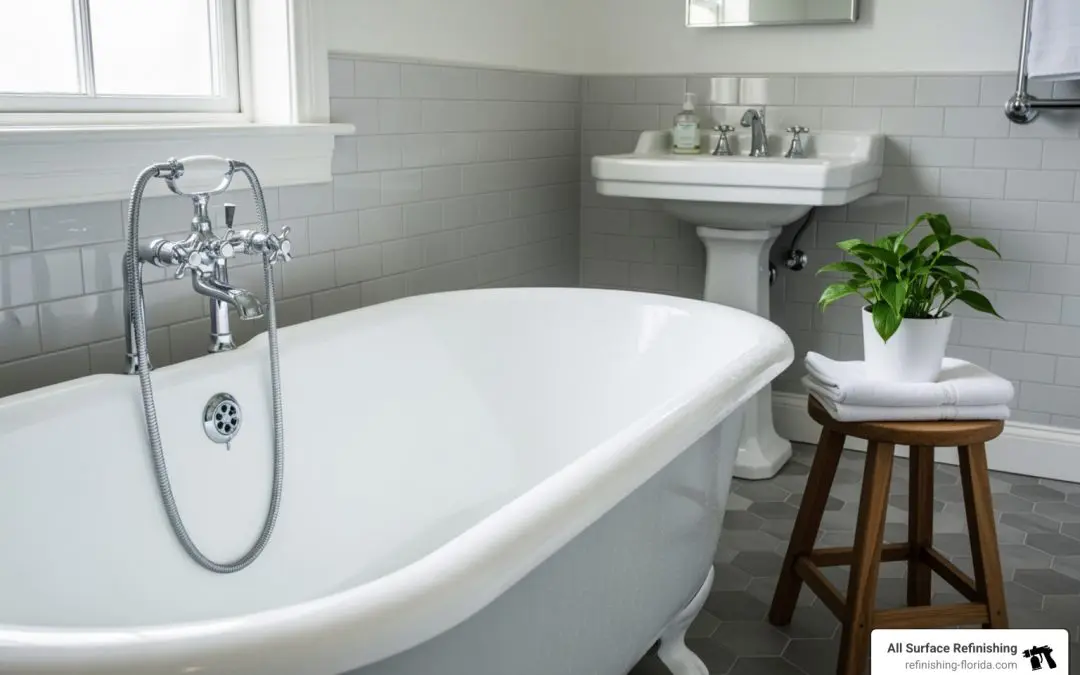
What is Bath Resurfacing and Why It Matters
Bath Resurfacing is a proven process that restores your worn bathtub to a like-new condition by applying a durable coating over the existing surface. Also called reglazing or refinishing, this method is a cost-effective alternative to full replacement.
Quick Answer: Bath Resurfacing at a Glance
- What it is: Applying a new finish coating over your existing bathtub surface
- Cost savings: 50-75% less than replacement (DIY: $100-$200, Professional: $330-$630 vs. Replacement: $1,565-$10,420)
- Time required: 3-5 hours for application, ready to use in 24-48 hours
- Lifespan: 5-10 years for DIY, 10-15 years with professional service
- Best for: Cosmetic issues like chips, stains, discoloration, or outdated colors
Instead of tearing out your entire bathtub and dealing with weeks of disruption, resurfacing addresses the surface layer only. The process involves thorough cleaning, repairing any damage, etching or sanding the surface for adhesion, and applying multiple coats of specialized epoxy or acrylic coating. Most homeowners choose this option because it saves thousands of dollars and avoids the mess of replacing plumbing, tiles, and flooring.
Whether you have a porcelain, cast iron, fiberglass, or acrylic tub, resurfacing can transform its appearance. You can even change the color to match your bathroom’s new style—turning that outdated avocado green into sparkling white.
I’m Frank Hernandez, President of All Surface Refinishing, and I’ve been refinishing surfaces across South Florida since 2011. Over the past decade, I’ve helped thousands of homeowners and property managers find that Bath Resurfacing delivers stunning results without the high cost and disruption of replacement.

Is Bathtub Resurfacing Right for You?
Is your bathtub looking a little worse for wear? Perhaps it’s stained, chipped, or simply an outdated color that clashes with your bathroom decor. Before you resign yourself to the costly and disruptive process of a full replacement, consider Bath Resurfacing. This innovative solution can breathe new life into your existing tub, changing it into a sparkling, like-new fixture.
We understand that deciding between resurfacing and replacement can be tricky. It’s about weighing the extent of the damage, your budget, and how long you want the solution to last. Generally, if your bathtub is structurally sound but cosmetically challenged, resurfacing is an excellent choice.

When to Resurface Your Bathtub
Bath Resurfacing is an ideal solution for a variety of common bathtub problems. If you’re experiencing any of the following, resurfacing could be your perfect match:
- Cosmetic Flaws: Minor chips, spiderweb cracks, peeling, or a flaking finish on your tub can be easily resolved with a fresh new coating. These are surface imperfections that don’t compromise the structural integrity of the tub.
- Stains and Discoloration: Stubborn rust stains, yellowing, or general discoloration that won’t come clean with regular scrubbing are prime candidates for resurfacing. We can make that old, dingy tub look bright and new again.
- Minor Chips and Cracks: If the damage is limited to the surface enamel and doesn’t extend deep into the tub material or cause leaks, resurfacing can effectively fill and cover these imperfections.
- Outdated Colors: Does your bathroom still sport a pastel pink, avocado green, or harvest gold tub from decades past? Resurfacing allows us to change the color of your tub to a crisp white, a modern neutral, or any shade that complements your updated bathroom design.
- Dull Finish: If your tub has lost its original shine and looks perpetually dull, resurfacing will restore that glossy, smooth finish, making it much easier to clean.
For a deeper dive into how we can transform your bathtub, explore More about our bathtub services.
When Bath Resurfacing May Not Be Suitable
While Bath Resurfacing is a remarkably versatile solution, it’s not a magic bullet for every problem. There are instances where a full replacement might be the more appropriate, albeit more expensive, option:
- Major Structural Cracks: If your bathtub has deep, visible cracks that extend through the material or indicate a structural failure, resurfacing won’t be enough to fix the underlying issue. In such cases, the tub’s integrity is compromised, and replacement is necessary.
- Severe Leaks: A leaking tub usually points to significant damage that goes beyond surface imperfections. Resurfacing primarily addresses the surface; it cannot reliably stop leaks originating from structural cracks or faulty plumbing connections.
- Extensive Rust Damage: While minor rust spots can be treated and covered, if the metal base of a cast iron or steel tub is extensively rusted and corroded, its structural integrity may be compromised. Resurfacing over severe rust is generally not recommended as the rust can continue to spread underneath the new coating.
- Warped Tub Material: If your tub is warped or severely deformed, especially common with older fiberglass or acrylic tubs that lack proper support, resurfacing won’t be able to correct the shape. This indicates a foundational problem that requires replacement.
In these situations, trying to resurface would only delay the inevitable and potentially lead to a less durable, unsatisfactory result. Our goal is always to provide the best, most lasting solution for your bathroom.
Cost & Time: Resurfacing Benefits
One of the most compelling reasons homeowners in South Florida choose Bath Resurfacing over replacement is the significant savings in both cost and time. Why go through the mess, time, and expense of replacing a bathtub when you can achieve a like-new look for a fraction of the cost?
Let’s compare the typical costs and timelines:
| Factor | DIY Bathtub Resurfacing | Professional Bathtub Resurfacing | Bathtub Replacement |
|---|---|---|---|
| Typical Cost | $100 – $200 | $330 – $630 | $1,565 – $10,420 (average $6,000) |
| Project Time | 4 – 6 hours | 3 – 5 hours | Several days to 4-5 weeks |
| Usable Time | 1 – 3 days | 24 – 48 hours | Weeks (due to plumbing, tiling, etc.) |
As you can see, refinishing a bathtub is significantly cheaper than replacing it. A $3,000 project cost is a conservative estimate for a bathtub replacement, and a full bathroom renovation can easily exceed $10,000, taking 4-5 weeks to complete. Our professional Bath Resurfacing can save you 50-75% over the cost of replacement, offering thousands of dollars in savings!
Beyond the financial benefits, resurfacing also saves you a tremendous amount of time and hassle. In most cases, a professional resurfacing project can be completed in one day, with your tub ready for normal use in as little as 24-48 hours. This means minimal disruption to your daily routine, unlike the weeks of inconvenience associated with a full replacement that involves plumbers, tile setters, and potential flooring changes.
To learn more about how we can save you money and time, visit Learn more about refinishing costs.
Your DIY Guide to Bath Resurfacing
For those with a penchant for home improvement and a desire to save even more, a DIY Bath Resurfacing project can be a rewarding endeavor. It’s a fantastic way to refresh your tub without hiring a pro, but it does require attention to detail and adherence to safety protocols. This guide will walk you through the process, but remember, the skill level is intermediate, and professional results are often harder to achieve on your own.
Essential Tools and Materials
Before you begin, gather all your supplies. A complete DIY bathtub refinishing kit is your best friend here, as it typically includes most of what you’ll need.
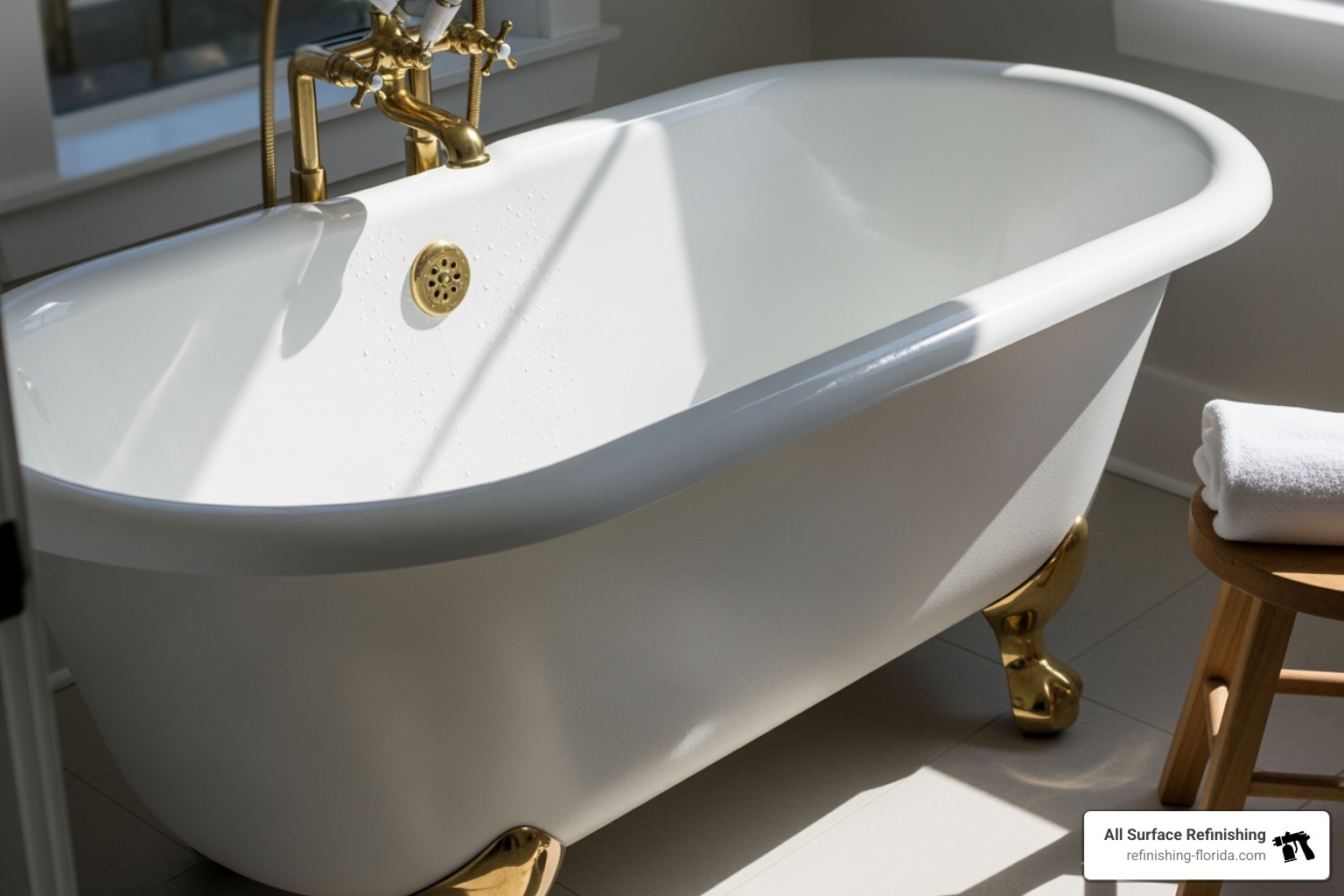
Here’s a list of essential tools and materials:
- Bathtub Refinishing Kit: Look for one that includes epoxy resin, hardener, etching powder, gloves, steel wool, brushes, and cleaning solutions. Many kits are epoxy-based, providing a tough coating.
- Epoxy or Urethane Acrylic Coating: If your kit doesn’t include the main coating, you’ll need to purchase a high-quality, specialized coating designed for bathtubs.
- Safety Respirator: This is CRUCIAL. The fumes from refinishing products are strong and potentially hazardous. Do not use just a dust mask; invest in a proper respirator designed for chemical vapors.
- Chemical-Resistant Gloves: Protect your hands from harsh chemicals.
- Safety Goggles: Essential eye protection.
- Abrasive Cleaners: Ammonia-based cleaners are often recommended for deep cleaning before resurfacing.
- Sandpaper: Various grits (e.g., 220-grit, 400-grit) for sanding and smoothing repairs.
- Painter’s Tape and Drop Cloths: To protect surrounding surfaces (tiles, walls, flooring).
- Putty Knife: For removing old caulk and applying epoxy putty.
- Epoxy Putty: For filling chips and small cracks.
- Ventilation Fans: A bathroom exhaust fan and a box fan placed in an open window will provide necessary airflow.
Step-by-Step Refinishing Instructions
Ready to get started? Follow these steps carefully for the best possible DIY Bath Resurfacing results:
- Step 1: Remove Hardware and Caulk: First, turn off the water supply to the bathroom. Then, remove the faucet, handles, drain, and overflow plate. Use a putty knife to scrape away all existing caulk around the tub. A clean surface is paramount!
- Step 2: Deep Clean the Tub: This is arguably the most important step for adhesion. Scrub the tub thoroughly with an abrasive cleaner or bleach to remove all soap scum, dirt, oil, and mineral deposits. Rinse completely with clean water and dry the tub thoroughly. Repeat if necessary.
- Step 3: Repair imperfections: Use epoxy putty to fill any chips, dings, or small cracks. Follow the product instructions for mixing and application. Once dry, sand the repaired areas smooth with fine-grit sandpaper until they are flush with the tub surface.
- Step 4: Sand and Etch the Surface: To ensure the new coating adheres properly, the existing surface must be dull and slightly porous. Use the etching powder provided in your kit (following its instructions) or sand the entire tub surface with 220-grit sandpaper. This creates a profile for the new finish to grab onto. Rinse the tub thoroughly again to remove all residue and let it dry completely.
- Step 5: Mask the Area: Use high-quality painter’s tape to carefully mask off all areas you don’t want coated, including surrounding tiles, walls, and fixtures. Lay down drop cloths to protect the floor.
- Step 6: Apply Primer and Coating: If your kit includes a primer, apply it first according to the instructions. Once dry, mix the epoxy or urethane acrylic coating carefully. Apply the coating in multiple thin, even layers (typically 2-3 coats) using a foam roller and brush. Avoid drips and runs. Allow adequate drying time between each coat as specified by the manufacturer. Work quickly, as these coatings often have a limited working time.
- Step 7: Allow for Proper Curing: This is a critical final step. Do NOT use the bathtub for at least 24 to 72 hours, or as long as the manufacturer recommends. Premature use can damage the freshly applied coating. Once fully cured, you can re-caulk the edges with new silicone caulk and reinstall your hardware.
Crucial Safety Precautions for Bath Resurfacing
Working with refinishing chemicals requires extreme caution. Your safety is paramount.
- Proper Ventilation: Ensure maximum airflow. Turn on your bathroom’s exhaust fan and open all windows in the bathroom and adjacent rooms. Placing a box fan in an open window, blowing outwards, can help draw fumes out of the room.
- Personal Protective Equipment (PPE): Always wear a proper chemical-vapor respirator, chemical-resistant gloves, and safety goggles. These are non-negotiable for protecting your respiratory system, skin, and eyes from strong fumes and splashes.
- Handling Chemicals Safely: Read all manufacturer instructions for each product in your kit. Pay close attention to mixing ratios, application methods, drying times, and disposal guidelines. Avoid skin contact and inhalation.
- Reading Manufacturer Instructions: Every refinishing kit is different. The instructions provided with your specific kit are your most important safety and application guide. Follow them precisely.
Professional vs. DIY: Making the Right Choice
When considering Bath Resurfacing, a common dilemma is whether to tackle it yourself or call in the professionals. Both options have their merits, but the differences in durability, finish quality, and warranty can significantly impact your satisfaction and the longevity of your refreshd tub.
Signs You Need a Professional Bath Resurfacing Service
While DIY resurfacing can offer a quick fix, there are clear indicators that professional intervention is the smarter, more reliable choice. We pride ourselves on delivering superior results across Florida, from Miami to Fort Lauderdale and beyond.
- Desire for Longevity: If you want your resurfaced tub to last 10-15 years or even longer, a professional service is essential. Our proprietary processes and high-quality materials, combined with expert application, ensure a durable finish that DIY kits simply can’t match.
- Significant Surface Damage: While DIY can handle minor chips, if your tub has extensive pitting, widespread spiderweb cracks, or deep stains, a professional has the expertise and tools to properly repair these issues before applying the new coating.
- Lack of Ventilation: If your bathroom lacks adequate ventilation or you’re concerned about chemical fumes in your home, professional services often employ specialized ventilation systems and techniques to minimize odors and ensure safety during the process.
- No Time for DIY: Bath Resurfacing is a multi-step process that requires patience and several hours of work, plus curing time. If your schedule doesn’t allow for this commitment, a professional can complete the job efficiently, often in just one day.
- Seeking a Warranty: Reputable professional resurfacing companies, like All Surface Refinishing, offer a written warranty on their workmanship and materials. This provides peace of mind and protection for your investment, something most DIY kits do not. Our services come with a 5-year guarantee on workmanship.
For expert assistance with your bathtub needs in South Florida, check out our Find professional services in your Florida area.
The Lifespan and Maintenance of a Resurfaced Tub
Understanding the expected lifespan and proper maintenance of your resurfaced tub is crucial for maximizing its beauty and durability.
- Professional Lifespan (10-15 years): When applied by experienced technicians using high-quality materials, a professionally resurfaced bathtub can last an impressive 10 to 15 years or even longer. This longevity is comparable to a brand-new tub, provided it receives appropriate care and maintenance. Our professional refinishing ensures a durable, glossy finish that stands the test of time.
- DIY Lifespan (5-10 years): While DIY kits can provide a temporary refresh, their lifespan is generally shorter, typically ranging from 5 to 10 years. The durability can vary significantly based on the quality of the kit, the thoroughness of preparation, and the skill of the person applying it.
Maintenance Tips for Longevity:
To ensure your resurfaced tub remains beautiful for years to come, follow these simple maintenance guidelines:
- Avoid Abrasive Cleaners: Harsh chemicals, abrasive powders, and scourers can damage the new finish. Stick to mild, non-abrasive cleaners like dish soap or specialized bathroom cleaners that are safe for refinished surfaces. Always rinse thoroughly after cleaning.
- No Suction Cup Mats: Suction cup bath mats can trap moisture underneath, leading to discoloration, peeling, or damage to the finish over time. Instead, opt for non-slip strips or a non-suction mat that can be removed and hung to dry after each use.
- Wipe Down Regularly: Wiping down your tub after each use helps prevent soap scum and mineral buildup, which can dull the finish and make cleaning more difficult later on.
- Address Leaks Promptly: Dripping faucets can cause staining and wear on the finish. Repair any leaks quickly to protect your resurfaced tub.
Eco-Friendly Benefits:
Choosing Bath Resurfacing is also an environmentally conscious decision. By extending the life of your existing bathtub, you’re actively participating in the “reduce, reuse, recycle” principle. This process significantly reduces landfill waste by keeping old tubs out of dumps and minimizes the environmental impact associated with manufacturing and transporting new tubs. It’s a win for your wallet and the planet!
To learn more about our commitment to quality and the environment, explore Understand the professional resurfacing process.
Frequently Asked Questions about Bathtub Resurfacing
We get a lot of questions about Bath Resurfacing, and we’re always happy to provide clear, straightforward answers. Here are some of the most common inquiries we receive from homeowners and property managers across South Florida.
What’s the difference between bathtub reglazing and refinishing?
This is a great question, and the answer is simpler than you might think! The terms “bathtub reglazing,” “bathtub refinishing,” and “bathtub resurfacing” are often used interchangeably in the industry. Essentially, they all refer to the same modern process: applying a new, durable coating over your existing tub surface to restore its appearance.
Historically, “re-enameling” or “reglazing” might have referred to processes involving high-heat baking, but with today’s advanced chemical coatings, these terms now describe the application of a specialized, multi-layer finish that cures at room temperature. While some might argue that “resurfacing” can sometimes imply minor repair work before the new finish is applied, for most practical purposes, when you hear “reglazing” or “refinishing,” you can understand it to mean the same transformative coating process as Bath Resurfacing.
At All Surface Refinishing, we use these terms to describe our high-quality service that brings your tub back to life. To learn more about our specific application methods, visit Learn about professional reglazing.
How long does a professionally resurfaced bathtub last?
The longevity of a professionally resurfaced bathtub is one of its most attractive features, especially when compared to a DIY job. With proper care and maintenance, you can expect our professional Bath Resurfacing to last a remarkable 10 to 15 years, or possibly even longer.
Several factors contribute to this impressive lifespan:
- Quality of Application: Our experienced technicians adhere to meticulous preparation and application processes, ensuring optimal adhesion and an even, durable finish.
- Quality of Materials: We use only premium, industrial-grade coatings specifically designed for bathtubs, which are far more robust than typical retail DIY kits.
- Usage and Care: How you treat your tub matters! Following our simple maintenance guidelines (avoiding harsh cleaners, abrasive tools, and suction cup mats) will significantly extend the life of the finish.
We stand behind the quality of our work. That’s why All Surface Refinishing confidently offers a five-year adhesion warranty on our porcelain bathtubs and ceramic tile refinishing services, and a general 5-year guarantee on our workmanship. This commitment ensures your peace of mind and guarantees a lasting, beautiful result.
Can any type of bathtub be resurfaced?
Yes, the good news is that most common bathtub materials are excellent candidates for Bath Resurfacing! This versatility is one of the reasons why resurfacing is such a popular choice for homeowners and property managers throughout South Florida.
Here are the types of bathtubs we can typically resurface:
- Porcelain: A classic material that responds beautifully to resurfacing, restoring its original gloss and smoothness.
- Cast Iron Tubs: These sturdy, often antique tubs are perfect for resurfacing. We can bring them back to their original glory, eradicating chips, rust, and stains, and saving a valuable fixture from the landfill.
- Fiberglass: Common in many homes, fiberglass tubs can show wear, cracking, or discoloration. Resurfacing effectively repairs and renews them, even addressing cracks due to improper structural support.
- Acrylic: Similar to fiberglass, acrylic tubs can be successfully resurfaced to cover scratches, dullness, or color changes.
- Clawfoot Bathtubs: These neat vintage tubs are often sentimental pieces. Resurfacing is an ideal way to preserve their charm while giving them a fresh, modern finish.
- Jacuzzi Tubs: Even jetted or soaker tubs can be refinished, revitalizing their appearance and extending their life.
We’re equipped to handle a wide range of materials, ensuring that almost any bathtub in your home or commercial property can benefit from our expert Bath Resurfacing services.
Conclusion: A Beautiful Bathtub is Within Reach
We hope this guide has shed light on the incredible benefits and process of Bath Resurfacing. It’s clear that whether you’re dealing with cosmetic flaws, outdated colors, or simply a dull finish, resurfacing offers a smart, economical, and aesthetically pleasing alternative to a full bathtub replacement. You can save thousands of dollars and avoid weeks of disruptive renovation, all while contributing to a more eco-friendly home by extending the life of your existing fixtures.
At All Surface Refinishing, we are Florida’s trusted experts in bathtub and countertop refinishing, resurfacing & painting. With over 30 years of combined experience and more than 14,000 projects completed, we offer cost-effective, fast, and high-quality changes for kitchens and bathrooms across South and Southwest Florida.
Our commitment to quality and customer satisfaction is best. We serve a wide array of communities, including Aventura, Bal Harbor, Boca Raton, Boynton Beach, Broward County, Carol City, Coconut Creek, Coconut Grove, Cooper City, Coral Gables, Coral Springs, Cutler Ridge, Dade County, Dania Beach, Davie, Deerfield Beach, Delray Beach, Fisher Island, Fort Lauderdale, Fort Pierce, Gold Coast, Golden Beach, Greenacres, Hallandale Beach, Hialeah, Hillsboro Beach, Hobe Sound, Hollywood, FL, Homestead, Indian River County, Indiantown, Islamorada, Ives Estates, Jensen Beach, Jupiter, Kendall, Key Biscayne, Key Largo, Key West, Lake Worth, Lauderdale By The Sea, Lauderdale Lakes, Lauderhill, Lazy Lake, Lighthouse Point, Loxahatchee, Marathon, Margate, Martin County, Miami, Miami Beach, Miami Lakes, Miami Shores, Miami Springs, Miami-Dade County, Miramar, North Bay Village, North Lauderdale, North Miami, North Miami Beach, North Palm Beach, Oakland Park, Palm Beach, Palm Beach County, Palm Beach Gardens, Palm City, Parkland, Pembroke Pines, Perrine, Port Saint Lucie, Port Salerno, Saint Lucie County, Sebastian, Stuart, Sweetwater, Tamarac, Vero Beach, Wellington, FL, West Miami, West Palm Beach, Weston, and Wilton Manors.
Ready to give your bathtub, kitchen, or bathroom a stunning new lease on life? Don’t hesitate to reach out. We’re here to make your home improvement dreams a reality with minimal fuss and maximum impact.
For a comprehensive understanding of how we can revitalize your space, Get a complete guide to professional bathtub resurfacing.
