
Evaluating Countertop Materials: Granite, Quartz, and Budget Alternatives
Selecting the right surface for your kitchen or bathroom remodel involves balancing aesthetic preferences, durability, maintenance routines, and overall project costs. With countless slab selections, engineered options, and budget-friendly alternatives available, evaluating the performance metrics of each material helps avoid surprise expenses during remodeling.
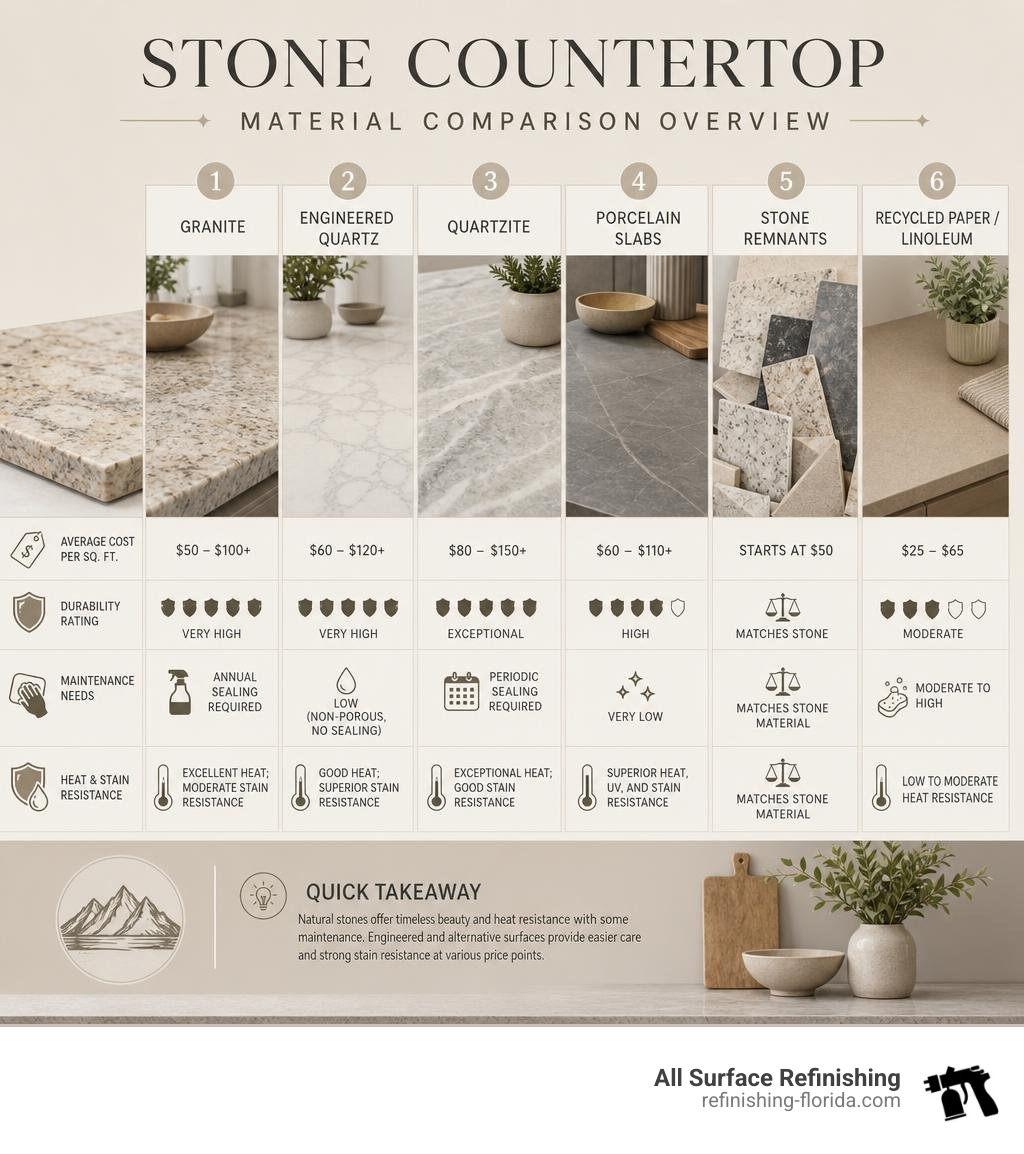
| Material | Average Cost per Sq. Ft. | Durability Rating | Maintenance Needs | Heat & Stain Resistance |
|---|---|---|---|---|
| Granite | $50 – $100+ | Very High | Annual Sealing Required | Excellent heat; moderate stain resistance |
| Engineered Quartz | $60 – $120+ | Very High | Low (Non-porous, no sealing) | Good heat; superior stain resistance |
| Quartzite | $80 – $150+ | Exceptional | Periodic Sealing Required | Exceptional heat; good stain resistance |
| Porcelain Slabs | $60 – $110+ | High | Very Low | Superior heat, UV, and stain resistance |
| Stone Remnants | Starts at $50 | Matches Stone | Matches Stone Material | Matches Stone Material |
| Recycled Paper / Linoleum | $25 – $65 | Moderate | Moderate to High | Low to Moderate heat resistance |
Quartz vs. Granite for Kitchens and Bathrooms
The debate between engineered quartz and natural granite remains a central discussion for homeowners in Fort Lauderdale, Miami, and Boca Raton.
Granite is 100% natural stone cut directly from quarries, offering unique veining patterns, earthy mineral textures, and outstanding natural heat resistance. Because it is porous, granite requires periodic sealing to guard against deep stains from oils, wine, and acidic liquids.
Engineered quartz combines roughly 90% crushed natural quartz crystals with polymer resins and color pigments. This blend creates an entirely non-porous surface that never requires chemical sealers and delivers exceptional resistance to stains, household bacteria, and everyday chipping. Quartz has low heat tolerance compared to granite; sudden exposure to piping-hot cookware can cause thermal shock and discoloration in the resin binder.
If you are evaluating natural alternatives with distinct aesthetics, exploring beyond granite: 7 affordable stone countertop options that don’t skimp on style helps uncover materials like quartzite and dolomite that fit diverse kitchen and bathroom layouts.
Budget-Friendly Surfaces and Stone Remnants
For budget-conscious kitchen updates or compact guest bathroom vanities, you do not have to settle for compromised aesthetics. High-value avenues include:
- Stone Remnants: Fabricators frequently carry leftover cuts from larger kitchen installations. Remnant inventory starts at just $50 per square foot, making it an affordable route for custom bathroom vanities, pantry stations, and laundry room counters.
- Eco-Friendly Composites: Recycled paper-based surfaces (such as PaperStone) and natural furniture linoleum or Marmoleum are one-half to three-quarters the price of quartz or granite, providing non-toxic, warm-touch alternatives for light-duty food prep areas.
- Porcelain & Solid Surface: Large-format porcelain slabs and solid acrylic surfaces provide sleek, modern profiles with uniform coloring and low maintenance requirements.
If your existing countertops are structurally intact but marred by outdated colors, scratches, or minor burns, reviewing the complete guide to professional countertop refinishing shows how professional surface restoration refreshes surfaces at a fraction of total replacement costs.
Comparing Cabinet Styles and Construction Options
Cabinets form the architectural backbone of any kitchen or bathroom, absorbing daily wear while defining the room’s visual tone. Choosing between construction grades determines both the immediate price tag and the long-term lifespan of your cabinetry.
When planning your kitchen renovation budget, understanding how much do new kitchen cabinets actually cost provides clarity on how materials, sizing, and hardware drive overall expenses.
Stock and Semi-Custom Cabinet Features
- Stock Cabinets: Mass-produced in standard modular sizes (typically 3-inch increments from 9 to 48 inches wide). Constructed using particleboard or medium-density fiberboard (MDF) with laminate or wood veneer exteriors. Fast delivery lead times (1 to 2 weeks) at an economical price point, but they lack flexibility for unusual architectural layouts.
- Semi-Custom Cabinets: Built to order using standardized cabinet box sizes while offering custom modifications, such as adjusted cabinet depth, personalized door styles (Shaker, flat-panel, raised-panel), and upgraded plywood box construction. Lead times range from 3 to 6 weeks.
- Frameless (European Style) Options: Eliminates the traditional face frame, allowing full-access interior storage, larger drawer boxes, and clean lines suited for contemporary homes across Palm Beach and Broward County.
The Value of Custom Cabinets and Countertops
Custom cabinetry is designed from scratch to match your exact room dimensions. This approach eliminates filler strips, accommodates irregular ceiling heights, and optimizes corner spaces with custom pullouts.
Key advantages of choosing custom installations:
- Premium Materials: Furniture-grade 3/4-inch plywood construction, solid hardwood face frames, and dovetailed maple drawer boxes built to endure humid coastal environments.
- Integrated Functionality: Integrated spice racks, vertical pan dividers, concealed trash pullouts, and heavy-duty soft-close drawer glides.
- Weight Support for Heavy Slabs: Custom cabinet boxes are engineered with reinforced corner blocks and load-bearing stretchers specifically designed to support dense natural stone and quartz slabs without sagging.
Step-by-Step Cost Breakdown for Cabinets and Countertops
Budgeting for kitchen or bathroom remodeling requires understanding how each production and installation phase contributes to the bottom line.
Before ordering materials, reviewing our kitchen cabinet refinishing cost guide helps you contrast the total cost of tearing out cabinets against the budget advantages of professional resurfacing.
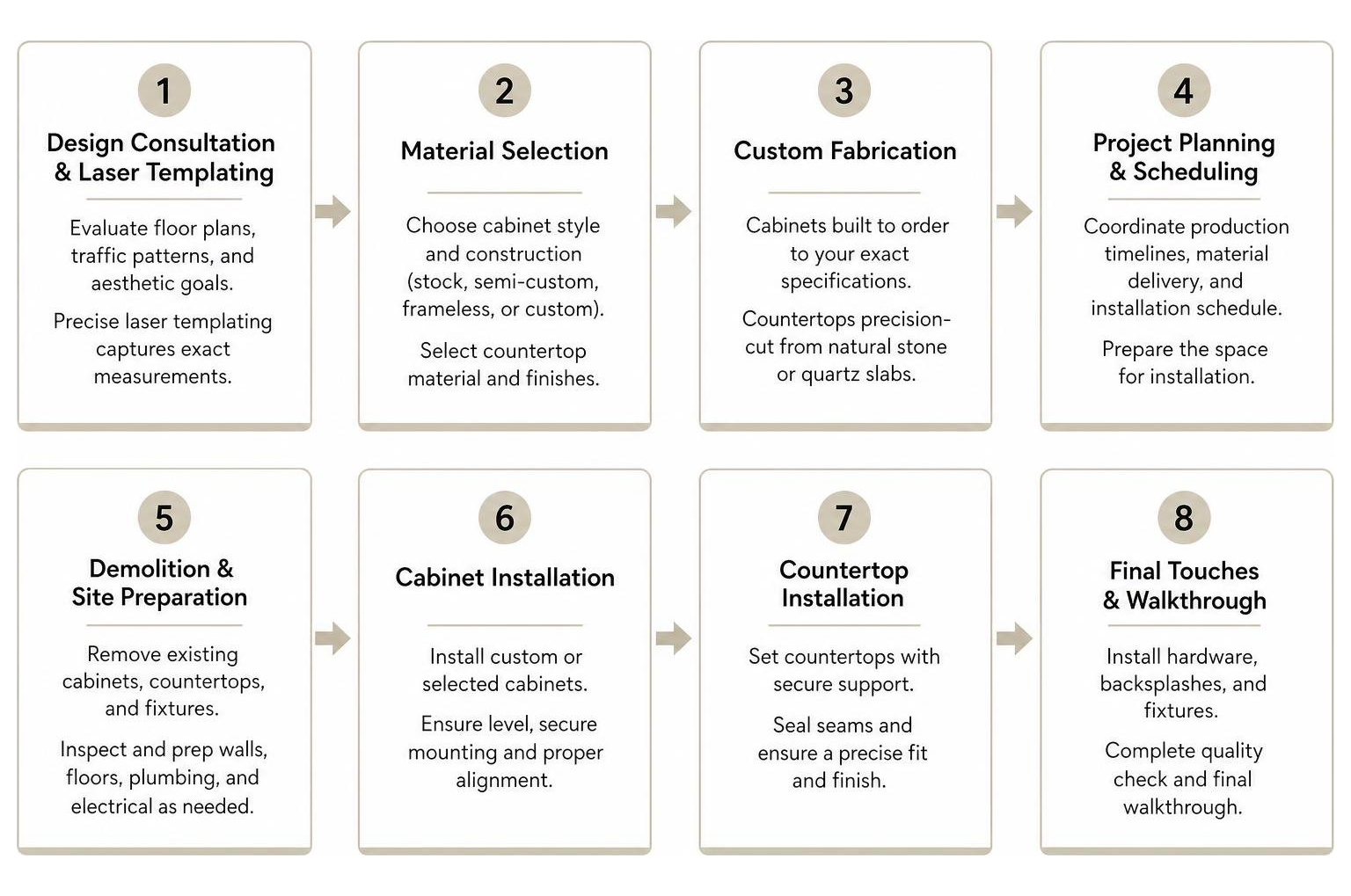
Step 1: Design Consultation and Laser Templating
The installation process begins with an in-home or showroom design consultation to evaluate floor plans, traffic patterns, and aesthetic goals.
- Digital Laser Templating: Once base cabinets are anchored, technicians use precision laser templating devices to map wall irregularities, out-of-square corners, and exact seam placements.
- CAD Layout Approvals: Homeowners review Computer-Aided Design (CAD) renderings that illustrate slab veining flow, seam positions, and edge profile treatments (such as beveled, eased, ogee, or bullnose edges) before cutting begins.
Step 2: Coordinating Sinks, Fixtures, and Backsplashes
Countertops do not exist in isolation; they integrate with essential plumbing fixtures and vertical wall surfaces.
- Sink Cutouts: Undermount sink cutouts require specialized CNC machine routing and hand polishing. Fabricators must have your physical sink on-site during fabrication to ensure a flush reveal.
- Faucet and Accessory Holes: Drilling for single-hole faucets, soap dispensers, water filters, and air switches must be mapped prior to stone installation.
- Tile and Full-Height Stone Backsplashes: Coordinating the thickness of your countertop with your vertical backsplash prevents gaps. Full-height matching stone backsplashes offer a clean look, while tile backsplashes require coordination with tile setters.
Step 3: Installation Timeline and Site Preparation
Countertop installation usually proceeds quickly once fabrication is finished:
- Timeline: Slab fabrication typically takes 2 to 4 weeks following templating. The physical on-site installation of countertops is completed in about 1 to 2 days for standard residential kitchens.
- Disruption Management: Clearing access pathways from entry doors to the kitchen, disconnecting plumbing lines, and removing cooktops ensures that heavy stone slabs move smoothly into the home.
Design Integration and Surface Restoration Strategies
Creating a unified kitchen or bathroom requires harmonizing color palettes, textural contrasts, and natural lighting.
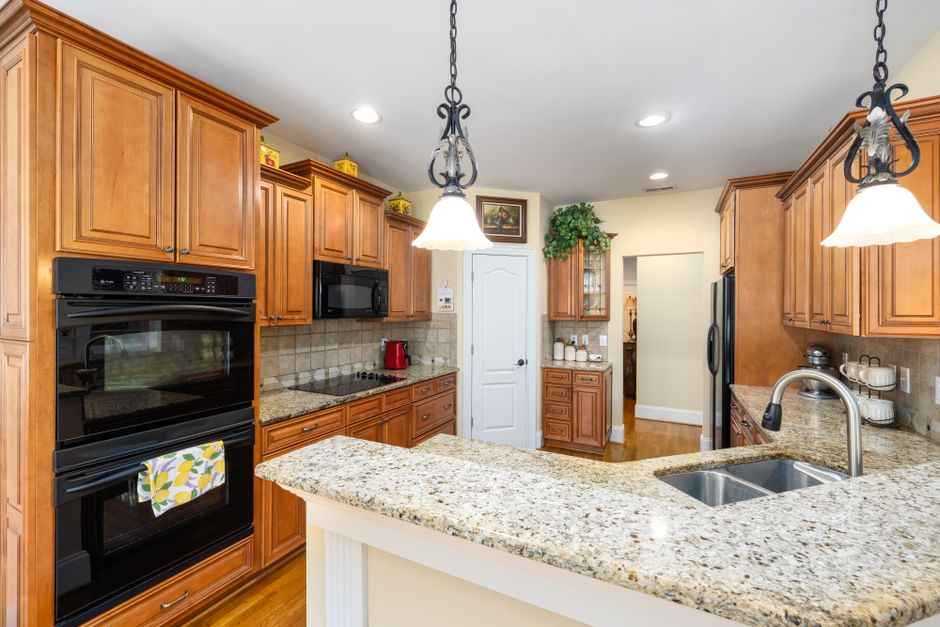
Coordinating Cabinets and Countertops for a Cohesive Style
Achieving visual harmony involves balancing focal points:
- High-Contrast Pairings: Dark espresso or deep navy base cabinets paired with crisp white quartz featuring subtle gray veining create a grounded look.
- Warm Natural Neutrals: Natural wood finishes (such as white oak or walnut) paired with creamy dolomite, honed granite, or earthy composite surfaces bring warmth and organic texture to coastal homes.
- Two-Tone Cabinetry: Using darker cabinetry on the kitchen island and lighter shaker cabinetry on perimeter walls allows the countertop stone to bridge both finishes cleanly.
- Surface Refresh Options: If your cabinet layout is sound, choosing to give your kitchen a facelift by changing your cabinet color gives you freedom to pair new countertop styles with updated cabinet finishes.
Surface Repair and Resurfacing Alternatives
When existing installations suffer from localized damage, complete tear-outs are rarely necessary. Professional surface restoration resolves common countertop issues:
- Epoxy Stone Repair: Chips along undermount sink rims or hairline cracks in granite and marble can be filled with color-matched acrylic or epoxy resins, then polished flush with the surrounding stone.
- Resealing and Polishing: Dull, etched natural marble or stained granite surfaces can be mechanically honed, polished, and treated with penetrating fluoropolymer sealers to revive their factory luster.
- Multi-Stone Resurfacing: For laminate, cultured marble, or worn solid surfaces, specialized bonding coatings replicate the look of natural granite without messy demolition.
Homeowners exploring cost-effective updates can learn more about countertop surface restoration: the secret to a new kitchen without the demo to see how existing counters can be preserved and renewed.
Frequently Asked Questions About Kitchen Remodeling Costs
What is the most cost-effective way to update kitchen cabinets and countertops?
The most budget-friendly path is preserving structurally sound cabinet boxes and countertop foundations through professional resurfacing, refinishing, and spot repairs. By applying durable, industrial-grade coatings or polishing existing stone, you bypass landfill waste, demolition mess, and the long lead times of new manufacturing. For smaller bathrooms, utilizing remnant stone slabs starting at $50 per square foot offers a luxury finish at minimal cost. Homeowners weighing their options can consult the complete guide to refinish cabinet cost and value to compare budget breakdowns.
How long does the fabrication and installation process typically take?
Standard custom countertop projects average 4 to 6 weeks from the initial agreement to final placement. The on-site installation of the fabricated stone slabs is fast, usually wrapping up in 1 to 2 days. Cabinet builds vary: stock cabinets can arrive in 1 to 2 weeks, while full custom cabinetry typically requires 4 to 8 weeks of shop fabrication prior to installation.
What should I look for when hiring an installation contractor?
When vetting kitchen and bathroom contractors across Florida, confirm the following essentials:
- Licensing and Full Insurance: Verify valid state and county licenses along with comprehensive general liability and workers’ compensation coverage.
- In-House Craftsmanship: Ask whether the company employs dedicated in-house fabricators and installers or outsources work to third-party sub-crews.
- Written Craftsmanship Warranties: Ensure the written quote explicitly covers seam integrity, chip repairs, sink mounting warranties, and finish durability.
- Verified Portfolio and Reviews: Check verified customer testimonials, regional showroom displays, and photo galleries of completed local projects.
Conclusion
Upgrading your kitchen or bathroom requires balancing budget constraints, material durability, and design preferences. Whether you choose the low-maintenance resilience of quartz, the organic beauty of granite, or choose to restore your existing surfaces, thoughtful planning ensures lasting value.
At All Surface Refinishing, we bring over 30 years of experience and more than 14,000 completed residential and commercial projects to property owners across Miami-Dade, Broward, Palm Beach, Martin, and Saint Lucie counties. We help homeowners achieve clean kitchen and bathroom transformations quickly, cleanly, and cost-effectively.
Ready to transform your home without the headaches of full replacement? Contact All Surface Refinishing today to schedule your consultation and explore our expert cabinet and countertop refinishing solutions!
