
How Long Does Bathtub Refinishing Last?
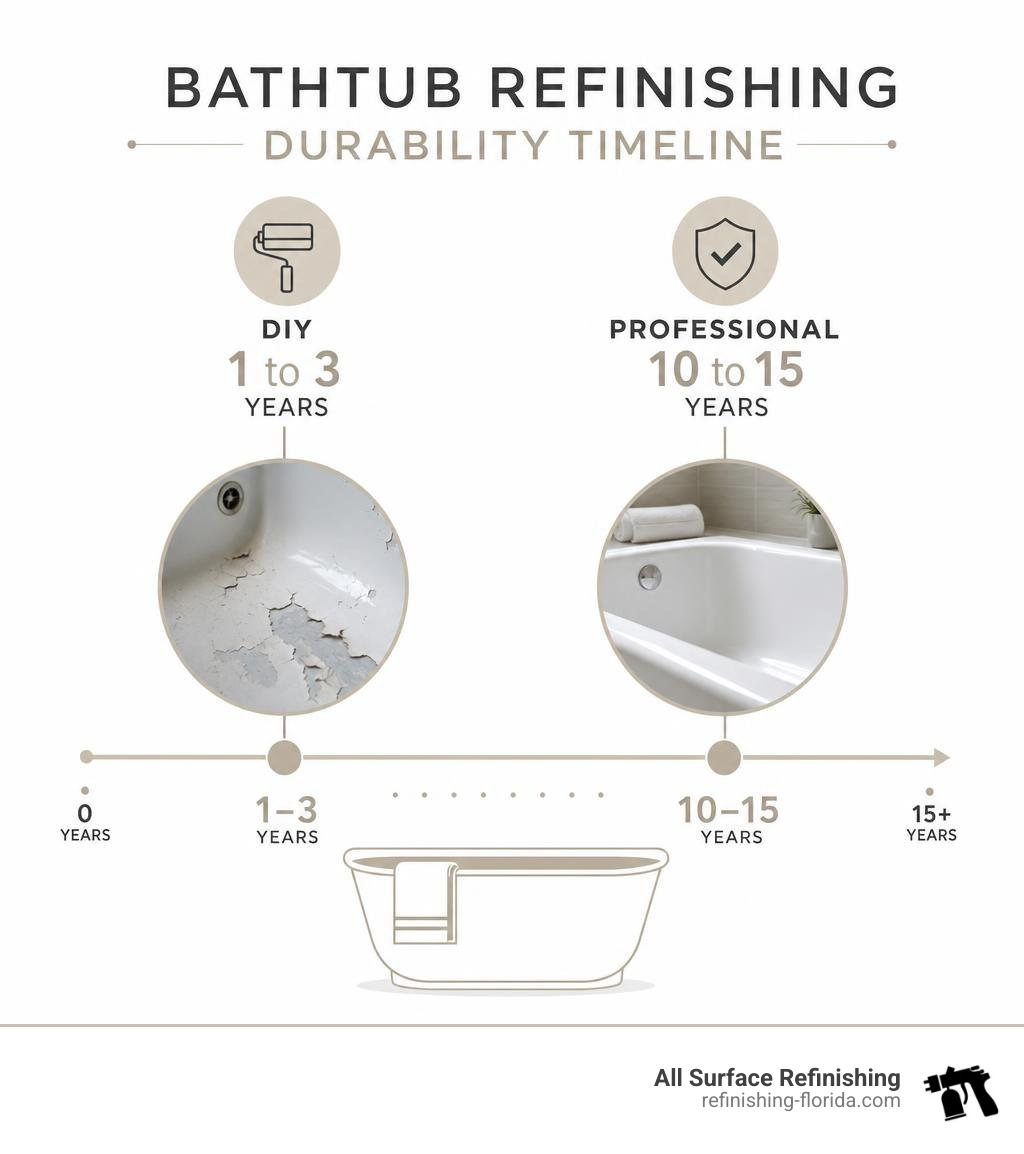
A professionally refinished bathtub typically lasts 10 to 15 years when the surface is properly prepared, the coating is professionally applied, and the tub is cleaned with non-abrasive products. A DIY bathtub kit often lasts just 1 to 3 years because surface prep, coating quality, and curing conditions are harder to control.
For property owners and managers, bathtub refinishing durability can make refinishing a practical alternative to replacement. Refinishing commonly costs about $300 to $600, while a full tub replacement can run $1,500 to $3,000 or more once removal, plumbing, tile, and surrounding bathroom repairs are considered. With sensible care, a refinished tub can handle normal daily bathing and routine cleaning without peeling or chipping.
I am Frank Hernandez, President of All Surface Refinishing, and I have worked in surface refinishing for more than a decade. Since helping lead All Surface Refinishing in South Florida beginning in 2013, I have seen how proper preparation, coating application, and maintenance determine real-world bathtub refinishing durability.
Bathtub refinishing durability terms to know:
- How to Stop Your Painted Bathtub from Peeling for Good
- The Ultimate Guide to Saving Your Peeling Fiberglass Tub
- Chipped Tub? Here is How to Repair Bathtub Enamel on a Budget
Understanding Bathtub Refinishing Durability and Lifespan
When evaluating surface longevity, it helps to understand what actually happens during the refinishing process. Bathtub refinishing is not simply rolling on a fresh layer of hardware store enamel. Instead, it is an advanced chemical restoration that bonds a high-performance topcoat directly to the existing fixture.
The curing process involves a multi-stage bonding system where specialized primers fuse at a molecular level with the underlying porcelain, cast iron, or acrylic. Once cured, this coating forms an impermeable barrier that resists moisture, daily thermal cycling, and general bath routine wear. Weighing the reglazing bathtub pros and cons helps homeowners and property managers see how professional resurfacing delivers a factory-smooth finish that performs reliably for well over a decade.
Professional Application vs Amateur Coating Durability
The performance gap between professional application and amateur DIY attempts comes down to chemistry, equipment, and bonding integrity. Retail DIY kits generally rely on standard epoxy paints applied with brushes or roll-on applicators. These coatings lack the elasticity and chemical resistance required to handle continuous hot water immersion and frequent expansion and contraction.
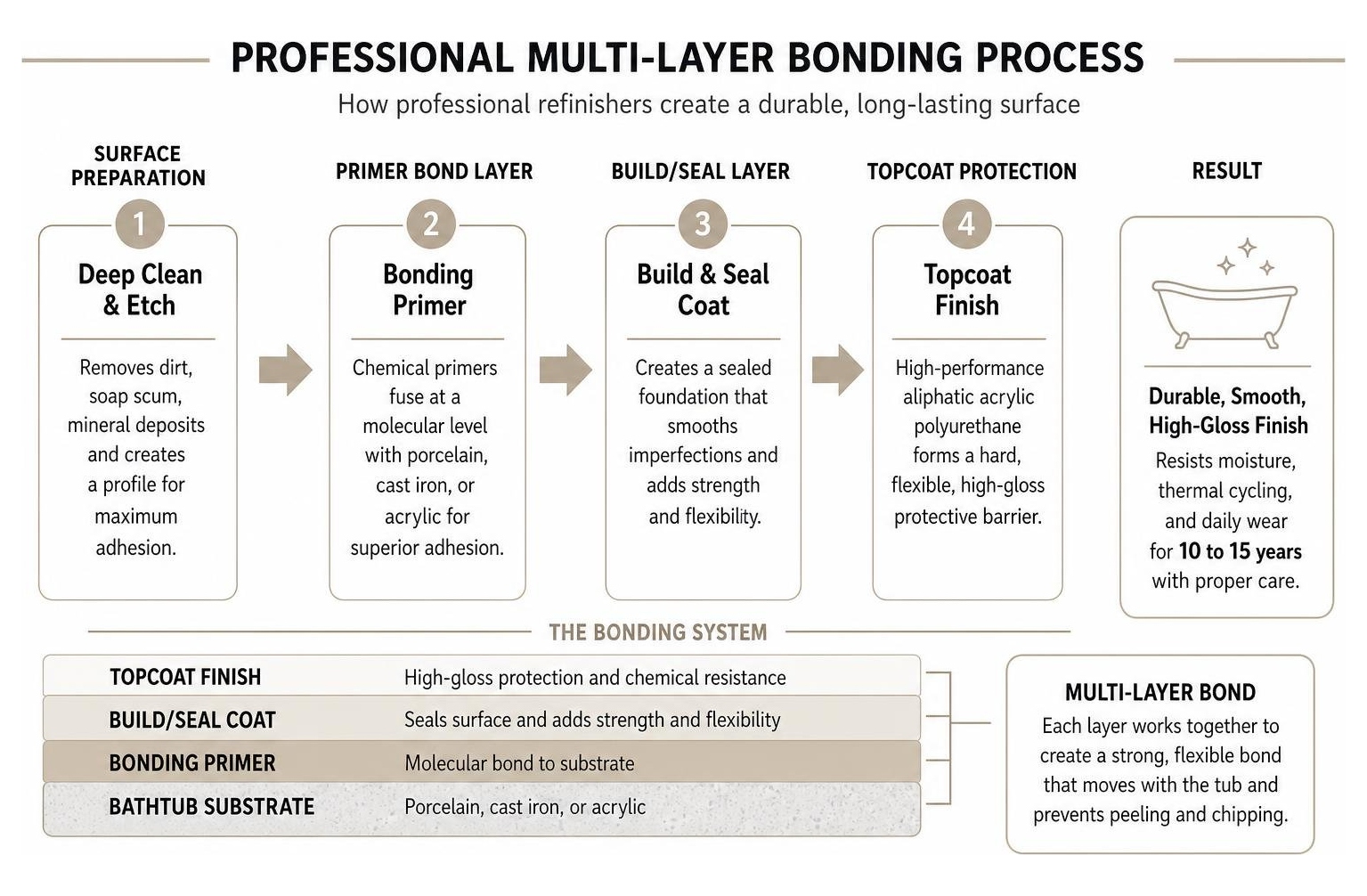
Professional technicians use commercial-grade aliphatic acrylic polyurethane coatings applied through fine-finish HVLP spray systems. These materials create cross-linked polymer chains that produce superior surface hardness while remaining flexible enough to withstand structural settling and temperature shifts. If you wonder how long your resurfaced tub will stay shiny, professional-grade topcoats retain their high-gloss luster for 10 to 15 years under normal residential and commercial usage, compared to the dull, chalky fade common in amateur kits after just 12 to 24 months.
Material Substrate Impact on Bathtub Refinishing Durability
The original composition of your bathtub influences how the coating bonds and flexes over time:
- Cast Iron: Exceptionally rigid and dense. It expands and contracts minimally, creating an ideal stable anchor for porcelain-bonding primers.
- Porcelain-Enameled Steel: Highly durable, though steel flexes slightly more than heavy cast iron. Proper mechanical etching ensures the coating remains firmly attached.
- Fiberglass Tubs: Flexible and prone to subtle shifting under body weight. Refinishing requires high-flexibility primers that move with the substrate without cracking.
- Acrylic Surfaces: Naturally non-porous and resilient. They require dedicated chemical bonding agents to promote optimal adhesion across the synthetic resin base.
Regardless of the base material, addressing structural flex before coating application ensures long-term integrity and prevents stress-induced micro-fractures.
Key Factors That Influence Tub Coating Longevity

A successful, long-lasting tub refinish relies on meticulous execution before the topcoat ever touches the surface. Environmental factors like high ambient humidity and inadequate airflow can trap moisture in microscopic pores, weakening the mechanical bond. Professional technicians manage these variables through dedicated exhaust systems and precise climate-controlled prep work.
Surface Preparation and Primer Chemistry
Preparation accounts for roughly 80% of total coating longevity. Technicians thoroughly clean the fixture to eliminate soap scum, mineral deposits, and body oils, followed by chemical or mechanical acid etching to create microscopic anchor profiles.
Applying a specialized silane bonding agent ensures that polymer adhesion occurs chemically, converting what would be a surface-level film into an integrated, bonded layer. Knowing how to stop your painted bathtub from peeling begins and ends with this uncompromising foundation. Skipping bonding agents or applying paint over unetched gloss guarantees premature peeling within months.
Daily Usage Habits and Chemical Resistance
Even the strongest industrial coating requires sensible daily care to maximize its lifespan. Refinished bathtubs handle daily bathing with ease, but abrasive cleansers and harsh chemical exposures will gradually wear down the protective topcoat.
Safe Cleaning Best Practices:
- Use non-abrasive liquid formulas like Dawn dish soap, Formula 409, or gentle pH-neutral bathroom cleansers.
- Clean with soft microfiber cloths or non-scratch sponges rather than abrasive scouring pads or wire wool.
- Avoid leaving standing water around drain fixtures or shampoo bottle bases for extended periods.
- Avoid bath mats with suction cups; the continuous suction pulls upward on the coating, creating localized stress points that can induce micro-tearing. Choose suction-free mats or remove mats promptly after bathing.
Long-Term Durability and Value of Bathtub Refinishing
Opting for refinishing delivers unmatched project efficiency and value. A full tub replacement often turns into a messy multi-day construction project that tears up surrounding tile, drywall, and plumbing lines. Refinishing revitalizes the existing fixture in just a few hours with minimal downtime, allowing full use of the bathroom within 24 to 48 hours.
When evaluating whether is refinishing your bathtub worth it, the combination of low upfront costs, durable performance, and fast turnaround makes it an appealing choice for homeowners, rental managers, and commercial hospitality operators.
Durability and Cost Efficiency Over Time
Refinishing can save property owners up to 75% compared to the total cost of removing and replacing a bathtub assembly.
| Comparison Metric | Professional Bathtub Refinishing | DIY Refinishing Kit | Full Bathtub Replacement |
|---|---|---|---|
| Typical Cost Range | $300 – $600 | $50 – $150 | $1,500 – $3,000+ |
| Expected Lifespan | 10 to 15 Years | 1 to 3 Years | 15 to 25+ Years |
| Project Downtime | 24 – 48 Hours | 48 – 72 Hours | 3 – 7+ Days |
| Tile & Plumbing Disruption | None | None | Extensive |
| Surface Bonding Quality | Industrial Chemical Bond | Surface-Level Paint Adhesion | Factory Fused Enamel/Acrylic |
Warranty Coverage and Long-Term Value
Reputable refinishing providers back their work with robust workmanship warranties and adhesion guarantees. Professional warranties typically protect against flaking, bubbling, or peeling resulting from material or application defects. These guarantees provide long-term peace of mind for residential bathrooms and commercial multi-unit properties alike.
Signs of a Failing Tub Coating and Maintenance Solutions

Understanding the warning signs of finish wear allows you to take corrective action before minor blemishes expand across the fixture.
Identifying Early Coating Failure
Common indicators that a tub coating requires attention include:
- Blistering or Bubbling: Moisture trapped beneath the primer layer expanding over time.
- Flaking around the Drain: High-stress contact zones where standing water has penetrated beneath an unsealed edge.
- Hairline Cracks or Crazing: Thermal shock or structural movement causing localized stress lines.
If you notice your bathtub coating peeling off, localized touch-up repairs can often resolve small chips before moisture spreads under larger sections of the topcoat.
Routine Maintenance for Maximum Durability
Maintaining a smooth, glossy finish over 10 to 15 years requires simple, consistent habits:
- Rinse and Dry: Rinse away soap lather after each use and wipe down the base with a soft microfiber cloth.
- Eliminate Leaks: Repair dripping faucets promptly to prevent persistent mineral trails and localized standing water wear.
- Use Neutral Cleaners: Clean weekly with mild, pH-neutral solutions to prevent soap scum buildup without degrading the gloss finish.
Frequently Asked Questions About Bathtub Durability
How long does a professionally refinished bathtub last?
A professionally refinished bathtub lasts between 10 and 15 years with routine cleaning and proper maintenance. Using professional-grade bonding agents and durable polyurethane coatings ensures a long-lasting, factory-smooth surface.
Can regular bathroom cleaners damage a refinished tub?
Yes. Cleaners containing bleach, ammonia, abrasive scouring powders, or harsh acids can gradually wear down the high-gloss protective topcoat. Stick to non-abrasive liquid soaps and soft cloths to maintain surface integrity.
What causes a refinished bathtub to peel prematurely?
Premature peeling is almost always caused by improper surface preparation, including inadequate etching, trapped moisture, missing bonding agents, or rushed curing times. Professional prep ensures the coating chemically fuses to the original substrate.
Conclusion
Maximizing the lifespan of your tub comes down to expert prep, industrial-grade bonding materials, and gentle daily care. With over 30 years of hands-on experience and more than 14,000 completed kitchen and bathroom projects across South Florida—including Miami, Fort Lauderdale, West Palm Beach, Boca Raton, Boynton Beach, Coral Springs, Delray Beach, Hollywood, FL, Jupiter, Kendall, Miramar, Pembroke Pines, Port Saint Lucie, Stuart, Vero Beach, and Wellington, FL—our team provides the dependable craftsmanship your home or commercial property deserves.
Ready to restore your bathtub with durable, long-lasting quality? Explore our professional bathtub refinishing services and request your free project quote today!
