
Bathtub Painting in Margate: What to Check First
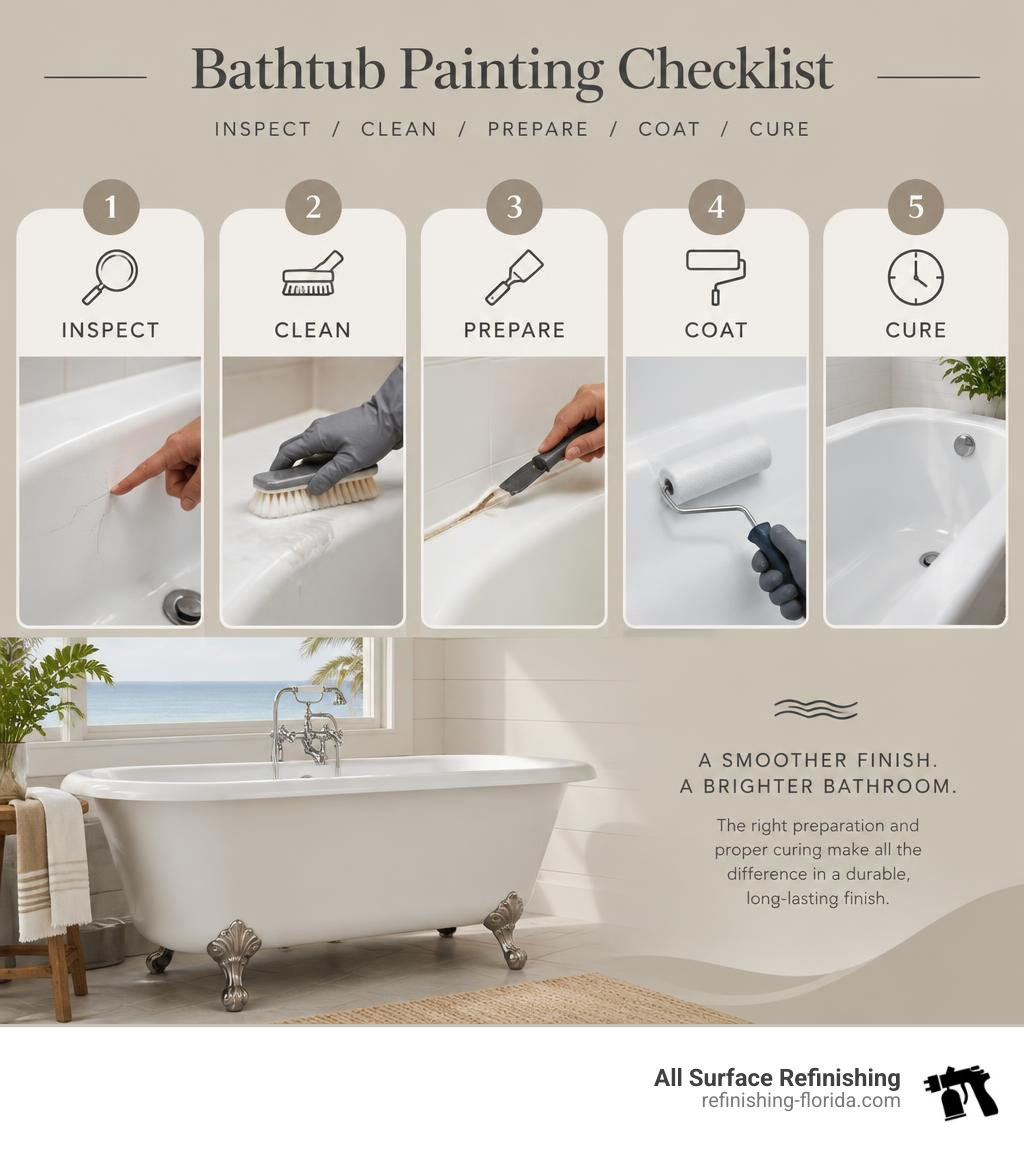
To paint a bathtub in Margate, check the surface for cracks or loose coating first. Then remove old caulk and buildup, clean and dry the tub, prepare it for a coating made for its material, and allow the finish to cure fully before use. If the surface is badly damaged or you want a smooth, lasting finish, compare DIY work with professional bathtub refinishing before you start.
Florida humidity makes drying, ventilation, and cure time especially important. A fresh finish can keep an older tub in use while giving the bathroom a new look without full replacement.
I’m Frank Hernandez, president of All Surface Refinishing, with more than 10 years of hands-on surface refinishing experience in South Florida. This bathtub painting Margate checklist covers the steps and choices I want property owners to understand before work begins.
Essential Preparation for Bathtub Painting Margate Homeowners Need
Surface preparation is the single most critical phase of any bathtub coating project. Bathrooms in South Florida face constant exposure to high indoor humidity, soap scum, and hard water minerals. If you apply a coating over an improperly prepped foundation, moisture inevitably works its way beneath the film, causing bubbling, blistering, and peeling within a few short months.
Proper groundwork requires stripping away every trace of old silicone caulk, mineral scale, body oils, and mold. Silicone caulk contains oils that permanently prevent paint and bonding primers from adhering. Before doing any sanding or chemical work, slice away the existing bead of caulk with a utility blade or specialized caulk removal tool, wiping the joint clean with denatured alcohol or acetone.
Safety and ventilation are equally vital. Bathtub painting products—whether store-bought epoxy kits or industrial aliphatic acrylic polyurethanes—release volatile organic compounds (VOCs). Always equip the workspace with high-powered exhaust fans venting out an open window, wear a fitted respirator rated for organic vapors, and protect your eyes and skin with chemical-resistant goggles and gloves. When reviewing your project scope, taking time for evaluating local bathtub resurfacing options helps you decide whether your fixture requires specialized chemical treatment or straightforward cosmetic care.
Step-by-Step Surface Cleaning and Etching
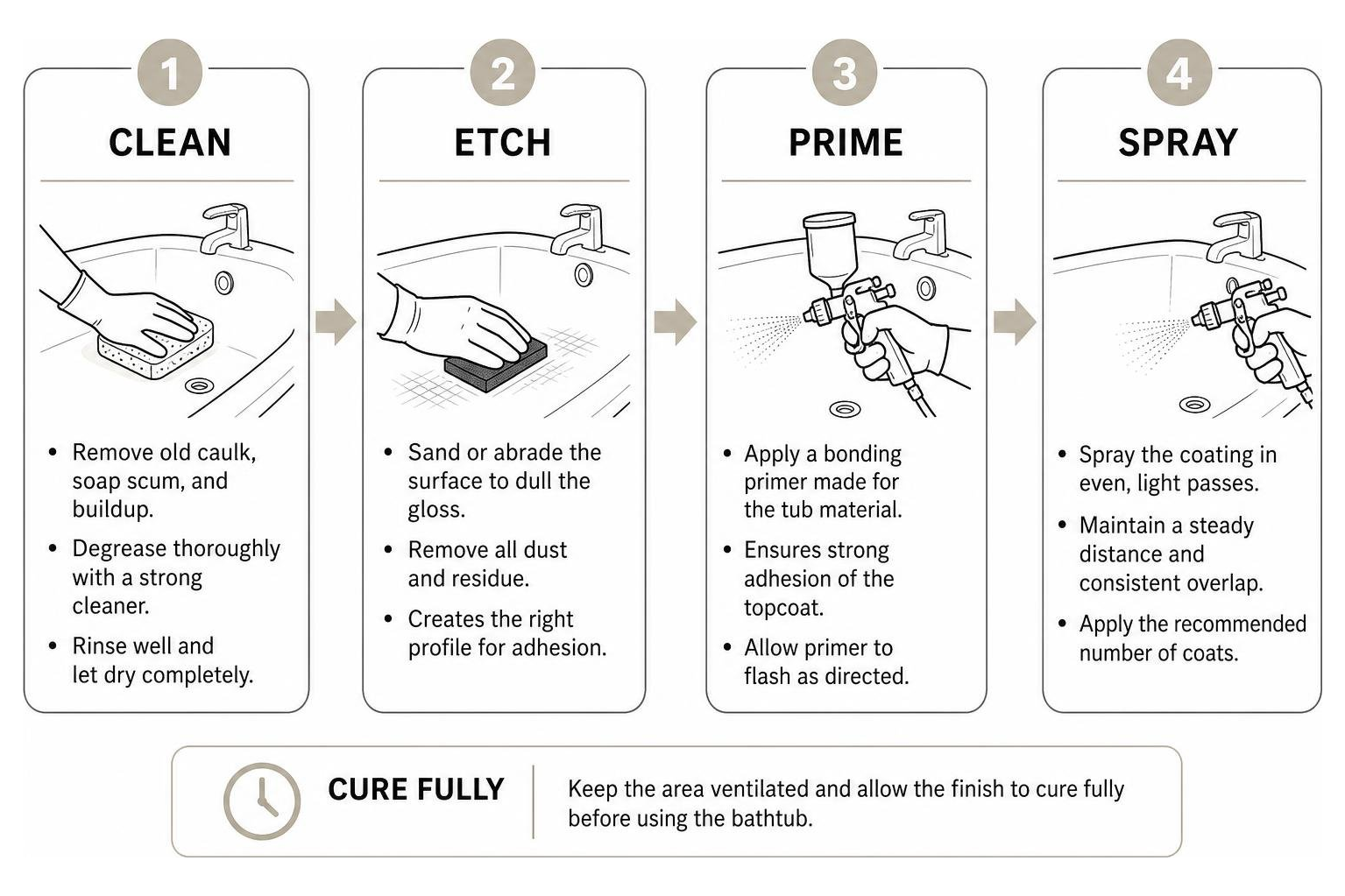
To ensure mechanical adhesion, the original porcelain, enamel, or acrylic glaze must be thoroughly stripped of gloss and contaminants. Follow this sequential cleaning and profile process:
- Heavy-Duty Degreasing: Scrub the tub basin using an industrial-strength, non-bleach degreaser or trisodium phosphate (TSP) substitute. This lifts embedded body oils, bath bomb residue, and scum lines that standard bathroom cleaners leave behind.
- Limescale and Mineral Dissolution: Florida tap water often leaves calcium and magnesium scale near drains and overflow plates. Apply an acidic cleaner or scale remover to dissolve these deposits completely.
- Mechanical or Chemical Etching: Porcelain and cast-iron tubs feature an ultra-hard, non-porous vitreous enamel glaze. Paint cannot grip this slick surface without an anchor profile. We use specialized etching paste or acid solutions to microscopically pit the porcelain. For fiberglass or acrylic tubs, thoroughly abrade the surface using 120- to 220-grit wet/dry abrasive sanding pads until the shine disappears.
- Rinsing and Complete Decontamination: Rinse the tub multiple times with clean, warm water to neutralize and flush away all etching acids and detergents.
- Moisture Elimination: Any water trapped under a fresh coating will ruin the project. Use a heat gun or heavy-duty blower to dry every crevice around the drain, overflow plate, and rim.
- Masking Surrounding Tile: Tape off surrounding wall tiles, bathroom vanity edges, faucets, and floor borders with high-adhesion painters tape and protective plastic sheeting.
Choosing the Right Primers for Bathtub Painting Margate Bathrooms
A topcoat is only as resilient as the primer beneath it. Standard multi-purpose household primers will fail quickly in a submerged, hot-water environment. You need a specialized bonding agent engineered specifically for non-porous, wet-area substrates.
For porcelain and enameled cast iron, professional resurfacing utilizes a silane molecular bonding agent. This wipe-on chemical primer creates a covalent bond between the inorganic glass porcelain and the organic resin topcoat. For fiberglass, acrylic, and gelcoat fixtures, a high-build, moisture-resistant epoxy primer provides the flexible anchor layer required to prevent stress cracks when the tub basin flexes under water weight.
Coastal Aesthetics and Color Trends in Margate Bathrooms
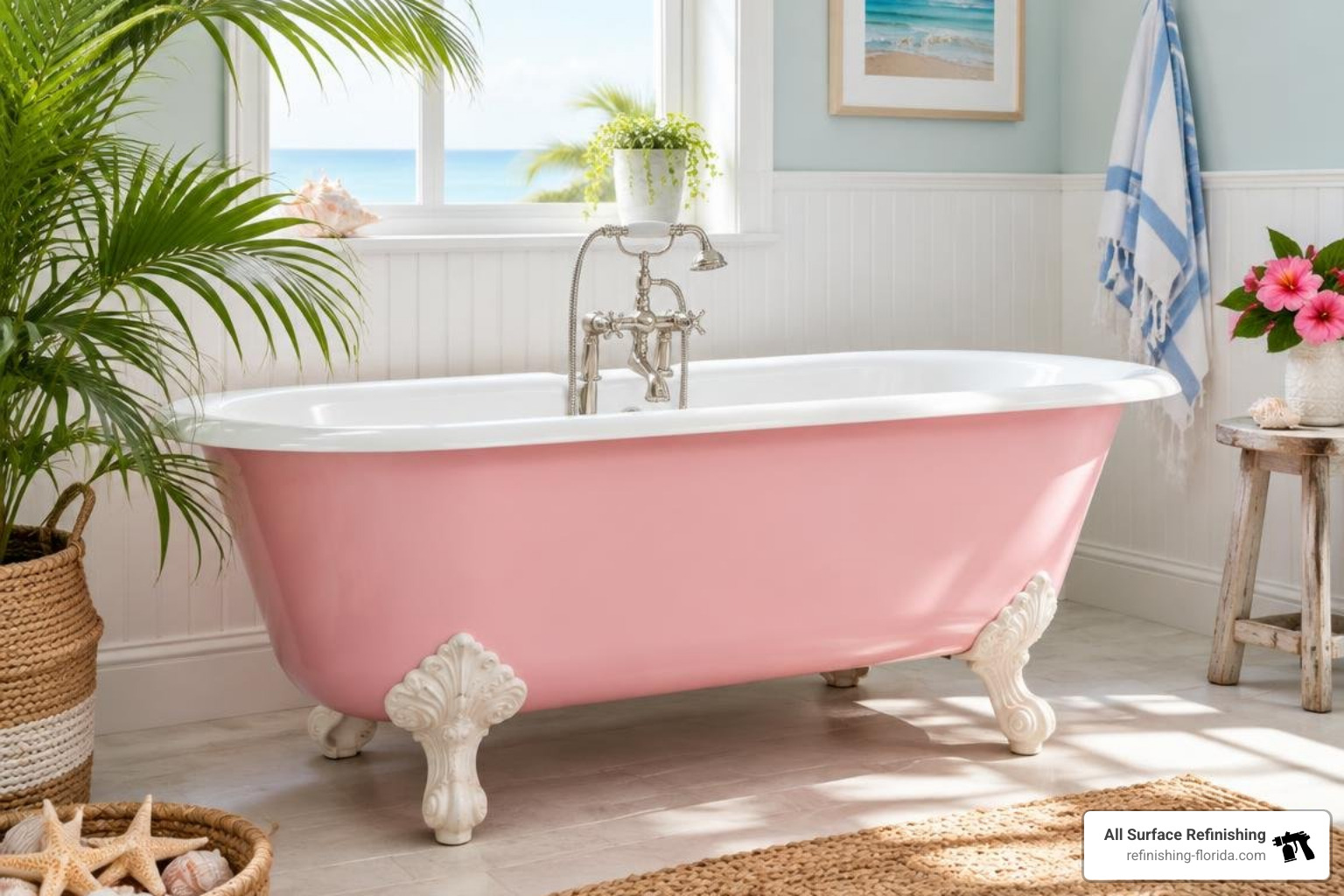
Margate homeowners are increasingly turning away from sterile, monochromatic grey designs in favor of expressive coastal character and playful vintage accents. Interior design movements often draw creative energy from coastal transformations, such as the design inspiration from eclectic coastal aesthetics found in vibrant seaside homes that blend vintage flair with tropical tones.
Bathrooms present an ideal canvas for artistic rejuvenation. Rather than tearing out a structurally sound mid-century or vintage tub and sending hundreds of pounds of cast iron to a landfill, refinishing lets you tailor the bathroom’s centerpiece to match your distinct interior palette. Whether drawing inspiration from local art clubs or exploring bold colour transformations for vibrant interior spaces, upcycling through bathtub painting combines sustainable living with high-end style.
Incorporating Bold Retro and Seaside Color Palettes
When selecting a color for your bathtub in Margate, consider how local natural light interacts with the surrounding bathroom surfaces:
- Pastel Miami Tones: Pale flamingo pink, soft peach, and sun-drenched buttermilk yellows introduce 1950s Art Deco nostalgia that brightens smaller master baths and guest suites.
- Coastal Blues and Seafoam Aqua: Crisp turquoise, ocean mist blue, and tranquil seafoam greens evoke the coastal waters of South Florida, pairing naturally with brushed brass or matte gold fixtures.
- Classic High-Gloss Porcelain White: Crisp, bright white remains timeless. It maximizes ambient light, coordinates with any tile scheme, and offers the highest resale appeal.
- Dramatic Jewel Tones: For standalone clawfoot tubs, painting the exterior shell in deep navy, forest green, or charcoal while maintaining a gleaming white interior delivers an upscale, designer focal point.
Achieving Flawless Finishes with Bathtub Painting Margate Techniques
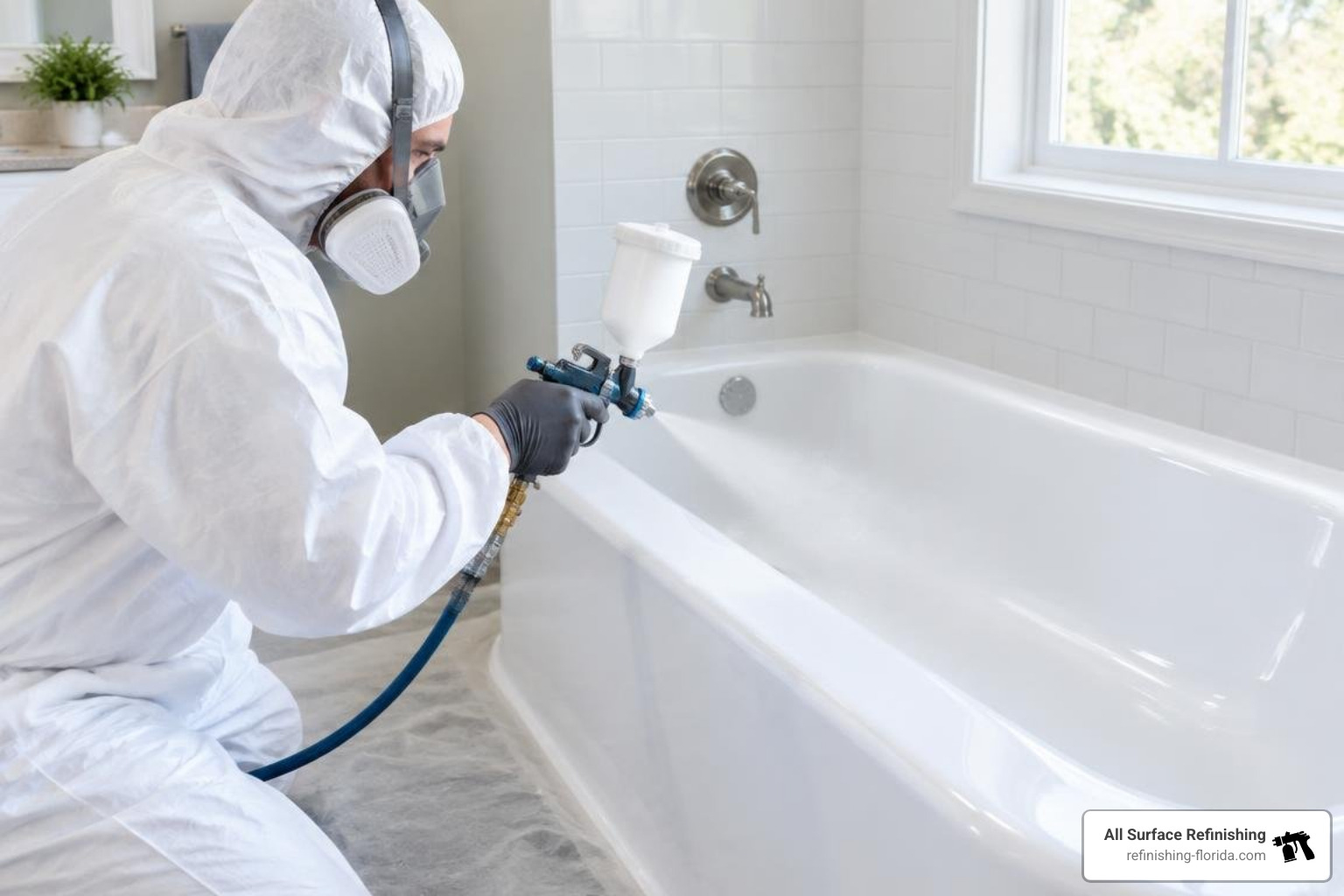
The application method dictates whether your finished tub looks factory-new or noticeably hand-painted. DIY roll-on kits rely on foam rollers and natural-bristle brushes. While accessible, brush and roll methods leave stipple textures, brush marks, and uneven edge thicknesses that can trap grime over time.
Professional refinishers achieve an ultra-smooth, mirror-like finish using high-volume low-pressure (HVLP) or air-assisted turbine spray systems. Spray application atomizes the liquid coating into an ultra-fine mist, laying down uniform layers without roller marks or runs.
To ensure professional-grade results and avoid problems like orange peel (a bumpy, textured finish caused by improper thinning or rapid solvent evaporation in warm air), each coat must flash off correctly before the next pass. Once the final topcoat is applied, respect the product’s full cure window. While a surface may feel dry to the touch in 2 to 4 hours, chemical cross-linking often requires 24 to 48 hours before the bathtub is subjected to standing hot water and soap. Exploring reviews of top bathroom refinishing specialists can give you a clear perspective on the differences in quality and longevity achieved by experienced spray technicians.
Comparing DIY Bathtub Painting vs. Professional Resurfacing
Before tackling your bathroom project, weigh the trade-offs between consumer roll-on paint kits and commercial-grade resurfacing.
| Feature | DIY Bathtub Painting Kits | Professional Bathtub Resurfacing |
|---|---|---|
| Primary Material | Standard 2-part epoxy paint | Aliphatic acrylic polyurethane |
| Application Tool | Foam roller and bristle brush | HVLP heated spray turbine |
| Surface Profile Step | Sandpaper scuffing | Chemical acid etch or molecular silane bonding |
| Finish Texture | Light orange peel / visible brush lines | Smooth, mirror-like factory glaze |
| Cure Window | 3 to 7 days | 24 to 48 hours |
| Yellowing Resistance | Low to moderate (epoxies amber with UV/age) | High (polyurethanes resist UV discoloration) |
| Expected Lifespan | 1 to 3 years | 10 to 15+ years with proper care |
| Warranty Protection | None (consumer product guarantee only) | Multi-year written workmanship warranty |
While DIY kits offer an entry-level price point for temporary makeovers, professional restoration provides superior adhesion, chemical resistance, and long-term durability. If you are looking for long-lasting performance without the mess of manual painting, consider scheduling professional tub refinishing services in Margate to ensure your fixture holds up against daily use.
Frequently Asked Questions About Bathtub Refinishing in Margate
How long does a painted bathtub last in Florida’s humid climate?
A professionally resurfaced bathtub typically lasts 10 to 15 years or more when maintained properly. DIY epoxy paint kits generally last between 1 and 3 years before peeling or chipping around the drain. In South Florida’s humid climate, running an exhaust fan during and after showers reduces ambient moisture, protecting the chemical bond and extending the life of the finish.
Can you paint over acrylic, fiberglass, and cast iron bathtubs?
Yes. Refinishing coatings can be applied to porcelain-enameled cast iron, pressed steel, acrylic, fiberglass, and cultured marble. However, the surface prep must match the substrate. Cast iron requires etching to open the porcelain glaze, whereas fiberglass and acrylic require mechanical sanding and specialized flexible epoxy primers to accommodate tub basin flexing.
How do I maintain and clean a painted bathtub?
Clean your painted or refinished tub using mild, non-abrasive liquid dish soaps or foaming bathroom cleaners applied with a soft microfiber cloth or sponge. Avoid abrasive scouring powders, stiff scrub brushes, bleach, and harsh acids, as they will scratch and dull the protective topcoat. Never use suction-cup bath mats, as water trapped beneath the cups can weaken the coating’s bond.
Conclusion
Restoring your bathroom fixture through careful preparation, durable primers, and precision coating techniques is an affordable, eco-friendly way to upgrade your home. By preserving your existing tub and updating its look with fresh coastal colors or classic bright white, you avoid the high expense, dust, and structural plumbing disruption of full demolition.
At All Surface Refinishing, we bring more than 30 years of industry experience and over 14,000 completed projects across South and Southwest Florida to ensure flawless, long-lasting results. Whether you need an enameled cast iron tub revived or a fiberglass shower enclosure brightened, trust our experienced team for top-tier professional bathtub refinishing. Contact us today to schedule your bathroom consultation.
