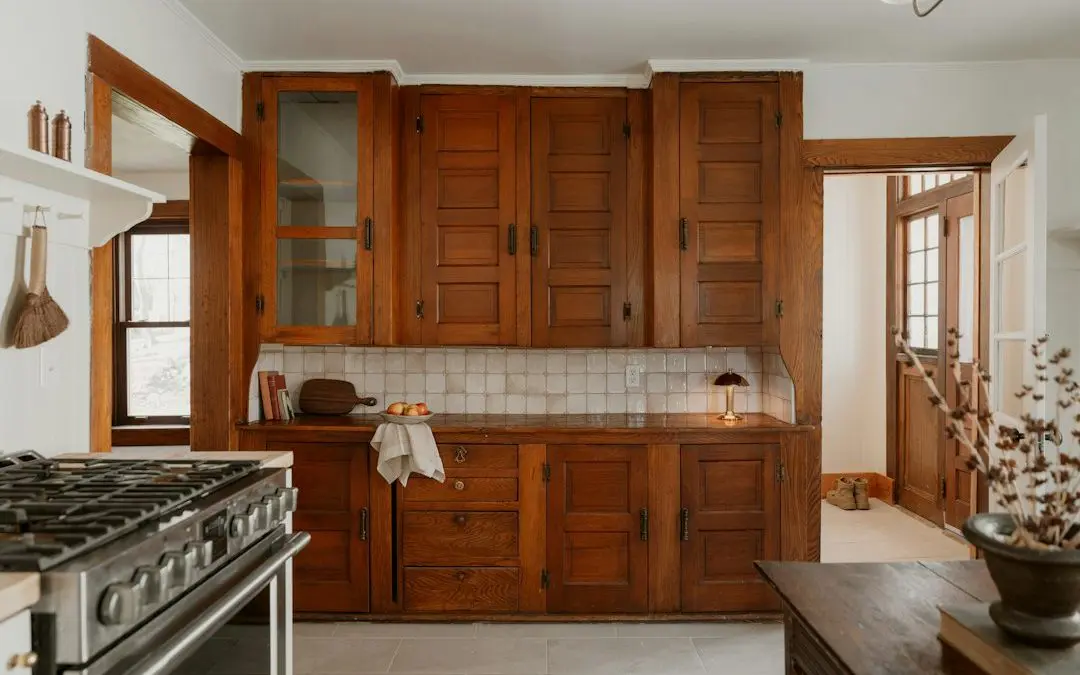
How to Find Unfinished Kitchen Cabinets Near Me
To find unfinished kitchen cabinets near me, first measure your kitchen, then compare nearby cabinet suppliers, building-surplus stores, millworks, and online RTA cabinet sellers that ship to Miami, Fort Lauderdale, Boca Raton, or West Palm Beach. Ask whether cabinets are in stock, made from solid wood or plywood, sold assembled or ready to assemble, and include hardware, trim, or a warranty.
Unfinished cabinets arrive without their final paint or stain. They can be a smart fit when you want a custom color, want to see the real wood grain, or need to manage a kitchen update budget. Buyers may save about 10% to 30% versus comparable pre-finished cabinets, but the final cost should include prep, finishing, hardware, delivery, and installation.
I’m Frank Hernandez, President of All Surface Refinishing, and I have worked in surface refinishing for more than a decade while serving property owners across South Florida since 1996. My experience helping clients improve kitchen cabinets can help you evaluate unfinished kitchen cabinets near me and decide whether professional finishing is the right next step.
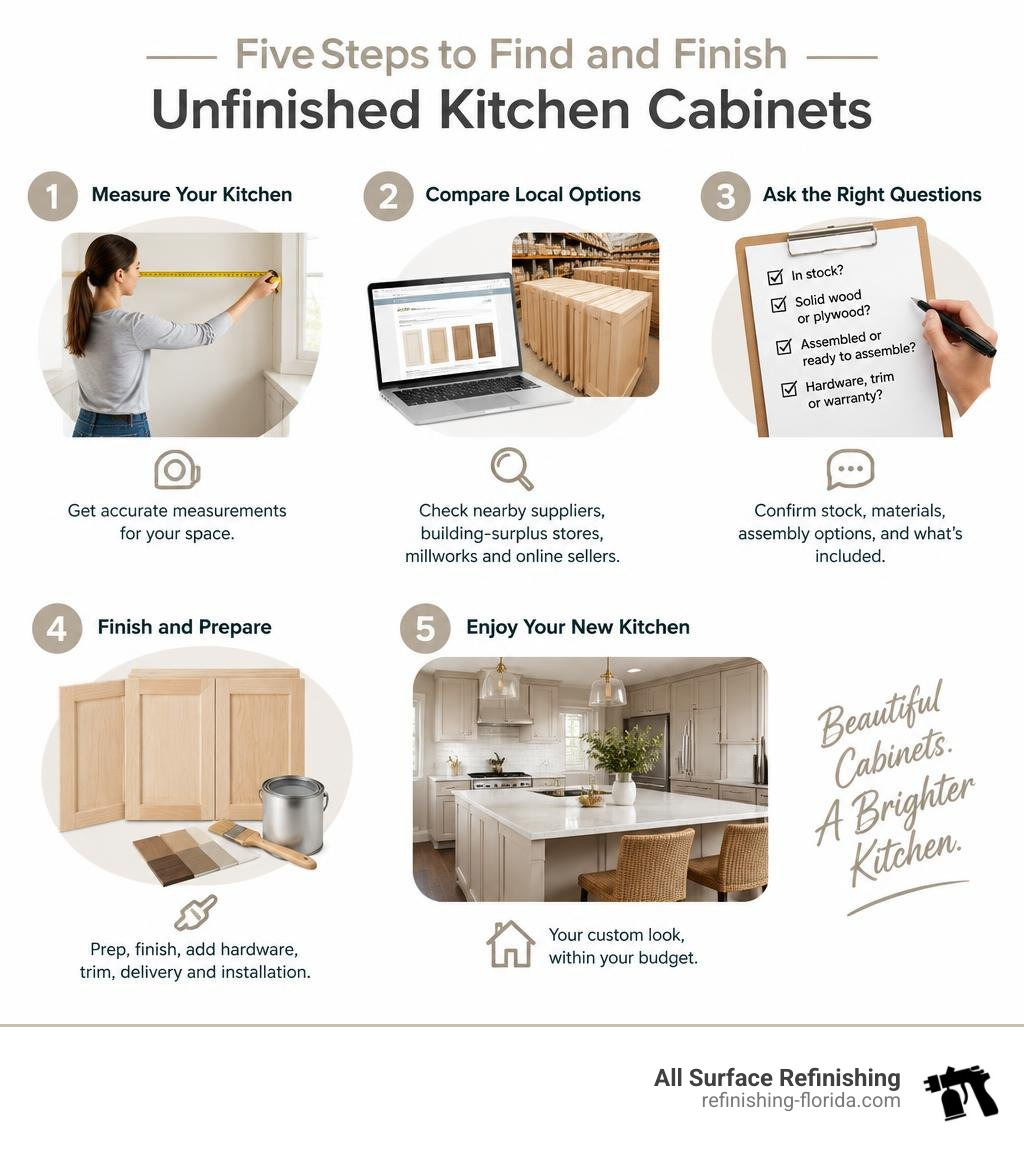
Unfinished kitchen cabinets near me glossary:
What Are Unfinished Kitchen Cabinets and Why Choose Them?
Unfinished kitchen cabinets are fully constructed cabinet boxes, face frames, doors, and drawers built from raw lumber and furniture-grade plywood that have not undergone factory painting, staining, or topcoat sealing. Unlike mass-manufactured, pre-finished boxes covered in thermo-foil or polyurethane glazes, unfinished cabinetry arrives bare. Why did the cabinet go to therapy? It simply had unfinished business! All jokes aside, bare wood is a massive strategic advantage for homeowners who want distinct, personalized kitchens.
The main reason homeowners and builders choose unfinished kitchen cabinets is creative freedom paired with immediate cost efficiency. Pre-finished lines force you to choose from a limited swatch booklet of factory grays, off-whites, or espresso stains. If your goal is a coastal sage green island or a rich honey stain matching a historic Florida bungalow, factory lines often fall short. Unfinished units provide a true blank slate.
Financially, raw cabinetry saves between 10% and 30% on upfront purchase costs compared to factory-finished units. Because manufacturers do not have to run automated spray booths, cure ovens, or multi-stage lacquering lines, those production savings are passed straight to you. You can check our detailed breakdown when comparing cabinet costs across multiple wood species.
Raw wood provides an unfiltered look into product quality. When a cabinet box is pre-painted, thick coatings can conceal low-grade composite fillers, knot holes, or weak joint pins. With bare cabinetry, you can inspect the grain alignment, dovetail integrity, and core plywood layers before committing your budget.
| Feature / Metric | Unfinished Kitchen Cabinets | Factory Pre-Finished Cabinets |
|---|---|---|
| Upfront Purchase Cost | 10% to 30% lower than finished equivalents | Higher base retail price |
| Color & Stain Flexibility | 100% custom; paint or stain to any paint code | Restricted to manufacturer catalog swatches |
| Material Transparency | Wood grain, joints, and veneers are fully visible | Hidden under primer, enamel, or laminates |
| Lead Time | Often quick-shipped in 3 business days | 2 to 8 weeks depending on factory schedule |
| Finishing Labor | Requires DIY prep or professional painting service | Ready to hang out of the box |
| Hardware Customization | Completely open; holes drilled on-site | Sometimes pre-drilled for specific pull spreads |
Materials, Wood Species, and Standard Sizing
The core build of quality unfinished cabinets relies on solid hardwoods and multi-ply wood panels. Premium product lines use solid birch, maple, or oak face frames combined with 1/2-inch to 3/4-inch furniture-grade plywood for box sides, tops, and bottoms. Avoid weak particleboard or low-density fiberboard (LDF) wherever moisture is a factor.
Solid birch doors with high-density fiberboard (HDF) center panels are the modern industry standard for paint-grade Shaker profiles. Solid wood rails and stiles provide structural rigidity, while an HDF center panel prevents seasonal paint cracking caused by Florida humidity swings. Premium lines feature heavy-duty undermount self-closing drawer glides, full-extension solid wood dovetail drawer boxes, and 6-way adjustable soft-close European door hinges.
When planning your kitchen layout, review our guide to kitchen cabinet styles and options alongside standard architectural dimensions:
- Base Cabinets: Standard height is 34.5 inches (reaching 36 inches with standard 1.5-inch countertops) and a standard depth of 24 inches. Widths range from 9 inches for narrow spice pullouts up to 48 inches for large sink bases or multi-drawer banks, scaling in 3-inch increments.
- Wall Cabinets: Standard depths are 12 inches to 24 inches (for over-the-fridge enclosures). Heights range from 12, 15, 18, 24, 30, 36, to 42 inches depending on ceiling clearances and soffits.
- Tall Pantry Units: Stand at heights of 84, 90, or 96 inches with depths of either 12 or 24 inches, featuring adjustable shelving or pull-out pantry roll trays.
5 Simple Steps to Find Unfinished Kitchen Cabinets Near Me
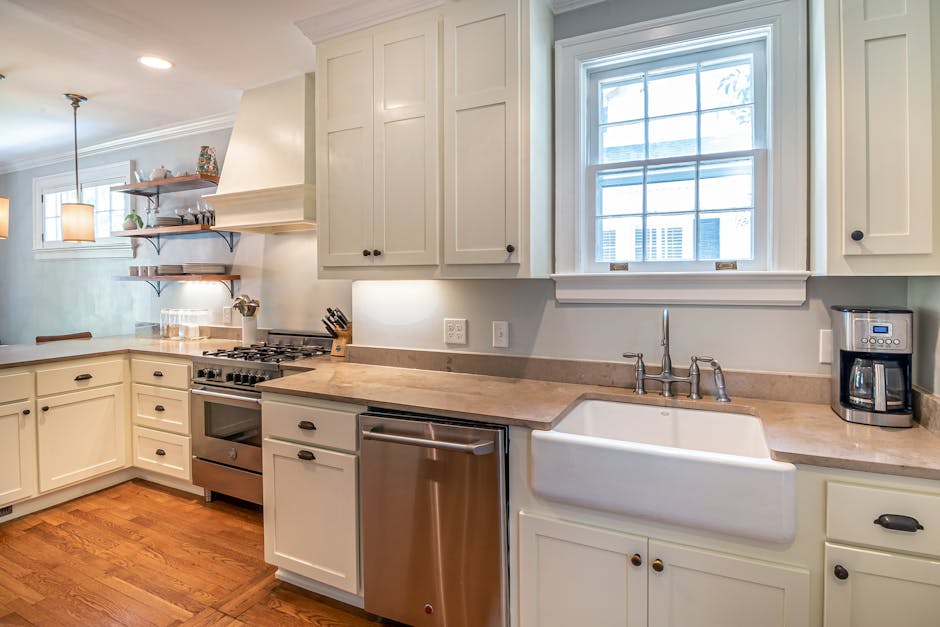
Finding the right products requires a structured plan so your layout fits properly, your budget stays intact, and you avoid missing pieces. By following these practical steps, you can secure durable cabinetry while taking advantage of inexpensive kitchen cabinet solutions across the region.
Step 1: Measure Space and Determine Base, Wall, and Tall Configurations
Accurate spatial planning is the foundation of a successful kitchen project. Start by drawing a rough floor plan on grid paper, noting total wall lengths in inches rather than feet.
- Map Utilities: Mark water supply lines, drain stacks, gas pipes, electrical outlets, range vents, and HVAC registers.
- Locate Windows and Doors: Measure from the outer edge of window/door casings to the nearest corner. Note window sill heights from the finished floor to ensure base cabinets and backsplashes clear comfortably.
- Calculate Appliance Clearances: Standard refrigerator openings require 36 inches of width and 72 inches of height; standard dishwashers require a 24-inch opening directly adjacent to the sink base; freestanding ranges require a true 30-inch gap.
- Allocate Functional Cabinet Boxes: Plan diagonal corner wall cabinets, blind base corners, and deep sink base units first, then fill remaining spans with standard 2-drawer or 3-drawer base banks. Always include 3-inch filler strips to allow door handles to clear adjacent walls or appliances.
Step 2: Search for Suppliers in Fort Lauderdale, Boca Raton, Miami, and West Palm Beach
Finding reliable stock involves reviewing regional millworks, surplus outlets, and wholesale showrooms across our service footprint. When sourcing locally, use our guide to finding affordable kitchen cabinets nearby to target quality inventory across Miami-Dade, Broward, Palm Beach, and Martin counties.
In Fort Lauderdale and Hollywood, FL, industrial warehouse corridors near major transit routes often house wholesale distributors with raw Shaker inventory ready for immediate pickup. Homeowners in Boca Raton, Delray Beach, and Boynton Beach can source through specialty building supply outlets that stock bare birch cabinetry. If you are shopping in Miami, Hialeah, Coral Gables, or West Miami, commercial millwork districts supply fully assembled, all-wood bare boxes to trade contractors and homeowners alike. Further north in West Palm Beach, Palm Beach Gardens, and Jupiter, look for surplus lumberyards that offer custom sizing alongside off-the-shelf wall and base units.
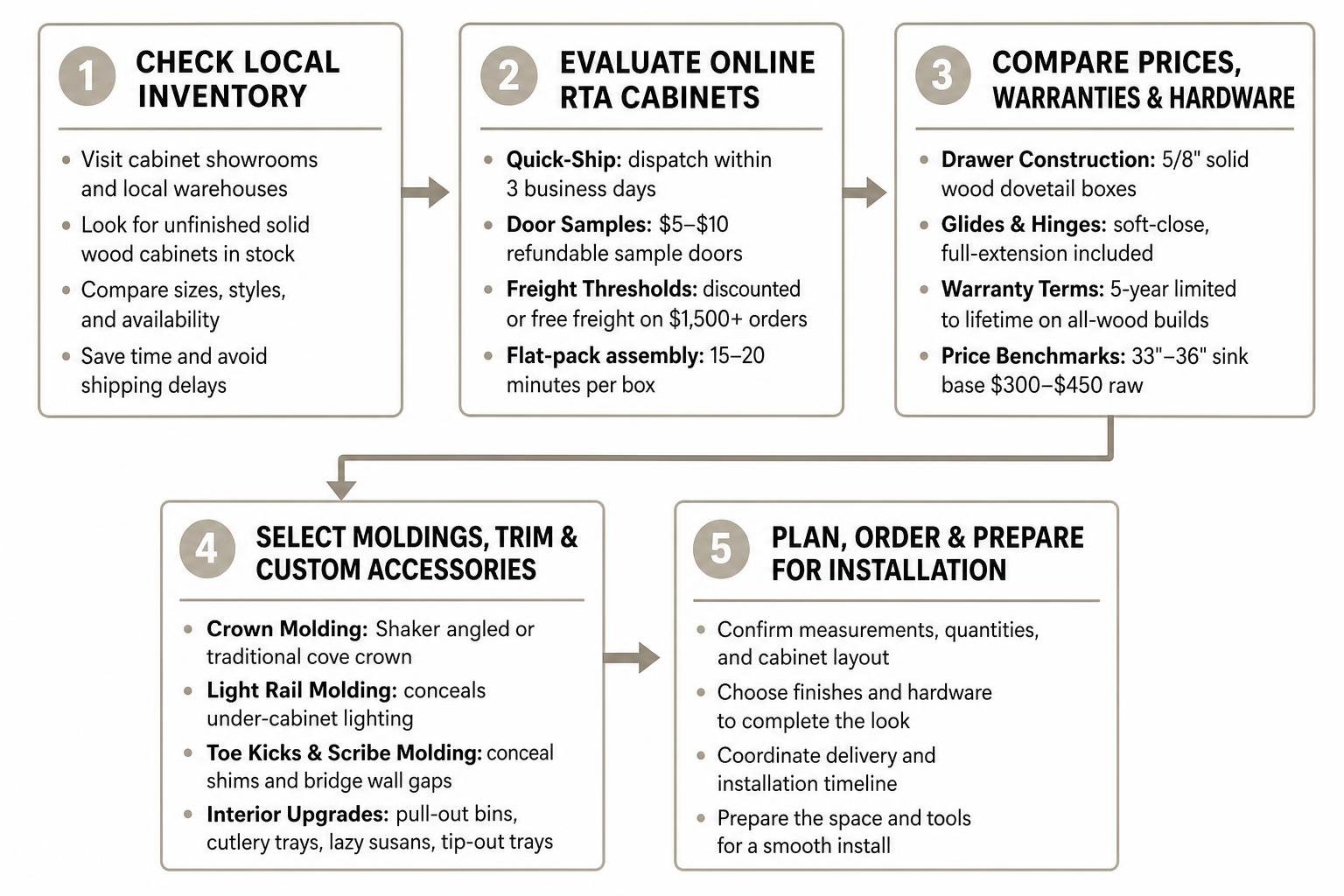
Step 3: Evaluate Online RTA and Ready-to-Ship Cabinets
If local stock is limited, ordering Ready-to-Assemble (RTA) unfinished cabinets online provides another avenue. High-volume online distributors maintain deep inventories of unfinished Shaker cabinets manufactured from solid birch and furniture-grade plywood.
Online shopping offers several distinct advantages:
- Quick-Ship Programs: Many RTA distributors dispatch flat-pack orders within 3 business days.
- Door Sample Programs: Order refundable sample doors (typically $5 to $10) to assess the raw wood grain, dovetail joints, and sanding quality before ordering a full kitchen package.
- Freight Shipping Thresholds: Standard freight shipping applies, but many suppliers provide discounted or free freight on orders crossing $1,500.
Flat-pack RTA units use interlocking wood cam-locks, wood glue, and pocket screws. They assemble in 15 to 20 minutes per box, cutting down on material waste and transportation costs.
Step 4: Compare Prices, Warranties, and Hardware Inclusions
Do not judge cabinet pricing solely by the base box quote. Scrutinize the hardware and joinery specifications included with each estimate. For a comprehensive look at market brackets, reference our kitchen cabinet pricing guide.
- Drawer Construction: Look for 5/8-inch solid wood dovetail boxes rather than stapled butt joints.
- Glides and Hinges: Confirm whether boxes include 6-way adjustable soft-close concealed hinges and full-extension undermount glides. Buying these items separately can add $20 to $40 per drawer/door opening.
- Warranty Terms: Review warranty documentation. Reputable manufacturers offer 5-year limited warranties, while some all-wood cabinet lines are backed by lifetime warranties covering structural defects, warping, and hardware failure.
- Price Benchmarks: An unfinished 33-inch or 36-inch sink base typically lists between $300 and $450 raw, whereas pre-finished equivalents run $500 to $750.
Step 5: Select Moldings, Trim, and Custom Accessories
Cabinet boxes alone do not make a finished kitchen; trim components tie the installation into your home’s architecture. When ordering your unfinished cabinet set, select matching raw wood accessories:
- Crown Molding: Shaker angled crown or traditional cove crown closes the gap between the top of wall cabinets and the ceiling.
- Light Rail Molding: Installed along the bottom edge of wall cabinets to conceal under-cabinet LED task lighting strips.
- Toe Kicks and Scribe Molding: 8-foot raw wood toe-kick skins conceal leveling shims beneath base units, while scribe molding bridges gaps along uneven drywall.
- Interior Upgrades: Add factory-matched pull-out waste basket inserts, tiered cutlery drawer trays, wooden lazy susans, and sink-front tip-out sponge trays.
How to Properly Prep, Paint, and Seal Unfinished Cabinets
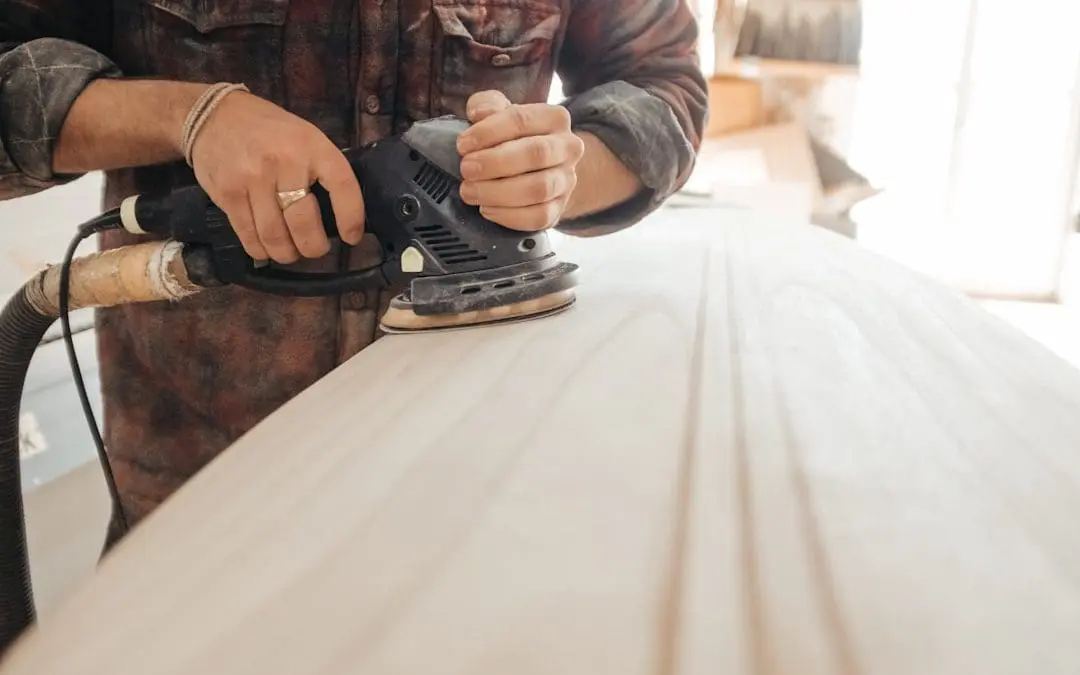
Applying a finish to bare wood requires careful surface preparation. Skipping prep steps on raw birch or maple will lead to uneven color absorption, flashing, and premature peeling. Because raw wood responds directly to humidity and moisture, follow a disciplined finishing workflow:
- Initial Sanding: Although unfinished cabinets arrive factory pre-sanded, handle marks, transit scuffs, and natural grain lift must be leveled. Hand-sand all doors, frames, and drawer fronts with 150-grit sandpaper, following the grain direction. Finish with 220-grit paper for a glass-smooth surface.
- Dust Extraction: Vacuum all surfaces using a soft brush attachment, then wipe the bare wood with a tack cloth or a lint-free microfiber towel dampened with mineral spirits. Never use water to clean bare wood, as it raises the grain.
- Staining Route (Option A): If you want to highlight the natural wood grain, apply a pre-stain wood conditioner first. Birch and maple have uneven densities that can turn blotchy without a conditioner. Once conditioned, apply your oil-based or wiping stain, let it penetrate according to manufacturer guidelines, wipe off excess, and seal with at least three coats of clear, non-yellowing polyurethane or conversion varnish.
- Painting Route (Option B): For a modern solid color, apply a high-build, stain-blocking bonding primer. Oil-based or shellac-based primers seal the wood tannins completely. Once dry, sand the primer coat lightly with 320-grit paper to remove nibs. Apply two coats of premium cabinet enamel (such as an urethane-modified alkyd or waterborne ceramic enamel).
- Curing vs. Drying: While paint may feel dry to the touch within 2 to 4 hours, complete chemical curing takes up to 30 days. Handle doors carefully during initial re-assembly to prevent edge chipping.
If spraying multiple coats in a home environment feels overwhelming, or if you want a factory-level smooth finish without buying professional spray rigs, hiring a dedicated finishing specialist ensures showroom-level results.
Frequently Asked Questions About Unfinished Cabinets
Where Can I Find the Best Deals on Unfinished Kitchen Cabinets Near Me?
The best deals are found through local building surplus warehouses, direct cabinet distributors, and freight-direct RTA web portals. In regions like Coral Gables, Kendall, Miramar, or Hollywood, FL, check commercial building supply hubs. Many distributor showrooms offer discounted display units or volume breaks if you purchase base, wall, and pantry cabinets together. Additionally, look for surplus outlets that offer local dock pickup, eliminating residential freight delivery surcharges.
How Much Money Do Unfinished Cabinets Actually Save?
Homeowners typically save 10% to 30% on the initial purchase price compared to factory pre-finished equivalents. For an average 10×10 kitchen containing 12 to 15 cabinet boxes, purchasing raw wood units can save between $1,200 and $2,800 on materials alone. To see how cabinetry fits into your broader remodel budget, check our analysis on how much new kitchen cabinets cost. That savings can be offset if you hire a third party for finishing, making it important to balance material discounts against professional painting costs.
Can I Stain or Paint Unfinished Cabinets Myself?
Yes, unfinished cabinets are well-suited for DIY painting or staining if you have a clean, well-ventilated workspace and the right tools. Achieving a brush-mark-free finish requires patience: you must sand thoroughly between coats, use quality foam rollers or an HVLP paint sprayer, and use high-grade bonding primers. Our team specializes in custom on-site spray application and surface refinishing—we do not sell retail paint cans.
Conclusion
Unfinished kitchen cabinets provide unmatched freedom to craft a custom, high-end kitchen layout without paying inflated factory catalog prices. By purchasing raw, all-wood birch and plywood boxes, you retain total control over your design, wood stain depth, and paint selection while saving thousands on upfront materials.
Whether you are updating a beachfront property in Key Biscayne or Marathon, remodeling a family home in Cooper City, Davie, or Weston, or refreshing a kitchen in Jupiter, Stuart, or Port Saint Lucie, the key to lasting success lies in quality finishing.
At All Surface Refinishing, we bring over 30 years of hands-on industry experience and more than 14,000 completed surface transformations to your home. We serve property owners across South and Southwest Florida—including Miami-Dade, Broward, Palm Beach, Martin, Saint Lucie, and Indian River counties. If you have sourced raw cabinetry and want a factory-smooth, durable paint or stain transformation, explore our expert cabinet painting and refinishing services to schedule your design consultation today.
