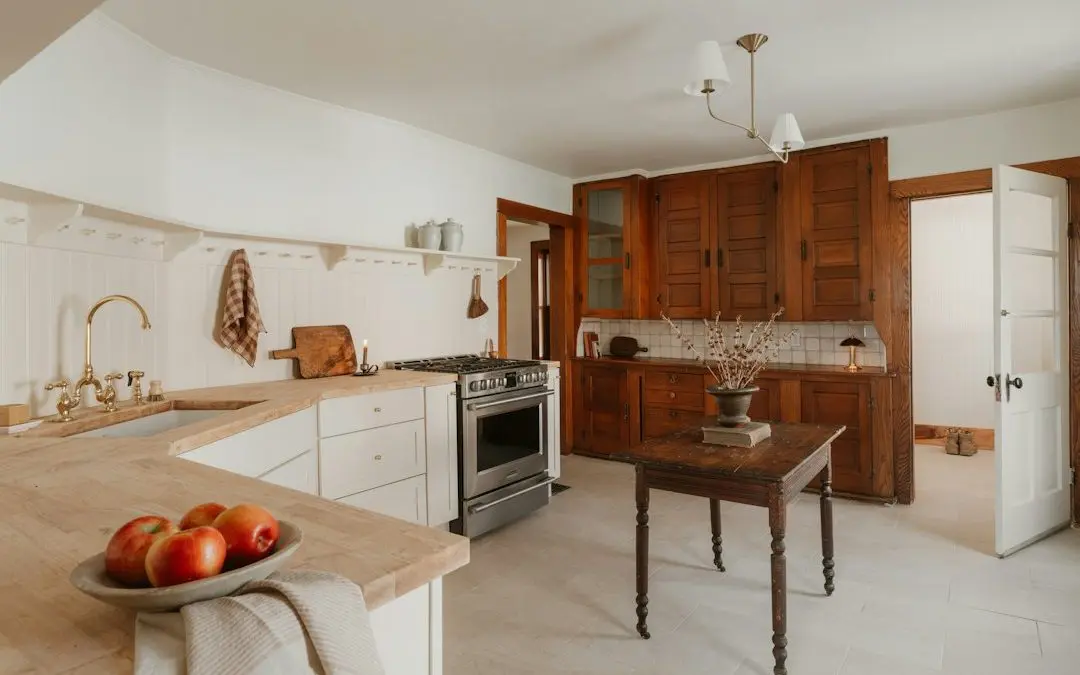
How to Use Antique Kitchen Cabinets in Your Kitchen
Start with one freestanding piece you can use every day. A Hoosier cabinet can hold baking supplies, while a Welsh dresser can store dishes. Measure your space, check that the cabinet is sturdy, and look for original finishes and hardware before making changes. Place it away from sink splashes and cooking heat, then choose a finish for your existing cabinets that helps the old and new pieces feel at home together.
I’m Frank Hernandez, president of All Surface Refinishing. My years of kitchen cabinet refinishing work shape the practical advice I share about bringing antique kitchen cabinets into a home without losing the character that makes them special.
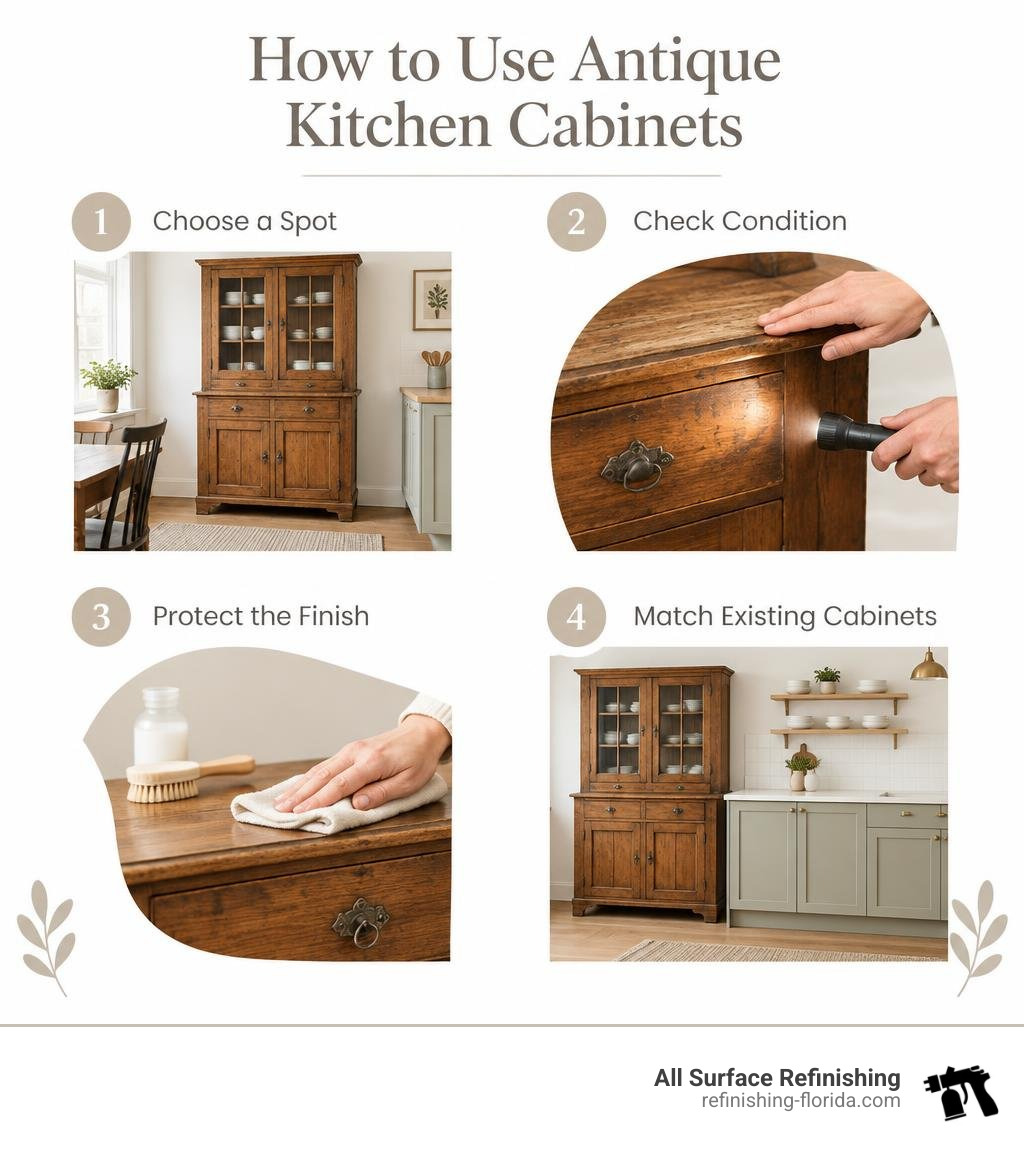
Antique kitchen cabinets terms to remember:
Historic Styles and Varieties of Antique Kitchen Cabinets
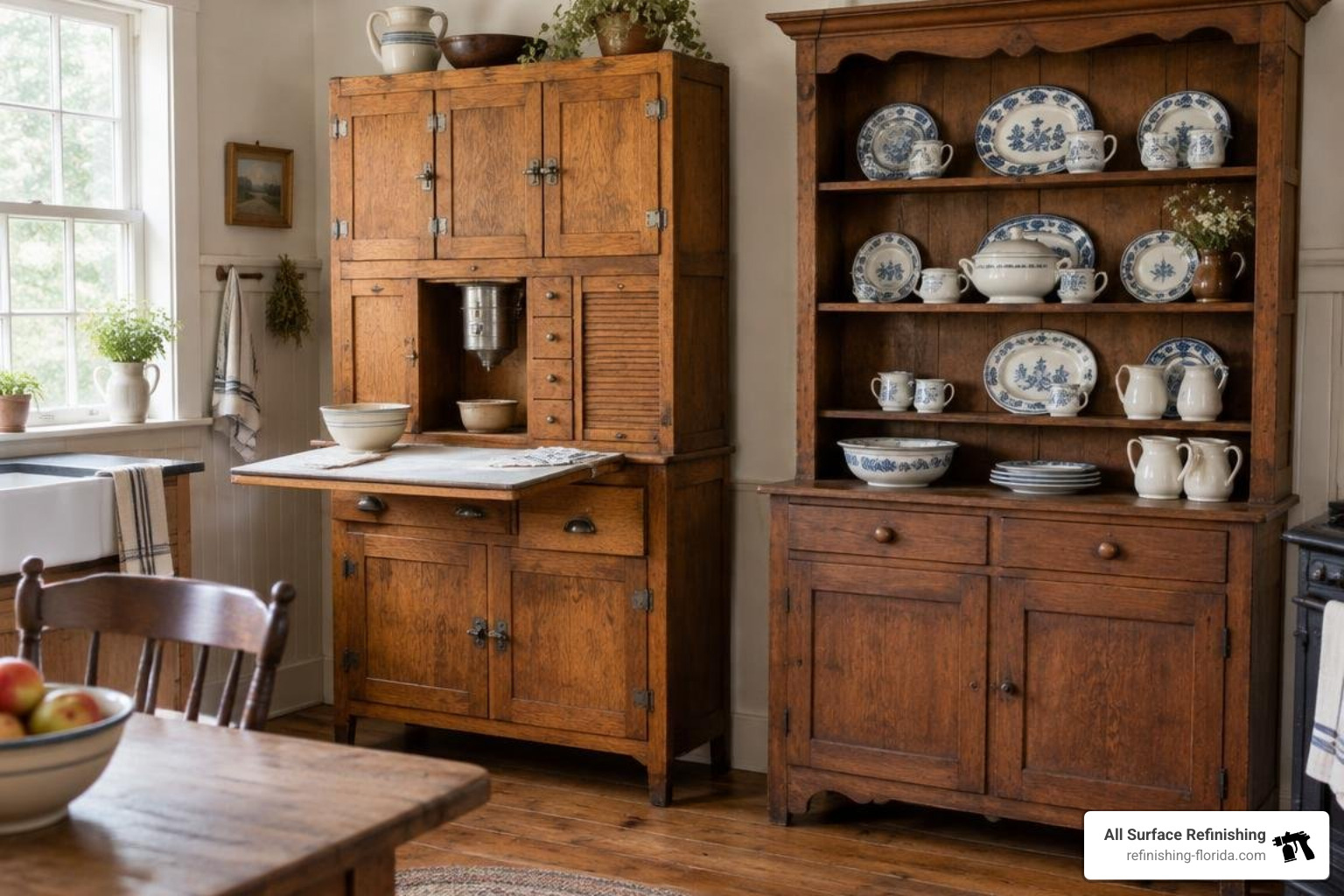
Long before continuous rows of fitted modular units became the standard in American homes during the post-WWII housing boom of the 1940s and 1950s, the kitchen was furnished with standalone architectural furniture. Early storage pieces were designed with individual utility in mind, serving specific daily culinary tasks from scratch baking to dish display.
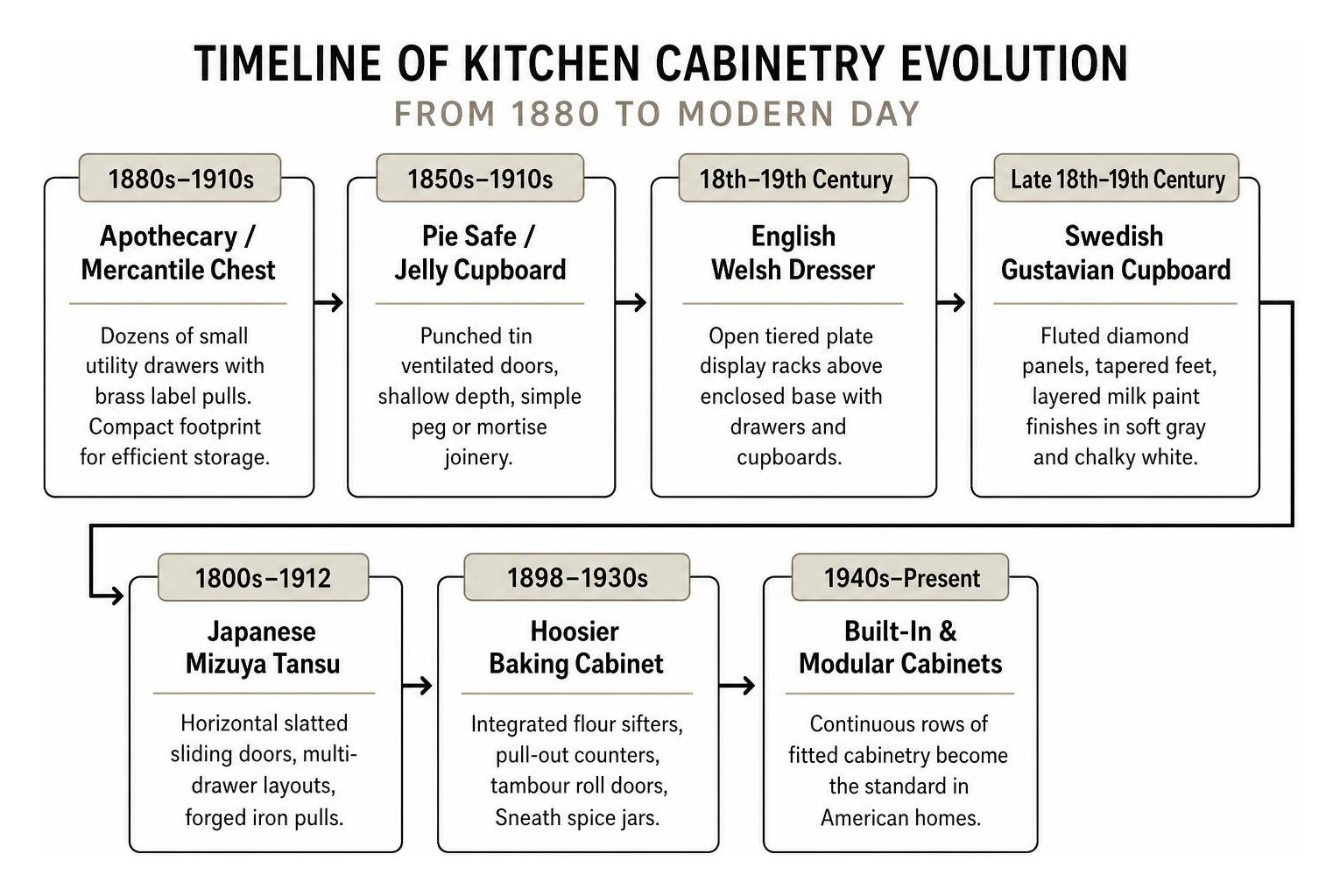
Understanding the differences between these historical cabinet types helps you choose the perfect centerpiece for your layout:
| Cabinet Style | Primary Historical Era | Dominant Woods & Materials | Distinctive Features |
|---|---|---|---|
| Hoosier Baking Cabinet | 1898–1930s | White Oak, Pine, Enamel | Integrated flour sifters, pull-out counters, tambour roll doors, Sneath spice jars |
| English Welsh Dresser | 18th–19th Century | Pitch Pine, English Oak, Sycamore | Open tiered plate display racks above enclosed base storage drawers and cupboards |
| Swedish Gustavian Cupboard | Late 18th–19th Century | Pine, Birch | Fluted diamond panels, tapered feet, layered milk paint finishes (soft gray, chalky white) |
| Japanese Mizuya Tansu | Edo to Meiji Eras (1800s–1912) | Keyaki (Zelkova), Sugi (Cedar), Elm | Horizontal slatted sliding doors, multi-drawer utility layouts, forged iron pulls |
| American Pie Safe / Jelly Cupboard | 1850s–1910s | Pine, Walnut, Butternut, Yellow Poplar | Punched tin ventilated door panels, shallow depth, simple peg or mortise joinery |
| Apothecary / Mercantile Chest | 1880s–1920s | Tiger Oak, Cherry, Gumwood | Dozens of small-proportioned utility drawers, brass label pulls, compact footprint |
The Iconic Hoosier Cabinet and Early Workstations
Between 1899 and the late 1930s, more than 40 manufacturers turned the freestanding baking workstation into a quintessential fixture of the American home. At peak production, factories churned out roughly 600 to 700 units per day. These pieces solved a major problem: early homes rarely had built-in pantries or continuous countertops.
Leading manufacturers like Coppes Brothers & Zook (creators of the famous Napanee Dutch Kitchenet), G.I. Sellers & Sons, McDougall, and the Hoosier Manufacturing Company engineered these stations to streamline household baking. As documented in the detailed history of Hoosier cabinets, vintage marketing campaigns highlighted domestic efficiency studies claiming the units saved home cooks up to 1,592 wasted steps every single day.
An authentic baking workstation combines three functional tiers:
- The Upper Hutch: Deep upper compartments housed mechanical metal hoppers with built-in rotary flour sifters, sugar dispensers, swinging brackets for glass canisters, and flexible wooden tambour roll-front doors that concealed interior clutter.
- The Intermediate Worktop: An extendable, slide-out prep counter surfaced in porcelain enamel, zinc, or solid wood that pulled forward to reveal a deep prep area.
- The Lower Base: Extra-deep bottom cabinetry fitted with heavy-duty wire racks for cast iron skillets, tin-lined moisture-resistant bread drawers, and anti-pest casters.
European Cupboards, Welsh Dressers, and Asian Tansu
For homeowners wanting an Old World or coastal aesthetic, European and Asian freestanding storage pieces offer exceptional craftsmanship.
- English Welsh Dressers & Pitch Pine Cupboards: Traditional 19th-century English dressers feature open stepped shelving racks designed for displaying ironstone platters above enclosed base drawers and cupboards. Often built from dense English pitch pine or sycamore, these pieces introduce vertical height and architectural character to dining nooks and large kitchen walls.
- Swedish Gustavian and Dalarna Cabinets: Late 18th- and 19th-century Swedish cupboards showcase canted sides, dentil crown moldings, and hand-scraped milk paint in shades of muted dove gray, cream, and soft seafoam green. Historical cabinetmakers utilized floating interior panel construction, allowing solid wood panels to expand and contract across seasonal humidity shifts without splitting the face frames.
- East Asian Mizuya Dansu & Apothecary Cabinets: If you appreciate clean architectural lines, exploring authentic Asian antique cupboards and tansu reveals exceptional woodworking. Mizuya Dansu (traditional Japanese kitchen chests) feature smooth sliding cedar or zelkova doors and woven wire mesh venting historically intended to store pottery, lacquerware, and dry goods.
Identification, Sourcing, and Valuation Guide
Sourcing authentic antique storage requires evaluating physical joinery, factory markings, and freight logistics. Architectural salvage warehouses and estate auctions regularly list rare cupboards, but buyers must evaluate both condition and structural authenticity before purchasing.
Dating and Authenticating Antique Kitchen Cabinets
Dating an antique storage piece involves examining the finish, joinery methods, hardware, and rear markings together rather than relying on a single clue.
When dating early Coppes Napanee cabinetry, examine the brand badge carefully. Before 1920, units typically featured a clear natural shellac or lacquer over high-grade quarter-sawn White Oak. In the 1920s, manufacturers introduced factory-painted finishes in pale green, cream, and canary yellow.
Be sure to check whether the upper hutch and lower base belong together. Mismatched halves—often cobbled together by past dealers from separate broken units—can be spotted by comparing the rear backing lumber, matching wood grains, and side bracket screw patterns.
How to Value and Appraise Antique Kitchen Cabinets
Condition, complete hardware, and original accessories dictate open-market valuations:
- Entry-Level / Project Grade ($150 – $350): Unbranded pine or oak cabinets requiring structural rebuilds, stripping of non-original paint layers, or missing base drawers and flour hoppers.
- Mid-Tier Restored Antiques ($450 – $950): Structurally sound units with authentic maker badges (such as Boone, Sellers, or McDougall) featuring working latches, smooth slide-out prep shelves, and stable finishes. Realized auction records for antique Sellers cabinets regularly land within this fair market range.
- Collector & Museum-Grade ($1,200 – $3,500+): Mint-condition, fully original solid oak workstations featuring complete sets of matching embossed Sneath glassware, intact tin-lined bread drawers, functioning lowering flour bins, intact tambour doors, and original advertising recipe cards pinned inside the cabinet doors.
Restoration and Maintenance Best Practices

Restoring an antique cabinet requires a balanced touch. The goal is to clean and stabilize the vintage woodwork without stripping away the historical character and aged patina that make the piece valuable.
When restoring aged wood surfaces, start with the gentlest cleaning method possible:
- Surface Decontamination: Wipe away decades of built-up cooking grease and dust using warm water mixed with mild vegetable oil soap. Avoid heavy alkaline household degreasers, which can cloud fragile shellac or soften historic milk paint.
- Hardware Reconditioning: Carefully unscrew stamped brass latches, nickel-plated hinges, and iron pulls. Soak metal hardware in warm soapy water and buff lightly with fine bronze wool to remove tarnish while preserving the darker recessed oxidation.
- Moisture Stabilization & Nourishment: Dry, checked wood grain should be treated with high-grade paste wax containing natural carnauba and beeswax. Buffing the cured wax with a horsehair brush seals open grain pores and provides moisture resistance against kitchen steam.
Reviewing cabinet refinishing basics gives you a solid foundation in wood preparation and surface durability before undertaking structural repairs.
Preserving Original Finishes vs. Modern Cabinet Painting
Homeowners frequently ask whether an antique cabinet should be stripped down to bare lumber or painted:
- When to Preserve Clear Finishes: If your cabinet features intact quarter-sawn oak, rich American walnut, or vibrant pitch pine with an original shellac or varnish patina, preserve the wood finish. Stripping 100-year-old aged wood down to bare timber can erase historical value and natural surface depth. If minor repairs are needed, explore budget-friendly ways to refinish old kitchen cabinets to repair wear spots while protecting the underlying wood grain.
- When to Apply Professional Paint: If the original wood finish was ruined by past moisture damage, or if the piece is a 1920s factory-painted model covered in peeling, mismatched coatings, painting is a practical restoration choice.
Follow the right way to paint kitchen cabinets by thoroughly cleaning, sanding, applying stain-blocking primer, and applying durable topcoats. When planning updates across your entire kitchen, estimating cabinet refinishing costs will help you budget for pairing freestanding antiques with your built-in cabinetry.
Integrating Antique Cabinetry into Modern Kitchen Designs
A freestanding antique cupboard does not need to sit in a historic museum kitchen to look fantastic. When thoughtfully integrated into open-concept floor plans, a vintage storage unit adds warm visual texture that softens sleek stone countertops and stainless steel appliances.
Explore these designer-approved kitchen cabinet makeover ideas for blending vintage and modern design elements:
- The Dedicated Espresso Bar & Beverage Station: Repurpose an antique Hoosier cabinet or Swedish pine cupboard into a custom coffee bar. The pull-out porcelain or wood prep counter provides ample space for an espresso machine, grinder, and syrups, while the upper shelving keeps mugs and beans organized. The tambour roll-top door slides down to conceal brewing gear when entertaining.
- The Baking Center & Prep Island: Position a heavy-duty oak baker’s cupboard along a prep wall. Use the lower deep tin-lined compartments to store stand mixer attachments, baking pans, and rolling pins.
- The Statement Walk-In Butler’s Pantry: If you have a large pantry or pass-through area, install an English Welsh dresser or multi-drawer apothecary chest to store dry goods, seasonal dinnerware, and table linens.
Pairing Freestanding Antiques with Existing Built-In Cabinets
To keep your kitchen from looking mismatched, balance your freestanding antique with your primary built-in cabinetry. If your built-in storage feels dated or clashes with your vintage showpiece, updating dated kitchen cabinets with clean, cohesive refinished colors like creamy whites, warm taupes, or charcoal grays helps your antique piece stand out as an intentional design feature.
Frequently Asked Questions About Vintage Kitchen Storage
What is the difference between an authentic antique cabinet and a vintage reproduction?
An authentic antique cabinet is at least 100 years old and exhibits traditional joinery techniques (such as hand-cut dovetails or early Knapp pin-and-cove joints), natural oxidation behind hinges, solid hardwood or tongue-and-groove backing boards, and genuine manufacturer markings. Modern reproductions often use flat slotted screws instead of period-accurate slotted brass hardware, modern plywood or particleboard backing panels, and artificially aged stains lacking natural grain depth.
Can antique wood cabinets handle everyday kitchen use and moisture?
Yes, provided they are placed strategically and sealed properly. Keep valuable antique wood away from direct sink splash zones, high-heat dishwashers, and unvented cooktops. Applying regular coats of natural paste wax protects clear wood finishes against ambient steam. For high-humidity environments, sealing interior drawers and shelves creates a durable moisture barrier that prevents solid wood drawer boxes from sticking.
How much does an authentic antique Hoosier cabinet cost?
Prices range from $200 to $350 for unrestored project units up to $1,200 to $2,500 for fully restored, authenticated oak models from renowned manufacturers like Sellers or Coppes Napanee. The presence of complete original accessories—including intact glass spice canister sets, functional flour sifters, and undamaged porcelain countertops—significantly increases market value.
Conclusion
Bringing antique kitchen cabinets into your home adds unmatched architectural warmth, fine woodworking craftsmanship, and timeless charm to modern kitchen spaces. Whether you are showcasing a 1910 oak Hoosier workstation, a Welsh dresser, or a multi-drawer apothecary chest, preserving these historic pieces allows you to celebrate vintage character without compromising everyday functionality.
At All Surface Refinishing, we have helped homeowners throughout South Florida restore the beauty of their kitchens for over 30 years across more than 14,000 completed transformations. If your built-in kitchen cabinets, countertops, or bathroom fixtures need a fresh, updated look to complement your favorite vintage furniture, our skilled team is here to help. Contact Frank Hernandez and the All Surface Refinishing team today to explore our professional cabinet refinishing services and discover how easy it is to revitalize your home.
