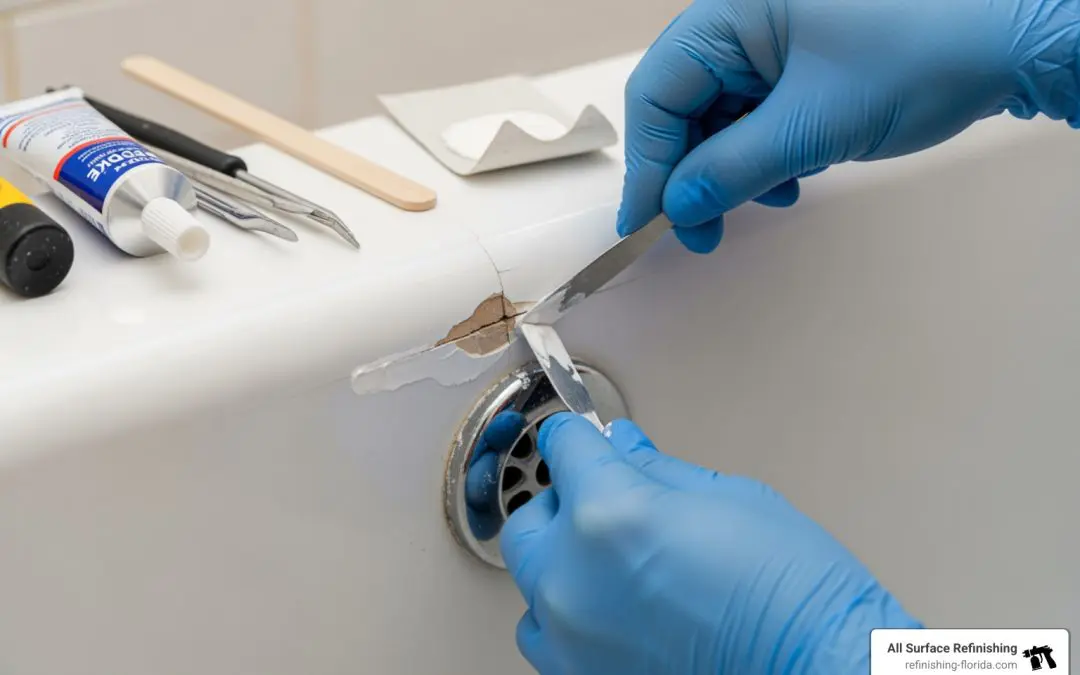
Why Bathtub Repair Matters for Florida Homeowners
Bathtub Repair is a cost-effective solution that can save property owners thousands of dollars compared to full replacement. Whether you’re dealing with an unsightly chip, a worrying crack, or stubborn rust spots, the right repair approach can restore your tub’s function and appearance without the mess and expense of demolition.
Quick Answer: Essential Bathtub Repair Options
- Small chips and scratches: Epoxy repair kits or professional touch-up services
- Cracks in fiberglass/acrylic tubs: Structural repair with reinforcement and color-matched refinishing
- Chips and rust in cast iron/steel tubs: Enamel repair kits or professional porcelain restoration
- Dull or stained surfaces: Professional refinishing or reglazing for a complete surface renewal
- Large structural damage: Professional repair with support foam and multi-layer coating
- Cost savings: Repair typically costs 75% less than replacement (which can exceed $3,000)
A cracked bathtub isn’t just an eyesore—it’s a ticking time bomb for water damage. As one industry expert notes, “Bathtub cracks can lead to serious water damage if left untreated, including mold, structural issues, and leaks.” The good news? Most bathtub damage can be successfully repaired, whether you tackle it yourself with the right products or bring in professionals for a flawless, lasting finish.
The challenge is knowing which repair method matches your tub’s material and damage type. Fiberglass and acrylic tubs are more prone to cracking than cast iron or porcelain, while enameled steel tubs battle rust. Each material demands a specific repair approach, and choosing the wrong product can waste time and money—or make things worse.
This guide walks you through the essential bathtub repair products and professional services available for South Florida property owners. You’ll learn how to identify your tub’s material, match the right repair solution to your specific damage, and decide when DIY makes sense versus calling in the pros.
I’m Frank Hernandez, President of All Surface Refinishing, and I’ve been helping South Florida homeowners and businesses with Bathtub Repair and refinishing since 2011. Over the past decade, I’ve personally repaired everything from minor chips to severe structural cracks in thousands of tubs across Miami-Dade, Broward, and Palm Beach counties, and I’ve trained a team of expert technicians who deliver the same quality results.

Identifying Your Bathtub’s Material and Damage
Before diving into any Bathtub Repair, the first step is always to understand what kind of bathtub you have and the nature of the damage. Just like a doctor needs to know if your ailment is a common cold or something more serious, we need to properly diagnose your tub’s issues to prescribe the right fix. Different materials react differently to damage and require specific repair methods.
Bathtubs are typically made from a few common materials:
- Acrylic: These tubs are lightweight, durable, and generally warmer to the touch. They’re often found in modern homes throughout South Florida, from the busy streets of Miami to the quiet communities of Palm Beach Gardens. With normal use, acrylic bathtubs can last around 10 to 15 years.
- Fiberglass: Similar to acrylic, fiberglass tubs are also lightweight and offer design flexibility. However, they are generally less durable and more prone to flexing and cracking than acrylic. You might find these in older homes or as more budget-friendly options.
- Porcelain-enameled steel: These tubs have a steel core coated with a layer of porcelain enamel. They are robust and can withstand significant wear, but the enamel can chip or scratch, exposing the steel underneath.
- Cast iron: The heaviest and most durable of the bunch, cast iron tubs also feature a porcelain enamel finish. They retain heat exceptionally well and are a hallmark of classic luxury. While incredibly tough, their enamel can chip, especially from heavy impacts, revealing the dark cast iron below. If you have a vintage home in Coral Gables or a historic property in Fort Lauderdale, you might just have one of these beauties!
Identifying Your Tub Type: A quick way to tell if your tub is acrylic or fiberglass is by touch and flexibility. Acrylic tubs feel warmer and flex only slightly when pressed. Fiberglass tubs, on the other hand, tend to feel cooler and give more easily when you press on them. For steel or cast iron, a magnet will stick to the surface if the enamel is intact. If it’s chipped, you’ll see the distinct metal beneath.
Once you know your material, you can assess the damage:
- Cracks: These can range from hairline surface cracks to deep fissures, especially common in fiberglass and acrylic tubs. A crack is a serious issue that demands immediate Bathtub Repair, as it can compromise the tub’s watertight integrity.
- Chips: Often seen in enameled steel or cast iron tubs, chips occur when the hard, brittle enamel breaks away, usually due to impact. These expose the underlying metal, making them susceptible to rust.
- Scratches: Surface scratches can appear on any tub material, making the surface look dull and providing places for dirt and grime to accumulate.
- Rust spots: Exclusively found on steel and cast iron tubs where the enamel has chipped, allowing water to reach the metal and cause oxidation. These spots can grow rapidly if left untreated.
- Dull finish: Over time, harsh cleaners, abrasive scrubbing, or simple wear and tear can strip away the original shine, leaving your tub looking tired and dingy.
- Water damage signs: Beyond the tub itself, look for soft spots on the floor around the tub, discoloration, or a musty smell. These are red flags that water might be leaking, turning a simple Bathtub Repair into a more urgent plumbing issue.
- Leaks: The most critical sign that your tub needs attention. A leak, no matter how small, can lead to serious structural damage, mold growth, and costly repairs to your home’s subfloor or ceiling below.
For more in-depth information on specific material repairs, especially for classic fixtures, you can learn more about Cast Iron Tub Repair.
Why Bathtub Material Matters for Repair
Understanding your bathtub’s material is the cornerstone of effective Bathtub Repair. It’s not just about aesthetics; it dictates the type of filler, adhesive, and coating that will properly bond and last.
- Fiberglass and acrylic cracking: These materials are inherently more flexible than metal tubs. While this makes them lighter and easier to install, it also means they are “more prone to cracking compared to more durable materials like cast iron or porcelain.” Cracks in these tubs often stem from a lack of adequate support underneath, causing the tub to flex under weight. Impact from a dropped shampoo bottle can also cause stress cracks. Repairing these requires flexible fillers and often structural reinforcement to prevent the crack from reappearing.
- Cast iron and steel chipping: The porcelain enamel on these tubs is essentially a glass coating. It’s incredibly hard and scratch-resistant but also brittle. A heavy object, like a dropped tool or even a cast iron pan, can cause a chip. This isn’t just cosmetic; it’s a breach in the protective layer.
- Rust formation: This is the nemesis of chipped steel and cast iron tubs. Once the enamel is chipped, “Chips and dings in tub coatings can allow water to reach the metal and cause rust.” Water and air then begin to oxidize the metal, leading to unsightly and expanding rust spots that can eventually compromise the tub’s integrity. Effective Bathtub Repair for rust involves not just covering it up, but treating the rust and sealing the metal from further exposure.
- Porous vs. non-porous surfaces: Fiberglass and older acrylic tubs can sometimes become slightly porous over time, making them more susceptible to staining and harder to clean. Porcelain enamel, on the other hand, is extremely non-porous when intact, making it highly resistant to stains. This difference affects how thoroughly a surface needs to be cleaned and prepared for repair, as well as the type of primer or bonding agent needed.
- Adhesion of repair products: The chemical composition of each tub material requires specific repair products to ensure proper adhesion. An epoxy designed for acrylic might not bond effectively to porcelain, and vice-versa. Using the wrong product can lead to the repair failing quickly, peeling, or discoloring. Our professional technicians in areas like Jupiter and Pompano Beach understand these nuances and select the perfect materials for each job.
Common Signs Your Bathtub Needs Repair
Your bathtub often gives subtle (and sometimes not-so-subtle) clues when it’s time for some tender loving care. Paying attention to these signs can prevent minor issues from becoming major headaches.
- Visible cracks or holes: This is perhaps the most obvious sign. Even hairline cracks can allow water to seep through, potentially damaging your subfloor or ceiling. As we mentioned, “A cracked bathtub is more than an eyesore: It can lead to serious problems like leaks, water damage, and even mold growth if left untreated.”
- Water pooling around the tub: If you notice puddles on the bathroom floor after a shower or bath, it could indicate a leak from a crack, a faulty drain, or compromised caulk. Don’t ignore it – water damage can be insidious!
- Stains that won’t clean: If you’ve tried every cleaner under the sun and those mysterious stains just won’t budge, it might be a sign that your tub’s surface is damaged, porous, or losing its protective layer. This is a common issue we address for homeowners in Boynton Beach and Delray Beach, restoring their tubs to sparkling clean.
- Spreading rust spots: For cast iron or steel tubs, a small chip can quickly turn into a growing rust stain. If you see rust spreading, it means water is continuously reaching the metal, and the problem will only worsen without intervention.
- A flexing or unstable tub floor: If your tub feels spongy or unstable when you step into it, especially in fiberglass or acrylic models, it’s a strong indicator of inadequate support underneath. This flexing puts immense stress on the tub, making it “prone to cracking.” Addressing this requires structural Bathtub Repair, often from underneath.
- Dull or faded finish: If your once-gleaming tub now looks tired, faded, or discolored, it’s not just a cosmetic issue. The protective top layer might be compromised, making it harder to clean and more susceptible to further damage.
Ignoring these signs is like ignoring a check engine light in your car – it might run for a while, but eventually, you’ll face a much bigger problem. A timely Bathtub Repair can save you significant money and hassle down the line. For more DIY insights, check out A DIY Guide to Bathtub Repair.
Top Professional Bathtub Repair and Refinishing Solutions
When it comes to Bathtub Repair, sometimes a little DIY elbow grease is all you need. Other times, you’ll want the precision, durability, and seamless finish that only professional services can provide. Our team at All Surface Refinishing has been delivering these high-quality results across South Florida for over a decade, handling everything from tiny chips to full bathroom changes.
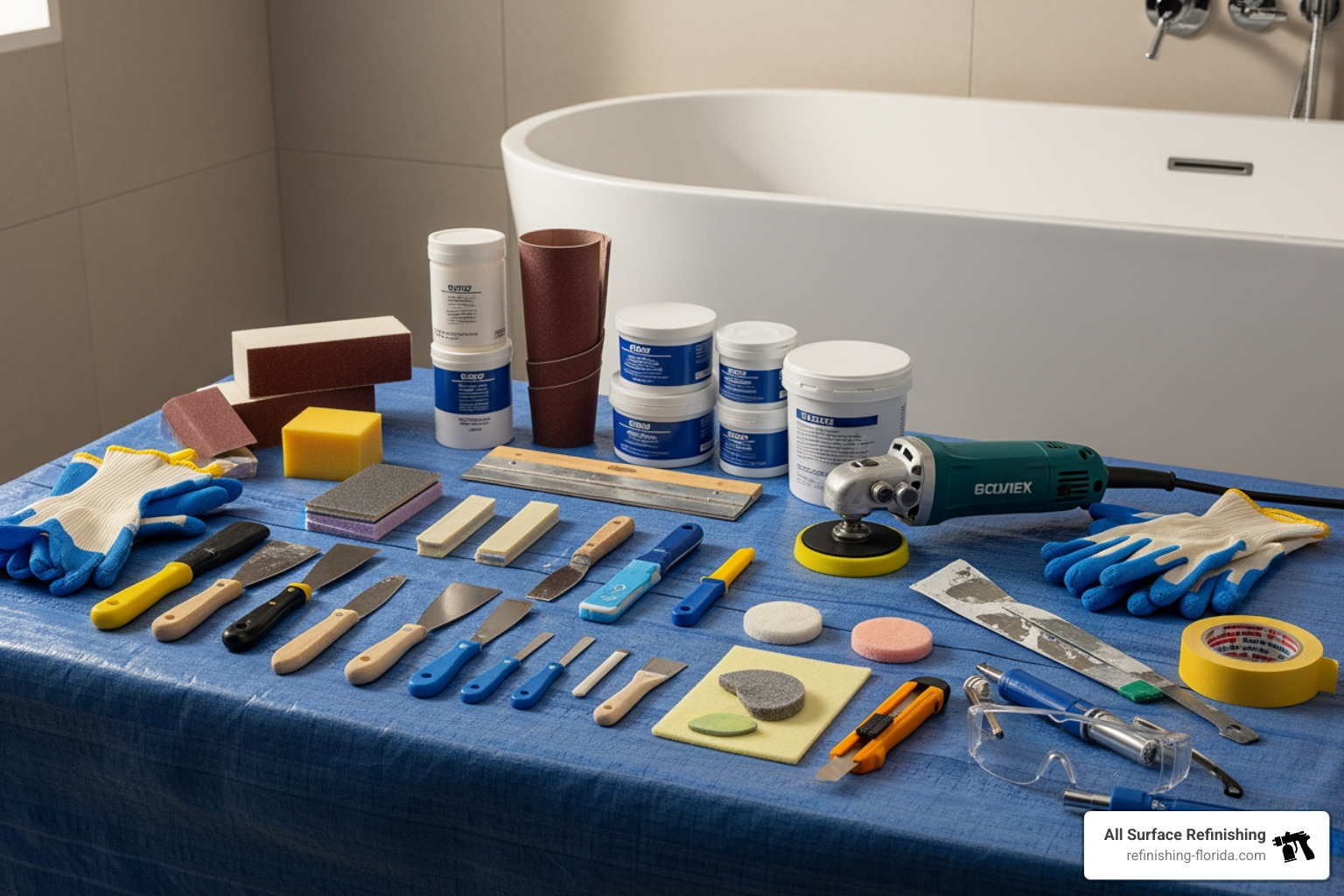
We categorize our services into two main types:
- Spot Repair: This is for localized damage like a single chip, a small crack, or a rust spot. The goal is to seamlessly blend the repair into the existing surface, making the damage disappear as if it were never there. This is a highly cost-effective solution when the rest of the tub is in good condition.
- Full Refinishing (or Reglazing): If your tub has widespread damage, a dull finish, numerous scratches, or you simply want a new color, full refinishing is the answer. This process involves applying a brand-new, durable coating over the entire tub surface, making it look and feel like new.
One of the biggest challenges, especially with spot repairs, is color matching. While DIY kits often promise a universal white that rarely matches, professional technicians have access to a wider range of tints and the artistic eye required to blend the repair perfectly. As one expert insight confirms, “DIY repair kits rarely deliver the long lasting, color matched results that professional bathtub refinishing delivers.” Our team takes pride in making the damage look like it was never there, a skill honed over 14,000+ projects.
For Cracks in Fiberglass & Acrylic Tubs
Cracks in fiberglass and acrylic tubs are more than just cosmetic blemishes; they’re potential leak points that can lead to serious water damage. For these types of tubs, especially common in many South Florida homes, professional Bathtub Repair offers lasting solutions.
Our approach includes:
- Professional epoxy repair: We use specialized, waterproof polyester resins and epoxy fillers that are designed to bond securely with fiberglass and acrylic. These materials are flexible enough to withstand the slight movement inherent in these tubs, preventing the crack from reappearing.
- Structural reinforcement: Often, a crack in a fiberglass or acrylic tub indicates a lack of support underneath. We don’t just patch the surface; we address the root cause. This might involve injecting foam beneath the tub to provide firm support or, for more severe damage, rebuilding the bottom with fiberglass cloth and resin. This makes the repaired area “typically stronger than brand new.”
- Color-matched refinishing: After the structural repair is complete, we carefully blend the repair into the existing tub surface. This involves applying acrylic enamel coatings with an artist’s airbrush, ensuring a seamless finish that’s virtually invisible.
Here’s a simplified look at the professional steps involved:
- Clean: Thoroughly clean the damaged area and surrounding surface using specialized cleaning agents.
- Sand: Lightly sand the crack and surrounding area to create a surface for the repair materials to adhere to.
- Apply Filler: Carefully apply the epoxy or polyester resin filler into the crack, ensuring it fills completely.
- Cure: Allow the filler to cure fully, a critical step for durability.
- Sand Smooth: Once cured, sand the repaired area smooth and flush with the tub’s surface.
- Finish: Apply a color-matched acrylic enamel coating, delicately blended to match your tub’s original color and sheen.
For more comprehensive information on our services, including specific solutions for these types of issues, please visit our Tub Repair page.
For Chips & Rust in Enameled Steel or Cast Iron Tubs
Enameled steel and cast iron tubs are renowned for their durability, but their hard, glossy surfaces are susceptible to chips and, consequently, rust. If you have one of these classic tubs in your home in Miami Beach or Fort Pierce, you know how frustrating these blemishes can be. Our professional Bathtub Repair services are perfectly suited for these challenges.
Our specialized techniques include:
- Professional enamel repair: For chips, we use high-quality, durable enamel repair compounds. These are carefully applied to fill the chipped area, restoring the smooth surface.
- Porcelain touch-up: After filling, a precise porcelain touch-up is applied, often with an artist’s brush, to match the original color and sheen of your tub’s enamel. This artistic touch is what truly makes the damage disappear.
- Epoxy putty application: For deeper chips or gouges, a strong epoxy putty may be used first to build up the area, providing a solid foundation for the enamel layers.
- Rust treatment and sealing: When rust is present, simply covering it up won’t work. We first carefully remove all traces of rust, then treat the metal to neutralize any remaining oxidation. Only then do we apply a specialized primer and sealant to prevent future rust from forming before applying the enamel layers. This “importance of sealing metal” is paramount for a long-lasting repair.
The process ensures that the repaired area is not only visually seamless but also protected from further deterioration. Small chips, scratches, and scuffs can be quickly repaired, making this type of Bathtub Repair much more economical than replacing the entire tub. To dive deeper into how we handle these robust fixtures, explore our Cast Iron Tub Refinishing Guide.
For Scratches, Stains, and Dull Finishes
If your bathtub isn’t chipped or cracked but simply looks tired, stained, or has lost its original luster, a full Bathtub Repair or refinishing service is often the perfect solution. This is a common scenario in many South Florida bathrooms where years of use and cleaning have taken their toll.
We offer comprehensive solutions to revitalize your tub:
- Professional tub and tile refinishing: This process involves applying a brand-new, durable coating over your entire tub and even surrounding tiles. It’s a complete surface change that makes your bathroom look like new, without the demolition mess.
- Spray-on epoxy coatings: We use high-tech, durable acrylic or epoxy coatings that are professionally sprayed onto the carefully prepared surface. This ensures an even, smooth finish that bonds directly to the original tub material.
- Brush-on acrylic enamel: While spraying offers the most uniform finish, for certain applications or touch-ups, a high-quality brush-on acrylic enamel can be used by skilled technicians.
- Surface preparation and cleaning: This is arguably the most critical step. We thoroughly clean the tub using proprietary two-step cleaners to remove all soap scum, oils, and grime. Any previous repairs or loose coatings are removed, and the surface is etched to create a profile for optimal adhesion.
- Etching agents: Professional etching agents are used to microscopically roughen the surface of porcelain and other materials. This creates thousands of tiny pores for the new coating to grip onto, ensuring a strong, lasting bond. This is far superior to simply sanding, which often isn’t enough for smooth, hard surfaces.
Our refinishing process makes your worn-out tub look and feel like new again, saving you up to 75% over the cost of replacement. It’s a fantastic option for homeowners in areas like Fort Lauderdale, West Palm Beach, and Miami who want a refreshed bathroom without the massive expense and disruption of a full remodel. You can learn more about how we achieve these changes on our Professional Bathtub Reglazing page.
Your Essential Toolkit and Safety Gear
Whether you’re attempting a minor DIY Bathtub Repair or just performing regular maintenance, having the right tools and, more importantly, the right safety gear is non-negotiable. We always prioritize safety in all our projects, and we encourage you to do the same!

Working with chemicals, sanding dust, and sharp tools requires caution. Ventilation is absolutely key when dealing with repair epoxies and paints, which can emit strong fumes. Always open windows, use fans, and consider working during cooler times of the day when you can keep air flowing.
Must-Have Tools for Any Repair
For any minor Bathtub Repair you might attempt, here’s a basic toolkit you’ll want to have on hand:
- Putty knife: Essential for mixing and applying fillers smoothly.
- Utility knife: Handy for trimming excess material or defining edges.
- Sandpaper (various grits): You’ll need coarse grits (like 80-grit) for initial shaping and fine grits (like 400-grit or even 800-grit) for smoothing and feathering the repair into the surrounding surface.
- Tack cloth: A sticky cloth used to pick up fine dust particles after sanding, ensuring a clean surface for paint or sealant.
- Masking tape: To protect surrounding areas from paint or filler.
- Small paintbrushes: For applying touch-up paint or small amounts of sealant.
- Cleaning rags: For surface preparation and cleanup.
- Rubbing alcohol or denatured alcohol: For degreasing and cleaning the repair area.
Critical Safety Precautions
Your health and safety are paramount. When working with repair kits and chemicals, always take these precautions:
- Respirator mask for fumes: This is crucial. Many epoxy and paint products emit volatile organic compounds (VOCs). A proper respirator mask (not just a dust mask) with organic vapor cartridges will protect your lungs. “Wear protective clothing (face mask, gloves, safety goggles) when using insulating foam, especially if you have breathing or skin conditions.”
- Chemical-resistant gloves: Protect your hands from direct contact with epoxies, paints, and solvents.
- Safety glasses: Protect your eyes from splashes, dust, and fumes, especially when sanding or mixing.
- Proper ventilation: As mentioned, keep the area well-ventilated. Open windows, use exhaust fans, and take breaks to get fresh air.
- Following professional instructions: Always read and strictly follow the instructions provided with your repair kit. They contain vital information about application, curing times, and specific safety warnings for that product.
A little preparation and caution go a long way in ensuring a safe and successful Bathtub Repair.
Professional Services vs. DIY: Making the Right Call
Deciding whether to tackle a Bathtub Repair yourself or call in the professionals is a common dilemma for homeowners in Fort Lauderdale, Miami, and beyond. There are clear advantages and disadvantages to both, and the “right” choice often depends on the extent of the damage, your budget, and your comfort level with DIY projects.
Let’s break down the comparison:
| Feature | DIY Bathtub Repair Kits | Professional Bathtub Repair/Refinishing “`
The research is for an SEO article on “Bathtub Repair” in an extensive guide format. I need to make sure to follow the provided intro, use the research, and stick to the word count and Florida-specific locations. I also need to use the provided internal and external links. I will be using first person plural.
Word Count Check: I will keep an eye on the word count as I write to ensure it stays close to 25.
Tone: Simple, clear, warm, and incorporate humor where appropriate.
Let’s begin.
