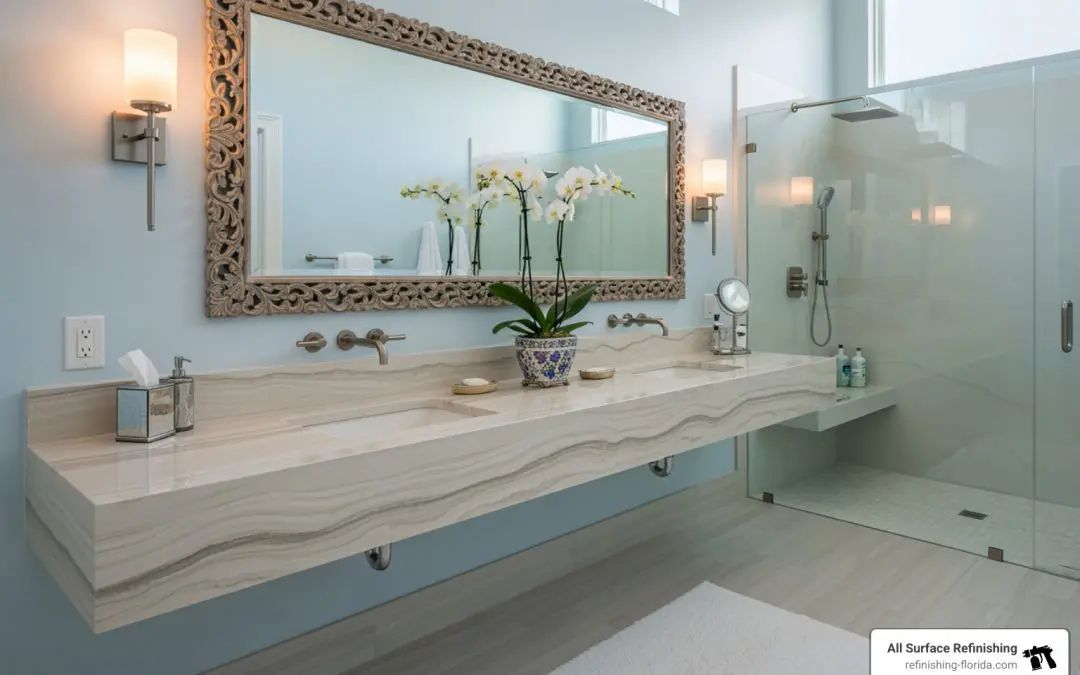
Why Choosing the Right Bathroom Countertop Stone Matters
Bathroom countertop stone comes in several popular options, each with unique benefits. Here’s what you need to know:
Top Bathroom Countertop Stone Options:
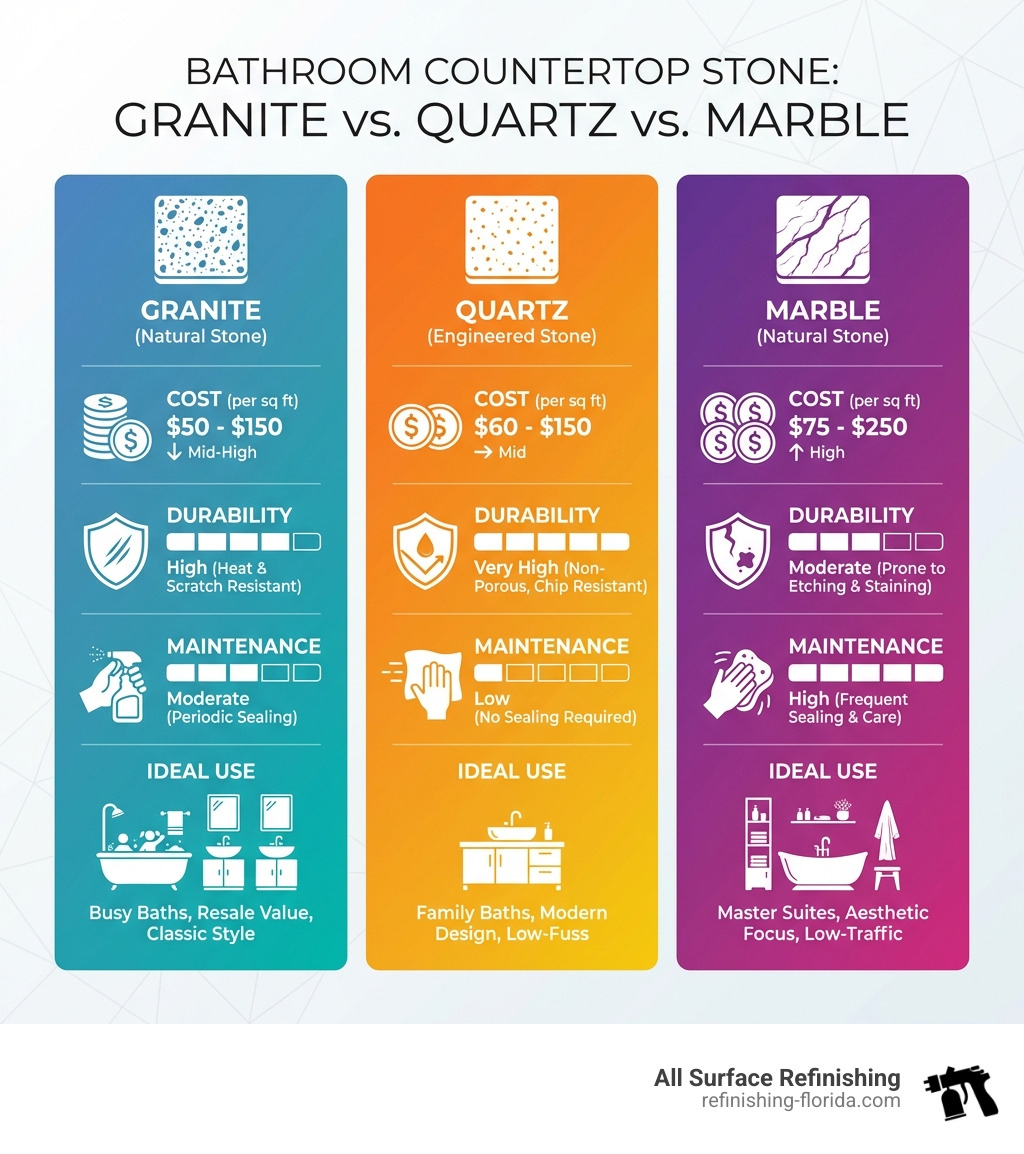
| Stone Type | Best For | Durability | Maintenance | Cost Range |
|---|---|---|---|---|
| Granite | Heat resistance, unique patterns | Excellent | Requires sealing | $50-$150/sq ft |
| Quartz | Low maintenance, consistent look | Excellent | Minimal | $55-$125/sq ft |
| Marble | Luxury aesthetic, classic elegance | Good | High (frequent sealing) | $75-$250/sq ft |
| Quartzite | Marble look with granite toughness | Excellent | Minimal | $75-$200/sq ft |
| Porcelain | Moisture resistance, versatility | Excellent | Minimal | $55-$120/sq ft |
Quick Answer: Quartz is the most popular choice for bathroom countertops due to its non-porous surface, low maintenance, and durability. However, the best choice depends on your budget, style preferences, and how much maintenance you’re willing to perform.
Selecting the perfect bathroom countertop stone can feel overwhelming. You’re investing in a surface that needs to withstand daily moisture, cleaning products, and heavy use while still looking beautiful. The good news? You have more options than ever before—from classic granite and luxurious marble to modern quartz and durable porcelain.
The cost of replacing bathroom countertops ranges from $50 to $250 per square foot installed. That’s before you factor in demolition, disposal, potential cabinetry damage, and the mess of construction. For a standard bathroom vanity, you’re looking at a significant investment and several days of disruption.
Whether you’re updating a master bathroom in Coral Gables, refreshing a condo bathroom in Miami Beach, or renovating a rental property in Boca Raton, understanding your options is the first step. Natural stones like granite, marble, and quartzite offer one-of-a-kind beauty with unique veining patterns. Engineered surfaces like quartz and porcelain provide consistency and durability with minimal maintenance.
Each material has distinct advantages. Granite offers incredible heat resistance and timeless appeal. Marble delivers best elegance but requires more care. Quartz provides a sleek, modern look with near-zero maintenance. Quartzite combines the best of both worlds—marble’s beauty with granite’s toughness.
The key factors you’ll need to weigh include:
- Durability – How well it holds up to daily use
- Maintenance – Time and effort required to keep it looking new
- Cost – Initial investment and long-term value
- Aesthetics – How it fits your design vision
- Moisture resistance – Critical for Florida’s humid climate
This guide will walk you through everything you need to know about bathroom countertop stone options. We’ll compare natural versus engineered stones, break down the pros and cons of each material, and share practical advice on maintenance and care to help you make an informed decision.
The Great Debate: Natural vs. Engineered Bathroom Countertop Stone
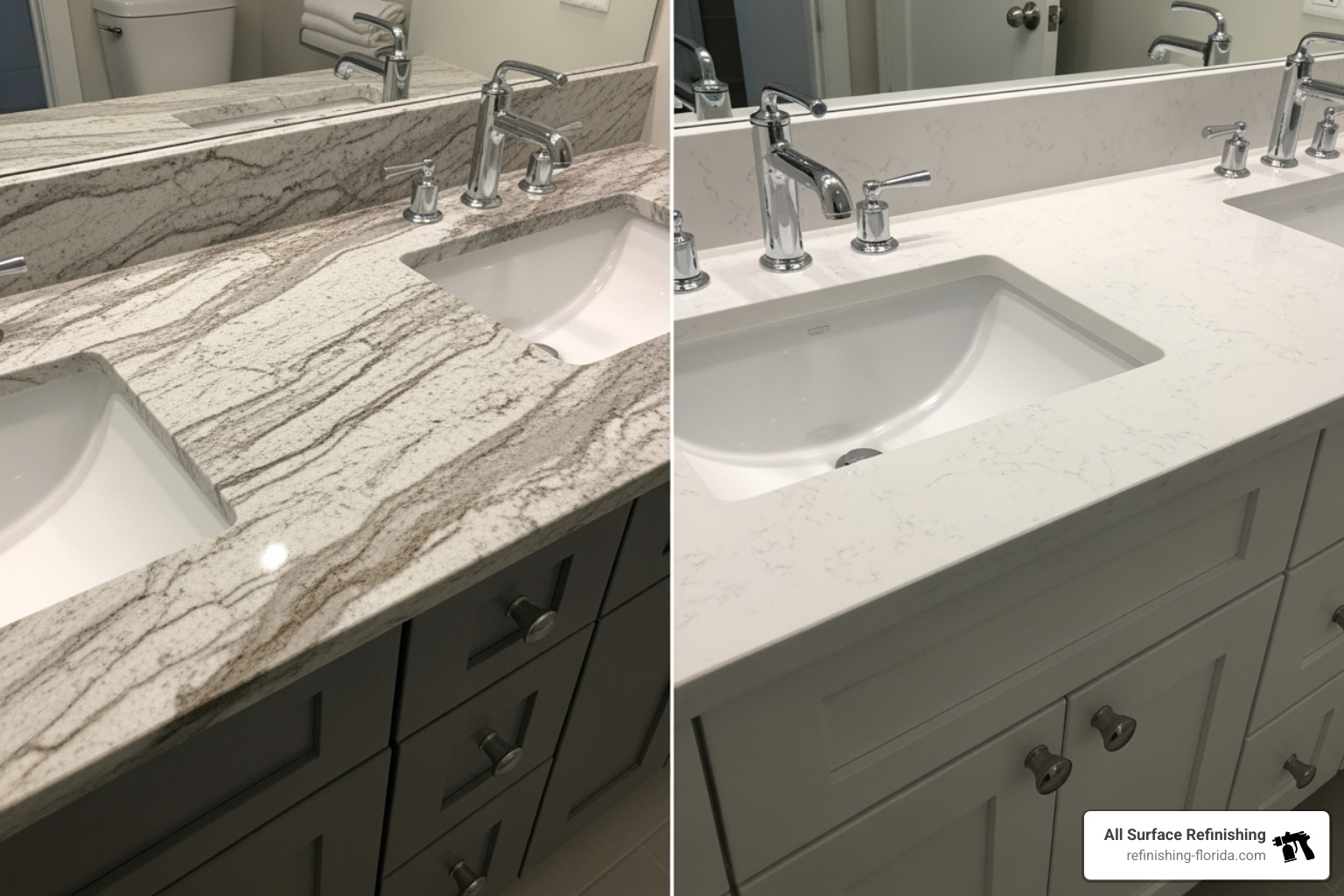
When we talk about bathroom countertop stone, we’re often debating between the raw, untouched beauty of natural stone and the consistent, man-made perfection of engineered stone. Each has its devotees and distinct advantages depending on your priorities.
Natural stone, like granite or marble, is quarried directly from the earth. Its patterns, colors, and veining are unique, a true testament to nature’s artistry. No two slabs are exactly alike, which can be both a blessing and a curse. While it offers unparalleled individuality, it also comes with varying levels of porosity and maintenance requirements.
Engineered stone, such as quartz or porcelain, is manufactured by combining natural minerals (like crushed quartz) with resins and pigments. This process allows for greater consistency in pattern and color, creating a uniform look that many modern designs demand. Engineered stones are also typically non-porous, making them highly resistant to stains and bacteria.
The impact on your bathroom’s aesthetics and performance is significant. Natural stone often evokes a sense of timeless luxury, while engineered stone leans towards sleek, contemporary designs. Understanding the properties of each will help you choose a material that not only looks beautiful but also functions perfectly for your lifestyle.
The Enduring Allure of Natural Stone
There’s an undeniable charm to natural stone. Its unique veining and one-of-a-kind patterns bring a piece of geological history into your home. Many homeowners in places like Coral Gables and Palm Beach cherish the idea of having a truly unique surface. While natural stone can be a significant investment, its beauty is timeless. However, many natural stones are porous, meaning they can absorb liquids and harbor bacteria, often requiring regular sealing.
Granite: Durable and Unique
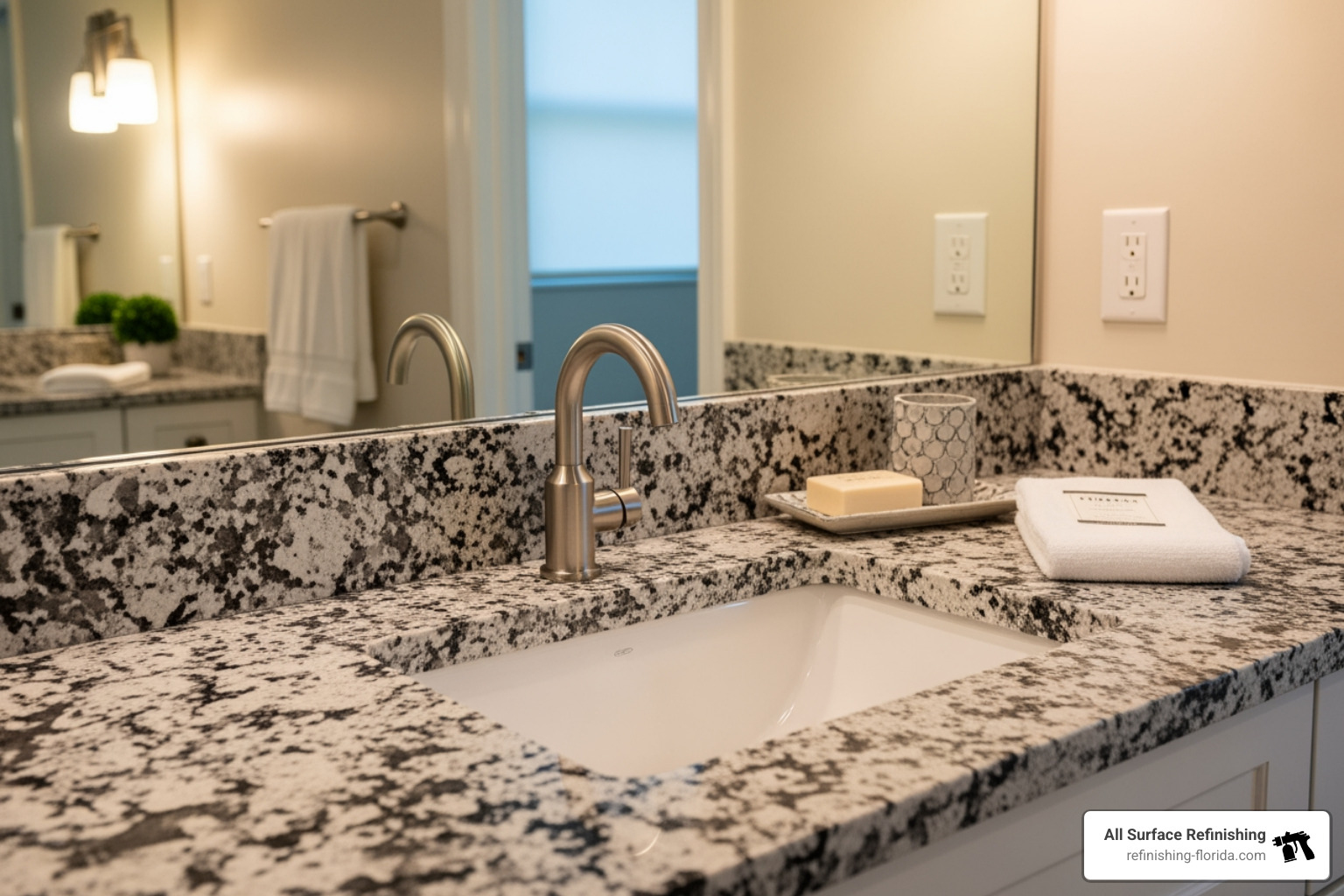
Granite has long been a favorite for its durability and incredible heat resistance. It’s a natural stone that comes in a wide variety of unique colors and patterns, from subtle speckles to exotic veining. While natural granite is known for its hardness, it is also porous and requires sealing, sometimes as often as twice a year, to prevent staining and bacteria growth.
Its robust nature makes it an excellent choice for a busy master bathroom in Fort Lauderdale or a family bathroom in Pembroke Pines where durability and style are equally important.
Marble: Luxurious and Elegant
Marble is hands down one of the most beautiful natural stone options, prized for its luxurious appearance and neat veining. Its classic white and gray tones instantly lift any bathroom, creating a spa-like retreat. However, natural marble is notoriously soft and highly porous, making it susceptible to staining, scratching, and etching from acids (like many bathroom cleaners or even toothpaste). It requires frequent sealing—at least once a year—and very careful maintenance.
For those who dream of a marble bathroom and are prepared for the upkeep, its sophisticated style is unmatched for a Miami Beach condo or Boca Raton vanity.
Quartzite: Marble’s Look with Granite’s Toughness
Quartzite is a natural stone that often gets confused with marble due to its similar neat veining, but it boasts the toughness of granite. It’s more scratch- and acid-resistant than most surfaces, registers between a 7 and 8 on the Moh’s hardness scale, and can withstand heat. This makes it an attractive option for those who love the look of marble but need greater durability. It’s an ideal choice for a bright, airy bathroom in Jupiter or a contemporary space in Weston, offering beauty and resilience.
Other Natural Stones: Soapstone and Travertine
Beyond the big three, other natural stones like soapstone and travertine also offer distinct looks. Soapstone is a natural stone with a soft, smooth surface and inherently non-porous qualities. It’s durable, resistant to heat and stains, and doesn’t absorb liquids or bacteria, making it a hygienic choice. While it’s softer than granite and can scratch, these can often be sanded out. Travertine, on the other hand, is known for its porous, textured surface and unique, varied color patterns, often requiring regular sealing every one to three years.
The Modern Appeal of Engineered Stone
Engineered stones, especially quartz and porcelain, have gained immense popularity for their consistency, non-porous surfaces, and low maintenance. They offer a wide selection of colors and patterns, providing design flexibility that natural stone sometimes can’t match.
Quartz: Sleek, Modern, and Uniform
Quartz is by far the best and most popular material for your bathroom sink countertop. It’s an engineered stone made from a blend of roughly 90% quartz combined with pigments and polymers, resulting in a highly durable, non-porous surface. This means it’s inherently stain-resistant, scratch-resistant, and doesn’t require sealing, making maintenance a breeze. Quartz offers a sleek, modern, and uniform appearance, available in many different colors, styles, and patterns, including those that mimic natural stone with marble-style grains.
Its low-maintenance and consistent aesthetic make it a perfect solution for a sleek white countertop in an Aventura apartment or a contemporary dark gray in a Parkland home.
Porcelain: Lightweight and Versatile
Porcelain slabs are thin, large sheets known for their strength, resistance to scratching, stains, and bacteria, making them hygienic and low-maintenance. They can be manufactured to mimic a variety of natural materials, including marble, concrete, and wood, offering a lightweight appearance with robust performance. This is an excellent option for any Florida bathroom, from Delray Beach to Vero Beach, offering versatility and durability in a stylish package.
Key Factors in Your Selection Process
Choosing the right bathroom countertop stone is a blend of personal taste and practical considerations. Making an informed decision involves balancing priorities like budget, usage, and style to ensure long-term satisfaction.
What to Consider for Your Bathroom Countertop Stone
When selecting the perfect material for your bathroom, we encourage you to think about how the space will be used and what your priorities are.
Budgeting: The cost of new bathroom countertop stone materials can range significantly. As you’ve seen, natural stones like marble can be very expensive, often $75-$250 per square foot installed, while quartz is typically $55-$125 per square foot. When planning your budget, be sure to account for the cost of the slab, fabrication, and installation, as well as potential additional costs for demolition and plumbing.
Usage: Consider whether the bathroom is a high-traffic family bathroom, a serene master suite, or a rarely used powder room. For a busy family bathroom in Miramar or a master bath in Wellington, durability and ease of cleaning are paramount. A non-porous, scratch-resistant material like quartz would be ideal. For a powder room, where aesthetics might take precedence over durability, a more delicate material like marble could create a stunning visual impact.
Personal Style: Your countertop should complement your bathroom’s overall design. Do you prefer the classic elegance of marble, the rustic charm of soapstone, or the modern sleekness of quartz? With a vast array of styles, colors, and patterns available in both natural and engineered stone, you can find a countertop that perfectly matches your vision.
Design Elements and Customization
The aesthetic impact of your bathroom countertop stone isn’t just about the slab itself; it’s also about the details. Customization is key to creating a truly unique space.
- Countertop Edge Profiles: The edge profile can dramatically alter the look and feel of your countertop. Options range from a classic bullnose or a decorative ogee to a modern straight or beveled edge, allowing you to tailor the final look to your style.
- Integrated Sinks: Many engineered countertops, like quartz and porcelain, offer the option of an integrated sink made from the same material. This creates a seamless, modern, and easy-to-clean surface. With natural stone, an undermount sink is a popular choice for a sleek aesthetic.
- Finish Options: Beyond color and pattern, the finish itself (polished, honed, or matte) contributes to the overall aesthetic. A polished finish offers a classic, reflective look, while a honed or matte finish provides a more contemporary, low-sheen appearance.
- Backsplash Coordination: A matching or complementary backsplash can unify your bathroom design. You can use the same slab material for a cohesive, high-end look or choose a contrasting tile to add visual interest.
Prefabricated vs. Custom Slabs
Homeowners typically face a choice between prefabricated countertops and custom-fabricated slabs. Prefabricated countertops are cut and finished in standard sizes (often around 112 by 26 inches) and are generally less expensive and quicker to install. They are a great option for standard vanity layouts.
Custom countertops are fabricated from a full slab chosen by you, offering complete design flexibility for unique layouts, specific dimensions, or matching large areas seamlessly. While this option comes with a higher price tag and longer lead time, it allows for a truly bespoke result tailored perfectly to your bathroom.
Care and Maintenance: Keeping Your Countertop Pristine
Once you’ve installed your new bathroom countertop stone, protecting that investment with proper care and maintenance is crucial. Especially in Florida’s humid climate, understanding how to keep your surfaces pristine will ensure their longevity and beauty.
Best Practices for Cleaning Bathroom Countertops
The ease of maintenance for your countertop will depend on the material you choose. Non-porous surfaces like quartz and porcelain are incredibly simple to clean, while porous stones like marble and granite require more specific care.
- Recommended Cleaners: For daily cleaning on most stone surfaces, a mild soap and water solution or a pH-neutral cleaner is best. For porous stones like marble, it is critical to avoid acidic or harsh chemical cleaners, which can cause etching. Always check the manufacturer’s recommendations for your specific material.
- Cleaning Tools to Avoid: Stay away from abrasive scouring pads, steel wool, or harsh brushes that can scratch the surface. A soft cloth or sponge is sufficient for daily cleaning.
- Daily Wipe-Downs: A quick wipe-down after each use will prevent soap scum and water spots from building up, which is especially important in high-humidity areas like South Florida bathrooms.
- Handling Spills Immediately: It’s always a good practice to wipe up spills immediately, particularly colored liquids like makeup or hair dye. On unsealed or poorly sealed natural stone, these can lead to permanent stains.
Preventing and Removing Stains and Etching
Engineered stones like quartz are non-porous and highly resistant to stains and etching. Natural stones, however, require more diligence.
- Protective Measures: Sealing is the most important protective measure for porous natural stones like granite, marble, and quartzite. Depending on the stone and usage, it may need to be resealed every one to three years to protect against stains. Using coasters and trays for toiletries, makeup, and hair products can add an extra layer of protection for all countertop types.
- Addressing Common Stains: Most stains on a well-maintained countertop can be wiped away with a mild cleaner. For tougher stains on natural stone, you may need a specialized stone poultice. Always test cleaning solutions on an inconspicuous area first.
- Professional Repairs: In the event of damage like a chip or deep scratch, many stone countertops are repairable. A professional stone restoration specialist can often repair damage, seamlessly restoring your countertop to its original beauty. This is often a better alternative than a full replacement.
Beyond Replacement: The Smart Solution for Your Florida Bathroom
When considering a refresh for your bathroom countertop stone, it’s easy to jump straight to replacement. However, we’ve seen countless homeowners in Miami, Fort Lauderdale, and West Palm Beach find the hidden costs and significant disruptions that come with traditional countertop replacement.
Think about it:
- Demolition Mess and Timeline: Ripping out old countertops creates dust, debris, and can halt access to your bathroom for days or even weeks.
- Cabinetry Risks: Removing old countertops can sometimes damage existing cabinetry, leading to unexpected repair costs or even full cabinet replacement.
- Disruption: Your home becomes a construction zone, impacting your daily routine.
The Benefits of Countertop Refinishing
This is precisely why we champion countertop refinishing as the smart, efficient, and beautiful alternative for your Florida bathroom.
- Save up to 50% over replacement: Refinishing is almost always more affordable, quicker, and easier than removal and replacement. For example, a new quartz countertop can start around $40-$55 per square foot, reaching up to $125 per square foot. Our services offer a fraction of that cost.
- Project completed in 24-48 hours: In most cases, you can use your kitchen or bathroom with the refinished countertop within 24-72 hours, depending on the selected finish. This is a huge advantage over the weeks often required for traditional replacement.
- No demolition mess: Our process is clean, contained, and doesn’t involve tearing out your existing surfaces.
- Durable, high-tech coatings: We use advanced materials that provide a resilient, non-porous surface, resistant to stains, heat, and scratches.
Transform Your Existing Surface
At All Surface Refinishing, we specialize in giving your existing countertops a brand-new lease on life. With over 30 years of experience and 14,000+ projects completed across South and Southwest Florida, we can update dated colors and patterns, repair chips and scratches, and give you the luxurious look of stone without the cost or hassle.
Whether you have Formica®, cultured marble, tile, or even an existing natural stone that’s seen better days, we can transform it. You don’t have to live with dull, damaged, or outdated surfaces. Our high-tech coatings, including our “Natural Accents™” stone-look finishes, provide a beautiful, durable, and easy-to-maintain solution.
To learn more about how we can refresh your bathroom surfaces, explore our Countertop Refinishing & Resurfacing Complete Guide or find the DIY Magic for a Stunning Transformation that resurfacing offers.
Frequently Asked Questions about Bathroom Countertops
What is the most durable finish for a bathroom countertop?
For extreme durability and low maintenance, quartz and quartzite are excellent choices. Quartz is an engineered stone that is non-porous, scratch-resistant, and stain-resistant, making it ideal for busy bathrooms. Quartzite is a natural stone known for its incredible hardness—even harder than granite—and resistance to heat and scratches. Both offer long-lasting performance and beauty.
What is the most popular bathroom countertop stone?
Quartz is currently the most popular choice for bathroom countertops. Homeowners love it for its wide range of consistent colors and patterns, its exceptional durability, and its low-maintenance, non-porous surface that never needs sealing. Its versatility allows it to fit into both modern and traditional bathroom designs.
Can I put a hot curling iron on my countertop?
It depends on the material. Natural stones like granite and quartzite have very high heat resistance and can generally withstand heat from a curling iron. However, the resins used in engineered quartz can be damaged by sudden, high heat, potentially causing discoloration or cracking. Regardless of the material, it is always best practice to use a heat-resistant mat or trivet under hot styling tools to protect your investment and ensure your countertop remains beautiful for years to come.
Conclusion
Choosing the right bathroom countertop stone is a pivotal decision that impacts both the functionality and aesthetics of your space. As we’ve explored, whether you’re drawn to the timeless elegance of marble, the robust appeal of granite, or the sleek modernity of quartz, each material offers unique benefits. The “best” choice ultimately depends on your specific budget, lifestyle, and personal style.
For homeowners in Aventura, Boca Raton, Coral Gables, Miami Beach, Palm Beach, Broward County, and surrounding areas, weighing the pros and cons of durability, maintenance, cost, and aesthetics is the key to finding the perfect surface. By understanding the differences between natural and engineered stones, you can select a countertop that you will love for years to come.
We hope this guide has been helpful in your journey to create the bathroom of your dreams.
