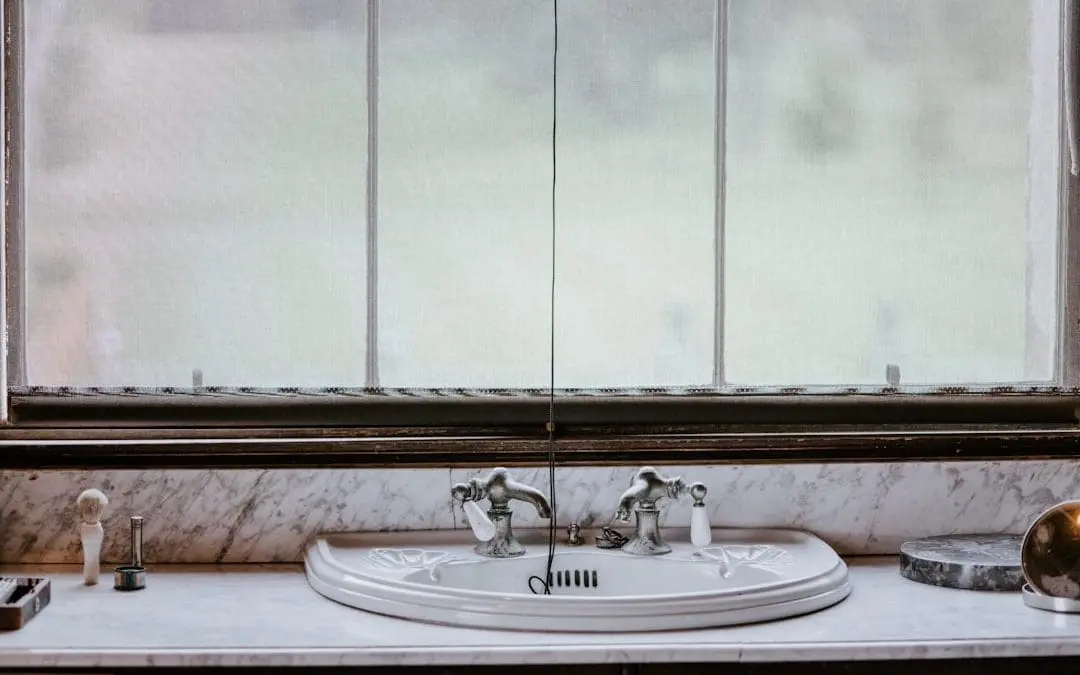
A Chipped Porcelain Sink Is More Than Just an Eyesore
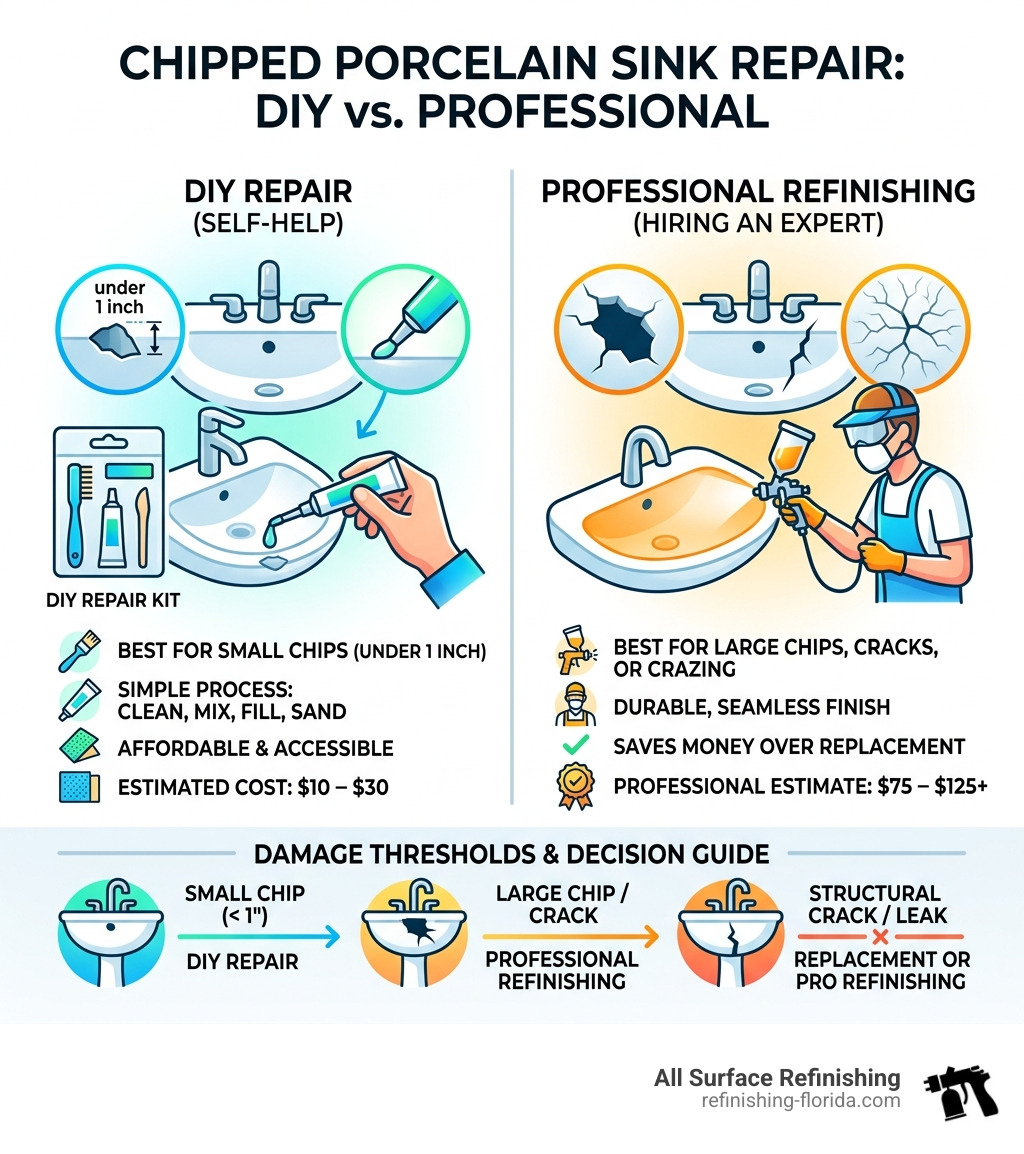
A chipped porcelain sink can be repaired in most cases — here’s a quick overview of your options:
| Damage Type | Best Fix | Estimated Cost |
|---|---|---|
| Small chip (under 1 inch) | DIY repair kit | $10–$30 |
| Large chip or crack | Professional refinishing | $75–$125 |
| Structural crack or leak | Replacement or pro refinishing | $200–$800+ |
| Widespread crazing | Professional refinishing | $75–$125 |
That small chip near your drain might seem minor. But leave it alone and it can turn into a rust stain, a spreading crack, or a full-blown leak into the cabinet below.
The good news? Most chipped porcelain sinks can be fixed — either with a $15 repair kit from the hardware store or with a professional refinishing service that restores the original finish.
What you do next depends on two things: how bad the damage is and what your sink is made of.
I’m Frank Hernandez, President of All Surface Refinishing, and I’ve been repairing and refinishing chipped porcelain sinks across South Florida since 1996. In that time, I’ve seen everything from tiny nicks near the faucet to deep gouges that exposed the cast iron underneath — and I’ll walk you through exactly how to handle each one.
Identifying Your Sink Material and Damage Severity
Before you run out to buy a repair kit, we need to play detective. Not all “white sinks” are created equal. Knowing the difference between porcelain-on-steel and solid fireclay is the difference between a repair that lasts a decade and one that peels off by next Tuesday.
To start, grab a magnet from your fridge. If it sticks to the sink, you’re dealing with either enameled cast iron or enameled steel.
- Cast Iron: These are heavy-duty classics. When they chip, you’ll usually see a dark, rough grey or black material underneath. This is the iron, and it will rust quickly if exposed to water.
- Pressed Steel: These are lighter and thinner than cast iron. A chip here often looks like a clean break, sometimes showing grey metal beneath.
- Fireclay: A magnet won’t stick here. This is a solid ceramic material fired at incredibly high temperatures. It’s beautiful but brittle.
- Composite/Acrylic: These are modern plastic or stone-resin blends. They don’t “chip” in the same way porcelain does; they tend to scratch or pit.
Understanding the how to identify sink materials and damage types is vital because it dictates the urgency of the repair. For example, a chipped porcelain sink with a cast iron base is a ticking time bomb for rust.

You should also look for crazing—that network of fine, spiderweb-like hairline cracks. This usually happens in sinks over 30 years old due to “thermal cycling” (the constant shift between hot and cold water). While it looks like a surface issue, it often means the glaze is reaching the end of its life.
Assessing a Chipped Porcelain Sink for Repair vs. Replacement
We often get calls from homeowners in Boca Raton or Fort Lauderdale asking, “Is it even worth fixing?” Here is our professional “Rule of Thumb”:
- The 1-Inch Rule: If the chip is less than an inch in diameter and isn’t leaking, a DIY kit or a professional touch-up is usually sufficient.
- Rust Penetration: If you see orange or brown stains spreading from the chip, the metal underneath is oxidizing. This requires immediate attention before the rust eats a hole through the fixture.
- Leaking Cracks: If water is dripping into your vanity, the damage is structural. In some cases, we can seal these during a full refinishing process, but if the crack is wide enough to fit a credit card, replacement might be safer.
- Mounting Hole Damage: If the porcelain is crumbling around the drain or the faucet holes, the structural integrity is compromised.
For a deeper dive into these heavy-duty fixes, check out our Cast Iron Sink Repair Complete Guide.
How to Repair a Chipped Porcelain Sink
If you’ve decided to tackle a small nick yourself, you’re essentially acting as a “dentist” for your sink. You are going to fill a cavity, sand it smooth, and polish it to a shine.
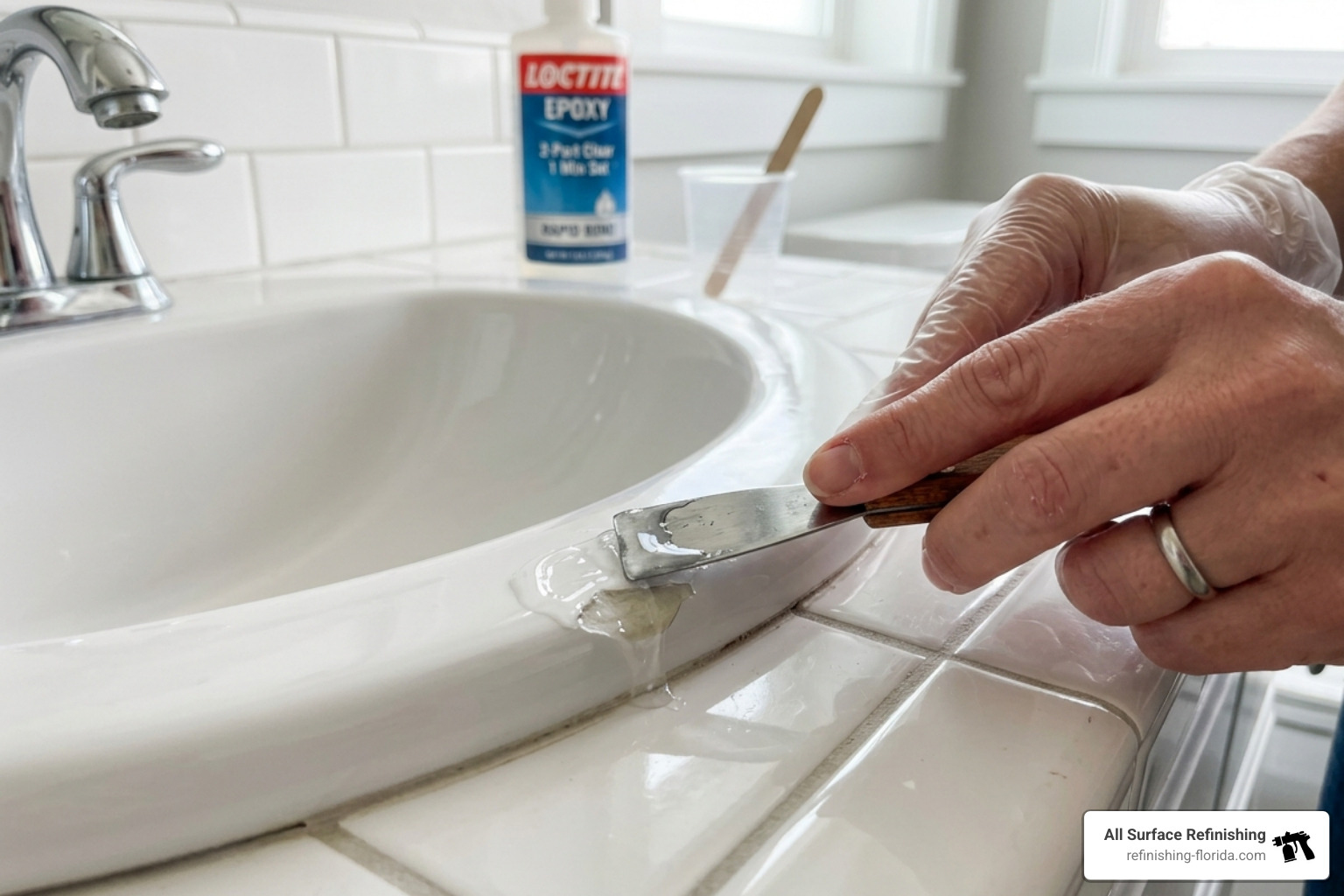
The secret to success isn’t the brand of the kit; it’s the preparation. Most DIY failures happen because the surface wasn’t clean enough for the epoxy to bond. You’ll be using a two-part epoxy resin that mimics the hard, glossy finish of porcelain.
Safety first: ensure you have plenty of ventilation. South Florida humidity can also affect drying times, so if you’re working in Miami-Dade or Palm Beach County during the summer, keep the A/C on to help the air stay dry.
Essential Tools for Fixing a Chipped Porcelain Sink
To get professional-looking results, you’ll need more than just the box from the store. Here is your shopping list:
- Porcelain Repair Kit: We often see homeowners use the Magic Porcelain Chip Fix, which is a solid two-part epoxy solution.
- Cleaning Agents: Denatured alcohol or acetone are best for removing soap scum and oils.
- Sandpaper: You’ll need a variety of grits, specifically 400-grit for the initial smoothing and 1000 to 2000-grit for the final polish.
- Microfiber Cloths: To ensure no lint is left behind.
- Putty Knife: A small plastic one is great for leveling the filler.
Step-by-Step Guide to Repairing Your Chipped Porcelain Sink
Follow these steps to restore your sink’s surface. Patience is your best friend here!
- Deep Clean: Scrub the area around the chip with an abrasive cleaner. Rinse thoroughly and dry. Follow up by wiping the chip itself with denatured alcohol to remove every trace of oil.
- Sand the Edges: Use your 400-grit sandpaper to gently smooth any jagged porcelain edges. You want a smooth transition so the filler can “feather” out.
- Mix the Compound: If using a two-part epoxy, mix it exactly as directed. Pro tip: only mix what you need. Some kits allow you to freeze the leftover mixture for a second coat later!
- Layering Technique: Don’t try to fill a deep hole in one go. Apply a thin layer, let it set for 45 minutes, and apply another. Overfill the chip slightly because the epoxy will shrink a tiny bit as it cures.
- The 24-Hour Cure: This is the hardest part—do not touch it. In Florida’s humidity, we recommend waiting a full 24 hours before sanding.
- Sanding and Polishing: Once hard, wet-sand the area with 1000-grit sandpaper until it’s flush with the sink. Finish with 2000-grit and a polishing compound for that glass-like shine.
For more detailed visuals on this process, visit our page on Porcelain Sink Repair.
Professional Refinishing vs. DIY Repair Kits
While a DIY kit is great for a tiny nick, it rarely looks “perfect.” Why? Because “white” isn’t just one color. In porcelain, there are at least 10 different shades of white, ranging from bone and biscuit to stark arctic white.
| Feature | DIY Repair Kit | Professional Refinishing |
|---|---|---|
| Color Match | Limited (usually 1-2 shades) | Custom-blended to match perfectly |
| Texture | Can feel slightly “rubbery” | Glass-hard and seamless |
| Durability | 6 months to 2 years | 10 to 15+ years |
| Coverage | Small spots only | Entire sink surface |
| Warranty | None | Typically 5 years |
DIY kits often use basic epoxies that can yellow over time when exposed to UV light from bathroom windows. Professional refinishing, like what we provide at All Surface Refinishing, uses high-grade acrylic urethanes. These coatings are designed for constant water immersion and won’t peel or fade.
If your sink has more than three chips, or if the finish has become dull and “chalky,” a Sink Vanity Refinishing Repair is a much better investment than trying to patch a dozen spots.
When to Call a Professional in South Florida
We love a good DIY project, but some situations require the pros. You should call us if:
- The sink is undermounted: Replacing an undermount sink often requires tearing out the granite or quartz countertop. We can refinish it in place for a fraction of that cost.
- It’s a high-end fireclay farmhouse sink: These are expensive and easy to ruin with the wrong chemicals.
- Structural Leaks: If water is escaping, the “patch” needs to be waterproof and pressure-resistant.
- Commercial Use: If you manage a property in West Palm Beach or Miami, you need a finish that can stand up to heavy use and industrial cleaners.
Our professional chip repair services are available throughout the Gold Coast, from Jupiter down to Homestead.
Preventing Future Damage to Your Bathroom and Kitchen Fixtures
Once your sink is beautiful again, let’s keep it that way! Most chips aren’t “wear and tear”—they are accidents that could have been avoided.
- Stop the Thermal Shock: Never pour a pot of boiling pasta water directly into a cold porcelain sink. The rapid expansion can cause the porcelain to crack or “ping.” Run the cold water faucet while you pour to buffer the temperature.
- Use a Sink Grid: This is the #1 way to prevent chips. A stainless steel or silicone grid acts as a shock absorber for dropped pots or heavy coffee mugs.
- Ditch the Abrasives: Avoid steel wool and harsh scouring powders. They create microscopic scratches that trap dirt, making the sink look dull and leading you to scrub even harder—which eventually wears through the glaze.
- Check Your Hardware: Believe it or not, many cracks start because a DIYer overtightened the drain flange or the faucet nuts. Snug is good; “white-knuckle tight” is a recipe for a crack.
For more maintenance secrets, see our Cast Iron Sink Refinishing Tips.
Frequently Asked Questions about Porcelain Sink Repair
How long does a porcelain chip repair last?
A standard DIY epoxy repair typically lasts 1 to 3 years before the edges start to lift or the color shifts. A professional refinishing job, however, can easily last 15 years if you follow basic care instructions (no bleach, no abrasive pads).
Will the repair be invisible?
With a DIY kit? Probably not. You’ll likely see a slight difference in the “sheen” or color if you look closely. With professional blending, we can get the match so close that even you will forget where the chip was.
Can I use my sink immediately after repairing a chip?
No! This is the most common mistake. Even if the epoxy feels hard to the touch after an hour, it is still “outgassing” and hardening internally. You should wait at least 24 hours before letting water touch the repair, and wait 5 days before using any cleaning chemicals on that spot.
Conclusion
A chipped porcelain sink doesn’t have to mean a messy, expensive bathroom renovation. Whether you choose to patch a small nick yourself with a hardware store kit or call in the experts for a total transformation, the key is to act fast before rust or leaks take hold.
At All Surface Refinishing, we’ve spent over 30 years perfecting the art of the “invisible repair.” With over 14,000 projects completed across Palm Beach, Broward, and Miami-Dade counties, we know exactly how to handle Florida’s unique challenges. We can make your old, chipped sink look brand new in just a few hours—saving you up to 50% over the cost of replacement.
Ready to restore your sink’s shine? Visit our Porcelain Sink Repair page to see our work, or contact us today for a free estimate in Boca Raton, Miami, or anywhere in South Florida!
