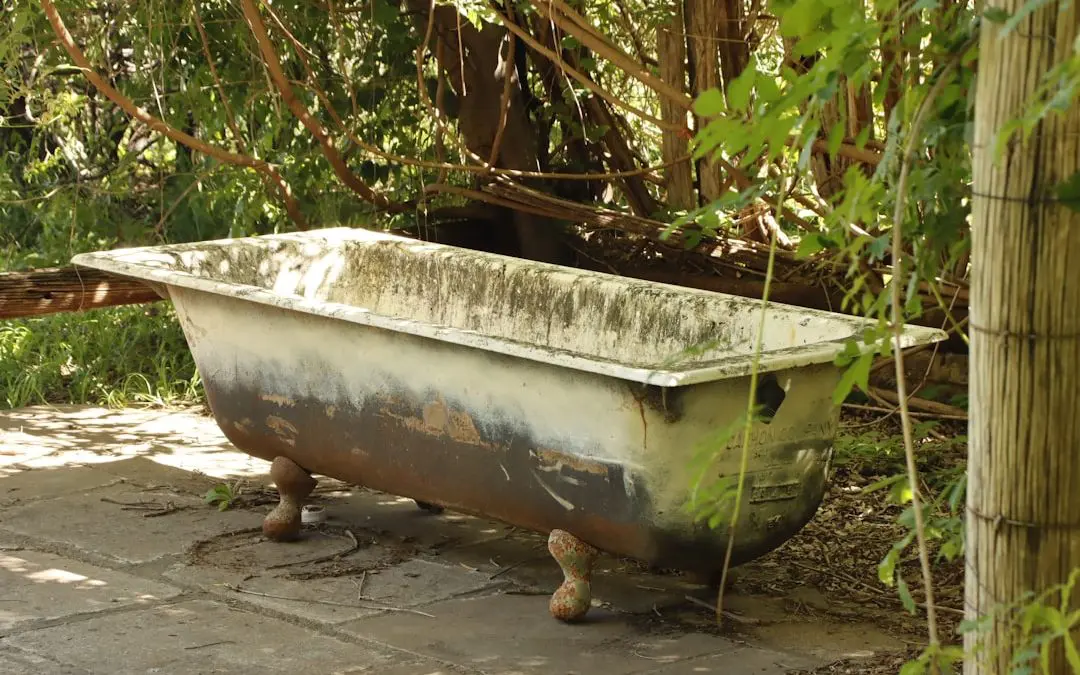
Your Antique Tub Can Look Brand New — Without Losing What Makes It Special
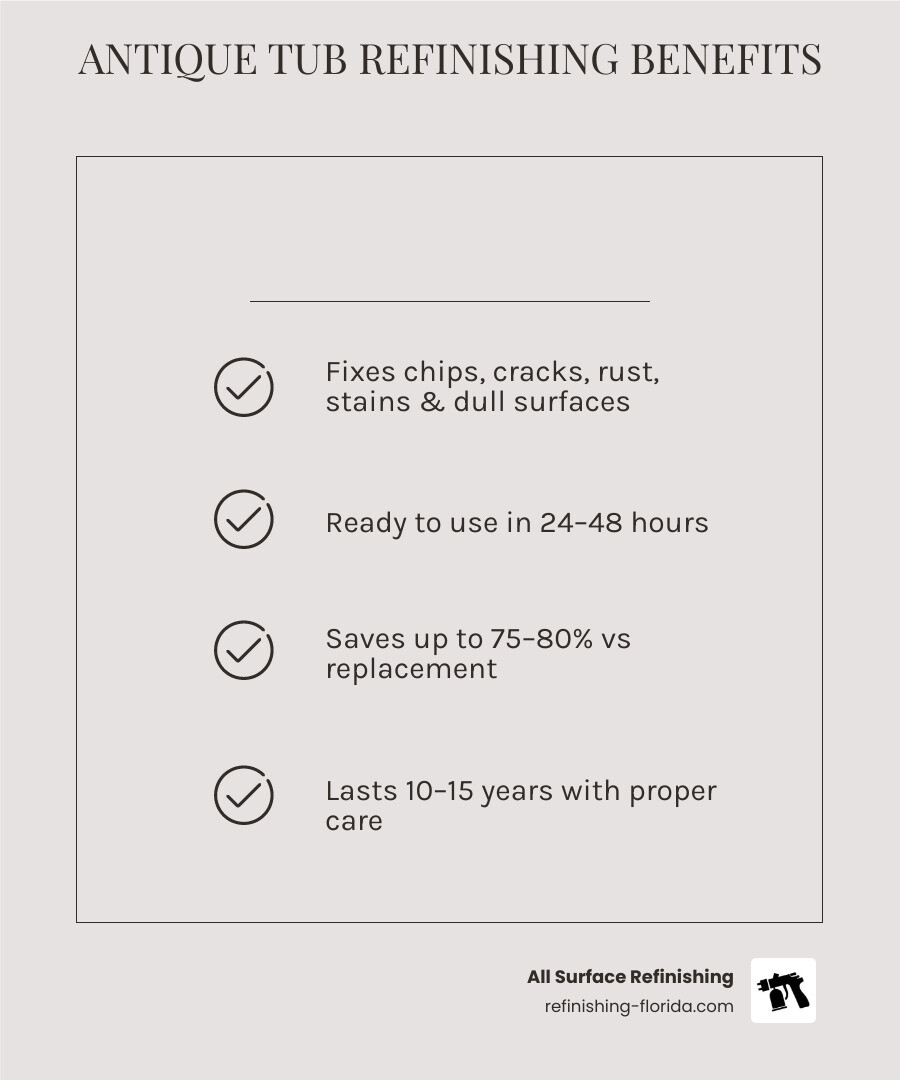
Antique tub refinishing is the process of restoring a vintage cast iron or porcelain tub — like a clawfoot — to a like-new finish by repairing surface damage and applying fresh protective coatings. No demolition. No replacement. Just a transformed tub, usually ready to use within 24–48 hours.
Quick answer for homeowners:
- What it fixes: chips, cracks, rust, stains, and dull or worn surfaces
- How long it takes: a few hours on-site; ready to use in 24–48 hours
- Cost savings: up to 75–80% less than full tub replacement
- Finish lifespan: 10–15 years with proper care
- Custom options: choose any color for the interior, exterior, and clawfeet separately
That elegant clawfoot tub standing in your bathroom isn’t just a fixture — it’s a piece of history. These tubs were originally built from heavy cast iron and designed for long, deep soaks. They were made to last, and most of them still can.
The problem is that time is hard on surfaces. Years of use leave behind chips, rust spots, stains, and a finish that’s lost its shine. At that point, many homeowners face a choice: rip it out and replace it, or restore what’s already there.
Replacing an antique tub isn’t just expensive — it often means losing something that can’t be bought back. Modern reproductions are typically made from acrylic, which doesn’t hold heat the way original cast iron does and simply doesn’t carry the same character.
Refinishing lets you keep the tub and get a surface that looks brand new.
I’m Frank Hernandez, President of All Surface Refinishing, and I’ve spent over a decade working hands-on with vintage and antique tub refinishing projects across South Florida. I’ve seen how the right restoration process can take a tub that looks completely worn out and turn it into the centerpiece of a bathroom — without ever removing it from the room.
Related content about antique tub refinishing:
What Antique Tub Refinishing Really Means
When we talk about antique tub refinishing, we aren’t just talking about a quick coat of paint. We are talking about a professional restoration process designed specifically for the unique materials found in Victorian-era and early 20th-century bathrooms. Whether it’s a massive clawfoot or a built-in cast iron beauty, these fixtures require a specialized touch to regain their former glory.
What antique tub refinishing is and what it fixes
At its core, antique tub refinishing is a multi-step restoration process. Over decades, the original porcelain enamel on a cast iron tub becomes porous. It starts to trap dirt, leading to stubborn stains that no amount of scrubbing can remove. Eventually, you might see deep chips, spiderweb-like cracks, or even rust beginning to eat away at the iron underneath.
Our refinishing process addresses all of these issues. We repair the physical damage—filling those chips and neutralizing the rust—before applying a new, high-gloss coating that looks and feels exactly like the original porcelain.
Antique tub refinishing vs reglazing vs full bathtub restoration
You’ll often hear the terms “refinishing,” “reglazing,” and “restoring” used interchangeably. In the residential service world, they generally refer to the same thing: applying a high-tech coating to an existing fixture.
However, true “reglazing” is an industrial process where the tub is fired in a kiln at temperatures exceeding 2,500°F. Since we can’t fit a kiln into your home in Boca Raton or Fort Lauderdale, we use advanced bonding agents and acrylic urethane coatings. This “cold” refinishing process creates a chemical bond that is incredibly durable, providing a porcelain-like finish without the need for a factory oven.
Why antique clawfoot bathtubs are worth saving
There is a reason why antique tub refinishing remains so popular in May 2026. These tubs are simply better built than most modern alternatives.
- Heat Retention: Original cast iron is a massive thermal sink. Once it gets warm, it stays warm, allowing for much longer soaking times than thin acrylic or fiberglass tubs.
- Craftsmanship: You can’t replicate the weight and “soul” of a 300-pound Victorian tub with a modern acrylic reproduction.
- Historical Integrity: If you live in a historic area like Coral Gables or Coconut Grove, preserving the original fixtures adds significant character and value to your home.
Why Refinishing Beats Replacing an Antique Tub
Many homeowners initially think that buying a new tub is the “cleaner” option. In reality, replacement is often a logistical nightmare, especially with antique fixtures.
Cost, timeline, and mess: the real-world comparison
Replacing a cast iron tub is rarely as simple as “out with the old, in with the new.” Because these tubs are so heavy, removal often requires multiple laborers and sometimes involves cutting the tub into pieces. Then there’s the plumbing—modern drains and faucets often don’t align with 100-year-old pipe configurations.
Refinishing, by comparison, offers:
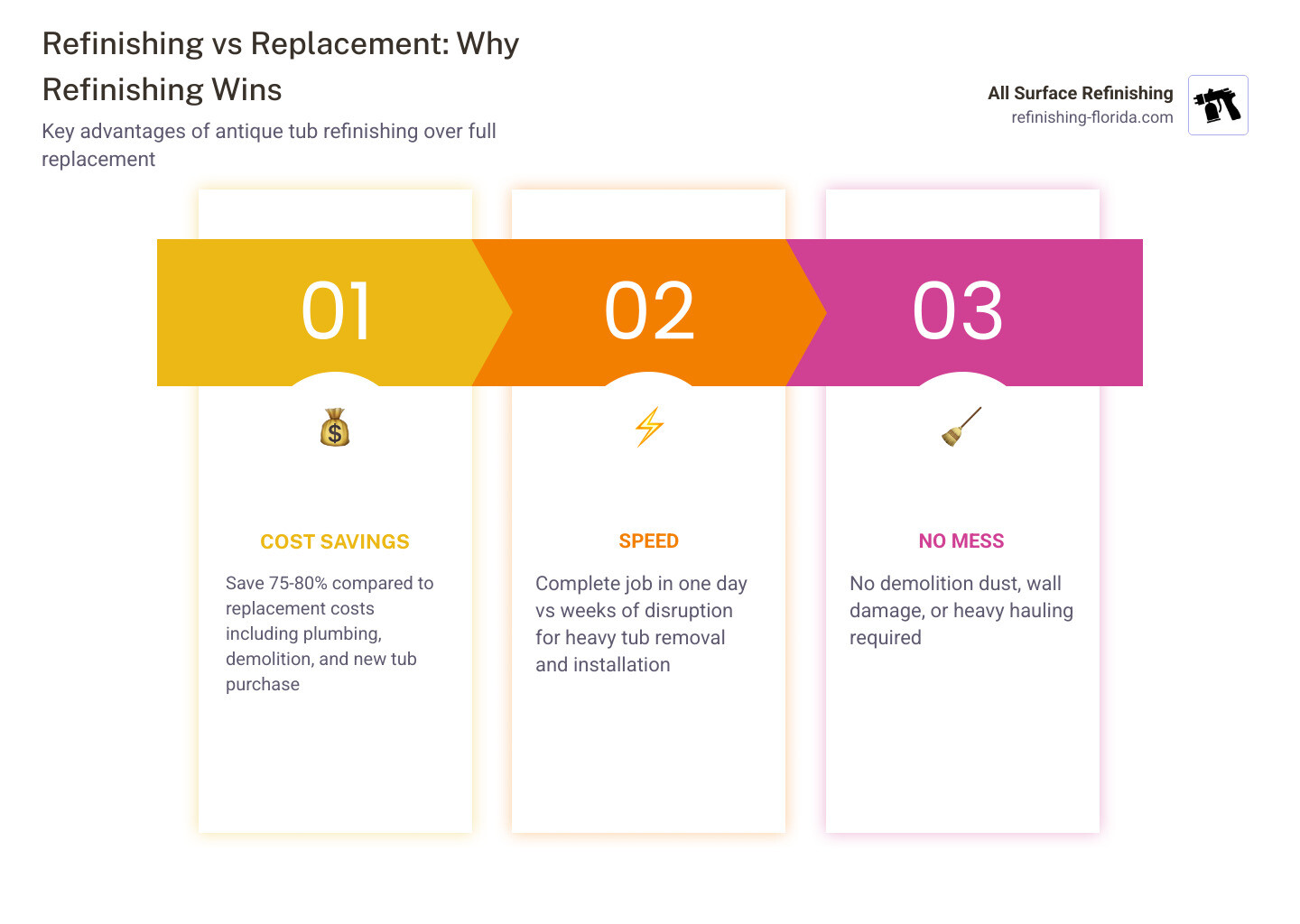
- Massive Savings: You can save up to 75% to 80% compared to the total cost of replacement, plumbing, and tile repair.
- Speed: We typically finish the job in a single day.
- No Mess: There is no demolition, no dust from ripped-out walls, and no heavy hauling.
How refinishing preserves charm while updating the bathroom
Refinishing allows you to customize the look while keeping the silhouette that makes the tub special. You can choose a classic white for the interior and a bold, modern color for the exterior. This “two-tone” look is a favorite for homeowners in Miami and Palm Beach who want to blend historic charm with contemporary design.
Eco-friendly benefits of keeping a cast iron bathtub
In an era where sustainability matters, antique tub refinishing is the green choice. Instead of sending a massive piece of cast iron to a Florida landfill, you are recycling and repurposing a high-quality material. This process supports waste reduction efforts similar to those encouraged by the Environmental Protection Agency. It reduces the demand for new manufacturing and prevents the waste associated with full bathroom demolition.
Step-by-Step Antique Tub Refinishing Process
We take a very methodical approach to every project. Here is how we transform a tub from a “before” to an “after.”
Inspecting damage before antique tub refinishing begins
The first thing we do is a thorough structural and surface check. We look for deep rust spots, especially around the drain and the feet. We also check for previous DIY attempts—if someone tried to paint the tub with a kit from a big-box store, we have to strip that off first to ensure our professional coating bonds correctly. For more on this, see our guide on cast iron tub repair.
Surface prep, repairs, and bonding
Preparation is 90% of the job.
- Cleaning: We use industrial-strength degreasers to remove every trace of soap scum and oils.
- Etching: We use a specialized acid paste or sanding process to “open up” the pores of the old porcelain. This creates a mechanical grip for the new finish.
- Repairs: We fill chips and cracks with waterproof resins and sand them smooth until they are invisible.
- Bonding: We apply a proprietary bonding agent that acts like a “chemical glue,” ensuring the new finish won’t peel or blister.
Spraying the new finish on the interior, exterior, and clawfeet
Once the tub is prepped and the bathroom is masked off (to protect your floors and walls), we use a high-volume, low-pressure (HVLP) spray system to apply multiple layers of acrylic urethane.
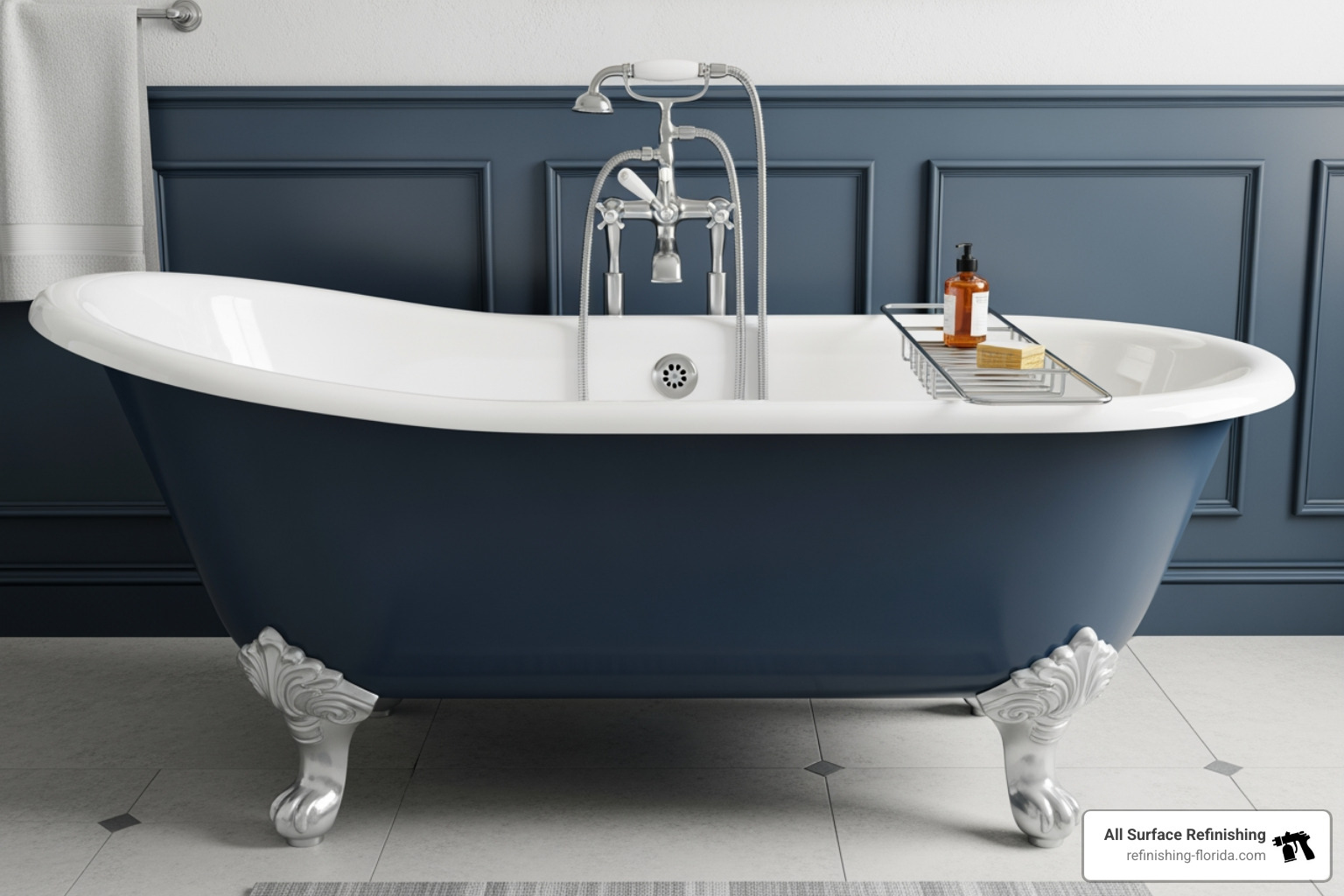
If you have a clawfoot tub, we can refinish the exterior and the feet separately. Many clients choose a high-gloss white for the inside and a matte black or stone-look finish for the outside. The clawfeet themselves can be painted to match or even finished in metallic tones like gold, bronze, or nickel.
Dry time, cure time, and when the bathtub can be used again
Most of our projects in South Florida are completed in 4 to 6 hours. While the finish will be dry to the touch fairly quickly, it needs time to “cure” and harden. We generally recommend waiting 24 to 48 hours before you fill the tub for its first soak. During the process, we use powerful exhaust fans to manage odors and ensure proper ventilation.
Materials, Colors, Safety, and Durability
The quality of the materials determines how long your “new” tub will last. At All Surface Refinishing, we use industrial-grade coatings that are far superior to anything found in a retail store.
What materials and coatings professionals use
We utilize a high-performance acrylic urethane resin system. This material is designed to withstand constant moisture and temperature fluctuations without cracking or losing its luster. For more technical details, check out our page on cast iron bathtub refinishing.
Custom options for antique tubs: inside, outside, and clawfeet
The beauty of antique tub refinishing is the level of customization available.
- Colors: While “Standard White” is the most popular, we can match almost any color, including almond, bone, or even bold custom hues.
- Finishes: You can opt for a high-gloss porcelain look or a more modern matte finish on the exterior.
- Feet Plating: We can restore the original clawfeet to look like polished chrome, brushed nickel, or antique bronze. This is often the “jewelry” of the bathtub that makes the whole room pop. You can find more inspiration on our clawfoot bathtub reglazing page.
How long a refinished tub lasts and what warranties cover
With proper care, a professionally refinished antique tub should last between 10 and 15 years. We provide a solid warranty that covers issues like peeling or blistering, giving you peace of mind that your investment is protected.
Is antique tub refinishing safe for children and pets?
Yes. While there is a noticeable odor during the actual spraying process (similar to fresh paint), we use professional ventilation equipment to clear the air. Once the coating has cured (usually within 24 hours), it is completely non-toxic and safe for the whole family, including your pets.
Care, Costs, and Whether DIY Is Worth It
Keeping your tub looking beautiful is easy, but it does require a slight change in how you clean.
How much professional antique tub refinishing costs compared to replacement
In the South Florida market—from Miami to Jupiter—a full bathroom remodel involving tub replacement can easily run $3,000 to $5,000 or more once you factor in the tub, the plumber, and the tile work. Professional refinishing usually costs a small fraction of that, often coming in under $1,000 depending on the size and condition of the tub.
The simple maintenance routine that protects the new finish
The number one rule for a refinished tub is: No Abrasives.
- Do Use: Soft sponges and non-abrasive cleaners like Dawn dish soap or cleaners specifically labeled safe for acrylics.
- Don’t Use: Comet, Ajax, steel wool, or harsh bleach. These will dull the finish over time.
- No Suction Mats: Suction cups can pull on the finish. If you need a non-slip surface, ask us about our integrated slip-resistant bottoms.
For a deeper dive into care, read our cast iron tub refinishing guide.
Can DIY kits work on antique tubs, or should you hire a pro?
We see a lot of “failed DIY” projects. Retail kits usually involve a brush-on or roll-on epoxy that leaves visible marks and often peels within six months because the bonding isn’t strong enough. Given the value of an antique tub, we always recommend professional service. If you’re curious about the risks, see the ultimate guide to refinishing your cast iron tub at home.
Finding a reputable bathtub refinishing service in Florida
When looking for a pro in South Florida, look for experience and local reviews. All Surface Refinishing has over 30 years of experience and has completed over 14,000 projects across areas like Boca Raton, Fort Lauderdale, and Miami.
- Ask about the bonding agent: Ensure they use a high-quality chemical bond.
- Ask about the warranty: A reputable company stands by their work.
- Check the portfolio: Look for actual photos of antique tub restorations.
Frequently Asked Questions About Antique Tub Refinishing
Can chips, cracks, rust, and stains all be repaired during antique tub refinishing?
Absolutely. Most antique tubs we encounter have at least some of these issues. We remove the rust, fill the chips with waterproof resin, and sand the surface until it’s perfectly smooth before the final coating is applied.
Can the inside and outside of the bathtub be refinished in different colors?
Yes! This is one of the best ways to highlight a clawfoot tub. A popular choice is a brilliant white interior with a charcoal gray or black exterior. We can even do “stone-look” finishes on the outside for a unique, high-end aesthetic.
Are there professional bathtub refinishing providers for antique tubs in Florida?
Yes, we provide on-site service throughout South and Southwest Florida, including Miami-Dade, Broward, Palm Beach, and Martin Counties. Whether you are in Coral Springs, Delray Beach, or Weston, we bring the equipment to you.
Conclusion
Your antique tub is a work of art that deserves to be preserved. By choosing antique tub refinishing, you aren’t just saving money—you’re saving a piece of history and keeping a high-quality fixture in your home where it belongs.
If your tub has lost its luster, don’t replace it. Restore it. At All Surface Refinishing, we take pride in helping Florida homeowners fall in love with their bathrooms all over again.
Ready to see the difference for yourself? Learn more about our bathtub services or contact us today for a free quote in any of our service areas, from Aventura to West Palm Beach.
