What Bathtub Resurfacing Actually Is (And Why It Matters for Your Bathroom)
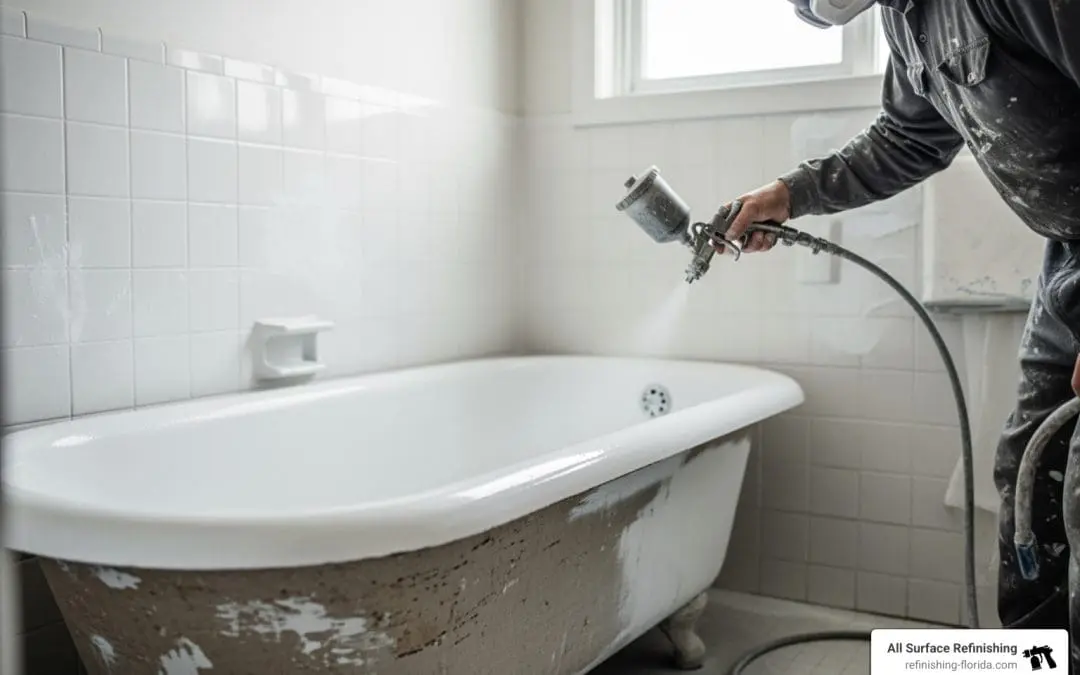
What is bathtub resurfacing? It’s the process of restoring your existing bathtub’s surface with a new, durable coating — making it look brand new without tearing it out and replacing it.
Here’s the short answer:
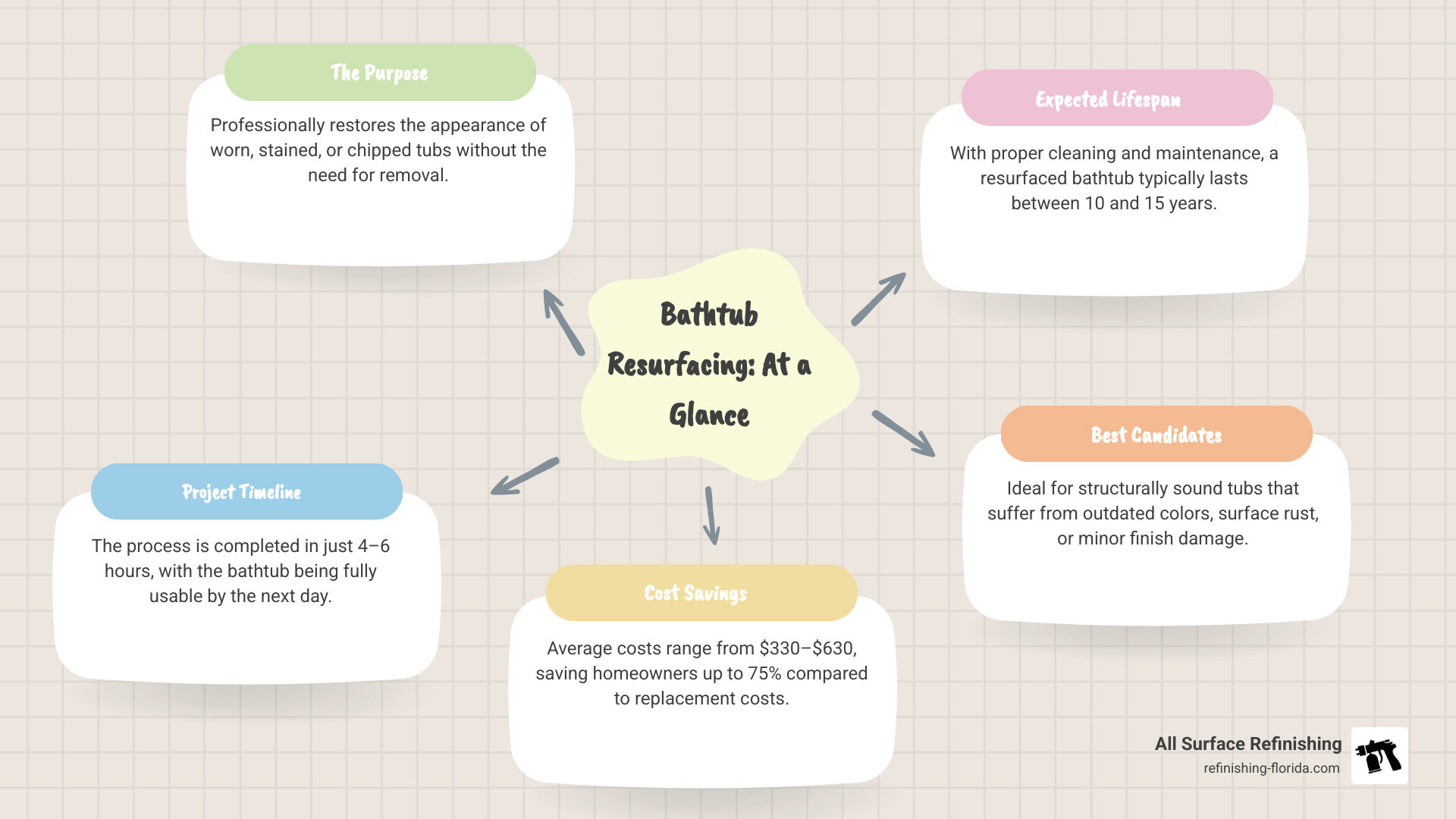
Bathtub resurfacing (also called refinishing or reglazing) is a professional restoration process where a worn, stained, or damaged bathtub surface is cleaned, repaired, and coated with a new finish — typically completed in a single day for a fraction of the cost of replacement.
At a glance:
- What it does: Restores the look and feel of an old or damaged tub
- How long it takes: 4–6 hours of work, usable the next day
- How long it lasts: 10–15 years with proper care
- What it costs: Around $330–$630 professionally (vs. $2,800–$6,000+ to replace)
- Best for: Tubs that are structurally sound but look worn, stained, chipped, or outdated
If your tub still holds water but looks terrible, resurfacing is almost always the smarter move over replacement.
I’m Frank Hernandez, President of All Surface Refinishing, and I’ve been working in the surface refinishing industry since 2011 — with hands-on experience restoring hundreds of bathtubs across South Florida using the same professional-grade process we’ll walk you through in this guide. Understanding what is bathtub resurfacing is the first step to making a confident, cost-saving decision for your bathroom.
Easy what is bathtub resurfacing word list:
What Is Bathtub Resurfacing?
Bathtub resurfacing is a cosmetic restoration method for an existing tub. Instead of removing the bathtub, hauling it out, replacing plumbing connections, repairing surrounding tile, and dealing with demolition dust, we restore the surface that is already there.
In simple terms, resurfacing gives an old bathtub a new outer finish. The goal is to make the tub look clean, smooth, glossy, and updated again.
This is especially useful in Florida bathrooms where tubs often suffer from:
- hard water staining
- soap scum buildup
- dull, worn finishes
- chips and minor surface cracks
- rust spots on older tubs
- outdated colors like pink, almond, or other old-school shades
For homeowners in South and Southwest Florida, resurfacing is often the sweet spot between “do nothing” and “start a full bathroom renovation and accidentally lose your weekend, your budget, and your patience.”
What is bathtub resurfacing and how does it work?
When people ask us what is bathtub resurfacing, the easiest answer is this: it is a multi-step process that combines preparation, repair, bonding, coating, and curing.
A professional tub resurfacing job usually includes:
- Removing caulk, drain trim, and anything that gets in the way
- Deep-cleaning the bathtub to remove residue, oils, and mineral buildup
- Repairing chips, scratches, small cracks, or pitted areas
- Sanding or etching the surface so the new coating can bond properly
- Applying a bonding agent or primer
- Spraying on multiple layers of professional finish
- Allowing the new surface to dry and cure before use
The result is not a new tub body. It is a new finished surface on the tub you already have.
What is the difference between bathtub resurfacing, refinishing, and reglazing?
Most homeowners hear three terms:
- resurfacing
- refinishing
- reglazing
In everyday use, these words are often treated as synonyms. Even industry and consumer resources such as Bathtub refinishing use the terms closely together.
That said, there can be slight differences in how people use them:
- Resurfacing usually refers to the overall restoration of the surface
- Refinishing often means the complete process, including prep, repairs, primer, and topcoat
- Reglazing sometimes refers more specifically to the final coating stage
In the real world, many contractors use all three to mean “make my old tub look new again.”
The more important question is not what word is used. It is what process is included. A quality job should include:
- proper surface prep
- repair of damage
- professional-grade coatings
- safe ventilation
- enough cure time
If someone skips those steps, calling it “refinishing” instead of “reglazing” will not magically make it better.
What kinds of bathtub problems can resurfacing fix?
Resurfacing works best on tubs that are structurally sound but cosmetically worn. It can usually improve:
- chips
- scratches
- dull surfaces
- stains
- discoloration
- rust spots
- mineral deposits
- faded finish
- surface wear
- minor non-structural cracks
- outdated tub colors
It can also be a smart option when the damage is spread across the whole tub, rather than one tiny repair spot.
If you want more details about service options, see our bathtub services page.
How the Bathtub Resurfacing Process Works Step by Step
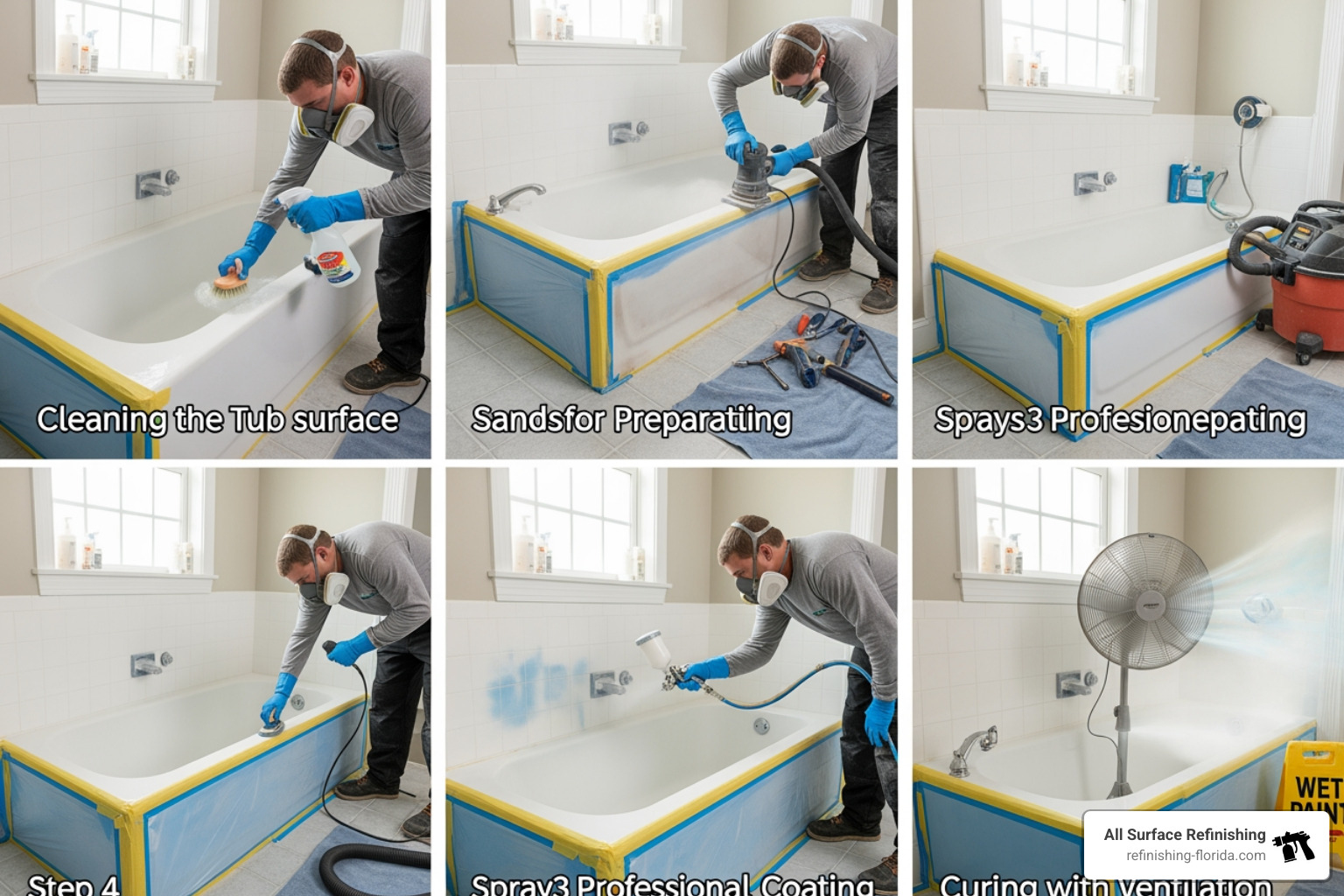
A good resurfacing job is mostly about prep. The glossy final coat gets the compliments, but the preparation is what gives the finish a chance to last.
Step 1: Cleaning, repairs, and surface preparation
First, we remove anything that can interfere with the new coating, such as:
- old caulk
- drain covers
- overflow plates
- soap residue
- silicone contamination
Then the tub is thoroughly cleaned and degreased. This removes body oils, soap scum, and mineral deposits. If these stay on the surface, the new finish may not bond well.
After cleaning, we repair visible damage. Depending on the tub, that can include:
- filling chips
- smoothing scratches
- repairing small cracks
- addressing pitted areas
- treating limited rust damage
Next comes sanding, etching, or another bonding prep method. The purpose is to create a profile the coating can grip. This stage is one reason professional resurfacing usually lasts longer than quick DIY jobs.
If your tub has noticeable damage, our bathtub repair guide explains common repair issues in more detail.
Step 2: Priming and applying the new finish
Once the surface is clean, dry, and repaired, we apply the coating system.
This often includes:
- a bonding agent
- an epoxy or specialty primer
- a durable topcoat, often urethane or acrylic urethane based
Professional resurfacing materials are designed for bathtub surfaces, not just general paint. That matters because bathtubs deal with standing water, soap, cleaning products, and regular temperature changes.
The finish is typically sprayed on in multiple coats for a smooth, even appearance. This helps create the glossy, like-new surface most homeowners want.
Step 3: Drying, curing, and when you can use the tub again
The work itself often takes about 4 to 6 hours. Many professional jobs are completed in one day, and in many cases the tub can be used the next day.
Typical timing looks like this:
- on-site work: about 4 to 6 hours
- light drying: same day
- cure window before normal use: around 24 to 48 hours
Humidity can affect cure time, and that matters in Florida. A bathroom in Miami Beach, West Palm Beach, Fort Lauderdale, or Key Largo may need careful ventilation and drying control to help the finish cure properly.
The short version: fast project, but do not rush the cure. Your tub will thank you.
What materials are used in bathtub resurfacing?
Professional bathtub resurfacing may use a combination of:
- industrial cleaners and degreasers
- body fillers for chips and minor cracks
- bonding agents
- epoxy primers
- urethane topcoats
- acrylic urethane coatings
- new caulk after the finish cures
Common tub materials that can be resurfaced include porcelain, fiberglass, acrylic, cast iron, enameled steel, and some cultured marble surfaces.
Different tub materials need different prep methods. For example, fiberglass and acrylic can require a different approach than older cast iron tubs. If you want to learn more, see our guide on restoring bathtub surfaces the right way.
Costs, Lifespan, and Benefits Compared With Replacement
For many homeowners, this is the section that answers the real question: “Sounds great, but what will it cost me and how long will it last?”
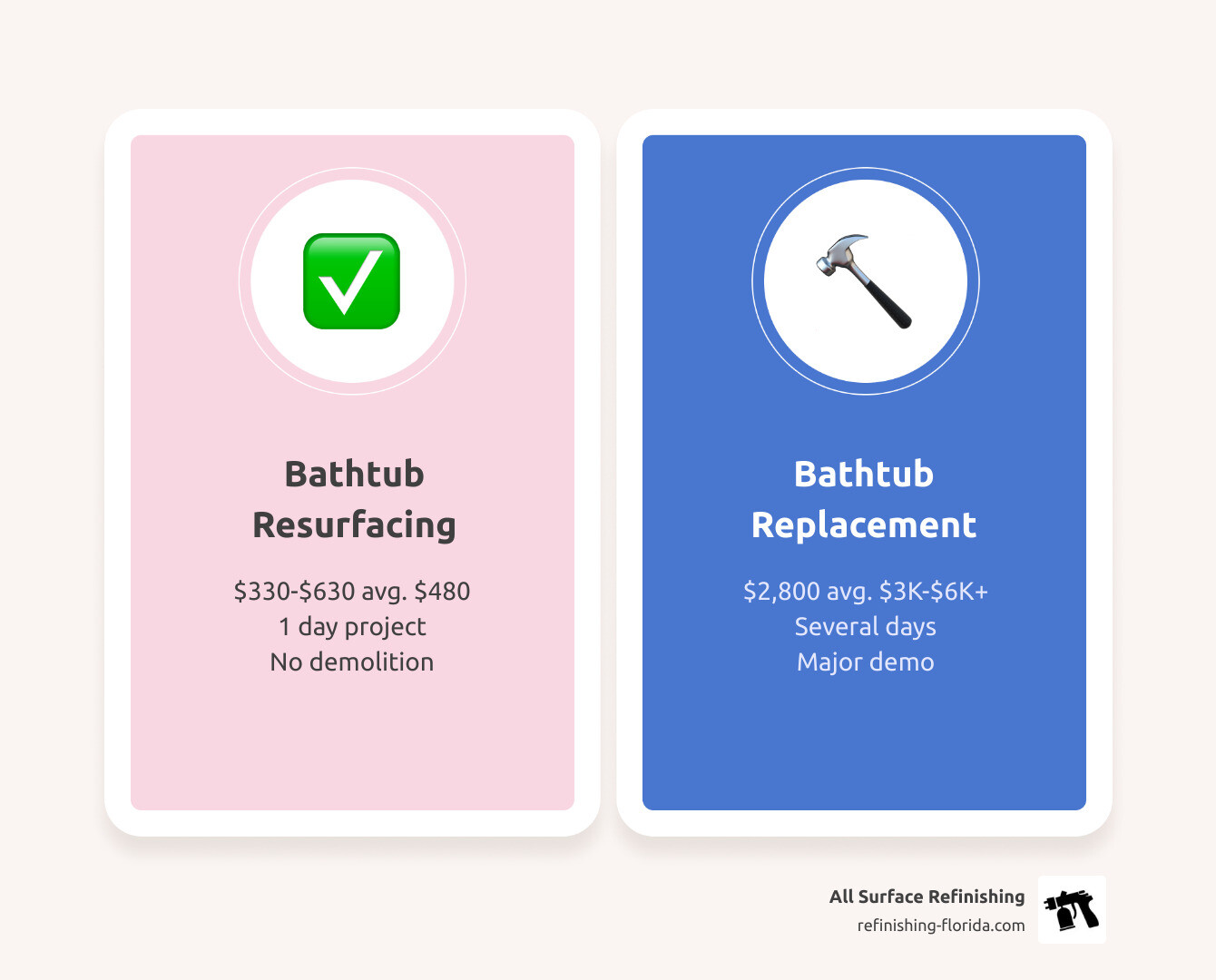
| Category | Bathtub Resurfacing | Bathtub Replacement |
|---|---|---|
| Typical cost | $330-$630 professionally | Often $2,800 average, and can run $3,000-$6,000+ |
| Project time | Usually one day | Often several days or longer |
| Demolition | No major demolition | Yes, usually includes removal and surrounding work |
| Bathroom disruption | Low | High |
| Lifespan | About 10-15 years with proper care | New tub lifespan depends on material and installation |
| Waste | Keeps existing tub out of landfill | Old tub is removed and discarded |
How much does bathtub resurfacing cost?
Based on the research, professional bathtub refinishing commonly falls around $330 to $630, with an average around $480.
DIY kits are cheaper, often about $100, but lower upfront cost is not the whole story. DIY jobs usually involve tradeoffs in finish quality, safety, and longevity.
Cost can vary based on:
- tub material
- tub condition
- amount of chip or crack repair needed
- color change requests
- whether surrounding tile or other surfaces are included
For a deeper breakdown, see our Bathtub Refinishing Costs Ultimate Guide.
How long does bathtub resurfacing last?
A professionally resurfaced bathtub typically lasts about 10 to 15 years with proper care. Some systems may perform even longer in favorable conditions, and some research cites 15 to 20 years for certain high-quality professional applications.
The biggest factors are:
- quality of preparation
- quality of coating materials
- technician skill
- full curing time
- how the tub is cleaned and used afterward
DIY jobs and poor-quality applications often do not last nearly as long. Research commonly puts low-end or DIY lifespan closer to 3 to 5 years, while stronger DIY efforts may reach 5 to 10 years.
Why homeowners choose resurfacing over full bathtub replacement
The savings are a big reason. Research shows refinishing can save up to 75% compared with replacement.
Replacement costs vary widely, but the numbers in the research show:
- about $2,800 average according to HomeAdvisor
- $3,000 or more according to the National Kitchen and Bath Association
- as much as $6,000 on average in some replacement scenarios, with ranges reaching over $10,000
And those numbers are not just for the tub itself. Replacement can also involve:
- demolition
- plumbing adjustments
- tile repair
- wall repair
- disposal
- more labor time
- more days without a working bathroom
Resurfacing is also more eco-friendly because it keeps the existing bathtub in place instead of sending it to a landfill.
When resurfacing is the better choice and when replacement makes more sense
Resurfacing is usually the better choice when:
- the tub is structurally sound
- the damage is mostly cosmetic
- you want to save money
- you want to avoid demolition
- you want a faster bathroom update
- the tub is difficult to remove, like some cast iron or older tubs
- you want to update the tub color
Replacement may make more sense when:
- the tub has severe structural cracks
- there is extensive rust through the body
- the tub is leaking
- the fixture moves because of installation problems
- there is hidden water damage behind or under the tub
- you are doing a full bathroom remodel and changing layout or size
If your tub is ugly but solid, resurfacing is usually the practical move. If your tub is failing as an actual tub, replacement may be the smarter long-term answer.
Which Bathtubs Can Be Resurfaced and How to Maintain Them
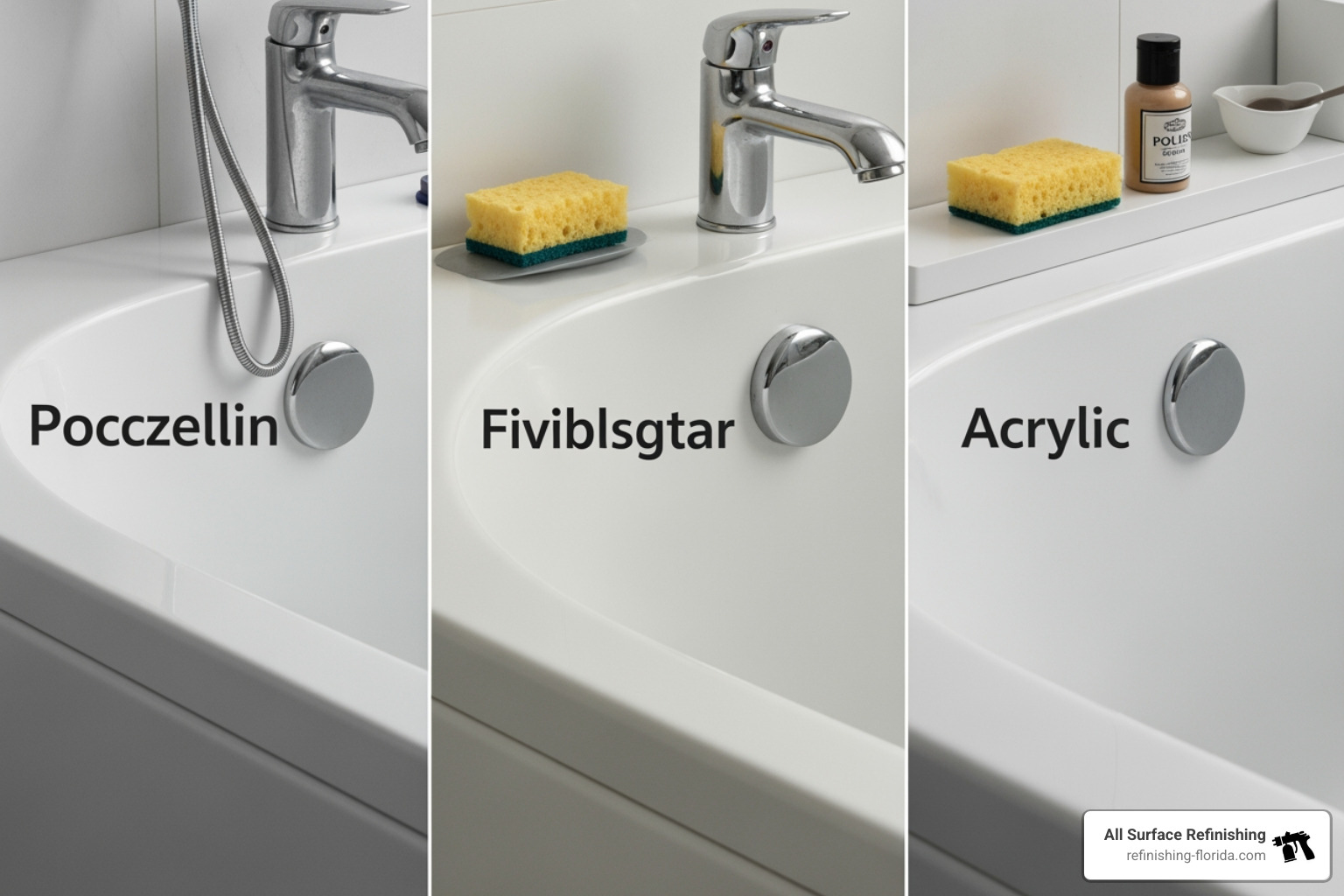
Which bathtub materials can be resurfaced?
Many common bathtub materials can be resurfaced, including:
- porcelain
- cast iron
- fiberglass
- acrylic
- enameled steel
- cultured marble
- clawfoot tubs
The key is structural soundness. A worn finish is fine. A cracked-through tub body is not.
For material-specific guidance, you can also read our pages on fiberglass bathtub resurfacing and cast iron bathtub refinishing.
How to clean and maintain a resurfaced bathtub
Maintenance is simple, but it matters.
To help a resurfaced tub last as long as possible:
- clean with mild soap or a non-abrasive cleaner
- use a soft sponge or cloth
- rinse after use when possible
- wipe the surface dry to reduce residue buildup
- keep caulk lines in good shape
- repair plumbing leaks promptly
A resurfaced tub does not need harsh scrubbing. In fact, that is exactly what you want to avoid.
What should you avoid after a bathtub is resurfaced?
To protect the finish, avoid:
- abrasive pads
- steel wool
- harsh scouring powders
- bleach-heavy or ammonia-heavy cleaners
- suction cup bath mats
- leaving shampoo bottles, soap bars, or metal cans sitting in puddles
- dropping heavy objects in the tub
- standing water around failing caulk
Suction cup mats are a common problem because they can pull at the coating and cause peeling over time. Rubber mats and harsh chemicals are frequent warranty killers too.
If you want the tub to look great for years, treat it more like a finished surface and less like a workshop sink.
Safety Hazards, DIY vs. Professional Resurfacing, and Common Questions
Is bathtub resurfacing safe?
Yes, bathtub resurfacing can be safe when trained professionals use the right ventilation, protective equipment, and coating system.
But this is not a casual “open a window and hope for the best” type of project.
Research highlights real risks from certain chemicals used in some stripping and refinishing work, especially methylene chloride. At least 14 worker deaths since 2000 have been linked to methylene chloride use in bathtub refinishing environments. That is one reason professional safety practices matter so much.
Important precautions include:
- proper exhaust ventilation
- respirators or supplied-air respiratory protection when required
- full masking of the work area
- careful material handling
- following product cure and re-entry guidance
For homeowners, the practical takeaway is simple: if resurfacing is done professionally, with proper ventilation and procedures, it can be performed safely. If it is done carelessly, the fumes and chemicals are not something to mess around with.
DIY vs. professional bathtub resurfacing: pros and cons
DIY resurfacing has one obvious advantage: lower upfront cost.
DIY pros:
- cheaper materials, often around $100
- can be tempting for budget-conscious homeowners
- may be workable for a secondary tub with modest expectations
DIY cons:
- shorter expected lifespan
- more visible brush or roller marks
- weaker bonding and finish quality
- risk of peeling
- strong fumes and ventilation issues
- potential overspray or accidental damage
- no professional warranty
- significant prep learning curve
Professional pros:
- better prep and repair quality
- smoother sprayed finish
- stronger, more durable coatings
- faster project completion
- safer ventilation practices
- better appearance and longer service life
Professional cons:
- higher upfront cost than DIY
- requires scheduling a service appointment
If you are weighing both options, our DIY bathtub reglazing guide and professional bathtub reglazing page can help you compare them more closely.
Frequently Asked Questions about what is bathtub resurfacing
How long does the resurfacing process take from start to finish?
Most bathtub resurfacing projects take about 4 to 6 hours of on-site work. In most cases, the tub can be used in 24 to 48 hours, often the next day.
Can you change the color of a bathtub during resurfacing?
Yes. Color change is one of the most popular reasons homeowners choose resurfacing. Old pink, almond, beige, or dated finishes can often be updated to a clean modern white or another selected color.
Will a resurfaced bathtub look new?
When done properly, yes. A professionally resurfaced tub should look glossy, smooth, and dramatically cleaner and newer than before.
Is resurfacing just painting a bathtub?
Not really. It is easy to think of it that way, but professional resurfacing is more technical than rolling wall paint onto a tub. It involves cleaning, repair, bonding, specialty primers, and professional topcoats made for wet environments.
Is resurfacing worth it?
Usually yes, if the tub is structurally sound. You save money, avoid demolition, and can get many more years out of the fixture.
Conclusion
Bathtub resurfacing is one of the fastest and most cost-effective ways to update a worn bathroom without the expense and disruption of replacement. If you came here asking what is bathtub resurfacing, the answer is simple: it is a professional process that restores the surface of your existing tub so it looks fresh, clean, and usable again.
For many Florida homeowners, that means:
- lower cost than replacement
- less mess
- faster turnaround
- a like-new appearance
- 10 to 15 years of added life with proper care
At All Surface Refinishing, we have spent more than 30 years helping homeowners across South and Southwest Florida transform bathrooms and kitchens with high-quality refinishing, resurfacing, and painting services. With 14,000+ completed projects, we know when a bathtub can be saved and when replacement is the better call.
If your bathtub is worn out but still structurally sound, resurfacing may be the smartest upgrade you can make. Learn more on our bathtub services page and see whether your tub is a good candidate for restoration.
