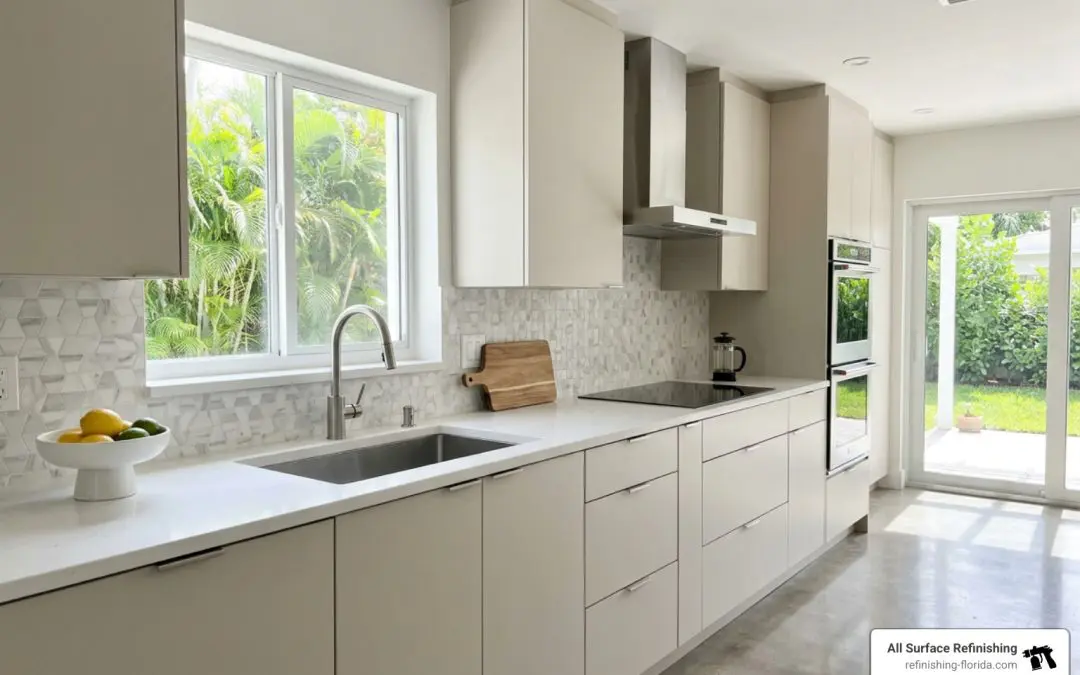
Your Kitchen Deserves a Fresh Look — Without the Renovation Chaos
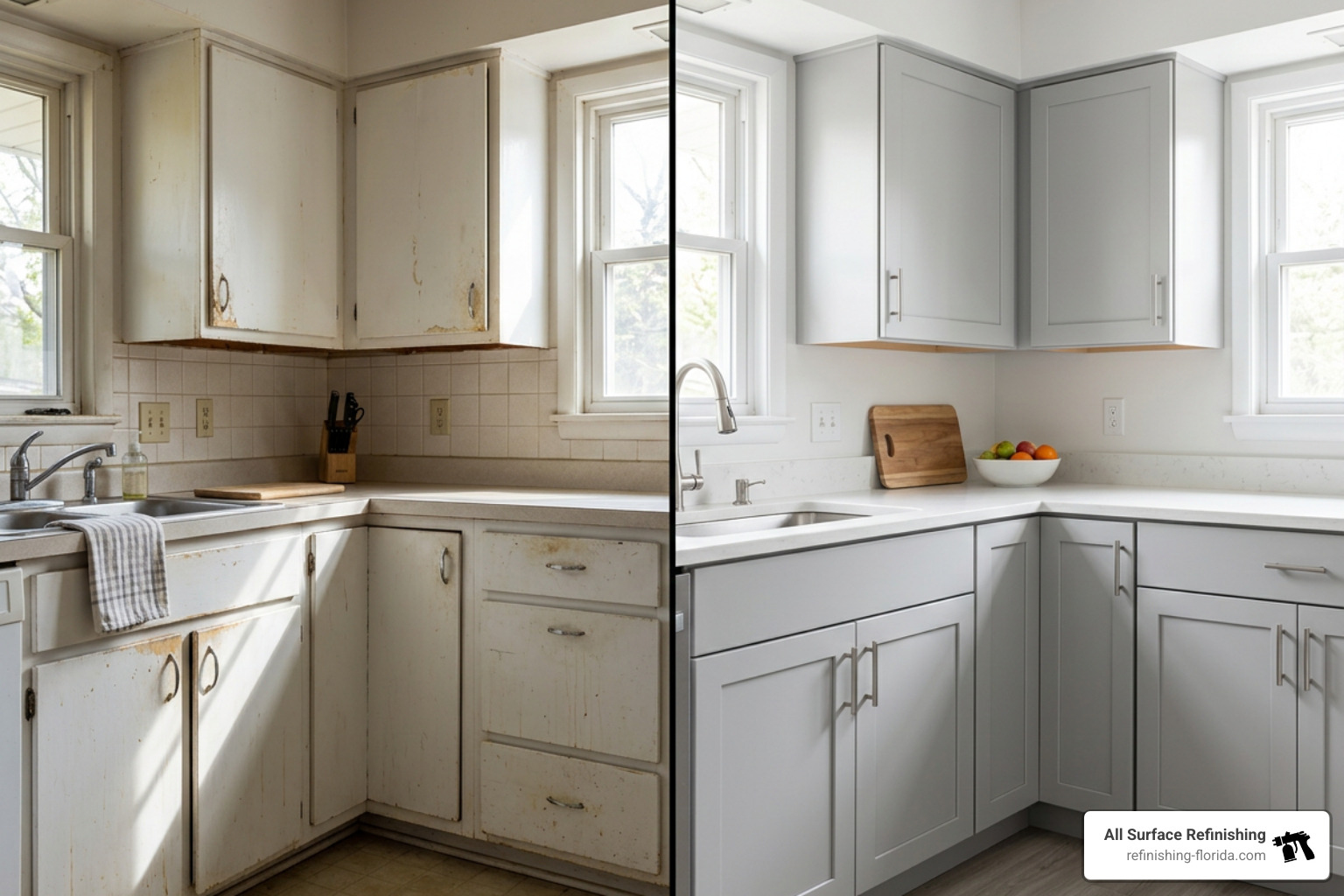
Resurfacing cabinet surfaces is one of the smartest ways to transform your kitchen or bathroom without tearing everything out. If your cabinets look worn, dated, or just tired — but the boxes themselves are still solid — resurfacing can give you a brand-new appearance at a fraction of the cost of full replacement.
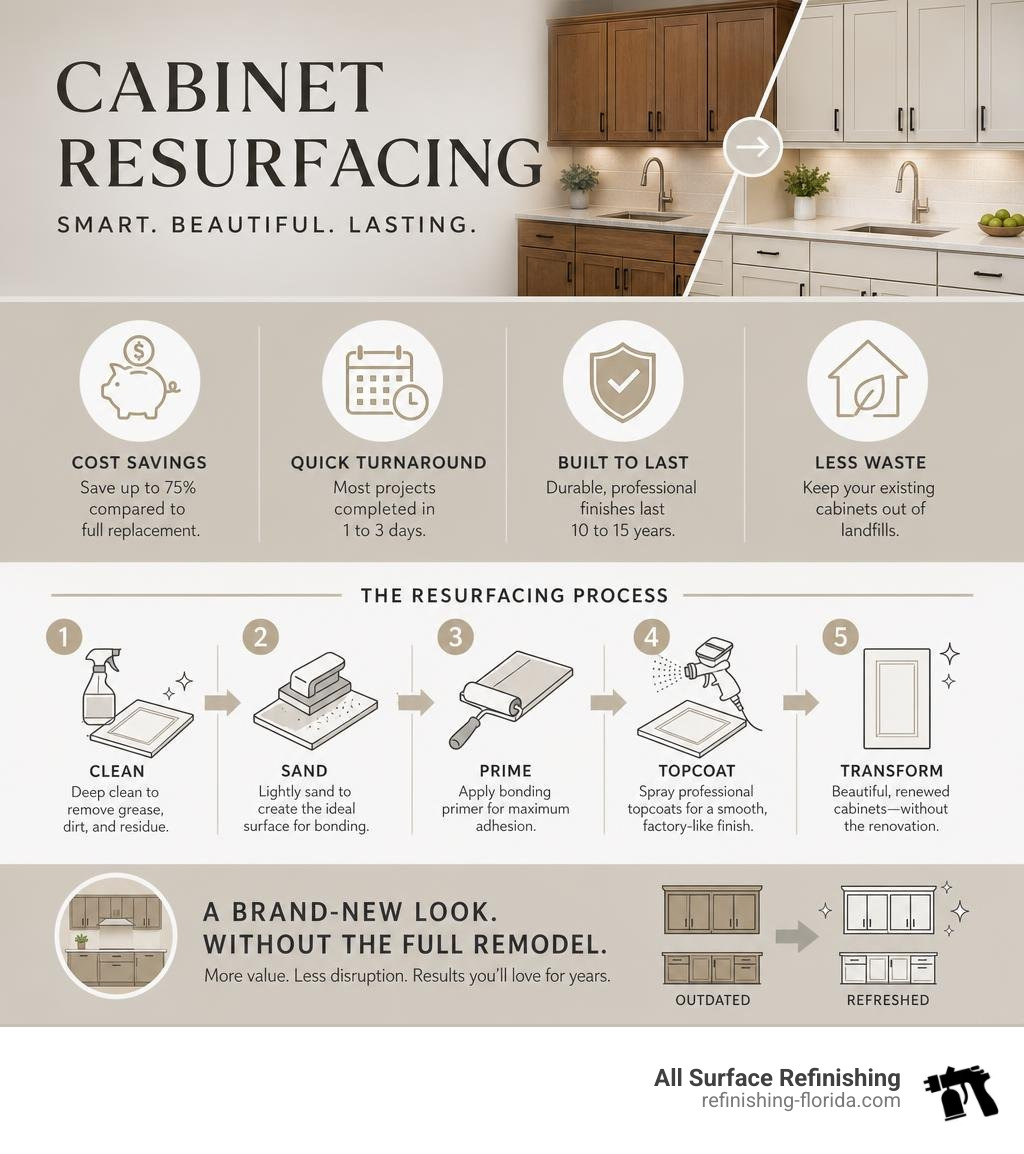
Quick answer: What is cabinet resurfacing?
| Question | Answer |
|---|---|
| What is it? | Applying a new finish to existing cabinet surfaces — cleaning, sanding, priming, and topcoating |
| What stays? | The cabinet boxes and existing layout |
| What changes? | The color, finish, and overall appearance |
| How long does it take? | 1 to 3 days for most projects |
| How much does it cost? | $1,000 to $10,000 depending on kitchen size and finish |
| How much can you save? | Up to 75% compared to full cabinet replacement |
| How long do results last? | 10 to 15 years with professional application |
Full cabinet replacement in South Florida can easily run $20,000 to $50,000 or more. Resurfacing gets you a factory-fresh look for a fraction of that — with minimal mess and no demolition.
And unlike a quick paint job, professional cabinet resurfacing uses bonding primers and lacquer-based topcoats that hold up against the heat, humidity, and daily wear that Florida kitchens face.
I’m Frank Hernandez, President of All Surface Refinishing, and I’ve been resurfacing cabinet surfaces across South Florida since 1996 — from Miami-Dade to Broward and beyond. In that time, I’ve seen how the right resurfacing process can completely transform a kitchen or bathroom without the cost or disruption of a full remodel. In this guide, I’ll walk you through everything you need to know to make the smartest decision for your home.
Key terms for resurfacing cabinet:
What is Cabinet Resurfacing and How Does It Work?
When homeowners look for a smart way to upgrade their kitchens, they often get confused by the industry jargon. Let’s clear that up right away.
Cabinet resurfacing is a highly specialized restoration process. Instead of tearing out your entire kitchen, we work with your existing structurally sound cabinet boxes and drawer fronts. By leaving the structural framework in place, we completely avoid altering your existing kitchen layout. This means there is no need to disturb your plumbing, electrical connections, or expensive countertops.
During a professional resurfacing project, we remove all the doors and drawer fronts to prepare them in a controlled environment. We then clean, prep, and apply a high-performance, factory-grade finish to both the cabinet frames (on-site) and the doors (off-site). Once everything is cured, we reinstall the components with fresh hardware. The result is a seamless, modern look that makes your old cabinets look as if they were just delivered from a high-end manufacturer.
For a deeper dive into the fundamentals of this process, check out our comprehensive guide on Cabinet Resurfacing 101.
The Difference Between Refinishing and Resurfacing Cabinet Systems
While some people use the terms interchangeably, there are distinct differences in how we approach a project depending on the existing material of your cabinetry.
- Cabinet Refinishing: This is a surface-level restoration. It is ideal when your wood cabinets are in good shape but the topcoat has failed due to moisture near the sink or grease from cooking. Refinishing focuses on restoring or changing the color of your existing doors and frames using professional-grade coatings.
- Resurfacing Cabinet Systems: This represents a deeper level of restoration, often dealing with non-wood materials like Formica, laminate, or thermofoil. When these materials become discolored or worn, standard painting will not work. Resurfacing uses specialized bonding agents that fuse with these slick surfaces, allowing us to apply a durable, factory-style finish that won’t peel.
For a complete breakdown of what goes into a professional finish, you can read our Cabinet Refinishing Complete Guide 2026.
We do not sell paint or perform standard house painting. Our expertise lies strictly in applying high-performance, sprayed-on industrial coatings that provide maximum durability and a factory-smooth finish.
Why Resurfacing Cabinet Doors is Better Than Replacing
If you are happy with your current kitchen layout, choosing to resurface your existing cabinet doors is almost always the superior choice compared to a full replacement. Here is why:
- Incredible Cost Savings: Ripping out cabinets is incredibly labor-intensive. By keeping your existing boxes, you eliminate the cost of new cabinet construction and heavy demolition labor.
- Environmentally Responsible: A full kitchen demolition sends hundreds of pounds of wood, metal, and plastic straight to South Florida landfills. Resurfacing is a sustainable kitchen remodel alternative that diverts up to 80% of potential waste, giving a second life to perfectly stable materials. The U.S. Environmental Protection Agency also encourages the sustainable management of construction and demolition materials, which makes resurfacing a practical choice for homeowners who want to reduce unnecessary kitchen debris.
- No Home Disruption: A full replacement can leave your kitchen unusable for weeks or even months. Resurfacing is completed in a matter of days, meaning you won’t have to live on takeout food for a month.
To see the dramatic visual difference this process makes, browse through our gallery of Cabinet Resurfacing Before And After transformations.
The Cost of a Resurfacing Cabinet Project in Florida
When planning a kitchen upgrade, understanding the project cost is essential. For a professional resurfacing cabinet project, pricing is typically calculated per linear foot of cabinetry.
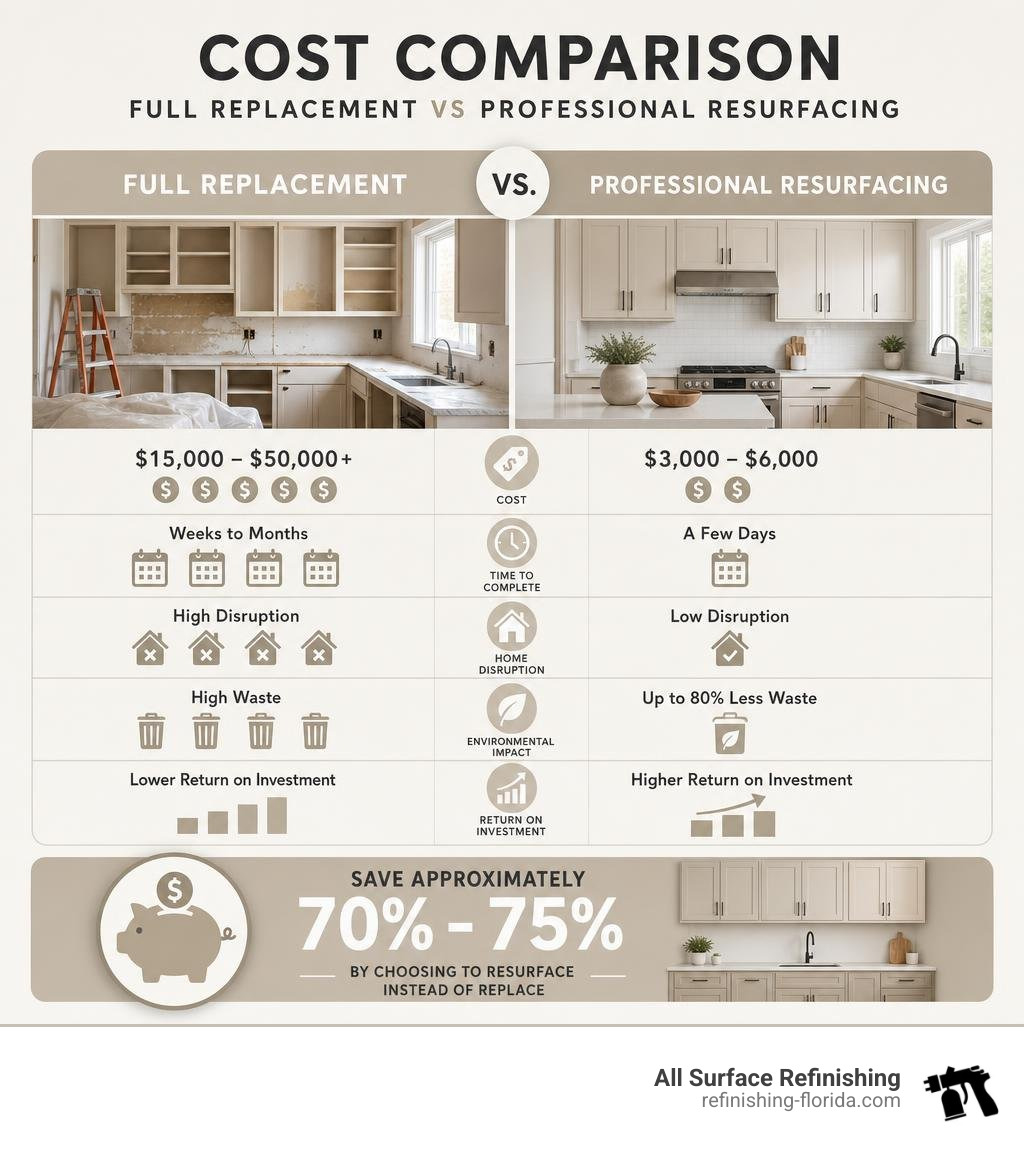
On average, professional cabinet resurfacing in South Florida ranges from $1,000 to $10,000, with most standard-sized kitchens landing somewhere between $3,000 and $6,000. This represents a massive financial advantage for homeowners who want a high-end look without the high-end price tag.
For a detailed breakdown of pricing structures, check out our Cabinet Resurfacing Cost Guide.
Comparing Resurfacing to Full Cabinet Replacement
Let’s look at the numbers. A complete cabinet replacement in South Florida typically starts around $15,000 and can easily climb to $50,000 or more for custom wood cabinetry.
By choosing to resurface instead of replace, you save approximately 70% to 75% of the cost of a full remodel. That is money you can keep in your bank account or reallocate toward other home upgrades, such as modern appliances or new lighting.
If you live in Broward County, you can see how local homeowners are saving thousands by reading about our Local Transformations in Fort Lauderdale.
Regional Pricing Factors in South Florida
Because we serve a wide variety of coastal and suburban communities across South and Southwest Florida, localized factors can influence your final estimate.
- Miami and Aventura: High-rise condo regulations, parking restrictions, and service elevator schedules in coastal areas can occasionally affect project timelines and logistics.
- Boca Raton and Boynton Beach: Larger estate homes in these communities often feature extensive layouts with large kitchen islands, which require more materials and detailed masking.
- Deerfield Beach and Broward County: Coastal homes in these areas must account for high salt air and humidity, making premium moisture-resistant bonding primers absolutely essential. Learn more about our regional work in our guide on Cabinet Refinishing Deerfield Beach.
When to Choose Resurfacing vs. Full Replacement
While we love the magic of resurfacing, it isn’t the universal solution for every single kitchen. How do you know if your cabinets are good candidates?
Choose Resurfacing If:
- The structural integrity is sound: Your cabinet boxes are sturdy, dry, and free of water damage or sagging.
- You like your current kitchen layout: You don’t want to move your sink, stove, or refrigerator to a different wall.
- Your countertops are staying: You recently upgraded your countertops (or love your existing ones) and do not want to risk damaging them during a heavy cabinet demolition.
- You want to save money and time: You prefer a 3-day project over a 3-week construction circus.
You Must Replace If:
- The wood is rotting or water-damaged: If your sink leaked and ruined the bottom of your sink base cabinet, or if termite damage has compromised the wood, the structures must be replaced.
- You want a completely new layout: If you plan to knock down walls or completely relocate your appliances, new cabinet boxes will be required.
The Professional Cabinet Resurfacing Process
Achieving a factory-smooth, durable finish that won’t peel under the Florida sun requires an incredibly meticulous process. We don’t just brush on some paint; we use a multi-step chemical bonding system.
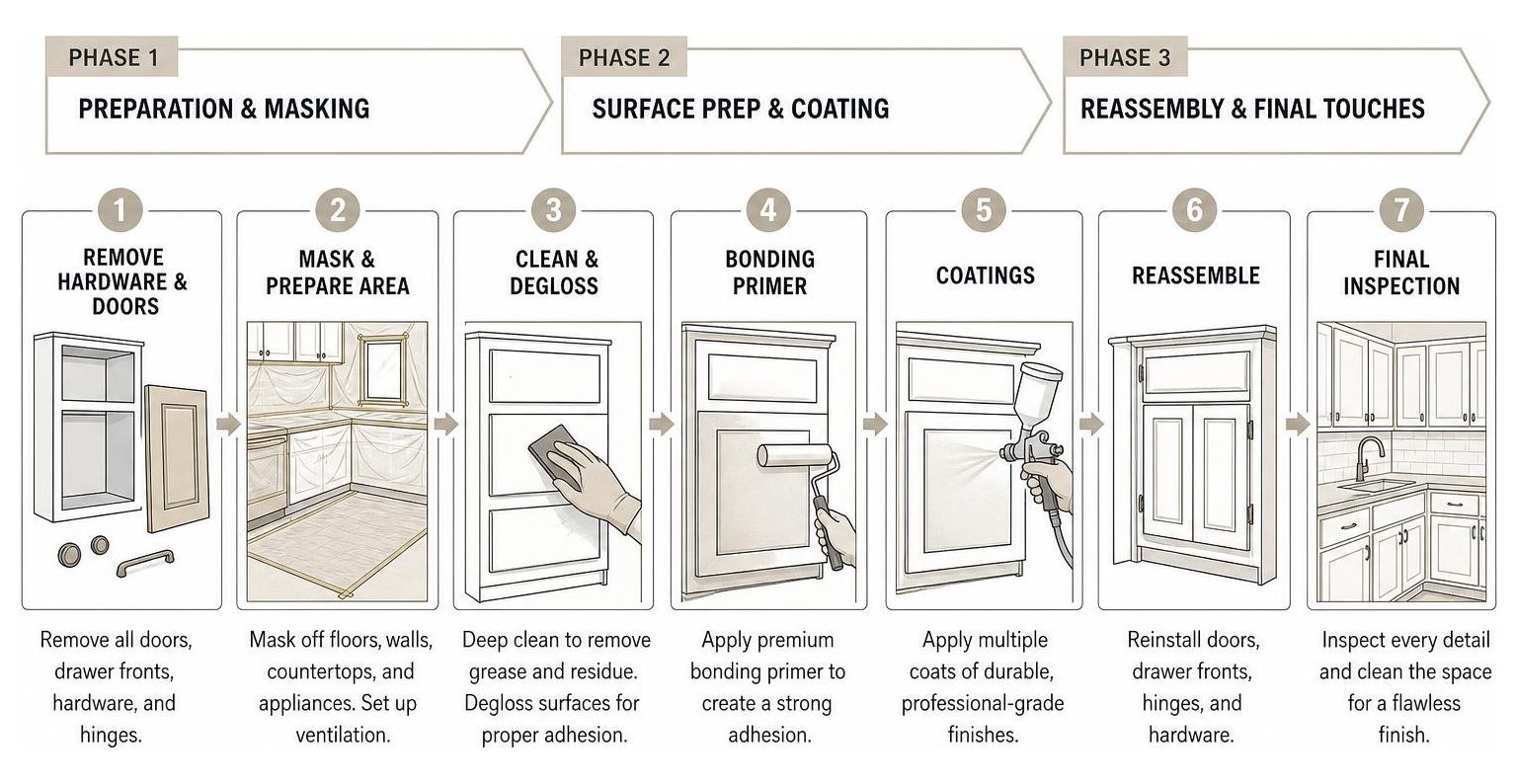
Here is exactly how our team at All Surface Refinishing transforms your kitchen in three main phases:
Phase 1: Preparation and Masking
We begin by removing all doors, drawer fronts, and hardware. We then completely mask off your kitchen — including floors, walls, countertops, and appliances — to protect your home from overspray. We also set up temporary ventilation systems to safely exhaust fumes.
Phase 2: Cleaning and Sanding
We scrub every inch of the cabinet frames and doors with industrial-strength degreasers to remove years of cooking oils, grease, and dust. Once clean, we scuff-sand all surfaces. This creates a microscopic texture that allows our coatings to anchor deep into the material.
Phase 3: Priming and Coating
We apply a high-performance bonding primer specifically engineered for slick surfaces like wood, laminate, or thermofoil. Once the primer cures, we spray multiple coats of a premium, lacquer-based topcoat. This is not wall paint; it is an incredibly hard, chemically cured finish that resists moisture, heat, and impact.
Why DIY Resurfacing is Not Recommended
It can be tempting to buy a retail “cabinet transformation kit” and spend your weekend trying to tackle this project yourself. However, DIY cabinet resurfacing carries significant risks.
- Slick Surface Adhesion: Standard retail primers cannot chemically bond to laminate or thermofoil. Without professional-grade bonding agents, your new finish will likely begin peeling within a year, especially around high-moisture areas like the sink or dishwasher.
- The Brush-Mark Dilemma: Applying coatings with a brush or roller leaves visible texture and brush marks. Achieving a perfectly flat, factory-smooth finish requires specialized HVLP (High-Volume, Low-Pressure) spray equipment and the skill to use it.
- Time and Mess: What takes our professional crew 1 to 3 days can easily drag on for three weekends for a DIYer, leaving your kitchen in a state of chaotic, dusty limbo.
If you want to read more about the challenges of doing this yourself, read our Diy Cabinet Resurfacing Guide.
Frequently Asked Questions About Resurfacing Cabinets
Do you need to remove countertops when resurfacing cabinets?
No! One of the greatest benefits of resurfacing is that your countertops remain completely undisturbed. Because we do not remove the cabinet boxes, our technicians work carefully around your existing granite, quartz, or laminate counters. We protect them with thick protective paper and plastic masking, ensuring minimal disruption to your home.
How long do resurfaced cabinets last?
When performed by professionals using premium lacquer-based topcoats, a resurfaced kitchen will easily last 10 to 15 years or more. The key to this durability is our thorough cleaning, scuff-sanding, and the use of chemical bonding primers that prevent the finish from chipping or peeling over time.
Does cabinet resurfacing increase home value?
Absolutely. The kitchen is the most critical room in the house when it comes to real estate value. A dated, worn kitchen can instantly turn off buyers or lower your asking price. Resurfacing gives you a modern, clean look that dramatically boosts your home’s visual appeal and resale appeal, offering an incredibly high ROI (Return on Investment) compared to the massive upfront cost of a full remodel.
Conclusion
Upgrading your kitchen or bathroom doesn’t have to mean living through weeks of dusty demolition and spending tens of thousands of dollars. With professional cabinet resurfacing, you can achieve the modern, factory-fresh kitchen of your dreams in just a few days.
At All Surface Refinishing, we bring over 30+ years of experience and more than 14,000 completed projects to every home we service. As Florida’s trusted experts in cabinet, countertop, and bathtub resurfacing, we are proud to serve homeowners across South and Southwest Florida, including:
- Broward County: Fort Lauderdale, Hollywood, FL, Davie, Coral Springs, Pembroke Pines, Weston, Deerfield Beach, Miramar, and Oakland Park.
- Miami-Dade County: Miami, Aventura, Bal Harbor, Coconut Grove, Coral Gables, Key Biscayne, and Miami Beach.
- Palm Beach County: Boca Raton, Boynton Beach, Delray Beach, West Palm Beach, Palm Beach Gardens, and Wellington, FL.
- Southwest Florida & Coastal Towns: Fort Pierce, Stuart, Vero Beach, Port Saint Lucie, and Jupiter.
Ready to fall in love with your kitchen all over again? Schedule a Cabinet Resurfacing Consultation with our friendly team today, and let us show you how affordable a beautiful home transformation can be!
