Two Tone Cabinets: A Simple Way to Add Depth to Your Kitchen
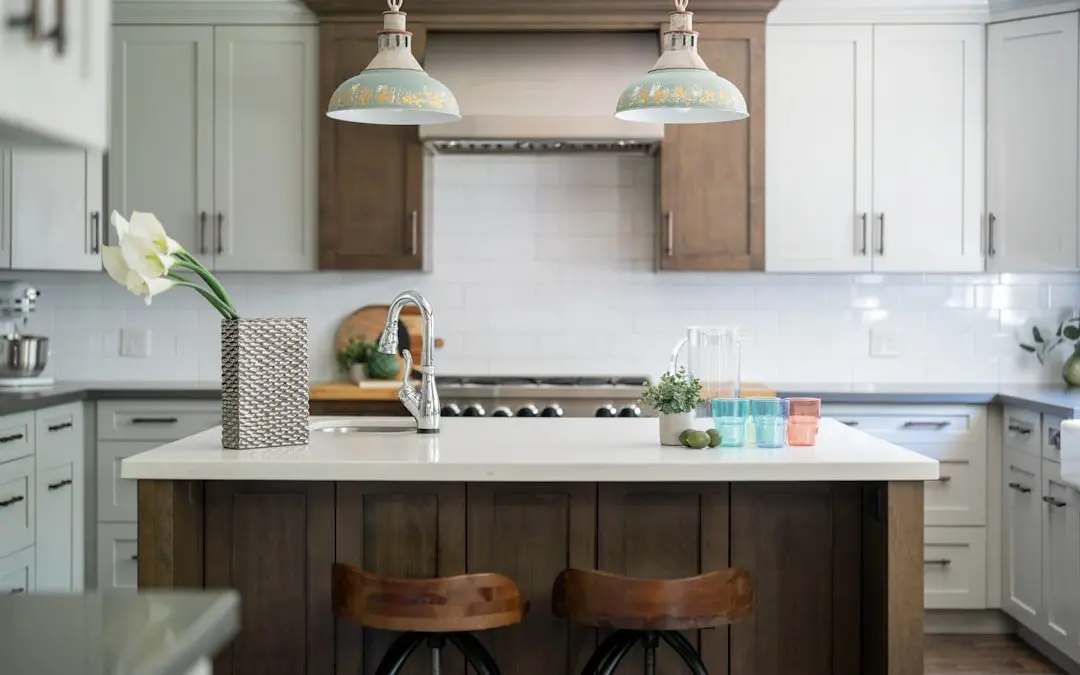
Two tone cabinets use two cabinet colors, finishes, or wood tones in one kitchen. The easiest, most balanced approach is to keep upper cabinets light and use a darker or warmer color on lower cabinets or the island. This adds contrast, creates a focal point, and can help a small kitchen feel more open.
For a polished result:
- Choose one main cabinet tone and one accent tone.
- Pair colors with similar undertones, such as warm white with oak or cool white with navy.
- Use the darker shade on lower cabinets, where it helps ground the room and hides everyday marks.
- Tie both tones together with one hardware finish, countertop, or backsplash.
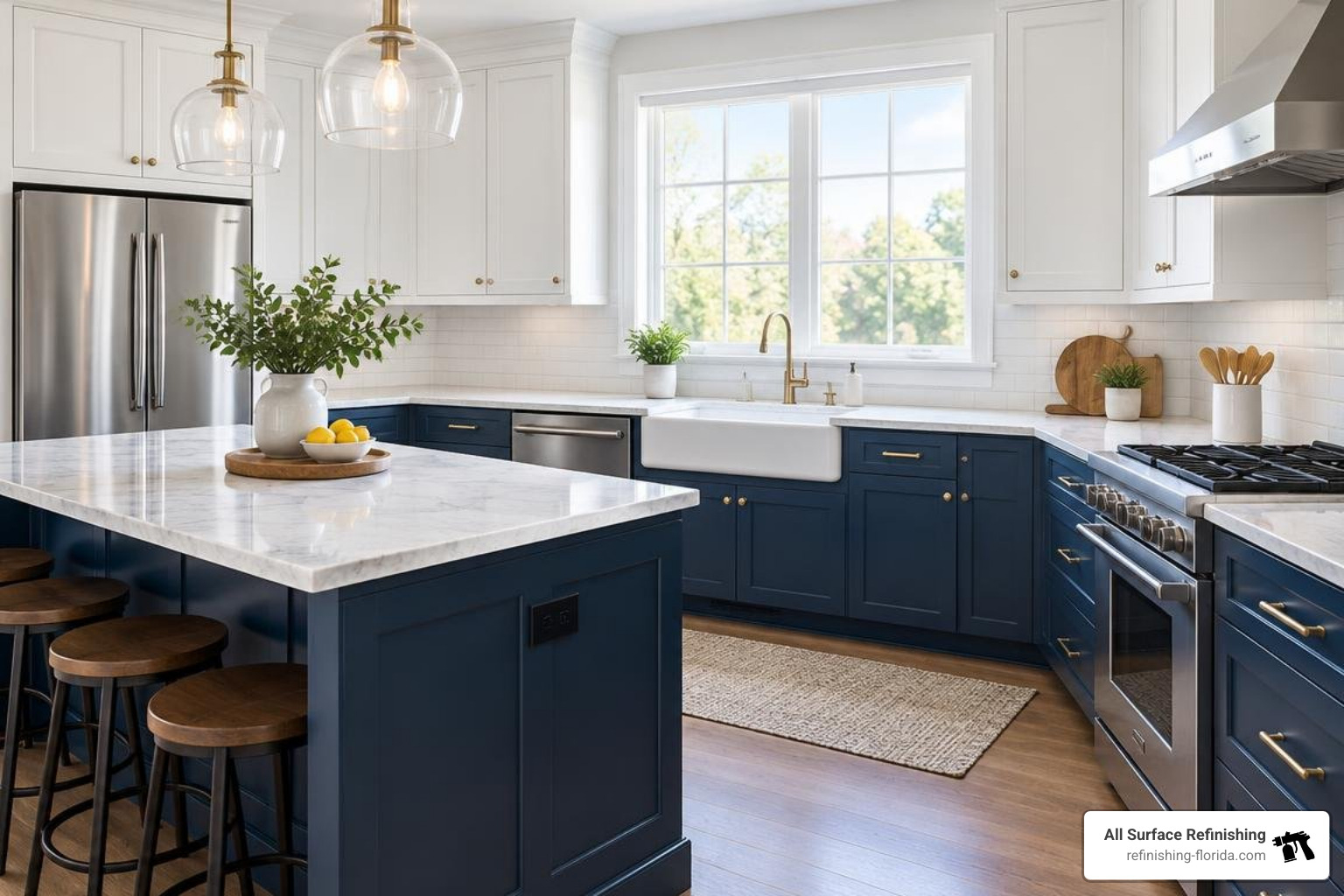
Two-tone kitchen cabinets can be subtle, like creamy white with natural wood, or bold, like deep navy lowers with bright white uppers. They are also a practical update for property owners who want a fresh kitchen look without the cost, mess, and disruption of replacing cabinets.
I’m Frank Hernandez, President of All Surface Refinishing, and I have more than a decade of hands-on refinishing experience helping South Florida property owners update kitchen surfaces. In this guide, I will show you how two tone cabinets can bring new life to an outdated kitchen with the right colors, layout, finish, and care.
Two tone cabinets further reading:
Why Two Tone Cabinets Are the Top Kitchen Trend in 2026
The kitchen has evolved into the true centerpiece of modern living. In 2026, standard monochrome cabinetry often feels flat, especially in open-concept floor plans where the kitchen transitions seamlessly into the family room or dining space. Recent industry research reveals that nearly 1 in 4 homeowners renovating their kitchens select contrasting shades for upper and lower units. This shift represents a widespread movement away from sterile, single-shade spaces toward textured, personalized environments.
By dividing colors across your cabinetry, you introduce natural visual hierarchy. Light colors on the upper perimeter draw the eye upward, catching natural sunlight and making standard eight-foot ceilings feel significantly taller. Meanwhile, richer or deeper shades along the base define work zones without erecting physical barriers.
Homeowners can dramatically enhance their home’s appeal by changing their cabinet color rather than spending weeks dealing with major construction. When done right, a dual-tone approach gives your kitchen the bespoke charm of an architect-designed space while adding serious character and resale appeal.
Stunning Two Tone Color Combinations and Finishes
Finding the right color pairing is all about understanding balance and contrast. The most successful dual-finish kitchens achieve a harmonious balance where the two shades elevate one another instead of competing for attention.
If you are exploring fresh painted kitchen cabinet ideas, here is a comparison of top-performing color combinations:
| Upper Cabinet Shade | Lower Cabinet or Island Shade | Visual Effect | Best Architectural Style |
|---|---|---|---|
| Crisp Pure White | Matte Pitch Black | Dramatic, high-contrast, modern | Modern, Industrial, Minimalist |
| Soft Warm White | Medium Stained Walnut / White Oak | Organic, warm, grounded | Transitional, Coastal, Scandinavian |
| Cream / Pale Khaki | Smoky Jade or Forest Green | Earthy, serene, sophisticated | Traditional, Craftsman, Modern Cottage |
| Soft Greige | Deep Indigo Navy | Crisp, tailored, luxurious | Classic, Coastal Contemporary |
| Warm Off-White | Deep Burgundy / Espresso | Rich, bold, focal-heavy | European Traditional, Modern Elegance |
Classic Tuxedo and High-Contrast Pairings
The classic “Tuxedo” look—combining bright white upper cabinets with deep black or dark charcoal base units—remains a timeless design staple. Exploring black and white kitchen design ideas shows just how versatile this pairing can be. The crisp contrast adds instant architectural weight to the room while keeping the upper visual plane airy and bright.
To prevent a tuxedo kitchen from feeling sterile, use a soft satin or ultra-matte lacquer finish. Matte finishes absorb harsh glare from South Florida’s bright daylight, lending the deep black lowers a velvety, luxurious texture that resists noticeable fingerprints.
Earthy Greens, Navy Blues, and Natural Wood Tones
Designers in 2026 have embraced organic earth tones. Over 80% of kitchen design experts highlight soft greens—ranging from muted sage to deep smoky jade—as the defining color family of the year. Pairing earthy green base units with warm, creamy uppers infuses the kitchen with a calming, nature-inspired feel.
Similarly, pairing rich navy blue or deep coastal indigo bases with natural wood or warm off-white creates a tailored, timeless finish. Complementing these tones with modern Shaker profiles and brushed brass pulls bridges traditional craftsmanship with modern luxury.
Strategic Layouts for Modern Kitchens
Applying two colors across your kitchen requires clear spatial planning. Rather than splitting shades arbitrarily, designers rely on established proportion models to create natural focal points.
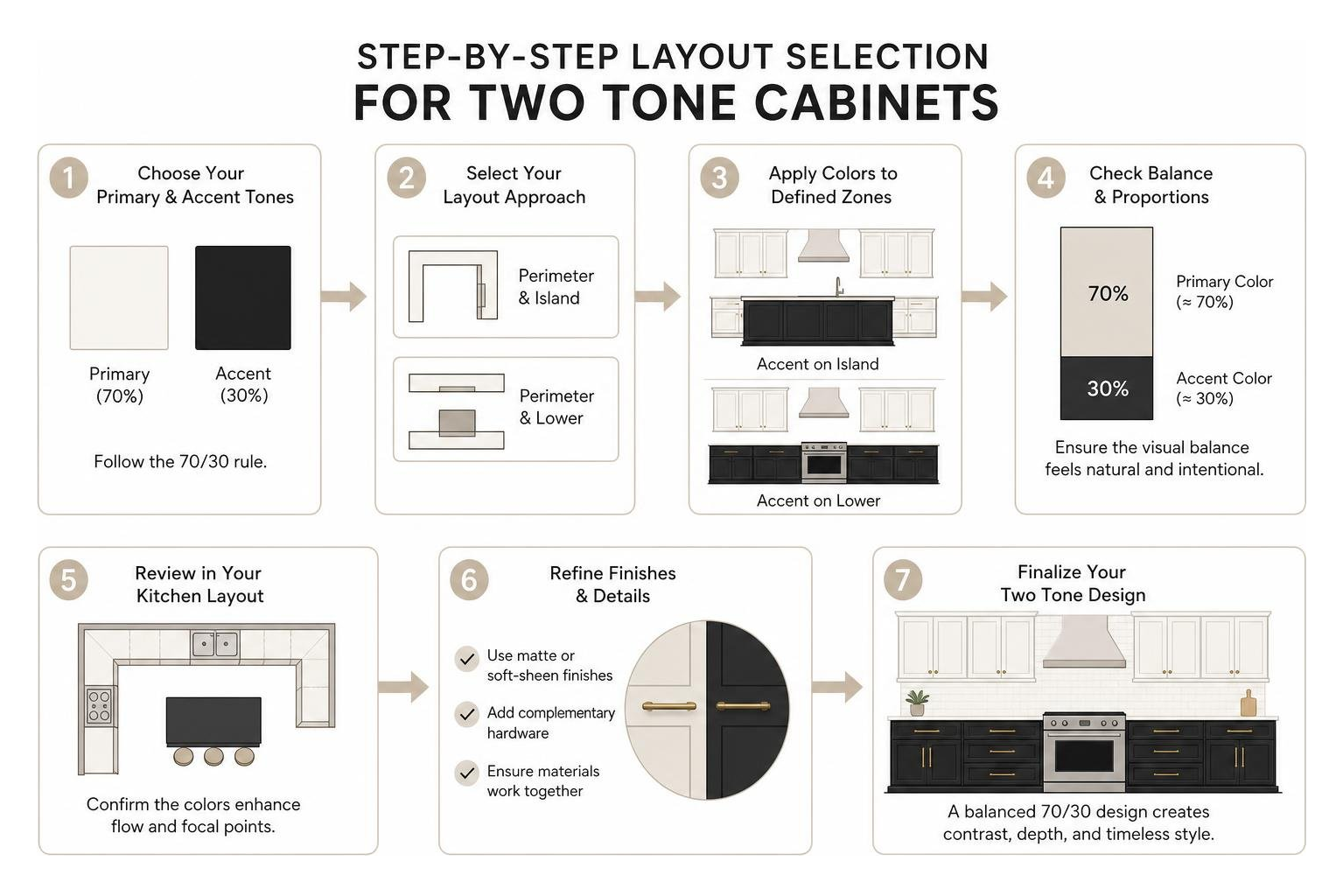
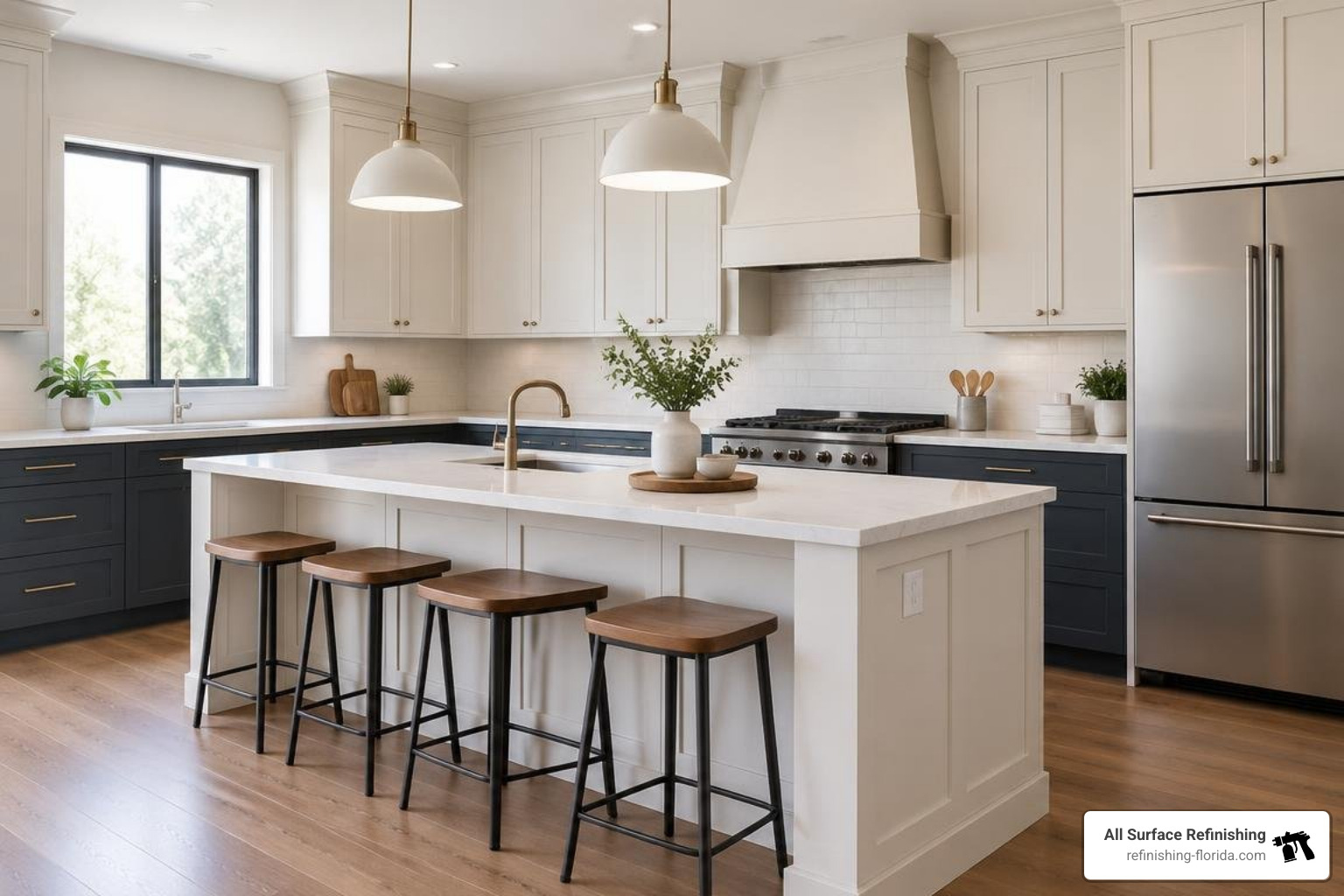
The most reliable guideline is the 70/30 rule. Dedicate roughly 70% of your total visible cabinetry surface to your primary, dominant tone (often the lighter perimeter cabinets) and the remaining 30% to your accent color (such as an oversized island or lower bank).
Designing Layouts with Two Tone Cabinets
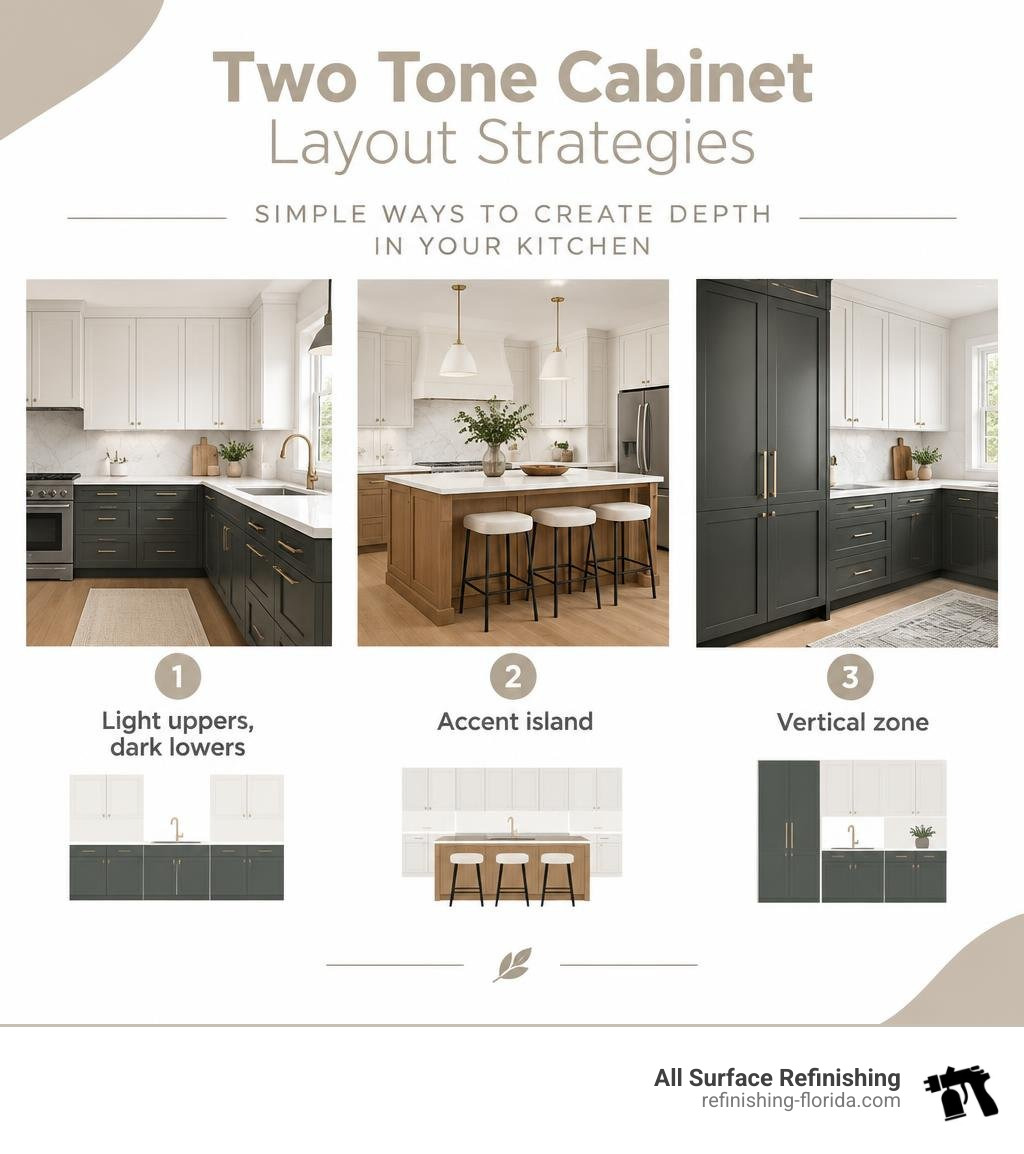
Your kitchen layout dictates where contrasting colors work best:
- The Upper/Lower Split: Perfect for L-shaped, U-shaped, and compact galley kitchens. Placing darker base units on bottom anchors your appliances, while lighter upper cabinets prevent narrow cooking corridors from feeling boxed in.
- The Accent Island: Ideal for open-concept layouts. Keeping the entire perimeter wall neutral and finishing the kitchen island in a contrasting hue instantly establishes a dramatic focal point.
- Vertical Functional Zoning: Use a single contrasting color from floor to ceiling for a dedicated pantry wall, built-in coffee station, or wet bar. This defines custom functional zones within larger spaces.
A deliberate layout plan helps you achieve that sleek, flawless modern cabinet look without overwhelming your room’s dimensions.
Hardware and Lighting Coordination
Undertone discipline is essential when planning a two-tone kitchen. Warm shades (creams, warm whites, taupes, rich walnut) should be paired with warm-undertone accents, while cool hues (slate, cool gray, crisp arctic white, navy) require cool-toned partners.
Your hardware acts as the visual bridge connecting both colors:
- Brushed Brass and Warm Gold: Pair beautifully with warm whites, olive greens, navy, and rich wood tones.
- Matte Black: Serves as a versatile, graphic anchor across both warm and cool palettes.
- Polished Nickel or Chrome: Complements cool grays, deep blues, and modern flat-panel doors.
Ensure your under-cabinet LED task lighting operates at a neutral 3000K to 3500K color temperature. Excessively cool (5000K) lighting can make warm wood stains look washed out, while overly warm (2700K) lighting can cause crisp white uppers to appear yellowed.
Best Practices for Upgrading Your Cabinetry
Reinventing your cabinetry doesn’t require tearing out perfectly solid boxes. Refinishing existing wood or factory-finished cabinets provides a high-end, factory-smooth transformation at a fraction of the cost and turnaround time of replacement.
Achieving lasting durability requires professional preparation. At All Surface Refinishing, our process ensures factory-grade adhesion:
- Deep Degreasing and Decontamination: Kitchen cabinets accumulate cooking oils and residues that must be completely removed.
- Mechanical Abrasion: Surfaces are carefully sanded to open the grain and create a secure bonding profile.
- High-Adhesion Bonding Primers: Specialized primers seal tannins and ensure paint bonds permanently to the core substrate.
- Precision Spray Finishing: Multiple coats of premium, industrial-grade acrylic urethane or lacquer are applied in a controlled environment to eliminate brush marks.
Opting for professional kitchen cabinet painting services delivers a glass-smooth, durable finish. If you enjoy learning about the trade, you can also review how to change your kitchen cabinet color like a pro to understand the meticulous steps required for long-lasting results.
Maintaining Your Two Tone Cabinets
To keep your newly finished cabinets looking pristine for years to come:
- Choose Low-Sheen Satin or Semi-Gloss: Satin finishes offer the ideal balance between modern low-sheen beauty and effortless washability.
- Clean with Non-Abrasive Solutions: Wipe surfaces using a soft microfiber cloth dampened with warm water and mild dish soap. Avoid harsh chemical cleaners, scouring pads, or ammonia-based sprays.
- Manage Steam and Humidity: Use range hoods when boiling liquids to protect upper cabinet finishes from excessive moisture.
- Address Nicks Promptly: If heavy cookware causes a small chip on base cabinets, professional touch-up methods preserve the protective moisture seal.
For homeowners wanting to refresh worn finishes, our dedicated cabinet color change service delivers a fast, mess-free makeover.
Frequently Asked Questions About Two Tone Kitchens
Does Two Tone Cabinet Design Work in Small Kitchens?
Yesood, when you use the right layout. A bright upper cabinet tone such as crisp white or soft warm white keeps the upper visual plane airy else makes a compact space feel closed in. Pairing that with wood-toned lowers grounds the space without shrinking it. Avoid in a small kitchen placing a bold contrasting tone on both uppers and lowers, which can feel visually heavy and busy.
What Is the Most Durable Finish for Two Tone Kitchen Cabinets?
For South Florida’s humidityife, a professional spray-applied acrylic urethane or high-grade lacquer performs best for two tone cabinetry. Satin and semi-gloss sheens balance washability with modern low-glare looks, and they resist the daily cooking oils, moisture, and fingerprints that flat or matte paints absorb. Proper priming and preparation matter as much as the topcoat color, since adhesion determines how many years the contrast stays crisp.
Can You Two Tone Cabinets Without Replacing Them?
Yes, and this is one of the most practical ways to get the look. Professional refinishing allows property owners to keep solid cabinet boxes and change the color, sheen, or wood-tone appearance across upper, lower, and island units without complete replacement. For kitchens with cabinet styles that already fit the home, painting or refinishing existing doors and drawer fronts is faster and less costly than swapping everything.
Does Two Tone Cabinetry Work with Any Countertop?
Two tone cabinets work well with natural stone, quartz, solid surface, and butcher block, as long as the countertop bridges the upper and lower shades. A counter with both warm and cool veining can tie together cream uppers and navy or walnut lowers elegantly. For high-contrast combinations like white and black cabinetry, a quieter countertop keeps the room from feeling too busy.
Conclusion
Upgrading to two tone cabinets is one of the most effective ways to breathe new life, depth, and personality into your kitchen. Whether you love the crisp contrast of classic black and white, the organic warmth of white oak and cream, or the rich luxury of navy and brass, this versatile design approach turns ordinary kitchens into custom showpieces.
With over 30 years of experience and more than 14,000 successful transformations completed, All Surface Refinishing is Florida’s trusted leader in surface renewal. We help property owners achieve their dream kitchens quickly, cleanly, and affordably.
Ready to elevate your home? Contact us today to explore our cabinet refinishing and painting services and receive your free consultation!
