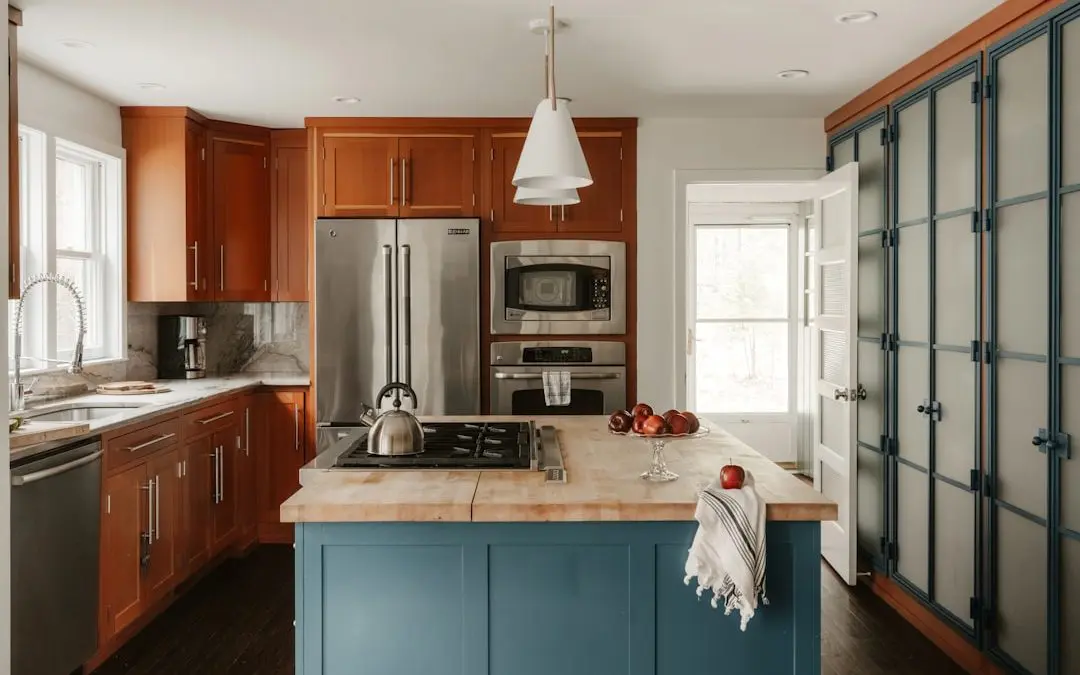
How to Evaluate Hardwood Kitchen Cabinets
The best hardwood kitchen cabinets pair durable wood doors and drawer fronts with a sturdy cabinet box. Check the box material, drawer joints, and finish before choosing a wood species or door style. Solid hardwood brings natural grain and can often be refinished, but it does not mean every part of the cabinet is solid wood. A plywood box can offer strong support while handling the movement that comes with changes in humidity.
If your existing cabinets are sound but look worn, refinishing may give your kitchen a fresh look without replacing them. I’m Frank Hernandez, and I’ve worked in surface refinishing since 2011, helping South Florida homeowners update cabinets and other kitchen surfaces. I’ll walk you through what to look for in hardwood kitchen cabinets, starting with the parts behind the doors.
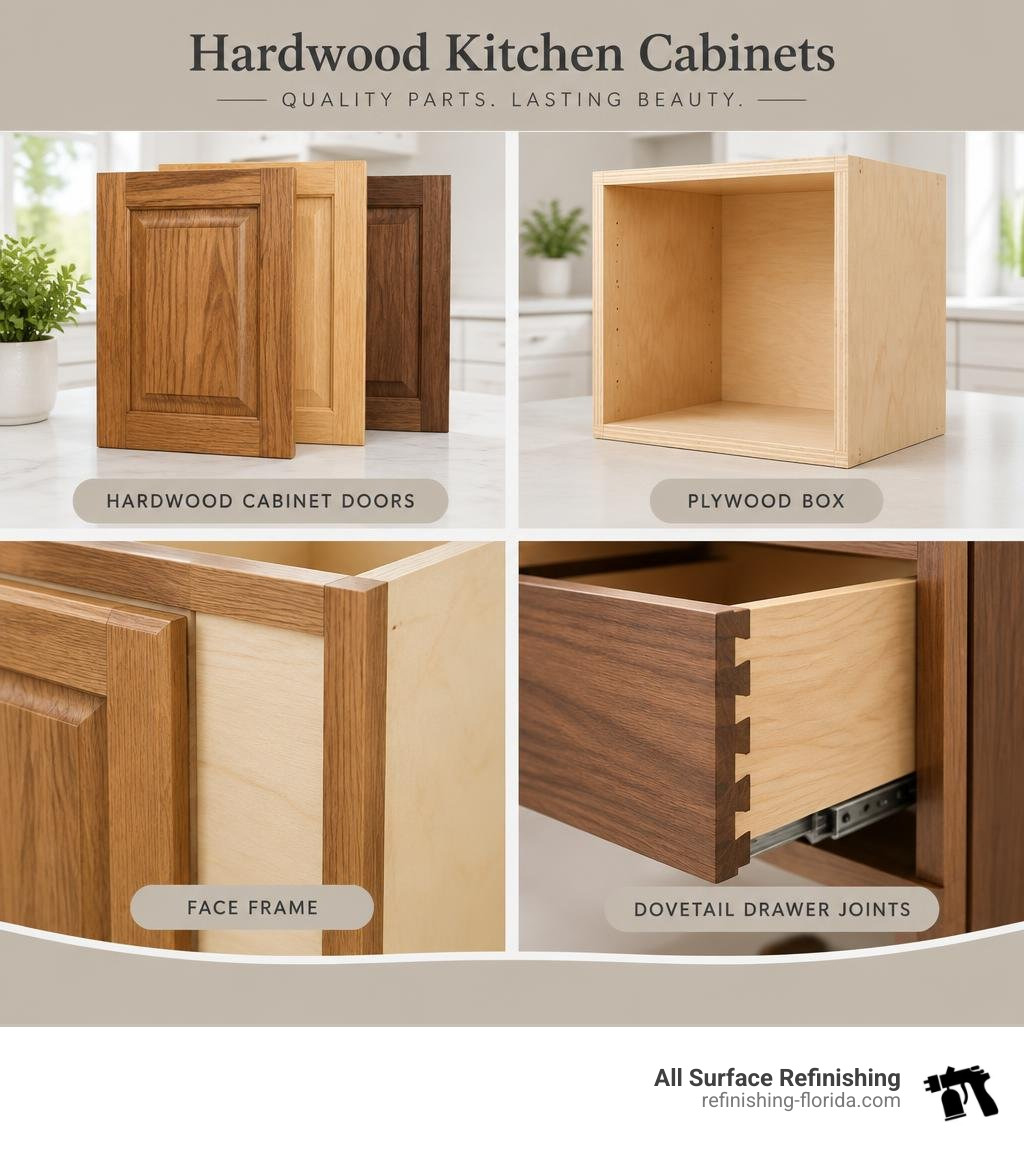
Hardwood kitchen cabinets definitions:
Why Invest in Hardwood Kitchen Cabinets for Your Home
When you step into a kitchen, cabinetry sets the visual tone and handles the heaviest physical workload of any architectural element in your house. Choosing authentic hardwood is an investment in natural warmth, tactile character, and generational structural longevity. Unlike synthetic materials that look tired after a few years of daily use, real timber develops character while retaining its core strength.
Beyond aesthetics, natural timber provides incredible repairability. Scratches, minor dents, and changing design tastes do not mean you have to tear out your setup. Authentic hardwood can be sanded, sealed, repainted, or re-stained down the road, making it an environmentally sustainable choice that boosts overall property value. To see how natural wood fits alongside different layout options, explore our comprehensive guide to kitchen cabinet styles and options.
Structural Benefits of Hardwood Kitchen Cabinets
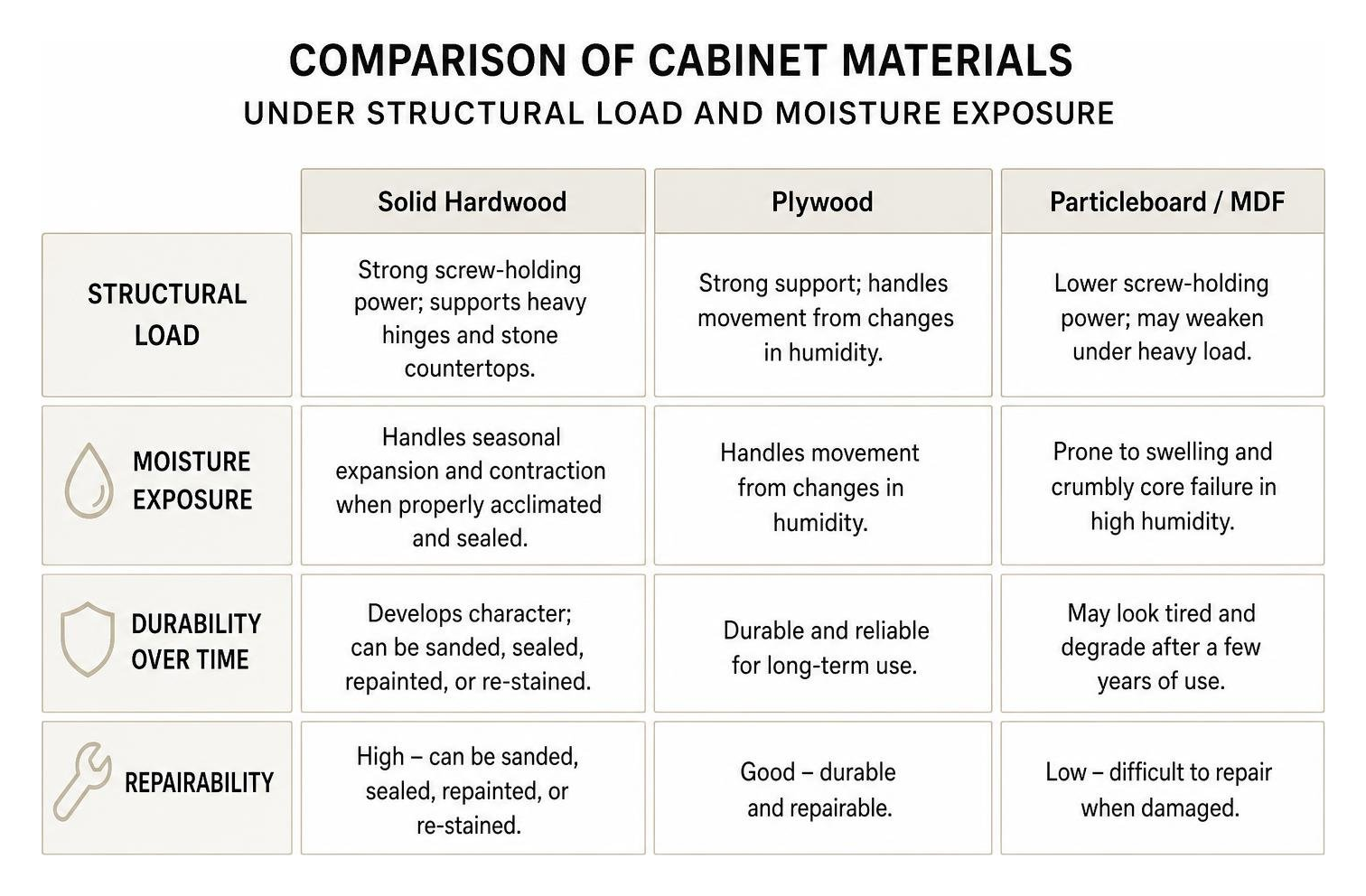
The real magic of hardwood lies in its cellular density. Solid timber delivers superior screw-holding power, meaning heavy-duty hinges will not pull loose after thousands of door swings. When properly acclimated and sealed, hardwood components distribute the weight of stone countertops—such as granite or quartzite—without bowing under the load.
In humid regions like South Florida, structural integrity comes down to how well materials manage moisture. High-density hardwoods handle seasonal expansion and contraction smoothly when built with proper floating-panel joinery. You avoid the catastrophic swelling and crumbly core failure common in low-end fiberboard setups.
Popular Wood Species: Grain, Hardness, and Style
Every wood species brings a distinct grain pattern, natural color spectrum, and level of dent resistance. The Janka hardness test measures how well a wood species resists denting and wear, giving homeowners a clear metric for daily durability.
| Wood Species | Janka Hardness Rating | Grain Pattern & Aesthetic | Best Suited Finish Type | Relative Cost Tier |
|---|---|---|---|---|
| Hard Maple | 1,450 lbf | Fine, closed, uniform grain | Flawless painted finishes & subtle stains | Moderate to High |
| White Oak | 1,360 lbf | Strong, linear, coarse open grain | Natural, cerused, and light stains | High |
| Hickory | 1,820 lbf | Bold, dramatic, contrasting grain | Clear coats and natural stains | Moderate to High |
| Red Oak | 1,290 lbf | Pronounced cathedral grain | Medium to dark rich stains | Moderate |
| Cherry | 950 lbf | Smooth, satiny, flowing grain | Warm, natural ambering stains | High |
| Walnut | 1,010 lbf | Rich, elegant, swirling dark grain | Clear topcoats and light natural stains | Premium / Luxury |
| Alder | 590 lbf | Straight, soft, uniform fine grain | Distressed or rustic warm stains | Budget to Moderate |
Hard maple remains the gold standard for painted cabinetry due to its ultra-smooth, closed grain. On the other hand, white oak—specifically rift-sawn or quarter-sawn—offers unmatched dimensional stability and a modern, linear look that highlights organic wood tones.
Cabinet Box Construction Standards and Joinery Methods
A gorgeous cabinet door is only as reliable as the cabinet carcass supporting it. While doors and drawer fronts showcase the beauty of hardwood, the cabinet box (or case) does the heavy structural lifting.
Plywood Boxes vs. Particleboard Core Materials
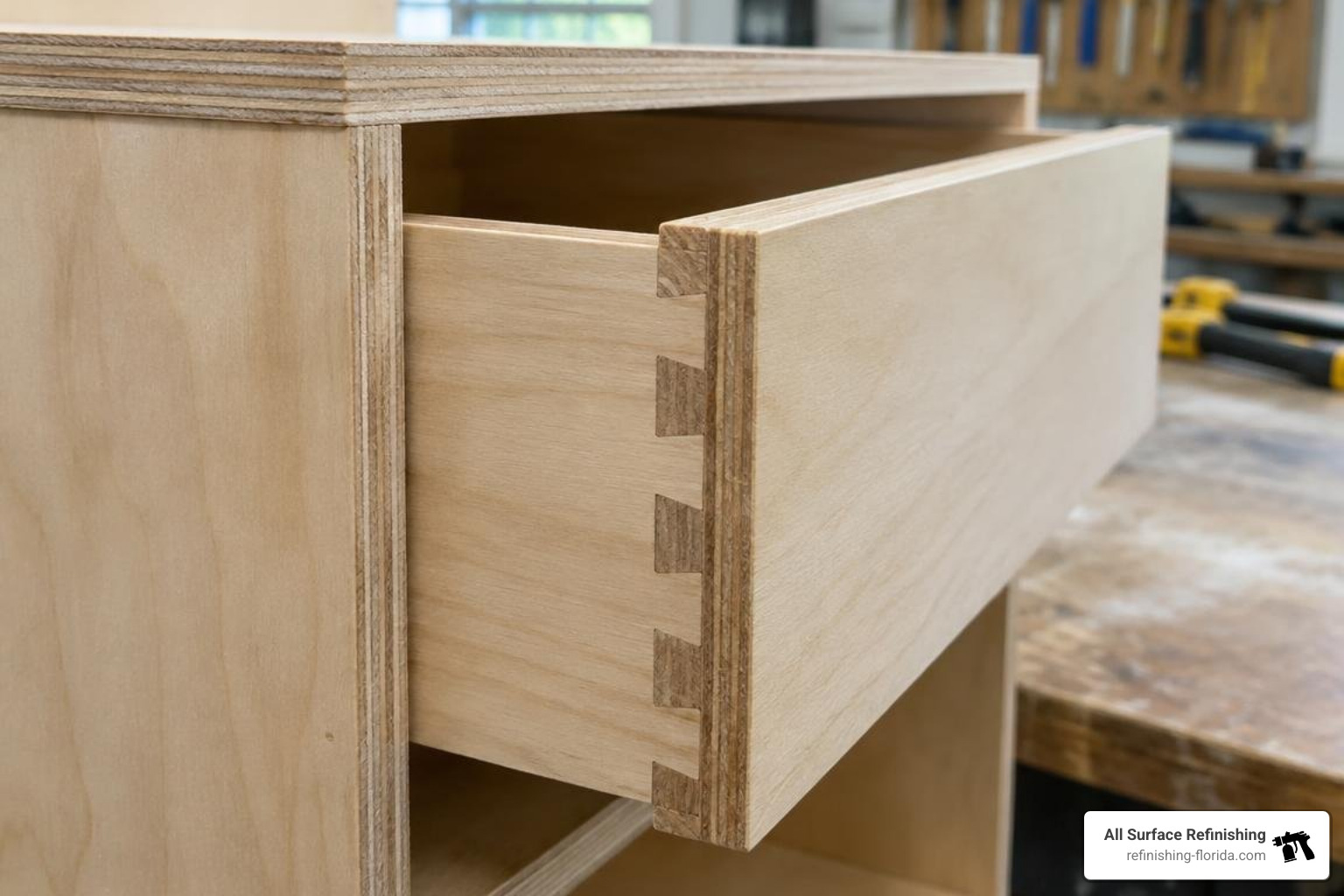
High-end cabinetry relies on 3/4-inch furniture-grade plywood for box sides, tops, bottoms, and structural shelving. Plywood is manufactured by layering thin sheets of wood veneer in alternating grain directions. This cross-grain construction delivers massive shear strength, prevents sagging across wide spans, and holds mechanical fasteners tightly.
In contrast, standard particleboard or low-density fiberboard consists of pressed wood particles bonded with glue. If a minor plumbing leak occurs beneath a kitchen sink in Fort Lauderdale or Coral Gables, particleboard absorbs the standing water like a sponge. It quickly swells, loses its structural bond, and permanently disintegrates. Plywood box construction resists ambient humidity shifts and occasional spills, ensuring your cabinet structure stays level and square for decades.
Dovetail Drawers and Face Frame Configurations
A dependable indicator of quality craftsmanship is the drawer box joinery. Premium builds use solid hardwood drawer sides joined with interlocking dovetail joints. Dovetail joints form a mechanical wedge that tightens under load, meaning the drawer face cannot pull away from the box even when packed with heavy cast-iron cookware.
Cabinet framing generally falls into three configurations:
- Framed Inset: The cabinet door sits completely flush inside a solid wood face frame opening. This provides a handcrafted, historic aesthetic, though it requires precise artisan installation.
- Full Overlay: The doors and drawer fronts are sized generously to cover almost the entire face frame, creating a clean, seamless look popular in contemporary homes.
- Standard Overlay: The doors partially overlap the face frame, leaving several inches of wood frame visible around each opening.
To protect these structural joints from repeated impact, top-tier cabinetry pairs solid wood boxes with full-extension, concealed undermount soft-close glides.
Design Profiles, Overlays, and Finish Options
Your door style dictates your kitchen’s overall design personality. Whether you live in a coastal estate in Palm Beach or a modern condo in Miami, hardwood can be shaped into virtually any architectural profile.
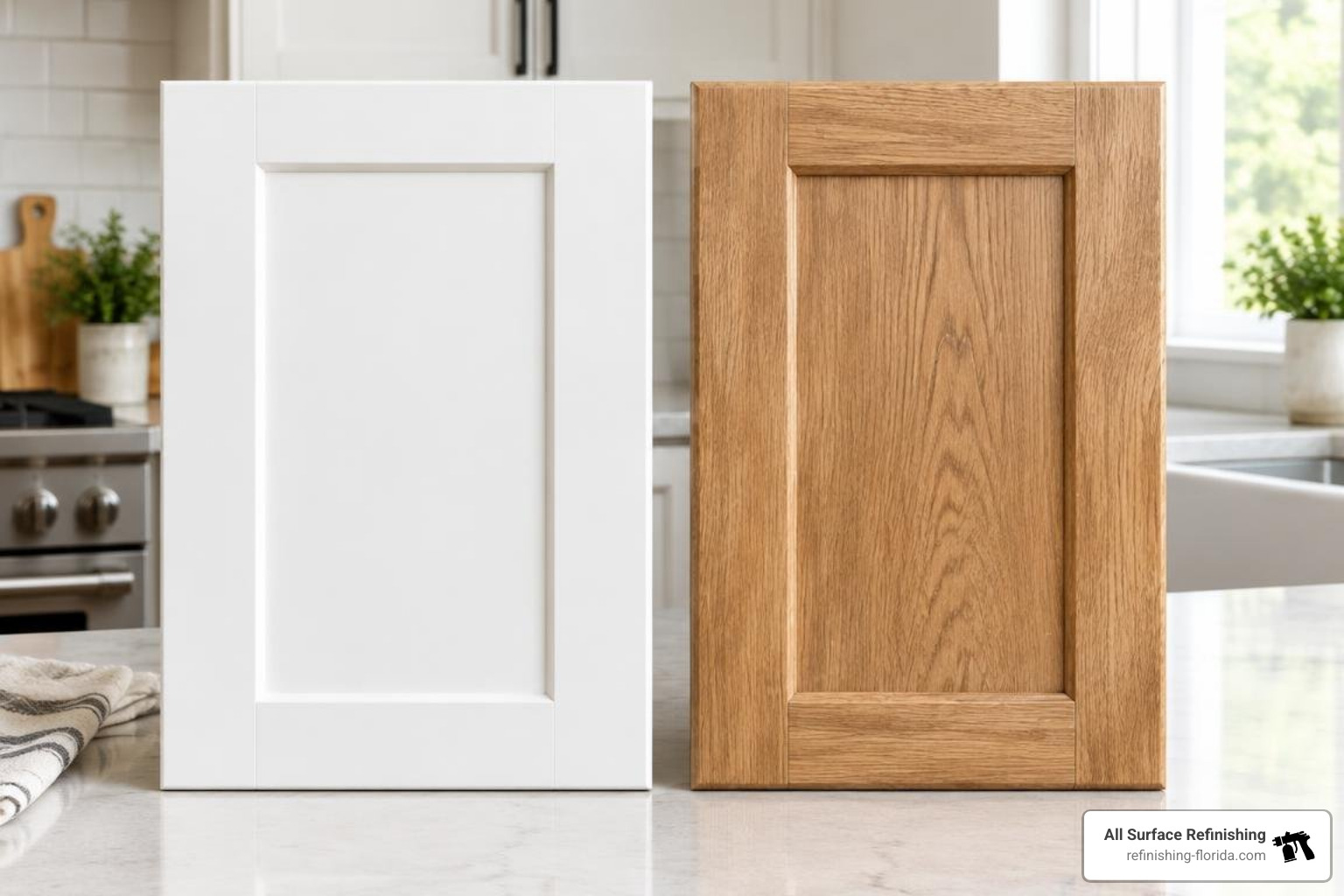
Shaker, Slab, and Raised Panel Profiles
- Shaker Doors: The timeless five-piece design features a recessed flat center panel framed by clean stiles and rails. Its versatility fits everything from transitional suburban homes to minimalist urban kitchens.
- Modern Slab: A completely flat front that highlights uninterrupted wood grain. As configured in modern builds, slab doors provide a sleek backdrop that lets exotic grain patterns shine.
- Raised Panel: Features a center panel that rises flush with the outer frame profile. This creates rich shadow lines well-suited for traditional or historic Mediterranean homes in Boca Raton and Coral Gables.
If you are exploring custom profiles, you can review Solid Wood Cabinet Doors | Custom & Durable Options to see how specific cuts alter grain direction and visual balance.
Factory Finishes: Painted vs. Stained Hardwood Kitchen Cabinets
Your finish choice fundamentally changes how wood behaves over time.
- Stained Finishes: Penetrate into open wood pores, accentuating the natural grain variations, medullary rays, and mineral streaks of species like oak, walnut, and cherry. Stained wood hides everyday dust and minor dings exceptionally well.
- Painted Finishes: Provide a smooth, uniform color palette. For the cleanest painted surface, paint-grade hard maple or tight-grained poplar is essential to prevent prominent wood grain from telegraphing through the coating.
Professional shop finishes utilize catalyzed conversion varnishes rather than standard hardware-store latex paint. Conversion varnishes cure via a chemical cross-linking process, creating an ultra-durable, moisture-impermeable barrier that resists household cleaning chemicals, grease splatters, and food acids.
Evaluating Custom, Semi-Custom, and Stock Pricing Tiers
Navigating cabinet manufacturing tiers helps you balance design flexibility against your project budget.
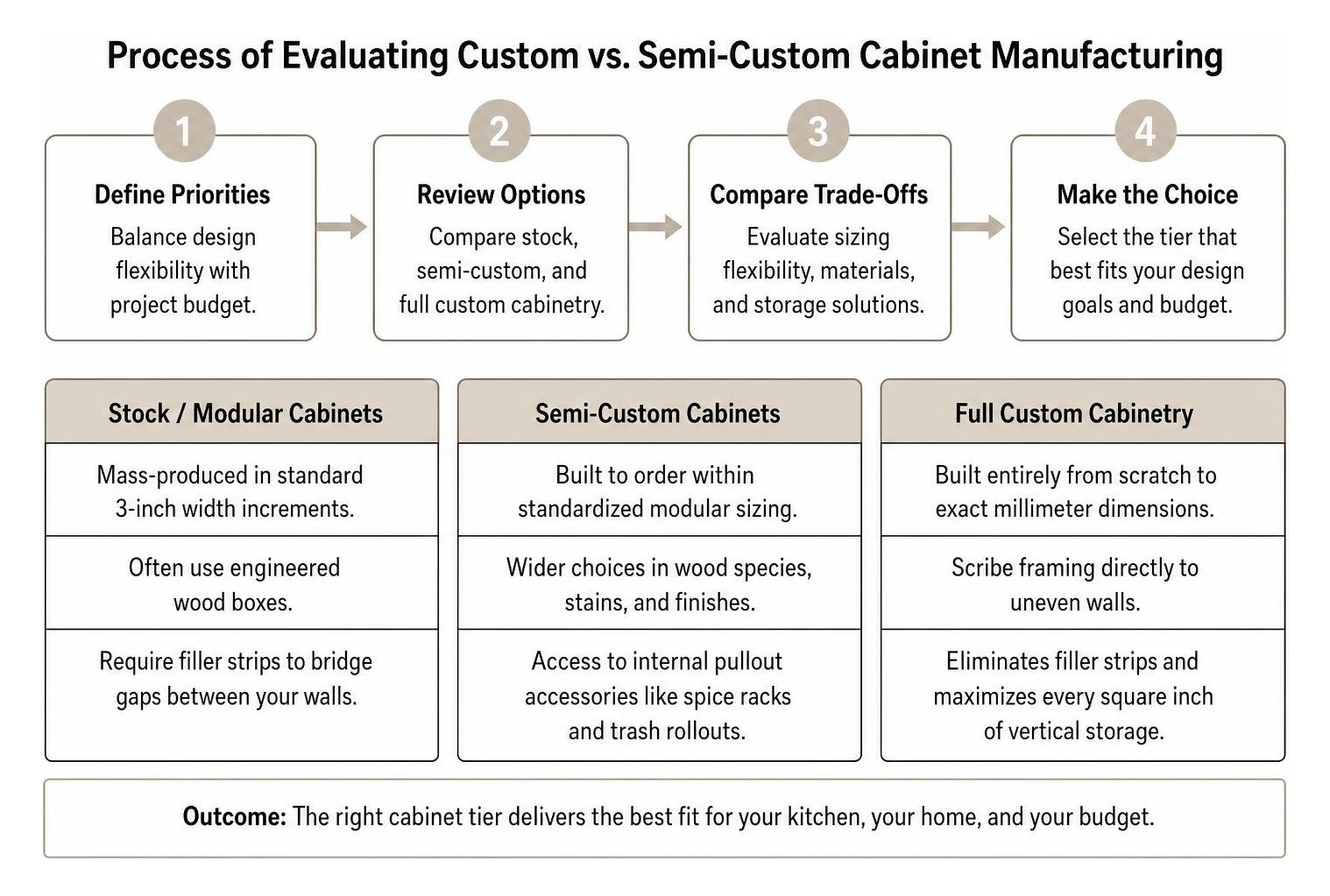
- Stock / Modular Cabinets: Mass-produced in standard 3-inch width increments. While budget-friendly, they often use engineered wood boxes and require filler strips to bridge gaps between your walls.
- Semi-Custom Cabinets: Built to order within standardized modular sizing but offering wider choices in wood species, stains, and internal pullout accessories like spice racks and trash rollouts.
- Full Custom Cabinetry: Built entirely from scratch to the exact millimeter dimensions of your kitchen. Custom shops scribe framing directly to uneven walls, eliminating filler strips and maximizing every square inch of vertical storage.
For a broader breakdown of market costs, check our guide on how much new kitchen cabinets cost.
Budget Expectations and Project Lead Times
Real hardwood cabinetry represents a significant investment. For full custom solid wood kitchen setups:
- Small Kitchens (Under 150 sq ft): Typically range from $15,000 to $25,000 fully installed.
- Medium to Large Kitchens (150–250+ sq ft with Island): Range from $25,000 to $45,000 or more, depending on chosen species and specialty storage inserts.
Custom cabinet fabrication generally takes 8 to 12 weeks of shop production, resulting in total project lead times of 10 to 16 weeks from design approval to freight delivery. High-quality builders back their work with multi-year warranties covering joinery and material defects.
Maintenance Routines and Long-Term Value in Florida Climates
Caring for fine hardwood requires simple, consistent habits:
- Dust Weekly: Use a clean, dry microfiber cloth to remove dust and airborne cooking oils.
- Clean Gently: Wipe surfaces using a damp cloth with mild, wood-safe soap diluted in warm water. Avoid abrasive sponges, ammonia, bleach, or silicone-based polishes.
- Dry Immediately: Never leave standing water or damp dish towels hanging over finished wood doors.
- Manage Indoor Humidity: Maintain indoor relative humidity levels between 35% and 55% using your home air conditioning to minimize wood movement.
For deeper insights into extending cabinet lifespan, explore our Kitchen Cabinet Refinishing Guide 2026.
Frequently Asked Questions About Hardwood Kitchen Cabinets
How long do solid wood kitchen cabinets typically last?
With 3/4-inch plywood boxes, dovetail drawer joinery, and a quality catalyzed finish, well-maintained hardwood cabinets last 30 to 50 years or more. Because solid wood can be sanded and restored, the structural components can easily outlast the homeowners who installed them.
What is the most durable wood species for kitchen cabinetry?
Hard maple, hickory, and white oak offer the best dent and impact resistance. Hickory is the hardest domestic hardwood, making it virtually impervious to everyday bumps from pets, vacuum cleaners, and busy family life.
Can existing hardwood cabinets be updated without full replacement?
Yes. If your cabinet boxes and solid wood doors are structurally sound, you do not need to spend tens of thousands of dollars on replacement. You can view our cabinet resurfacing before and after results to see how a professional color change revitalizes dated timber, and review transparent kitchen cabinet painting costs to compare your options.
Conclusion
Investing in high-quality kitchen cabinetry comes down to recognizing what lies beneath the surface. Prioritizing solid wood doors, durable hardwood joinery, and robust 3/4-inch plywood boxes ensures your kitchen remains beautiful, functional, and structurally sound for decades to come.
If your home in Miami-Dade, Broward, Palm Beach, or Martin County already has quality wood cabinets that simply look worn or dated, our team at All Surface Refinishing is here to help. With over 30 years of hands-on experience and more than 14,000 completed kitchen and bathroom transformations, we can restore your existing woodwork with stunning factory-grade finishes at a fraction of full replacement costs. Reach out to Frank Hernandez and the team today to explore our professional cabinet refinishing services and give your kitchen the high-end look it deserves.
