
What Are the Longest Lasting Bathtub Refinishing Methods?
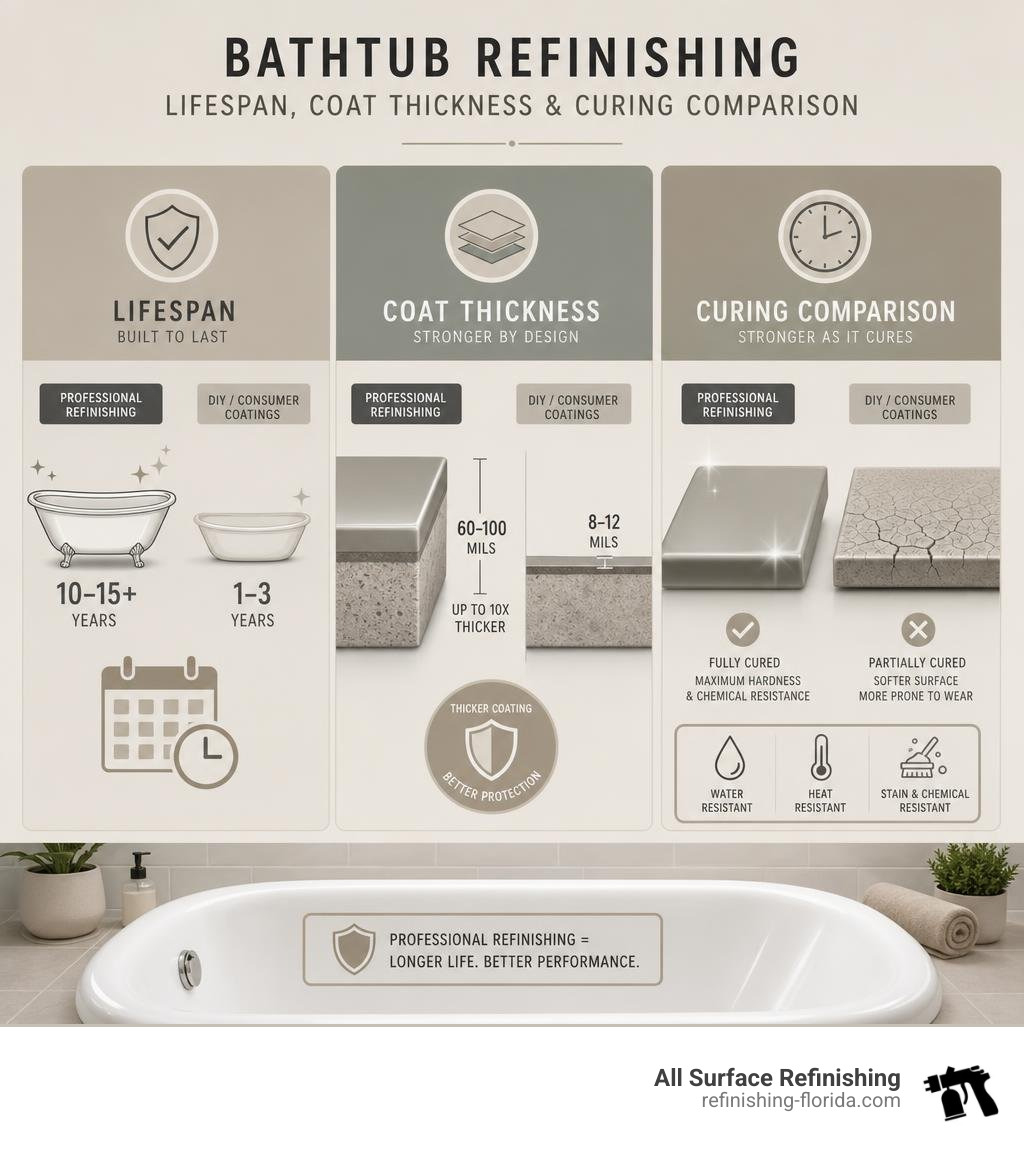
When homeowners ask us how to get 10 to 15 years or more out of a restored tub, the answer comes down to three technical variables: the molecular adhesion of the base coat, total cured coating thickness, and the chemical resilience of the topcoat resin.
Achieving maximum longevity requires moving past superficial cosmetic touch-ups. A quick layer of consumer-grade epoxy roll-on coating creates an aesthetic barrier that looks clean for a few months, but it lacks the structural integrity to withstand continuous thermal expansion, standing water, and daily physical impact. True industrial-grade restoration is an intensive chemical conversion process. It permanently bonds a new high-solid resin or aliphatic polymer layer directly onto the original cast-iron, pressed steel, porcelain, or fiberglass core.
As of September 2026, homeowner demand across South Florida properties—from coastal estates in Palm Beach and Miami Beach to family residences in Coral Springs and Boynton Beach—favors high-build, low-VOC resurfacing systems. These commercial formulations deliver hard-wearing, non-porous surfaces without the harsh, lingering solvent fumes of older generation enamels.
Professional resurfacing eliminates the need for expensive, messy demolition. When performed with proven chemical etching and high-performance polymers, a restored bathtub looks and performs like brand-new vitreous china while saving property owners thousands of dollars.
How Do Pour-On and Spray-On Bathtub Reglazing Compare in Durability?
The structural difference between pour-on reglazing and professional spray-on applications lies in dry-film coating thickness. A standard professional multi-stage spray-on acrylic urethane coating measures approximately 8 to 12 mils in total thickness (where 1 mil equals 1/1000 of an inch). In contrast, high-solid pour-on polymer coatings achieve a self-leveling thickness of 60 to 100 mils—up to 10 times thicker than conventional spray applications.
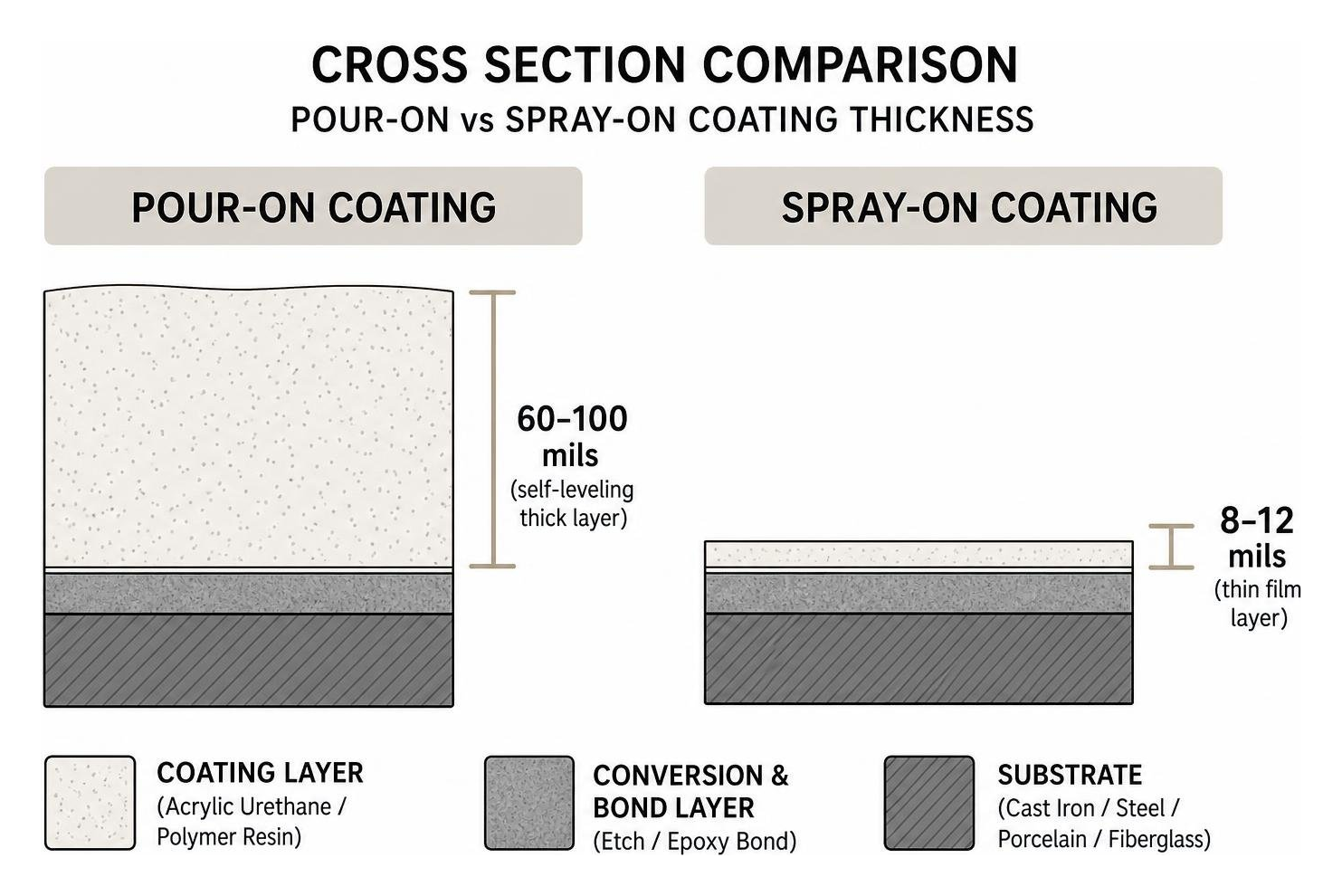
Coating thickness directly dictates impact resistance and long-term protection against chipping. When heavy shampoo bottles, handheld shower heads, or children’s bath toys drop onto a 10-mil sprayed surface, the localized impact energy transfers rapidly to the thin bonded layer. On a thick 80-mil pour-on coating, the high-density resin absorbs and dissipates mechanical shock, preventing micro-fractures, hairline spider cracks, and moisture infiltration that cause peeling.
Curing times also differ between these two professional techniques:
- Pour-on polymer systems: Self-level across the tub floor and vertical walls, curing into a dense, non-porous solid within 24 hours.
- Multi-stage spray-on systems: Applied in fine atomized passes (etching primer, epoxy bonding agent, multiple aliphatic urethane topcoats) that require a full 48-hour cure window before exposure to water.
| Feature / Metric | Pour-On Polymer Method | Professional Spray-On Acrylic Urethane | DIY Roll-On / Brush Kits |
|---|---|---|---|
| Typical Lifespan | 10–15+ Years | 3–5 Years (Up to 7–10 with expert prep) | 6–18 Months |
| Coating Thickness | 60–100 mils (High-build solid) | 8–12 mils (Multi-layer atomized) | 2–4 mils (Uneven roller film) |
| Cure Window | 24 Hours | 48 Hours | 72+ Hours |
| Odor / VOC Profile | Solvent-free, virtually odorless | Moderate to high (Requires ventilation) | Variable / High solvent odor |
| Best Substrates | Heavy cast-iron and enameled steel | Cast-iron, steel, fiberglass, acrylic | Superficial touch-ups |
| Surface Retention | Non-porous, permanent gloss | High-gloss factory shine | Dulls quickly, stains easily |
For high-traffic master bathrooms and busy rental properties in Fort Lauderdale and West Palm Beach, thick self-leveling layers provide superior defense against gouging and abrasive cleansers. Learning more about how long your resurfaced tub will stay shiny helps set realistic expectations for gloss retention and regular maintenance.
When Is the Pour-On Method the Superior Choice?
The pour-on technique provides exceptional performance on solid, rigid substrates—specifically vintage cast-iron bathtubs and heavy pressed-steel enameled fixtures. Because cast iron does not flex under foot traffic, it creates an unyielding base for a thick, self-leveling liquid resin application.
Pour-on formulas are 100% solid and solvent-free. For high-rise condominiums, luxury apartments, and occupied homes in downtown Miami, Aventura, or Boca Raton, pour-on resurfacing eliminates offensive chemical paint odors, allowing homeowners to remain comfortably in their residences while technicians work. Furthermore, the seamless thickness of the pour-on layer creates complete resistance to standing water around the drain, making it the premier choice for cast iron bathtub refinishing.
When Does Professional Spray-On Acrylic Urethane Excel?
While pour-on resins offer incredible thickness on rigid metals, professional high-volume, low-pressure (HVLP) spray-on acrylic urethane systems remain the industry standard for lightweight, flexible substrates. Modern synthetic bathtubs naturally shift and flex when filled with water or stepped on by bathers. A rigid, ultra-thick pour-on coat can stress-crack on a flexible basin, whereas an elastomeric spray-on acrylic urethane flexes smoothly with the tub wall.
HVLP spray application excels in:
- Complete fiberglass bathtub resurfacing and acrylic tub restorations.
- Large one-piece tub-and-shower modular enclosures.
- Matching integrated wall tiles and surrounding bathroom surfaces with an ultra-smooth, mirror-like factory finish.
Why Is Chemical Etching and Surface Prep Essential for Long-Term Adhesion?
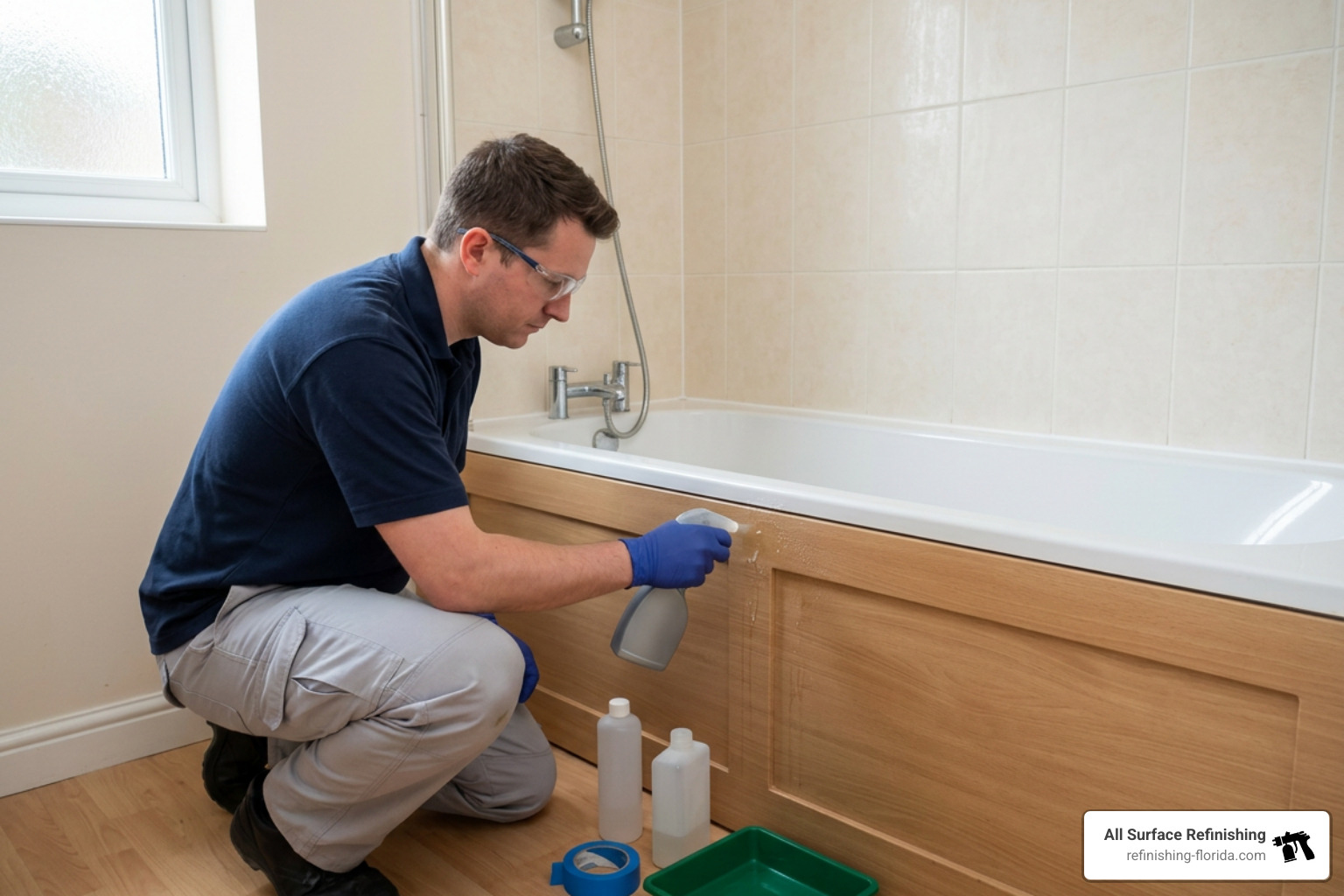
The most common question property owners ask us is why refinishing projects fail early. The reality is that 90% of coating failures have nothing to do with the topcoat product itself – they stem directly from substandard surface preparation.
Original bathtubs are coated in vitreous porcelain enamel: powdered glass fused to iron or steel at temperatures exceeding 1,500°F. This creates an impervious, non-porous, ultra-slick surface. New coatings cannot mechanically bond to slick porcelain without an engineered mechanical anchor profile.
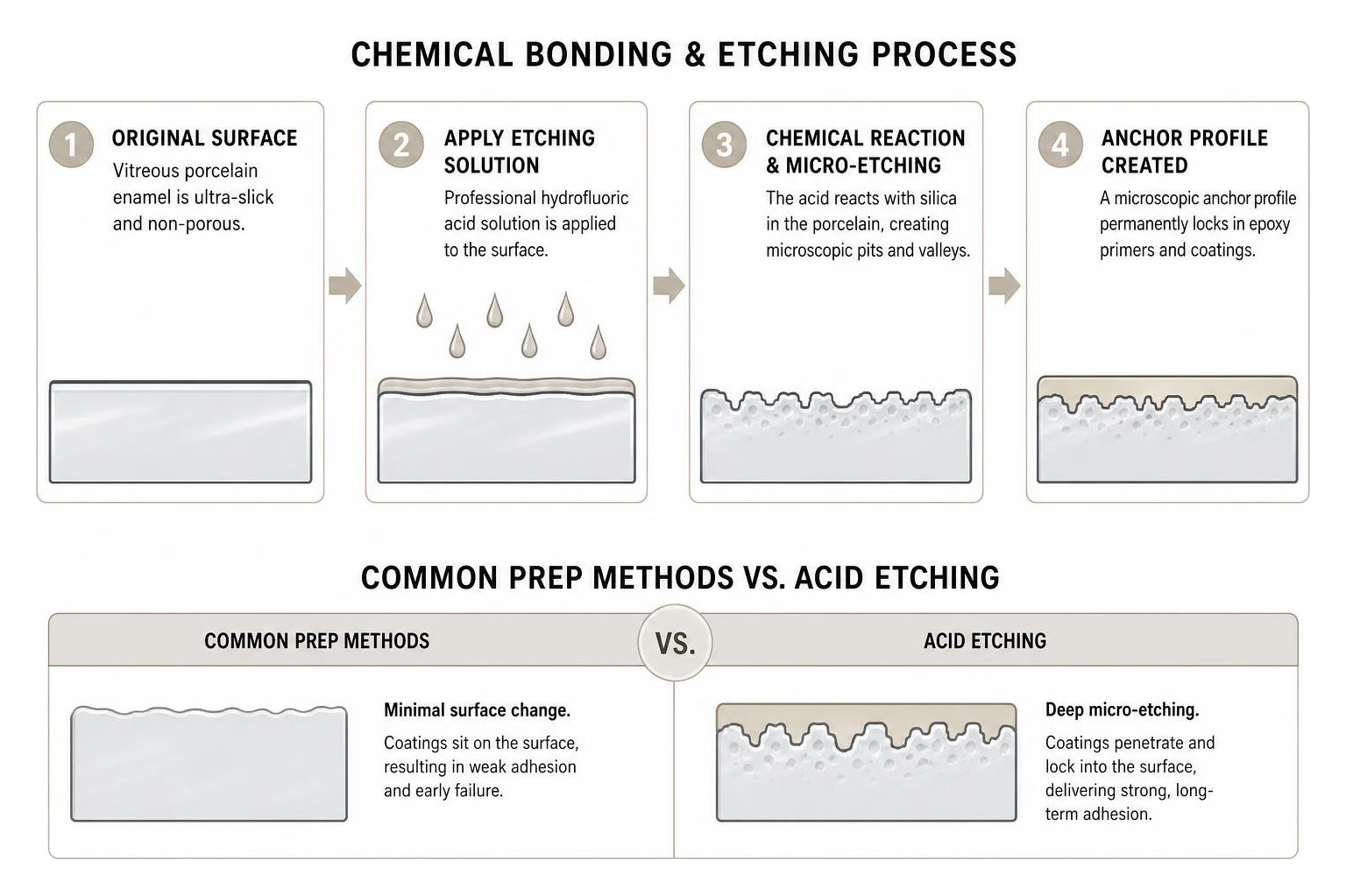
To create that microscopic mechanical anchor, we apply a professional hydrofluoric acid etching solution. Hydrofluoric acid chemically reacts with the silica in the porcelain, creating microscopic pits and valleys across every square millimeter of the tub. This transforms the glass-slick surface into an anchor profile that permanently locks in epoxy primers. Because hydrofluoric acid is a hazardous industrial chemical, trained technicians follow strict handling and ventilation controls consistent with CDC/NIOSH guidance on hydrofluoric acid safety.
Household cleaners, bleach, trisodium phosphate (TSP), or light manual sanding cannot chemically pit vitreous porcelain. When contractors skip acid etching to save time, the new topcoat merely rests on top of the porcelain like a sheet of plastic wrap. Within 6 to 12 months, hot bath water causes thermal expansion, forcing moisture beneath the unbonded film, leading to massive blistering, bubbling, and sheet peeling.
Our industrial pre-treatment protocol follows meticulous technical standards:
- Deep Degreasing: Removing all body oils, soap scum, mineral scale, and silicone residues with industrial emulsifiers.
- Chemical Acid Etching: Applying specialized hydrofluoric acid agents to create deep microscopic mechanical porosity across all enameled areas.
- Neutralization and Flush: Completely neutralizing acid residues with alkaline solutions, followed by complete drying using high-velocity heated air.
- Structural Chip and Rust Repair: Treating rust spots with chemical converters and filling deep chips with waterproof structural resins.
- Silane Chemical Bonding Agent: Wiping a molecular coupling agent onto the dry etched surface to establish cross-linking chemical bonds.
- High-Solid Epoxy Primer: Spraying a commercial epoxy primer to create a sealed, waterproof foundation that ensures long-term bathtub refinishing durability.
Which Topcoat Materials Provide the Greatest Wear and Chemical Resistance?

Choosing the correct topcoat chemistry determines how well your refinished bathtub resists yellowing, hot water immersion, bathroom cleaners, and surface abrasion over decades of use.
1. Traditional Epoxy Topcoats
Epoxy coatings provide exceptional initial adhesion and hardness. However, standard epoxies suffer from poor UV stability and cross-link degradation over time. Under typical bathroom lighting and sunlight exposure from windows, epoxy finishes gradually turn yellow or chalky. They also become brittle as they age, making them prone to micro-chipping under repeated hot-and-cold thermal shocks.
2. Standard Acrylic Enamels
Acrylic enamels are modified paints that dry quickly and offer high immediate gloss. While they look attractive immediately after application, their molecular bonds lack high chemical resistance. Routine bathroom cleaners, bleach, or cosmetic bath oils break down the resin structure, causing premature dulling, scuffing, and localized staining within two to three years.
3. Aliphatic Acrylic Urethane (The Professional Gold Standard)
Two-component aliphatic acrylic urethane is the leading industry standard for premium spray-applied bathroom resurfacing. The aliphatic polymer backbone provides complete UV stability, ensuring the brilliant white finish never yellows. It combines high surface hardness (resisting scratches from abrasive cleansers) with elastomeric flexibility, allowing the coating to expand and contract smoothly with the metal or fiberglass substrate during hot baths.
Our technicians utilize high-performance aliphatic urethanes during porcelain bathtub resurfacing to ensure lasting gloss retention and resistance to scalding water.
4. High-Solid Polymeric Resins (Pour-On Systems)
High-build, 100% solid polymeric resins combine the dense impact strength of cured polymer with a thick, self-leveling finish. Because they contain zero evaporating solvents or thinning agents, they cure without pinhole micro-voids, forming an impenetrable barrier against standing water, thermal shock, and aggressive household chemicals.
How Does Bathtub Refinishing Cost and Lifespan Compare to Full Replacement?
A common dilemma for homeowners in Delray Beach, Jupiter, and Hollywood, FL, is deciding whether to resurface an aging bathtub or replace it entirely. Evaluating the total economic impact requires looking past the retail price of a new tub at a home improvement store.
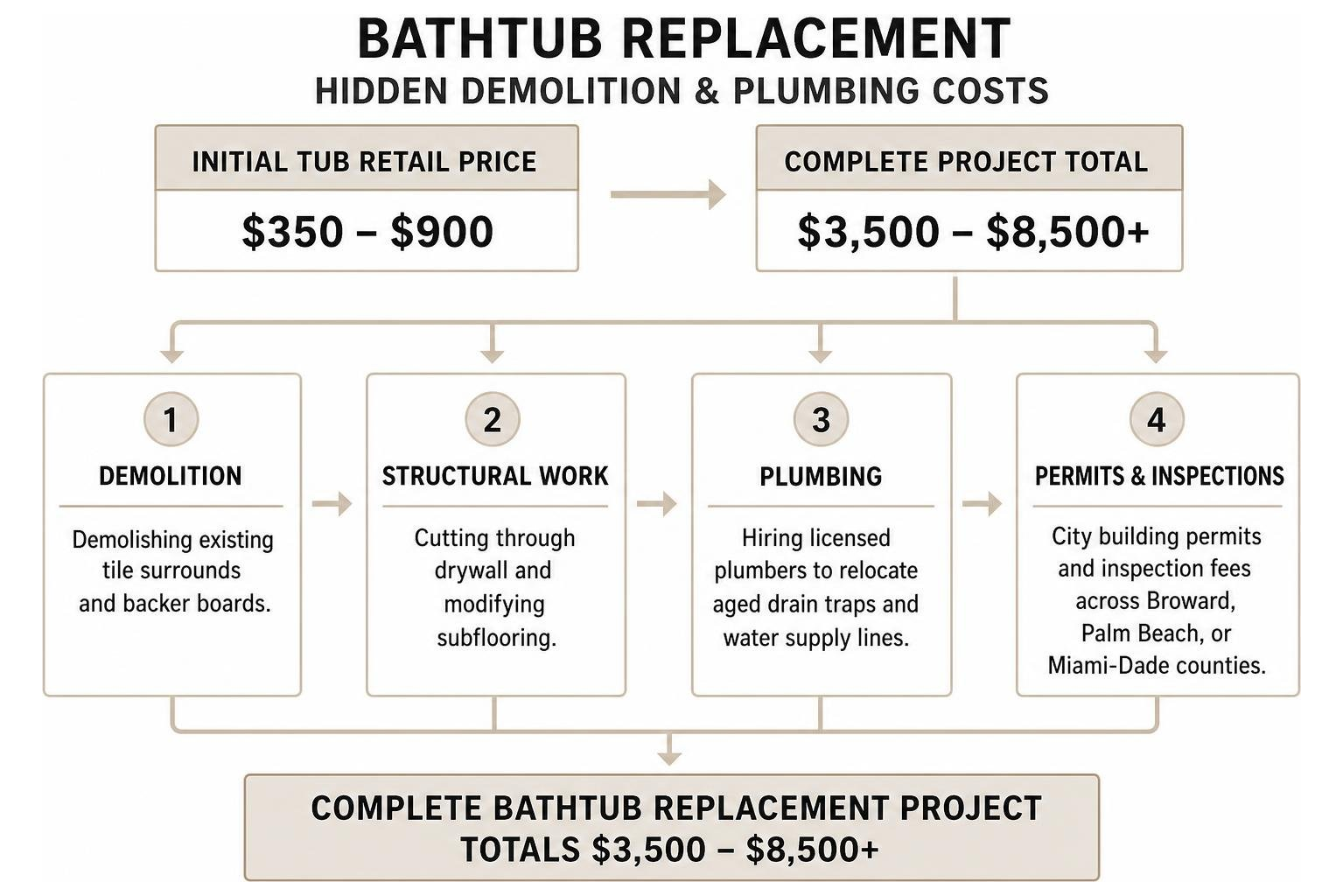
A replacement bathtub might carry an initial retail price of $350 to $900, but the complete removal and replacement project regularly totals $3,500 to $8,500+. The hidden costs include:
- Demolishing existing tile surrounds and backer boards.
- Cutting through drywall and modifying subflooring.
- Hiring licensed plumbers to relocate aged drain traps and water supply lines.
- City building permits and inspection fees across Broward, Palm Beach, or Miami-Dade counties.
- One to two weeks of bathroom downtime and construction mess.
Professional bathtub refinishing, detailed in our overview of bathtub refinishing costs, costs a fraction of total replacement (typically between $350 and $700 depending on the tub’s condition and method). The entire process finishes in 3 to 5 hours, and the fixture is fully cured and ready for use within 24 to 48 hours. When a professional pour-on or premium urethane finish delivers a 10- to 15-year service life, the return on investment easily outperforms replacement.
Professional Warranties: What Do They Actually Cover?
When evaluating refinishing companies, look closely at warranty terms. Reputable professional refinishers provide a comprehensive 5- to 10-year written warranty.
A true commercial warranty covers:
- Spontaneous coating delamination or peeling.
- Blistering and bubbling resulting from primer failure.
- Premature yellowing or chemical discoloration under normal use.
Legitimate warranties do not cover physical damage from dropped tools, damage from acidic drain cleaners, prolonged leaking faucets that erode finishes, or surface scouring caused by steel wool and abrasive scouring pads.
Can Surrounding Bathroom Tile Be Refinished for Equal Durability?
Yes. Surrounding wall tile surrounds, shower enclosures, and backsplashes can be resurfaced using the identical chemical etching, epoxy primer, and aliphatic urethane topcoat system.
Resurfacing bathroom tile creates a permanent seal over existing grout lines. In South Florida’s humid subtropical climate, porous grout absorbs moisture, leading to persistent mold, mildew, and grime accumulation. Applying a commercial topcoat locks the grout beneath an impervious, continuous waterproof barrier that wipes clean with mild dish soap and water, revitalizing the entire bathroom aesthetic without demolition.
Frequently Asked Questions About Long-Lasting Bathtub Resurfacing
Why do some professionally refinished bathtubs fail within the first year?
First-year bathtub refinishing failures are caused by one of four preventable technical errors:
- Skipped or Inadequate Acid Etching: Using wipe-on cleaners or fast sanders instead of commercial-grade hydrofluoric acid etching leaves porcelain too slick for primer bonding.
- Moisture Trapped During Application: Even slight plumbing drips from a leaky tub spout or moisture in airline hoses will cause immediate blisters and localized peeling around the drain.
- Incompatible Primer and Topcoat Chemistries: Mixing cheap consumer-grade primers with high-potency urethane topcoats causes chemical lifting and solvent entrapment.
- Use of Harsh Abrasive Cleaners: Using abrasive bleaching powders, pumice stones, or stiff wire brushes scratches the cured surface, breaking the moisture seal.
Hiring an experienced contractor who uses multi-stage chemical etching, industrial moisture traps, and matching commercial-grade polymer products prevents these premature delamination issues.
Is refinishing durable enough for everyday family use and jacuzzis?
Yes. A professionally refinished bathtub using thick pour-on polymer or multi-coat aliphatic urethane easily withstands heavy everyday family use, including daily hot baths and continuous shower usage.
High-performance refinishing is also completely compatible with jetted jacuzzis, soaking tubs, and whirlpool systems. The cured resin forms a durable structural bond that handles high-velocity water movement from circulation jets without lifting. To maximize the 10- to 15-year lifespan, clean the surface using non-abrasive, pH-neutral bathroom cleansers, liquid dish soap, or mild foaming sprays, and avoid suction-cup rubber bathmats that trap water underneath.
How can homeowners verify that a refinishing contractor uses top-tier methods?
Before signing a contract or allowing a technician into your home, ask these essential qualifying questions:
- “What chemical process do you use to prepare slick porcelain?” (The correct answer is professional acid etching or high-concentration silane bonding—never just soap, TSP, or hand sanding).
- “What specific topcoat resin are you applying?” (Look for commercial aliphatic acrylic urethanes or 100% solid pour-on polymers, not hardware store epoxy paint or basic acrylic enamel).
- “Do you run commercial exhaust ventilation during spraying?” (Technicians must use high-cfm exhaust ducting to vent overspray and fumes safely out of the home).
- “Is your business fully licensed, bonded, and insured with a written multi-year warranty?”
Red flags include one-coat “miracle” sprayers, handymen claiming no prep is necessary, contractors with no proof of insurance, or pricing that seems unrealistically low.
How Can You Ensure Your Bathtub Refinishing Project Lasts for Decades?
Achieving a durable bathtub finish that stands up to 10 to 15+ years of daily use is not a matter of luck. It is the direct result of proven chemistry:
- Aggressive chemical etching with hydrofluoric acid solutions to create a mechanical anchor.
- Molecular silane coupling agents and high-solid epoxy primers that permanently fuse with the substrate.
- Premium aliphatic acrylic urethane or 60–100 mil high-build pour-on polymer topcoats engineered for long-term water immersion.
Maintaining your resurfaced tub is simple: rinse the basin after use, repair dripping faucets promptly to avoid standing water scale, and clean exclusively with non-abrasive liquid detergents and microfiber cloths.
With over 30 years of experience and more than 14,000 completed residential and commercial projects across South and Southwest Florida—serving communities from Key Largo, Kendall, and Coral Gables up through Fort Lauderdale, Boca Raton, West Palm Beach, Stuart, Port Saint Lucie, and Vero Beach—our team at All Surface Refinishing delivers factory-grade transformations that last.
Ready to restore your bathtub, jacuzzi, tile surround, or bathroom vanity to pristine showroom condition without the expense and hassle of replacement? Contact our team today to schedule an on-site evaluation with our professional bathtub resurfacing services specialists.
