
Identifying Causes of Bathtub Discoloration
To remove yellow bathtub stains safely, start by applying a baking soda paste to soap residue and a 1:1 warm water and vinegar soak to hard water mineral scale, then gently wipe and rinse. Understanding why your bathtub changes color makes cleaning far easier and protects your fixture from accidental damage. Discoloration rarely happens overnight; it builds up through daily bathing habits, local water chemistry, and environmental exposure.
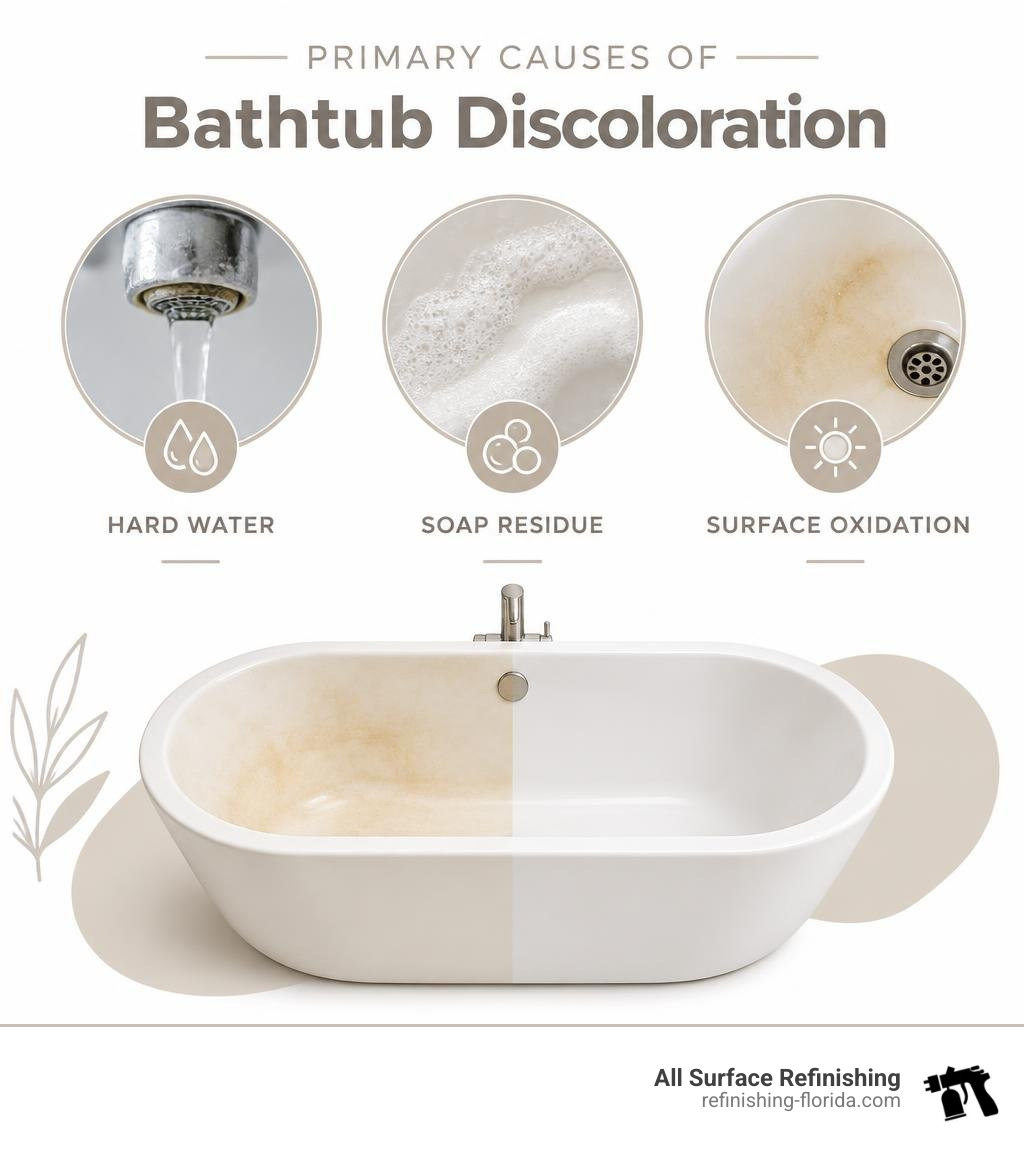
In bathroom environments across regions like Miami, Fort Lauderdale, and West Palm Beach, municipal and well water supplies carry varied mineral concentrations. About 85% of U.S. households use hard water to some extent, making mineral staining an everyday reality for homeowners. Beyond water hardness, regular exposure to bath oils, tinted bath bombs, body washes, and ultraviolet sunlight entering through bathroom windows can accelerate surface yellowing.
The table below breaks down common bathtub stain colors, their chemical culprits, and the typical way they appear on bathroom surfaces:
| Stain Color | Primary Chemical / Environmental Cause | Typical Location & Appearance |
|---|---|---|
| Yellow / Tan | Hard water minerals (calcium/iron), body oils, soap film, UV oxidation | Waterlines, standing puddles, whole-tub dulling |
| Red / Dark Brown | Iron dissolved in water (levels $ge$ 0.3 mg/L), corroding plumbing | Below faucets, surrounding the drain, pitted areas |
| Blue / Green | Copper pipe corrosion, low pH acidic water | Streaks below dripping spouts |
| Pink | Serratia marcescens airborne bacteria | Grout lines, caulking, damp corners |
| Black / Dark Grey | Mold and mildew spores thriving in high humidity | Caulking seams, textured floor treads |
Mineral Scale and Hard Water Buildup
When tap water evaporates from your tub floor or sits along the waterline, it leaves behind dissolved solids. Calcium hardness in tap water can exceed 120 mg/L in many regions, leaving behind a persistent calcium carbonate crust. When iron content as low as 0.3 mg/L is present in the supply, that mineral scale takes on a distinct pale yellow or dingy tan appearance.
Over weeks and months, these microscopic mineral crystals interlock with fatty acids from bar soaps, forming a stubborn, crusty layer. Learning how to remove yellow stains from a white bathtub starts with understanding that this mineral crust requires chemical dissolution rather than brute scrubbing.
Oxidation and Deep Surface Aging
Not every yellow spot is an external deposit resting on the tub. Surface discoloration consistently ranks among the top three cosmetic issues in tubs older than 3 to 5 years, particularly in homes with moderate-to-hard water conditions.
Over time, gelcoats on fiberglass and protective top layers on acrylic undergo chemical breakdown from hot water, UV light, and harsh cleaning agents. This process—known as oxidation—causes deep sub-surface yellowing inside the material matrix itself. When porcelain tubs suffer wear, the microscopic glass glaze wears thin, exposing the underlying, porous enamel to permanent staining.
Proven Methods for Yellow Bathtub Stain Removal
Successful cleaning relies on pairing the right active ingredients with sufficient contact time, allowing the chemistry to do the heavy lifting.
Step-by-Step DIY Yellow Bathtub Stain Removal with Household Staples
Household staples provide safe, non-abrasive options for removing yellow buildup without etching your tub’s protective finish.
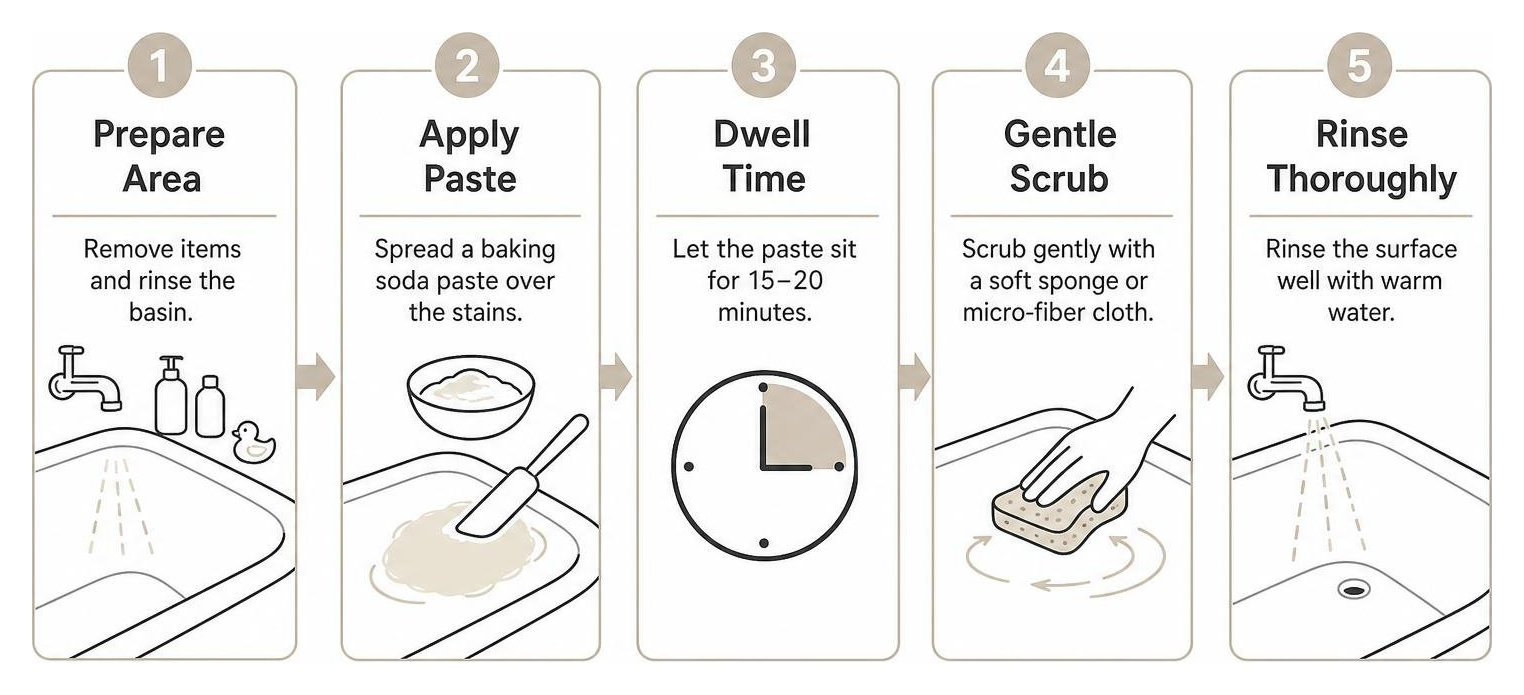
- Pre-Rinse the Basin: Remove shampoo bottles, bath toys, and mats. Rinse the basin with warm water to clear loose dirt and hair.
- Apply a Surfactant Pre-Wash: Wash the tub using warm water and a neutral liquid dish soap. Surfactant-based cleaners remove up to 60–70% of early-stage soap film without damaging acrylic or enamel surfaces.
- Target Soap Scum with Baking Soda: For oily, yellowish grime, mix baking soda with a splash of water (or hydrogen peroxide for organic lifting power) to create a thick paste with the consistency of frosting. Spread the paste generously over the stains. Research shows a baking soda paste removed up to 80% of surface-level discoloration on acrylic panels after 30 minutes of dwell time.
- Dissolve Hard Water Scale with Vinegar: For crusty mineral rings along the waterline, soak paper towels or micro-fiber cloths in a 1:1 mixture of warm water and distilled white vinegar. Lay the soaked towels directly over the mineral scale and let them sit for 15 to 20 minutes to break down the calcium bonds.
- Gently Agitate: Use a damp, non-scratch micro-fiber cloth or a soft nylon cleaning sponge to buff the area using circular motions. Never use green abrasive scouring pads or steel wool.
- Rinse and Dry: Thoroughly flush the basin with warm water to remove all dissolved minerals and cleaner residues, then wipe the tub completely dry with a soft towel.
Safe Commercial Products for Yellow Bathtub Stain Removal
If natural household mixtures leave residue behind, select commercial cleaners formulated with chelating agents and mild organic acids (such as citric or oxalic acid). Cleaners containing chelating agents bind to calcium and iron ions, pulling them away from the tub finish.
Always choose neutral-pH or mild specialty bathroom formulas labeled as safe for your specific fixture. Spray the cleaner evenly, allow the recommended dwell time (usually 5 to 10 minutes) so the active ingredients can break down deposits, wipe with a soft cellulose sponge, and rinse away all chemical residue.
Protecting Specific Tub Materials: Acrylic, Fiberglass, and Porcelain
Different tub materials react differently to cleaning agents. Using the wrong chemical or tool can turn a light yellow stain into permanent surface damage.
Cleaning Acrylic and Fiberglass Fixtures
Acrylic and fiberglass bathtubs feature a softer, non-porous outer layer (often a polyester gelcoat or thermoformed acrylic sheet). These surfaces are sensitive to scratches and strong solvents. Abrasive powders, scouring pads, and harsh industrial acids create micro-scratches that dull the glossy finish and trap dirt.
When cleaning acrylic or fiberglass:
- Stick strictly to soft micro-fiber cloths, soft sponges, and mild liquid detergents.
- Use baking soda mixed with liquid dish soap for gentle scrubbing.
- Avoid acetone, paint thinners, and undiluted industrial acids.
- Work in smooth, circular motions to protect the glossy clear finish.
If years of harsh cleaning have stripped the protective gloss, you may need a guide on restoring worn bathtub surfaces to bring back that original shine.
Treating Porcelain and Cast Iron Bathtubs
Porcelain-enameled cast iron and pressed steel tubs have a hard, glass-like finish fired at high temperatures. While porcelain resists scratches better than acrylic, it remains vulnerable to strong, continuous acid exposure and chipping.
- Moderate acids like diluted white vinegar or commercial oxalic-acid cleansers are safe for short contact times on intact porcelain.
- Avoid hard wire brushes or coarse abrasive tools that can scratch the glass glaze.
- Address chips promptly. If moisture reaches the underlying cast iron, rust can form under the enamel; see our advice on repairing bathtub rust and mineral pitting to prevent structural damage.
Long-Term Stain Prevention and Professional Resurfacing
Keeping your tub bright is easier when you prevent mineral and soap film from setting up in the first place.

Stopping Recurrent Yellow Stains and Mineral Deposits
Consistent, low-effort habits stop yellow stains before they bond to the tub surface:
- Quick Rinse After Bathing: Rinsing the tub after each use reduces mineral concentration by up to 40–50%. A quick spray with warm water flushes away residual body oils and soap before they settle.
- Wipe Down the Waterline: Keep a small squeegee or dedicated micro-fiber towel in the bathroom to wipe moisture from the tub floor and corners after use.
- Maintain Ventilation: Run your bathroom exhaust fan during showers and leave it on for 20 minutes afterward. The EPA recommends maintaining indoor humidity between 30% and 50% to reduce moisture-related residue buildup and microbial growth in enclosed bathrooms.
- Address Water Hardness: In communities with heavy lime and calcium, installing a whole-home water softener eliminates the minerals responsible for hard water scale.
When Surface Oxidation Requires Bathtub Refinishing
There comes a point where cleaning no longer works. If you have applied safe cleansers, let them dwell, and gently scrubbed without seeing improvement, the yellow hue is likely sub-surface oxidation, worn gelcoat, or permanently etched enamel.
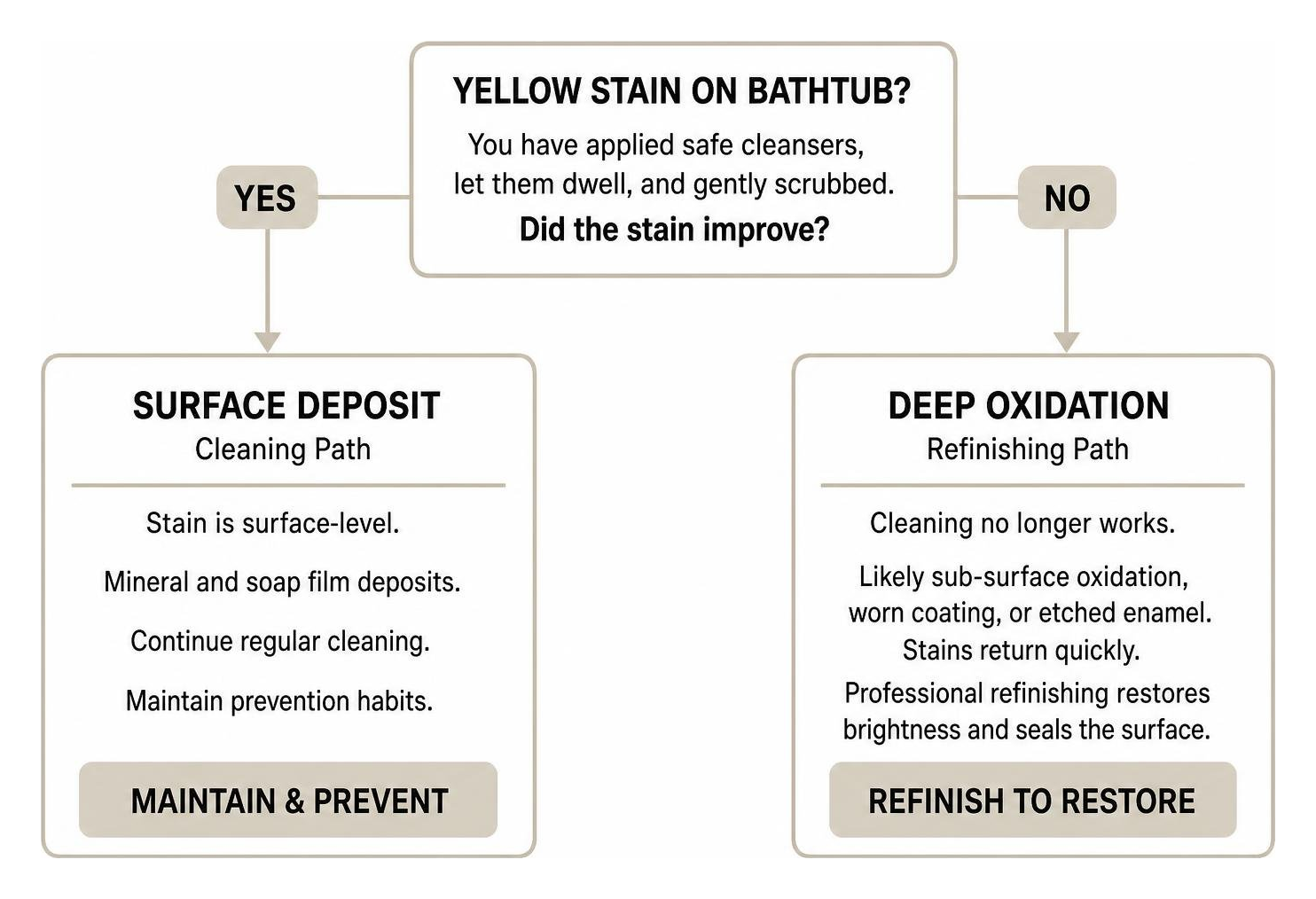
When the original factory coating is worn away, the exposed porous layers trap minerals instantly, causing stains to return within days. Professional resurfacing restores 90–95% of the original surface brightness when oxidation has not penetrated deeply into the structural layers. Rather than paying thousands to tear out fixtures, professional refinishing applies an industrial-grade, non-porous coating that seals the fixture, restores a glossy look, and makes everyday cleaning simple.
Frequently Asked Questions About Bathtub Stain Removal
Is bleach safe to use on yellow bathtub stains?
Bleach is an effective disinfectant for sanitizing and killing surface mold, but it is not an effective cleaner for yellow mineral scale or rust stains. In fact, sodium hypochlorite (the active chemical in chlorine bleach) can oxidize dissolved iron in tap water, turning pale mineral deposits into darker yellow or reddish-brown marks. On acrylic and fiberglass, repeated bleach use can accelerate yellowing and degrade synthetic resins over time.
How often should I clean my bathtub to prevent yellowing?
Give your tub a light weekly wash with a neutral liquid soap or a mild baking soda wash to keep soap scum and body oils from hardening. Pair this with a quick 10-second water rinse and wipe-down after every bath or shower. Reserve deep mineral treatments with diluted vinegar for monthly touch-ups as needed.
Why do yellow stains keep coming back after cleaning?
Stains return quickly when the tub’s top glaze or gelcoat has worn away. Microscopic scratches created by age, scouring pads, or abrasive powders create tiny pockets that hold water, bath soap, and minerals. In hard-water areas, every bath leaves new calcium deposits behind, making yellow rings reappear within days unless the surface is resealed.
Conclusion
Yellow bathtub stains from hard water, soap residue, and everyday use do not have to ruin your bathroom’s look. By starting with gentle dish soaps, utilizing baking soda pastes, and applying diluted vinegar to mineral scale, you can remove unsightly marks while protecting your tub’s finish.
When years of wear, micro-scratches, or deep oxidation have permanently yellowed your tub, scrubbing harder only accelerates surface breakdown. All Surface Refinishing delivers dependable, high-quality transformations for tubs, jacuzzis, tile surrounds, vanities, and cabinets across South and Southwest Florida—serving homeowners from Boca Raton, Coral Gables, and Fort Lauderdale to West Palm Beach, Boynton Beach, and Delray Beach.
Ready to restore your bathroom fixtures to a spotless, glossy shine? Contact our team today for expert bathtub refinishing services and enjoy a tub that looks brand new in just a single day.
