
Understanding the Core Process of Bathtub Reglazing
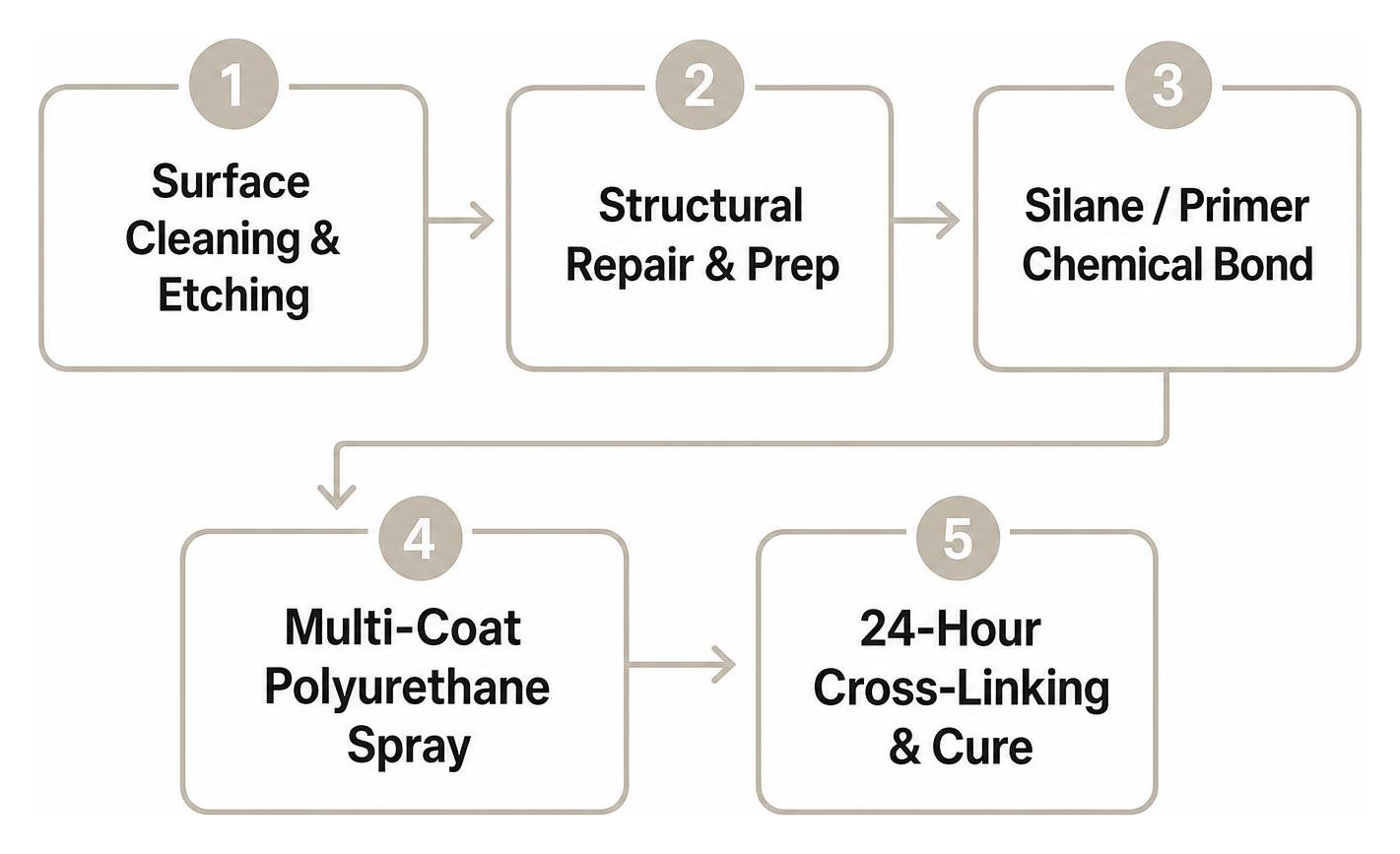
Bathtub reglazing (also referred to as refinishing or resurfacing) is a multi-step chemical restoration process that completely renews the visible surface of your fixture in place. Rather than tearing out the unit, we clean, mechanically or chemically etch the existing substrate, apply high-grade molecular bonding agents, and spray several layers of specialized acrylic polyurethane topcoats. As detailed in our guide to bathtub reglazing, the result is a non-porous, factory-smooth coating that looks and performs like brand-new porcelain. For a broader technical overview of the chemistry involved, see surface finishing.
| Step | Action | Tools & Materials | Duration |
|---|---|---|---|
| 1. Preparation | Stripping, deep cleaning, and etching | Industrial cleaners, mechanical sanders, etching agents | 1 – 2 Hours |
| 2. Repair & Masking | Filling chips, sealing cracks, taping perimeter | Waterproof polyester putty, plastic sheeting, masking tape | 45 – 60 Minutes |
| 3. Priming & Bonding | Applying molecular adhesion promoter | Silane bonding agent, epoxy primer, HVLP sprayer | 30 – 45 Minutes |
| 4. Topcoat Application | Spraying multi-coat finish | Aliphatic acrylic polyurethane, HVLP turbine | 1 – 1.5 Hours |
| 5. Curing & Polish | Chemical cross-linking and surface finishing | Infrared curing lamps, high-speed buffing pads | 24 Hours |
Benefits of Reglazing Bathtubs for Homeowners
For homeowners with an otherwise sound tub, reglazing improves the appearance of the existing fixture without extensive demolition, disposal, plumbing disruption, or prolonged construction inside the bathroom.
In contrast, professional bathtub refinishing takes only a few hours to complete and is ready for use within 24 hours. Because we work directly with the existing fixture, you avoid demolition waste heading to local landfills. Reviewing the pros and cons of reglazing bathtubs makes it clear: for speed, budget management, and structural preservation, restoration is the superior option.
Lifespan and Durability Expectations for Reglazing Bathtubs
A professionally reglazed tub delivers a factory-grade finish that lasts between 10 and 15 years with proper care. Achieving that longevity requires avoiding abrasive bleach powders, scouring pads, and suction-cup bath mats, which can trap water and weaken the bond. Simple, routine maintenance using non-abrasive, pH-neutral spray cleaners and soft microfiber towels keeps the gloss intact for well over a decade.
5 Proven Methods to Reglaze a Bathtub for Long-Lasting Results
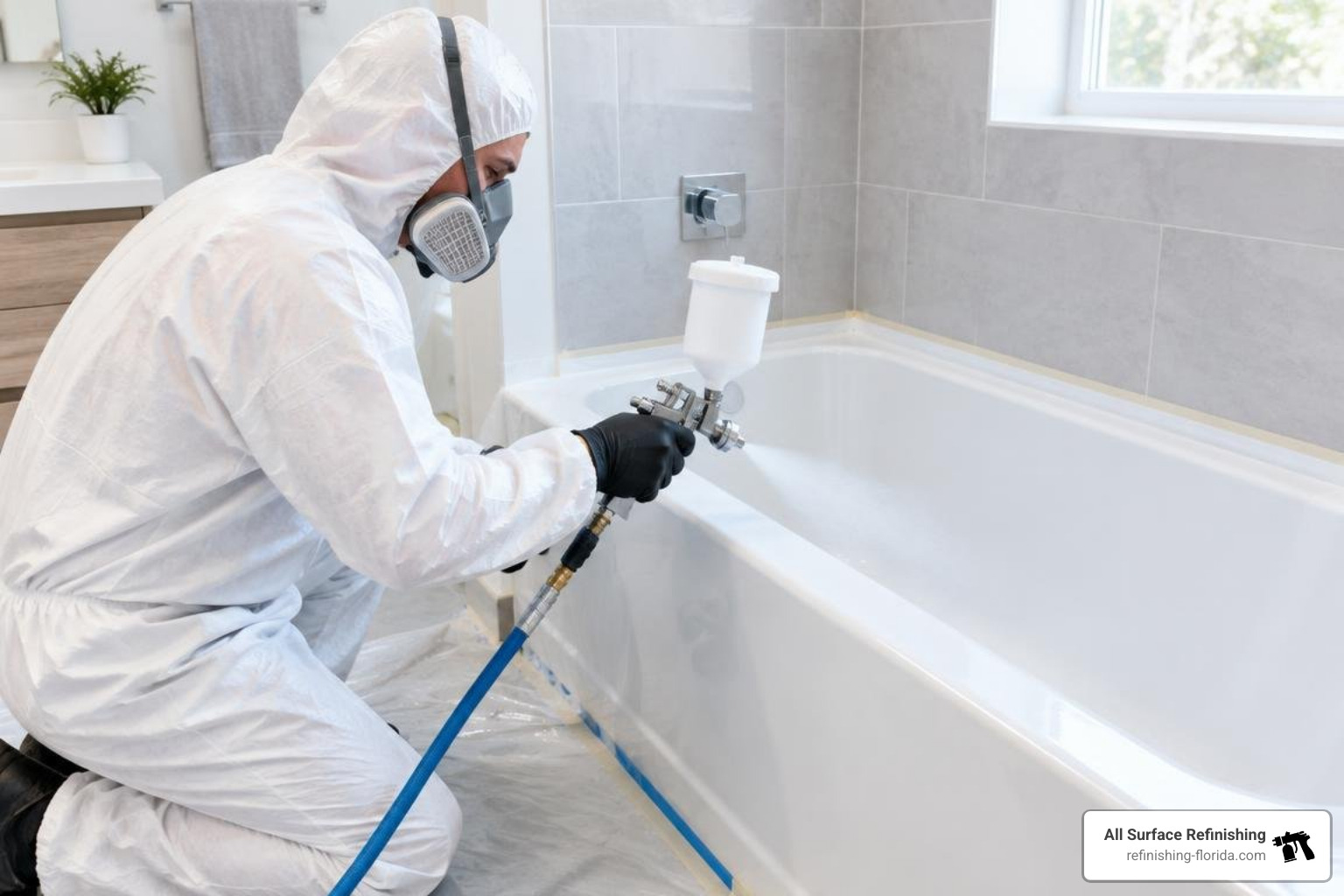
Different bathtub materials and bathroom configurations require tailored restoration techniques. Here are the five proven methods we use to deliver flawless, long-lasting results.
Method 1: Professional HVLP Multi-Coat Aliphatic Acrylic Polyurethane Spraying
The industry gold standard relies on high-volume, low-pressure (HVLP) turbine spray systems to lay down aliphatic acrylic polyurethane. This system atomizes the liquid coating into a fine, controlled mist, minimizing overspray and preventing brush strokes.
Before spraying, a molecular bonding primer is applied to establish a permanent chemical bridge with the original substrate. When exploring professional tub reglazing in Hialeah and Broward, this multi-coat spray method is the benchmark for securing a hard, high-gloss finish that resists UV discoloration and yellowing.
Method 2: High-Adhesion Cast Iron Acid-Etch and Silane Polymer Glaze
Vintage cast-iron bathtubs possess heavy, heat-retaining porcelain enamel that requires specialized surface preparation. We apply a controlled etching solution to gently open the microscopic pores of the glass-like enamel.
Once rinsed and neutralized, we wipe on an advanced silane polymer bonding agent. Silane creates a covalent bond between the inorganic cast-iron porcelain and the organic topcoat. Homeowners interested in cast iron tub reglazing depend on this chemical fusion process to ensure the newly applied surface will never delaminate or chip under heavy thermal cycles.
Method 3: Reinforced Fiberglass and Acrylic Resin In-Place Reglazing
Fiberglass and modern acrylic tubs flex when filled with water and bearing body weight. Applying a rigid, unyielding coating to a flexible basin leads to stress cracks. For these fixtures, we first repair underlying floor weaknesses and fill micro-cracks with reinforced structural resin.
Next, we spray an elasticized acrylic topcoat formulated specifically to expand and contract alongside the tub walls. This specialized resin elasticity stops flex-induced spider cracks from returning.
Method 4: Bathtub Reglazing With Careful Protection of Adjacent Surfaces
Many tub restoration projects require treating the fixture while safeguarding nearby wall surfaces for a clean, cohesive result. We meticulously mask the grout perimeter with industrial-grade moisture barrier tape and heavy poly sheeting.
During bathtub reglazing, the surrounding wall surfaces are carefully masked to protect them from overspray and keep the work focused on the tub. Property owners turning to cost-effective bathtub reglazing in Hollywood FL can expect a refreshed bathtub without unnecessary disruption to the surrounding bathroom surfaces.
Method 5: Professional Reglazing for Porcelain-Enameled Steel Tubs
Pressed-steel bathtubs are lighter than cast iron and prone to localized rust spots around drains and overflows when the original porcelain chips away. This method focuses on aggressive rust elimination, metal stabilization, and zinc-rich epoxy priming.
After removing rust scale and stabilizing the bare steel, we apply an adhesion-focused primer followed by high-solid enamel topcoats. The result seals vulnerable metal against moisture and standing water, halting corrosion for years to come.
Crucial Safety Precautions and Fume Ventilation Protocols
Safety is non-negotiable during the reglazing process. Professional coatings and etching agents contain volatile organic compounds (VOCs) and solvents that require strict handling:
- Exhaust Ventilation Systems: High-powered negative-air exhaust fans and flexible ducting are routed out the nearest window to continuously extract fumes and overspray.
- Respiratory Protection: Technicians wear NIOSH-approved, full-face respirators equipped with organic vapor and particulate cartridges.
- Bathroom Isolation: The room is sealed off using commercial poly sheeting and zipper doors to prevent fumes and overspray from migrating into bedrooms and hallways.
- Fire & Environmental Safety: All pilot lights, heating elements, and open flames within the immediate area are extinguished before solvent-based primers and topcoats are applied.
How to Prevent Common Reglazing Failures: Peeling, Chipping, and Bubbling
Substandard refinishing attempts frequently fail within 1 to 2 years, often ending in extensive surface peeling, bubbling, and chipping. The root cause is almost always inadequate surface preparation, trapped moisture, or improper chemical adhesion.
When reviewing the bathtub reglazing debate regarding long-term coating durability, factory-grade adhesion cannot be duplicated without rigorous multi-step prep. Professional refinishers eliminate moisture entrapment with specialized hot-air drying systems, execute thorough chemical etching, apply commercial-grade silane bonding agents, and carefully regulate curing to guarantee a resilient, permanent bond.
How to Choose a Reputable Bathtub Reglazing Contractor
Hiring the right technician ensures your project goes smoothly and your investment is fully protected. When evaluating local refinishing specialists:
- Verify Licensing and Insurance: Ensure the company carries comprehensive general liability and workers’ compensation coverage.
- Review Real Pricing Standards: Review realistic tub reglazing cost estimates beforehand; professional work generally ranges from $400 to $900 depending on tub condition and material.
- Inspect the Warranty Terms: Look for a written, multi-year warranty (ideally 3 to 5 years minimum) that covers peeling, blistering, and adhesion failure.
- Demand Eco-Friendly & OSHA-Compliant Standards: Confirm the crew follows strict ventilation standards and uses low-VOC, EPA-compliant bonding systems.
- Check Local Track Record: Use location-tailored resources like our Fort Lauderdale bathtub reglazing guide to confirm the provider has extensive experience serving your specific community.
Frequently Asked Questions About Bathtub Reglazing
How long does a reglazed bathtub typically last?
A professionally refinished bathtub typically lasts 10 to 15 years. Longevity depends on baseline surface preparation, the quality of the aliphatic acrylic polyurethane used, and routine care with non-abrasive bathroom cleaners.
What affects the durability of professional bathtub reglazing?
The primary factors are mechanical or chemical surface etching, the application of molecular silane primers, the thickness of the cured topcoat, and homeowner maintenance habits (such as avoiding bleach and rough scouring pads).
How much does professional bathtub reglazing cost?
Professional reglazing typically costs between $400 and $900, depending on the tub’s condition, material, and required preparation. For a detailed breakdown of local market options, review our guide to top tub reglazing services.
Conclusion
Revitalizing your bathroom does not require weeks of demolition, high plumbing costs, or the mess of a complete tear-out. With modern refinishing techniques, your worn, stained, or dated tub can regain its brilliant, high-gloss finish in just one day.
With over 30 years of hands-on experience and more than 14,000 completed transformations, All Surface Refinishing delivers durable, factory-grade solutions across South Florida—including Miami, Fort Lauderdale, West Palm Beach, Boca Raton, Hollywood, FL, Coral Gables, and surrounding communities.
Ready to transform your bathroom without the headache of remodeling? Contact us today to schedule your expert bathtub reglazing services and enjoy a like-new tub in 24 hours.
