
The Hidden Dangers of a Dripping Shower
A shower floor leak can quickly become a property nightmare. Here’s what you need to know:
Quick Fix Guide for Shower Floor Leaks:
- Minor leaks – Re-grout and re-caulk ($30-$500)
- Moderate damage – Apply waterproofing membrane ($135-$500)
- Severe leaks – Professional refinishing ($900-$2,300)
- Critical damage – Full replacement ($530-$4,600)
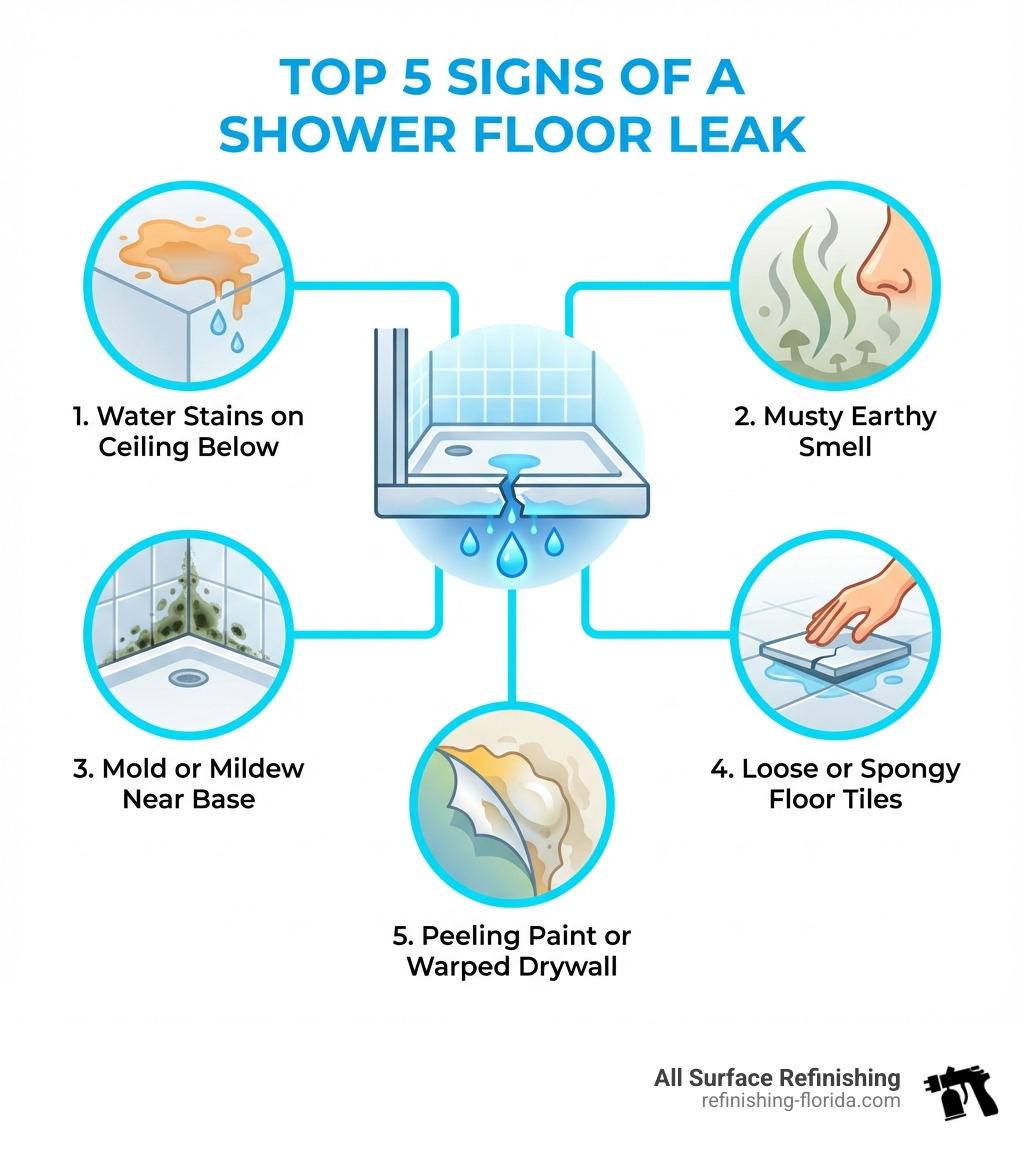
Warning signs: Water stains on ceilings below, musty smells, loose tiles, mold growth, or unexplained water bill increases.
That small puddle is a warning. Water seeping through your shower floor travels into the subfloor, weakens structural supports, damages drywall, and creates the perfect environment for mold. A minor grout crack can escalate into ceiling collapse, extensive mold remediation, and even foundation damage.
A leak of just 1/8 inch can waste up to 300 gallons of water per day. In one extreme case, faulty shower waterproofing led to repair costs exceeding $240,000.
Most homeowners don’t notice a leak until visible damage appears elsewhere, often months or years after it started. The constant moisture creates health hazards from mold and can attract pests.
The good news is that catching and addressing shower floor leaks early saves thousands. Fixing the problem promptly protects your property value and your family’s health.
I’m Frank Hernandez, President of All Surface Refinishing. Since 1996, my team and I have helped South Florida property owners solve shower floor leak problems with cost-effective refinishing. We create durable, waterproof surfaces that stop leaks without the mess and expense of a full replacement.
Simple guide to Shower floor leak terms:
Spotting the Signs: Is Your Shower Floor Leaking?
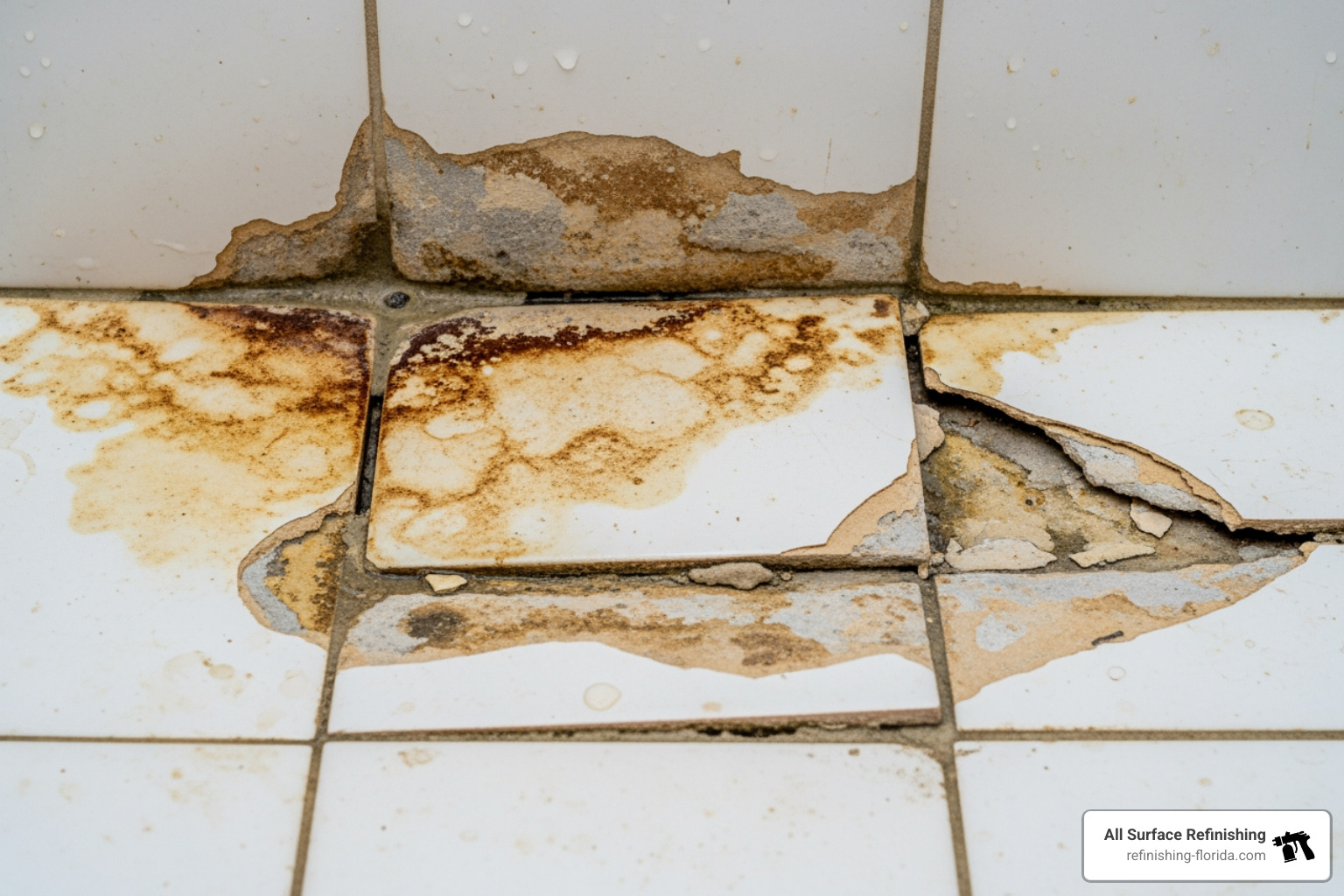
Before fixing a shower floor leak, you must confirm it’s happening. Recognizing the signs early can save you from costly repairs. Look for these common indicators:
- Water Stains on Ceilings or Adjacent Walls: Discoloration, bubbling paint, or dripping water on the ceiling below or walls next to the shower is a strong sign of a leak.
- Musty or Earthy Odors: A persistent damp, musky smell near the shower often points to hidden moisture and potential mold growth from a leak.
- Mold and Mildew Growth: Excessive mold along baseboards, in corners, or on walls outside the shower suggests a prolonged moisture problem.
- Loose or Spongy Floor Tiles: If shower floor tiles feel loose or soft, water has likely seeped underneath, damaging the subfloor and adhesive.
- Peeling Paint or Warped Drywall: Look for curling or bubbling paint on walls near the shower. Warped, swollen, or discolored drywall is also a clear red flag.
- Damaged Baseboards: Baseboards outside the shower can absorb water, leading to stains, discoloration, or warping.
- Unexplained High Water Bills: A sudden spike in your water bill can indicate a hidden leak. A small leak can waste hundreds of gallons of water daily.
If you notice these signs, it’s time to investigate. Prompt action is crucial to protect your home. If your tiles are worn, our team also offers More info about tile refinishing services.
Common Culprits Behind a Shower Floor Leak
Understanding why your shower is leaking is key to a lasting solution. Here are the most common causes:
- Cracked or Missing Grout: Grout is porous and not waterproof. If cracked or missing, water can seep through to the structure below.
- Failed Caulking or Sealant: Caulk creates a watertight seal where surfaces meet. Over time, it can peel or crack, creating gaps for water to escape.
- Cracked Shower Pan: The shower pan (tiled, fiberglass, or pre-formed) can crack from age or stress, creating a direct path for water to leak.
- Improperly Installed Shower Pan: If the pan lacks the correct slope toward the drain or the waterproofing membrane was installed incorrectly, water can pool and seep into the subfloor.
- Clogged Drain: A clogged drain can cause water to back up and sit on the shower floor, exacerbating weaknesses in grout or caulk and leading to a leak.
- Leaking Plumbing Connections: The leak may come from pipes or fittings behind the walls or under the floor, mimicking a shower floor leak.
- Building Movement: Natural settling and movement of your home can stress tile and grout, leading to hairline cracks that compromise the waterproof seal.
Identifying the specific cause is essential for choosing the right repair strategy.
How to Diagnose a Shower Floor Leak
Pinpointing the source of a shower floor leak requires a systematic approach to isolate the problem. The goal is to determine if the leak is from the plumbing or the shower pan itself.
Here’s a typical diagnostic process:
Rule Out Plumbing Issues First
It’s important to check for plumbing leaks before assuming the pan has failed.- Visual Inspection: Check the showerhead, faucet handles, and exposed pipes for drips.
- Spray Test: Direct water only at the shower walls for several minutes. If a leak appears outside the shower, the issue may be with the wall tiles, grout, or plumbing.
- Professional Pressure Test: A plumber can perform a pressure test on the water lines to check for hidden pipe leaks.
Simple Water Test (Flood Test) for the Shower Pan
If the plumbing is sound, test the shower pan to confirm a shower floor leak.- Preparation: Ensure the shower floor is clean and dry.
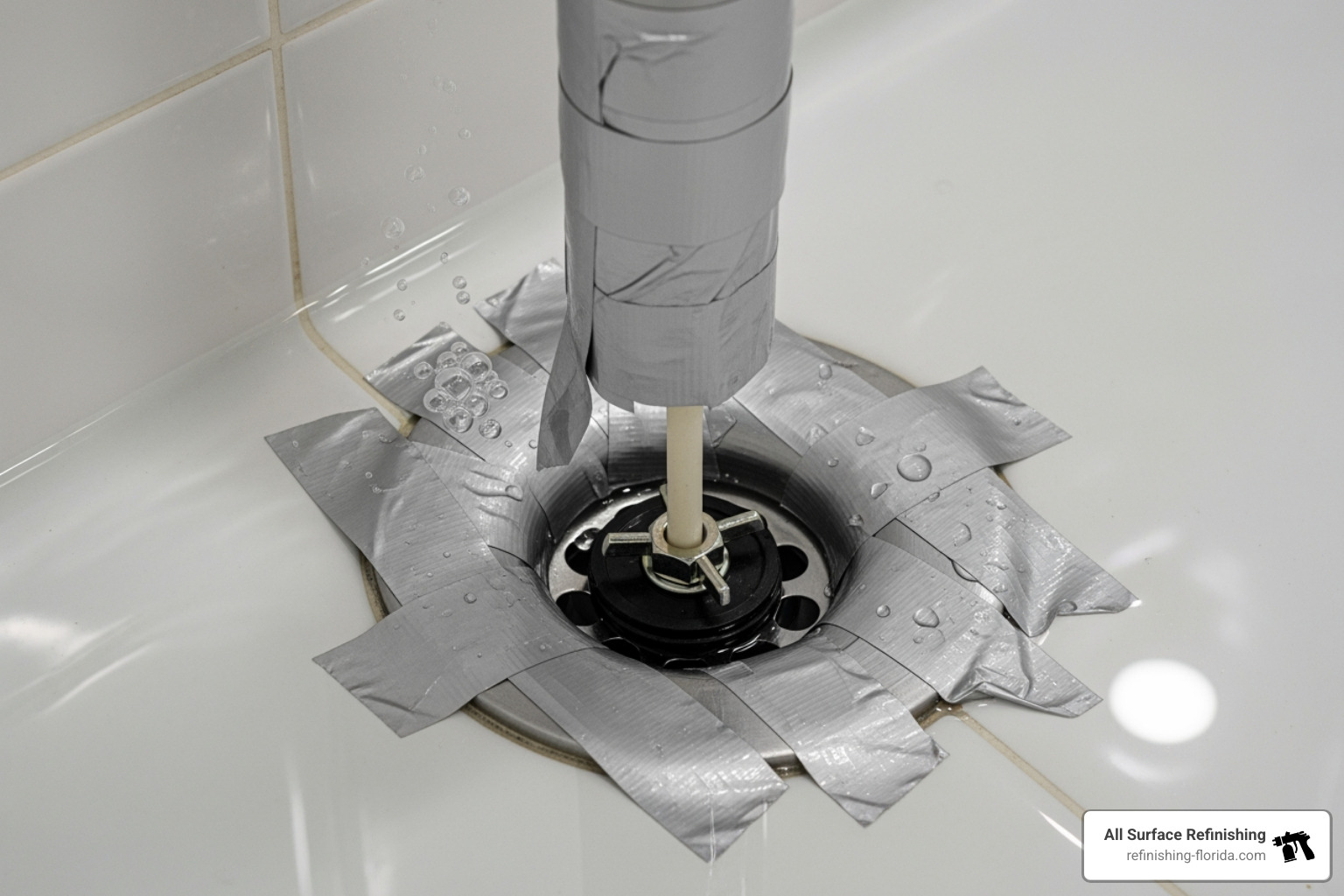
- Seal the Drain: Completely seal the shower drain with a rubber stopper or duct tape.
- Fill the Pan: Use a bucket to fill the pan with 1-2 inches of water, keeping the level below the curb.
- Mark and Wait: Mark the water level and wait at least 8 hours (24 is better) for a leak to appear.
- Observe: If the water level drops, it indicates a leak in the pan or its waterproofing. Check for water around the shower base or on the ceiling below.
Visual Inspection of Grout and Caulk:
Examine all grout lines for cracks or missing sections. Check caulk seams for deterioration, peeling, or gaps, as these are common failure points.Checking for Pan Movement or Deflection:
A properly installed pan should be solid. Any movement, instability, or a spongy feeling when stepped on is a critical sign that the pan’s support has failed, allowing water to reach the subfloor.
For complex leaks, our team offers specialized Professional shower and tile services to accurately identify the source of your shower floor leak and recommend the best course of action.
Your Repair Options: From DIY Touch-Ups to Professional Solutions
Once a shower floor leak is identified, the next step is choosing a repair. Options range from quick DIY touch-ups to professional solutions, depending on the leak’s severity, damage extent, and your budget. It’s crucial to distinguish between temporary fixes and permanent solutions that address the underlying cause.
Repairing a shower floor leak can cost anywhere from $30 for minor DIY work to over $4,600 for a full replacement.
Here’s a quick comparison of typical approaches:
| Feature | DIY Touch-Ups | Professional Refinishing | Full Shower Pan Replacement |
|---|---|---|---|
| Cost Range | $30 – $500 | $900 – $2,300 (often significantly less than replacement) | $530 – $4,600 |
| Effectiveness | Temporary, cosmetic | Permanent, stops leaks, renews surface | Permanent, brand new installation |
| Timeframe | Hours to 1-2 days | 2-3 days (cure time included) | Several days to over a week (plus cure time) |
| Disruption | Minimal | Minimal to moderate (no demolition) | High (demolition, dust, noise) |
| Addresses Underlying Leak | No (only surface symptoms) | Yes (seals and reinforces the pan) | Yes (rebuilds the entire pan structure) |
| Aesthetic Outcome | Minor improvement | Like-new appearance, custom colors/finishes | Brand new look |
DIY Touch-Ups
For minor issues like hairline grout cracks or small caulk gaps, a DIY fix can be a temporary measure.
- Grout Repair: Remove old, damaged grout, clean the area, and apply new shower grout.
- Applying Epoxy or Masonry Sealer: For small holes or fine cracks in a non-tiled pan, a specialized sealer can temporarily fill the void.
- Re-caulking Seams: Remove old caulk from seams, clean the area, and apply a fresh bead of high-quality silicone caulk.
Limitations of DIY Fixes: These methods are band-aids that address symptoms, not the root cause of a shower floor leak. If the underlying waterproofing has failed, the leak will return, likely causing more damage.
When to Call a Professional
A professional is necessary to prevent catastrophic damage in the following situations:
- Extensive Water Damage: Significant water stains, warped drywall, or mold indicate an ongoing leak that has damaged your home’s structure.
- Cracked Shower Pan: A cracked pan, especially a tiled one, means the waterproofing system is compromised and likely needs a professional rebuild.
- Suspected Subfloor Damage: A spongy or moving shower pan indicates water damage to the subfloor, which requires professional repair to restore structural integrity.
- When DIY Fixes Fail: If temporary fixes don’t stop the leak, the problem is beyond a simple surface repair.
- Shower Pan Refinishing as a No-Demolition Solution: To avoid the cost and mess of a full replacement, professional refinishing is an excellent option. Our team repairs the damage and applies a new, durable, waterproof coating over your existing pan. This process stops the shower floor leak, provides a like-new finish, and can save up to 75% compared to replacement. Your shower is typically ready in 2-3 days. For more insights, check out our Shower stall reglazing complete guide.
The Aftermath: Consequences and Insurance Coverage
Ignoring a shower floor leak can lead to devastating consequences for your home’s structure, your family’s health, and your finances.
- Structural Damage: Water seeps into wood and sheetrock, weakening materials and leading to sagging floors, compromised wall studs, and even ceiling collapse.
- Wood Rot and Subfloor Replacement: Prolonged moisture causes wood framing and subflooring to rot, weakening the structure and often requiring costly replacement.
- Mold Remediation: A leak creates the perfect environment for mold, which can spread behind walls and under floors, triggering health issues and requiring expensive professional remediation.
- Damaged Personal Property: Leaks can travel to other rooms, ruining furniture, carpets, and personal belongings.
- Pest Infestations: Damp environments attract pests like termites and cockroaches, leading to further damage.
After repairs, consider Anti-slip treatments for your shower floor to add a layer of safety.
Will Homeowners Insurance Cover the Damage?
Whether insurance covers a shower floor leak often depends on the cause.
- Sudden vs. Gradual Damage: Policies typically cover “sudden and accidental” damage (like a burst pipe), but often deny claims for “gradual” damage from a slow leak, viewing it as a maintenance issue.
- Policy Exclusions: Many policies exclude damage from continuous seepage. They might cover resulting damage (like a ruined ceiling) but not the cost to repair the shower pan itself.
- Importance of Maintenance: Insurers may deny claims if they believe the damage resulted from neglect. Keeping maintenance records and addressing leaks promptly is crucial.
- Filing a Claim: If you believe your damage is covered, document it thoroughly with photos and contact your insurer immediately.
- Understanding Your Rights Under Florida Law: In Florida, insurers must handle claims fairly and promptly. If your claim is unjustly denied, you may have legal recourse.
Our advice is to act quickly on any shower floor leak to prevent extensive damage and avoid potential claim denials.
Frequently Asked Questions about Shower Leaks
Here are answers to common questions about a shower floor leak.
What’s the difference between a shower pan and a shower base?
Though often used interchangeably, they are different:
- Shower Pan: This is the hidden, waterproof layer directly under your shower floor tiles. It’s a sloped structure with a membrane that funnels water to the drain, protecting your subfloor. Its main job is waterproofing.
- Shower Base: This is the finished floor surface you stand on. It can be a pre-formed, one-piece unit (fiberglass, acrylic) or the tiled floor system that sits on top of the shower pan.
How long does it take to repair a leaking shower floor?
The repair time for a shower floor leak depends on the method and extent of damage.
- Minor Repairs (1-2 days): Simple fixes like re-grouting or re-caulking can be done in a day, plus curing time.
- Refinishing (2-3 days): Professional refinishing, including minor repairs and applying a new waterproof finish, typically takes 2-3 days, including cure time. You can learn More about our resurfacing process here.
- Full Replacement (1 week+): A full demolition and replacement of the shower pan is the most time-consuming option, often taking a week or more.
Can you refinish a cracked shower pan?
Yes, in many cases, a cracked shower pan can be refinished. This is a specialty of ours and a great alternative to a full replacement.
Our process involves:
- Preparation: We thoroughly clean and prepare the surface.
- Crack Repair: We repair cracks and other damage to reinforce the pan’s structure.
- Sealant Application: We apply a proprietary sealant to create a new, durable, waterproof barrier, stopping the shower floor leak.
- Refinishing: We apply a new finish in your chosen color or texture.
This method creates a new, waterproof surface that is ready for use in a few days. It’s a cost-effective solution that can save up to 75% compared to replacement. If you’re curious about other repairs, you can also Learn about tub repair.
Stop the Leak for Good with Professional Refinishing
A shower floor leak threatens your home’s integrity and your peace of mind. Ignoring it can lead to structural damage, mold, and costly disruptions. The key is to act quickly, diagnose accurately, and choose a lasting solution over a temporary DIY fix.
For a permanent, cost-effective solution that protects your investment, professional intervention is the best path. Our team at All Surface Refinishing understands the challenges shower floor leaks pose to properties across South and Southwest Florida. For over three decades, we’ve served communities including Aventura, Bal Harbor, Boca Raton, Boynton Beach, Broward County, Carol City, Coconut Creek, Coconut Grove, Cooper City, Coral Gables, Coral Springs, Cutler Ridge, Dade County, Dania Beach, Davie, Deerfield Beach, Delray Beach, Fisher Island, Fort Lauderdale, Fort Pierce, Gold Coast, Golden Beach, Greenacres, Hallandale Beach, Hialeah, Hillsboro Beach, Hobe Sound, Hollywood, FL, Homestead, Indian River County, Indiantown, Islamorada, Ives Estates, Jensen Beach, Jupiter, Kendall, Key Biscayne, Key Largo, Key West, Lake Worth, Lauderdale By The Sea, Lauderdale Lakes, Lauderhill, Lazy Lake, Lighthouse Point, Loxahatchee, Marathon, Margate, Martin County, Miami, Miami Beach, Miami Lakes, Miami Shores, Miami Springs, Miami-Dade County, Miramar, North Bay Village, North Lauderdale, North Miami, North Miami Beach, North Palm Beach, Oakland Park, Palm Beach, Palm Beach County, Palm Beach Gardens, Palm City, Parkland, Pembroke Pines, Perrine, Port Saint Lucie, Port Salerno, Saint Lucie County, Sebastian, Stuart, Sweetwater, Tamarac, Vero Beach, Wellington, FL, West Miami, West Palm Beach, Weston, and Wilton Manors.
We specialize in refinishing solutions that stop shower floor leaks and revitalize your shower’s appearance. Our process creates a durable, waterproof seal without the mess and high cost of demolition, saving you up to 75% compared to a remodel. Your shower will be ready in days.
Don’t let a leak become a flood. If you suspect a shower floor leak, reach out to the experts.
Contact us for professional shower, tub, and tile repair and refinishing services today and let us help you stop the leak for good.
