
Why Should You Have Your Kitchen Cabinets Professionally Spray Painted?
When updating your kitchen in 2026, homeowners face a common dilemma: how to achieve a modern, luxurious interior without spending tens of thousands of dollars on structural demolition. Full kitchen cabinet replacements often involve tearing out solid structural boxes, damaging adjacent drywall and backsplashes, and leaving your kitchen unusable for six to eight weeks.
Having your kitchen cabinets professionally spray painted delivers the clean, refined look of custom cabinetry at a fraction of the investment.
Unmatched Surface Smoothness
Traditional brush and roller applications always leave behind subtle textures, such as stipple patterns, lap lines, and bristle marks. While those textures might look acceptable on flat drywall, they stand out on cabinet doors under direct kitchen lighting.
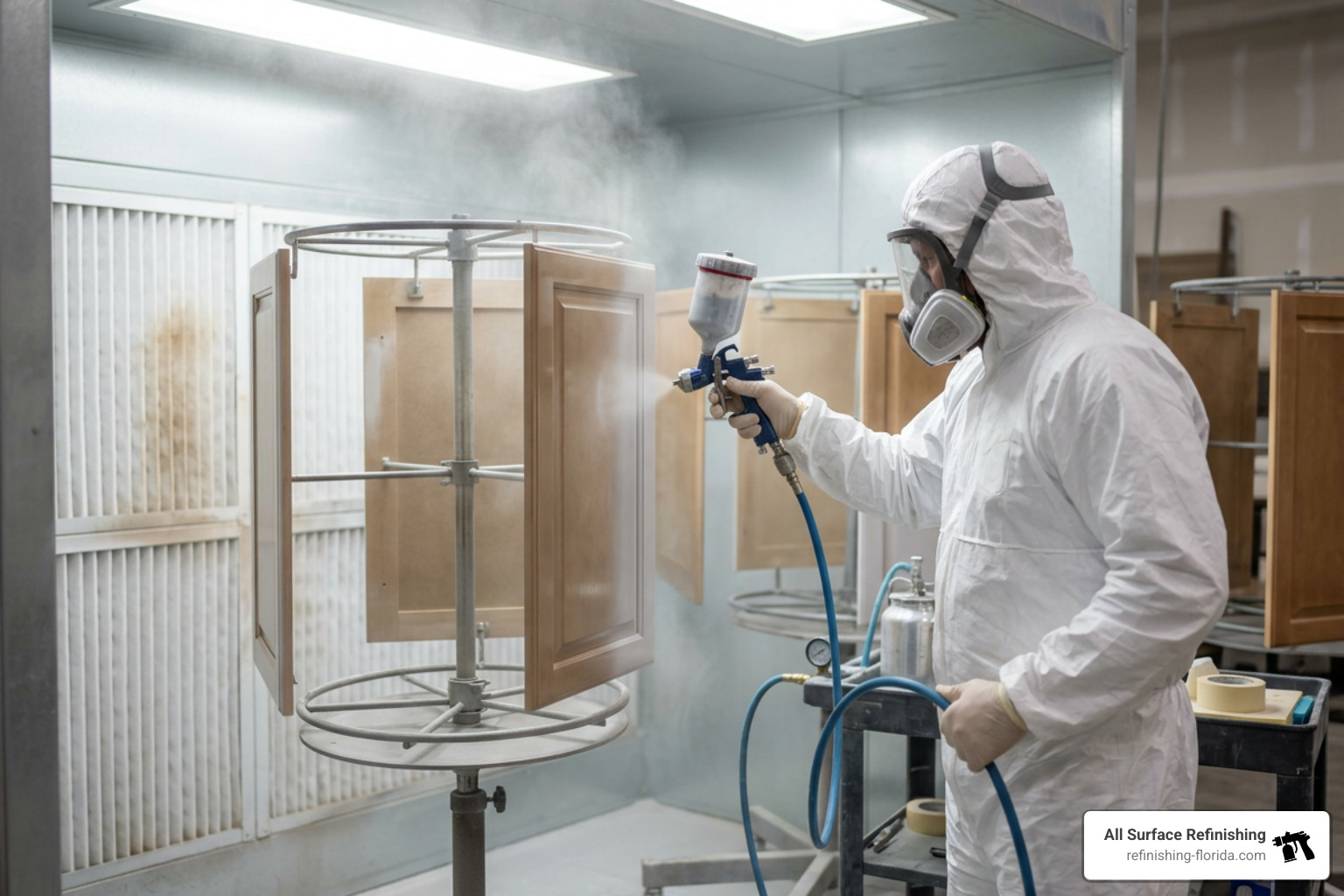
Professional High-Volume Low-Pressure (HVLP) and air-assisted airless spray equipment atomize liquid coatings into micro-fine particles. This allows the finish to self-level over the substrate, creating a completely uniform, ultra-smooth surface identical to custom factory-built cabinets.
Massive Financial Savings
Custom and semi-custom kitchen cabinets can cost anywhere from $15,000 to over $40,000 once you factor in tear-out, carpentry labor, disposal fees, and countertop re-leveling. Professionally spray painting your existing solid cabinet boxes and doors delivers the same high-end transformation while saving you 70% to 80% compared to a complete tear-out. You can then reallocate those remodel savings into upgraded quartz countertops, modern appliances, or luxury lighting.
Fast Turnaround with Minimal Household Disruption
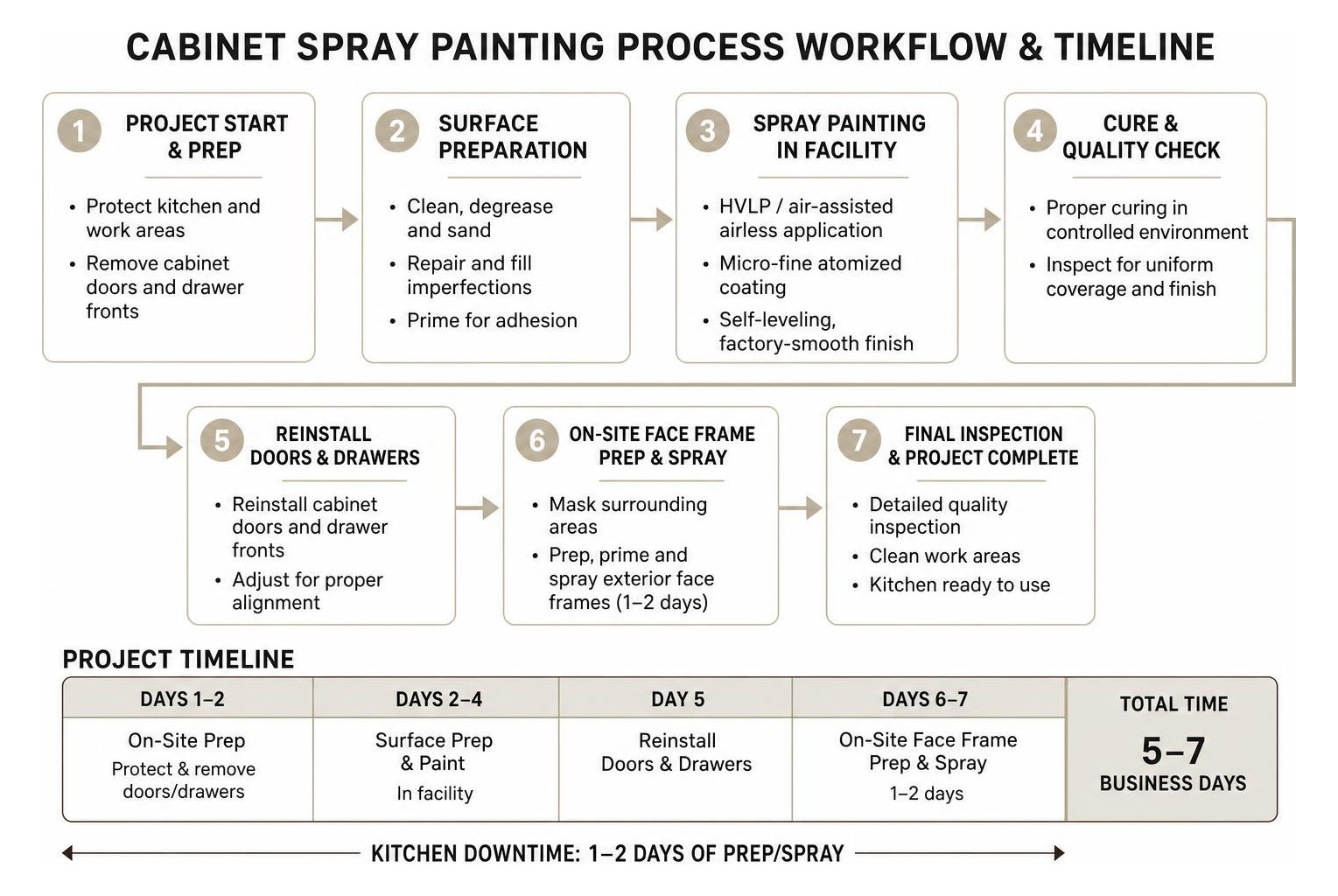
A complete cabinet replacement turns your home into a major construction zone for over a month. In contrast, our professional spray process is typically completed in just five to seven business days.
Because we remove the cabinet doors and drawer fronts to prepare and spray them in a specialized, temperature-controlled spray facility, your kitchen remains largely functional throughout the project. We only spend one to two days masking and spraying the exterior face frames inside your home.
How Does the Professional Cabinet Spray Painting Process Work?
Achieving a high-end, chip-resistant finish on high-traffic kitchen cabinets requires a systematic, multi-step process. In the coatings industry, surface preparation accounts for roughly 75% of the overall quality, adhesion, and long-term durability of the final finish. Skipping any mechanical or chemical preparation step can lead to premature peeling, chipping, or bubbling.
Here is our proven step-by-step workflow to spray paint kitchen cabinets for enduring durability.
Surface Preparation, Degreasing, and Masking
Hardware Removal and Sequential Labeling
We begin by systematically numbering every cabinet door and drawer front alongside its corresponding cabinet box location. Hinges, pulls, and mounting screws are removed, organized, and safely set aside. Precise labeling ensures that every door returns to its exact original opening, preventing misaligned gaps or rubbing edges during final reassembly.Industrial Chemical Degreasing
Kitchen cabinets are exposed to years of cooking grease, airborne oils, steam, cleaning residues, and hand lotions around handles. Applying paint over invisible grease films ruins adhesion. We thoroughly scrub every surface with heavy-duty degreasing agents and specialized solvent cleaners to lift deep-seated contaminants before any sanding begins.Mechanical Scuff-Sanding and Surface Repairs
Once clean and dry, we scuff-sand the surfaces using fine-grit abrasives to break the gloss of the existing clear coat or stain. This mechanical profiling creates a microscopic texture for primers to anchor onto. Any structural dents, deep gouges, or cracked seams are filled with high-strength wood filler and sanded smooth. For open-grain hardwoods like oak, we apply specialized grain fillers to smooth out deep pores if a sleek finish is desired.Containment Masking and Kitchen Protection
Inside your home, we protect non-painted surfaces. We mask floors with heavy builder’s paper, cover countertops in protective plastic, seal off appliances, and mask cabinet interiors. We also install heavy plastic zip-walls to isolate the kitchen from adjacent living spaces, using negative-air exhaust fans to direct any airborne particles outside.
Priming, Precision Spraying, and Reinstallation
High-Adhesion Stain-Blocking Primer Application
We spray two uniform coats of high-adhesion bonding primer tailored to your cabinet material (solid hardwood, engineered MDF, or laminate). For species prone to tannin bleed like oak or knotty pine, we use stain-blocking primers that seal wood oils and prevent discoloration.Intermediate Sanding and Dust Extraction
Between every coat of primer and topcoat, surfaces are hand-sanded with ultra-fine 320- to 400-grit sandpaper to remove any airborne micro-nibs. Surfaces are then thoroughly vacuumed and wiped down with tack cloths to ensure a clean surface before topcoating.Application of Commercial-Grade Topcoats
We spray multiple thin coats of durable commercial grade cabinet paint. Unlike standard architectural wall paint, these specialized industrial coatings dry into an exceptionally hard, chemical-resistant shell that will not soften under grease exposure or crack with seasonal humidity shifts.Controlled Curing and Reinstallation
Doors and drawer fronts dry in a dedicated, dust-free facility under strict humidity and temperature controls. Once cured, our crew returns to unmask your kitchen, reattach the doors and drawer fronts, install new clear silicone door bumpers, and adjust all hinges for balanced reveals and clean swing lines.
What Factors Influence the Cost of Spray Painting Kitchen Cabinets?
Every kitchen features unique architectural profiles, structural dimensions, and material finishes. Understanding the main variables that affect overall pricing will help you plan your project budget accurately.
Key Cost Drivers for Cabinet Painting
- Total Piece Count: The overall number of cabinet doors, false panels, drawer fronts, and end panels is the primary pricing factor. More pieces require more prep time, masking, spraying, and spray-facility drying rack space.
- Cabinet Substrate Material: Smooth substrates like maple, poplar, or dense MDF require standard mechanical prep. Open-grained hardwoods like cathedral oak require additional grain-filling steps if you want a contemporary, smooth look.
- Kitchen Layout and Architectural Details: Complex kitchen layouts with multi-level crown mouldings, integrated wine racks, open shelving units, decorative fluting, or contrasting island colors require extra detail work, hand-masking, and tailored spray passes.
- Hardware Modifications: If you keep your original knob and pull spacing, hardware installs quickly. If you switch to modern pulls with different hole centers, we fill, sand, and blend the old mounting holes before spraying.
Before committing to a project, request a detailed cabinet painting cost estimate to ensure you receive an itemized proposal that includes masking, prep work, and premium materials. For more details on budgeting and common contractor estimates, review our guide on kitchen cabinet painting costs.
How Does Professional Cabinet Spraying Compare to DIY Painting?
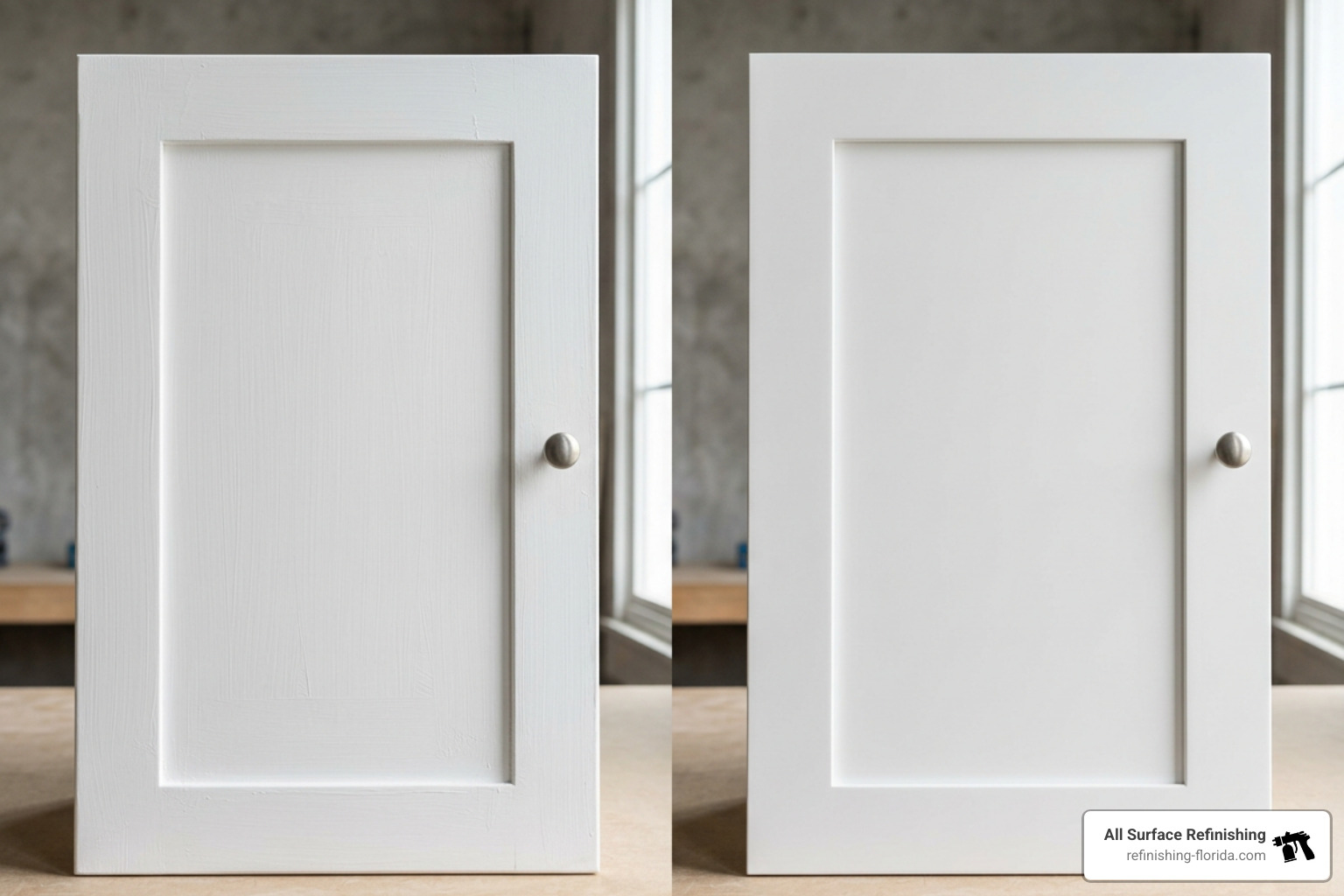
Many homeowners consider painting their own kitchen cabinets over a series of weekends to save money. However, kitchen cabinets endure more daily contact, moisture, thermal expansion, and grease exposure than almost any other painted surface in a home.
The Hidden Financial Costs of DIY Painting
While DIY painting might seem like a budget-friendly route, the cost of proper tools, safety gear, and materials adds up quickly. A homeowner aiming for quality results typically spends $400 to $1,000+ on supplies alone:
- Professional-grade HVLP or air-assisted spray gun and high-output compressor rental
- High-grade respirator masks and organic vapor filtration cartridges
- Specialized chemical degreasers, tack cloths, and multi-grit sandpapers (120, 220, 320, 400 grit)
- Heavy drop cloths, masking paper, delicate surface painter’s tape, and zip-wall containment poles
- Premium stain-blocking primers and specialized cabinet enamel coatings
For a full breakdown of the math, check out our analysis on the true cost of painting your own cabinets.
Common DIY Pitfalls
- Nozzle Spatter and Runs: Consumer-grade sprayers often fluctuate in air pressure, causing paint droplets to spatter across doors. Applying paint too heavily on vertical surfaces also causes visible runs and sags.
- Peeling Around Handles and Dishwashers: DIY paint jobs frequently skip intensive chemical degreasing. When skin oils or dishwashing steam contact improperly prepped surfaces, the paint can bubble and peel away in sheets.
- Extended Disruption: Hand-painting or spraying cabinets without a dedicated spray booth often stretches across multiple weekends, leaving kitchen tools, countertops, and appliances disorganized for a month or more.
Investing in professional cabinet spray painting eliminates these risks. It guarantees an ultra-smooth, resilient surface backed by professional warranties.
How Do You Choose the Right Local Cabinet Spray Painting Contractor?
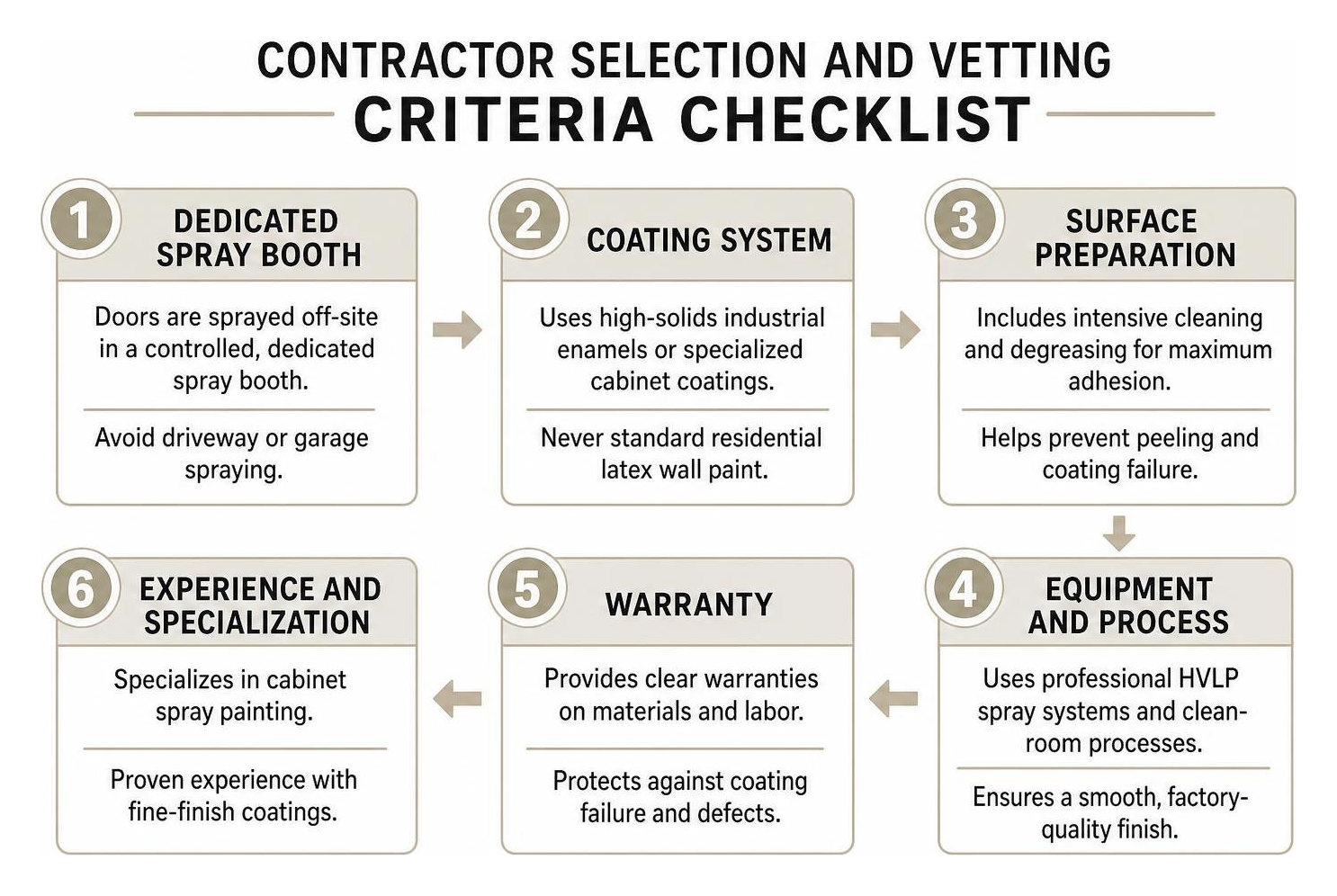
Hiring the right contractor is the most important decision you will make for your kitchen cabinet update. Cabinet spraying is a specialized trade that requires fine-finish coatings expertise, dedicated equipment, and clean-room processes.
Key Questions to Ask Prospective Contractors
Before signing an agreement or paying a deposit, ask each contractor these questions:
- Do you spray the doors in an off-site, dedicated spray booth? (Spraying doors in an uncontrolled driveway or garage introduces dust, insects, and humidity issues into the finish.)
- What specific coating system do you apply? (Contractors should use high-solids industrial enamels or specialized cabinet coatings—never standard residential latex wall paint.)
- What is your complete containment and masking protocol for on-site box spraying? (Look for zip-wall containment barriers, negative-air filtration, and complete masking of countertops and floors.)
- Do you provide a written warranty against peeling and bubbling? (A reliable professional will stand behind their prep work and adhesion with a multi-year written warranty.)
To prepare for your consultations, review our full checklist of questions to ask before hiring kitchen cabinet painting experts. You can also see what other homeowners discuss when seeking quality results in community threads like homeowner recommendations for painting kitchen cabinets.
Serving Local Communities
When hiring local cabinet painters, look for an established company with deep regional roots and verifiable customer reviews.
At All Surface Refinishing, we bring over 30 years of direct refinishing experience and more than 14,000 successfully completed projects. We provide high-quality cabinet painting and surface refinishing services backed by proven craftsmanship and dedicated customer care.
Whether your kitchen features 1990s honey oak, dark espresso stain, or dated thermofoil, our crew has the specialized equipment and experience to transform your space. Explore our complete line of professional cabinet refinishing and painting services to get started.
What Are the Most Frequently Asked Questions About Professional Cabinet Spray Painting?
How long will my kitchen be unusable during the spray painting project?
Your kitchen remains usable for the vast majority of the project. A typical residential project follows this schedule:
- Day 1: Our crew numbers and removes all cabinet doors and drawer fronts, then transports them to our off-site spray facility.
- Days 2 to 4: While the doors undergo degreasing, sanding, priming, and multi-coat spraying in our dust-free facility, your kitchen remains open for light use, refrigeration, and meal prep.
- Days 4 to 5: We spend one to two days on-site building a protective zip-wall enclosure, masking all surfaces, and spray-coating the fixed cabinet face frames.
- Day 6 or 7: We return with the cured doors and drawer fronts, rehang them with precision hardware alignment, apply fresh silicone bumpers, and complete the final inspection with you.
Overall, your kitchen is only sealed for spraying for about 24 to 48 hours.
Will there be strong paint odors or overspray throughout my home?
No. Because all doors and drawer fronts are sprayed and cured off-site in our specialized facility, the vast majority of coating application happens outside your home.
When we spray the fixed cabinet face frames inside your kitchen, we seal off the room using heavy plastic barriers and tension zip-poles to create a sealed clean room. We use commercial-grade air scrubbers and negative-pressure exhaust fans vented directly out a window to capture atomized paint particles and channel fumes outside.
We also apply high-grade, low-VOC industrial cabinet coatings engineered to flash off quickly, leaving your living spaces free of lingering odors or overspray.
How durable is a professionally spray-painted cabinet finish against daily wear?
A professionally applied industrial cabinet finish is designed for heavy daily use. Unlike standard decorative wall paints that remain soft and can tear under friction, our commercial cabinet coatings cure into a hard, non-porous finish that chemically bonds with the underlying wood or substrate.
This finish resists:
- Cooking Oils and Finger Grease: Won’t soften, stain, or turn gummy around door handles.
- Moisture and Steam: Holds up well around high-humidity areas like dishwashers, sinks, and coffee stations.
- Everyday Scuffs and Impact: Resists chipping and scratching from cookware, pets, and children.
For long-term care, simply clean the surfaces using a soft microfiber cloth dampened with warm water and mild, non-abrasive dish soap. Avoid harsh bleach, ammonia-based sprays, or abrasive scouring pads to keep your factory-smooth cabinet finish looking pristine for years to come.
