
Why Freestanding Kitchen Cabinets Make Sense
Freestanding kitchen cabinets add storage without locking you into a full kitchen remodel. Choose a cabinet type based on what you need to store, measure the available floor space and door clearance, then select a size, finish, and material that work with your kitchen. Tall pantry cabinets help use vertical space, while islands, cupboards, sideboards, and hutches can add prep space, drawers, or display storage.
Unlike built-in cabinetry, these standalone pieces can be moved, repurposed, or taken to another home. That makes them especially useful for renters, small kitchens, and property owners who want a more flexible update. Quality varies widely, from budget-friendly engineered wood cabinets to long-lasting solid hardwood pieces with adjustable shelves and durable finishes.
I am Frank Hernandez, President of All Surface Refinishing, and I have spent more than a decade working with homeowners and property managers to improve worn kitchen surfaces. That experience helps me evaluate how freestanding kitchen cabinets can complement an existing kitchen and create a cleaner, more functional look without full replacement.
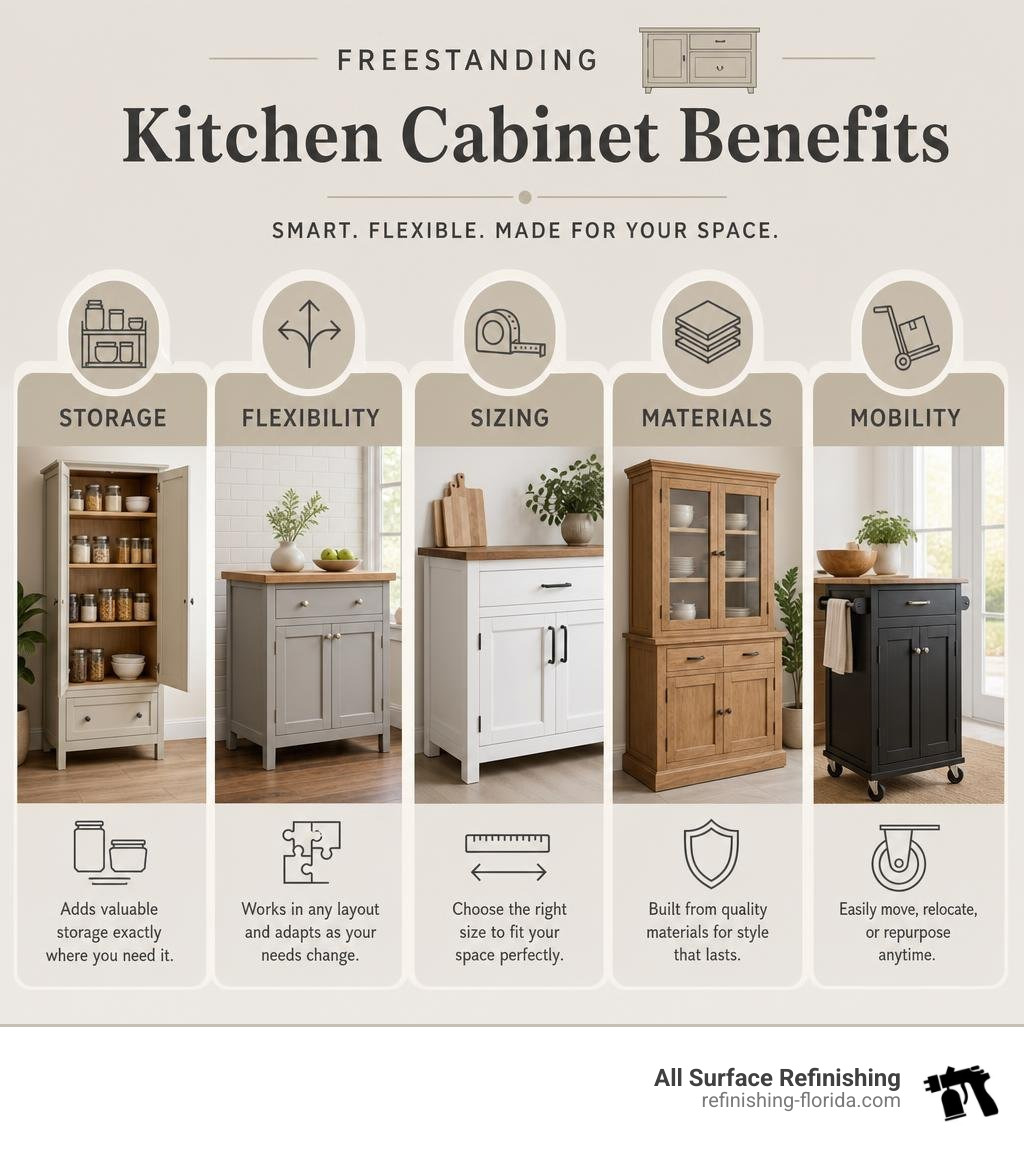
Key Benefits of Freestanding Kitchen Cabinets
For decades, standard fitted cabinetry dominated modern residential design. However, the emerging trend of unfitted kitchen furniture has changed how we view kitchen layouts. Embracing standalone furniture introduces unmatched design freedom, visual character, and practical advantages.
- Mobility and Portability: If you move from a condo in Miami to a single-family home in Fort Lauderdale, your standalone furniture comes right along with you. It is the ultimate rental-friendly storage upgrade that protects your initial investment.
- Modular Layout Flexibility: Kitchen workflows evolve over time. Unlike wall-anchored boxes, you can rearrange standalone units whenever you need to accommodate a larger dining table or a new appliance without tearing out drywall or replacing baseboards.
- Budget-Friendly Alternative: Built-in cabinetry renovations often require extensive demolition, carpentry, and electrical rerouting. Free-standing units can save up to 25% on overall installation costs while providing immediate storage capacity.
- Faster, Easier Setup: Most standalone units arrive fully assembled or require basic modular assembly, eliminating weeks of construction dust, loud power tools, and kitchen downtime.
- Architectural Warmth: Blending individual furniture pieces creates layered visual interest and depth, breaking away from the sterile, cookie-cutter look of wall-to-wall fitted boxes.
| Feature | Freestanding Kitchen Storage | Traditional Built-In Cabinetry |
|---|---|---|
| Mobility | Fully portable; relocates with you | Permanently fixed to wall studs and floor |
| Installation Cost | Minimal to none; no structural modifications | High labor, framing, and installation costs |
| Custom Placement | Rearrange anytime to suit layout changes | Fixed footprint; costly and difficult to reconfigure |
| Design Character | Eclectic, vintage, artisanal, or modern furniture feel | Uniform, uniform-run appearance |
| Lead Time | Immediate purchase to a few weeks | Often 6 to 12+ weeks for custom fabrication |
Popular Types and Storage Configurations
Selecting Freestanding Kitchen Cabinets for Pantries and Cupboards
When square footage is tight, utilizing vertical space is essential. Standalone pantries and cupboards provide deep, organized storage without expanding your kitchen’s physical footprint.
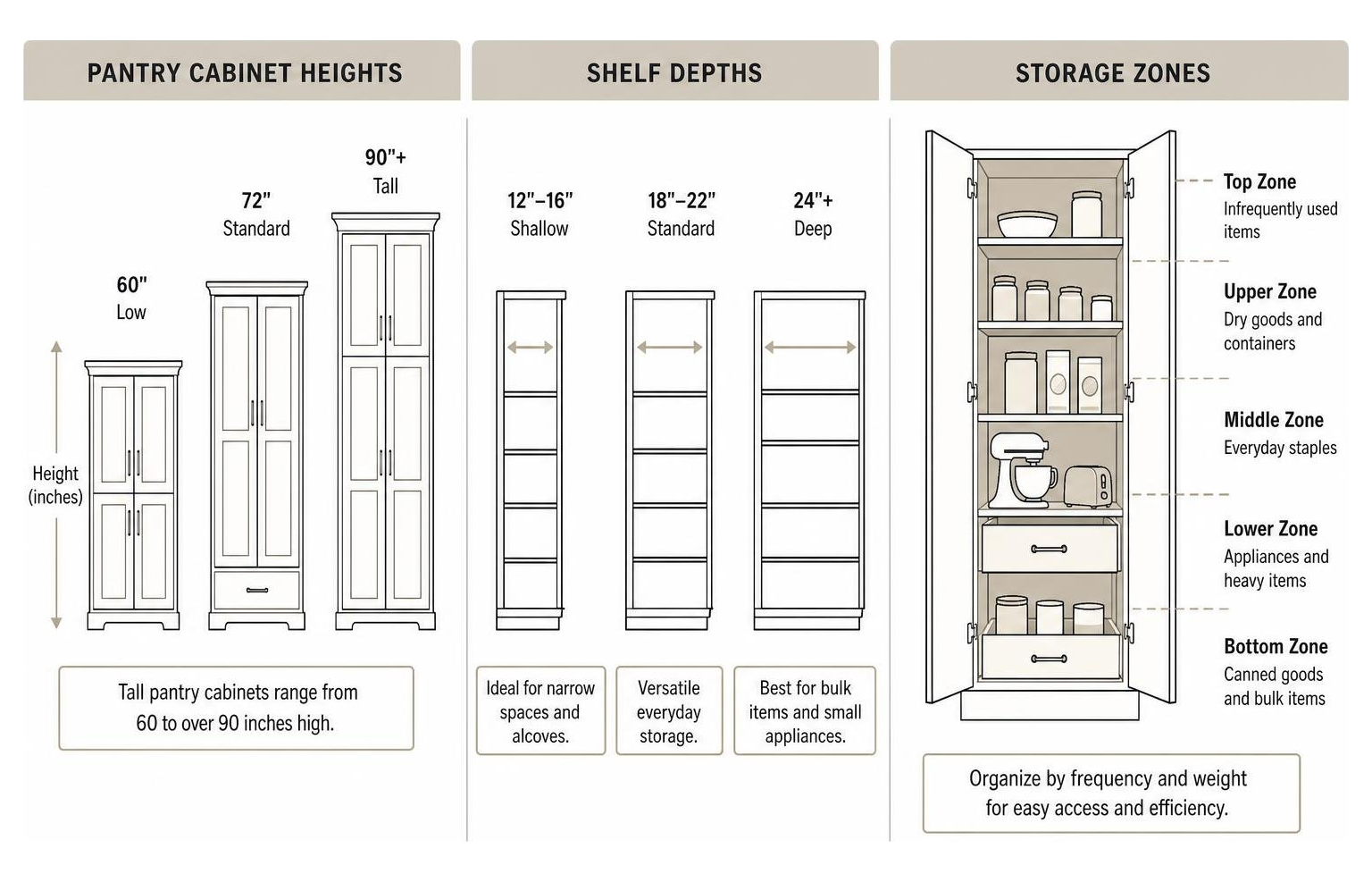
- Tall Pantry Cabinets: Ranging from 60 to over 90 inches high, these units function as primary dry-good storage hubs. Equipped with adjustable shelves spaced in 2-inch increments, they easily accommodate tall cereal boxes, bulk goods, and small kitchen appliances.
- Traditional Jelly Cupboards & Pie Safes: With shallower depths (typically 12 to 16 inches), these charming pieces fit narrow walkways or awkward alcoves, serving as dedicated spice cupboards or baking stations.
- Integrated Pull-Out Drawers: Advanced standalone cupboards feature soft-close internal drawers and full-extension glides, ensuring heavy canned items at the very back remain within arm’s reach.
Freestanding Islands, Sideboards, and Hutches
Beyond food storage, standalone furniture adds critical prep space and decorative display surfaces:
- Butcher Block Kitchen Islands: A mobile prep island with heavy-duty locking casters provides immediate chopping space and pot storage. You can roll it toward your cooking zone for dinner prep, then push it back against a wall when entertaining.
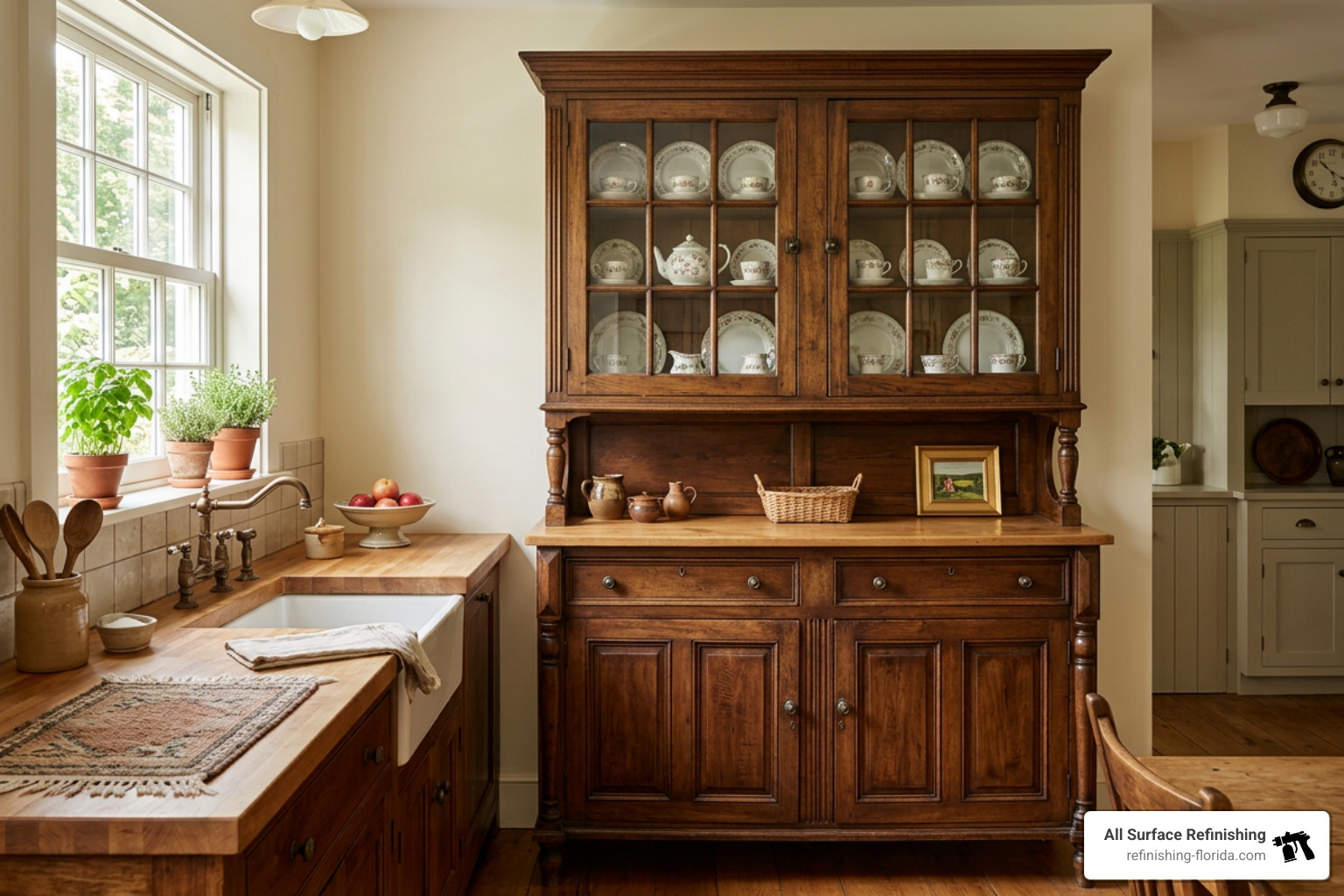
- Classic Kitchen Hutches: Featuring closed lower cabinetry paired with glass-front upper display shelves, hutches protect delicate dinnerware from kitchen grease while showing off fine china or glassware.
- Dining Room Buffets & Sideboards: Positioned along an adjoining wall in open-concept floorplans, a sideboard stores table linens, serving platters, and specialty barware while providing an elegant serving station for family gatherings.
Materials, Durability, and Space Planning
Solid Wood and Finishes for Freestanding Kitchen Cabinets
The structural longevity of any cabinet depends entirely on its materials and exterior coating. High-end standalone units are crafted from solid hardwoods such as red oak, hard maple, cherry, walnut, and quarter-sawn white oak. Solid wood holds heavy loads without sagging, resists impacts, and allows for future surface refinishing.
In humid climates like South Florida, proper moisture sealing is critical. High ambient humidity can cause untreated natural woods to expand and contract, leading to sticky doors or warped shelves. Applying multi-stage protective sealers and durable topcoats locks out ambient moisture, prevents swelling, and ensures your furniture withstands daily steam and heat from cooking.
If you acquire a vintage wooden cupboard or inherit solid wood cabinetry that looks dated, you do not need to replace it. Learning cabinet resurfacing 101 or choosing to refinish old kitchen cabinets restores the structural integrity of natural wood while updating the finish to complement your home’s aesthetic.
Measuring Clearance and Architectural Layouts
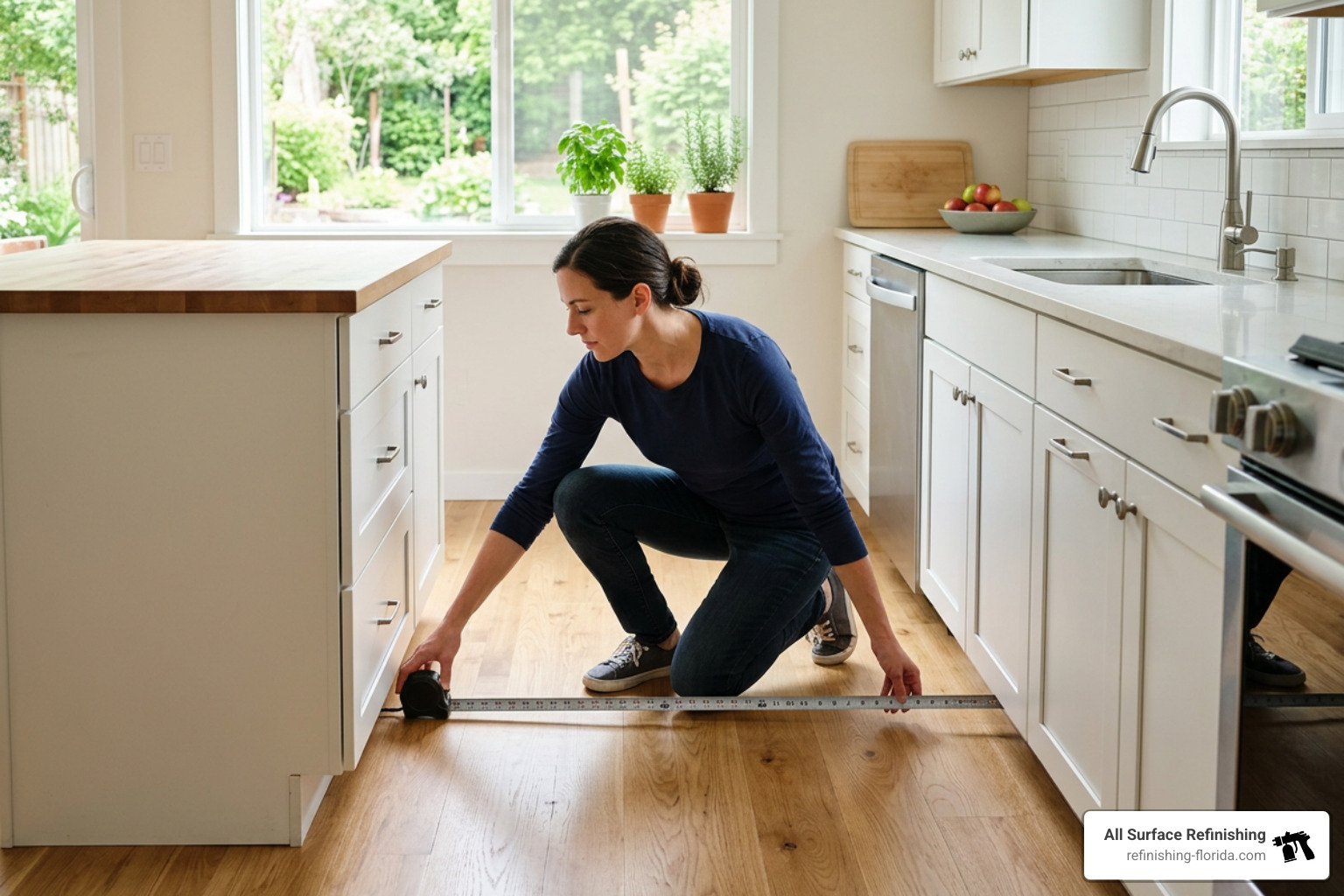
Before purchasing any large standalone piece, accurate measurements are vital to avoid obstructing daily workflow:
- Aisle Clearance: Maintain at least 36 to 42 inches of walkway space between your cabinet and opposite counters or appliances. In multi-cook households, aim for 48 inches to ensure smooth traffic flow.
- Door & Drawer Swing Paths: Ensure cabinet doors and fully extended pull-out drawers do not collide with open refrigerator doors, dishwashers, or oven handles.
- Ceiling & Crown Molding Clearance: Measure from the floor to the lowest ceiling obstacle (such as soffits, light fixtures, or crown molding). Always leave at least 2 to 3 inches of breathing room above tall units.
- Work Triangle Integration: Place pantry cabinets within comfortable reach of your food prep zones without severing the direct line between your sink, refrigerator, and range.
Custom Styling and Long-Term Cabinet Care
To make a standalone piece feel like an intentional part of your home, coordinate its finish and hardware with your existing decor. Follow practical layout advice by balancing contrasting tones; for example, pairing a deep navy or sage green standalone hutch with neutral white perimeter walls. Mixing textured woods, brushed metal knobs, and open shelving creates an inviting, collected-over-time atmosphere.
If your existing cabinets clash with your new freestanding furniture, you can easily give your kitchen a facelift by changing your cabinet color. Discovering how to change kitchen cabinet color like a pro allows you to harmonize natural wood stains, matte lacquers, and metallic hardware accents across your entire space.
Maintaining Your Solid Wood Surfaces
- Daily Cleaning: Wipe surfaces down using a soft microfiber cloth dampened with warm water and mild dish soap. Avoid harsh bleach, ammonia, or abrasive scrubbing pads that can strip protective topcoats.
- Moisture Management: Immediately dry spills, grease splatters, and steam condensation around cabinet doors and drawer edges to prevent long-term finish degradation.
- Hardware Maintenance: Periodically check and tighten hinge screws and drawer glides to keep doors perfectly aligned and prevent hinge sagging over time.
Frequently Asked Questions About Standalone Kitchen Storage
What is the main difference between a pantry cabinet and a hutch?
A pantry cabinet is designed primarily for concealed food, dry goods, and small appliance storage, typically featuring solid doors and deep interior shelving. A hutch is a two-piece furniture unit featuring a closed base cabinet topped by an open or glass-enclosed display rack intended for showing off decorative dishware and glassware.
Can freestanding units be used in rooms outside the kitchen?
Yes! One of the greatest advantages of standalone cabinetry is its multi-room versatility. A tall cupboard works exceptionally well as a linen closet in a laundry room, an organized supply cabinet in a home office, or a craft armoire in a utility room.
How much weight can standalone cabinet shelves hold?
Weight capacity depends heavily on construction material:
- Engineered Wood / Particle Board: Typically supports 25 to 35 pounds per shelf before experiencing noticeable deflection or sagging.
- Solid Hardwood (Oak, Maple, Cherry): High-quality solid wood shelves with sturdy support cleats can easily support 50 to 75+ pounds per shelf, making them ideal for cast iron cookware, bulk canned goods, and heavy stand mixers.
Transform Your Kitchen with All Surface Refinishing
Whether you are incorporating an artisan freestanding cupboard or revamping your entire kitchen layout, achieving a unified, high-end appearance does not require expensive cabinet replacement.
At All Surface Refinishing, we bring over 30 years of hands-on experience and more than 14,000 completed resurfacing projects to homeowners across South Florida. From Miami-Dade County, Broward County, and Palm Beach County up through Martin County and Saint Lucie County, our specialized cabinet painting, refinishing, and countertop resurfacing services deliver factory-grade, durable results in days rather than weeks.
Ready to elevate your kitchen’s style and functionality? Explore our professional kitchen cabinet services today and request your free design consultation!
