
What You Need to Know About a Whirlpool Jacuzzi Tub Before You Buy, Replace, or Restore
A whirlpool Jacuzzi tub is one of the most popular bathroom upgrades in American homes — and one of the most misunderstood. Here’s a quick snapshot of what you’re dealing with:
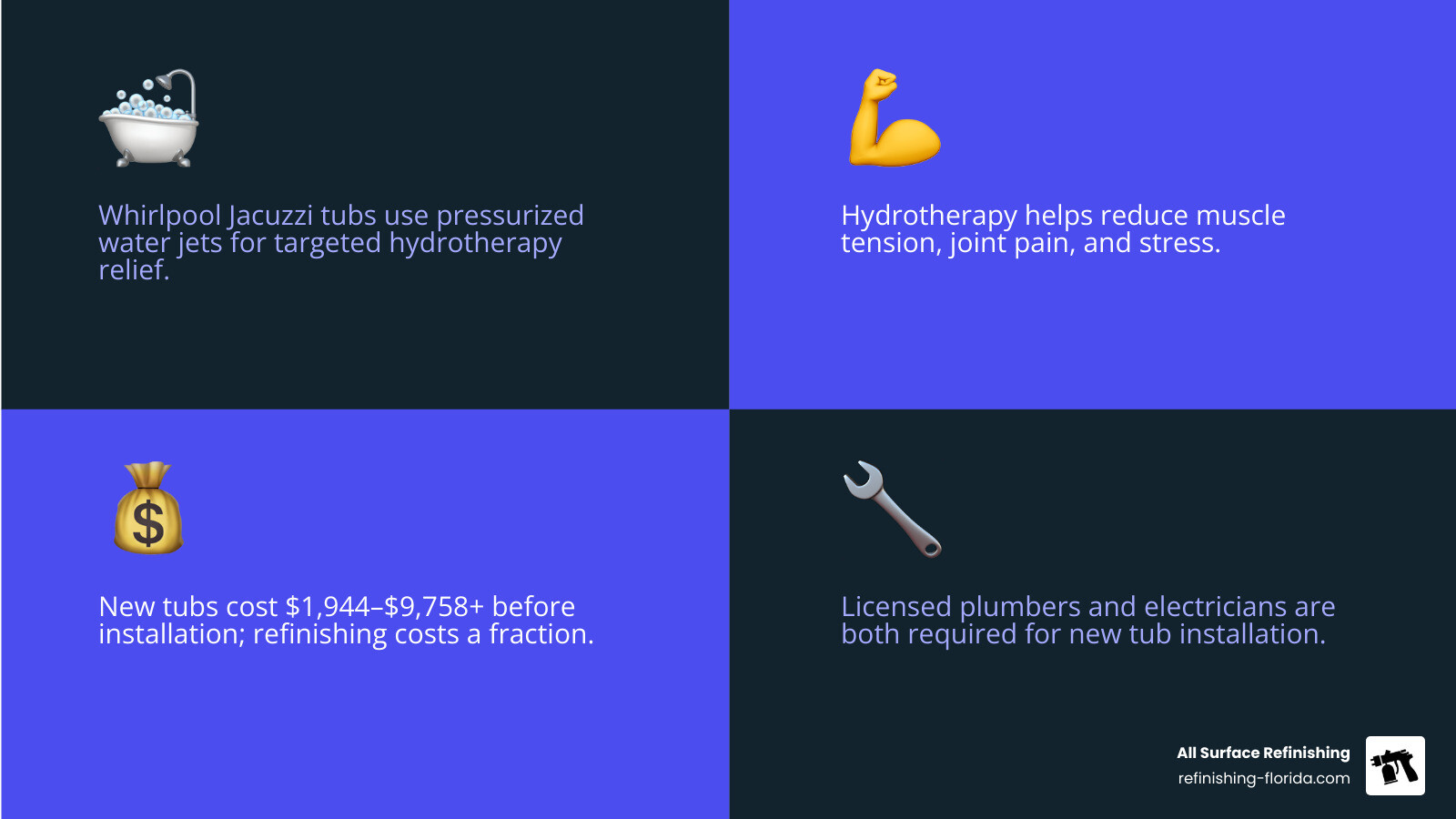
- What it is: A bathtub with built-in water jets that circulate pressurized water for hydrotherapy
- Main benefit: Targeted relief for sore muscles, joint pain, and stress
- Key decision: New tubs cost $1,944–$9,758+ before installation — refinishing your existing tub costs a fraction of that
- Who installs it: Licensed plumbers and electricians are both required for a new installation
- Best for: Homeowners who want spa-like results without a full bathroom gut renovation
Whether your current jetted tub is looking worn, yellowed, or cracked — or you’re simply exploring your options — this guide covers everything: how these tubs work, what they cost, how to maintain them, and when restoration beats replacement.
I’m Frank Hernandez, President of All Surface Refinishing, and I’ve spent decades helping South Florida homeowners restore their whirlpool Jacuzzi tubs to like-new condition — without the chaos and cost of a full replacement. If you’re a property owner weighing your options, you’re in the right place.
What is a Whirlpool Jacuzzi Tub?
To understand how to get the most out of your bathroom, we first need to clear up a common point of confusion: the difference between a “whirlpool tub” and a “Jacuzzi.”
Technically, “Jacuzzi” is a trademarked brand name — the pioneers who brought jet-propulsion technology into the residential bathroom. However, much like “Kleenex” or “Band-Aid,” the term has become a generic label. Today, when homeowners refer to a whirlpool Jacuzzi tub, they are usually talking about any residential bathtub equipped with pressurized, recirculating water jets designed to massage the body.
When looking at jetted options on the market in July 2026, you will find three primary therapy configurations:
- Whirlpool Baths: These systems use an electric pump to pull water from the tub, mix it with air, and push it back out through adjustable, high-pressure water jets. This delivers a vigorous, deep-tissue massage that is highly targeted.
- Air Baths (Pure Air®): Rather than circulating water, an air bath uses a motorized blower to push warm air through dozens of tiny, low-profile pinholes in the bottom of the tub. This creates an effervescent, bubbling “champagne” effect that offers a gentle, full-body caress.
- Combination Systems: If you want the best of both worlds, combination tubs feature both high-pressure water jets and gentle air bubbles, allowing you to customize your hydrotherapy experience depending on your physical needs.
To help you visualize how these systems compare, we have compiled a quick overview:
| Feature | Whirlpool Bath | Air Bath | Combination System |
|---|---|---|---|
| Massage Type | Deep-tissue, targeted physical massage | Gentle, full-body effervescent bubbling | Dual action (vigorous and gentle) |
| Medium Used | High-pressure water + air mixture | Warm air bubbles only | Both water jets and air channels |
| Best For | Chronic muscle tension, joint pain, arthritis | Fibromyalgia, skin stimulation, relaxation | Versatile family use and custom therapy |
| Typical Jet Count | 4 to 24 adjustable jets | 20 to 80+ tiny air ports | Multiple water jets + full air ring |
Understanding the Mechanics of a Whirlpool Jacuzzi Tub
To appreciate why a whirlpool Jacuzzi tub requires careful handling, it helps to understand how it operates under the hood.
A standard whirlpool system relies on a closed-loop plumbing network. When you fill the tub and turn on the system, an electric pump draws water through a suction cover (usually located near the bottom of the tub basin). The pump then forces this water through internal PVC piping and out through the jets.
To create a truly therapeutic massage, modern systems use silent air induction. This process mixes air with the pressurized water just before it leaves the jet nozzle, increasing the force and creating a pulsation effect. Keeping these physical components clean and mechanically sound is critical. If the suction cover is blocked, or if the internal seals dry out, the entire system can lose pressure or develop leaks behind your bathroom walls.
Standard vs. Luxury Jetted Bathtubs
As you explore jetted tub options, you will notice a significant divide between budget-friendly “comfort” models and high-end “luxury” systems.
Standard builder-grade whirlpool tubs typically feature a single-speed motor, a basic on/off switch, and 4 to 8 fixed directional jets. While functional, they can be surprisingly loud. The classic “hissing” sound of air induction and the vibration of the motor can sometimes detract from your peaceful spa experience.
In contrast, luxury models — such as the Jacuzzi KX15917 72″ x 42″ Sia® Drop In Luxury Whirlpool Bathtub with 13 Jets, Luxury Controls, Chromatherapy, Heater, Center Drain and Right Pump | Ferguson Home — elevate the experience with advanced technology. These luxury systems utilize:
- Multi-Speed Motors: Allowing you to dial the massage intensity up or down.
- Whisper+ Technology®: A specialized mounting system with patented gel dampers that absorb motor vibrations, making operation up to 18% quieter.
- Electronic Silent Air Induction: Blending air and water seamlessly without the noisy hiss.
- Chromatherapy: Integrated LED lighting systems capable of producing up to 256 mood-setting colors.
- Inline Heaters: Built-in heating elements that maintain water temperatures between 77°F and 104°F, ensuring your bath stays hot without constantly draining and refilling.
Key Health and Therapeutic Benefits of Hydrotherapy
Hydrotherapy is not just a luxury; it is a time-tested physiological treatment. By combining heat, buoyancy, and targeted pressure, a whirlpool Jacuzzi tub triggers positive biological responses in your body:
- Muscle Tension Relief: The force of the water jets acts as a deep-tissue massage, kneading away knots, increasing local blood circulation, and delivering oxygen-rich blood to tired muscles.
- Joint Pain and Arthritis Management: Buoyancy reduces your body weight by up to 90%, taking pressure off aching knees, hips, and ankles. The warm water dilates blood vessels, reducing inflammation and stiffness.
- Stress and Anxiety Reduction: Soaking in warm water stimulates the release of endorphins (the body’s natural feel-good chemicals) while reducing cortisol levels.
- Fibromyalgia Comfort: While high-pressure water jets can sometimes aggravate sensitive pressure points for fibromyalgia sufferers, switching to a pure air bath or a low-pressure combination system provides a soothing, pain-free alternative that stimulates circulation without pain.
Targeted Relief with a Whirlpool Jacuzzi Tub
The real magic of a high-quality whirlpool system lies in jet customization. Depending on the model, your tub may feature:
- Directional Jets: Allowing you to manually angle the stream toward specific muscle groups, like your lower back or shoulders.
- Rotary Jets: Delivering a spinning, circular massage action that mimics a therapist’s hands.
- Low-Profile Spinning Micro Jets: Frequently clustered in groups to target the upper back, neck, or feet.
For instance, corner-style configurations often feature molded edge seats designed specifically to facilitate foot massages, while recessed back jets align perfectly with the spine. If you already have a jetted tub in your South Florida home, learning to adjust these jets can help you maximize its therapeutic benefits without spending a dime on a new unit.
Identifying Your Existing Whirlpool Tub Configuration
If you are considering upgrading or restoring your bathroom, you must first identify your tub’s physical configuration. Whirlpool tubs generally fall into five categories:
- Alcove (Skirted): Enclosed by three walls, this is the most common configuration in standard residential bathrooms. They typically feature an integrated front apron or “skirt.”
- Drop-In: The tub shell is dropped into a custom-built wood or tile deck, leaving only the top rim exposed.
- Freestanding: A dramatic centerpiece that stands entirely on its own, like the INIZIO™ 6636 Freestanding Whirlpool | Jacuzzi.com | Jacuzzi® or the premium INIZIO™ 6636 Freestanding Whirlpool Whisper+ White with NW50817 Round Tub Filler Matte Black .
- Corner: A triangular design that fits snugly into a corner, often featuring double-occupancy seating like the spacious CAPELLA® 6060 Whirlpool RH White | Jacuzzi.com | Jacuzzi® .
- Walk-In: Designed with a sealed door and a low step-over threshold, these tubs are engineered for seniors and individuals with limited mobility.
No matter which of these configurations you have in your home, professional refinishing and resurfacing can work wonders. Rather than ripping out a custom-built tile deck or destroying a beautifully integrated alcove, we can apply high-performance coatings directly to the existing shell, restoring its original high-gloss luster in a matter of hours.
Why Keeping Your Existing Layout Avoids Major Renovation Headaches
Many homeowners in Palm Beach, Broward, and Miami-Dade Counties underestimate the physical complexity of buying a new tub. If you decide to replace your existing unit, you have to worry about:
- Doorway Clearance: High-end tubs can be incredibly bulky. For example, the Capella® 6060 corner tub measures 60″ x 60″, which will not fit through a standard bathroom doorway without removing door frames or even cutting into drywall.
- Subfloor Weight Limitations: A standard acrylic whirlpool tub can weigh up to 220 lbs empty. Once you add up to 102 gallons of water (which weighs 8.34 lbs per gallon, totaling over 850 lbs of water) plus the weight of the bathers, the total floor loading can easily exceed 1,000 lbs. Standard residential floors are rated for 30 to 40 lbs/ft², whereas a loaded walk-in or luxury tub can exert up to 75 lbs/ft², requiring costly structural floor reinforcement.
By choosing to refinish your existing tub, you bypass these structural and logistical nightmares entirely, preserving your bathroom’s structural integrity while saving thousands of dollars.
The Hidden Challenges of Replacing a Whirlpool Tub
Replacing an old whirlpool jacuzzi tub is never a simple “swap out” job. It is a major construction project that involves multiple trades and complex building codes.
First, there are the strict electrical requirements. A standard jetted tub requires dedicated power. If your new tub includes an inline heater, the National Electrical Code (NEC) typically requires two entirely separate, GFCI-protected circuits: a 120VAC, 20 Amp circuit for the pump motor, and a 120VAC, 15 Amp circuit for the inline heater. These outlets must be mounted at least 4 inches above the floor and remain fully accessible.
Second, the plumbing modifications can be extensive. You may need to relocate drain lines, install new overflow assemblies, or upgrade your water supply lines. If your new tub has a center drain but your old one was a right-hand drain, your contractor will have to cut into your subfloor to reroute the pipes.
Why DIY Replacement is Not Recommended
We always caution homeowners against attempting a DIY whirlpool replacement. To do it safely and legally, you must navigate:
- Licensed Professional Requirements: Local building codes in South Florida strictly dictate that only licensed plumbers and electricians should perform these installations to prevent catastrophic water damage or electrical shock hazards.
- The Service Access Panel Dilemma: Building codes require a minimum of a 12” x 18” direct access panel to service the pump and motor. If your DIY installation seals this equipment behind a solid tile wall, you will have to smash your beautiful new tile the first time a motor seal fails.
- Grounding and Safety: Both the pump and the heater must be bonded to the house electrical panel using a solid #8 copper wire to prevent shock risks. For a deeper look at protecting your home from water damage during repairs, check out our guide on how to Dont Let Your Spa Day Turn Into A Leak Nightmare Jacuzzi Repair Guide.
Maintenance, Cleaning, and Long-Term Care
One of the biggest complaints homeowners have about their whirlpool Jacuzzi tub is the buildup of black flakes and unpleasant odors. Because these systems use a closed-loop plumbing network, water sits inside the internal PVC lines after you drain the tub. Over time, skin cells, body oils, soap scum, and bath additives accumulate inside the pipes, creating a breeding ground for bacteria and mold (commonly known as biofilm).
To prevent this buildup and protect your system, follow this simple cleaning and disinfection routine every few weeks:
- Fill the tub with warm water until it sits at least 1 to 2 inches (25mm to 50mm) above the highest jet.
- Add 2 tablespoons of low-sudsing automatic dishwasher detergent and 1/2 cup of household bleach (or a specialized commercial jet flush cleaner).
- Turn on the whirlpool system and run the jets for 10 minutes to thoroughly flush the internal plumbing lines.
- Drain the tub completely.
- Refill the tub with cold, clean water above the jets and run the system for another 5 minutes to rinse out any remaining residue.
- Drain the tub and wipe down the acrylic shell with a soft microfiber cloth.
Repairing and Restoring Your Existing Tub
Over years of use, even the highest-quality acrylic or fiberglass tub shells will begin to show their age. Exposure to UV rays, harsh chemical cleaners, and mineral-heavy South Florida water can lead to yellowing, dullness, and fine surface scratches.
Worse yet, structural stress can cause physical damage. If you are dealing with structural issues, don’t panic. You can learn how to handle these issues in our guide on How To Conquer These Jacuzzi Whirlpool Tub Repair Challenges. If you notice a crack in your tub basin, we also specialize in seamless jacuzzi crack repair that seals the leak and reinforces the shell, preventing further damage without the need for a costly replacement.
The Cost-Effective Alternative: Refinishing vs. Replacement
When your jetted tub starts looking dated or worn, you face a major financial choice. Let’s look at the real numbers behind the total cost of ownership.
Purchasing a brand-new whirlpool tub is just the tip of the iceberg. While a quality tub itself can cost anywhere from $1,049 to over $9,750, the real expense lies in the installation:
- Demolition & Disposal: Ripping out the old tub, tile surround, and drywall ($800 – $1,500).
- Plumbing Upgrades: Hiring a licensed plumber to run new lines and connect the drain ($1,000 – $2,500).
- Electrical Upgrades: Running new dedicated GFCI circuits from your main electrical panel ($800 – $1,800).
- Tile & Drywall Reconstruction: Rebuilding the walls and tiling around the new tub ($1,500 – $3,500).
When all is said and done, a “simple” tub replacement easily balloons into a $6,000 to $15,000+ bathroom renovation project.
On the other hand, choosing to refinish jacuzzi tub surfaces allows you to completely bypass this chaos. Our professional jacuzzi tub resurfacing process restores the original high-gloss shine, seals minor imperfections, and updates the color to a modern, crisp white — all for a fraction of the cost of replacement. If you are looking for budget-friendly ways to modernize your bathroom, explore our breakdown of The Cheapest Ways To Jacuzzi Refinishing.
Professional Resurfacing in South Florida
At All Surface Refinishing, we have spent over 30 years perfecting the art of bathroom restoration. We serve homeowners across South and Southwest Florida, including:
- Miami-Dade County: Miami, Coral Gables, Key Biscayne, Aventura, and Sunny Isles.
- Broward County: Fort Lauderdale, Hollywood, Davie, Weston, and Coral Springs.
- Palm Beach County: West Palm Beach, Boca Raton, Delray Beach, Boynton Beach, and Jupiter.
Our specialized, multi-step refinishing process is designed to handle the unique demands of jetted tubs. We meticulously mask off your jets, repair any surface cracks or chips, apply a proprietary bonding agent, and finish with a high-performance, durable acrylic coating. The result is a gorgeous, durable finish that looks and feels brand new. For a closer look at our local expertise, read The Ultimate Guide To Jacuzzi Tub Resurfacing Fort Lauderdale Style.
Frequently Asked Questions about Whirlpool Tubs
What size water heater is typically needed for a whirlpool tub?
As a general rule of thumb, your home’s water heater should be at least two-thirds the size of the tub’s total water capacity. For a standard whirlpool tub with a 55 to 63-gallon operating capacity, you will need a minimum water heater capacity of 50 US Gallons to ensure you can fill the tub with warm water without running out. If you have a larger luxury tub (like a 102-gallon model), you may need to upgrade to a 75-gallon water heater or install a tankless water heater system.
Can I use bath oils or bubble bath in a jetted tub?
No, you should never use traditional bath oils, bubble baths, or oil-based additives in a whirlpool tub. When the pump is running, these oils are drawn into the internal plumbing lines where they cling to the PVC walls, creating a sticky residue that traps hair, skin cells, and bacteria. Over time, this will clog your jets, damage the pump seals, and cause foul odors. If you want to use additives, stick strictly to specially formulated, non-oily, low-foaming bath salts or liquid aromatherapy products designed specifically for jetted systems.
How can I extend the lifespan of my existing whirlpool tub?
To keep your existing tub looking and performing beautifully for years to come:
- Clean the internal plumbing lines at least once a month using the bleach and dishwashing detergent flush method.
- Never turn on the whirlpool system unless the water level is at least 1 to 2 inches above the highest jet to prevent running the pump dry and burning out the motor.
- Avoid using abrasive cleaners, steel wool, or harsh scrubbing pads on the acrylic surface, as these will scratch the finish and make it dull.
- When the surface begins to show its age, invest in professional refinishing to seal the acrylic and protect it from future wear.
Conclusion
Your whirlpool Jacuzzi tub should be a sanctuary of relaxation, not a source of stress. While the thought of replacing an outdated, yellowed, or damaged jetted tub can feel overwhelming, you do not have to endure the mess, cost, and structural headaches of a major bathroom demolition.
By choosing to restore and resurface your existing tub, you can enjoy a beautiful, spa-like bathroom transformation in a matter of hours — while keeping thousands of dollars in your pocket.
Ready to transform your South Florida bathroom? Check out our Buyers Guide Best Indoor Jacuzzi Repair Services or contact All Surface Refinishing today to request a free quote. Let us help you fall in love with your bath all over again!
