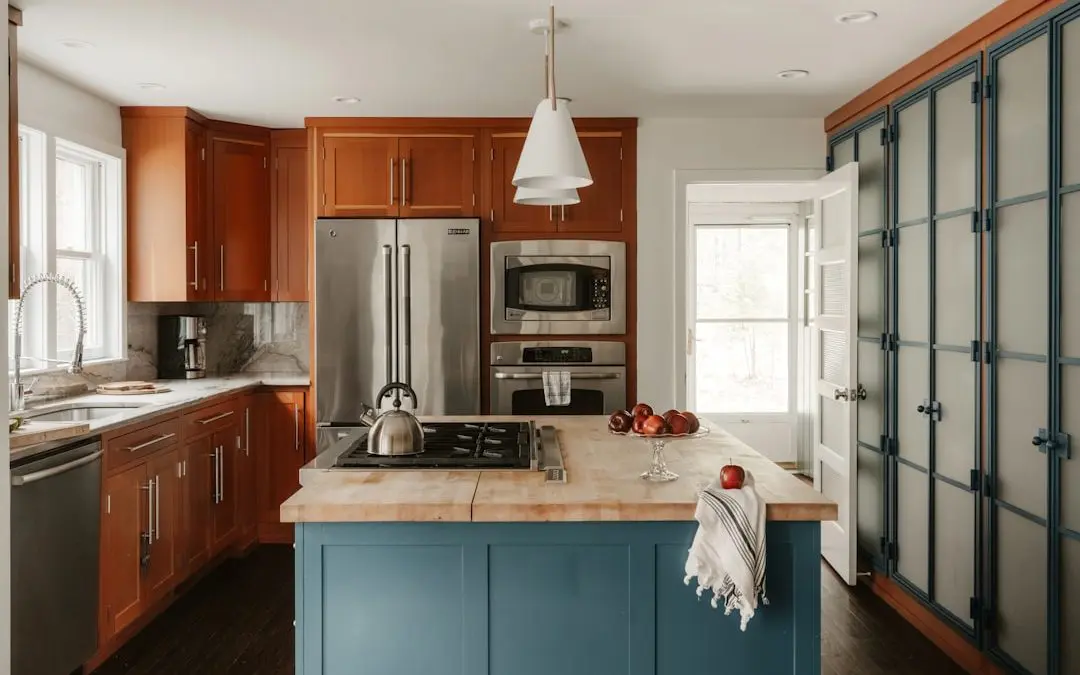
Why Changing the Color of Kitchen Cabinets Is One of the Smartest Home Upgrades You Can Make
Changing the color of kitchen cabinets is one of the fastest, most affordable ways to transform the look and feel of your kitchen — without tearing anything out or spending tens of thousands on a full remodel.
Here are the main ways to do it:
| Method | Best For | Typical Timeline |
|---|---|---|
| Painting | All cabinet types; dramatic color shifts | 3–7 days |
| Staining | Solid wood cabinets; natural wood-grain look | 3–5 days |
| Professional Refinishing | Durable, factory-quality finish | 3–5 days |
A professional refinishing service handles the prep, application, and finish — so you get lasting results without the DIY guesswork. Refinishing can also save up to 70% compared to full cabinet replacement, while adding real value to your home.
I’m Frank Hernandez, President of All Surface Refinishing, with over a decade of hands-on experience changing the color of kitchen cabinets for homeowners and businesses across South Florida. In this guide, I’ll walk you through everything you need to know — from choosing the right method and color to understanding what professional results actually look like.
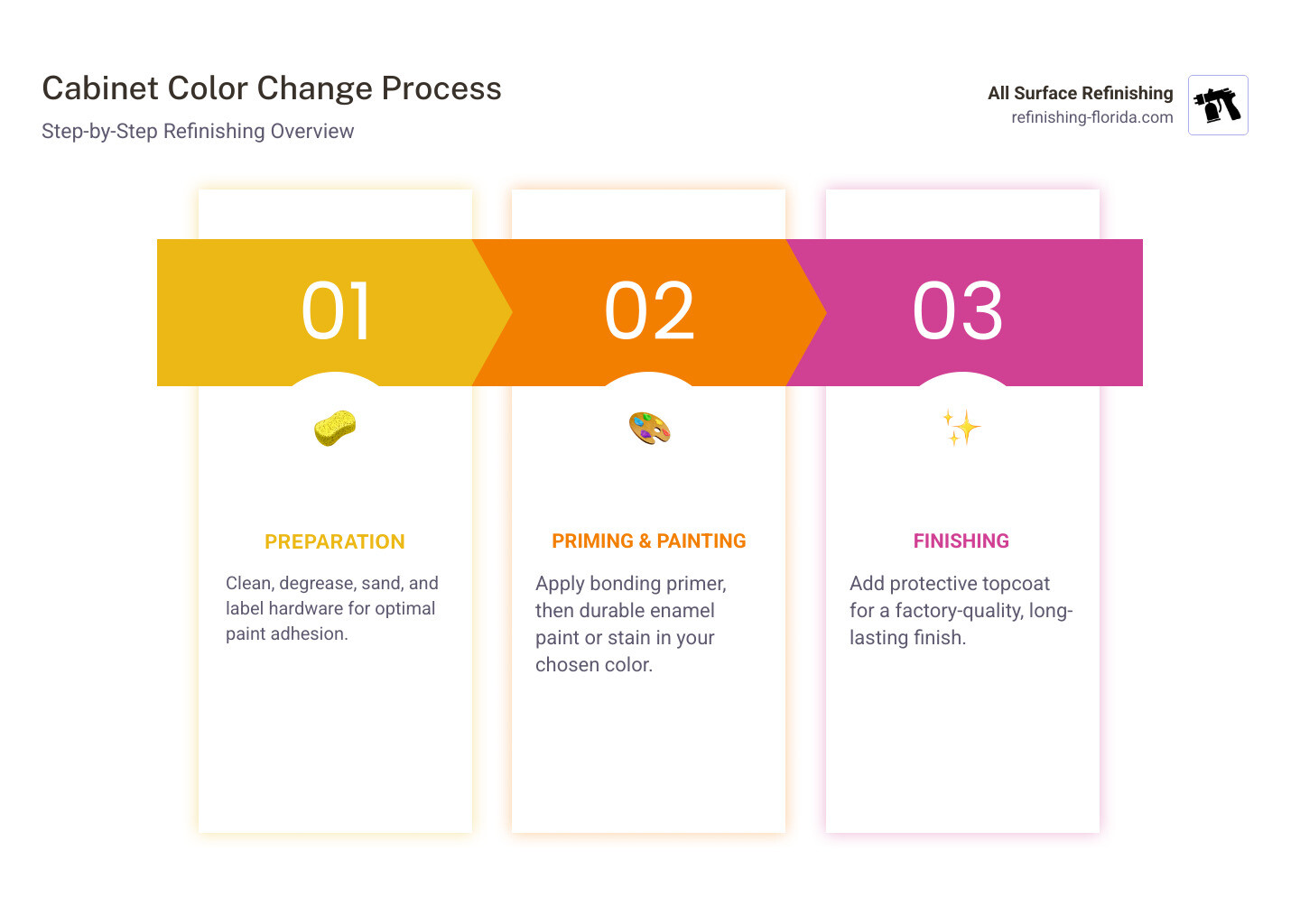
Changing the color of kitchen cabinets word guide:
- Best way to change kitchen cabinet color
- Cabinet color change service
- Kitchen cabinet painting experts
Effective Methods for Changing the Color of Kitchen Cabinets
When you decide it’s time for a change, you aren’t just picking a color; you’re picking a methodology. In our 30+ years of experience across South Florida—from the high-rises of Aventura to the estates in Boca Raton—we’ve seen that the method you choose dictates how long that “new kitchen smell” actually lasts.
Changing the color of kitchen cabinets generally falls into three categories: painting, staining, and professional refinishing.
- Painting: This is the most common DIY and professional route for achieving a solid, opaque look. It’s perfect for covering up dated wood grains (we’re looking at you, 1980s honey oak) or creating a modern, sleek aesthetic.
- Staining: If you love the texture of your wood but hate the shade, staining is the way to go. It involves removing the old finish and applying a new pigment that soaks into the wood fibers. This is a “heavy lift” because it requires stripping the wood down to its bare state.
- Professional Refinishing: This is the “Gold Standard.” It combines the best of both worlds—using high-grade industrial coatings that are far more durable than standard hardware store paint. At All Surface Refinishing, we use specialized equipment to provide a factory-style finish that can withstand the heat and humidity of a Florida summer.
According to experts at Bob Vila, refinishing is a terrific, cost-effective solution for homeowners who are tired of their cabinet color but have structurally sound cabinet boxes. For more details on how we handle these transformations, check out our cabinet color change services.
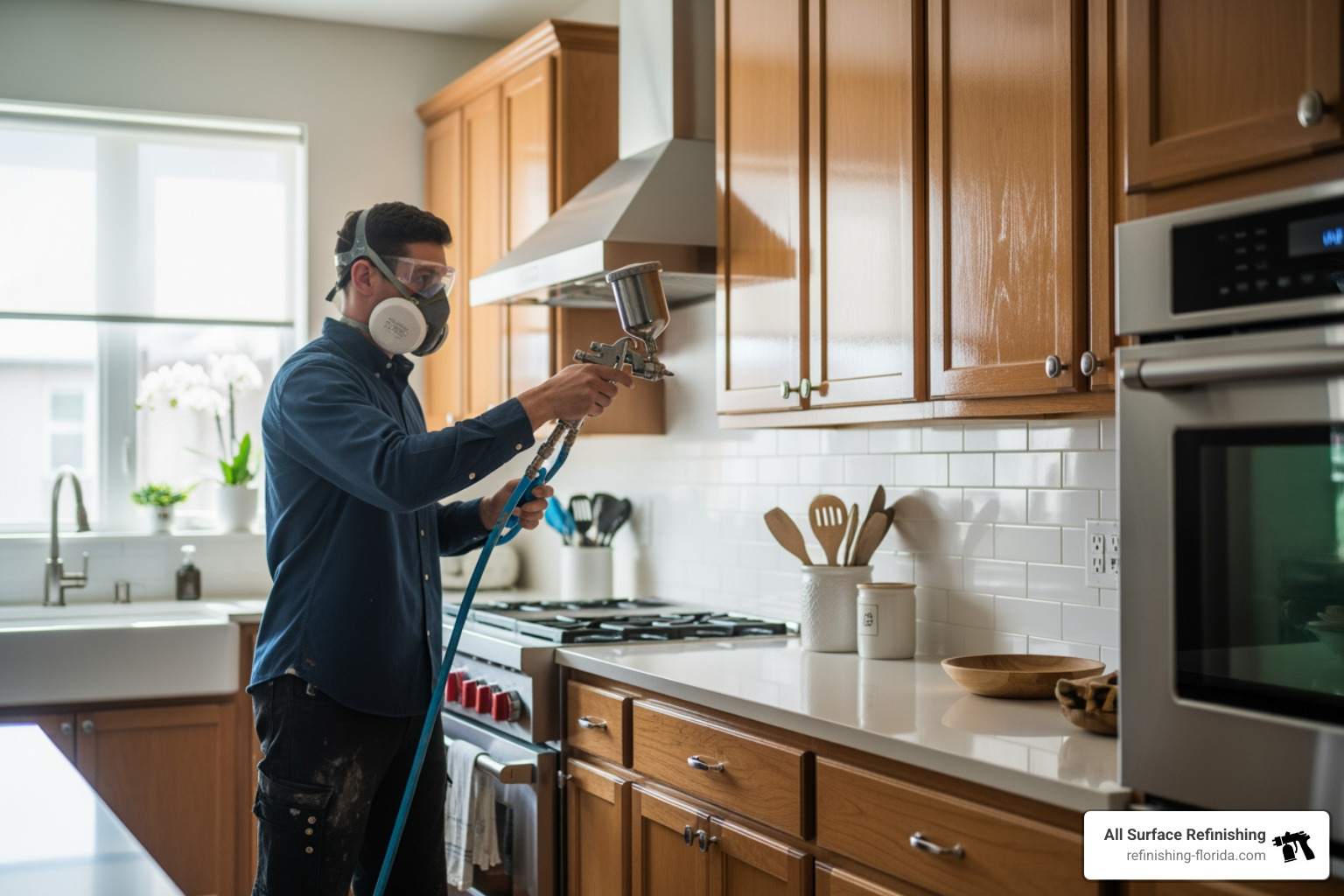
Choosing Between Painting and Staining when Changing the Color of Kitchen Cabinets
The choice between painting and staining often comes down to the “vibe” of your home and the material of your cabinets.
- Go with Painting if: You want a modern, solid color like navy blue or charcoal gray. Painting is also the only viable option if your cabinets are made of MDF or laminate, as these materials won’t “take” a stain. High-quality enamel paint provides a smooth, easy-to-clean surface that hides imperfections in the wood.
- Go with Staining if: You have high-quality solid wood (like cherry, maple, or walnut) and want to showcase the natural grain. Staining can shift a light oak to a deep espresso or a rich mahogany. However, keep in mind that staining requires a wood conditioner to prevent blotchiness, especially on porous woods.
For a deeper dive into the technical side of these finishes, we recommend reading our Practical Guide to Painting Kitchen Cabinets Professionally.
Essential Preparation for Changing the Color of Kitchen Cabinets
If you take only one thing away from this guide, let it be this: Preparation is 90% of the job. You can buy the most expensive paint in the world, but if you apply it over twenty years of bacon grease and finger oils, it will peel.
We follow a rigorous preparation protocol that we call the SVT process:
- Sand: We scuff-sand the surfaces to create “tooth” for the new finish to grip.
- Vac: We vacuum every nook and cranny to remove dust.
- Tack: We use tack cloths to ensure the surface is surgically clean.
Before we even get to the SVT, we use Trisodium Phosphate (TSP) or a heavy-duty degreaser to strip away kitchen contaminants. We also emphasize the importance of labeling. Imagine taking off 30 cabinet doors in a large Coral Springs kitchen and trying to figure out which one goes where four days later. It’s a nightmare! We label every door, drawer, and hinge with a numbering system to ensure a perfect fit during reassembly.
For those brave enough to try a DIY version, The Spruce offers a great 10-step guide, but if you want to see how we condense that into a professional timeline, see our How to Paint Cabinets in 5 Easy Steps.
Choosing the Right Paint and Color for Your Florida Home
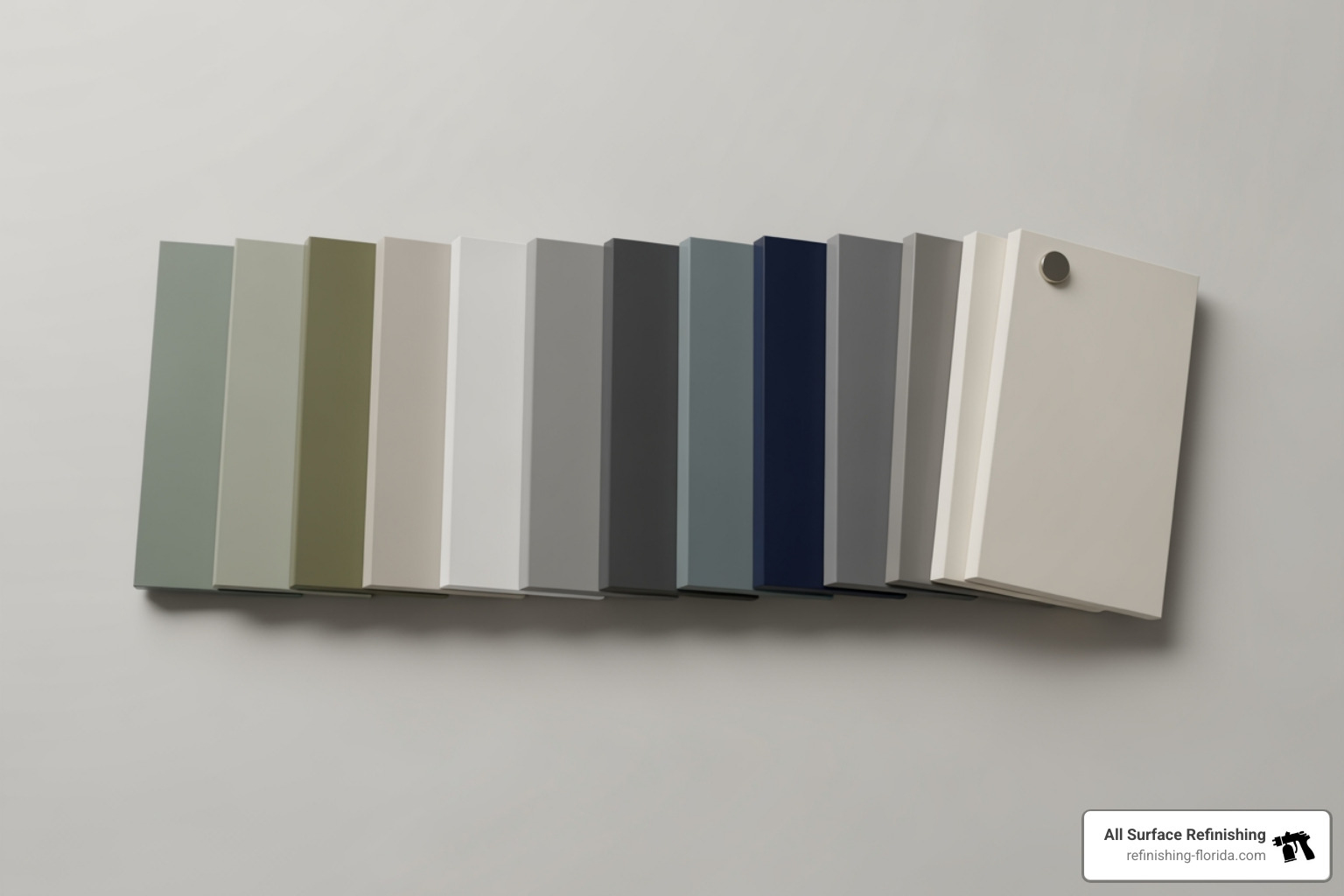
In May 2026, we are seeing a shift toward “organic modern” palettes. While white remains a timeless classic—especially in sun-drenched areas like Miami Beach and Fort Lauderdale—homeowners are getting bolder.
Popular and Timeless Colors for 2025-2026:
- Muted Greens: Sage and olive tones are huge right now. Fun fact: A recent study found that muted green kitchens can add an average of $1,597 to a home’s perceived value!
- Navy Blue: It’s the “new neutral.” It looks stunning against gold or brass hardware.
- Charcoal Gray: Perfect for those who want a sophisticated, moody look without going full black.
- Off-Whites and Creams: In South Florida, the light is very “cool” and bright. Pure white can sometimes feel clinical, so we often recommend warmer off-whites to make the space feel inviting.
Choosing the right product is just as important as the color. We recommend waterborne alkyd or acrylic-urethane enamels. These provide the hardness of an old-school oil paint but without the yellowing or the toxic fumes. You can find our top recommendations in our article: Painting Cabinets: Here’s the Top Paint Pick.
Best Finishes for Durability and Maintenance
In a kitchen, the “sheen” or finish isn’t just about looks—it’s about survival. Kitchen cabinets are high-touch surfaces exposed to steam, grease, and cleaning chemicals.
- Satin Finish: This is our most requested finish. It has a soft glow that hides fingerprints and minor imperfections well, yet it’s durable enough to be wiped down regularly.
- Semi-Gloss: If you have a dark kitchen and want to bounce more light around, semi-gloss is a great choice. It is incredibly moisture-resistant and very easy to scrub.
- Matte: While trendy, we generally advise against matte finishes for cabinets. They tend to show oils from your skin and are much harder to clean without leaving “burnish” marks.
For more on choosing the right finish for your specific kitchen layout, see our guide on how to Paint Kitchen Cabinets.
Handling Different Materials: Wood vs. Laminate
Not all cabinets are created equal. In many South Florida homes, especially in newer developments in Miramar or Pembroke Pines, you’ll find laminate or MDF cabinets.
- Solid Wood: These are the easiest to refinish. They take paint and stain well, provided they are cleaned and sanded properly.
- Laminate/Thermofoil: Can you change the color of laminate? Yes! But you cannot use standard paint. You must use a high-quality bonding primer. Laminate is non-porous, so the primer acts as the “glue” that holds the paint to the surface. Without it, the paint will peel off in sheets.
- MDF (Medium Density Fiberboard): MDF is very stable but acts like a sponge. It requires a solvent-based primer to seal the fibers before you can apply your topcoat.
For a step-by-step on handling these tricky materials, refer to this Tutorial Guide on Changing Cabinet Colors.
The Cost and Value of Professional Cabinet Refinishing
Let’s talk numbers. We know that for our clients in Palm Beach and Martin County, ROI (Return on Investment) is a major factor. A full kitchen remodel can easily top $40,000. Changing your cabinet color gives you that “new kitchen” feeling for a fraction of that.
| Feature | DIY Painting | Professional Refinishing |
|---|---|---|
| Cost | $400 – $1,000 | $1,800 – $5,000+ |
| Labor Time | 80 – 120 hours | 0 hours (for you!) |
| Duration | 1 – 2 weeks | 3 – 5 days |
| Durability | 2 – 5 years | 8 – 15 years |
| Finish Quality | Visible brush marks/drips | Factory-smooth |
While DIY is cheaper upfront, the value of professional work is seen in the longevity. A professional finish using industrial-grade coatings can last 10 years or more, whereas a DIY job often starts chipping near the handles within 24 months.
Furthermore, strategic color choices pay off. As mentioned earlier, the right green can add nearly $1,600 in value, whereas “daisy yellow” has been shown to reduce home value by up to $4,000! For a personalized quote, check out our Cabinet Painting Cost Estimate and our Guide to Cabinet Painting & Refinishing Expenses.
Timeline and Longevity of Professional Results
Time is the one thing we can’t make more of. A DIY cabinet project usually turns a kitchen into a “construction zone” for at least two weekends. Our professional process is designed to minimize disruption.
Most of our projects in areas like Boynton Beach and Delray Beach take just 3 to 5 days.
- Day 1: Teardown, labeling, and deep cleaning.
- Day 2: Masking the kitchen (turning it into a temporary spray booth) and priming.
- Day 3-4: Applying multiple coats of industrial enamel and allowing for initial cure.
- Day 5: Reinstallation and hardware adjustment.
Because we use professional-grade products, the “cure time” (the time it takes for the paint to reach maximum hardness) is much faster than retail paints. You can usually start using your kitchen gently within 24 hours of completion. To learn more about the full lifecycle of a project, read our Cabinet Painting Services Complete Guide.
Frequently Asked Questions
Do I need to sand my cabinets before changing the color?
Yes. We get this question all the time because “no-sand” paints are heavily marketed. While some products have great adhesion, we always recommend at least a light scuff-sanding with 220-grit sandpaper. This removes the gloss from the previous finish and creates a mechanical bond. If you skip sanding, you are relying 100% on the chemical bond of the primer, which is a risky gamble in a high-traffic kitchen. Learn more in our guide on How to Change Kitchen Cabinet Color Like a Pro.
How do I handle lead paint in older Florida homes?
If your home was built before 1978 (common in historic parts of West Palm Beach or Coconut Grove), there is a chance your cabinets have lead-based paint. Do not sand them yourself. We recommend getting a lead test kit from a hardware store. If it’s positive, you need professional abatement. We take safety seriously and follow all EPA guidelines to ensure your family isn’t exposed to toxic dust.
Can I change the color of my cabinets without removing the doors?
You can, but you shouldn’t. Painting doors while they are hanging leads to drips, “bridge” marks where the door meets the frame, and paint getting into the hinges. We always remove the doors and drawer fronts to paint them in a controlled environment (or a dedicated spray area). This ensures every edge is covered and the finish is perfectly level.
Conclusion
Changing the color of kitchen cabinets is more than just a weekend project; it’s a strategic investment in your home’s beauty and value. Whether you’re in a cozy condo in Hallandale Beach or a sprawling estate in Wellington, a fresh color can completely redefine your living space.
At All Surface Refinishing, we bring 30+ years of experience and over 14,000 successful projects to every kitchen we touch. We pride ourselves on being South Florida’s trusted experts, serving communities from Miami to Jupiter and everywhere in between. We don’t just “paint” cabinets; we transform them using industrial-grade techniques that stand the test of time.
Ready to give your kitchen the facelift it deserves? Let us help you navigate the colors, finishes, and processes to get the kitchen of your dreams at a fraction of the cost of a remodel.
Contact us today for a free consultation! Explore our professional cabinet services
