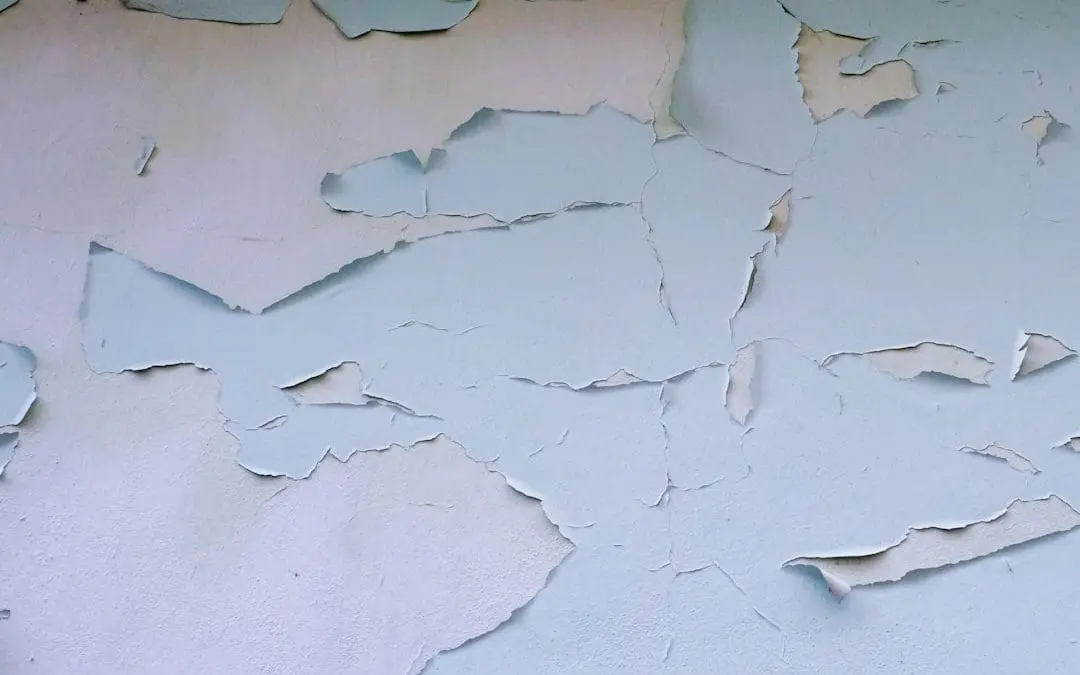
Why is My Painted Bathtub Peeling?
Painted bathtub peeling is a common problem — and it’s one you can fix without replacing the entire tub.
Here’s a quick summary of what to do:
- Stop using abrasive cleaners — they accelerate peeling.
- Remove suction cup bath mats — they pull up the coating over time.
- For small chips or peels — use an epoxy touch-up kit from your local hardware store.
- For widespread peeling — professional refinishing is the most durable, cost-effective solution.
- Don’t ignore it — peeling exposes the surface beneath to rust, bacteria, and moisture damage.
A peeling bathtub is more than just an eyesore. Once the coating starts lifting, water gets underneath. That leads to rust, mold, and a surface that keeps getting worse — fast.
The good news? You don’t need a full tub replacement. Whether you’re dealing with a small patch or sheets of coating coming off, there are proven ways to fix it — and keep it from happening again.
This guide walks you through exactly what causes painted bathtub peeling, how to repair it, and how to prevent it from coming back.
I’m Frank Hernandez, President of All Surface Refinishing, and I’ve been refinishing bathtubs across South Florida since 1996 — so I’ve seen every type of painted bathtub peeling there is, from minor chips to full coating failures. Let’s get your tub looking like new again.
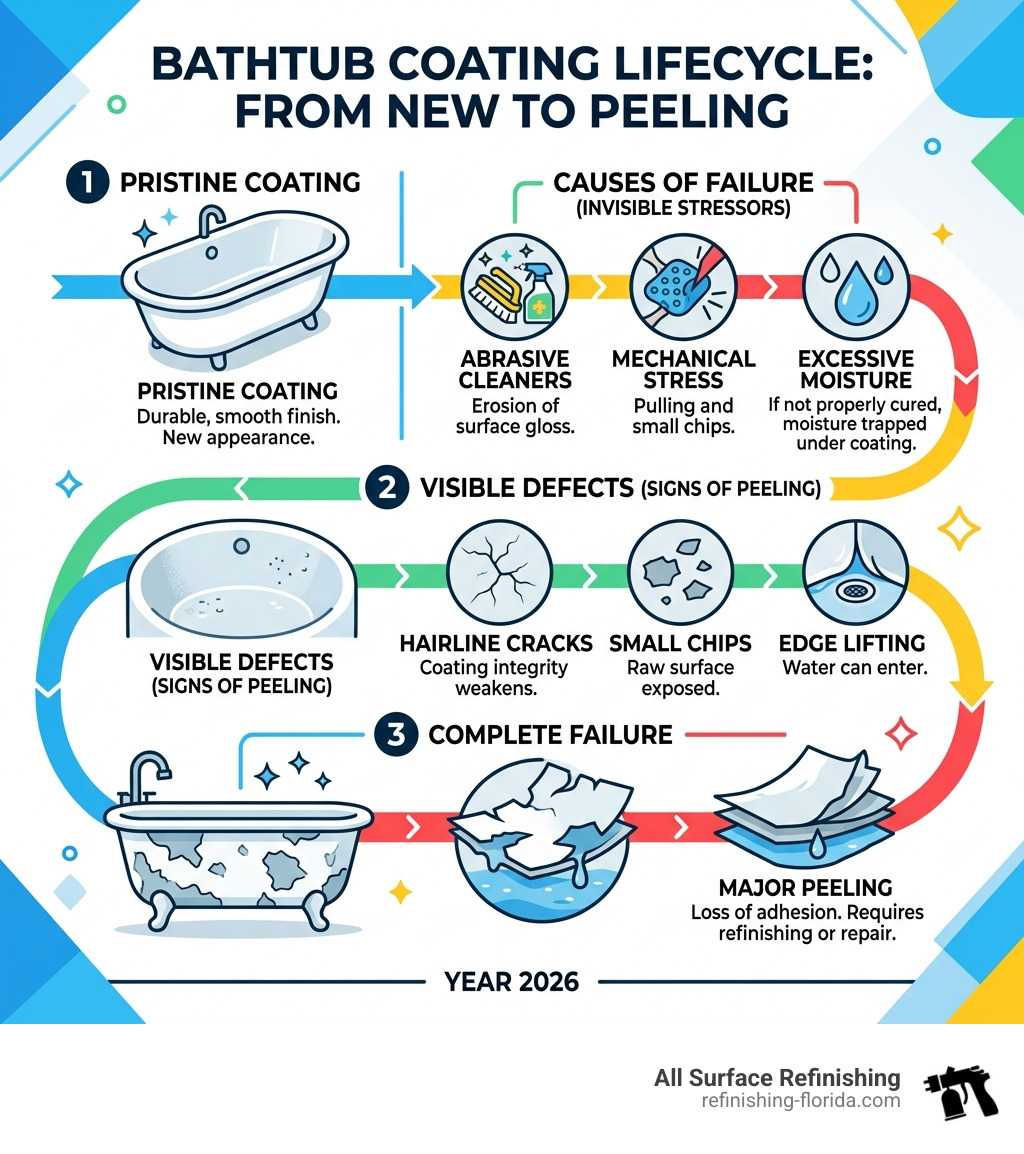
Painted bathtub peeling further reading:
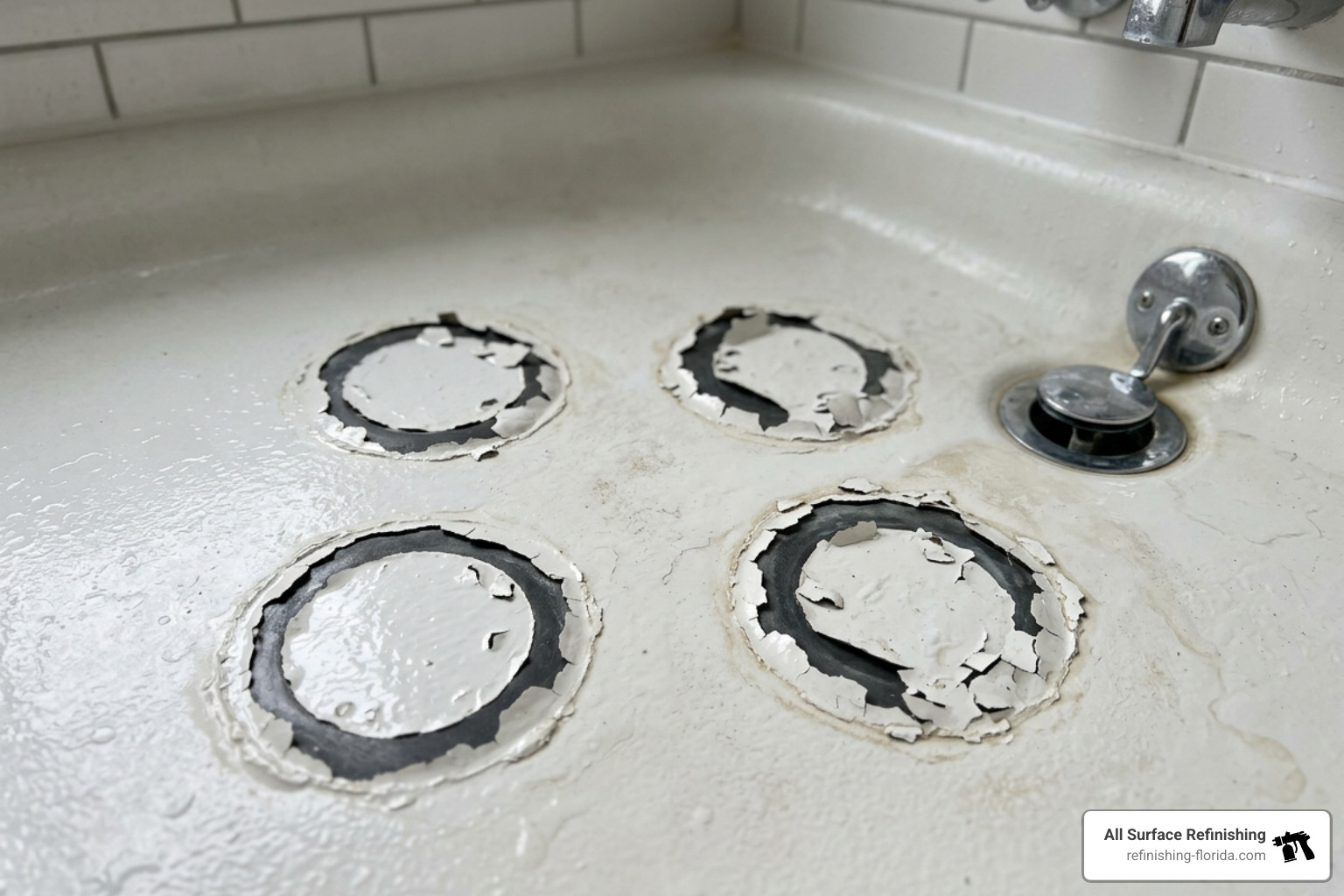
When you see your bathtub finish lifting in sheets or flaking off in small pieces, it’s rarely a “spontaneous” event. Usually, painted bathtub peeling is the result of a breakdown in the bond between the coating and the original tub surface. Many homeowners in areas like Boca Raton or Fort Lauderdale don’t even realize their tub was previously refinished until the paint starts coming off.
The most common culprit? Poor preparation. If the previous person who painted the tub didn’t thoroughly clean off soap scum, body oils, and mineral deposits, the new paint has nothing to grab onto. Over time, the constant cycle of hot and cold water causes the tub material to expand and contract (thermal expansion). If the paint isn’t flexible or well-bonded, it simply cracks and lifts.
Another major offender is the humble suction cup bath mat. While they keep you from slipping, those tiny suction cups act like miniature plungers. Every time you lift the mat, you are literally pulling at the paint. If there is any weakness in the bond, the mat will win, leaving behind circular peeling patterns. For more on why this happens, check out our guide on Bathtub Coating Peeling Off Quick Fixes Long Term Solutions.
Common Causes of Adhesion Failure
Adhesion is the “glue” that keeps the finish on your tub. When it fails, you get painted bathtub peeling. This often happens due to:
- Incompatible Materials: Using standard porch paint or generic enamel on a non-porous surface like porcelain is a recipe for disaster.
- Soap Scum and Hard Water: If these aren’t removed with industrial-strength cleaners during the prep phase, they create a “slick” layer that prevents paint from sticking.
- Abrasive Cleaners: Using gritty powders (like Comet or Ajax) on a painted tub creates microscopic scratches. Water enters these scratches, gets under the paint, and pushes it up.
- Contractor Shortcuts: Sometimes, a “quick fix” involves painting over a damp surface or skipping the etching process. This leads to what we call delamination—where the top coat simply slides off. You can learn more about the technical side of these steps in this How to Fix a Peeling Bathtub in 8 Steps guide.
The Role of Moisture and Humidity in Florida Bathrooms
In South Florida, we deal with a unique challenge: humidity. Whether you’re in the coastal air of Delray Beach or the humid suburbs of Weston, moisture is everywhere.
When a bathtub is painted, moisture can actually diffuse through the coating at a molecular level. If the coating is too thin or the wrong material (like certain polyurethanes), “microchannels” form. These channels allow water vapor to reach the original tub surface, where it sits and rots the bond from the inside out. This is why professional Bathtub Resurfacing in Fort Lauderdale requires specialized moisture-resistant bonding agents to ensure the finish survives our tropical climate.
Is Painted Bathtub Peeling Dangerous for Your Family?
At first glance, a peeling tub just looks “dirty.” However, painted bathtub peeling can actually pose several risks to your family’s health and safety.
First, there is the physical hazard. Peeling paint creates uneven surfaces and sharp edges that can scratch skin, especially for children. Furthermore, as the paint flakes away, it creates a “trip hazard” or a slip-and-fall risk if the underlying surface is smoother than the painted area.
Beyond the physical, there’s the hygiene factor. The gaps between the peeling paint and the tub surface are perfect breeding grounds for bacteria and mold. Because you can’t easily scrub under the peeling paint, soap scum and stagnant water sit there, potentially leading to skin irritation or worse. For a deeper dive into these risks, read about Is Bathtub Paint Peeling Dangerous?.
Toxic Chemicals and Fume Considerations
If you decide to fix the tub yourself or hire a low-cost contractor, you need to be aware of the chemicals involved. Many old-school bathtub strippers contain methylene chloride, a highly toxic chemical that has been linked to severe respiratory issues and even fatalities when used in unventilated spaces.
When we perform a Professional Bathtub Resurfacing, we use high-powered exhaust systems to pull fumes out of your home. If you are sensitive to smells or have respiratory issues, it’s vital to ensure that whoever is fixing your tub uses proper safety protocols and low-VOC materials where possible.
Structural Risks: From Peeling to Rust
For cast iron tubs, painted bathtub peeling is the first step toward structural damage. Once the enamel or paint is gone, the raw iron is exposed to water and oxygen. This leads to oxidation—better known as rust.
Rust isn’t just a stain; it’s a “cancer” for your tub. It eats into the metal, causing pitting and eventually holes that can leak into your floorboards. If you have a fiberglass tub, peeling paint can expose the porous fibers, leading to degradation and cracking. If you notice orange stains or rough spots, you should look into Patching Rusty Bathtub Spots before the damage requires a total tub replacement.
How to Fix a Peeling Bathtub: DIY vs. Professional Solutions
When homeowners in Miami or West Palm Beach see their tub peeling, they usually ask: “Can I just fix this myself?” The answer depends on the extent of the damage and how long you want the fix to last.
| Feature | DIY Epoxy Kit | Professional Acrylic Resurfacing |
|---|---|---|
| Cost | $50 – $150 | $400 – $800 |
| Durability | 1 – 2 years | 10 – 15+ years |
| Finish Quality | Visible brush/roller marks | Smooth, high-gloss spray finish |
| Preparation | Basic cleaning/sanding | Industrial etching & bonding agents |
| Cure Time | 3 – 5 days | 24 – 48 hours |
For a long-term fix, Professional Bathtub Reglazing is almost always the better investment.
Step-by-Step DIY Repair for Painted Bathtub Peeling
If you have a very small chip (smaller than a dime) and the rest of the tub is in great shape, a DIY touch-up can work. Here is how to handle a Simple Repair and Recoat:
- Scrape: Use a paint scraper to remove any loose or flaking paint around the damaged area. Be aggressive—if it’s loose, it has to go.
- Sand: Use 80-grit sandpaper to smooth the edges where the paint meets the tub. You want a “feathered” edge so you don’t feel a bump.
- Clean: Use acetone or a strong degreaser to remove all dust and oils. Dry it completely with a lint-free tack cloth.
- Fill: If there’s a deep chip, apply a bit of epoxy putty and let it dry. Sand it smooth once cured.
- Mask: Use masking tape to protect the drain and the surrounding tile.
- Paint: Apply a bathtub-specific epoxy paint. Use a high-quality brush and try to keep your strokes even.
- Cure: Do not use the tub for at least 72 hours.
Why Professional Refinishing Stops Painted Bathtub Peeling
The reason DIY kits often fail is that they rely on “mechanical” adhesion (the paint sticking to scratches in the surface). Our Bathtub Reglazing Experts use a “molecular” bonding process.
We apply a proprietary bonding agent (like a chemical primer) that creates a permanent link between the old tub and the new coating. We then use industrial sprayers to apply multiple layers of high-tech acrylic, which is much more durable than the epoxy found in store-bought kits. This process ensures the paint won’t peel, even with heavy daily use.
Preventing Future Painted Bathtub Peeling
Once your tub is fixed, you want it to stay that way. The longevity of your tub’s finish depends heavily on how you treat it in the first few weeks and months. For more specific details on our process, visit our services/bathtub page.
Maintenance Tips for Long-Lasting Results
- Wait to Wash: Even if the tub feels dry, the chemical “cure” takes time. Avoid using the tub for the full recommended time (usually 24–48 hours for pros).
- Go Gentle: Throw away the steel wool and the scouring powders. Use liquid dish soap or a specialized non-abrasive bathtub cleaner.
- Dry it Out: After your last shower of the day, give the tub a quick wipe with a towel. This prevents mineral deposits from building up and attacking the finish.
- No Suction Cups: If you need a bath mat, use a silicone mat that stays in place without suction, or look into having a permanent non-slip surface applied during the refinishing process. You can find more tips on how to Reglaze Tub surfaces correctly to avoid these issues.
Choosing the Right Materials for Florida Tubs
Not all coatings are created equal. In our experience with Fiberglass Bathtub Resurfacing and Cast Iron Bathtub Refinishing, we’ve found that high-solids acrylic coatings perform best.
While epoxy is great for filling chips, it can yellow over time when exposed to sunlight (a big factor in Florida bathrooms). Polyurethane is common in the industry but can be sensitive to constant water submersion. We recommend professional-grade acrylic because it retains its gloss and stays flexible enough to handle the “expansion and contraction” of your tub without peeling.
Frequently Asked Questions about Peeling Tubs
What should a tenant do if their bathtub paint is peeling?
If you are renting an apartment in Boynton Beach or Miami, and your painted bathtub peeling starts, tell your landlord immediately.
Many tenants worry they will lose their security deposit, but peeling is almost always caused by a failing reglazing job from years ago—not by the tenant’s use. Reporting it early prevents the tub from rusting, which saves the landlord money. Document the issue with photos and send an email so there is a record. For professional advice on how these repairs are handled in rentals, see Bathtub Refinishing Services in Boynton Beach.
How long do bathtub refinishing or repair jobs typically last?
A DIY repair kit usually looks presentable for about 1 to 2 years before it starts to chip or yellow. In contrast, a professional refinishing job from All Surface Refinishing typically lasts 10 to 15 years, and in many cases up to 20 years, provided you follow the basic maintenance steps. The difference in longevity comes down to the quality of the bonding agents and the thickness of the sprayed-on coating.
Are the fumes from bathtub refinishing toxic?
The chemicals used to strip and reglaze a tub are strong. During the application, they can cause dizziness or irritation if inhaled. This is why we use professional ventilation systems that vent the air directly outside. The “paint smell” usually lingers for about 24 hours, but once the coating is cured, it is completely non-toxic and safe for the whole family, including pets and sensitive individuals.
Conclusion
Dealing with painted bathtub peeling is frustrating, but it doesn’t have to be a permanent headache. By understanding the causes—like poor prep and harsh cleaners—you can take the right steps to restore your bathroom’s beauty. Whether you choose a quick DIY touch-up for a small chip or opt for a professional transformation, the key is acting before rust and mold take over.
At All Surface Refinishing, we’ve spent over 30 years helping homeowners from Miami to West Palm Beach save thousands of dollars by resurfacing instead of replacing. With over 14,000 projects completed, we know exactly what it takes to make a tub finish last in the Florida climate.
Ready to say goodbye to those ugly flakes? Contact us for more info about bathtub services and get a free quote today. Let’s give your bathtub the “forever finish” it deserves.
