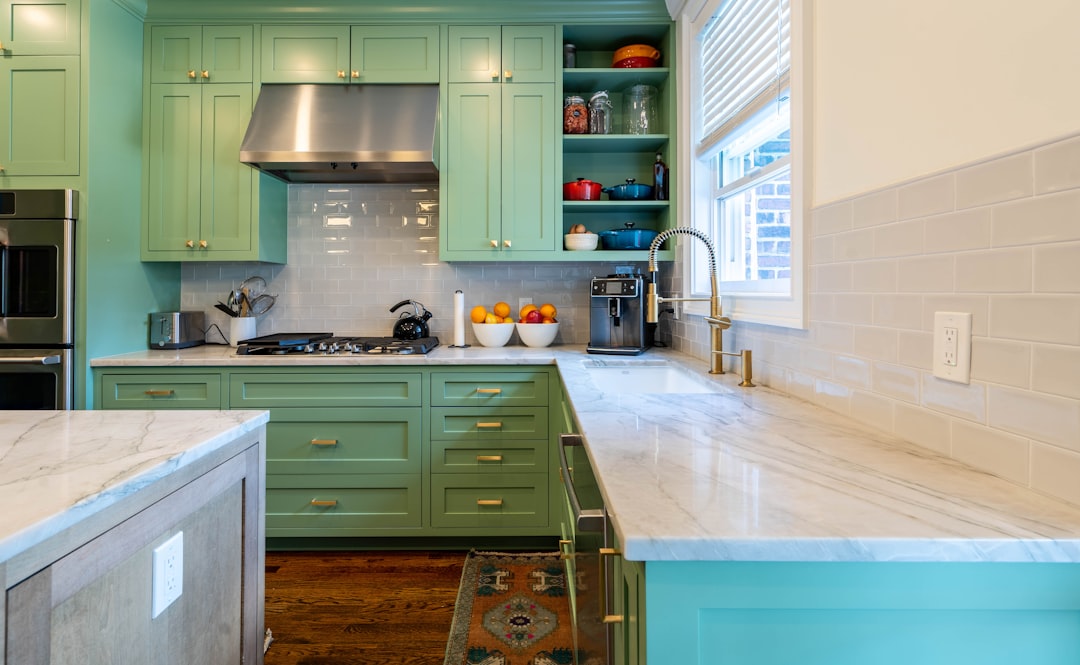
Why Knowing What Is Cabinet Resurfacing Can Save Your Kitchen Budget
When planning a kitchen remodel, asking what is cabinet resurfacing can save you thousands of dollars while completely transforming your space.
Cabinet resurfacing (often called cabinet refinishing) is a specialized process where professional technicians clean, prep, and spray a highly durable, industrial-grade coating over your existing cabinet boxes, doors, and drawer fronts. Instead of tearing out your structurally sound cabinets, this process bonds a fresh, factory-like finish directly to the existing surfaces, making them look brand new for a fraction of the replacement cost.
Here is a quick look at what the process involves:
- No Demolition: Your existing cabinet boxes, doors, and drawer fronts stay in place.
- Surface Prep: Technicians deep-clean, sand, and repair any minor surface damage.
- High-Performance Coating: A durable, acrylic polyurethane finish is sprayed on using professional HVLP equipment.
- Fast Turnaround: The entire process usually takes just a few days, compared to weeks of messy construction.
I’m Frank Hernandez, President of All Surface Refinishing, and since 1996, our family-owned team has helped South Florida property owners understand what is cabinet resurfacing and how it can breathe new life into their kitchens and bathrooms. Over the last three decades, we have perfected these durable, high-performance spray techniques to deliver stunning, factory-grade results without the headache of a full kitchen tear-out.
What is cabinet resurfacing terms to know:
What is Cabinet Resurfacing?
To truly understand what is cabinet resurfacing, it helps to look at how we approach kitchen and bathroom remodeling here in South Florida. Many homeowners assume that the only way to get a modern, clean kitchen is to rip out everything down to the drywall. However, cabinet resurfacing offers a smarter, less invasive alternative.
Instead of replacing the entire wooden structure, we focus on the exterior surfaces that define your kitchen’s aesthetics. By cleaning, prepping, and applying an advanced, high-performance coating to your cabinet boxes, face frames, and doors, we achieve a flawless finish that looks like it came straight from a high-end cabinet manufacturer.
This is not a temporary cosmetic cover-up. It is a structural-grade surface transformation. Because we use industrial-grade coatings rather than standard retail paint, the finished product resists moisture, grease, and daily wear. To learn more about the basic fundamentals of this process, check out our Cabinet Resurfacing 101 guide.
The Core Process: What is Cabinet Resurfacing in Practice?
In practice, the resurfacing process is a highly systematic craft. It begins with meticulous cabinet surface preparation. We don’t just spray over old kitchen grease and grime; we remove all doors and drawer fronts, clean every square inch with specialized degreasing agents, and sand the surfaces to create a perfect profile for adhesion.
Next, our technicians set up a mobile spray booth in your home, carefully masking off your walls, floors, and appliances. We then use high-volume, low-pressure (HVLP) professional cabinet spray equipment to apply an industrial-grade acrylic polyurethane cabinet finish. This chemical compound cures into an incredibly hard, rock-solid shell that resists chipping, scratching, and fading. For a detailed look at how this process is executed locally, read our Complete Guide Cabinet Refinishing Hialeah.
Why Homeowners Choose What is Cabinet Resurfacing Over Replacement
The decision to resurface rather than replace comes down to three main factors: cabinet structural integrity, cost, and convenience.
Most older cabinets built in South Florida homes feature exceptionally strong plywood or solid wood cabinet frames. Tearing these out to install cheap, modern particle-board stock cabinets is actually a step backward in quality. Resurfacing preserves these high-quality materials while upgrading their look.
Additionally, choosing to resurface is one of the most eco-friendly kitchen cabinet options available. It keeps perfectly good wood out of local landfills and avoids the environmental toll of manufacturing and shipping new cabinet boxes. For broader renovation-waste context, the U.S. Environmental Protection Agency provides guidance that applies to kitchen cabinet demolition waste. Plus, because the kitchen layout remains exactly the same, you avoid the domino effect of having to replace your countertops, plumbing fixtures, and backsplash. Dive deeper into these benefits with our Cabinet Refinishing Complete Guide 2025.
Cabinet Resurfacing vs. Replacing: Cost and Value Comparison
When planning a kitchen remodel, your budget is often the deciding factor. Let’s look at how professional cabinet resurfacing stacks up against full cabinet replacement in terms of cost and value.
| Project Type | Average Cost Range | Project Duration | Disruption Level | Lifespan |
|---|---|---|---|---|
| Professional Cabinet Resurfacing | $1,500 – $4,500 | 3 to 5 Days | Very Low (Kitchen remains usable) | 10 to 20 Years |
| Full Cabinet Replacement | $8,000 – $25,000+ | 2 to 4 Weeks | Extremely High (No kitchen for weeks) | 15 to 25 Years |
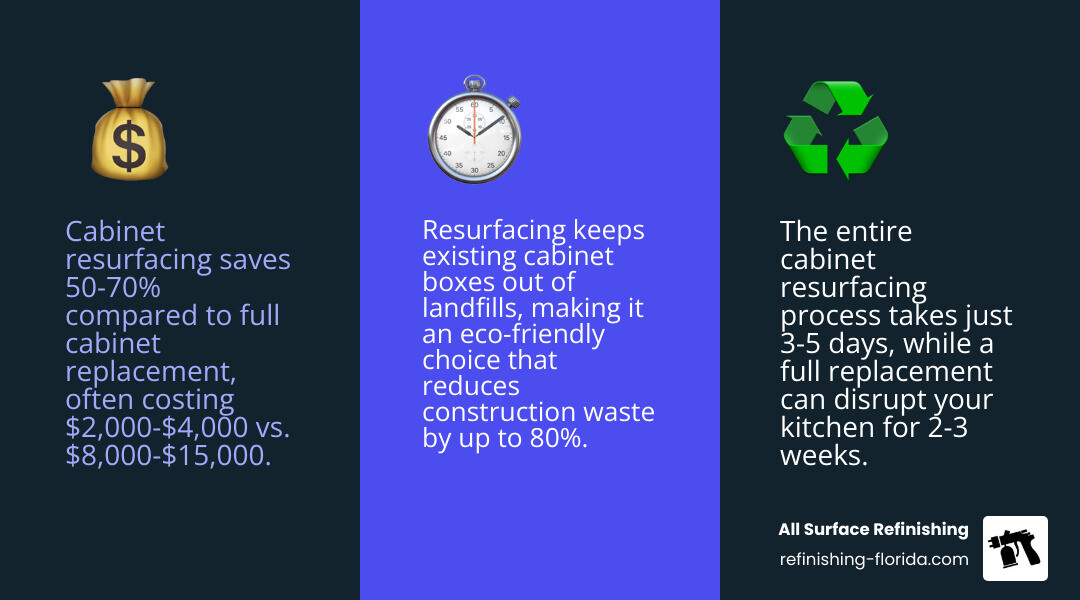
As the table shows, professional cabinet resurfacing delivers massive kitchen cabinet budget savings. By opting to resurface, you can save up to 70% compared to new cabinet installation costs. Those saved thousands of dollars can then be reinvested into other areas of your home, or used to upgrade your appliances and lighting. For a comprehensive breakdown of these financial benefits, consult our Cabinet Resurfacing Cost Guide Save Thousands on Your Kitchen Remodel.
Professional vs. DIY Resurfacing Costs
It can be tempting to try a DIY approach to save money. However, DIY cabinet painting risks are incredibly high. Standard retail paints, rollers, and paintbrushes simply cannot produce a factory-smooth finish. Without industrial-grade spray equipment and professional-strength chemical bonding agents, DIY coatings are highly prone to brush marks, runs, and peeling—especially in high-humidity Florida climates.
When you invest in a professional cabinet application, you are paying for long-term cabinet durability. Our team at All Surface Refinishing brings over 30 years of hands-on experience, specialized spray booths, and commercial-grade coatings that are simply unavailable to the general public. To compare the true costs of doing it yourself versus hiring a pro, read our Cabinet Refinishing Cost Guide.
The Step-by-Step Cabinet Resurfacing Process
To achieve a flawless, factory-grade finish, we follow a strict multi-step protocol. Here is exactly how we transform your kitchen from start to finish:
This systematic workflow ensures that every door, drawer, and face frame receives the exact same level of detail and care. For more tips on managing this process, see our guide on how to Refinish Old Kitchen Cabinets.
Preparing the Cabinet Boxes and Doors
The secret to a durable finish is 90% preparation and 10% application. The process begins with careful cabinet hardware removal. We take off all doors, drawer fronts, hinges, and handles.
Next, we perform an intensive cabinet surface cleaning. Kitchen cabinets accumulate a thick layer of microscopic cooking oils, steam residue, and hand oils over the years. We use industrial-strength degreasing agents to strip these contaminants away. Once clean, we sand all surfaces to remove the old glossy topcoat. We also perform cabinet grain filling on open-grain woods (like oak) to ensure the final finish is perfectly smooth and modern. Learn more about these preparation steps in our Kitchen Cabinet Refurbishing guide.
Applying the High-Performance Finish
Once prep is complete, the magic happens. We seal off the rest of your home with heavy-duty plastic masking to protect your furniture, floors, and countertops.
Using specialized HVLP cabinet sprayers, we apply a multi-coat cabinet system. This includes a high-adhesion bonding primer followed by multiple coats of our premium acrylic polyurethane. This material flows out perfectly flat as it dries, erasing any trace of wood grain or imperfections and leaving behind a factory-like cabinet finish that is incredibly easy to clean. For a closer look at how we deliver these results in your area, view our Cabinet Refinishing Aventura Complete Guide.
Pros and Cons of Resurfacing Your Kitchen Cabinets
Like any home improvement project, cabinet resurfacing has its advantages and limitations. Weighing these cabinet resurfacing pros and cons will help you decide if this is the right path for your home.
The Pros:
- Incredible Savings: Costs a fraction of full cabinet replacement.
- Rapid Turnaround: Your kitchen is back in service in days, not weeks.
- Extreme Durability: Our industrial coatings offer superior cabinet moisture resistance, which is absolutely vital in our humid Florida kitchen climate.
- Eco-Friendly: Reduces home waste by keeping sturdy wood out of landfills.
- No Countertop Risk: You don’t have to risk cracking your beautiful granite or quartz countertops during a messy cabinet demolition.
To see real-world transformations, browse through our Cabinet Resurfacing Before and After gallery.
When is a Cabinet a Good Candidate for Resurfacing?
Not every kitchen is a candidate for resurfacing. The primary requirement is cabinet structural soundness. If your cabinet boxes are structurally strong, they are perfect candidates.
- Plywood cabinet frames and solid wood boxes are the gold standard for resurfacing.
- MDF cabinet boxes (Medium-Density Fiberboard) are also excellent candidates, provided they have not suffered severe water damage or swelling.
If your current kitchen layout works well for your daily routine, resurfacing is almost always the best choice. To assess your kitchen’s structural readiness, check out our Cabinet Resurfacing 101 guide.
Limitations of Cabinet Resurfacing
While resurfacing works wonders, it cannot solve every problem.
- Layout Changes: If you want to move your sink, relocate your range, or knock down walls to create an open-concept kitchen, resurfacing alone won’t suffice (though you can resurface the remaining cabinets after making structural changes).
- Severely Damaged Wood: Cabinets that are rotting, structurally sagging, or heavily swollen from water damage must be replaced rather than resurfaced.
If you are unsure whether your cabinets can be saved, our team can evaluate them during a professional consultation. You can learn more about our specific offerings on our Cabinet Refinishing Services page.
Frequently Asked Questions About Cabinet Resurfacing
How long do resurfaced cabinets last?
With proper care, professionally resurfaced cabinets will easily last 10 to 20 years. Because we use industrial-grade polyurethane coatings rather than standard household paint, the finish behaves like a factory-baked enamel. Maintaining them is simple: just wipe them down with a soft microfiber cloth and a mild soap-and-water solution. Avoid harsh abrasives or wax-based cleaners. For more detailed maintenance tips, see our Cabinet Resurfacing 101 guide.
Do resurfaced kitchen cabinets peel?
When performed by a professional, resurfaced cabinets do not peel. Peeling only occurs when there is poor cabinet coating adhesion, usually caused by improper cleaning, inadequate sanding, or using cheap retail paints. In South Florida, high kitchen humidity can ruin a DIY paint job quickly. Our professional-grade bonding primers are chemically engineered to cross-link with the wood fibers, creating an unbreakable bond that withstands heat and moisture. Read more about humidity protection in our Kitchen Cabinet Refinishing Greenacres Guide.
Do you have to remove countertops to resurface cabinets?
No! One of the biggest advantages of cabinet resurfacing is that you do not have to remove your countertops. During a full kitchen cabinet replacement, countertops are highly susceptible to cracking or breaking when pried off the old cabinet boxes. Our resurfacing process offers zero kitchen disruption to your existing countertops, backsplash, and flooring. We mask off and protect your countertops completely before we begin spraying, ensuring a clean, stress-free update.
Conclusion
Understanding what is cabinet resurfacing is the first step toward achieving the kitchen of your dreams without breaking the bank. By preserving your structurally sound cabinet boxes and applying an ultra-durable, factory-grade coating, you get a beautiful, modern space quickly, cleanly, and affordably.
At All Surface Refinishing, we are proud to be South Florida’s trusted experts in bathtub, countertop, and cabinet resurfacing. With over 30 years of experience and more than 14,000 successful projects under our belt, we serve homeowners across Broward, Miami-Dade, and Palm Beach Counties—including Aventura, Boca Raton, Fort Lauderdale, Miami, Hialeah, and West Palm Beach.
Are you ready to skip the stress of a major demolition and save thousands on your remodel? Transform your kitchen with professional cabinet resurfacing by contacting our team today for a free estimate!
