Is Bathtub Resurfacing Worth It — or Should You Just Buy a DIY Kit?
Bathtub resurfacing is the process of restoring your existing tub’s surface with new coatings — instead of ripping it out and starting over. Here’s the short answer to what most people want to know:
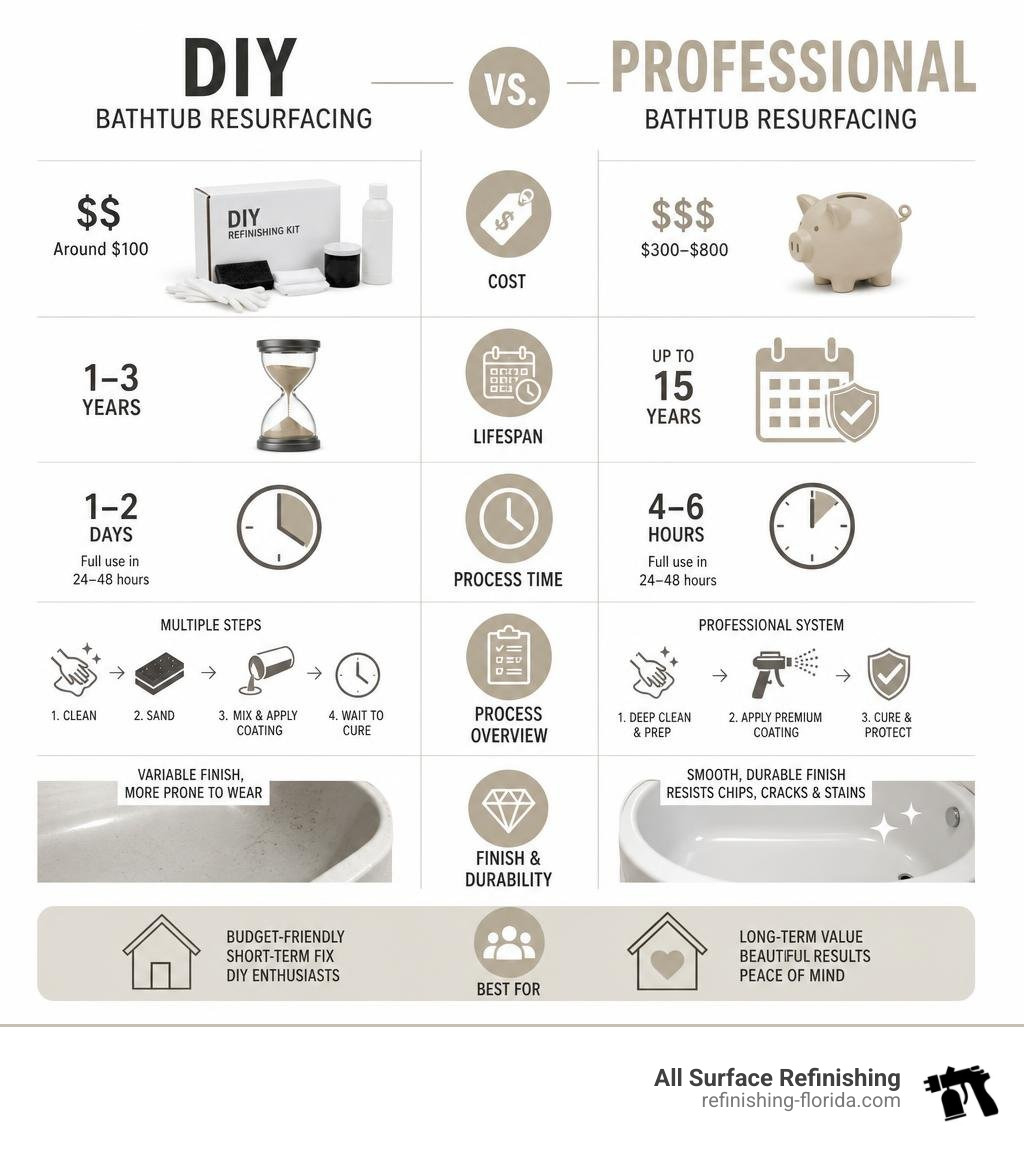
- Cost: Professional resurfacing typically runs $300–$800. Full replacement costs $3,000–$8,000+.
- Time: Most jobs are done in 4–6 hours. Replacement takes 1–4 weeks.
- DIY kits: Available for around $100, but they come with real trade-offs in durability and finish quality.
- Lifespan: A professionally resurfaced tub can last up to 15 years with proper care.
- Materials: Works on porcelain, cast iron, fiberglass, acrylic, and more.
So yes — resurfacing can save you up to 80% compared to replacement. But how you resurface your tub matters a lot.
That’s exactly what this guide covers: what resurfacing actually involves, whether DIY kits are worth your time, and what separates a finish that lasts a decade from one that peels in a year.
I’m Frank Hernandez, President of All Surface Refinishing, with over 15 years of hands-on experience in bathtub resurfacing across South Florida. I’ve seen what works, what fails, and why the difference between a great result and a costly mistake almost always comes down to preparation and materials.
Glossary for Bathtub Resurfacing:
What Is Bathtub Resurfacing and How Does It Work?
When homeowners look at a dingy, discolored, or chipped tub, they often assume demolition is the only cure. However, bathtub resurfacing — also commonly referred to as reglazing, refinishing, or re-enameling — is a specialized surface restoration technique that cleans, repairs, primes, and recoats your existing fixture. Instead of tearing up floor tiles, breaking through drywall, and dealing with massive plumbing overhauls, resurfacing treats the bathtub surface directly in place.
At its core, the process relies on engineered chemical adhesion. The existing nonporous finish is chemically etched or mechanically abraded so that high-performance primers and synthetic topcoats can bond permanently to the underlying material. To explore the full technical scope of this transformation, check out our Bathtub Resurfacing Complete Guide.
Key Advantages of Bathtub Resurfacing
The decision to restore rather than demolish comes down to several distinct practical advantages:
- Massive Cost Savings: While tearing out a tub and installing a new modern unit easily ranges between $3,000 and $8,000 when factoring in tile restoration and plumbing work, bathtub resurfacing generally ranges from $300 to $800. That represents a savings of up to 75% to 80%.
- Rapid Turnaround: A full bathroom teardown locks you out of your primary bathroom for one to four weeks. Professional resurfacing requires just 3 to 5 hours of active application work, with complete cure times in as little as 24 to 48 hours.
- Zero Demolition Mess: Demolishing a cast iron or fiberglass tub generates heavy plaster dust, broken tile debris, and structural noise. Resurfacing keeps your existing wall surround and floor layout completely intact.
- Preservation of Quality Fixtures: Older cast iron and porcelain-enameled tubs built decades ago boast superior thermal retention and rock-solid construction compared to lightweight modern plastic alternatives. Resurfacing preserves these heavy-duty historic fixtures indefinitely.
For a deeper look into project economics, review our article Is Tub Reglazing Worth It A Complete Cost Breakdown.
Materials Suitable for Bathtub Resurfacing
Nearly every standard residential and commercial fixture material can undergo resurfacing successfully, provided the underlying structure is stable:
- Porcelain and Cast Iron: Heavy, rigid, and prone to surface chips or dull glaze, cast iron tubs accept chemical etching and silane primers exceptionally well.
- Fiberglass and Acrylic: Lightweight plastic units can develop spiderweb stress cracks and severe dullness. Specialty synthetic primers flexibly adhere to these surfaces without cracking under temperature expansion.
- Enamel and Cultured Marble: Synthetic marble vanities and steel-enameled tubs clean up beautifully when prepped with specialized chemical etching compounds.
If a fixture holds water and retains its structural frame without deep catastrophic rot, it is an ideal candidate for resurfacing.
The Truth About DIY Kits: Do They Really Work?
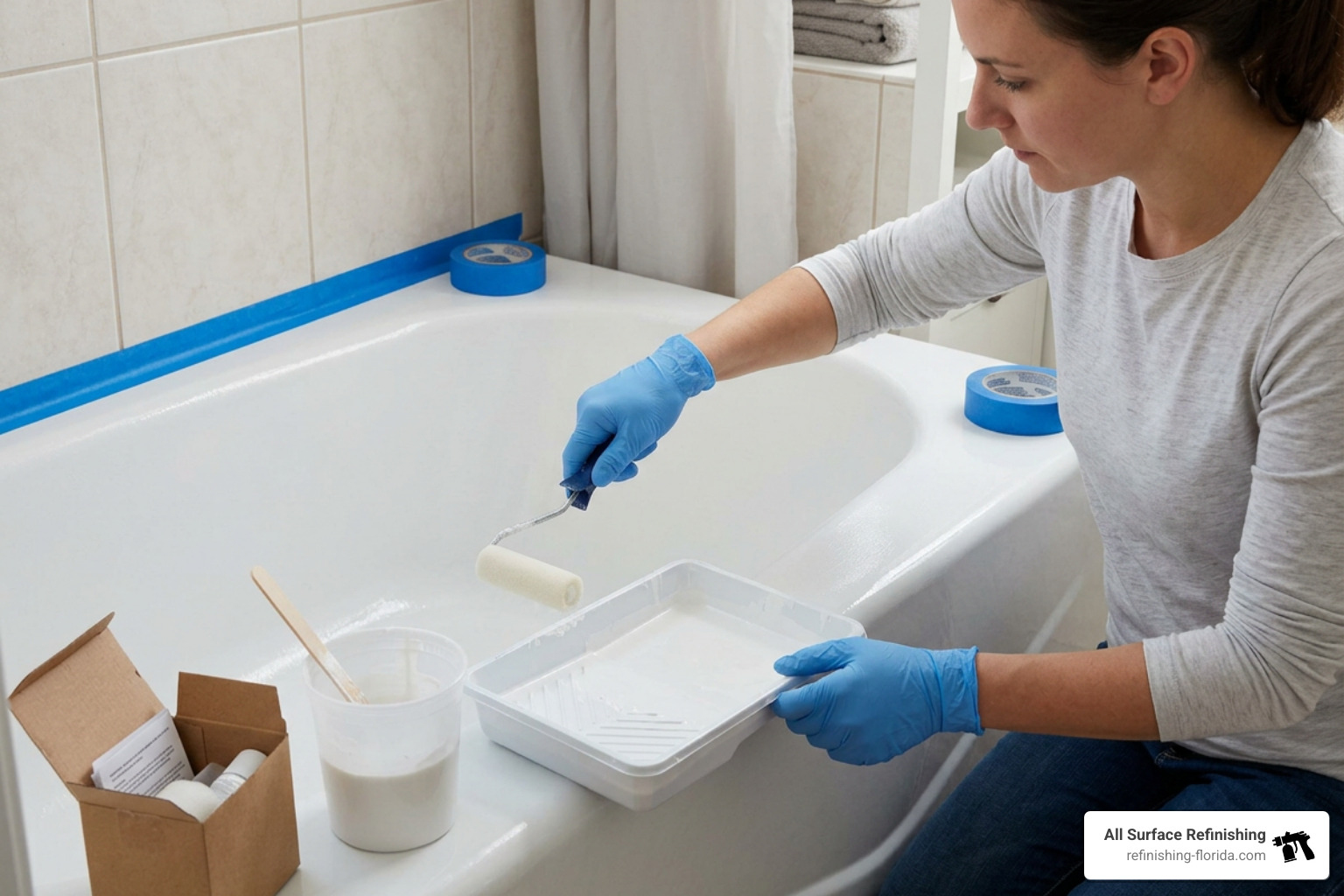
Walk into any local home improvement store, and you will likely find off-the-shelf DIY refinishing kits priced around $89 to $100 (such as a 22 oz. two-part resin kit). These products market themselves as quick, inexpensive weekend fixes for worn enamel and tile. But do they actually deliver long-term results?
The honest reality is that while a DIY kit can temporarily cover stains and minor scuffs on a tight budget, consumer-grade paint resins simply lack the bonding chemistry, film thickness, and impact resistance of commercial coatings.
Pros and Cons of DIY Bathtub Resurfacing
To evaluate whether rolling or brushing an epoxy kit onto your bathtub makes sense, consider these side-by-side trade-offs:
Pros:
- Low Upfront Cost: At around $90 to $100, DIY kits fit tight landlord or temporary fix budgets.
- Immediate Accessibility: Kits include basic tools like small foam rollers, gloves, and two-part epoxy liquids.
- Convenience: You can attempt small touch-ups on your own timeline without scheduling contractor visits.
Cons:
- High Risk of Peeling: Without professional acid etching powders, commercial silane bonding agents, and high-volume low-pressure (HVLP) spray equipment, DIY coatings frequently fail within 6 to 12 months.
- Uneven Finish & Brush Marks: Rolling epoxy resin onto smooth contours often leaves visible lap lines, orange-peel textures, brush strokes, and trapped air bubbles.
- Weak Chemical Durability: DIY two-part coatings are susceptible to hot water softening, soap scum buildup, and cracking around drain rings.
- Difficult Stripping Later: When a DIY coat inevitably bubbles or peels, removing that partially attached epoxy layer doubles the labor required for future restoration. Read more about fixing these issues in our guide on Bathtub Coating Peeling Off Quick Fixes Long Term Solutions.
| Feature / Metric | DIY Refinishing Kits | Professional Resurfacing |
|---|---|---|
| Average Cost | $89 – $100 | $300 – $800 |
| Application Method | Brush or Foam Roller | Professional HVLP Spraying |
| Surface Bonding | Basic Sanding / Mild Scrub | Chemical Acid Etching + Silane Coupling Agent |
| Active Work Time | 3 – 5 Hours | 3 – 5 Hours |
| Drying / Touch Time | ~10 Hours | ~1 – 2 Hours |
| Full Cure Time | 24 – 72 Hours | 24 – 48 Hours |
| Expected Lifespan | 1 – 3 Years | Up to 15 Years |
| Warranty Protection | None (Product replacement only) | Multi-Year Full Labor & Material Warranty |
Safety Hazards, Chemical Fumes, and Ventilation Requirements
One of the most dangerous, overlooked aspects of DIY bathtub stripping involves chemical safety. Historically, off-the-shelf and commercial stripping products relied heavily on methylene chloride to quickly strip away old coatings.
Methylene chloride vapors are exceptionally toxic and can cause sudden asphyxiation, dizziness, and death when used in small, poorly ventilated spaces like residential bathrooms. National safety agencies like OSHA and NIOSH have documented at least 14 worker fatalities linked directly to methylene chloride exposure during bathtub refinishing projects in enclosed spaces.
Professional technicians protect property and personal health by establishing high-capacity local exhaust systems (rated at a minimum of 1,200 CFM) to pull hazardous solvent vapors directly out of the home while supplying clean breathing air via NIOSH-approved fresh-air respirators. Attempting to strip a tub without professional exhaust ducting and specialized safety gear poses genuine health risks to your entire household.
Professional Refinishing Step-by-Step and Cost Breakdown

When you hire experienced specialists, you aren’t just paying for paint — you are investing in structural surface science, industrial spray equipment, and comprehensive surface preparation. Browse our Professional Bathtub Resurfacing Complete Guide to explore our technical standards.
The Refinishing Process: Prep, Etching, and Curing Time
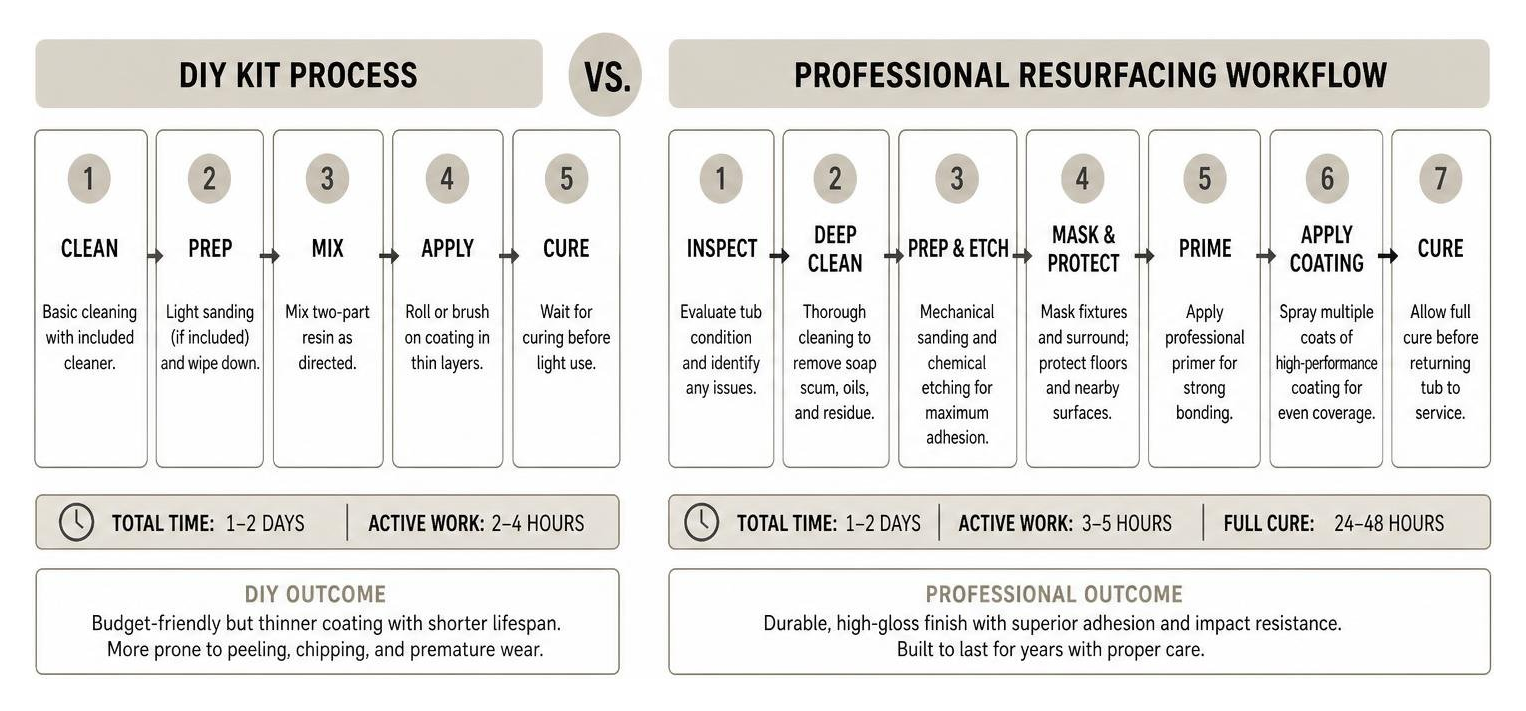
Achieving a mirror-smooth finish that sticks for over a decade requires a multi-step engineering workflow. Here is how professional technicians transform a worn tub:
- Hardware Removal and Masking: Water spouts, drain covers, and overflow plates are removed or masked off with chemical-resistant paper and tape to protect non-target surfaces.
- Deep Cleaning & Scrubbing: Industry-grade degreasers strip away decades of accumulated body oils, soap scum, lime scale, and hard water minerals.
- Acid Etching & Mechanical Sanding: Nonporous porcelain, glaze, or enamel is treated with acid etching solutions or sanded with 120-grit wet/dry abrasives. This microscopically pits the smooth glaze, creating thousands of physical anchor points.
- Structural Chip & Crack Repair: Surface chips, deep scratches, and small rust spots are ground down, neutralized, and filled with specialized polyester body putties before being sanded smooth.
- Silane Bonding Layer: A liquid silane bonding agent is applied. Silane creates a molecular bridge between inorganic porcelain substrate and organic polymer topcoats.
- High-Build Primer Application: Two separate coats of epoxy-based high-build primer are applied using HVLP sprayers to seal the substrate and smooth minor imperfections.
- Acrylic-Urethane Topcoat Spraying: Three cross-coats of professional acrylic-urethane enamel are sprayed across the fixture. This yields a cured film thickness of 5 to 8 mm (0.20 to 0.31 inches).
- Curing & Final Polish: The topcoat dries to the touch within a few hours and achieves initial hardness in 24 hours. The technician inspects the finish, removes masking paper, wet-sands minor dust nibs, buffs the shine, and applies fresh silicone caulk around all borders.
Learn more details in our step-by-step breakdown on How to Resurface a Bathtub in 6 Simple Steps.
Lifespan, Warranties, and Local Florida Services
When completed by trained specialists using commercial acrylic-urethane finishes, a resurfaced tub boasts a lifespan of up to 15 years. Standard professional services backed by local warranties provide homeowners with peace of mind against peeling, blistering, or discoloration.
In regional markets across South and Southwest Florida — including Fort Lauderdale, Miami, Boca Raton, West Palm Beach, and Boynton Beach — humidity and heavy bath usage demand top-tier adhesion standards. You can read regional insights in The Ultimate Guide to Professional Bathtub Resurfacing in Fort Lauderdale and explore localized services at Bathtub Resurfacing Fort Lauderdale.
Care and Maintenance to Prevent Peeling and Extend Tub Life
A newly resurfaced bathtub looks identical to factory porcelain, but it requires sensible ongoing maintenance to keep its deep high-gloss shine intact for years.
Follow these proven care rules:
- Use Non-Abrasive Cleaners: Clean the surface using mild, non-abrasive liquid soaps or gentle degreasers (such as standard Dawn dish soap, Formula 409, or Scrubbing Bubbles). Apply using a soft, non-scratch sponge or microfiber cloth.
- Never Use Abrasive Powders or Steel Wool: Cleansers with gritty particles, chlorine bleach, or metallic scrubbing pads will scratch the synthetic topcoat, dulling the finish and creating micro-grooves that collect dirt.
- Avoid Suction-Cup Bathmats: Rubber or plastic bathmats with suction cups underneath trap moisture against the finish. Over time, constant hydraulic suction can pull the topcoat away from the substrate. If extra slip resistance is needed, ask your technician to spray an integrated slip-resistant texture directly into the floor coat during application.
- Maintain Perimeter Caulking: Inspect the silicone caulk joint running around the perimeter of the tub annually. If perimeter caulk peels or cracks, replace it immediately so water cannot seep behind the coating edge and cause lifting.
- Fix Dripping Faucets Promptly: A continuously dripping faucet causes mineral rings and localized water pooling that degrades topcoat gloss over extended periods.
To protect your tub finish long term, read our guide on How to Stop Your Resurfaced Bathtub From Peeling for Good.
Frequently Asked Questions About Bathtub Refinishing
How long does a resurfaced bathtub take to dry before use?
While consumer DIY kits claim dry-to-touch times around 10 hours, professional coatings dry to the touch within 1 to 2 hours. However, full chemical cross-linking and curing require 24 to 48 hours (and up to 72 hours for certain DIY epoxy kits). You should avoid running water or placing items inside the tub until the full cure window has passed.
How much does professional bathtub refinishing cost?
Professional resurfacing costs average between $300 and $800 depending on tub size, substrate condition, and geographic location. Standard alcove porcelain or fiberglass tubs sit on the lower end of the spectrum, while larger garden tubs, jet tubs, or freestanding clawfoot fixtures require additional preparation and materials. Compared to full bathroom replacements that cost $3,000 to $8,000+, resurfacing delivers immediate cost savings of up to 75% to 80%.
What cleaners should be avoided on a resurfaced tub?
Avoid all harsh abrasive powders, concentrated bleach, ammonia, steel wool pads, wire brushes, and heavy acidic cleaners. Stick strictly to mild liquid soaps, gentle dish detergents, and soft sponges to preserve the topcoat’s mirror gloss.
Conclusion
When evaluating whether to resurface your tub or buy an off-the-shelf DIY kit, the choice comes down to long-term value. DIY kits offer an entry-level cosmetic patch, but they carry high risks of brush marks, peeling, and chemical hazards. Professional bathtub resurfacing combines acid etching, silane bonding agents, industrial HVLP sprayers, and high-build acrylic urethane to deliver a factory-grade finish that lasts up to 15 years for a fraction of the cost of replacement.
At All Surface Refinishing, we bring over 30 years of industry experience and more than 14,000 completed transformations across South and Southwest Florida — from Miami and Fort Lauderdale to Boca Raton, West Palm Beach, and beyond. If you are ready to eliminate unsightly stains, chips, and outdated colors without the chaos of a full demolition, explore our Professional Bathtub Refinishing Services and request your free consultation today!
