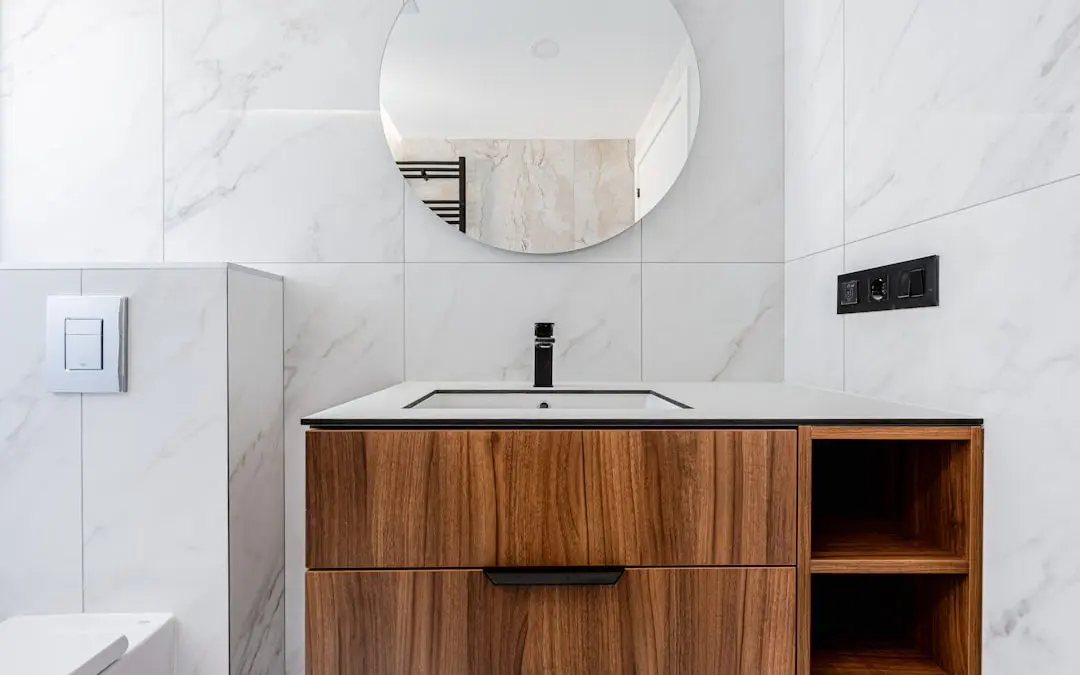
What Full Overlay Cabinets Are and Why They Matter
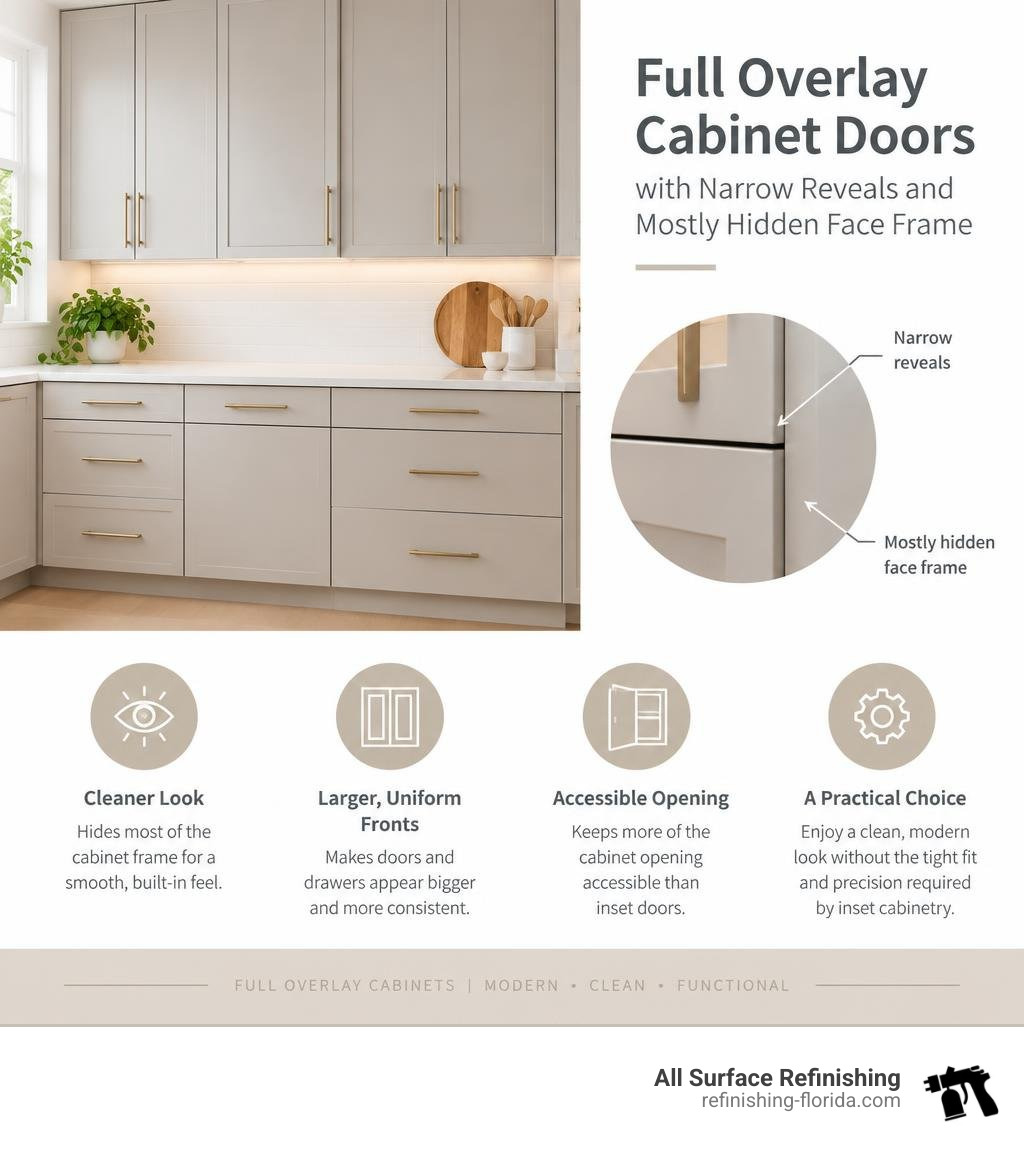
Full overlay cabinets have doors and drawer fronts that cover nearly all of the cabinet face frame. Only narrow, intentional gaps called reveals remain between doors and drawers. The result is a smooth, built-in look that works especially well in modern and transitional kitchens and bathrooms.
They are a practical choice when you want to:
- Hide most of the cabinet frame for a cleaner look
- Make cabinet fronts appear larger and more uniform
- Keep more of the cabinet opening accessible than with inset doors
- Avoid the tight fit and higher installation precision that inset cabinetry requires
“Full overlay” does not mean zero gaps. Doors still need small, even reveals to open without rubbing, allow for hinge adjustment, and handle normal seasonal movement in cabinet materials.
I’m Frank Hernandez, President of All Surface Refinishing, and I have worked in surface refinishing for more than a decade while helping Florida property owners update kitchen and bathroom spaces. In this guide, I will explain how full overlay cabinets work, what makes them different from other cabinet profiles, and what to consider before updating their finish and hardware.
Full overlay cabinets terms explained:
Understanding Full Overlay Cabinets: Design and Construction
The structural appeal of full overlay cabinetry lies in how the doors interact with the cabinet carcass. In traditional cabinetry, the front structural perimeter—known as the face frame—remains largely visible. With full overlay design, the doors and drawer fronts are enlarged to sit directly on top of the frame, concealing anywhere from 90% to nearly 100% of the underlying framing members.
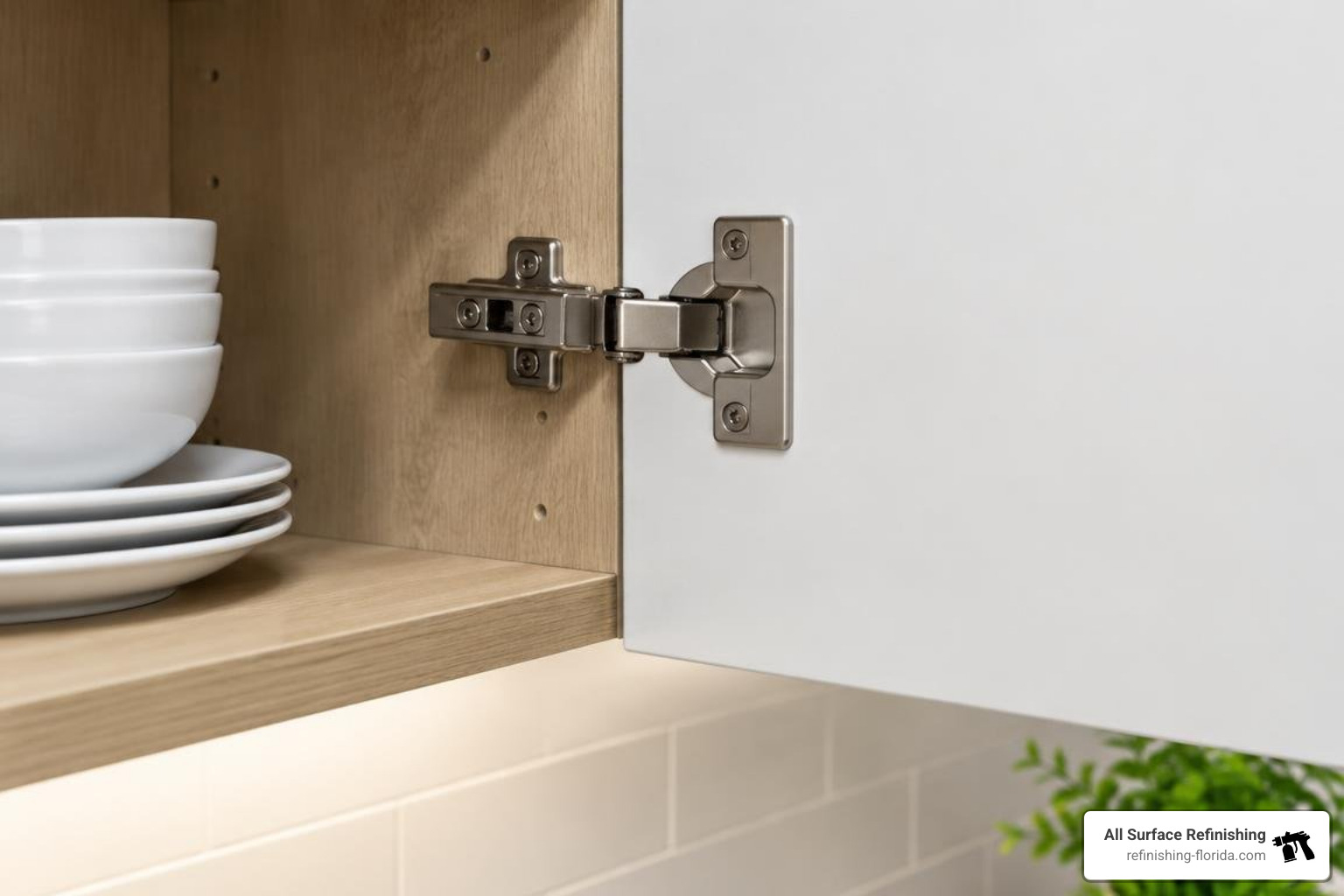
This configuration creates a continuous visual plane across the entire run of kitchen cabinets or bathroom vanities. Achieving this seamless aesthetic requires specific engineering:
- Door Sizing: Doors are manufactured larger than the interior cabinet openings, extending across the stiles (vertical frame members) and rails (horizontal frame members).
- Concealed European Hinges: Fully hidden cup hinges mount inside the cabinet box and door interior, eliminating exterior hardware barrels and allowing the doors to sit flat over the face frame.
- Box Stability: Sturdy cabinet boxes (often built with durable plywood cores) prevent structural racking, ensuring that the tight gaps between doors remain consistent from end to end.
By covering the face frame, full overlay doors provide the sleek, monolithic appearance often associated with frameless European cabinetry while retaining the rigid structural support of an American-style framed box.
Anatomy and Hardware for Full Overlay Cabinets
A reliable full overlay system relies on high-grade components working in unison. Because the doors cover the frame, any slight misalignment becomes immediately noticeable across adjacent doors and drawers.
The construction quality of the doors themselves is critical. Premium options—such as a Shaker Full Overlay 12 in. W x 12 in. D x 30 in. H Plywood Assembled Wall Kitchen Cabinet in Linen White or wider units like the Shaker Full Overlay 27 in. W x 12 in. D x 42 in. H Plywood Assembled Wall Kitchen Cabinet in Stone Gray—utilize mortise-and-tenon joinery on solid hardwood stiles and rails.
For hardware, concealed hinges with integrated soft-close pistons allow three-way adjustability (height, depth, and side-to-side). This adjustability lets installers dial in precise alignment across every drawer front and cabinet door.
Overlay Measurements, Reveals, and Tolerances
In cabinet terminology, the reveal is the small portion of the cabinet frame or gap left visible around the perimeter of a closed door. While standard overlay leaves reveals of 1 to 2 inches, full overlay reduces this reveal down to a uniform 1/4-inch to 1/8-inch spacing between adjoining doors.
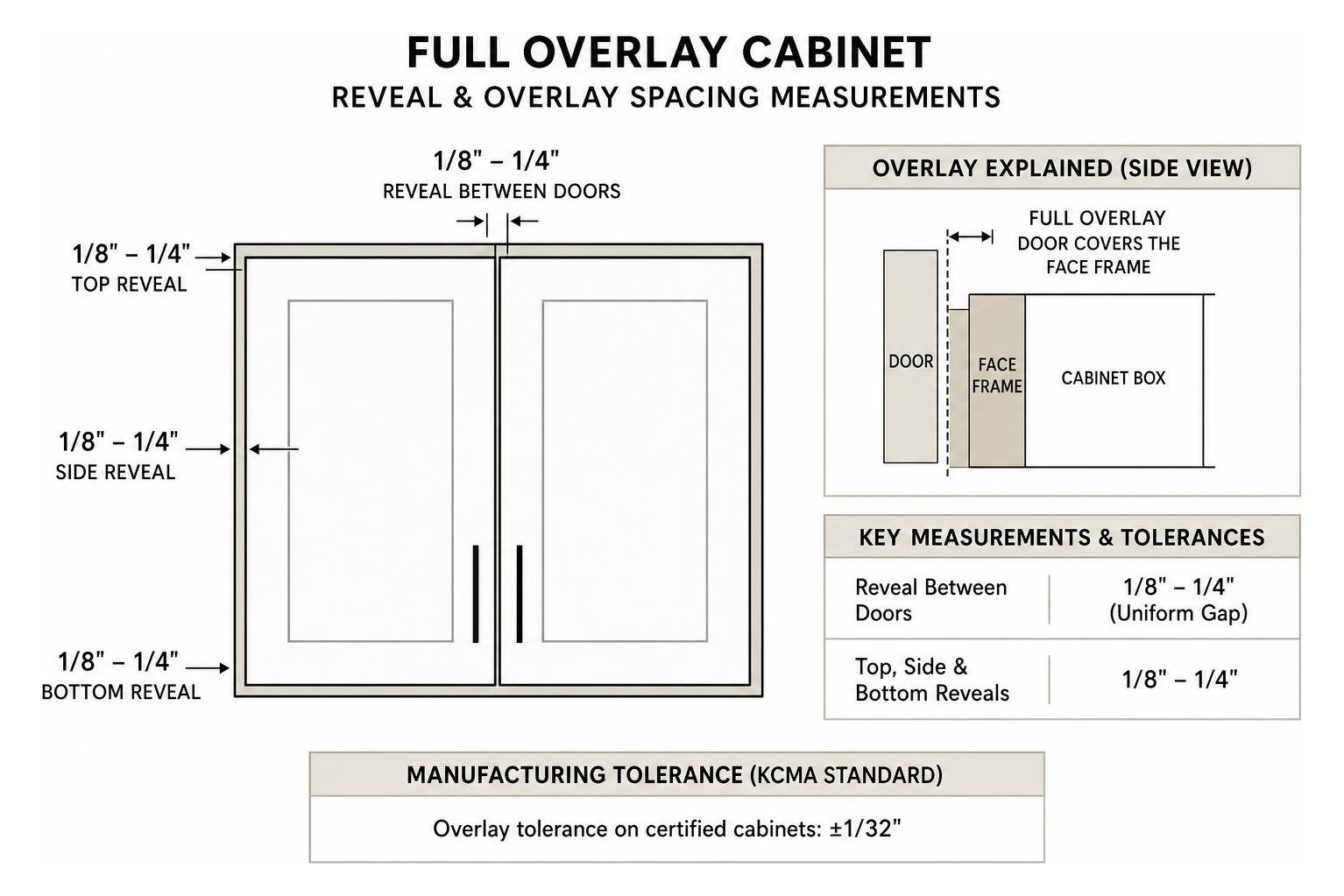
Industry standards established by the Kitchen Cabinet Manufacturers Association (KCMA) specify strict manufacturing tolerances of ±1/32″ for overlays on certified cabinets. Maintaining these tolerances is essential because natural wood expands and contracts with changes in ambient humidity. In South Florida coastal communities like North Lauderdale, North Miami, and Palm Beach, relative humidity can cause solid wood doors to expand across the grain by up to 1/16″ seasonally. Engineered center panels and correct hinge spacing ensure that doors do not bind against each other when environmental conditions shift.
Comparing Cabinet Profiles: Full Overlay, Partial Overlay, and Inset
Homeowners evaluating kitchen remodel concepts often weigh three primary cabinet styles: partial overlay (standard), full overlay, and inset cabinetry. Each style impacts budget, storage accessibility, and visual presence differently.
| Feature | Partial Overlay | Full Overlay | Flush Inset |
|---|---|---|---|
| Face Frame Exposure | 1″ to 2″ exposed frame | Minimal reveal (1/8″ to 1/4″) | Entire face frame visible |
| Aesthetic Style | Traditional / Builder-grade | Modern / Transitional | Classic / Furniture-style |
| Relative Cost | Baseline / Economical | Moderate / Budget-friendly | Premium (20–30% higher) |
| Usable Storage | Moderate | Maximum interior volume | Reduced drawer/box depth |
| Installation Precision | Standard | Moderate | Extremely high |
| Hardware Visibility | Semi-concealed or exposed | Fully concealed Euro hinges | Exposed butt or concealed |
While inset cabinetry provides high-end historic charm, it requires extreme craftsmanship to prevent door rub as wood swells. Full overlay delivers a contemporary, clean look similar to luxury European cabinetry without the premium labor cost or susceptibility to binding.
Storage Capacity and Spatial Efficiency
One functional advantage of full overlay cabinetry is the optimization of interior storage space. Because the doors and drawer fronts sit outside the frame opening rather than flush inside it, you gain 1.5 to 2 inches of usable interior drawer depth compared to inset construction.
Furthermore, full overlay layouts simplify access in tight corners. Standard units, like a Shaker Full Overlay 24 in W 12 in D 30 in H Plywood Assembled Wall Corner Easy Reach Kitchen Cabinet in Linen White, maximize interior volume while allowing doors to hinge open without catching on adjacent drawers or decorative molding.
Cost and Installation Complexity
Because full overlay doors rest over the face frame, the installation process requires less microscopic framing calibration than inset cabinets. Installers can hang and adjust doors quickly using the adjustment screws on modern concealed hinges.
For budget-conscious remodels, full overlay provides significant cost efficiency. Pre-manufactured and semi-custom full overlay systems deliver a sleek, custom appearance without the steep price tag of custom inset millwork. These cabinet profiles offer dependable fitment and swift assembly while giving kitchens and bathrooms a clean, modern upgrade.
Aesthetics, Materials, and Customization Options
Full overlay construction works across various design styles, from clean transitional kitchens to minimalist contemporary spaces. Popular design variations include:
- Shaker Profiles: Recessed five-piece doors that combine traditional frame lines with modern, tight reveals.
- Slab Panels: Flat, unadorned surfaces that create an ultra-modern, uninterrupted wall of cabinetry.
- Two-Tone Palettes: Crisp white or linen uppers paired with bold charcoal, navy, or woodgrain base cabinets.
- Glass-Front Inserts: Strategically placed glass door uppers that lighten visual mass across long runs of cabinetry.

Material selection impacts longevity. While solid hardwood stiles and rails offer durability, doors with High-Density Fiberboard (MDF) center panels resist moisture movement better than solid wood center panels, making them well-suited for humid Florida climates. For custom installations, shops in Palm Beach and North Miami often specify high-stability sheet goods behind full overlay profiles to maintain alignment over decades of use.
Maintaining and Transforming Full Overlay Cabinets
Because full overlay doors extend past the face frame, their outer edges are exposed to daily hand contact, kitchen steam, and routine impacts. Keeping them in top shape requires regular care and protective finishes.
- Edge Cleaning: Wipe down the vertical side edges of frequently used doors weekly to prevent skin oils from softening the finish.
- Hinge Tightening: Periodically check the mounting plates on concealed hinges to prevent doors from sagging out of alignment.
- Surface Refinishing: When the factory clear coat or paint begins to wear, resurfacing is a fast, cost-effective way to restore them without removing functional cabinet boxes.
If your existing cabinet boxes and doors are structurally sound, professional refinishing can completely update the color scheme. For detailed steps on updating cabinet finishes, check out our kitchen cabinet refinishing guide.
When working in coastal environments, achieving a durable finish requires industrial-grade coatings rather than basic DIY brush paints. Review our cabinet refinishing complete guide and our breakdown on cabinet resurfacing 101 to understand the preparation process. If you want a smooth, factory-grade look without brush marks, explore our cabinet spray painting guide or see how we provide professional painting services in Miami to transform dated cabinetry. You can also review our guide on how to paint kitchen cabinets the right way and explore our dedicated cabinet painting services to see how modern finishes protect your investment.
Frequently Asked Questions About Cabinet Profiles
What is the primary difference between full overlay and partial overlay doors?
Partial overlay doors leave 1 to 2 inches of the cabinet face frame exposed around every door and drawer front, creating wide borders between units. Full overlay doors are sized larger, leaving only a 1/8-inch to 1/4-inch reveal, which conceals nearly the entire face frame for a cleaner, modern look.
Can full overlay doors be installed on existing face frame cabinet boxes?
Yes. As long as your existing cabinet boxes are square and structurally sound, you can install new, larger full overlay doors. You will need to calculate the proper overlay measurements based on your rail and stile widths and install matching compact concealed hinges. For a detailed exploration of door coverage dimensions, read this article on full overlay cabinet door coverage.
Do full overlay doors require specialized hardware?
Yes. Full overlay doors require concealed European-style cup hinges (typically 35mm bore diameter) engineered specifically for full overlay applications. These hinges mount to the inside edge of the cabinet face frame or carcass wall and feature integrated adjustment screws to help align the tight door reveals.
Conclusion
Full overlay cabinetry offers a clean balance between modern design, storage capacity, and everyday functionality. By covering the underlying face frames with larger doors and concealed hardware, this cabinet style provides the seamless look of modern European furniture while retaining the strength of framed construction.
At All Surface Refinishing, we bring over 30 years of experience and more than 14,000 completed kitchen and bathroom transformations to homeowners across South Florida. Whether you are updating existing kitchen cabinets or refreshing bathroom vanities, we provide high-grade resurfacing and painting that delivers a factory-smooth finish without the cost and mess of full replacement.
We proudly serve homeowners throughout South and Southwest Florida, including North Lauderdale, North Miami, Palm Beach, Parkland, Stuart, and surrounding communities. To restore your kitchen cabinets or bathroom surfaces, explore our cabinet refinishing and resurfacing services in South Florida and request a free quote today.
