Choosing Between Cabinet Painting and New Cabinet Door Replacement
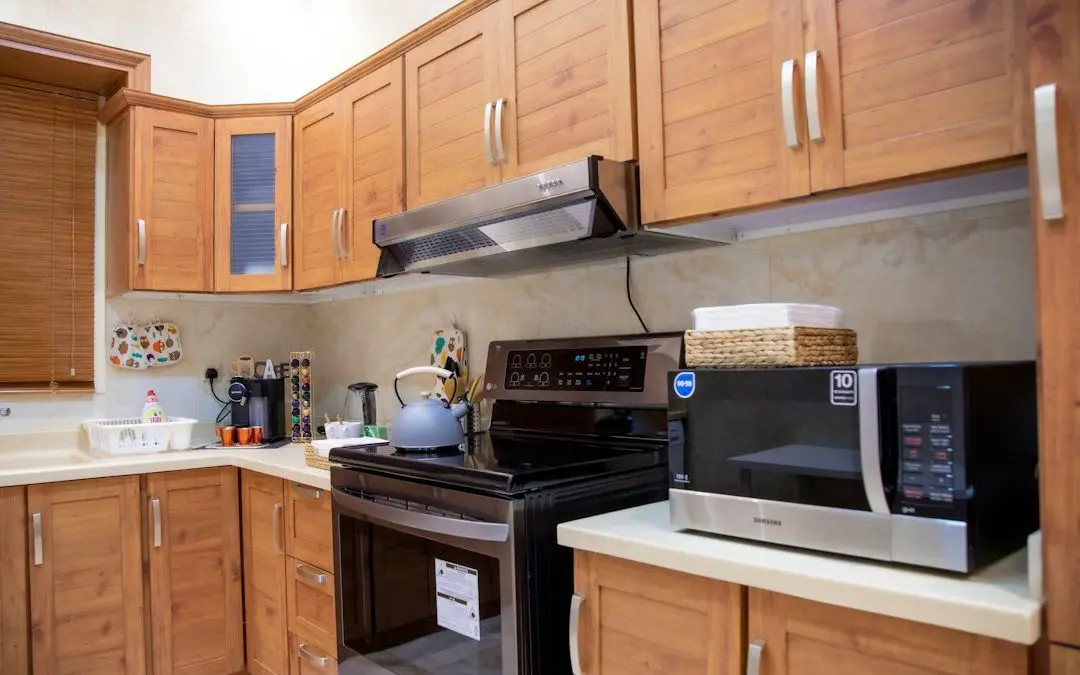
When evaluating cabinet painting versus new cabinet door replacement for a kitchen with structurally sound boxes, professional cabinet painting is the lower-cost, lower-disruption choice. It can update color and finish while preserving solid cabinet boxes. Replacing cabinet doors and drawer fronts may make more sense when you want a completely different door profile, but it usually costs more because new fronts represent a major part of the project budget.
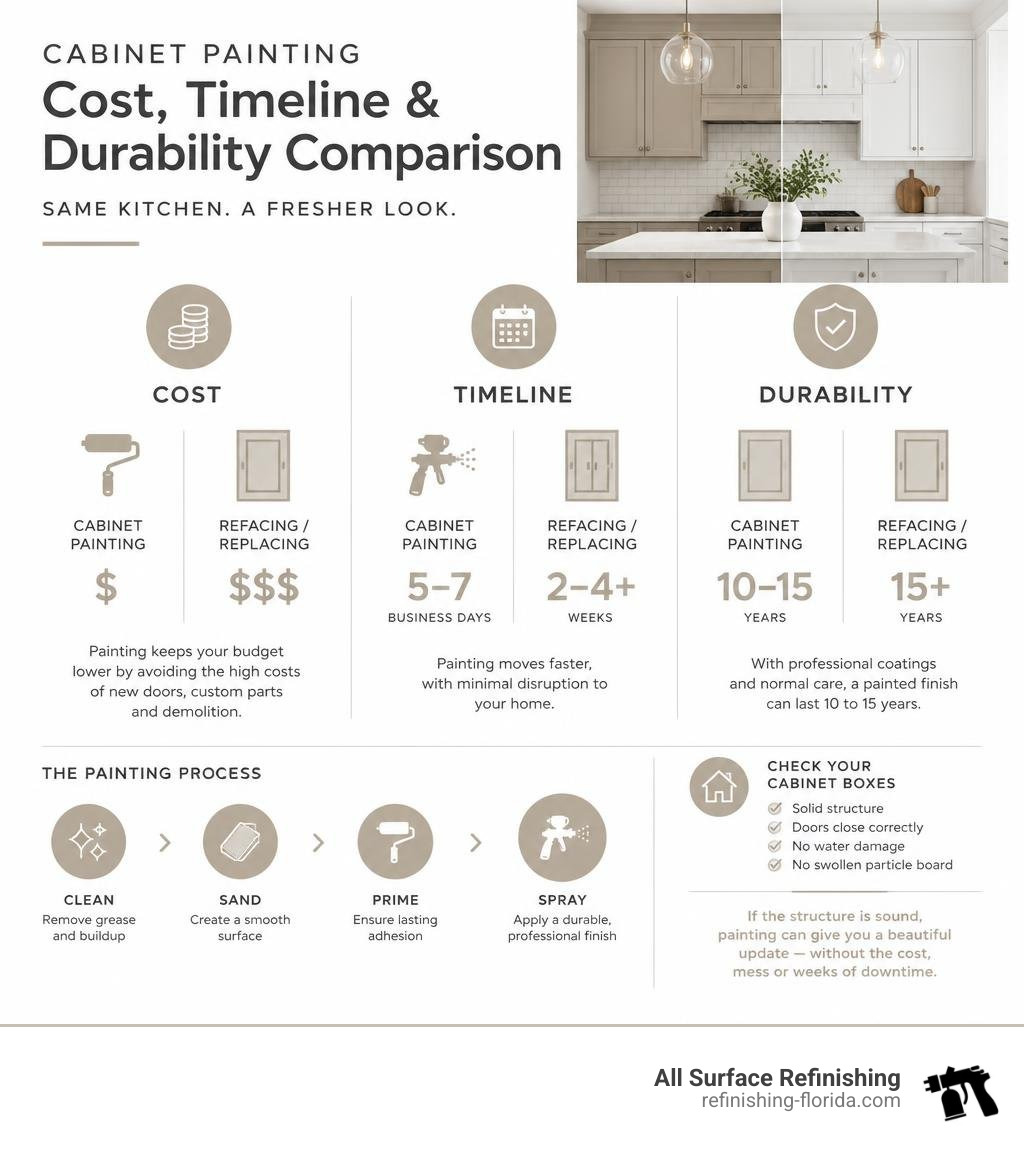
A professional cabinet coating process typically takes 5 to 7 business days. Proper cleaning, sanding, priming, and spray application matter more than the color itself. With durable professional coatings and normal care, a finished cabinet surface can last 10 to 15 years.
The key question is not simply how old your cabinets are. Check whether the boxes are solid, doors close correctly, and there is no serious water damage or swollen particle board. If the structure is sound, repainting can deliver a major kitchen update without the cost, mess, or weeks of downtime that come with replacement. For many Florida homeowners weighing cabinet door replacement versus painting kitchen cabinets, painting is the practical way to preserve quality woodwork while achieving a fresh, modern look.
I am Frank Hernandez, President of All Surface Refinishing, and I have worked in surface refinishing for more than a decade, helping Florida property owners weigh options for cabinet painting and door replacement. My team focuses on practical, durable cabinet makeovers that refresh the space without requiring a full replacement.
Kitchen Cabinet Painting: Cost and Value Breakdown
Evaluating your kitchen remodeling budget requires understanding where your dollars actually go. Labor costs for skilled on-site carpentry have risen noticeably across South Florida, making custom installations and full replacements far more expensive than surface renewal. When you choose professional cabinet painting, you eliminate the massive overhead associated with demolition, custom manufacturing, and complex framing adjustments.
Material expenses remain tightly controlled during a professional spray transformation. Instead of ordering bespoke wood components or structural pieces, the primary investments center on industrial-grade bonding primers, chemical degreasers, fine abrasives, and high-performance topcoats. This approach channels your budget into meticulous surface preparation and skilled application rather than raw construction materials.
| Factor | Professional Cabinet Painting | Full Cabinet Replacement |
|---|---|---|
| Typical Cost Range | 30% to 50% less expensive | Full retail price + labor |
| Project Disruption | Minimal; functional kitchen space | Complete tear-out; 3 to 4 weeks |
| Project Timeline | 5 to 7 business days | Several weeks of downtime |
| Expected Lifespan | 10 to 15 years with care | 15 to 25 years |
| Return on Investment | Exceptionally high | Moderate due to high initial cost |
The return on investment for painting existing kitchen cabinets is among the highest in the home improvement industry. Homeowners achieve the look of a high-end designer space without overcapitalizing. Rather than sinking capital into tearing out solid wood framework, your funds are optimized through an efficient, targeted kitchen transformation.
Does Professional Cabinet Painting Fit Your Budget?
When reviewing your cabinet painting cost estimate, the financial advantages become clear immediately. Homeowners consistently see substantial savings of 30% to 50% compared to major structural alternatives. For a standard 10×12 kitchen layout, these savings translate to thousands of dollars kept in your pocket.
As detailed in our cabinet refinishing guide, modern kitchen upgrades do not require astronomical spending to achieve luxury results. Average savings typically range between $3,000 and $7,000 for standard layouts, and can reach up to $12,000 on larger custom properties. Current rates make painting the most economically sound decision for kitchens with structurally sound boxes.
What Drives the Expense in Professional Cabinet Painting?
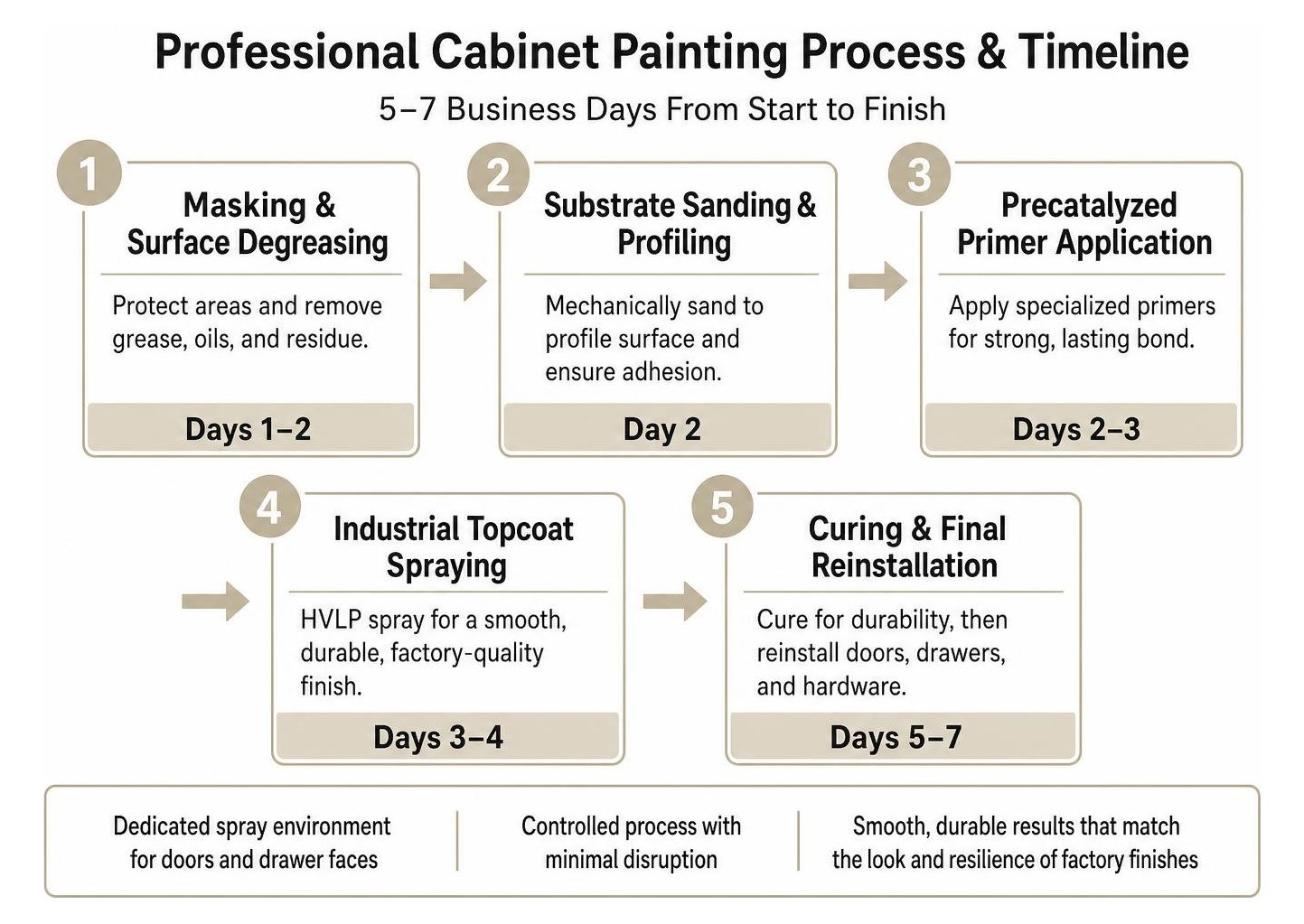
The primary investment in a top-tier paint project is dedicated craftsmanship and surface engineering. We do not sell paint; our focus is delivering high-performance surface transformations through comprehensive, multi-step preparation. That process begins with intensive degreasing to remove years of airborne cooking oils, grease, and residue that standard household cleaners leave behind.
Next, mechanical and hand sanding profiles the wood substrate to ensure mechanical adhesion. We then apply specialized primers and industrial-grade coatings using high-volume, low-pressure (HVLP) spray systems. Upgrading pulls, knobs, and soft-close hinges can also be integrated into the timeline, completing a sleek look. A thorough cabinet surface comparison analysis reveals that properly prepped coatings easily match the visual quality and daily resilience of original factory finishes.
Process, Timeline, and Longevity of Cabinet Painting
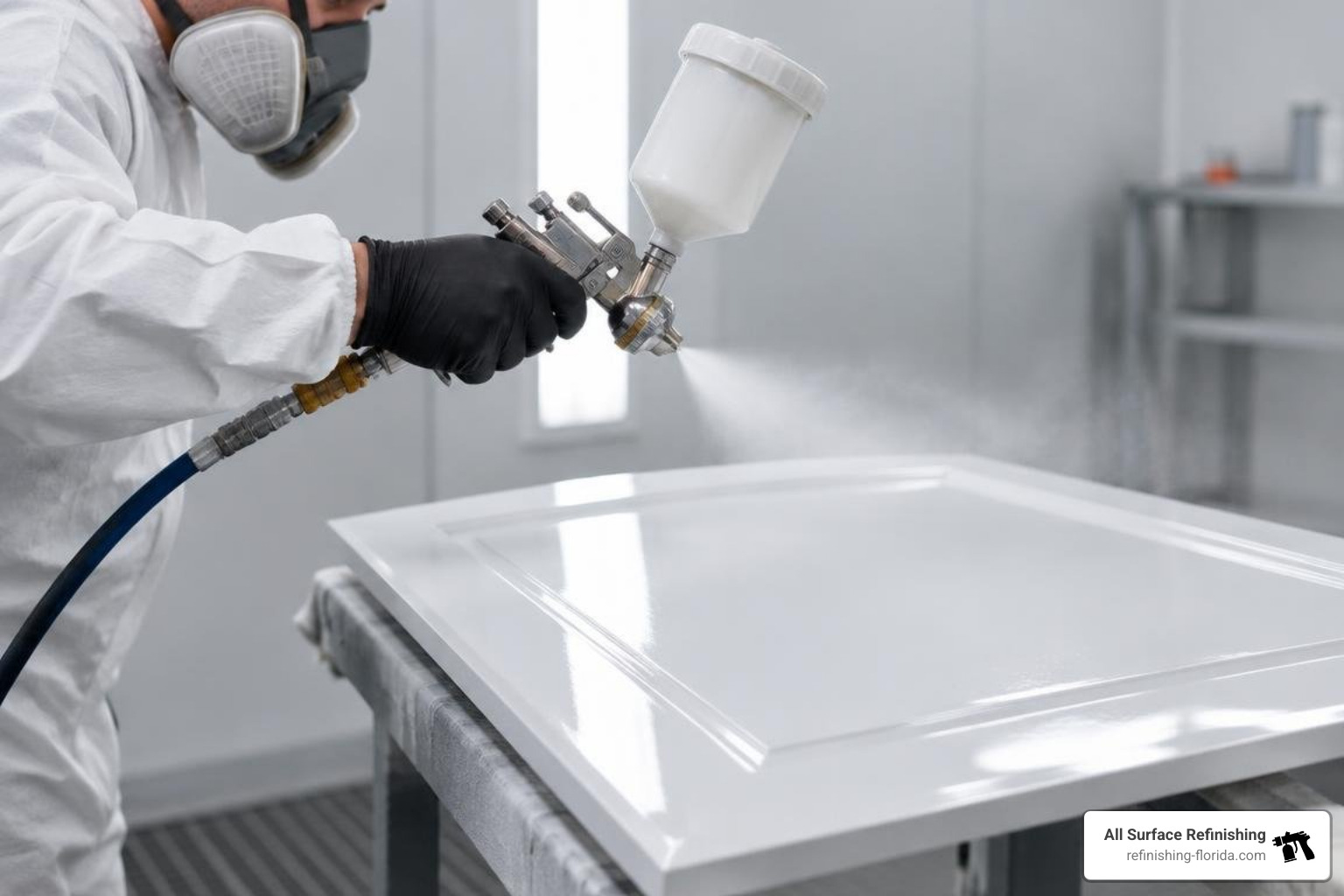
A true professional cabinet coating project is a controlled, technical procedure that delivers smooth, durable results. Unlike standard residential wall painting, industrial cabinet spraying requires an uncompromising approach to containment, air filtration, and chemical bonding. The transformation happens systematically, minimizing disruption while protecting the surrounding living areas from overspray and debris.
Site disruption is kept exceptionally low. While on-site preparation takes place inside the home to mask appliances, walls, and countertops, the cabinet doors and drawer faces are typically prepped and finished in a dedicated spray environment. This approach keeps dust levels to an absolute minimum and ensures your kitchen remains clean and accessible throughout the project.
Professional Spraying Timelines and Disruption
A full professional cabinet painting project generally requires just 5 to 7 business days from start to finish. In contrast to complete kitchen overhauls that leave homes disorganized for up to a month, our streamlined process gets you back to your regular kitchen routine in days.
We use precision HVLP sprayers to eliminate brush strokes, roller marks, and unsightly orange-peel textures. Portable extraction systems and zip-wall dust containment barriers safeguard your home during prep. Learning how to paint kitchen cabinets properly shows that true durability hinges on rigorous masking, clinical cleanliness, and controlled drying intervals.
Analyzing Cabinet Painting Durability
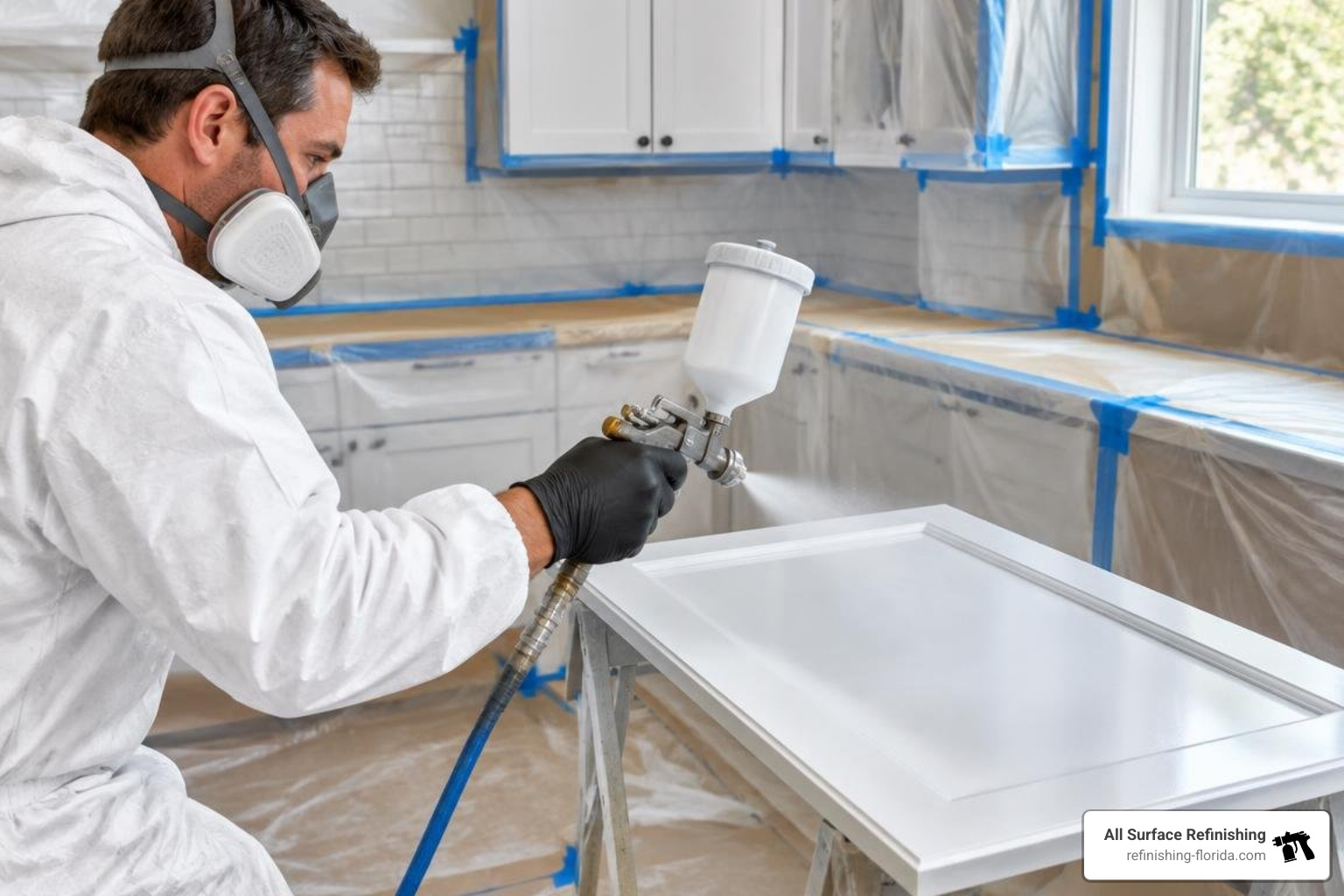
When executed correctly, an industrial spray finish delivers a lasting 10 to 15 year lifespan under standard daily use. The secret lies within the chemical architecture of the materials. We utilize advanced precatalyzed primers that penetrate deeply into the wood fibers, creating a molecular bond that locks out moisture, resists steam, and prevents chipping.
Selecting the top coatings for kitchen cabinets is critical to long-term performance. Industrial acrylic coatings cure into a hard, non-porous shell that withstands Florida’s ambient humidity, frequent cleaning, and heavy family use. Standard latex paints soften and peel under heat and moisture, but commercial-grade industrial finishes maintain their bond, sheen, and color saturation year after year.
How to Choose the Right Cabinet Painting Solution for Your Kitchen
Deciding whether your kitchen is a prime candidate for a coating transformation involves evaluating your layout, lifestyle, and existing materials. If you are satisfied with the spatial footprint of your cooking area and your storage layout functions well, keeping the existing cabinet boxes is the smartest path forward.
Solid wood, plywood, and medium-density fiberboard (MDF) substrates take exceptionally well to professional spray finishing, unlocking a fresh aesthetic without the major expense of total demolition.
Assessing Cabinet Substrates and Wear
Before starting any transformation, examine the structural integrity of your face frames, interior shelving, and cabinet boxes. Surface wear, faded varnish, minor scratches, and dated finishes are easily resolved with prep work and spray coatings. However, deep water rot or swollen, crumbling particle board indicate structural issues that must be repaired before finishing.
Our complete cabinet refinishing guide explains how different materials behave under professional treatment:
- Solid Oak and Ash: Open-grain hardwoods that benefit from grain-filling techniques if an ultra-smooth modern look is desired, or can be sprayed directly to highlight the organic wood texture.
- Maple and Cherry: Tight-grained woods that naturally yield a glass-smooth factory finish with standard priming.
- MDF and HDF: Engineered wood surfaces that do not expand and contract with humidity changes, making them ideal for seamless paint adhesion.
- Sound Thermofoil: Surfaces where the core substrate is intact can be professionally stripped, prepared, and painted to correct peeling vinyl coatings.
The 70 Percent Cabinet Condition Rule
To help homeowners decide whether their cabinetry is worth painting, we use a straightforward evaluation standard: the 70 Percent Cabinet Condition Rule. If at least 70% of your cabinet box structure, drawer glides, and layout remain functional and sound, painting is overwhelmingly your best financial move.
When your cabinetry passes this baseline, replacing the entire installation provides diminishing returns. Painting revitalizes the remaining 30% of aesthetic wear, scratches, and dated colors at a fraction of the cost, maximizing your renovation budget and preserving high-quality original woodwork.
Frequently Asked Questions About Cabinet Makeovers
Will professional cabinet painting look like it was done in a factory?
Yes. When completed by experienced technicians using professional HVLP equipment and industrial-grade acrylic coatings, the final surface is completely smooth, level, and free of brush strokes or roller texture. The result is an ultra-durable, sleek finish that mirrors high-end factory-manufactured cabinetry.
Can you paint only some cabinets and leave others unchanged?
Yes, phased or two-tone painting is common in modern kitchen design. Many homeowners choose to paint an island in a contrasting accent shade while leaving perimeter cabinets neutral, or refresh the lower boxes while preserving upper storage. Precise color matching and consistent sheen levels ensure a balanced, cohesive presentation across the entire space.
Why do some people choose professional cabinet painting?
Homeowners choose professional cabinet painting because it delivers a complete visual transformation in under a week at 30% to 50% less cost than major structural alterations. It preserves sturdy, well-built original cabinet boxes while introducing modern colors, moisture-resistant protection, and a smooth, easy-to-clean finish that lasts for years.
Conclusion
Upgrading your kitchen does not require massive investments or weeks of construction clutter. By choosing professional spray painting, you unlock a sleek, long-lasting transformation that preserves your existing layout while updating your space with modern color and durable, moisture-resistant protection.
With more than 30 years of experience and over 14,000 completed projects across South and Southwest Florida, All Surface Refinishing is ready to revitalize your space. Explore our professional cabinet refinishing services to discover how quickly, cleanly, and affordably your kitchen can be updated.
