
How to Remove Bathtub Rust Stains Without Damaging the Finish
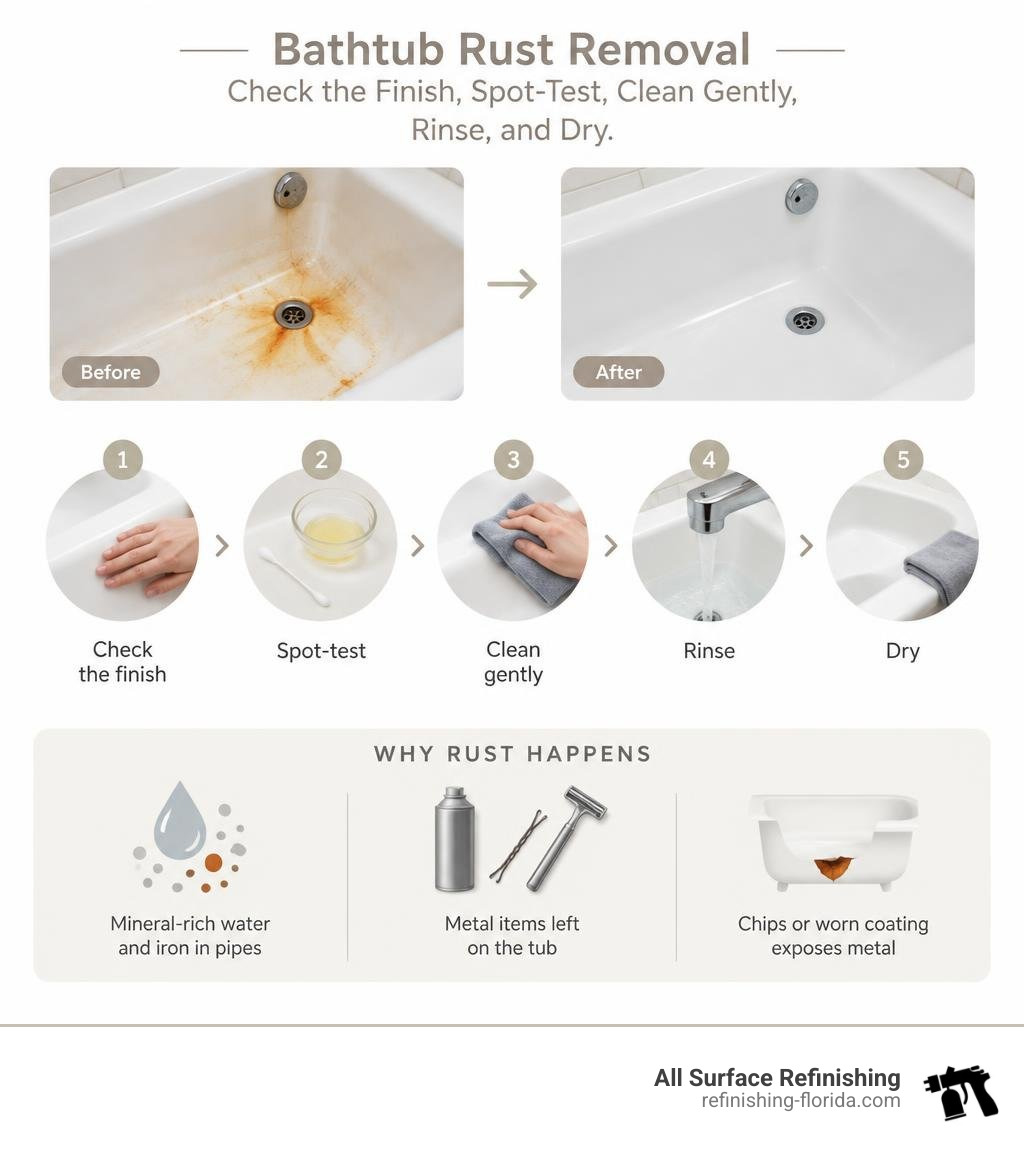
Start with the tub’s finish, not the stain. Clean away soap scum, then test a small hidden area. On a sound porcelain-enamel tub, try a little lemon juice on the rust for up to 10 minutes. Wipe gently with a soft cloth, rinse well, and dry. For acrylic or fiberglass, skip the lemon unless the tub maker says acids are safe; use a cleaner approved for that finish instead. Avoid bleach and harsh scrubbers.
A stain that stays after gentle cleaning may be sitting in a chip or worn coating. More scrubbing can make that damage worse.
I’m Frank Hernandez, president of All Surface Refinishing, and I’ve worked in surface refinishing since 2011. That experience shapes how I explain how to remove bathtub rust stains while protecting the finish.
Identifying Rust Causes and Bathtub Material Vulnerabilities
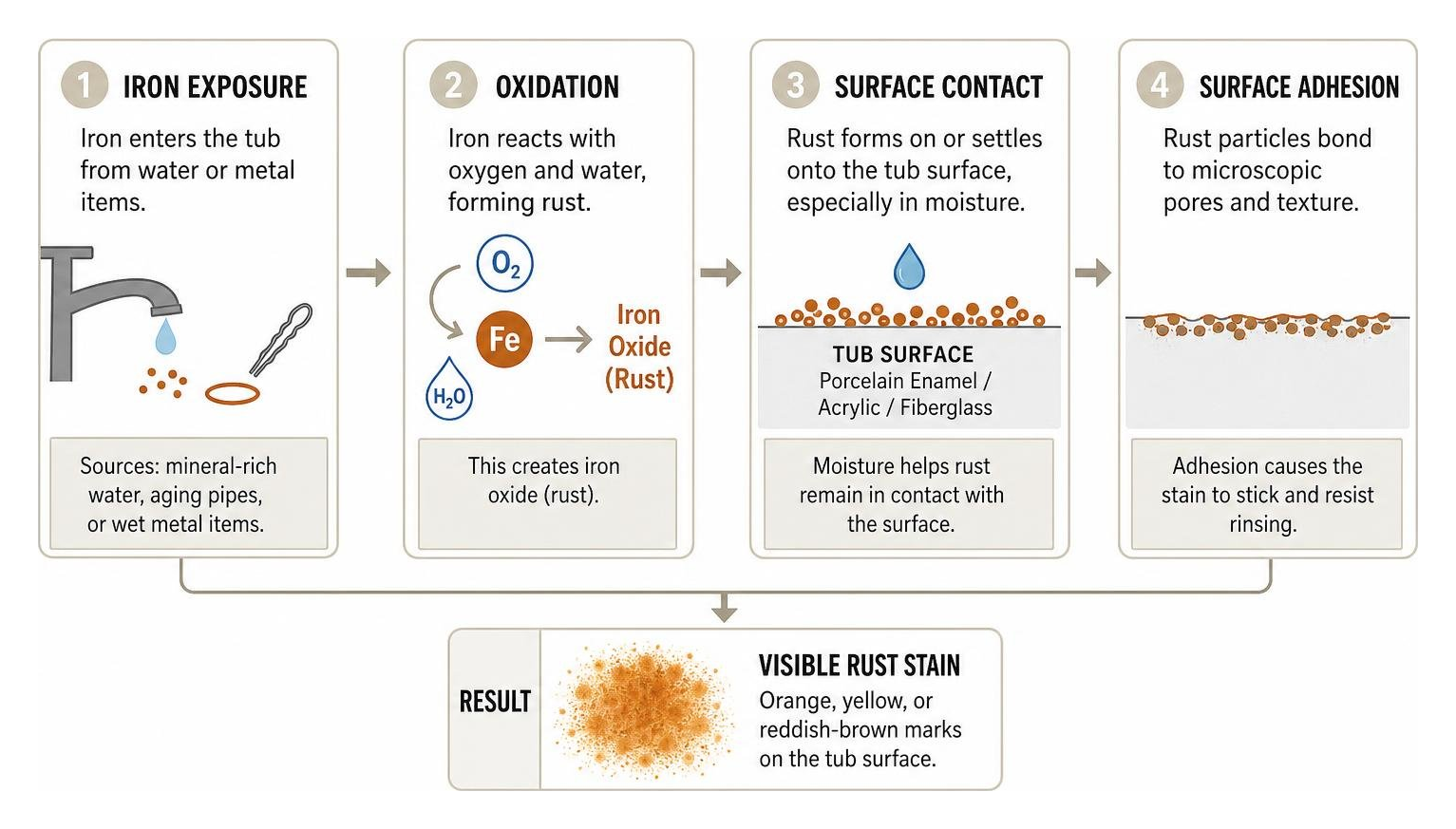
Rust in a bathroom is essentially iron oxide formed when iron, oxygen, and water meet. But how does that iron find its way into your tub in the first place? In South Florida communities from Boca Raton and Fort Lauderdale to Coral Gables, mineral-rich groundwater and older municipal supply pipes often carry dissolved iron. When water drips from a faucet or pools near the drain, that dissolved iron oxidizes upon contact with the air, leaving unsightly orange, yellow, or reddish-brown marks.
Other times, rust originates directly on top of the surface. A metal shaving cream canister, a forgotten bobby pin, or a wet steel razor left on the tub ledge can leave a bright rust ring within hours. Finally, older porcelain-enameled steel or cast iron tubs can rust from within if the glass enamel coating chips or wears thin, exposing the raw metal underneath to standing moisture.
Before grabbing a cleaning tool, you must know what your tub is made of. Different tub substrates react completely differently to chemicals and mechanical abrasives:
| Bathtub Material | Common Vulnerabilities | Chemical & Acid Tolerance | Safe Cleaning Approach |
|---|---|---|---|
| Porcelain Enamel (Cast Iron or Steel) | Chipping, impact cracks, acid etching over prolonged dwell times | High chemical resistance; moderate acid tolerance; vulnerable to harsh mineral acids | Mild natural acids (lemon, vinegar), non-abrasive cloths, wet pumice only if original heavy porcelain |
| Acrylic | Scratches easily, prone to dulling, heat sensitivity | Low chemical resistance; vulnerable to acetone, solvents, and strong unbuffered acids | Gentle DIY pastes, liquid dish soaps, soft microfiber cloths |
| Fiberglass (Gelcoat) | Micro-scratching, porous wear layers, UV and chemical fading | Sensitive to abrasive scouring powders, strong bleaches, and aggressive solvents | Diluted natural solutions, melamine foam used gently with lots of water |
| Cultured Marble / Composite | Permanent surface etching, loss of protective topcoat shine | Extremely sensitive to acidic cleaners (vinegar, lemon, citric acid) | pH-neutral cleaners, non-abrasive liquid detergents |
Tub Finish Safety and Spot Testing
No matter which DIY recipe you choose, always perform a patch test on an inconspicuous corner—such as the outer tub apron or beneath the soap ledge. Apply a dime-sized amount of your cleaning mixture, let it sit for the intended dwell time, rinse it clean, and inspect the gloss. If the area looks dull, chalky, or discolored, stop immediately.
Preventing micro-scratches is critical. Scrubbing with dry melamine pads, wire brushes, or dry abrasive scouring powders strips away the glossy protective seal of acrylic and fiberglass. Once that factory seal is gone, the underlying porous plastic absorbs mineral deposits even faster, turning a temporary rust stain into permanent discoloration. For older tubs that already show deep damage beneath the stain, understanding how to patch rusty bathtub spots will help you determine whether simple cleaning is enough or structural repairs are required.
Best DIY Methods for How to Remove Bathtub Rust Stains
When dealing with surface stains, patience beats aggressive force. The secret lies in chemical dwell time: allowing mild, natural acids to break the chemical bond of the iron oxide so it can be wiped away effortlessly. Following safe methods for bathtub cleaning ensures you protect your plumbing, your skin, and your tub’s delicate finish.
How to Remove Bathtub Rust Stains with Lemon Juice and Salt
Citric acid in fresh lemon juice acts as a natural chelating agent, converting iron oxide into a soluble form that easily rinses away. Table salt serves a dual purpose: it boosts the acid’s reactivity and acts as a gentle, dissolvable abrasive.
- Clean the Surface: Wash away any surface soap scum or body oils using warm water and mild dish soap, then pat the area dry.
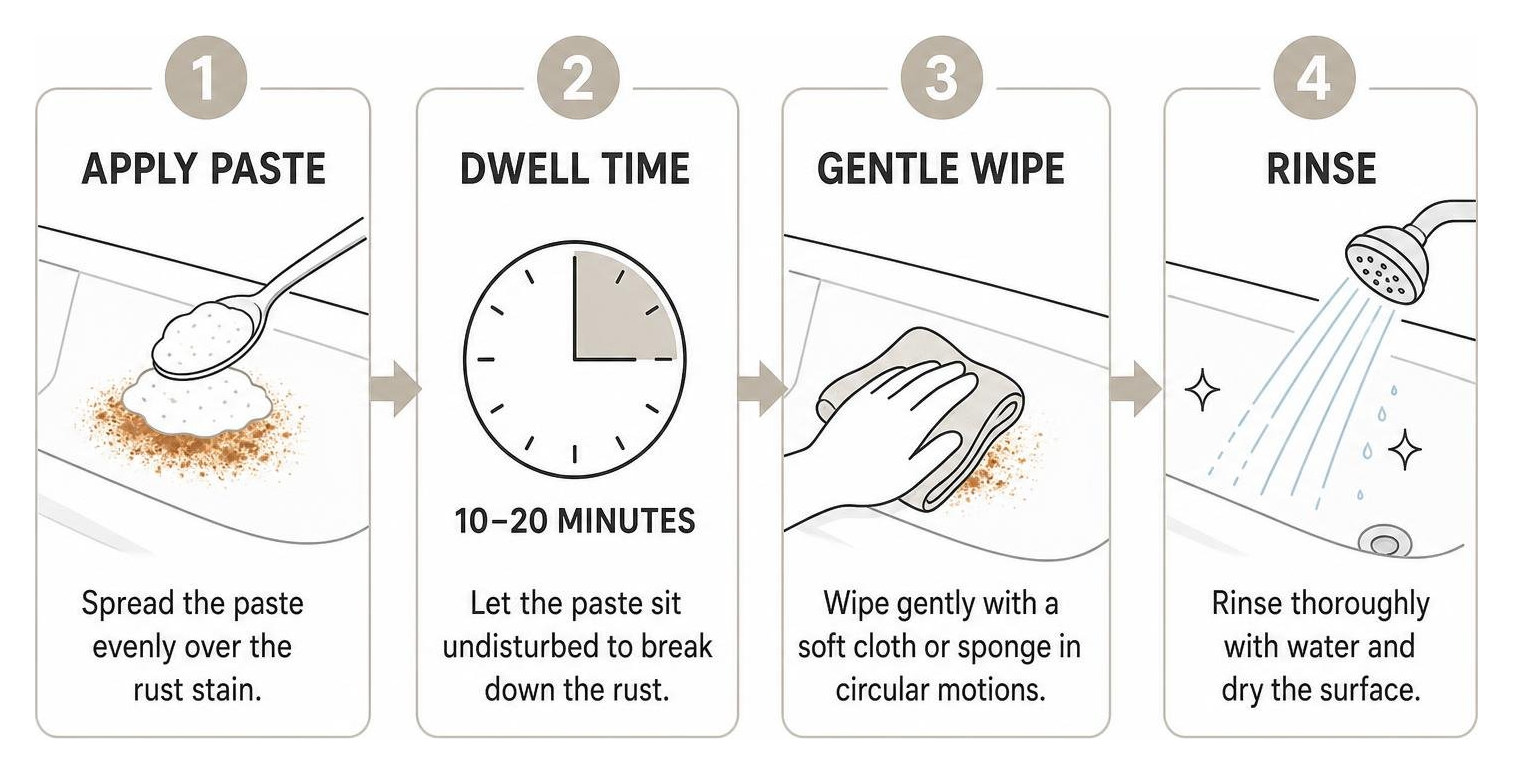
- Apply the Mixture: Squeeze fresh lemon juice directly over the rust stain. Sprinkle ordinary table salt generously over the wet area until a thick paste forms.
- Allow Dwell Time: Let the paste sit undisturbed for 10 to 20 minutes on porcelain enamel tubs. For acrylic tubs, keep dwell time under 10 minutes to prevent surface clouding.
- Agitate Gently: Use a damp microfiber cloth or a soft sponge to work the paste in circular motions. Never press down hard; let the citric acid do the heavy lifting.
- Rinse and Dry: Flush the area thoroughly with cold tap water and wipe the tub completely dry with a clean towel.
For lighter stains on durable enamel, natural rust removal with lemon and salt is often all you need for a spotless shine.
How to Remove Bathtub Rust Stains with Baking Soda and Vinegar
Baking soda (sodium bicarbonate) is a mild, non-scratching abrasive with alkaline lifting power, while distilled white vinegar contains 5% acetic acid. While mixing them together in an open bowl creates an exciting fizz, that bubbling reaction actually neutralizes both ingredients into salt water and carbon dioxide. To get the maximum benefit, apply them sequentially.
- Create the Paste: Mix three parts baking soda with one part water (or a few drops of dish soap) to form a thick spread.
- Coat the Stain: Smear the paste directly over the rust marks, ensuring complete coverage.
- Add the Acid Trigger: Spray undiluted white vinegar directly onto the applied paste. The bubbling action will help loosen stubborn mineral particles embedded in the surface.
- Let It Work: Allow the mixture to rest on the surface for 20 to 30 minutes.
- Wipe and Rinse: Rub the paste gently with a soft cloth, rinse thoroughly with clean water, and dry.
Maintaining the smooth feel of your tub during regular cleaning is essential; you can discover more tips on how to restore bathtub surface integrity to prevent dulling over time.
Tackling Persistent Spots with Hydrogen Peroxide and Cream of Tartar
For older stains that resist vinegar and lemon juice, cream of tartar (potassium bitartrate) combined with standard 3% household hydrogen peroxide offers exceptional stain-lifting power. Cream of tartar is a mild, natural dry acid, while hydrogen peroxide acts as a non-chlorine oxidizing bleach that breaks apart mineral discoloration without damaging porcelain.
- Blend the Treatment: In a small dish, mix equal parts cream of tartar and hydrogen peroxide until you achieve the consistency of cake frosting.
- Apply Generously: Spread the paste over the rust spot using a silicone spatula or gloved fingers.
- Cover and Dwell: Place a piece of plastic wrap over the paste to keep it from drying out. Let it sit for 30 to 45 minutes.
- Buff and Rinse: Remove the plastic wrap, buff the spot gently with a damp sponge, and rinse completely with warm water.
When Household Remedies Fail: Deep Corrosion and Surface Damage

Household remedies work wonders on topical stains left by dripping faucets or shaving cans. However, they cannot fix physical deterioration. If you clear away a rust stain only to find a dark, rough divot, bubbling porcelain, or black raw metal, the tub’s protective enamel has worn through.
When water reaches the raw iron substrate of a classic tub, structural corrosion begins. In this state, household acids can actually accelerate damage by eating away at the exposed iron. If your tub has reached this stage, specialized cast iron tub repair or learning how to fix cast iron tub damage will restore both structural integrity and a glossy, rust-proof barrier.
Prevention Habits to Keep Your Bathtub Rust-Free

Stopping rust before it forms saves hours of scrubbing and preserves your tub’s glossy finish. Integrate these simple habits into your household routine:
- Dry After Use: Keep a dedicated microfiber cloth in your bathroom to wipe down the tub basin, corners, and faucet ledges after your final shower or bath of the day.
- Store Metal Cans Away: Never keep shaving cream, metal-bottomed hairspray, or metal scrubbers on wet shower ledges. Store them in plastic caddies or outside the tub.
- Repair Dripping Fixtures: A slow drip from a showerhead or tub spout continuously deposits dissolved minerals onto the exact same spot, creating concentrated rust trails.
- Install a Water Treatment System: If you live in an area with high iron or hard water content (such as Palm Beach County or Martin County), a whole-home water softener or iron filtration unit prevents mineral deposits across all your plumbing fixtures.
- Clean Weekly with Gentle Detergents: Routine cleaning with non-abrasive liquid dish soaps prevents soap scum from trapping hard water minerals against the tub surface.
Frequently Asked Questions About Bathtub Rust Removal
Can bleach remove rust stains from a bathtub?
No, never use chlorine bleach on rust stains. Chlorine bleach is a powerful oxidizing agent that chemically reacts with iron, accelerating oxidation and turning light yellow spots into dark, permanent rust stains. Additionally, bleach fumes in an enclosed bathroom can irritate your lungs.
Will vinegar damage porcelain or acrylic tub finishes?
Standard distilled white vinegar (around 5% acidity) is generally safe for porcelain enamel and most acrylic tubs when diluted and used with short dwell times (under 30 minutes). However, continuous, unrinsed exposure to vinegar can etch older porcelain finishes and dull the high-gloss shine of acrylic. Avoid using vinegar on natural stone or cultured marble tubs, as the acid can etch the surface immediately.
Can a pumice stone or Magic Eraser scratch the bathtub surface?
Yes, if used incorrectly. A pumice stone should only ever be used on wet, genuine porcelain enamel; using it on acrylic, fiberglass, or cultured marble will cause severe, irreversible scratching. A Magic Eraser (melamine foam) behaves like ultra-fine sandpaper—while it is gentler, it must always be thoroughly soaked with water and used with light pressure to avoid stripping the gloss off acrylic surfaces.
Conclusion
Unsightly rust marks do not mean your bathtub is ruined. By identifying your tub’s material, testing household solutions like lemon juice, baking soda, and cream of tartar, and steering clear of harsh bleaches and scouring pads, you can safely restore your bathroom’s sparkle.
When rust runs deeper than surface level—causing enamel peeling, rough pitting, or chronic discoloration across your tub, tile, shower basin, or bathroom vanity—routine cleaning is no longer enough. All Surface Refinishing brings over 30 years of hands-on expertise and more than 14,000 completed transformations to homeowners and property managers throughout South and Southwest Florida. Whether you need residential bathroom rejuvenation in Miami, Fort Lauderdale, West Palm Beach, Coral Springs, or Delray Beach, or commercial resurfacing for multi-family properties, our proven restoration process seals away corrosion permanently without the cost and mess of replacement.
Contact our team today to explore our professional bathtub refinishing services and bring lasting shine back to your home.
