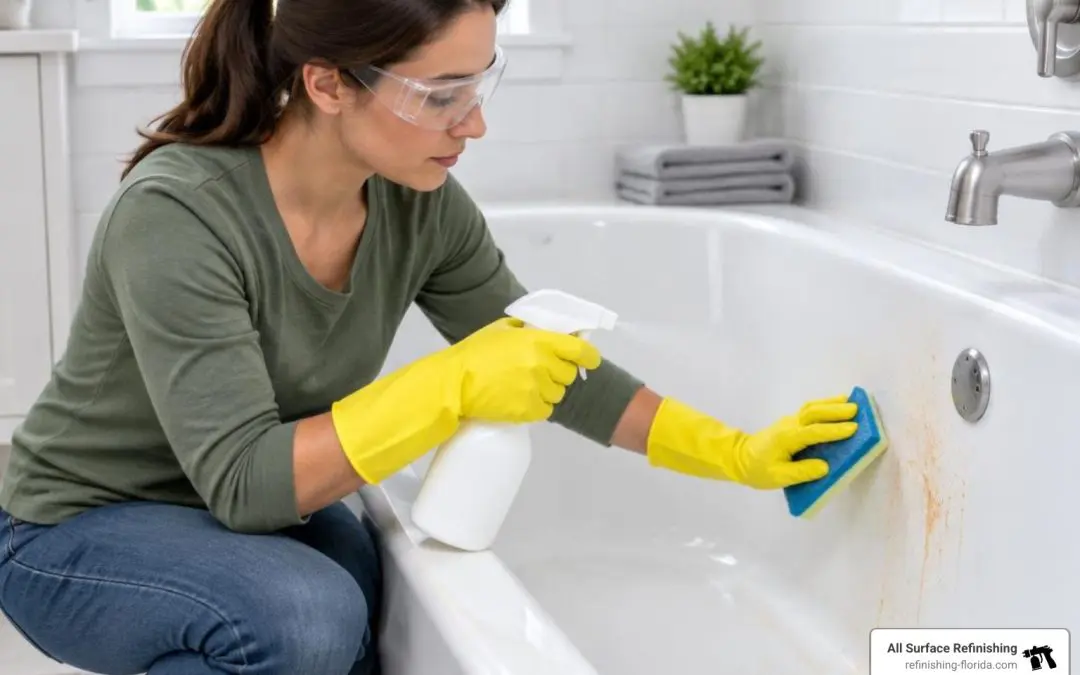
Why Bathtub Rust Stains Form and How Cleaners Target Them
For the best bathtub rust remover, start with an oxalic acid formula like Bar Keepers Friend for stubborn spots or a chelating cleaner like CLR Calcium, Lime & Rust for broader mineral stains. These products dissolve iron oxide safely on porcelain, acrylic, and fiberglass when used according to dwell-time limits. Rust stains can make even the cleanest bathroom look neglected, and understanding the chemistry helps you choose the right product.
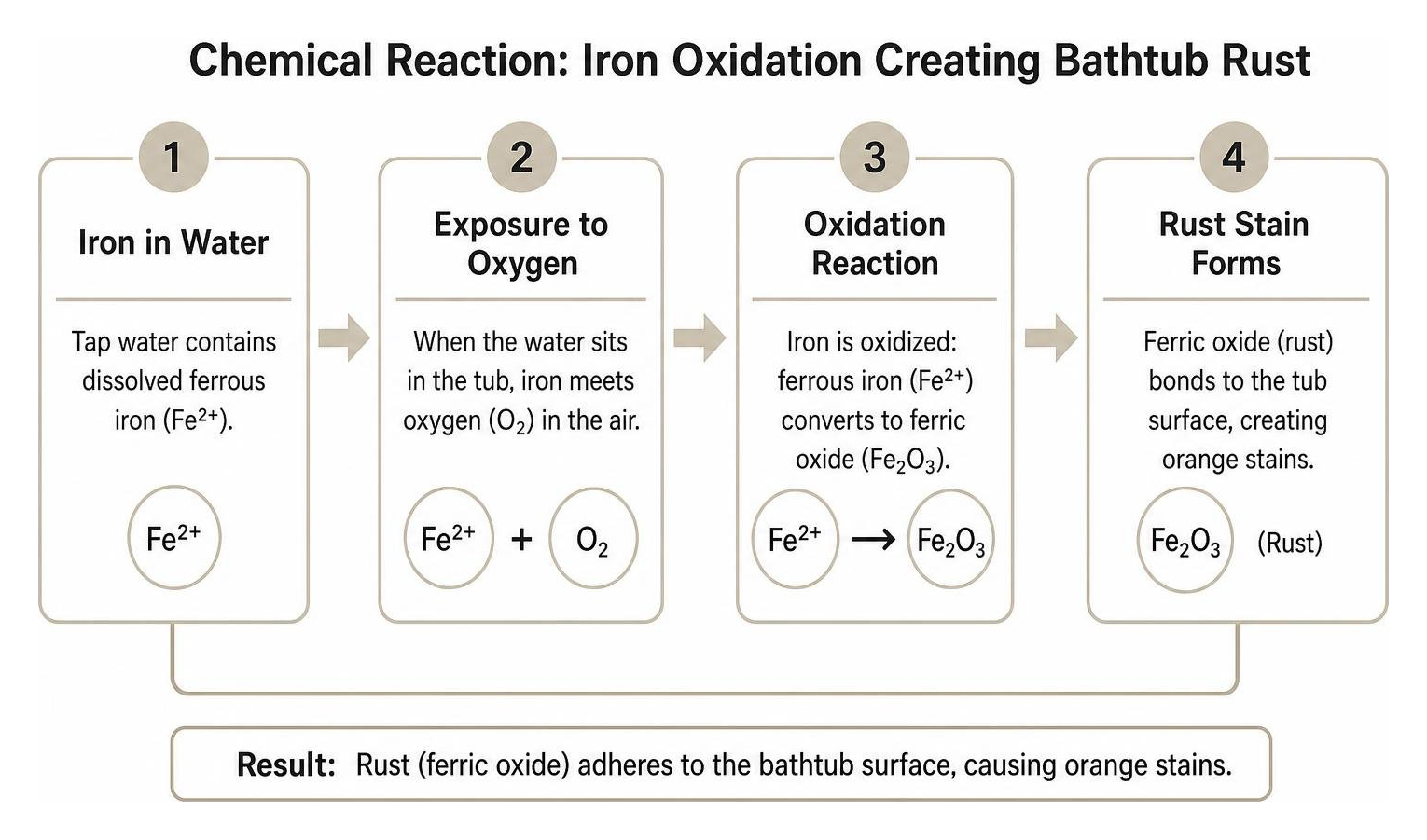
Bathtub rust stains typically originate from three distinct sources:
- Dissolved Iron in Water: Tap water—especially from private wells or older municipal systems—often carries dissolved ferrous iron. When this water sits in your tub and meets oxygen in the air, a chemical reaction called oxidation occurs. The iron transforms into ferric oxide (rust), bonding directly to the tub surface.
- Corroding Plumbing and Fixtures: Aging galvanized steel pipes, deteriorating water heater tanks, or chipping chrome drains shed microscopic metal particles. These particles settle on wet surfaces, corroding rapidly and leaving dark rings around your drain or streaks under the spout.
- External Metal Objects: Shaving cream cans, hairpins, razor blades, or metal caddies left on wet tub ledges oxidize within hours, leaving concentrated rust rings.
Standard bathroom cleaners fail against rust because they rely on alkaline degreasers, surfactants, or chlorine bleach. Bleach is an oxidizer; applying bleach to an iron deposit actually accelerates oxidation, turning faint yellow marks into dark reddish-brown stains.
To remove iron oxide, you need an acidic chemical agent or a chelating agent. Acids convert insoluble iron oxide into water-soluble iron salts, breaking the bond between the mineral and the tub finish. As detailed in The Spruce’s guide on the best rust removers for household surfaces, formulas containing oxalic acid, citric acid, gluconic acid, or phosphoric acid dissolve iron deposits without requiring destructive scraping.
Top Commercial Products: Choosing the Best Bathtub Rust Remover
Finding the right cleaner involves balancing stain-lifting power against surface safety. Below is a comparison of top-rated commercial rust removers across different formulas, dwell times, and material compatibilities.
| Product | Formula Type | Active Ingredients | Safe Surfaces | Max Dwell Time | Best For |
|---|---|---|---|---|---|
| Bar Keepers Friend Cleanser | Powder / Soft Cleanser | Oxalic acid, feldspar abrasive | Porcelain, ceramic, stainless steel | 1–2 minutes | Stubborn, concentrated spot stains |
| CLR Calcium, Lime & Rust | Liquid concentrate | Lactic acid, gluconic acid | Porcelain, fiberglass, chrome | 2 minutes (diluted 50/50) | Mixed hard water and broad mineral stains |
| Zep Concentrated CLR Remover | Professional liquid concentrate | Sulfamic / glycolic acid blend | Porcelain, tile, fiberglass | 60 seconds | Heavy commercial mineral scaling |
| Iron Out Stain Remover | Powder / Spray | Sodium hydrosulfite, sodium metabisulfite | Fiberglass, acrylic, porcelain | Seconds to 2 minutes | Severe iron staining without abrasion |
| Zep Shower, Tub & Tile Cleaner | Spray foam | Acidic surfactant blend | Acrylic, fiberglass, porcelain | 2–3 minutes | Routine maintenance and light rust |
Heavy-Duty and Liquid Cleaners Tested for Bathroom Fixtures
Commercial rust removers generally fall into three functional categories:
- Acidic Powders: Products like Bar Keepers Friend combine mild abrasives with oxalic acid. When wet, oxalic acid binds to iron ions, neutralizing the stain. This makes it exceptional for spot-cleaning porcelain and cast iron fixtures.
- Liquid Chelating Concentrates: Cleaners like CLR Calcium, Lime and Rust Remover (rated 4.6 out of 5 stars from over 4,300 customer reviews) utilize plant-based chelating agents that hold an EPA Safer Choice certification. They loosen iron bonds while dissolving calcium carbonate scale, making them ideal for full-tub descaling.
- Professional-Grade Acid Blends: Heavy concentrates such as Zep Concentrated Calcium, Lime and Rust Stain Remover dissolve thick rust crusts on contact. However, because they are potent, strict dwell-time limits (under 60 seconds) are critical to prevent chemical etching.
Factors to Evaluate for the Best Bathtub Rust Remover
- Material Compatibility: Acrylic and fiberglass lack the mineral hardness of porcelain. Never use aggressive abrasive powders or harsh solvents on plastic resins.
- pH Level and Chemical Strength: Highly acidic cleaners (pH under 2.0) work fast but can corrode tub drains, strip factory gloss, and cause chemical burns if mishandled.
- Dwell Time vs. Evaporation: Vertical tub walls cause thin liquids to run down before they can dissolve rust. Spray foams cling better to vertical surfaces, while concentrated liquids work well on flat tub basins.
- Environmental & Septic Safety: If your home uses a septic system, avoid cleaners containing heavy solvents or phosphates. Biodegradable, plant-derived formulations provide peace of mind.
Method Guide: Applying Homemade and Commercial Solutions Safely
Working with acidic rust removers requires proper safety precautions. Bathroom enclosures concentrate chemical vapors, and acidic formulas can irritate skin and eyes.
Essential Cleaning & Safety Supplies:
- Heavy-duty nitrile or rubber cleaning gloves
- Splash-resistant safety goggles
- Non-scratch microfiber cloths or nylon scrubbing pads (never steel wool or brass wire brushes)
- Plastic mixing bucket and spray bottle
- Clean water bucket or shower wand for rapid rinsing
- Bathroom exhaust fan turned on or open windows for ventilation
Always spot-test any chemical in an inconspicuous corner of the tub before applying it to the main stain. If you are caring for an older or refinished tub, review how to restore a bathtub surface the right way to avoid stripping existing topcoats.
Step-by-Step Application for Different Tub Materials
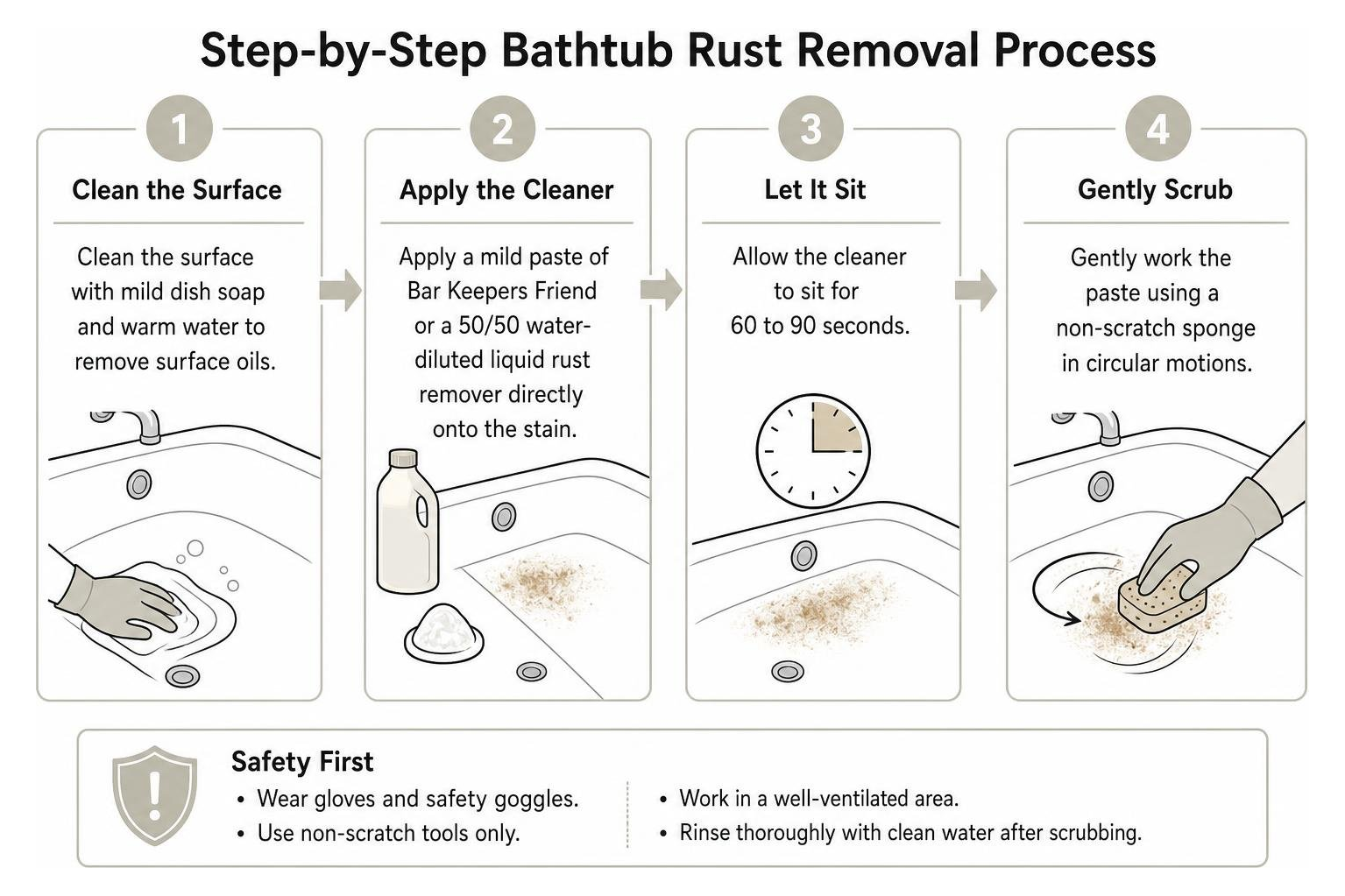
1. Glazed Porcelain & Enamel Cast Iron
- Clean the surface with mild dish soap and warm water to remove surface oils.
- Apply a mild paste of Bar Keepers Friend or a 50/50 water-diluted liquid rust remover directly onto the stain.
- Allow the cleaner to sit for 60 to 90 seconds.
- Gently work the paste using a non-scratch sponge in circular motions.
- Rinse immediately with cold water to halt the acid reaction, then wipe completely dry.
2. Modern Acrylic & Fiberglass
- Spray a non-abrasive formula, such as Iron Out spray or Zep Shower, Tub & Tile Cleaner, onto the rust.
- Let the foam sit for no more than 2 minutes. Do not allow the cleaner to dry on the tub surface.
- Wipe clean using a soft microfiber towel.
- If working on isolated rough spots, see our guide on patching rusty bathtub spots from surface rust to pitting.
- Rinse thoroughly with water and buff dry with a soft cloth.
Chemical and Acidic Formulas: When to Choose the Best Bathtub Rust Remover
If you prefer pantry-safe DIY methods before turning to commercial formulas:
- Lemon Juice and Table Salt: Sprinkle table salt over the rust spot and saturate it with fresh lemon juice. The citric acid acts as a mild chelator while the salt provides light, soluble grit. Let sit for 20–30 minutes, wipe gently, and rinse.
- Baking Soda and Distilled White Vinegar: Form a thick paste of baking soda and vinegar. Apply to the stain, leave for 30 minutes, scrub with a soft sponge, and wash down the drain.
While DIY methods work well on light, recent discoloration, severe rust deposits from high-iron well water demand commercial-grade chemistry. If rust has penetrated beneath the enamel layer down to the bare raw metal, home cleaners will not solve the issue. In cases of structural rust blisters or deep oxidation, explore professional cast iron tub repair to restore the tub’s integrity.
Frequently Asked Questions About Bathtub Rust Removal
How do you tell the difference between rust, soap scum, and hard water buildup?
- Rust: Distinct reddish-orange, brown, or yellowish hue. It forms streaks beneath faucet spouts or concentric rings around metal drains.
- Hard Water Deposits (Limescale): Off-white, grey, or chalky crust formed by calcium and magnesium carbonate. It feels rough and gritty.
- Soap Scum: Dull, slippery, whitish-yellow film formed when soap fatty acids bind with hard water minerals. It covers broader areas across the tub basin and lower wall panels.
Can acidic rust removers etch or damage bathtub surfaces?
Yes. Extended contact with high-acid cleaners can strip the glossy factory glaze off porcelain, dissolve protective acrylic resins, and corrode chrome drain flanges. Always adhere strictly to the manufacturer’s maximum dwell times (usually 1 to 2 minutes) and flush the tub with cold water. If chemical etching has left your tub feeling rough and porous, check our complete bathtub repair guide to evaluate refinishing options.
How can you permanently prevent bathtub rust stains from returning?
- Wipe Down Fixtures: Dry your tub and chrome fixtures with a squeegee or microfiber towel after bathing.
- Store Metal Outside the Tub: Keep metal shaving cream cans, razors, and iron caddies on hanging plastic organizers or vanity shelves.
- Fix Dripping Faucets: Promptly repair dripping spouts to stop the continuous deposit of dissolved iron minerals.
- Install a Water Treatment System: If your home receives hard well water, install a whole-house water softener or dedicated iron-reduction filter.
Conclusion
Finding the right rust cleaner makes short work of superficial mineral stains and restores brightness to your bathroom fixtures. However, when rust has eaten through your tub’s protective enamel, standard cleaners cannot fix the underlying damage. Scrubbing bare metal only exposes more iron to open air and moisture, worsening pitting over time.
When cleaning no longer works, professional resurfacing provides a long-lasting, cost-effective solution without the expense of a full bathroom tear-out. At All Surface Refinishing, we bring over 30 years of experience and more than 14,000 completed projects to homeowners and commercial property managers.
If your bathtub, jacuzzi, tile surrounds, or bathroom vanity surfaces across Miami-Dade County, Broward County, Palm Beach County, Martin County, or Saint Lucie County have lost their shine to severe rust and wear, our team can restore them with durable, factory-grade finishes. Contact us today to request a free estimate on our expert bathtub refinishing services and bring your bathroom back to life.
