Why Shower Floors Are More Dangerous Than You Think
Shower floor safety is one of the most overlooked hazards in the home — yet the numbers tell a sobering story.
Here’s what you need to know at a glance:
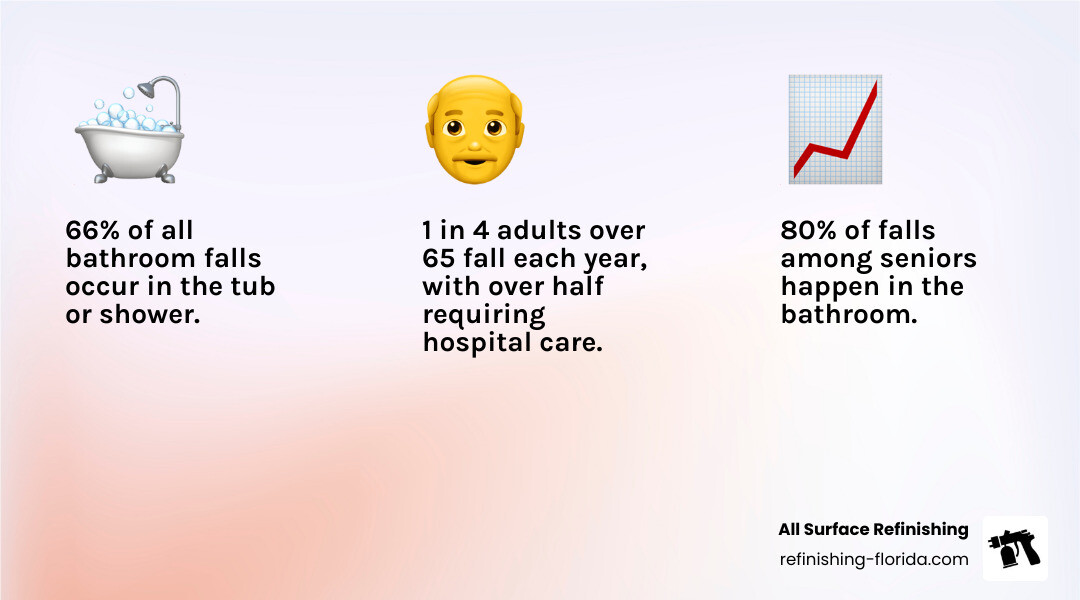
- 66% of all bathroom falls happen in the tub or shower
- 80% of falls among seniors occur in the bathroom
- 1 in 4 adults over 65 fall each year
- Over half of older adults who fall require hospital care
- The fix is often simple: better traction, smarter design, and the right products
The combination of water, soap residue, and smooth surfaces makes shower floors among the most slippery areas in any home. It doesn’t matter if you’re young or old — one wrong step is all it takes.
And the consequences can be serious. We’re talking broken bones, head injuries, and for older adults, a fall in the shower can mark a turning point in their independence.
This guide walks you through everything you need to know — from understanding slip-resistance ratings to choosing the right materials, coatings, and safety accessories for your bathroom.
I’m Frank Hernandez, President of All Surface Refinishing, and with nearly 30 years of experience transforming bathroom surfaces across South Florida, shower floor safety is something I’ve helped hundreds of homeowners address without the cost or disruption of a full remodel. Let’s get into what actually works.
Shower floor safety helpful reading:
Why Shower Floor Safety is a Critical Priority
When we talk about the most dangerous spots in a Florida home, people often think of pool decks or steep stairs. However, statistics from the CDC and the National Council on Aging tell a different story. According to the CDC, more than 66% of bathroom falls occur specifically in the tub or shower area. For our senior neighbors in places like Boca Raton or Boynton Beach, the risk is even higher; up to 80% of falls among seniors happen in the bathroom.
The physics of a shower are essentially a “perfect storm” for accidents. You have a smooth, non-porous surface (like porcelain or acrylic) coated in water. Add soap suds, shampoo, and body oils, and you’ve created a surface with almost zero friction. According to the National Council on Aging, over half of older adults who fall receive hospital care, and these incidents are a leading cause of fatal injuries in the elderly population. Prioritizing shower floor safety isn’t just about home improvement; it’s about injury prevention.
The Impact of Design on Shower Floor Safety
The physical layout of your shower plays a massive role in how likely you are to slip. If a shower is poorly designed, water can pool in certain areas, creating “hydroplaning” zones.
- Drain Placement: Ideally, the drain should be positioned so that water moves away from where you stand most frequently. Linear drains placed against a wall are becoming popular in South Florida remodels because they allow the floor to be sloped in one consistent direction, reducing uneven surfaces.
- Floor Slope: A consistent, gentle slope is required to prevent “ponding.” If the slope is too shallow, water sits; if it’s too steep, it can actually become a tripping hazard.
- Low Thresholds: For those with limited mobility, stepping over a 5-inch tub wall or a high shower curb is a recipe for disaster. Floor-level or “curbless” showers eliminate this obstacle entirely, allowing for a seamless transition from the bathroom floor into the shower.
- Water Pooling: Check your shower after use. If you see standing water ten minutes later, your drainage or slope is compromised, significantly increasing your slip risk.
Understanding Slip Resistance: COF and DCOF Ratings
How do we actually measure how “grippy” a floor is? In the tile and flooring industry, we use ratings called COF (Coefficient of Friction) and DCOF (Dynamic Coefficient of Friction).
| Rating Type | Baseline Standard | Recommended for Showers |
|---|---|---|
| COF (Static) | 0.50 (General) | 0.60+ |
| DCOF (Dynamic) | 0.42 (Level Interior) | Manufacturer specific “Wet” rating |
The American National Standards Institute (ANSI) suggests that for areas likely to be walked on when wet, a COF rating of at least 0.42 is the baseline. However, for showers—where soap and slope are involved—a COF rating of at least 0.60 is highly recommended.
DCOF is the more modern standard. It measures the friction of an object already in motion (like your foot sliding). While 0.42 is the standard for flat indoor floors, we always tell our clients in Miami and Fort Lauderdale to look for materials specifically rated by the manufacturer for “wet shower use.”
Top Solutions for Enhancing Bathroom Traction
If you aren’t ready for a full bathroom renovation, there are several ways to boost traction on your existing floors.
- Adhesive Treads and Strips: These are textured, self-adhesive pieces of plastic or vinyl. They are inexpensive and can be applied in various patterns. The “pro” is that they are cheap and easy to find at any hardware store in West Palm Beach. The “con” is that they can peel over time and the edges often trap dirt and mold. When it’s time to replace them, products like Goo Gone are essential for removing the stubborn adhesive residue.
- Suction Mats: These are the most common temporary fix. However, they can be dangerous if the suction cups don’t stick properly to a textured surface. They also require constant cleaning to prevent mold growth underneath.
- Professional Anti-Slip Treatments: For a more “invisible” and reliable solution, we offer Non-Slip Bath Services. These are chemical treatments that create microscopic texture on the surface of your tile or tub. Unlike mats or stickers, Anti-Slip Treatments won’t peel off and don’t change the look of your bathroom.
Applying Non-Slip Products for Maximum Shower Floor Safety
If you decide to go the DIY route with adhesive treads, preparation is everything.
- Clean Thoroughly: Use a non-abrasive cleaner to remove all soap scum.
- De-grease: Wipe the area with rubbing alcohol or acetone. This is the step most people skip, but it’s the most important for ensuring the adhesive bonds.
- Check Temperature: Most adhesives need the surface to be at least 50°F to bond correctly. (Usually not an issue here in Florida!)
- Bonding Time: Most products require at least 12 to 24 hours of dry time before you can get them wet. Don’t rush it!
Professional Coatings and Permanent Upgrades
For homeowners looking for a long-term solution that looks better than a rubber mat, professional coatings are the way to go. At All Surface Refinishing, we specialize in high-quality Tile Anti-Slip Coating that provides a permanent increase in traction.
Our process involves a professional slip-resistant application where we bond a textured agent directly into the finish. This is especially popular for commercial bathroom floor coating options in South Florida hotels and assisted living facilities where safety is a legal priority.
Permanent Materials for Long-Term Shower Floor Safety
If you are remodeling, choosing the right material from the start is the best way to ensure shower floor safety.
- Textured Porcelain: Porcelain is incredibly durable and water-resistant. Look for “matte” or “textured” finishes rather than “polished.”
- Pebble Mosaics: These provide excellent traction because of the high number of grout lines. The uneven surface of the pebbles acts as a natural anti-slip feature and even provides a bit of a foot massage!
- Low-Threshold Shower Pans: Many modern shower bases come with a built-in, molded texture. These are often made of acrylic or solid-surface materials and are designed specifically as non-slip shower flooring for seniors.
Complementary Safety Features for a Secure Bathroom
Even the grippiest floor in the world can’t prevent every fall. To create a truly safe environment, you should consider a multi-layered approach using Shower Safety Secrets.
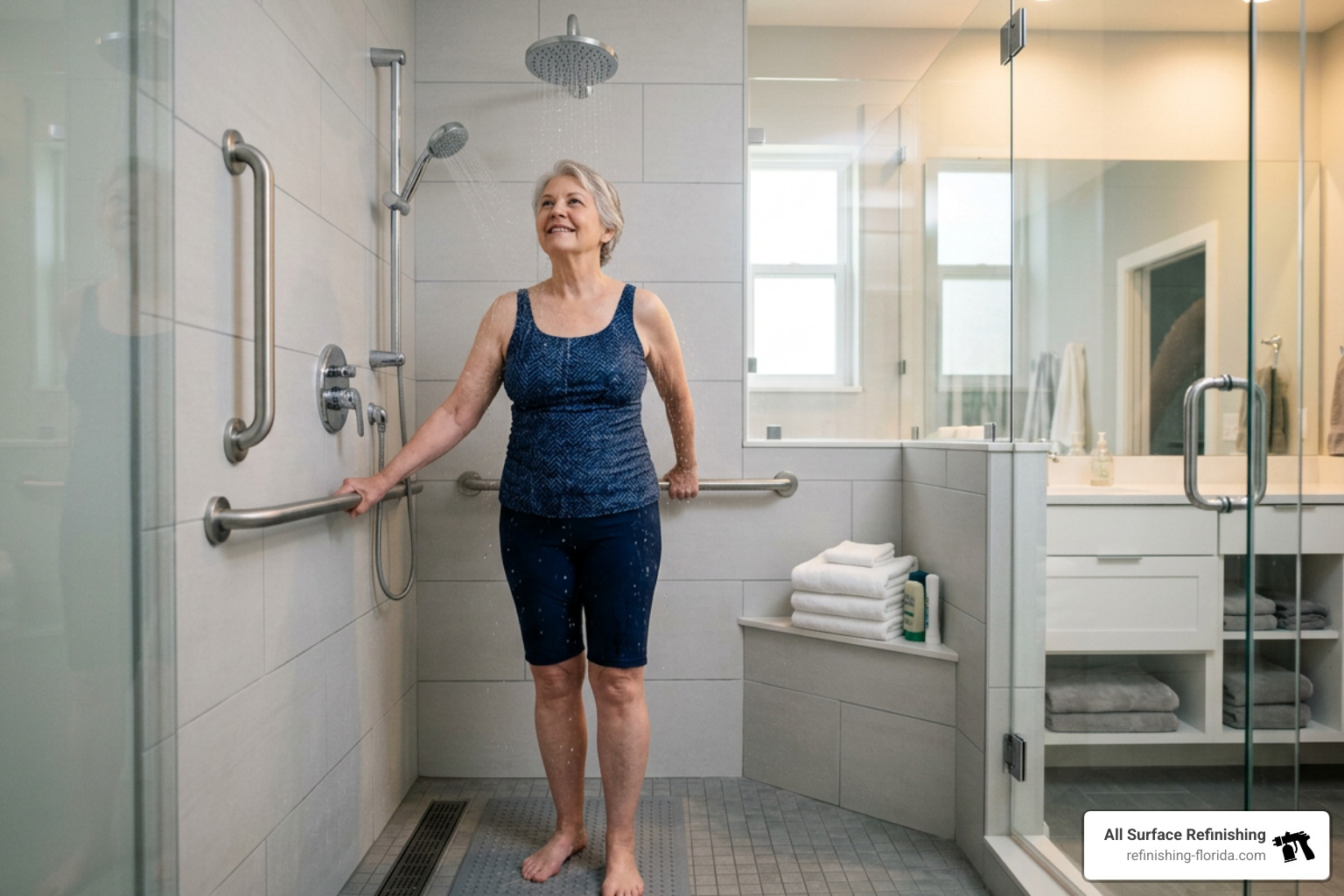
- Grab Bars: Forget the “hospital” look. Modern grab bars come in finishes like brushed gold or matte black that match your fixtures. Ensure they are ADA-compliant and mounted into wall studs—never trust a suction-cup grab bar!
- Shower Seats and Stools: If you struggle with balance or fatigue, sitting down to shower is the safest option. Built-in benches or high-quality removable stools are great upgrades.
- Handheld Showerheads: These allow you to stay seated or hold onto a grab bar with one hand while rinsing with the other. This significantly reduces the need to twist or turn in a slippery environment.
Maintenance and Common Mistakes to Avoid
One of the biggest mistakes we see in South Florida homes is the use of the wrong cleaning products. If you have a non-slip surface, you must avoid “film-forming” cleaners.
- Avoid Wax and Polishes: Never use floor wax or any “shining” agent in a shower. These fill in the microscopic textures that provide grip.
- Soap Film Removal: Over time, body oils and soap create a waxy buildup. This can make even a textured floor slippery. Regular scrubbing with a mild, non-abrasive detergent is necessary.
- Drainage Checks: Ensure your drain is clear. Standing water is the enemy of traction.
- Non-Film-Forming Cleaners: Use cleaners that rinse away completely. For more details on preserving your finish, check out our Comprehensive Guide to Non-Slip Bathtub Coatings.
Maintaining Long-Term Shower Floor Safety
To keep your floor safe for years, establish a routine:
- Weekly Scrubbing: Use a soft-bristled brush to reach into the textures of the floor.
- Vinegar Descaling: If you have hard water (common in areas like Jupiter or Homestead), a 50/50 vinegar and water solution can help remove calcium deposits that might smooth out your floor’s texture.
- Traction Preservation: Periodically test the floor. If it feels “slimy” even when clean, it’s time for a deep de-greasing.
Frequently Asked Questions about Shower Floor Safety
What is the best DCOF rating for a shower?
For a shower floor, you should look for a DCOF rating of 0.60 or higher. While 0.42 is the standard for level interior floors that get wet occasionally, the added factors of soap and the slope of the shower floor require a higher level of friction.
How long do anti-slip coatings last?
A professionally applied, chemically bonded anti-slip coating from All Surface Refinishing can last for many years with proper care. Unlike DIY sprays or stickers that might peel within months, our professional treatments become a part of the surface itself.
Can I make my existing tile floor non-slip without replacing it?
Yes! You don’t need to tear out your beautiful marble or porcelain tile. We can apply Anti-Slip Treatments that increase the friction of the tile without changing its color or appearance. This is a cost-effective way to upgrade your shower floor safety in a single afternoon.
Count on All Surface Refinishing for Safe South Florida Showers
At All Surface Refinishing, we believe that your bathroom should be a place of relaxation, not a place of risk. For over 30 years, we’ve been Florida’s trusted experts in making bathrooms both beautiful and safe.
Whether you are in Miami, Fort Lauderdale, Boca Raton, or West Palm Beach, we are here to help you transform your space. From non-slip bathtub coatings to complete tile refinishing, we provide the high-quality, cost-effective solutions South Florida homeowners deserve.
Don’t wait for a “close call” to take action. Get professional non-slip bath services today and give yourself and your family the peace of mind that comes with a truly safe shower.
