
Update a Vintage Green Bathtub Without Replacement
Green bathtub refinishing restores an outdated avocado, olive, or mint-green tub with a durable new surface instead of removing it. For the best result, first confirm the bathtub is structurally sound, repair chips or rust, thoroughly clean and prepare the surface, then choose a low-VOC or VOC-free refinishing system installed with the correct curing time.
This approach can reduce demolition waste, avoid the disruption of a full bathroom replacement, and limit the strong odors often linked to solvent-heavy coatings. Cast iron, steel, porcelain enamel, and many fiberglass tubs can be good candidates when the substrate is stable and properly prepared.
A vintage green bathtub may be dated, but it is often worth saving. The key is not simply covering the color. It is creating a clean, dry, properly bonded finish that holds up to daily bathroom use.
I am Frank Hernandez, President of All Surface Refinishing, and I have worked in surface restoration since 2011. In this guide, I will explain green bathtub refinishing options based on the practical steps that help South Florida property owners update tubs without replacement.
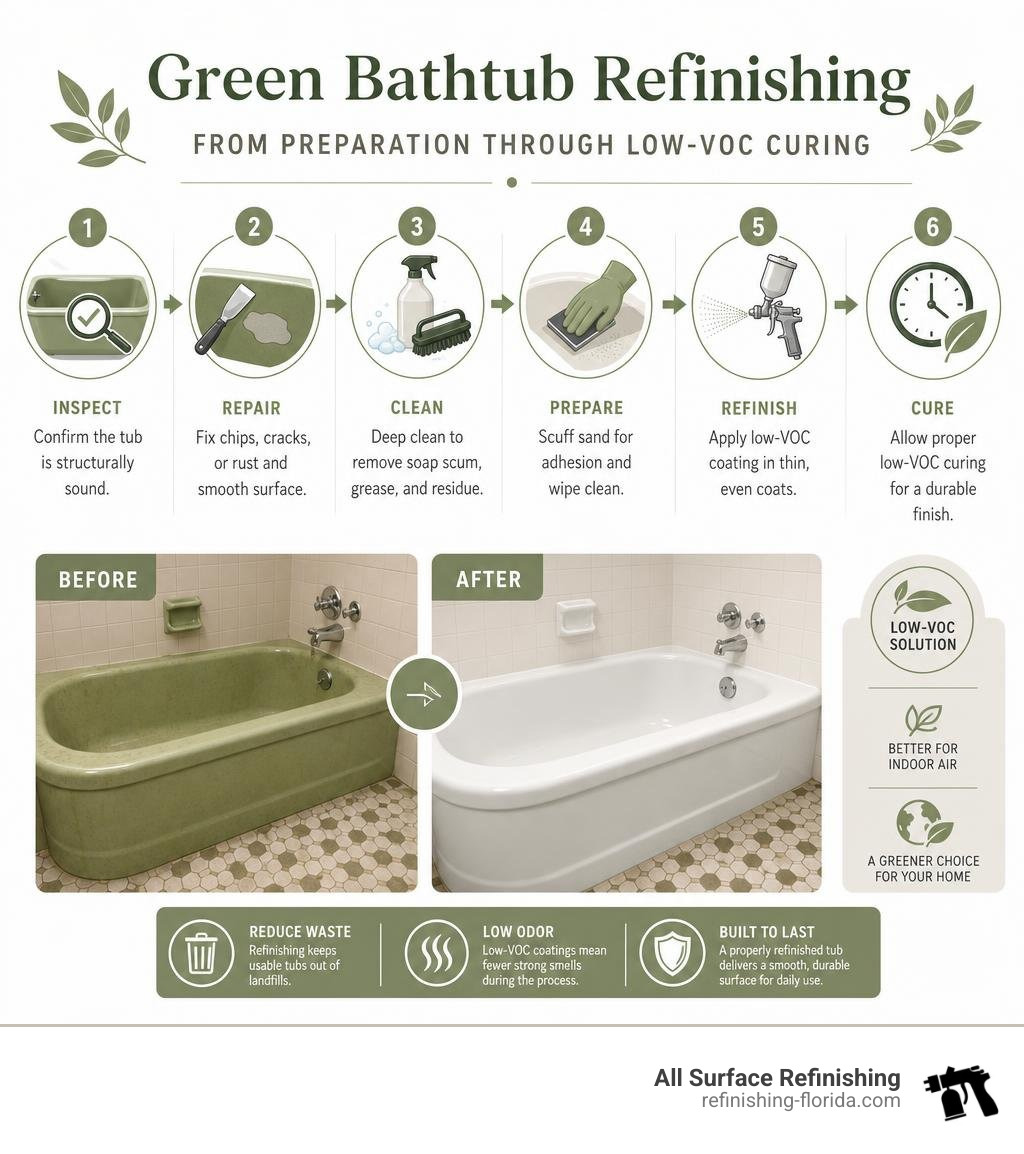
Key terms for green bathtub refinishing:
Understanding Your Options for Vintage Green Bathtubs
Mid-century homes built from the 1950s through the 1970s often feature distinctive fixtures in avocado green, seafoam, and olive green enamel. While these heavy cast iron or porcelain-on-steel fixtures boast exceptional structural durability, their bold retro hues often clash with modern bathroom designs. When facing an outdated bathroom color palette, homeowners frequently debate whether refinishing an olive green bathtub worth it? compared to undergoing a full bathroom tear-out.
Understanding whether Is Bathtub Painting Worth It? Cost Comparison and Price Guide provides clarity when deciding between replacement and surface restoration. Demolishing an old tub requires ripping out surrounding tile, updating subfloor plumbing, and hauling hundreds of pounds of metal to the landfill. Sustainable refinishing preserves the heavy, durable core of your vintage bathtub while giving it a brilliant, modern look. We do not sell paint; instead, professional restoration utilizes specialized industrial bonding polymers and recasting compounds designed specifically for high-moisture bathroom environments.
Why Choose Green Bathtub Refinishing Over Complete Replacement?
Choosing an eco-friendly bathtub transformation provides major environmental and practical advantages over total replacement. Traditional remodeling creates massive construction debris, sending heavy cast iron and fiberglass directly to regional landfills. By resurfacing your existing fixture in place, you divert substantial waste while saving thousands of dollars on plumbing and tile repairs.
Modern green refinishing utilizes advanced zero-VOC or low-VOC formulas and low-odor liquid resins. Traditional bathtub paints release volatile organic compounds that create harsh fumes and require extensive evacuation periods. In contrast, modern eco-resins cure quickly without toxic emissions. Learning The Ultimate Guide to Redoing a Tub Without the Demo highlights how keeping your existing fixture intact protects both your home’s indoor air quality and your renovation budget.
Evaluating Suitable Substrates: Cast Iron, Steel, and Fiberglass
Before starting any resurfacing project, you must identify the base material of your bathtub to ensure optimal structural adhesion:
- Porcelain Enamel over Cast Iron: Common in older vintage homes, these tubs are exceptionally durable and retain heat well. They require thorough chemical etching or mechanical abrading so the new resin locks into the porcelain pores. Reviewing How to Refinish Cast Iron Bathtubs: 5 Proven Methods helps identify the exact prep required for these heavy units.
- Enamelled Steel: Lighter than cast iron, steel bathtubs can develop rust around the drain or overflow plate. Rust spots must be completely neutralized and filled before recoating.
- Fiberglass and Acrylic: Common in newer construction or mid-century modular bathrooms. These units require specialized bonding primers to adhere to flexible synthetic composites without cracking or lifting.
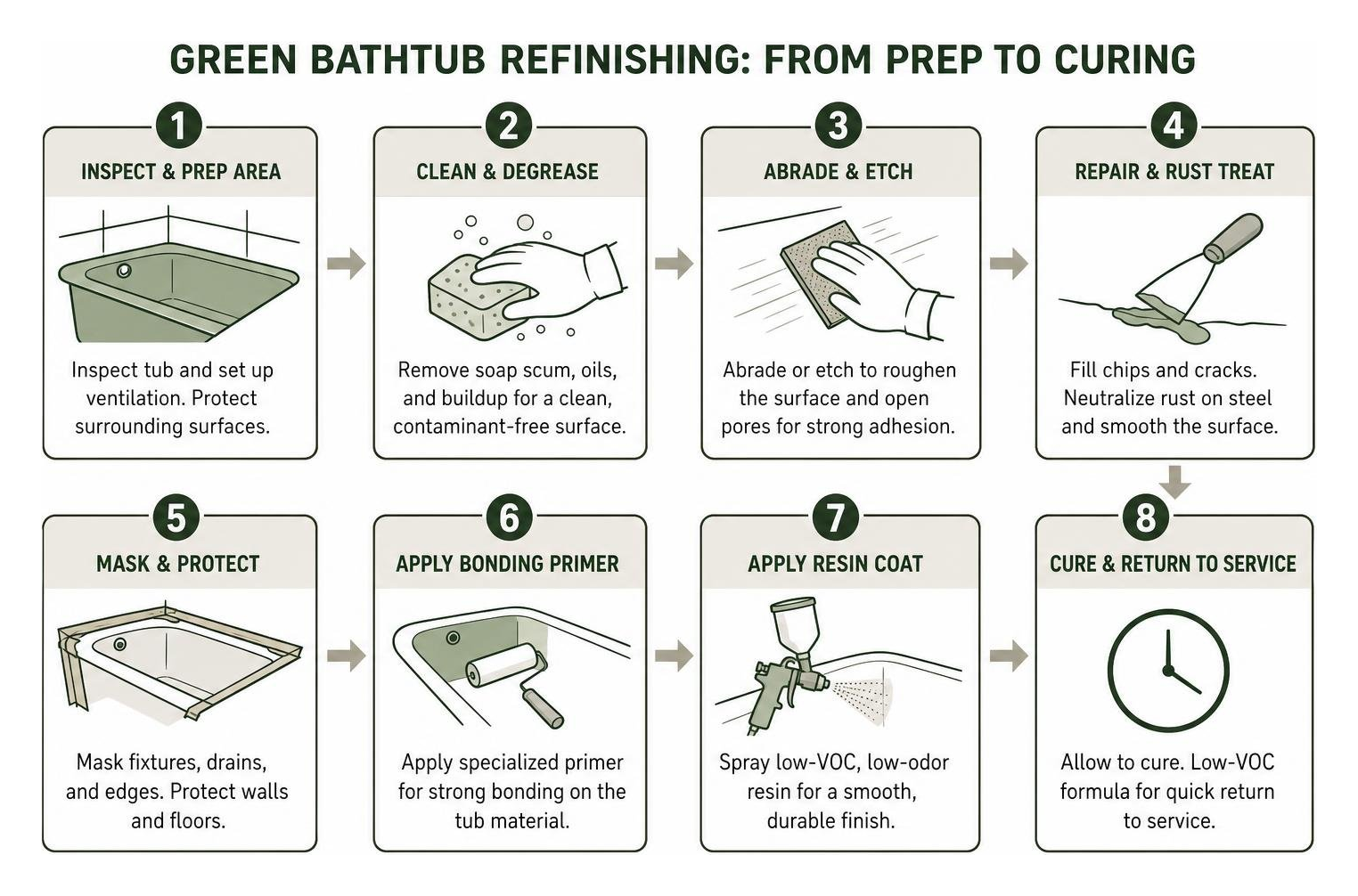
Step-by-Step Green Bathtub Refinishing: How to Transform Outdated Fixtures
Achieving a mirror-smooth, long-lasting surface requires systematic surface prep and careful material application.
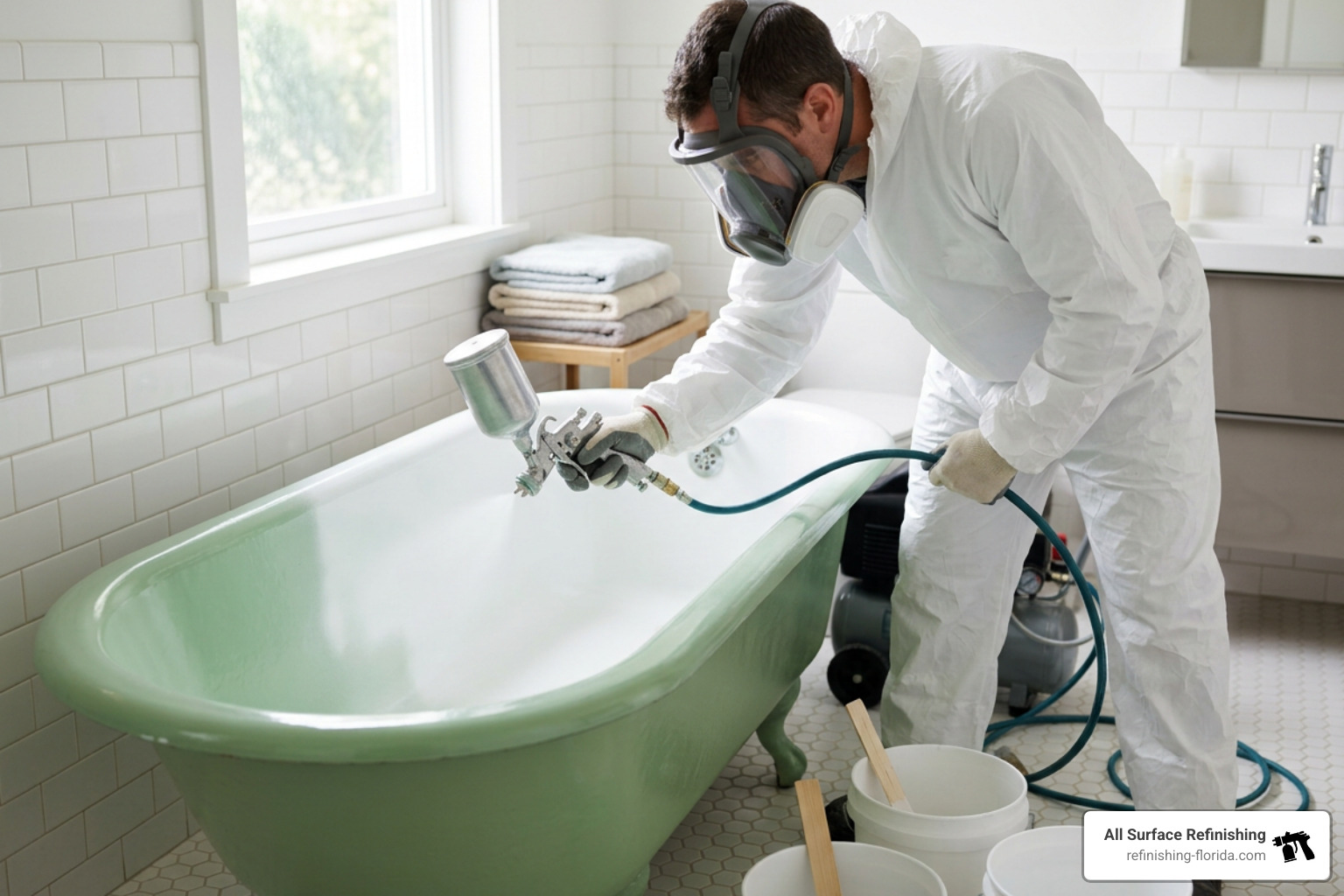
Following How to Repaint a Bathtub in 7 Easy-to-Follow Steps ensures you do not skip critical bonding stages.
Surface Prep and Etching Protocols
The longevity of any tub restoration depends entirely on surface preparation. Over decades of use, soap scum, body oils, and hard water minerals embed deep into the enamel.
- Deep Degreasing and Stripping: The tub must be cleaned using heavy-duty industrial degreasers. If previous coatings exist, they must be stripped down to the original factory substrate.
- Chip and Rust Repair: Any chips, cracks, or deep gouges are filled with moisture-resistant epoxy fillers and sanded flush with the surrounding surface.
- Substrate Etching: Porcelain surfaces require chemical etching or diamond-pad mechanical sanding to create microscopic anchor profiles.
- Bonding Agent Application: A silane or proprietary bonding agent is applied across the dry substrate. Knowing How to Stop Your Painted Bathtub from Peeling for Good comes down to establishing this permanent chemical moisture barrier before applying the topcoat.
Application and 24-Hour Curing Process
Once prepped, the bathtub is ready for coating. High-performance green refinishing utilizes thick-pour or high-viscosity two-part casting resins, such as zero-VOC poured epoxies or low-odor polymeric acrylics.
- Self-Leveling Application: The coating is poured or rolled smoothly across the tub deck and walls, allowing the resin to flow downward and create a thick, uniform layer without brush marks or spray mist.
- Fast 24-Hour Curing: Advanced resin formulas cure completely in 24 hours under normal room temperatures, allowing property owners to use their bathtub the very next day.
- Immersion Durability: These high-density resins easily pass continuous water immersion tests, creating a non-porous shell that prevents future staining and discoloration. Check The Definitive Guide to Bathtub Refinishing Durability for data on how these materials resist daily water exposure over time.
Comparing Eco-Friendly Reglazing Solutions: DIY Kits vs. Professional Restoration
When updating an outdated fixture, homeowners can choose between consumer DIY kits or hiring experienced refinishing technicians. Reviewing What Does It Cost to Reglaze a Tub in 2026? helps determine which route fits your project budget and performance goals.
| Feature / Metric | DIY Eco-Resin Kits (e.g., Pour-On/Roll-On) | Professional Eco-Resurfacing Services |
|---|---|---|
| Material Formulation | Two-part low-VOC epoxy/acrylic | Proprietary zero-VOC casting resin / industrial polymers |
| Application Tool | Foam roller, scooper box, or brush | High-precision pour system or professional HVLP sprayer |
| Average Material/Service Cost | $100 – $180 per kit | $400 – $750 complete service |
| Cure Time | 24 hours to 7 days (depending on brand) | 24 hours ready-for-use |
| Expected Lifespan | 3 to 7 years (prep-dependent) | 15 to 20 years with proper care |
| Odor & VOC Level | Zero-VOC / odorless formulas available | Odorless, non-toxic, safe for occupied homes |
| Skill Requirement | Moderate DIY ability; meticulous prep needed | Professional certified technician |
DIY vs. Professional Green Bathtub Refinishing: What to Expect
DIY refinishing kits, such as an Ekopel 2K, DIY Bathtub Refinishing Kit, No Odor, No Peel Gloss Finish – Refinished Bath Solutions, provide an accessible way to cover outdated colors without professional labor costs. Eco-friendly kits utilize zero-VOC, thick-pour casting resins that cure in 24 hours without toxic fumes. Customer benchmarks show that 95% of users report these modern kits are virtually odor-free, and 91% confirm the cured finish looks brand-new.
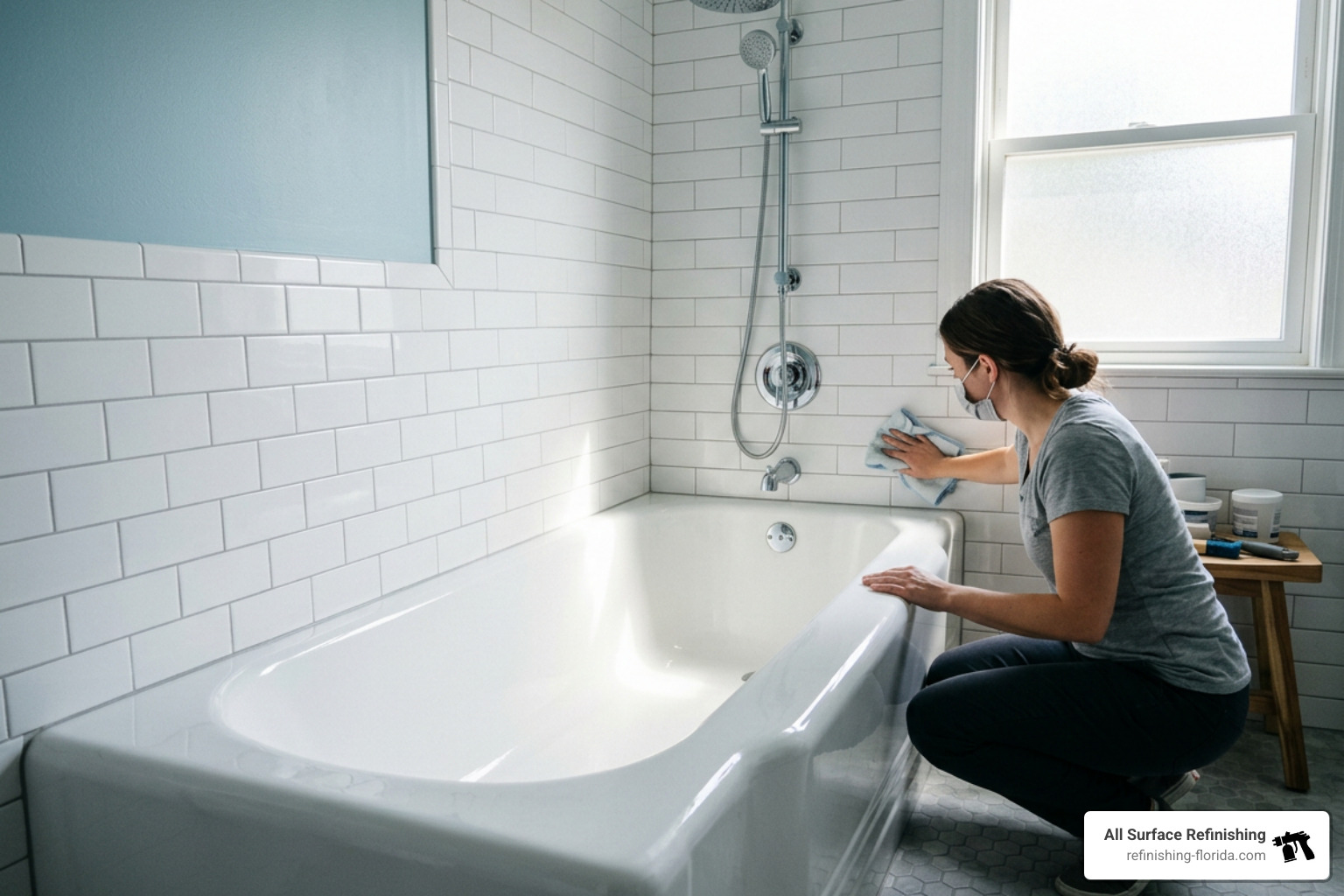
However, success depends entirely on surface preparation. Reading Bathtub Resurfacing 101: Do DIY Refinishing Kits Actually Work? explains why inadequate etching or improper mixing can cause DIY coatings to peel prematurely. Professional restoration includes industrial-grade surface etching, precision temperature control, and high-build polymer finishes applied by seasoned specialists, ensuring a flawless gloss that lasts up to 20 years.
Extending Longevity and Daily Maintenance
Maintaining a newly refinished bathtub requires gentle, non-abrasive cleaning habits:
- Use Mild Cleaners: Clean the surface regularly using dish soap, warm water, or specialized pH-neutral bathroom sprays.
- Avoid Abrasives: Never use scouring pads, steel wool, or abrasive bleaching powders, as they produce micro-scratches that dull the high-gloss shine.
- Fix Leaking Faucets: Dripping faucets can create mineral rings over time; address plumbing drips promptly to protect the drain perimeter.
- Prevent Peeling: If minor edge chips occur from dropped items, consult Bathtub Coating Peeling Off? Quick Fixes & Long-Term Solutions to seal edges before water penetrates underneath.
Frequently Asked Questions About Green Bathtub Refinishing
How long does an eco-friendly bathtub refinishing job last?
When applied correctly to a properly etched substrate, a high-quality green bathtub refinishing job lasts between 15 and 20 years. Longevity depends on avoiding abrasive cleaners, maintaining caulk lines around the tub deck, and preventing standing water pools around the drain.
Can you reglaze surrounding tile and bathroom countertops with eco-friendly coatings?
Yes. Eco-friendly two-part resins and low-VOC polymers adhere to ceramic tile surrounds, fiberglass shower pans, cultured marble vanity tops, and kitchen sinks. Exploring our guide From Grime to Shine: Your Bathtub Shower Reglazing Journey illustrates how you can resurface adjacent bathroom tiles and fixtures in a single visit without demolition.
What is the difference between low-VOC and traditional solvent coatings?
Traditional tub refinishing often relies on solvent-borne coatings containing harsh chemicals and methylene chloride, which produce dangerous fumes requiring high-powered exhaust fans and home evacuation. Green refinishing uses zero-VOC casting resins or water-based acrylic polymers that emit virtually no odors, making them safe for occupied homes, condos, and apartments.
Conclusion
Transforming an outdated vintage green bathtub into a bright, modern fixture does not require costly demolition or hazardous chemical exposure. By opting for sustainable, zero-VOC resurfacing solutions, you preserve heavy, high-quality vintage tubs while protecting indoor air quality and keeping construction debris out of local landfills.
At All Surface Refinishing, we bring more than 30 years of industry experience and over 14,000 completed resurfacing projects to homeowners, property managers, and commercial clients throughout South and Southwest Florida. We proudly serve homeowners across Miami-Dade County, Broward County, Palm Beach County, Martin County, Saint Lucie County, and Indian River County—including communities such as Miami, Fort Lauderdale, Coral Gables, Boca Raton, West Palm Beach, Palm Beach Gardens, Boynton Beach, Delray Beach, Hollywood, FL, Pembroke Pines, Miramar, Coral Springs, Davie, Weston, Aventura, Kendall, Homestead, Jupiter, Stuart, Port Saint Lucie, Fort Pierce, and Vero Beach.
Ready to update your vintage tub with an odorless, durable, high-gloss finish? Contact our team today for professional bathtub resurfacing services and get a long-lasting bathroom upgrade completed in just one day.
