Why the Best Anti-Slip Coating Could Be the Most Important Thing on Your Floor
The best anti-slip coating for most surfaces depends on where you’re applying it and how much traffic it sees. Here’s a quick breakdown:
| Surface | Best Coating Type |
|---|---|
| Bathroom tiles | Polyurethane sealer |
| Commercial kitchen floors | Epoxy system |
| Wet shower floors | Rubberized or polyurethane coating |
| High-traffic patios/decks | Polyaspartic system |
| Residential bathroom tiles | Water-based acrylic |
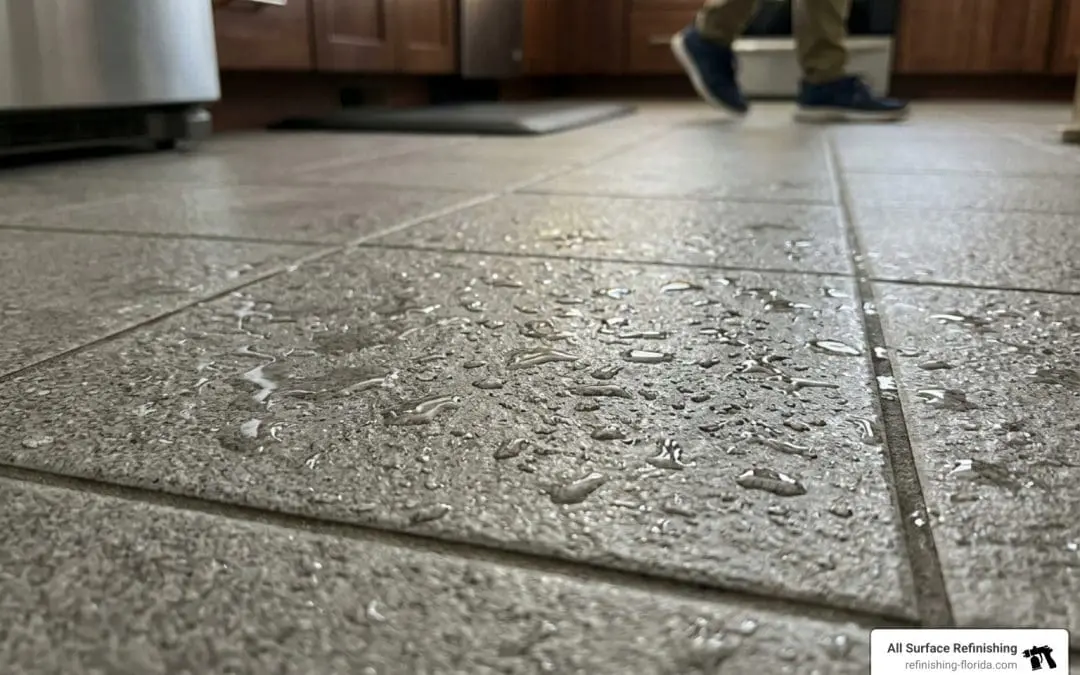
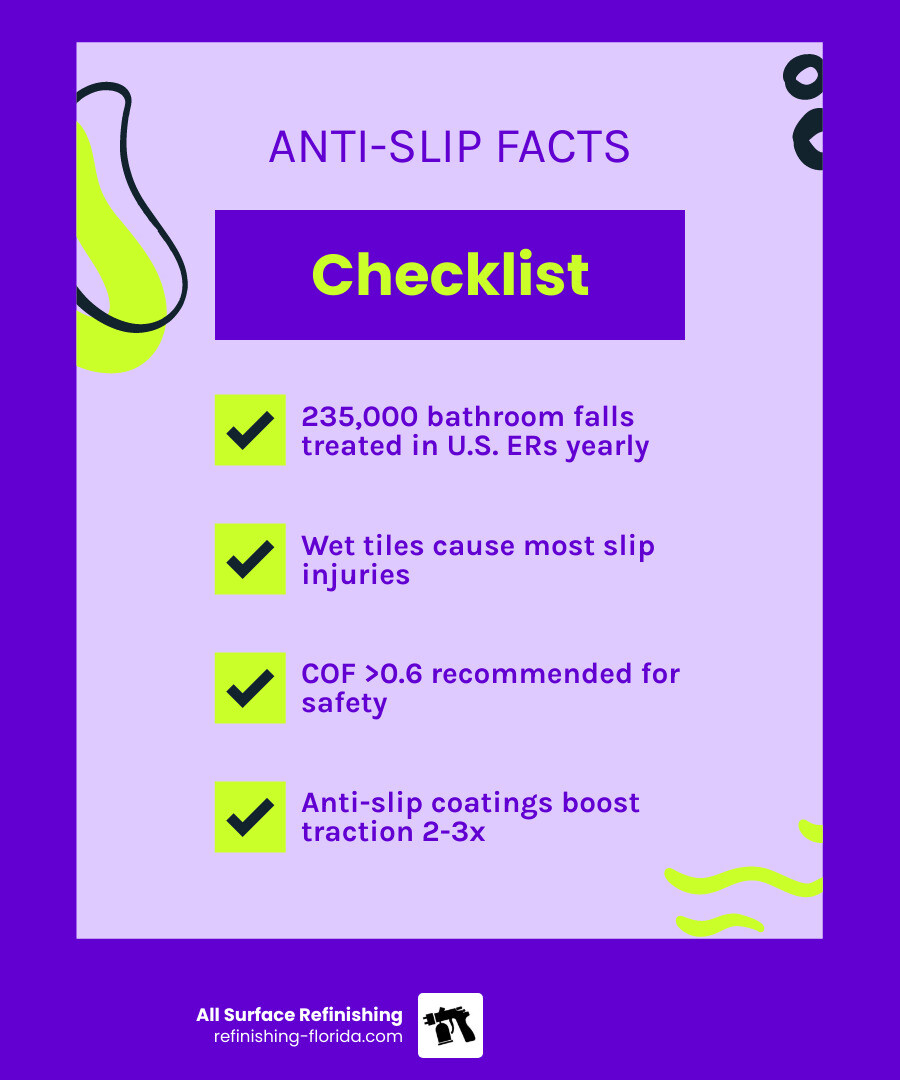
Slippery floors aren’t just inconvenient — they’re dangerous. Over 235,000 bathroom falls are treated in U.S. emergency rooms every year. That’s not a freak accident statistic. That’s a daily reality in homes and commercial spaces across South Florida.
The scary part? Most of those falls happen on surfaces that look perfectly safe — tile, fiberglass, polished stone. Wet floors change everything.
The good news: the right coating can turn a hazardous floor into a safe one without replacing a single tile.
I’m Frank Hernandez, President of All Surface Refinishing, and after more than a decade of hands-on refinishing work across Miami-Dade and Broward counties, I’ve seen how choosing the best anti-slip coating for the right surface makes all the difference between a quick fix and a lasting solution.
Key best anti-slip coating vocabulary:
Choosing the Best Anti-Slip Coating for Your Surface
When we talk about the best anti-slip coating in April 2026, we aren’t just talking about “sand in paint.” Modern chemistry has given us options that are nearly invisible, incredibly durable, and specifically engineered for different environments. Whether you are managing a commercial kitchen in Fort Lauderdale or a residential bathroom in Boca Raton, the goal remains the same: increasing surface friction.
Understanding Surface Friction and COF
In floor safety, we measure effectiveness using the Coefficient of Friction (COF). This rating tells us how much “grip” a surface provides. For example, the Ultra Grip Premium Extra Texture Non-Skid Epoxy Paint exceeds military standards with a wet COF of 1.14—that is some serious traction!
Traction Additives vs. Integrated Grit
There are two main ways coatings achieve their non-slip properties:
- Integrated Grit: The slip-resistant particles are already mixed into the liquid. This ensures a uniform finish and is common in industrial products like Tuff Grip Extreme Non-Skid Floor Paint.
- Texture Additives: A clear or colored coating is applied, and a specialized aggregate (like SlipShield® Aggregate) is broadcast or mixed in during application. This is often used when you want to preserve the look of decorative tiles.
Florida Climate and VOC Compliance
Living in South Florida—from Miami to West Palm Beach—means dealing with high humidity and intense UV exposure. The best anti-slip coating for our region must be UV-resistant to prevent yellowing or brittleness. Furthermore, we prioritize low-VOC (Volatile Organic Compounds) options. Products like Safe Tread Anti-Slip Coating are zero-VOC, making them safer for indoor use in homes and hospitals.
For a deeper dive into how these coatings work on various materials, check out The Ultimate Guide to Anti-Slip Floor Coatings for Tiles and Treatments.
Top 5 Coating Types for Every Surface
Selecting a coating isn’t a one-size-fits-all process. A product that works on a concrete warehouse floor might be a disaster on a fiberglass bathtub.
Epoxy Systems: The Best Anti-Slip Coating for Commercial Kitchens
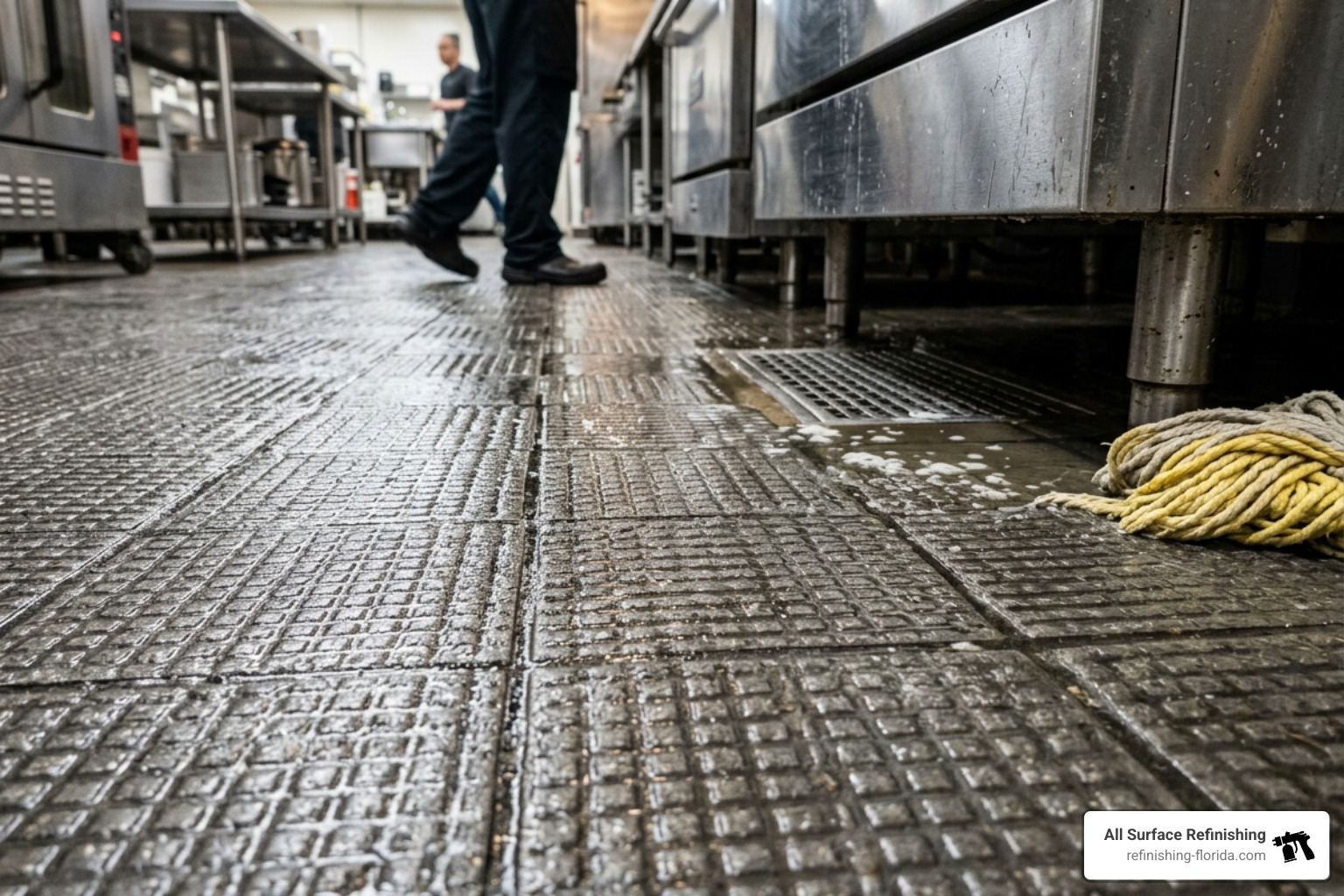
If you are running a restaurant in Coral Gables or a food processing plant in Hialeah, epoxy is your best friend. Epoxy systems are two-component, high-solids formulas that create an incredibly hard, chemically resistant barrier.
- Pros: Resistant to grease, oil, and harsh cleaning chemicals; extremely durable under heavy foot traffic.
- Cons: Can become brittle if used outdoors in direct Florida sun without a UV-stable topcoat.
- Best For: Commercial kitchens, loading docks, and garage floors.
Polyurethane Sealers: The Best Anti-Slip Coating for Bathroom Tiles
For those who want to keep their beautiful marble or ceramic tiles visible, polyurethane sealers are the gold standard. Products like SlipShield offer a clear finish that doesn’t mask the floor’s aesthetics.
- Pros: UV-resistant (won’t yellow); excellent moisture protection; barefoot-friendly textures available.
- Cons: Requires professional application to ensure the COF is optimized.
- Best For: Bathroom floors, entryways, and pool surrounds. For more bathroom-specific tips, see Shower Safety Secrets: Easy Ways to Make Your Shower and Bathtub Non-Slip.
Rubberized Coatings for Wet Areas
Rubberized coatings, such as Pro Grip Non-Skid Spray-On Rubberized Coating, provide a softer, more flexible finish. This is particularly important for areas where people are likely to be barefoot.
- Pros: Impact-absorbing; comfortable for paws and feet; often made from recycled materials.
- Cons: Lower coverage rates (typically 30-45 sq. ft. per gallon).
- Best For: Shower pans, boat decks, and locker rooms.
Fast-Curing Polyaspartic Systems
In the commercial world, time is money. Polyaspartic coatings are the high-speed cousins of epoxy. They cure incredibly fast—often allowing light traffic in just 4-6 hours.
- Pros: Rapid return-to-service; superior UV resistance; high “hot tire” resistance (won’t peel under warm car tires).
- Cons: Generally more expensive than standard acrylics or epoxies.
- Best For: Commercial garages in Boynton Beach, high-traffic retail walkways, and busy patios.
Water-Based Acrylics for Budget Safety
If you are looking for a cost-effective way to boost safety in a residential bathroom, water-based acrylics are a solid choice. Floor Grip – Clear Non-Slip Coating is a great example of a user-friendly, waterborne sealer.
- Pros: Low odor; easy to apply; budget-friendly (as low as $0.45 – $1.00 per sq. ft. for some formulas).
- Cons: Not as long-lasting as polyurethane or epoxy; may require more frequent reapplication (every 1-2 years).
- Best For: Residential bathroom tiles, vinyl, and wood floors. Learn more about Tile Anti-Slip Coating options.
Key Factors When Selecting a Slip-Resistant Finish
Before you pull the trigger on a purchase, consider these variables:
- Traffic Levels: A private bathroom in Wellington needs a different level of durability than a hotel lobby in Miami Beach.
- Moisture Exposure: Will the surface be submerged (like pool steps) or just occasionally damp? Products like Swiss GriP Non-Slip PRO P4/P5 are specifically certified for wet areas.
- Maintenance Needs: Some aggressive textures can trap dirt. You’ll want a balance between safety and “cleanability.”
- Regulatory Compliance: Commercial spaces must often meet ADA (Americans with Disabilities Act) and OSHA standards. Choosing a certified best anti-slip coating ensures you stay compliant and avoid liability.
Application and Maintenance for Long-Lasting Results
Applying an anti-slip coating is 80% preparation and 20% application. If the surface isn’t prepped correctly, even the most expensive coating will peel.
The Refinishing Process
- Cleaning: The surface must be free of wax, oil, and soap scum. We recommend using a pH-neutral degreaser.
- Etching/Scuffing: For dense surfaces like ceramic tile or concrete, chemical etching or mechanical scuffing (using 320-grit sandpaper) creates “teeth” for the coating to bond to.
- Priming: Some substrates, like bare metal or fiberglass, require a specific primer to ensure adhesion.
- Curing: Be patient! While some products are dry to the touch in 2 hours, they may take 24–48 hours for light foot traffic and up to 7 days to reach maximum chemical resistance.
Maintenance Tips
To preserve your coating’s lifespan—which can be 5 to 10 years for premium products like SparkleTuff™—avoid abrasive cleaners. Stick to water and mild, non-abrasive detergents. Never wax or polish an anti-slip surface, as this fills in the texture and makes it slippery again!
For more on choosing products that stick, see Find Your Footing: Top Non-Slip Products for a Safer Bathtub.
Frequently Asked Questions about Anti-Slip Solutions
How long do anti-slip coatings typically last?
It varies by chemistry. Standard acrylics might last 1–2 years, while high-performance polyurethanes and epoxies can last 3–5 years. Exceptional products like SparkleTuff™ have been known to last a decade or more if properly maintained.
Are these coatings safe for bare feet and pets?
Yes! Many modern coatings are designed with “barefoot-friendly” textures. Rubberized coatings and “Lite Bite” polyurethane variants provide excellent grip without being abrasive to skin or paws.
Can I apply these coatings over existing tile or fiberglass?
Absolutely. One of the biggest benefits of a non-slip bathtub coating is that it bonds to your existing fixtures. Whether it’s a porcelain tub in Hollywood or a tiled shower in Miramar, these coatings are designed to adhere to non-porous surfaces.
Conclusion
Investing in the best anti-slip coating is an investment in peace of mind. Whether you’re a homeowner looking to protect your family or a business owner safeguarding your customers, the right surface treatment is a cost-effective alternative to expensive floor replacements.
At All Surface Refinishing, we’ve spent over 30 years perfecting the art of surface transformation. From the high-rises of Aventura to the residential neighborhoods of Pembroke Pines and down to the vibrant streets of Miami, we provide expert application that ensures your floors are as safe as they are beautiful.
Ready to find your footing? More info about our non-slip bath services is just a click away, or you can contact us for a free estimate in South and Southwest Florida. Don’t wait for a slip to happen—take the step toward safety today!
